
Introduction
Dental practices today face mounting pressure due to high patient volumes and growing expectations. Dentists and staff often juggle multiple responsibilities simultaneously, from answering calls and booking appointments to managing patient records and coordinating treatments. This constant multitasking can create inefficiencies, errors, and missed opportunities, affecting both revenue and overall patient satisfaction.
Frequent missed calls and patient no-shows are among the biggest challenges, disrupting schedules and reducing productivity. Administrative tasks like sending reminders, collecting intake forms, verifying insurance, and updating records further consume staff time. These repetitive duties often take attention away from clinical care, leaving dental teams stretched thin and patients feeling less supported.
Fortunately, AI agents in dental care are emerging as a game-changing solution. By automating routine tasks, managing appointment reminders, and streamlining communication, these intelligent systems allow dental practices to operate more efficiently. Staff can focus on delivering high-quality care while patients experience smoother, more reliable service, enhancing satisfaction and boosting practice performance.
What Are AI Agents in Dental Practices?
AI agents are intelligent systems that use voice, chat, and SMS to automate administrative and patient communication tasks in dental offices. They are designed specifically to handle dental workflows, appointment scheduling, reminders, follow-ups, and patient engagement efficiently.
How They Differ from Generic Bots
Unlike generic chatbots, dental AI agents understand specialized dental terminology, treatment procedures, and office workflows. They include advanced escalation logic to route complex or urgent queries to human staff, ensuring accuracy and patient safety.
Role in the Practice
AI agents support dentists and staff by taking over repetitive, time-consuming tasks while maintaining a personalized patient experience. They enhance operational efficiency, reduce errors, and free clinical staff to focus on care, but they do not replace the clinical judgment or hands-on work of dental professionals.
If you are looking to integrate AI in dentistry to simplify patient communication
Recommended for watching:
Challenges in Traditional Dental Practice Operations
Running a dental practice involves numerous operational hurdles, from administrative overload to patient communication gaps. These challenges reduce efficiency, revenue, and patient satisfaction, making day-to-day management increasingly difficult, which can be effectively addressed with AI Dental Apps.
High no-show and cancellation rates
Frequent patient no-shows and last-minute cancellations lead to empty appointment slots, disrupting schedules and reducing revenue. Dentists and staff spend extra time managing these gaps, often struggling to fill openings efficiently and maintain consistent patient flow.
Front desk overload
Reception teams are overwhelmed with answering calls, booking appointments, sending reminders, and responding to patient queries. This multitasking increases stress, slows workflows, and risks errors, limiting staff’s ability to focus on patient care or other critical operational tasks.
Missed after-hours calls
Patients often contact practices outside office hours, resulting in missed opportunities when staff are unavailable. Lost calls can mean missed new patient leads, delayed treatment, and reduced satisfaction, impacting overall growth and reputation of the dental practice.
Paper-based intake forms
Traditional paper forms complicate record-keeping and slow the onboarding process. Patients spend extra time filling forms manually, while staff must manually enter information into practice systems, increasing the risk of errors and administrative inefficiency.
Fragmented systems
Dental offices often rely on multiple platforms for software, imaging, and patient records that do not communicate effectively. This fragmentation leads to duplicate work, data inconsistencies, and difficulties in accessing a comprehensive patient view for better decision-making, highlighting the need for a reliable Dental Office Answering Service.
Communication gaps
Patients may forget treatment instructions, follow-up appointments, or post-procedure care details. Inconsistent communication reduces no-shows treatment adherence and affects health outcomes, and requires additional staff effort to reconnect, follow up, and ensure patient compliance.
Limited practice visibility
Without proper analytics, tracking appointment utilization, conversion rates, or patient retention is challenging. Practices struggle to identify bottlenecks, measure efficiency, or make data-driven decisions that could optimize operations and maximize revenue.
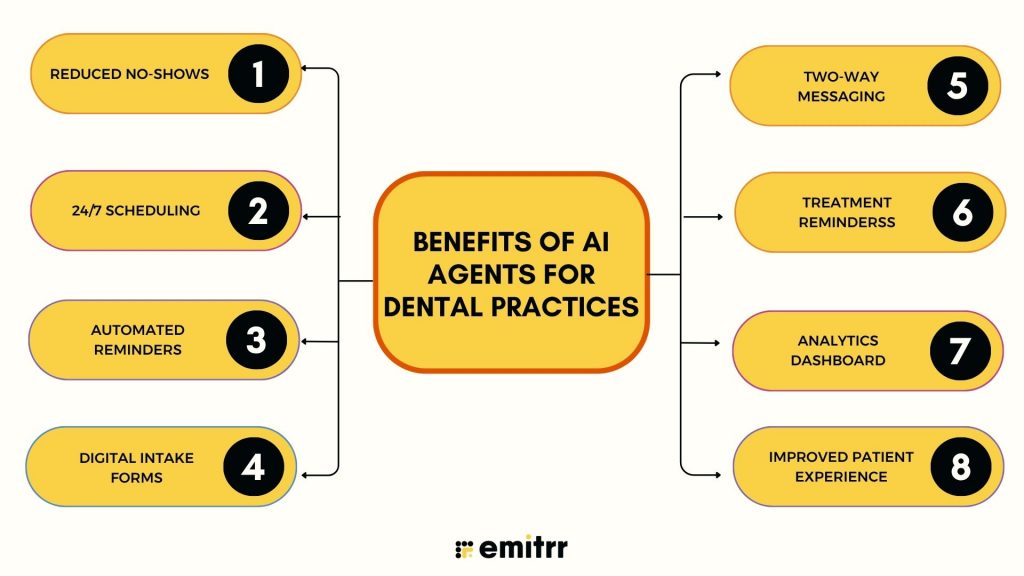
Benefits of AI Agents for Dental Practices
AI agents streamline dental operations, automate routine tasks, and improve patient communication. They help practices reduce administrative burden, optimize appointment scheduling, and enhance overall patient satisfaction, enabling staff to focus more on clinical care.
Reduced No-Shows
AI reminders and automated confirmations significantly lower patient no-shows. By sending timely notifications via SMS, voice, or chat, patients are prompted to confirm or reschedule appointments, improving slot utilization and helping practices maintain consistent revenue and workflow.
24/7 Scheduling
Patients can book, cancel, or reschedule appointments anytime through AI-driven systems. This eliminates dependency on front desk hours, increases convenience for patients, and ensures that Dental Practice for missed calls never misses new patient opportunities or appointment requests.
Automated Reminders
AI agents handle patient reminders and confirmations automatically. By delivering consistent notifications via multiple channels, patients stay informed about upcoming appointments or procedures, reducing last-minute cancellations and improving overall operational efficiency.
Digital Intake Forms
AI-powered digital forms streamline patient onboarding, including medical history and consent collection. Patients can complete paperwork online before their visit, reducing front desk workload and ensuring accurate, organized records within the practice management system.
Two-Way Messaging
Patients can communicate directly with AI via chat or text for questions about appointment reminders, procedures, or treatment plans. This instant interaction improves response times, reduces call volume for staff, and enhances patient satisfaction.
Treatment Reminders
AI agents send ongoing reminders for treatment plans, follow-ups, and preventive care. Patients receive prompts for upcoming cleanings, check-ups, or pending procedures, helping practices maintain continuity of care and improve treatment adherence.
Analytics Dashboard
AI systems provide dashboards showing appointment trends, patient engagement, and operational metrics. Practices gain visibility into performance, enabling data-driven decisions to reduce inefficiencies, track revenue, and optimize resource allocation.
Improved Patient Experience
Seamless communication through AI ensures patients feel supported and informed. Timely reminders, easy scheduling, and instant responses enhance satisfaction, loyalty, and trust, reflecting positively on the overall reputation and efficiency of the dental practice.

How AI Agents Operate in Dental Workflows
AI agents streamline dental workflows by automating routine administrative tasks, managing patient communication, and integrating with practice systems, enabling staff to focus on clinical care while improving efficiency and patient satisfaction.
Automated Scheduling
AI agents handle appointment booking, rescheduling, and cancellations through voice, SMS, or chat. Both new and existing patients can manage their appointments conveniently, reducing front desk workload and ensuring optimal utilization of available slots.
Missed Call Follow-Ups
When calls are missed, AI agents send automated text or chat messages to patients. This helps recover potential appointments, maintains engagement, and reduces lost opportunities, ensuring no patient request goes unnoticed.
Digital Intake & Consent
AI agents collect patient intake forms, medical history, and consent digitally before visits. This speeds up check-in, minimizes paperwork errors, and ensures accurate records, allowing staff to focus on patient care instead of administrative tasks.
Pre-Procedure Instructions
AI agents provide clear pre-op instructions, such as fasting, oral hygiene, and procedure preparation. Automated guidance ensures patients are well-prepared, reduces procedural delays, and enhances safety and overall experience.
Post-Procedure Check-Ins
After treatments, AI agents follow up with patients to monitor recovery and gather feedback. Timely check-ins help identify complications early, improve satisfaction, and maintain strong patient engagement.
Recall & Maintenance Reminders
AI systems automatically send reminders for routine cleanings, follow-ups, and preventive care. These notifications help patients stay on track with treatment schedules, improving oral health outcomes and maintaining consistent practice revenue.
Treatment & Payment Nudges
AI agents remind patients of pending treatments or outstanding payments. By sending gentle nudges for follow-ups or financing options, practices can enhance treatment adherence and reduce delayed payments.
Escalation Alerts
AI agents identify urgent issues, such as severe symptoms or emergency concerns, and escalate them to human staff. This ensures timely intervention while maintaining safe and effective patient care.
System Integration
AI agents integrate seamlessly with imaging, dental records, and practice management software. This centralizes data, streamlines workflows, and provides staff with a complete view of patient history for better-informed decisions, making it an essential part of Dental Patient Engagement Software.
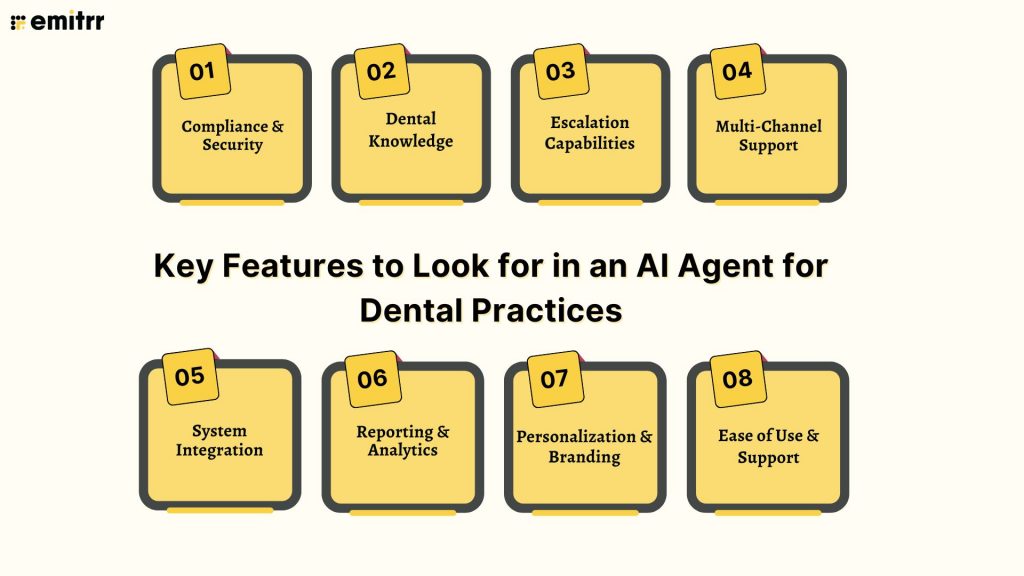
Key Features to Look for in an AI Agent for Dental Practices
Choosing the right AI agent is critical for dental practices. Key features ensure secure, efficient, and personalized operations while supporting staff, improving patient communication, and integrating seamlessly with existing practice systems.
Compliance & Security
AI agents must adhere to HIPAA or equivalent data privacy standards. Secure handling of patient records, communication, and consent ensures confidentiality, protects sensitive information, and builds patient trust while maintaining legal compliance.
Dental Knowledge
AI systems should understand dental terminology, procedures, and workflows. Domain-specific knowledge allows agents to interact accurately with patients, provide relevant instructions, and support staff without errors or misunderstandings in communication.
Escalation Capabilities
AI agents should identify complex or urgent patient situations and route them to human staff efficiently. This ensures timely intervention, proper handling of emergencies, and seamless collaboration between AI and dental professionals.
Multi-Channel Support
Effective AI agents communicate through calls, text messages, and chat. Multi-channel support ensures patients can reach the practice conveniently, increasing engagement, responsiveness, and accessibility for a wide range of patient preferences.
System Integration
AI agents must integrate with dental practice management, imaging systems, and EHR software. Seamless integration centralizes data, streamlines workflows, reduces duplication, and ensures staff have a complete patient view for better decision-making.
Reporting & Analytics
AI platforms should provide dashboards and reports showing operational metrics, patient engagement, no-shows, and revenue trends. Analytics empower practices to make data-driven decisions and continuously optimize efficiency and patient care.
Personalization & Branding
AI agents should reflect the clinic’s brand, including name, logo, and verified sender details. Personalized communication improves patient trust, engagement, and the overall perception of professionalism in every interaction.
Ease of Use & Support
The AI platform should be easy to onboard, with clear training and ongoing support for staff. Simplified adoption ensures smooth implementation, minimal disruption, and sustained benefits over time.
When Human Intervention Is Still Essential
While AI agents streamline many dental workflows, human involvement remains crucial in areas that require clinical judgment, emotional intelligence, and personalized decision-making. Dentists and staff ensure patient safety, provide expert care, and handle situations that AI cannot manage alone.
Diagnosing & Treatment Planning
AI cannot replace the clinical expertise needed to diagnose dental conditions or design treatment plans. Human dentists assess symptoms, interpret imaging, and customize care based on each patient’s unique medical history and oral health needs.
Handling Emergencies
Severe pain, trauma, or sudden dental emergencies require immediate human intervention. AI can flag these issues, but cannot provide the real-time clinical care, assessment, or hands-on treatment necessary to ensure patient safety.
Informed Consent & Complex Discussions
Procedures with significant risks or multiple options require detailed explanations. Dentists must personally discuss treatment plans, alternatives, and potential outcomes to obtain informed consent and address patient concerns thoroughly.
Sensitive or Emotional Conversations
Patients may have fears, anxieties, or personal concerns about dental care. Human staff provide empathy, reassurance, and understanding in ways AI cannot replicate, ensuring a supportive and comfortable patient experience.
Treatment Modifications & Judgment Calls
Unexpected clinical findings or patient responses may require altering the treatment plan. Dentists make nuanced decisions, adjusting procedures or timelines, which AI cannot independently determine, ensuring personalized and safe care.
Real-World Use Cases in Dental Practices
AI agents in dental practices handle routine tasks efficiently, improving patient engagement, operational workflows, and revenue. They complement human staff by automating scheduling, reminders, follow-ups, and communication while maintaining a personalized patient experience.
24/7 Patient Scheduling
AI agents enable patients to book, reschedule, or cancel appointments at any time via voice, chat, or SMS. This convenience ensures practices capture all potential appointments and reduces dependency on front desk availability.
Missed Call Recovery
When calls are missed, AI automatically follows up with patients via text or chat. This recovers potential appointments, maintains engagement, and reduces lost revenue opportunities without burdening staff.
Appointment Reminders
Automated reminders include confirm or reschedule options, ensuring patients stay informed and reducing last-minute cancellations. This improves appointment adherence and helps practices maintain consistent schedules.
Pre-Procedure Instructions
AI provides detailed guidance on pre-op requirements, such as fasting, oral hygiene, or preparation steps. Clear instructions minimize confusion, improve compliance, and ensure patients arrive ready for procedures.
Post-Visit Follow-Up
AI agents monitor recovery by sending follow-up messages to track pain levels, healing, or complications. Early identification of issues ensures timely intervention and improves patient satisfaction.
Recall Reminders
Patients receive automated reminders for routine check-ups, cleanings, and preventive care. This supports ongoing oral health, treatment continuity, and consistent practice revenue.
Treatment Plan Nudges
AI sends reminders for pending or incomplete treatments, such as fillings or crowns. These nudges encourage patients to complete their treatment plans, improving adherence and clinical outcomes.
Payment & Financing Reminders
Automated reminders notify patients of outstanding balances or financing options. This reduces late payments, improves cash flow, and makes the financial process smoother for patients.
Feedback & Review Requests
AI agents prompt patients for feedback or online reviews after visits. Collecting input improves patient engagement, enhances reputation, and provides insights for practice improvement.
Emergency Symptom Screening
AI chatbots for healthcare identify urgent symptoms and escalate them to staff immediately. This ensures timely human intervention while prioritizing patient safety and reducing potential complications.
How Emitrr Supports Dental Practices
Emitrr’s AI receptionist helps dental practices automate repetitive front desk operations while enhancing patient engagement and retention. It ensures every call, text, or chat is handled efficiently — improving utilization, patient satisfaction, and revenue through smart automation and seamless software integration, making it a reliable Dental AI Receptionist.
Automated Scheduling
Emitrr’s AI assistant answers calls, books, reschedules, or cancels appointments instantly without human involvement. Patients can interact via phone or chat 24/7, ensuring no scheduling opportunity is missed, and front desk staff can focus on in-clinic tasks.
Missed Call Recovery
When calls go unanswered, Emitrr’s AI immediately follows up through automated text or chat messages. This system helps recover lost appointments, maintain communication continuity, and prevent potential patient drop-offs, ultimately boosting practice efficiency and conversion rates.
Two-Way Patient Communication
Emitrr enables real-time, two-way texting and chat, allowing patients to ask questions, confirm appointments, or share documents securely. This personalized interaction enhances patient trust and reduces the communication gap between the practice and its patients.
Digital Intake and Consent Forms
Emitrr automates patient onboarding by sending digital intake and consent forms before visits. Completed forms sync directly with the system, saving time, reducing paper dependency, and ensuring accurate data collection for smooth check-ins.
Pre- and Post-Treatment Instructions
Emitrr automatically sends tailored pre-procedure guidelines and post-treatment care instructions via SMS or chat. This ensures patients are well-prepared before visits and supported during recovery, minimizing confusion and follow-up calls to the clinic.
Recall and Follow-Up Campaigns
Emitrr manages automated dental recall reminders for regular check-ups, cleanings, or incomplete treatments. These campaigns help maintain consistent patient flow, strengthen relationships, and improve long-term treatment adherence and practice revenue.
Urgent Issue Escalation
The AI system identifies emergencies or high-priority cases through chat or voice interactions and immediately alerts staff. This ensures quick response for urgent concerns, enhancing patient safety and trust in the practice.
Performance Analytics Dashboard
Emitrr offers detailed analytics dashboards tracking missed calls, appointment utilization, patient engagement, and revenue impact. These insights help practices identify performance gaps, optimize workflows, and make data-driven decisions for growth.
Seamless Software Integration
Emitrr integrates effortlessly with major dental practice management systems and imaging software. This connectivity ensures a unified workflow — eliminating manual data entry, reducing errors, and improving operational consistency across platforms.
HIPAA Compliance and Branding
Emitrr ensures all communications are HIPAA-compliant, safeguarding patient privacy and data security. Practices can also customize the platform with their logo, name, and verified sender ID to maintain brand consistency and patient trust.
Take a look at what the Emitrr AI agent can do:
Future Trends in AI for Dental Practices
AI in dentistry is rapidly evolving beyond automation — shaping smarter, more personalized, and data-driven patient experiences. The next wave of innovation will enhance clinical efficiency, patient engagement, and predictive care across every stage of the dental journey.
Generative AI for Clinical Documentation
Future AI systems will create detailed operative notes, chart summaries, and progress reports automatically. By analyzing procedure data and dictation, they’ll help dentists save time on documentation, reduce manual errors, and maintain consistent, structured patient records.
Voice Assistants for Hands-Free Support
AI-powered voice assistants will assist dentists during procedures, allowing hands-free access to patient charts, treatment history, or instrument details. This technology will improve workflow efficiency, infection control, and overall clinical precision in real-time.
Predictive Analytics for Cancellations
Predictive AI models will analyze appointment trends, patient behavior, and historical data to anticipate no-shows or cancellations. Clinics can then proactively engage patients through reminders or incentives, minimizing empty chair time and boosting profitability.
AR-Driven Patient Education Bots
Next-generation AI bots will use AR and 3D visuals to explain treatment plans and oral health conditions interactively. This will enhance patient understanding, reduce anxiety, and encourage greater treatment acceptance rates.
Integration with Scanners and Imaging Systems
AI will integrate seamlessly with intraoral scanners and imaging devices, offering real-time analysis, anomaly detection, and visual overlays. This integration will assist dentists in diagnostics, improving accuracy and early detection of dental issues.
Conversational AI for Treatment Planning
Evolving AI systems will function as virtual dental assistants — helping clinicians create personalized treatment plans, suggest options, and optimize scheduling based on patient needs and clinical data, ensuring smoother and more informed decision-making.
Frequently Asked Questions
No. AI complements dental teams by automating repetitive administrative tasks like scheduling and reminders. Human expertise remains essential for clinical care, patient relationships, and handling complex or sensitive situations that require empathy and judgment.
Yes, when AI systems maintain transparency, personalization, and professionalism. Patients appreciate quick responses and 24/7 accessibility, especially when communications reflect the clinic’s branding, verified identity, and deliver accurate, relevant information.
AI platforms designed for dental practices follow strict compliance standards like HIPAA. They encrypt patient data, limit access to authorized users, and ensure secure transmission across systems to maintain confidentiality and trust.
Modern AI agents integrate seamlessly with popular dental practice management software and imaging tools. Setup is straightforward, often completed within days, and vendors typically offer onboarding support to ensure smooth, disruption-free adoption.
AI efficiently automates appointment scheduling, reminders, confirmations, patient follow-ups, and intake forms. It also manages recall campaigns, missed call recovery, and feedback collection — freeing staff to focus more on patient care.
Conclusion
AI agents in dental care are reshaping how modern dental practices operate — streamlining administrative tasks, reducing missed appointments, and improving patient engagement. By integrating AI for dental offices, clinics can automate appointment scheduling, reminders, and follow-ups while maintaining personalized, empathetic communication. This balance between automation and human expertise ensures that staff focus on what truly matters — patient care and satisfaction. Ready to see how AI can transform your dental practice? Book a free demo with Emitrr and experience how our intelligent AI dental software can boost efficiency, patient retention, and overall revenue.

 4.9 (400+
reviews)
4.9 (400+
reviews)