
Introduction
For years, businesses have relied on SMS and MMS to communicate with customers. These traditional messaging formats have been reliable, but they come with clear limitations in engagement and interactivity.
Now, a new communication standard — RCS messaging — is changing the way brands connect with audiences. With features like verified business profiles, read receipts, and interactive buttons, it bridges the gap between traditional texting and modern app experiences.
However, with this new wave of communication technology, one question arises: What’s the difference between RCS and MMS, and which should businesses use?
This complete guide explores the differences between SMS vs MMS vs RCS, their pros and cons, business applications, and how platforms like Emitrr make adoption seamless.
What is MMS?
MMS, or Multimedia Messaging Service, is an upgraded form of SMS that enables users to send multimedia content such as pictures, audio files, GIFs, and short video clips along with text messages. MMS texting transformed mobile communication by allowing richer and more expressive interactions. With features like MMS group messaging, individuals and businesses can share creative, engaging messages with multiple recipients at once across mobile networks without relying on internet-based apps.
Evolution
The introduction of MMS marked a natural progression from SMS, giving users the ability to move beyond plain text and include visuals in their communication. As mobile devices and camera phones evolved, MMS became an effective tool for personal and commercial use. Businesses soon adopted it for marketing campaigns, sending product previews, offers, and event promotions directly to customers.
Limitations
- No interactivity: MMS messages are static; they don’t support interactive buttons or clickable CTAs for direct engagement.
- No branding or verification: Recipients see messages from unverified phone numbers, which reduces trust and brand authenticity.
- Limited file size: Most carriers restrict MMS file sizes between 300 KB and 3 MB, limiting high-quality content sharing.
- Limited analytics: Businesses can track delivery confirmations but lack detailed insights like open rates, engagement, or user actions.

What is RCS Messaging?
RCS, or Rich Communication Services, represents the next generation of mobile messaging, designed to replace traditional SMS and MMS. It combines the simplicity of text messaging with the interactivity and multimedia capabilities of modern chat apps like WhatsApp, iMessage, and Messenger — all within the phone’s native messaging app. RCS enables brands to create dynamic, engaging, and branded conversations with customers in real time.
Key Capabilities
- Rich media support: RCS allows the sharing of high-quality photos, videos, GIFs, and carousels, giving businesses the flexibility to visually showcase their products, offers, and services.
- Interactive elements: With buttons, quick replies, and embedded CTAs, RCS enables two-way interaction, helping customers take instant actions like “Buy Now,” “Book Appointment,” or “Track Order.”
- Verified business profiles: Businesses can send messages from verified profiles that include brand names, logos, and colour themes — increasing trust and ensuring customers can easily identify genuine senders.
- Read receipts and typing indicators: Similar to modern chat platforms, RCS provides real-time read receipts and typing indicators, helping brands gauge customer engagement and enabling more conversational, human-like communication.
- Larger file sizes: Unlike MMS, which restricts attachments to a few megabytes, RCS supports larger file sizes — typically up to 10 MB or more — ideal for HD media sharing.
RCS vs MMS: Key Differences
To understand the debate of RCS vs MMS, here’s a clear comparison of both:
| Feature | MMS | RCS |
| Media Support | Images, audio, video (limited size) | Rich media, GIFs, carousels, and interactive cards |
| Branding | Sent from a phone number | Verified business name and logo |
| Interactivity | Static messages | Buttons, quick replies, CTAs |
| Analytics | Delivery reports only | Read receipts, response tracking, engagement data |
| Security | Unverified sender | Verified, more secure |
| Reach | Works on all devices | Limited to Android and supported carriers |
| Cost Efficiency | Per-message cost | ROI-driven, supports smart bundling |
RCS vs SMS: Where Does SMS Fit?
Before diving deeper, it’s important to understand the place of SMS in modern messaging. Comparing RCS vs SMS helps businesses recognise how text-only messages evolved into rich, interactive conversations, bridging the gap between simplicity and immersive customer engagement.
SMS – The Foundation of Messaging
SMS, or Short Message Service, is the most basic form of mobile communication, supporting text-only messages with a 160-character limit. It works on all devices and networks, making it universally reliable. While simple, SMS lacks multimedia content, interactivity, and branding, which limits its effectiveness for engaging today’s digitally savvy customers.
MMS – Introducing Multimedia
MMS, or Multimedia Messaging Service, enhanced SMS by allowing businesses to send images, short videos, audio, and GIFs. This made messages more visually engaging and effective for promotions. However, MMS has limitations such as file size restrictions, no interactivity, and unverified sender information, which prevent it from fully meeting modern marketing and transactional messaging needs.
RCS – The Next Evolution
RCS, or Rich Communication Services, builds upon SMS and MMS by offering interactive, branded, and media-rich messaging. Businesses can include buttons, quick replies, carousels, and verified profiles to improve engagement. With real-time updates, read receipts, and analytics, RCS transforms messaging into a dynamic, conversational experience, outperforming traditional SMS and MMS for marketing and customer support automation.
Watch this video to learn how to automate text messaging campaigns:
Business Use Cases: MMS vs RCS
Businesses today must balance reach, engagement, and interactivity when messaging customers. MMS and RCS offer unique advantages, with MMS focusing on universal delivery and RCS enabling richer, interactive communication experiences.
MMS Examples
MMS is ideal for campaigns that rely on visual appeal without interactivity. It ensures a wide reach, making it suitable for businesses that want their messages seen by every customer.
- Sending static coupon flyers or discount codes: MMS allows businesses to share promotional images or discount flyers directly to customers’ devices, creating a visual incentive to drive purchases without needing complex interactivity.
- Sharing festive greetings with branded images: Brands can send themed greetings during holidays or festivals using MMS, including their logo or colours, ensuring every customer receives a consistent and visually appealing message.
- Inviting customers to events with photo-based banners: MMS enables event promotions through images or banners, helping businesses convey important information such as date, venue, or RSVP links while maintaining universal device compatibility.
Advantages of MMS
Even with modern alternatives, MMS continues to provide value due to its universal reach, simplicity, and predictable costs, making it a practical choice for straightforward visual communication campaigns.
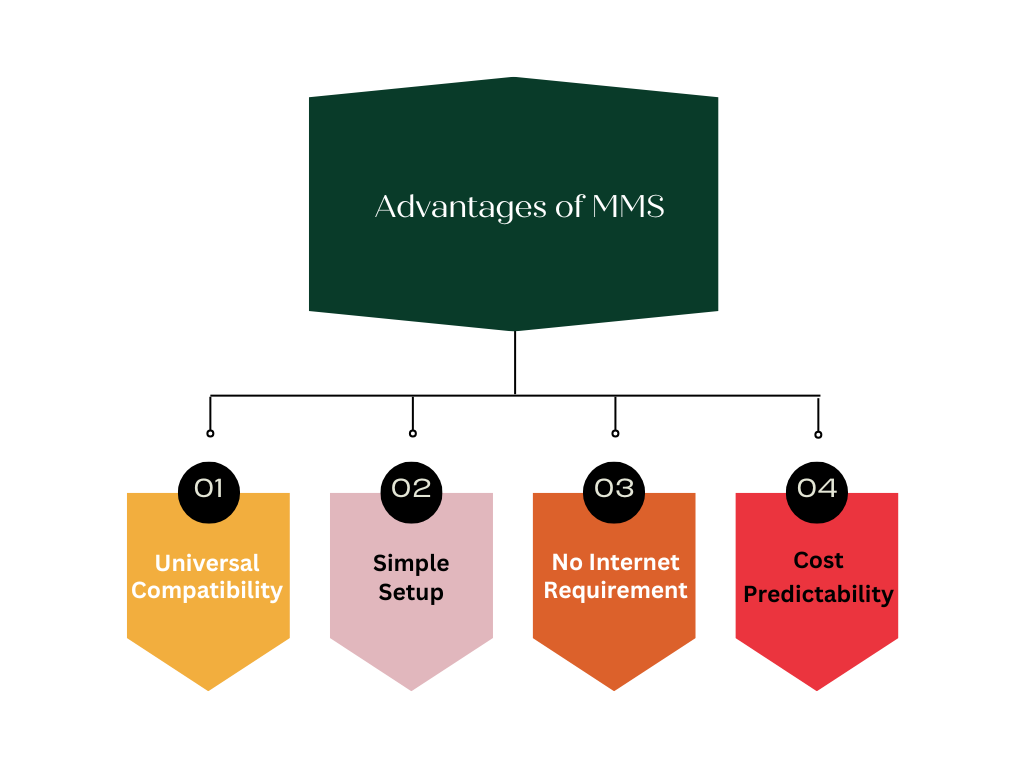
- Universal Compatibility: MMS guarantees delivery regardless of the recipient’s device or network, making it highly reliable for businesses targeting large, diverse audiences.
- Simple Setup: MMS campaigns are easy to launch, requiring minimal technical setup or MMS marketing software integration, ideal for teams seeking quick messaging solutions.
- No Internet Requirement: MMS doesn’t depend on mobile data or Wi-Fi, ensuring messages reach customers even in areas with limited connectivity.
- Cost Predictability: MMS pricing is straightforward, allowing businesses to plan budgets accurately without worrying about variable data or engagement costs.
Limitatiotions of MMS
Despite being reliable, MMS has several constraints. Its lack of interactivity, branding, and detailed analytics makes it less suitable for modern customer engagement strategies requiring measurable outcomes.
- No interactivity: MMS cannot include clickable buttons, carousels, or actionable CTAs, limiting customer engagement opportunities and interaction within the message thread.
- File size restrictions: Most carriers restrict MMS files to 300 KB–3 MB, preventing businesses from sending high-resolution images, videos, or richer media content.
- Unverified senders: Recipients see messages as coming from generic phone numbers, reducing brand trust and increasing the chances of messages being ignored or marked as spam.
- Lack of insights: MMS offers only delivery reports, leaving businesses unable to measure customer interactions, responses, or campaign effectiveness.
RCS Examples
RCS messaging allows interactive, branded, and measurable campaigns. Businesses can guide customers through actions in real-time, enhancing engagement, conversions, and trust — all within the native messaging app.
- Healthcare: RCS lets clinics send actionable appointment reminders, enabling patients to confirm or reschedule instantly, reducing no-shows and streamlining scheduling without leaving the chat interface.
- Retail: Retailers can share multiple products in carousels, allowing customers to browse, select, and purchase directly through RCS, providing an interactive shopping experience inside a messaging thread.
- Banking: Banks can notify users of suspicious transactions and offer instant reporting via buttons, increasing security and engagement while ensuring users trust the verified sender.
- Travel: Airlines can send boarding passes with interactive features, enabling travellers to add passes to digital wallets, receive updates, and manage trips directly within RCS messages.
- Automotive: Automotive businesses can send vehicle service alerts with buttons to book appointments instantly, providing convenience and improving service adherence through real-time interactivity.
Advantages of RCS
RCS surpasses MMS in interactivity, branding, and analytics, enabling businesses to engage customers effectively while delivering measurable results, making it ideal for marketing, customer support, and transactional messaging campaigns.
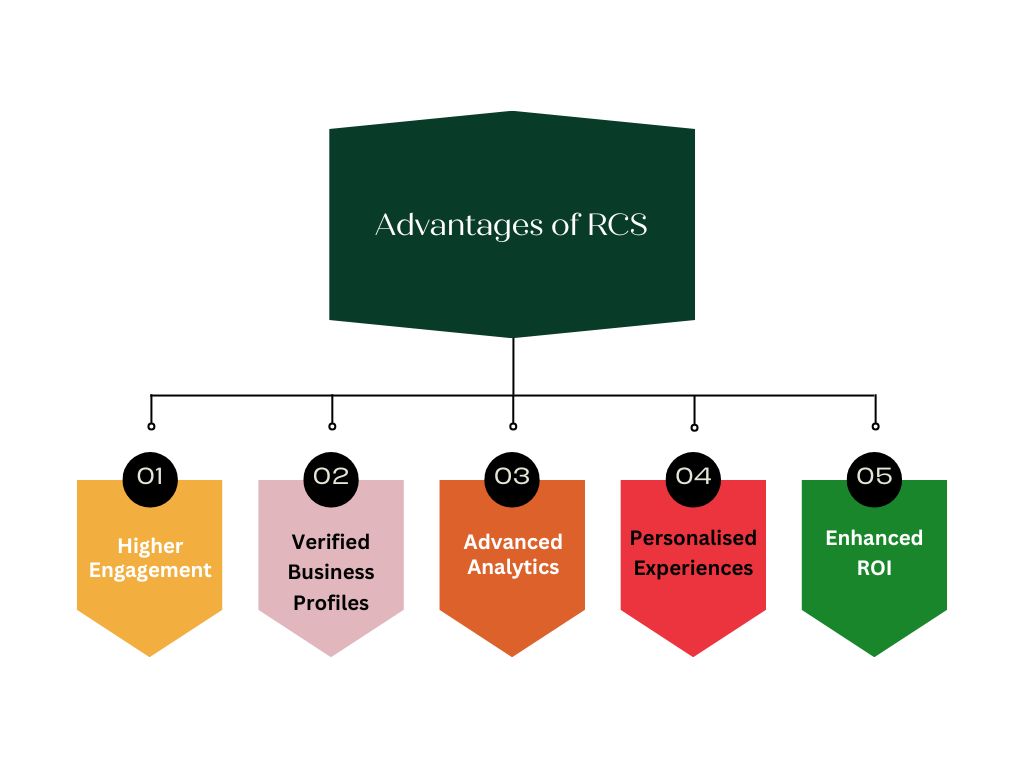
- Higher Engagement: Buttons, carousels, and quick replies in RCS encourage real-time customer interaction, improving conversions compared to static MMS or SMS campaigns.
- Verified Business Profiles: Verified sender identities ensure customers know the message is from a legitimate source, increasing confidence in engaging with the content.
- Advanced Analytics: RCS provides actionable insights on message performance, helping businesses optimise campaigns based on engagement and response metrics.
- Personalised Experiences: Businesses can deliver tailored messages using customer data, creating contextual conversations that improve satisfaction and retention.
- Enhanced ROI: RCS transforms static alerts into actionable campaigns, driving measurable results and increasing marketing and service efficiency compared to MMS.
Limitations of RCS
While powerful, RCS faces challenges that businesses should consider. Device compatibility, network reliance, and internet dependency can limit reach, though adoption continues to grow steadily.
- Device Support: Currently, RCS is primarily supported on Android devices, meaning Apple users cannot receive full interactive messages, limiting reach for mixed-device audiences.
- Carrier Dependence: RCS features like read receipts or rich media may differ depending on the carrier, affecting the consistency of message delivery and interaction.
- Internet Requirement: Unlike SMS or MMS, RCS requires an active internet connection, which could restrict usage in low-coverage areas or among users with limited mobile data.
- Gradual Adoption: Although more carriers and devices support RCS over time, adoption is still not universal, keeping fallback mechanisms like MMS essential for broader coverage.
Which One Should Your Business Choose?
Choosing between RCS and MMS depends on your business goals, audience needs, and engagement strategy. Understanding the strengths of each helps companies deliver messages effectively while maximising reach, interactivity, and customer satisfaction.
- Choose MMS: MMS is ideal when broad reach and device compatibility matter most. It delivers simple, visually appealing messages that work across all phones and carriers, ensuring that promotional flyers, greetings, or event invitations are seen by every customer without technical barriers.
- Choose RCS: RCS is best for businesses prioritising engagement, trust, and interactivity. It allows two-way conversations, branded profiles, interactive buttons, and rich media, creating immersive experiences that boost conversions, encourage customer responses, and support modern marketing and service workflows.
For optimal results, combine MMS and RCS in a hybrid strategy. Platforms like Emitrr automatically fallback to SMS or MMS when RCS is unsupported, ensuring every customer receives messages while maximising engagement and maintaining brand consistency across all devices.
How Emitrr Helps Businesses with MMS and RCS
Emitrr makes it easy for businesses to adopt RCS vs MMS vs SMS messaging through a unified, intelligent platform. It simplifies communication, ensures compliance, and maximises engagement while supporting automation, analytics, and secure workflows.
Unified Messaging Platform
Emitrr allows businesses to manage SMS, MMS, and RCS messages from a single dashboard. This centralised approach reduces operational complexity, ensures consistent messaging across campaigns, and provides a seamless experience for both marketing and transactional communications.
Smart Fallback System
Emitrr’s smart fallback feature automatically switches messages from RCS to MMS or SMS if a customer’s device does not support RCS. This ensures universal message delivery, eliminating manual intervention while maintaining engagement and campaign reliability.
Pre-built Industry Templates
Emitrr offers ready-made templates customised for industries like healthcare, retail, finance, and automotive. These templates are designed for quick deployment, compliant messaging, and maximising engagement, allowing teams to launch campaigns efficiently.
Advanced Analytics Dashboard
With RCS, businesses can access detailed analytics, including delivery rates, read receipts, click-throughs, and conversions. Emitrr’s dashboard allows real-time optimisation of campaigns, helping teams measure performance, improve ROI, and make data-driven decisions for every communication.
Automation Capabilities
Emitrr integrates with CRMs and business systems to automate messaging workflows. From appointment reminders templates to lead follow-ups, businesses can trigger personalised MMS or RCS messages automatically, saving time while maintaining engagement, efficiency, and secure patient communication.
Compliance and Security
Emitrr ensures all messaging is secure for healthcare communication. Verified RCS business profiles build customer trust, minimise spam risk, and maintain regulatory adherence, providing businesses with a safe, reliable, and professional messaging solution.
Frequently Asked Questions
The primary difference between RCS and MMS lies in interactivity and verification. RCS allows interactive buttons, read receipts, typing indicators, and verified business profiles, whereas MMS provides static multimedia content without engagement features or sender authentication.
RCS messaging is better for customer engagement because it supports interactive elements such as CTAs, quick replies, and carousels, while offering real-time analytics. MMS, in contrast, is limited to one-way, static communication, reducing engagement potential.
No, RCS cannot be sent to all devices. It currently works only on Android devices with carrier support. MMS, however, is universally supported across all mobile phones, making it more reliable for a broad audience reach.
Emitrr manages RCS and MMS messaging using a smart fallback system. If a recipient’s device doesn’t support RCS, the platform automatically sends the message via MMS or SMS, ensuring consistent delivery and engagement without manual intervention.
Businesses should use MMS for campaigns requiring universal reach, simple visuals, or broad notifications. RCS is ideal for interactive, branded messaging, customer engagement, and campaigns requiring buttons, CTAs, analytics, or richer conversational experiences.
Conclusion
The evolution from SMS vs MMS vs RCS highlights a significant transformation in business communication. MMS continues to serve as a reliable solution for wide reach and simple visual messaging, ensuring every customer receives key updates and promotions across all devices.
RCS, on the other hand, takes messaging to the next level with interactive elements, verified business profiles, rich media, and real-time analytics. It enables businesses to engage customers more effectively, build trust, and deliver personalised experiences that drive higher conversions and satisfaction.To stay ahead, businesses should adopt a hybrid strategy using a platform like Emitrr. Book a demo with Emitrr today to see how MMS and RCS can work together to enhance customer communication and maximise engagement.

 4.9 (400+
reviews)
4.9 (400+
reviews)