

Introduction
Increasing patient engagement is the cornerstone to building a credible practice and improving healthcare outcomes. It means opening doors to more word-of-mouth referrals, better patient retention rates, improved patient satisfaction, increased revenue, enhanced online reputation, and better health outcomes.
Interesting fact → A patient who is actively engaged with their provider, their health concerns, and their treatment plan will meet their healthcare needs 3X faster than a patient who is not engaged.
Whether it is prior to the visit, during the visit, or post-visit; you must know how to engage with your patients at every stage of the patient journey. Engaging effectively with your patients will help you improve the patient’s confidence in your practice, boost your online reputation, and facilitate patient-centered care.
But how to improve patient engagement in healthcare? What best practices should you implement to provide your patients with a positive experience? This article will cover the best patient engagement strategies for you to amp up your provider engagement game. Get ready to take some notes!
What is Patient Engagement?
Patient engagement refers to the process of actively involving patients in their healthcare journey. It goes beyond simply delivering medical care; it’s about empowering patients to take charge of their health by providing them with the tools, like where patients are given correct information, and communication as they need to make informed decisions. Engaged patients are more likely to adhere to treatment plans, ask questions about their care, and maintain healthier lifestyles, leading to better health outcomes overall.
Read more about Patient engagement in this detailed guide.
The Importance of Improving Patient Engagement in Healthcare
Understanding the significance of patient engagement is essential for healthcare providers aiming to enhance patient outcomes and operational efficiency. This section delves into the key benefits of improving patient engagement in healthcare, including better adherence to treatment plans, increased patient satisfaction and loyalty, and reduced operational costs for healthcare facilities.
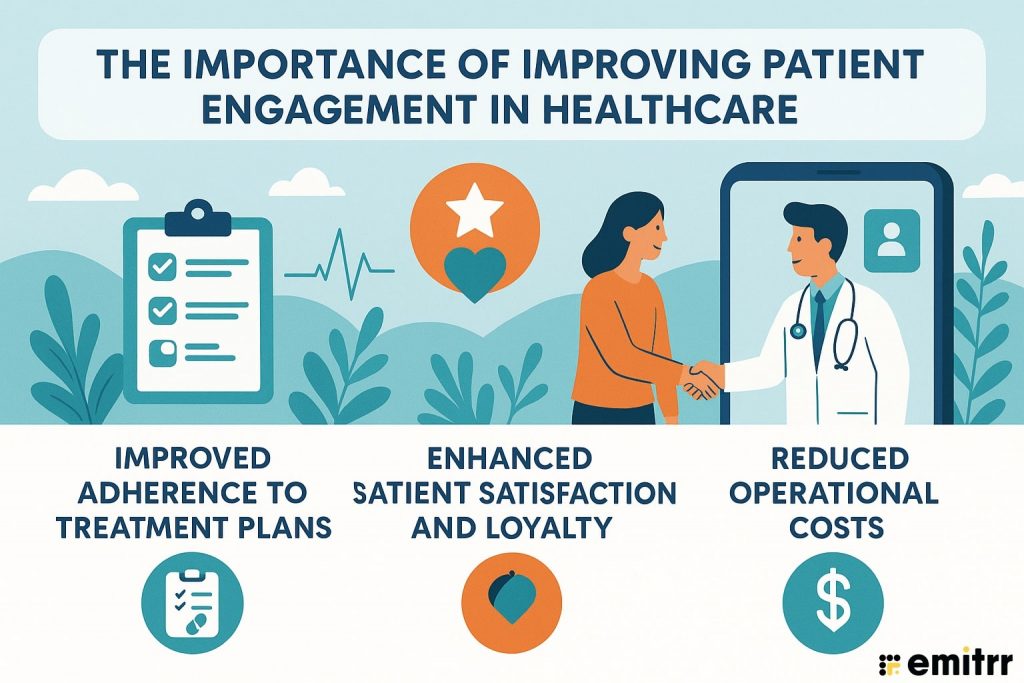
Improved Adherence to Treatment Plans
Engaged patients are more likely to follow through with their prescribed treatment plans, leading to better health outcomes. Patients who understand their care instructions and are regularly reminded of appointments are less likely to miss essential treatments.
Enhanced Patient Satisfaction and Loyalty
Patients’ overall satisfaction increases When they feel actively involved in their healthcare decisions. This improves the patient experience and fosters loyalty, ensuring they continue to choose your healthcare services in the future.
Support better patient engagement with ready-to-use HIPAA-compliant patient texting SMS templates. Download the templates now!
Reduced Operational Costs
A well-engaged patient base leads to fewer missed appointments and improved outcomes, reducing the strain on healthcare resources. Engaging patients helps avoid unnecessary follow-ups, reducing both time and financial costs for healthcare providers.
According to a study, healthcare systems that focus on improving patient engagement have seen a 30% reduction in missed appointments and a 20% increase in patient satisfaction rates.
Now that we understand its importance, let’s explore practical strategies for improving patient engagement.

How to Improve Patient Engagement in Healthcare?
Patient engagement is key to fostering long-term relationships, improving health outcomes, and enhancing patient satisfaction. Healthcare providers can create more personalized and interactive experiences that involve patients in their care journey by implementing specific strategies. Let’s explore seven patient engagement strategies that can help improve patient engagement.
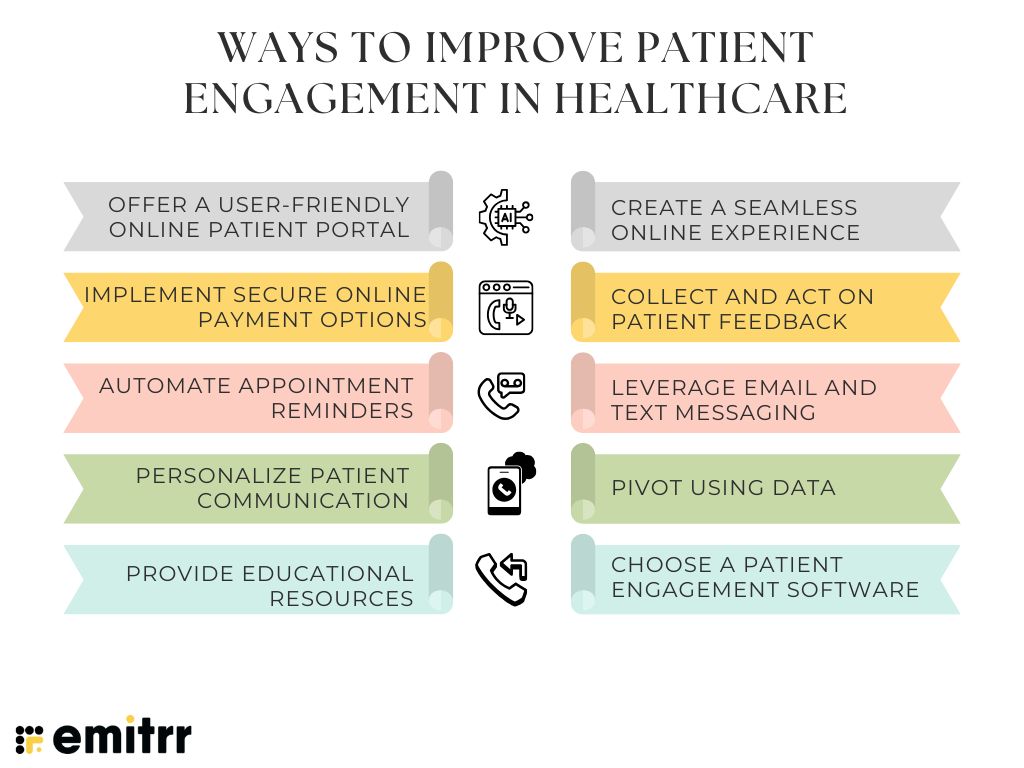
1. Offer a User-Friendly Online Patient Portal
A well-designed online portal can significantly enhance patient engagement by giving patients easy access to important services. With 81% of patients willing to use a secure portal for scheduling appointments, a user-friendly platform can streamline everything from viewing medical records to secure messaging with healthcare providers. Offering a seamless experience boosts overall satisfaction and keeps patients connected to their care.
2. Implement Secure Online Payment Options
Patients value convenience, especially when it comes to paying medical bills. By integrating this option into your platform, you not only provide ease of use but also build trust by offering secure, efficient ways for patients to manage their accounts. This integration demonstrates that your practice understands and addresses patient needs.
3. Automate Appointment Reminders
Missed appointments can cost healthcare providers significantly in both revenue and patient care quality. Automating reminders via text messages, email, or phone calls can drastically reduce no-show rates. Emitrr’s platform, for example, allows for seamless automation of these reminders, helping patients stay on track and ensuring consistent engagement with their healthcare needs. With automated SMS appointment reminders, you can reduce no-shows, decrease cancellations, and skim down long waiting lines as well. When cancellations do occur, waitlist management software can help practices identify patients who are ready to take an earlier appointment, making it easier to fill open slots and keep schedules running efficiently.
4. Personalize Patient Communication
When patient communication is tailored to individual needs, they feel more valued. In fact, 59% of millennials would switch doctors for better online access, highlighting the need for personalized digital interactions. Sending customized treatment plans or follow-up messages ensures that your patients are engaged and more likely to trust your care.
5. Provide Educational Resources
Education empowers patients to manage their health more effectively. When healthcare services provide digital educational materials—such as articles, videos, or interactive FAQs—patients can stay informed about their conditions and treatments. This proactive approach helps them feel more in control of their health, leading to better engagement and long-term outcomes.
6. Create a Seamless Online Experience
Offering a seamless online experience is one of the best patient engagement strategies. A poor online experience can damage patient-provider relationships, with 50% of patients stating that a bad experience impacts their loyalty. To prevent this, make sure your website, portal, and mobile platforms are optimized for easy navigation and access. Whether patients are using a desktop or mobile device, a smooth digital experience ensures they remain engaged with their healthcare services.
7. Collect and Act on Patient Feedback
Encouraging patients to provide feedback shows that you value their opinions. Platforms like Emitrr allow healthcare providers to easily collect and respond to reviews and suggestions. By addressing concerns quickly, you demonstrate your commitment to continuous improvement, helping to build trust and maintain strong doctor-patient relationships.
8. Leverage Email and Text Messaging
Email and text messaging is one of the most important patient engagement strategies that you must not overlook. To get the best results, you need to be connected with patients via email and text messaging. Emails are a great way to know when the next appointment is due, view the reports, and establish better bonds with patients. Text messaging can be highly useful to engage with customers. Healthcare clinics can interact with patients irrespective of their location through phone, chat, or text.
9. Pivot Using Data
It is a data-driven world, and patient data drives business decisions. With artificial intelligence for patient engagement, you can understand patterns of patient communication, drivers, motivations, and more. You can leverage these insights and preferences to meet patient demands. Data needs to be a foundational factor in your patient engagement strategy to decrease gaps in care. You can provide consistent engagement only if you know where to improve. A structured approach to care gap management can help healthcare organizations identify patients who are overdue for recommended care and develop targeted follow-up strategies to address those gaps. For example, healthcare practitioners can:
- Understand what concerns patients face at the clinic- hygiene, staff attitude, etc.
- Find out what channels patients prefer for communication- text, social media, or call
- Work on improving patient outcomes through follow-up phone calls
10. Choose a Patient Engagement Software
A patient engagement software brings the technology to make smart, swift, and better decisions. You can increase patient engagement levels, increase productivity levels, and provide assistance 24/7.
Emitrr offers a one-stop solution for all patient communication. Healthcare providers can interact with patients via chat, phone, and text. Patient engagement can be automated through recalls, reminders, asking for reviews, etc. Emitrr’s smartphone system can be integrated with your existing CRM to improve outcomes for the provider.
Emitrr can help a healthcare provider improve patient retention. With Emitrr, you can-
- Ensure no phone calls are missed
- Automate patient engagement
- Remind patient or patients about their clinic visits
- Manage appointment scheduling
- Reduce average handling time
- Increase conversions by maintaining contact with patients
- Reduce no-shows
- Increase care adherence
- Save resources and time
Upgrade your phone presence in minutes—download our healthcare voicemail greeting scripts (PDF)
Best Practices to Improve Patient Engagement
In addition to strategies, healthcare providers should adopt certain best practices to sustain and enhance patient engagement over time. These practices ensure that patients remain consistently involved in their care, leading to better outcomes and higher satisfaction.
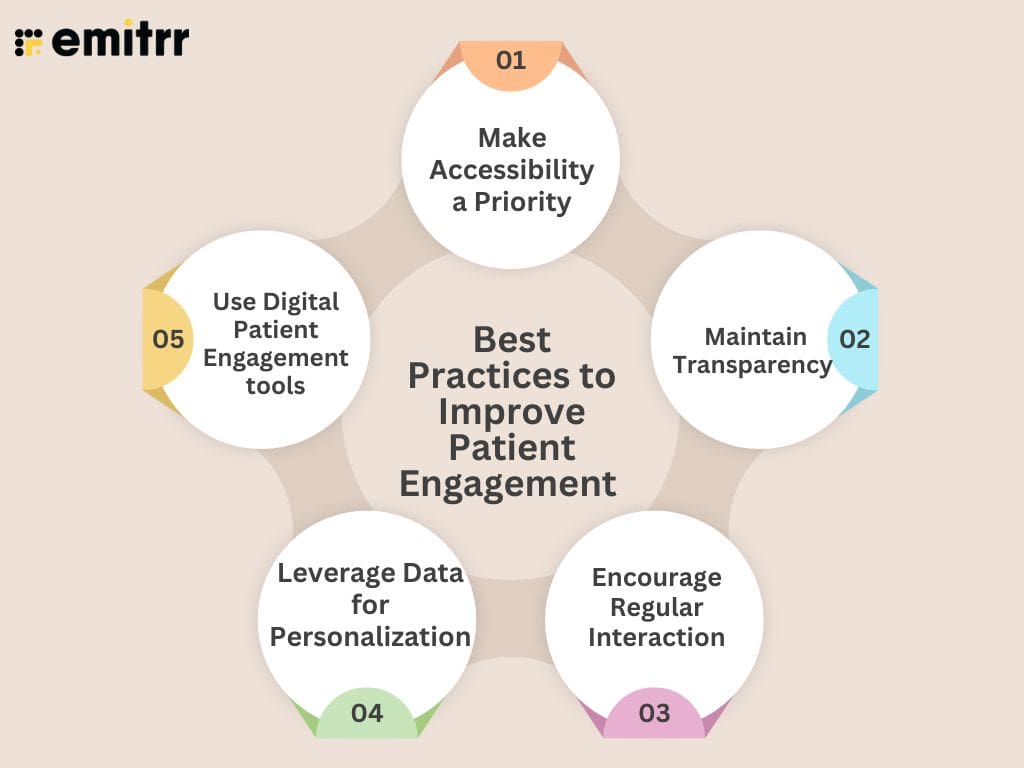
1. Make Accessibility a Priority
Patients of all technological skill levels should be able to access digital patient engagement tools without frustration. Offering intuitive interfaces and support services—such as live chat or customer service lines—ensures that patients feel comfortable using your platform, which can significantly increase digital patient engagement.
2. Maintain Transparency in Communication
Clear, open communication about treatment plans, costs, and health outcomes is essential. Patients appreciate transparency, especially when dealing with sensitive issues like finances or their health. This openness builds trust, which is foundational for long-term engagement.
3. Encourage Regular Interaction
Engaging patients between appointments strengthens the patient-provider relationship. Sending health tips, wellness reminders, or relevant updates ensures ongoing interaction, helping patients feel that their care is continuous and not just limited to office visits, and helps in increasing patient engagement.
4. Leverage Data for Personalization
Personalized care leads to better engagement. Using patient data to send customized emails, treatment plans, and reminders shows patients that their care is individualized. Data-driven communication can also lead to improved health outcomes, as patients are more likely to adhere to personalized advice.
5. Use Digital Patient Engagement tools
Technology such as digital patient engagement tools should simplify the healthcare journey, not complicate it. From appointment scheduling to billing, automated processes save time and make the overall experience smoother for patients. Simplified systems lead to higher patient satisfaction and greater long-term engagement.
Now that we’ve explored these best practices, let’s summarize how you can enhance patient engagement and strengthen relationships.
How to Measure Patient Engagement?
If you are a healthcare provider wanting to understand and track patient engagement in greater depth, then you must be wondering how to measure patient engagement. Below are the top 11 KPIs that you can track:
#1: Number of new appointments
The number of new appointments is an important KPI that you must use to track patient engagement. You need to measure how many discussions became appointments and loyal patients. This will help analyze if the services are being delivered right. Patient engagement is the core aspect of the appointment funnel and hence you can gain a lot of insights. You can also finetune marketing activities towards appointments to encourage more booking and scheduling.
#2: Patient wait time
Patient wait time is the average amount of time a patient needs to wait before meeting a physician. Patient wait times must be short so that patients feel that their time is being valued. This is essential as it improves patient satisfaction, makes work easier for staff to handle patients, and ultimately builds trust. You can take the help of patient scheduling tools and solutions to reduce patient wait times, thereby increasing your retention rates.
#3: Communication between staff, patient, and physician
Another KPI to track patient engagement is how frequent the communication is with all parties. The patient, staff, and physician need to be on the same terms with respect to the treatment and engagement. This communication must be omnichannel and empower all the parties involved. Improved communication is a great way to increase the quality of care. Patient communication is an important aspect of improving patient loyalty as well. So, effective communication is key to better engagement with the patient.
#4: Patient Satisfaction rates
Patient satisfaction rates measure how happy patients are with the quality of care, inside and outside the physician’s office. It permeates all the aspects of their association with the clinic. Patients usually respond in their feedback forms, surveys, or online pages about how they perceive their experience, and it is a great method to measure patient engagement.
#5: Social media mentions
Social media management of health care practices has become imperative. The best judges of patient engagement are patients themselves. Patients usually voice out their bad experiences on social media. This is why it is necessary to keep track of mentions on social media, address online reviews, and manage a reputation online.
#6: Patient lifetime value
Patient lifetime value is a rough estimate of all the income you could accrue for your clinic if the patient is retained with you. The higher the lifetime value, the lower patient acquisition costs will be. LTV or lifetime value is a key metric to understanding any form of engagement and tracking patient engagement as well. If your patients are engaged and able to schedule appointments on time, they will stick with your health care clinic.
#7: Patient Churn Rate
Patient churn rate is a KPI that must be measured by any healthcare organization. Churn rate is the percentage of patients who choose not to be treated by the provider even though they are on a therapy path. Churn is inevitable. However, a high churn rate will only bring your revenue down. There is also a patient churn tolerance that healthcare organizations can handle. The patient churn rate must be curbed to improve revenue opportunities. If churn rates are high, there is a huge revenue loss. To lower high churn rates, health care organizations need to put special focus on patient satisfaction and patient experience.
#8: Number of patient touchpoints or interactions
Another KPI that tracks and measures patient-provider interaction is the number of interactions and touchpoints. Touchpoints and interactions are the core pillars of the patient experience. Clinics and healthcare institutions can optimize workflow by using digital portals. It is important to have an optimum number of touchpoints and ensure that they offer the right experience. Every patient prefers to be contacted in a number of interactions. This needs to be pre-decided so as to generate revenue and quality of experience. If you reach the patient at many touchpoints, they might feel like it is a big hassle.
#9: Measuring patient engagement portals
Healthcare organizations that take patient engagement seriously are connected with patient engagement portals. Measuring the number of active and engaged users on a platform will help know how the tool is working as well as patient engagement levels. It is an important KPI to track patient engagement. Higher engagement means improved patient satisfaction and care delivery.
With AI-powered engagement, it is simpler to provide patient satisfaction and ensure all queries are answered on time. Chatbots will help boost engagement rates and make the entire communication hassle-free.
#10: Average call handle time
To measure and track patient engagement, another KPI is the average handling time of calls. Average call handle time is the time the staff or front-desk representative spends with a customer. This call can be for anything- scheduling an appointment, rescheduling an appointment, clarity on medicines, concern about health, or follow-up care practices. The chat and talk time need to be effective and efficient. The average handle time needs to be optimized to provide insight into patient behavior.
Not all patients may appreciate long and frequent calls from the healthcare provider. Making use of conversational technologies such as chatbots will cut down call handling times and provide the answers patients need.
#11. Maximum Patient Recall Time
Patient recall time is a metric that takes into account the length of the patient’s stay at the health care center. This KPI helps plan patient needs, budgets, and other expenses. Maximum patient recall time means the patient is satisfied with the service and chooses to return to the facility if need be.
Benefits of Tracking Patient Engagement KPIs
It is important to track patient engagement KPIs since it brings immense benefits to the organization. Some common benefits include-
- Help offer better care and respond to patients better
- Make decisions based on data intelligence
- Improve accountability and transparency
- Enhance patient satisfaction and effectiveness
- Identify areas of improvement
- Cut unnecessary expenses and increase revenue
Impact of Increased Patient Engagement
The impact of increased patient engagement can be multiple-fold and visible in various ways. It could either show in the number of patient reviews you receive or the number of patients you book in a day. Let us understand the impact in detail:
More Patient reviews
Did you know that nearly 84% of patients check the reviews left by your past patients before they make a decision to visit you?
That’s the kind of impact patient reviews can have. When your patients are engaged and satisfied with the treatment they received, they wouldn’t mind leaving a review. You can send a message saying:
“Hey, Emily! Thanks for choosing us. Would you please take out two minutes to leave us a review? Please click on the link below.”
They can simply leave a star rating and a small review describing their overall experience. Each review will have a significant impact on your practice’s online reputation. While positive reviews will help you attract more patients, negative reviews can harm the online reputation of your practice.
Word-of-mouth referrals
When patients have a satisfactory experience wherein their healthcare needs are met, their concerns resolved, and their health outcomes improved; they’d trust you with their healthcare needs in the future.
Not only that, but they’d recommend you to their friends and family and put in a good word about the kind of care you provide. Enhanced patient engagement leads to patient loyalty, which further leads to multiplied word-of-mouth referrals, more patients, and higher revenue.
You can trigger such referrals by providing exceptional care, networking with other providers in case of providing referrals for doctors, and creating incentivized campaigns. You can give gift cards to your patients if they refer you to their family members or friends, and even offer family discounts.
Recall and reactivation
Patient recall and reactivation is an important part of engaging patients as it helps promote ongoing preventive care, improves communication and relationship between doctors and patients, and enhances the health outcomes of the patients.
When you offer exceptional care to your patients and engage them effectively, you leave a lasting impression on their minds. So after six months or a year after providing treatment, if you send a message for a routine checkup, they’d definitely come back to you.
An effort made towards reactivating old patients leads to revenue growth, increases patient retention rates, reduces patient acquisition costs, keeps schedules full, improves patient loyalty, and increases patient volume.
Apart from the above improved patient engagement has a direct impact on your revenues, patient satisfaction, and retention, and above all drastically improves patient health outcomes.
Need the right words for your clinic’s voicemail? Grab our free PDF of compliant, patient-first scripts.
How to Increase Patient Engagement Using Emitrr?
In a digital-first healthcare landscape, providers need to leverage the right tools to stay connected with patients and increase patient engagement. Emitrr stands out as a premier solution to meet these needs. Here’s how to increase patient engagement using Emitrr:
1. Streamlined Communication
- Emitrr integrates patient portals, telemedicine platforms, and text marketing into one cohesive system.
- Patients enjoy convenient, consistent communication with their providers, whether they’re booking appointments or accessing medical records. Many healthcare organizations are also combining patient portals like MyChart with SMS communication to meet patients where they are most responsive, creating a more effective engagement strategy across the entire care journey.
- This streamlined process fosters ongoing interaction, increasing patient satisfaction and retention.
2. AI Integration
- Emitrr offers AI tools like AI chatbot, Website chatbot, IVR, and more that help in answering frequently asked questions 24/7. It even helps in booking appointments seamlessly, increasing patient engagement.
- The AI text feature offered by this patient engagement solution helps your front desk in drafting quick, empathetic responses to patients, making them feel comfortable.
Take a look at this video to see what more Emitrr AI can do:
3. Automated Reminders and Notifications
- Emitrr helps reduce no-shows, a problem that costs the healthcare industry $150 billion annually.
- Automated reminders—via text, email, or phone—ensure patients don’t miss appointments, enhancing both operational efficiency and care continuity.
4. Secure and Convenient Online Payments
- We have stated earlier that 78% of patients prefer using secure online payment systems, and Emitrr makes this process simple and safe.
- Patients trust that their transactions are handled securely, reducing billing issues and increasing patient engagement.
5. Personalized Patient Interactions
- Emitrr customizes communication based on individual patient data, including reminders, treatment plans, and follow-ups.
- This personalized approach strengthens the provider-patient relationship, leading to better engagement and patient loyalty.
6. Efficient Feedback Collection
- Emitrr makes it easy to gather and analyze patient feedback, showing patients that their input is valued.
- Quick response to patient reviews helps improve service quality and patient satisfaction.
7. Improved Patient Education
- By delivering educational resources through digital channels, Emitrr ensures patients are informed about their health conditions and treatments.
- Educated patients are more engaged, feel empowered in their healthcare journey, and are less likely to experience dissatisfaction.
8. Comprehensive Digital Integration
- Emitrr offers a unified experience by integrating appointment scheduling, communication, and feedback into one platform.
- Patients benefit from a smooth online experience, which is vital as 39% of patients state that a great digital experience strengthens their relationship with healthcare providers.
Patient Engagement Case Study
Spa Creek Health is a leading provider of dentistry and podiatry care for assisted living and memory care communities in Ohio, Pennsylvania, and Virginia.
Spa Creek Health experienced low website conversion rates, as many visitors remained unengaged and failed to take action. However, after implementing Emitrr’s chat widget, they were able to directly engage with visitors and increase appointment bookings. The chat widget prompted visitors to book appointments, resulting in record-breaking 3x website conversions.
Read their full story to see how Emitrr- one of the best patient engagement solutions helped this healthcare provider.
Frequently Asked Questions
Digital tools such as patient portals, appointment reminders, and telehealth platforms make it easier for patients to stay connected with their healthcare providers. These tools provide real-time updates, access to personal health information, and timely reminders, which improve patient participation in their healthcare journey.
Regular patient feedback is essential for improving the quality of care and patient satisfaction. Reviews provide insights that help healthcare providers make necessary adjustments, further enhancing patient engagement. Emitrr’s platform can help streamline the feedback collection process, making it easier to stay informed and connected with patient needs.
Absolutely. Personalized communication fosters trust, improves adherence to treatment plans, and ensures patients feel understood and valued. Personalized emails, reminders, and treatment follow-ups are all effective ways to boost engagement.
Collecting and acting on patient feedback demonstrates that providers value their patients’ opinions. Tools like Emitrr simplify this process, allowing providers to quickly gather reviews and make necessary improvements, which strengthens patient loyalty and engagement.
Low visit cancellation rates, unpaid balance, trust of patients for treatment, high portal enrollment, low complaint rate, and high website traffic are some key indicators of good patient engagement.
A patient engagement plan includes a strategy or plan of action to further improve the rate of patient engagement with your healthcare facility or clinic.
One of the easiest and most efficient ways to increase patient engagement is by implementing patient engagement software like Emitrr. Emitrr comes with easy appointment scheduling, rescheduling, and canceling features, appointment reminders, a two-way texting feature, etc., that can help you improve patient engagement easily.
With features like two-way texting, VoIP, appointment reminders and recalls, review, and reputation management, Emitrr is one of the best patient engagement tools.
Patient engagement can easily be done by using software. Patient engagement software can cost you anywhere between $100 – $500 a month or more depending on the features and software provider you choose.
Conclusion
The patient engagement strategies and best practices we’ve discussed can significantly impact healthcare facilities, helping them increase patient satisfaction, increase retention, and streamline operations. Offering user-friendly patient portals, automating reminders, and personalizing communication are just a few ways healthcare providers can ensure patients stay engaged, reducing missed appointments and improving overall care experiences.
Emitrr is one of the best patient engagement tools designed to help you implement these strategies effortlessly. With automated tools for reminders, secure payment options, and personalized communication, our platform enables healthcare providers to deliver top-tier patient engagement.
Ready to transform your patient engagement strategy? Contact Emitrr today to learn more!


 4.9 (400+
reviews)
4.9 (400+
reviews)