
Introduction: The Relentless Growth of the Patient Voice in Healthcare
“In a world of patient choice and digital transparency, the absence of your patient voice can be louder — and more damaging — than the criticism. Are you truly listening?”
Healthcare is moving from a provider-focused system to a patient-focused experience. Patients today are more informed, more empowered, and they demand the same continuous, tailored care they get in other industries. Patient satisfaction is now an essential concept in healthcare, going well beyond loyalty and referrals, and even as a basis for regulatory reimbursement (i.e. HCAHPS). But listening to every patient across all touchpoints — from scheduling appointments to post-procedure follow-ups —can be overwhelming, and practically impossible without the right tools.
This is why patient satisfaction survey software is so important. This blog will prepare you for the survey tool landscape in 2025, the organizations making moves, and how you can find the right survey tool for your practice. You will also learn how platforms like Emitrr are changing patient feedback — by combining smart AI with automation, we can take raw feedback and turn it into real, immediate action. You’ll also learn how platforms like Emitrr are reinventing patient feedback — leveraging intelligent AI and automation to transform raw data into actionable insight in real-time. Because in today’s health care, listening isn’t simply useful — it’s strategic.
Patient Satisfaction Survey Software Overview
Before we start discussing the major players, let’s get a clarification of what this kind of software does :
What is Patient Satisfaction Survey Software?
Patient Satisfaction Survey Software (also known as Patient Experience Management Software) is a software product built to streamline the end-to-end experience of collecting, interpreting, and actioning patient feedback. It goes beyond the traditional paper and infrequent phone call approach, delivering a structured, efficient, and scalable way to hear from your patients.
Purpose:
At its very heart, this software wants to do three things: learn what your patients are feeling and thinking about the care that they received from you, identify the touchpoints of your service that need to be bettered, and ultimately upgrade the quality of care you provide. It’s not about getting there well, but about getting there with real-time insights that allow you to make better decisions.
More Than Just Surveys:
Today’s patient satisfaction survey software platforms have come a long way since the days of simply mailing your patient’s questionnaires. Modern-day leading choice is likely to have a more comprehensive set of tools and capabilities such as:
- Communication: Automated follow-ups or direct messaging.
- Review management: Assisting you in getting customer feedback and managing your online reputation.
- Advanced analytics: The conversion of raw data into clear, actionable insights to show you what to do next.
These embedded capabilities are essential in delivering truly patient-centered care and in helping you to drive your pursuit of excellence.
Simplify feedback collection with patient satisfaction survey templates built for healthcare practices
Advantages of Patient Satisfaction Survey Software
Investing in the right patient survey software can provide your healthcare organization with many benefits, turning challenges into verifiable opportunities to advance and excel.
- Immediate Feedback: Enough of the waits — this software collects patient feedback directly following a visit. It allows you to address issues at an early stage before they get negative reviews or patients leave.
- Boost Patient Loyalty: When patients notice that your practice values their feedback and acts upon it, it fosters trust and reinforces long-term relationships that keep them coming back.
- Improved Health Outcomes: Satisfied patients have a better likelihood of adhering to care plans and trusting in their providers. You can also use patient survey software to spot communication failures that impact treatment compliance in the first place.
- Streamlined Communication: By allowing for automated check-in messages, automated reminders for follow-up appointments, and personalized correspondence, patient survey software allows you to keep patients engaged without more work for your staff, ensuring a consistent patient experience.
- Intelligent Decision-Making: Advanced analytics convert raw or direct patient perceptions into actionable feedback that can be used by administrators and frontline employees to identify improvement opportunities or prioritize resource alignment.
- Improved Online Reputation Management: Satisfied patients will be prompted to provide satisfied reviews, and the tools you have in place will support more private assistance for handling dissatisfied feedback. Together these things improve your visibility to new potential patients.
- Regulatory & Financial Advantages: The patient experience survey software helps hospitals fulfill the requirements of programs such as HCAHPS as well as value-based care, which enhances overall patient satisfaction score and reimbursement results.
- Operational Efficiency: Automating surveys and analysis cuts down on manual work, enabling staff to concentrate on patient care rather than administrative duties.
Important Features to Consider When Assessing Patient Satisfaction Survey Software
When shortlisting patient satisfaction survey software, prioritizing features that add value and offer ease of operation helps. This includes:
- Multi-Channel Survey Distribution: The software should support SMS, email, app engagement, kiosk, and QR code delivery that reaches the patients’ preferred channel, ultimately increasing the response rate.
- Customizable Templates: You will want to find software that offers a library of forms that are either industry-ready (HCAHPS or CAHPS) that you can co-brand or forms that you can customize with your questions, while also providing logic options – this will save you time while keeping the surveys relevant.
- Advanced Reporting & Analytics: Opt for the services of real-time dashboards, sentiment analysis, and trend tracking, and be able to segment the report by doctor, department, or patient group, which helps convert raw data into actionable insights.
- Automated Feedback Workflow: Select technology that auto-triggers follow-ups like thank-you or review requests on high ratings and alerts on low feedback, which ensures quick responsiveness.
- HIPAA Compliance & Security: You must apply any industry HIPAA compliance and privacy rules to the platform you are using or considering using for gauging satisfaction or any other process. The platform must have a level of data encryption and secure protocols to protect your patient information and gain their trust.
- System Integration: The software should be able to integrate with your EHR, EMR, CRM, or PM systems without any hassles. Being able to integrate saves time with manual transactions, can keep those transactions in some alignment or automation, and allow for follow-up surveys to be sent to clients who have recently completed an appointment or discharge anytime in the past. It can also send out your fit-for-purpose feedback requests in a timelier way.
- Reputation Management Tools: Technology that helps assemble reviews, monitor online ratings, and respond directly aids visibility and attracts new patients.
- Two-Way Communication: Pick technology that includes real-time SMS and web chat for clarification to boost responsiveness and patient satisfaction.
- Customer Support & Onboarding: Customer support availability, onboarding, and training resources are significant indicators for your organization to implement, and consistently use the tool and achieve long-term sustainability.
Selecting the Best Patient Satisfaction Survey Software: Key Considerations
Choosing the optimal patient satisfaction survey software isn’t a decision to be taken lightly. Here is a procedure to find the best fit in a stepwise way:
- Define clear goals: Decide what you want to do — raise NPS, cut wait times, get more online reviews, and increase retention. Determine KPIs and measure which software will serve your actual objectives.
- Define your pain points & workflows: Review your current patient feedback processes and ask yourself where the challenges are, and how much time is being wasted. Make sure the new tool can get into your flow and actually solve real workflow problems.
- Define your must-have features: Write down features you need to meet the goals and breakthroughs listed above, putting the most important features (HIPAA compliance, integrations, multi-channel options) vs. the nice-to-have features, which will help you make the right decision based on the size and needs of your clinic.
- Verify integration compatibility: Verify the software integrates with your EHR/EMR, CRM, and PM solutions. Inquire as to the accessibility of APIs for future customization and flexibility.
- Plan for the future: Choose a solution that has a good track record in assisting companies with business expansion, patient volume, and features and functionality that can be added as you grow.
- Pricing: Avoid just looking at the base fee, please compare pricing models (per user, per location, or survey volume), and ask how much in fees could be hidden–register, support, integration, etc., so you never assume in tables, with whichever vendor you evaluate.
- Evaluate credibility of vendor: Search online for reviews on places such as G2 or Capterra, look at case studies and awards, and check responsiveness for customer support and an available account manager.
- Try before you buy (free trials or demos): Experiment with demos and free trials. Ask for demos and include members of your team from different functions to test on ease of use and workflow.
- Check for data protection & compliance: Confirm HIPAA Compliance, Strong Encryption, Secure Servers, and Clearly Defined Privacy Protocols to safeguard your patient data.
Top 10 Patient Satisfaction Survey Software in 2025 – A Quick Comparison
To help you decide on a saturated market, we have selected 10 of the best patient satisfaction survey software solutions in 2025 to make your search easy. Every tool has its uses — from the enterprise hospital to the small clinic. Keep in mind that the “best” tool is the one that most effectively meets your individual needs.
The Top 10 Patient Satisfaction Survey Software are:
- Emitrr
- Press Ganey
- Solutionreach
- Weave
- SurveySparrow
- Artera (formerly WELL Health)
- Zonka Feedback
- Qualaroo
- Birdeye
- Podium
| Sr. No. | Software | Best For | Key Features | Pricing | G2 Rating |
| 1. | Emitrr | Automated Feedback Collection & All-in-One Communication | SMS/Email Surveys, AI-Powered Analytics, Reputation Management, 2-Way Chat, Appointment Reminders, Mass Messaging, EMR Integration | Custom Pricing | 4.8/5 |
| 2. | Press Ganey | Comprehensive Patient Insights & Benchmarking for Hospitals | Industry Benchmarking, Detailed Reports, Regulatory Compliance, Consulting Support | Custom Pricing | 4.7/5 |
| 3. | Solutionreach | Patient Recalls & Communication in General Practice | Reminders, Appointment Promotion, Basic Surveys, Online Scheduling, Communication Templates | Custom Pricing | 4.4/5 |
| 4. | Weave | Patient Communication & Engagement for Small/Mid-sized Practices | Two-Way Texting, Appointment Reminders, Basic Surveys, VoIP, Integrated Payments | Custom Pricing | 4.5/5 |
| 5. | SurveySparrow | Conversational & Engaging Surveys | Chat-like Interface, NPS Surveys, Offline Surveys, Conversational Layouts, Simple Reporting | Starts at $19/mo | 4.4/5 |
| 6. | Artera (formerly WELL Health) | Integrated Patient Messaging & EMR Integration | EMR Integration, Automated Outreach, Targeted Communications, Secure Chat | Custom Pricing | 4.5/5 |
| 7. | Zonka Feedback | Multi-channel Feedback Collection across Industries | Multi-channel Surveys, Real-Time Alerts, Analytics, Closed-Loop Feedback, Templates | Starts at $59/mo | 4.6/5 |
| 8. | Qualaroo | In-App/Website Real-Time Feedback Collection | In-app Surveys, Sentiment Analysis, Logic Branching, NPS, CRM Integrations | Starts at $80/mo | 4.5/5 |
| 9. | Birdeye | Online Reputation Management & Review Generation | Review Requests, Monitoring, Reputation Dashboard, NPS Tracking, Survey Builder | Custom Pricing | 4.4/5 |
| 10. | Podium | Local Clinic Messaging & Reputation Management | 2-Way Texting, Online Reviews, Text Payments, Web Chat, Survey Links | Custom Pricing | 4.3/5 |
VII. Detailed Breakdown of Each Software
Let’s take a closer look at what each of these top 10 patient experience survey software offers:
1. Emitrr
Overview:
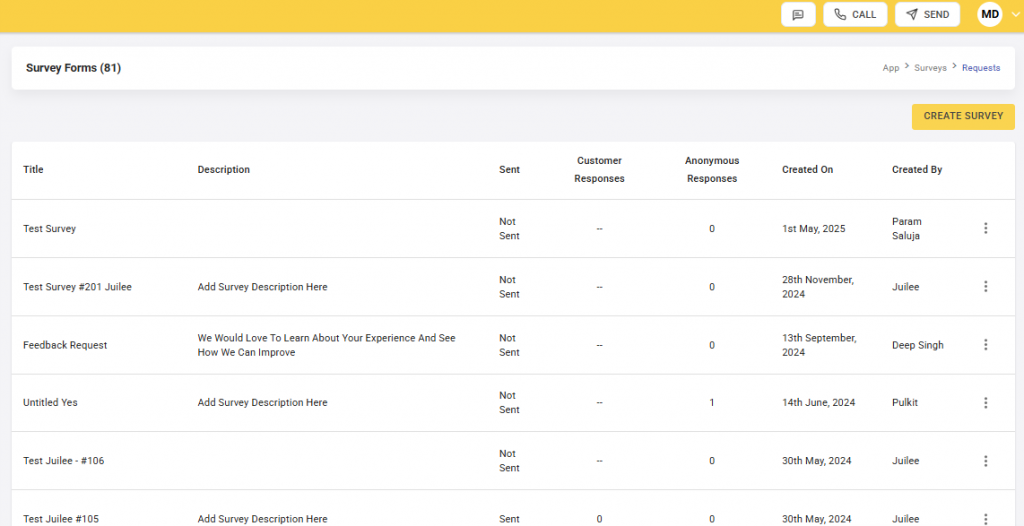
Built for healthcare Emitrr is a full-featured, next-generation communication and patient feedback software that is designed for hospitality and healthcare units. The goal with Emitrr is three-fold: First, it is all about automating communication so you can optimize patient engagement, while easily & effectively collecting actionable, authentic, and timely feedback to improve patient satisfaction. Second, it utilizes AI capabilities to streamline and integrate workflows to provide real-time feedback & insight, and a proactive approach to patient care.
Features:
- AI-based sentiment analysis of patient feedback to understand emotions.
- Real-time dashboards on live calls & feedback data.
- Two-way SMS, calls, and automation.
- Two-way integration with Customer Relationship Management (CRM) & Electronic Health Record (EHR) systems.
- Automated reminders via missed-call text automation.
- Automated SMS/email-based surveys.
- Live alerts to the back office for negative feedback.
- A reputation management solution that includes review collection & monitoring.
- Appointment reminders.
- Unified messaging aspects of mass messages.
- Ready-to-send patient satisfaction survey SMS templates.
Pros:
- Great customer support and response time.
- Simple and speedy onboarding process.
- Highly customized for diverse needs.
- Excellent survey response rates because Emitrr has an SMS-first approach with AI nudges.
- A full range of communications all within one software platform.
- Strong analytics to actionable insights.
- Deep focus on healthcare space.
- Strong HIPAA compliance measures.
Cons:
- Does not have some of the advanced enterprise-level features (yet).
- Focused primarily on English-speaking markets at this time.
- Quote-based pricing may not be appealing to audiences who like quick and transparent pricing. The model involves a consultation with Emitrr before they quote you.
Emitrr Pricing:
- Standard Plan($20/user/month): AI call management, Multi-channel support (voice, SMS), Call analytics dashboards, AI-powered smart auto-reply, CRM integrations. Great for startups and small and midsize businesses which need basic call center native plugin features.
- Professional Plan ($35/user/month): Includes all the features for Free and adds real-time dashboards, sentiment analysis, automated reporting, AI-driven predictive analytics, and advanced CRM & app integrations. Great for growing businesses who want more insight and automation for better customer experience and operational efficiency.
Ratings:
G2 Rating: 4.8/5
Support Channels:
- Phone
- Text (SMS)
- Live chat
- Rich knowledge base
- Custom onboarding and continued assistance for health organizations.
2. Press Ganey
Overview
For decades, the name Press Ganey has been associated with the quantifying of the patient experience. They offer a comprehensive set of tools around benchmarking and richer insights specifically applied to hospitals and health systems. They are all about driving better outcomes for patients and employee engagement for large organizations.
Features:
- Standardized patient satisfaction surveys (HCAHPS/CAHPS).
- Benchmark data for national comparisons.
- Analytics and reports.
- Consulting.
- Employee engagement surveys
- Regulatory compliance support.
Pros:
- Expertise in healthcare and longevity in the industry.
- Clear industry benchmarking.
- Robust reporting for large organizations.
- Ability to assist with regulatory compliance.
Cons:
- Can be quite expensive, complicating the ability of smaller practices to use it.
- Difficult to implement and difficult to manage for small practices.
- Not as much real-time immediate action on the ground compared to some agile solutions.
Pricing:
Custom, typically for large enterprises and larger business clients.
Ratings:
G2 Rating: 4.7/5
Support Channels:
- Enterprise-level support.
- Consulting.
3. Solutionreach
Overview:
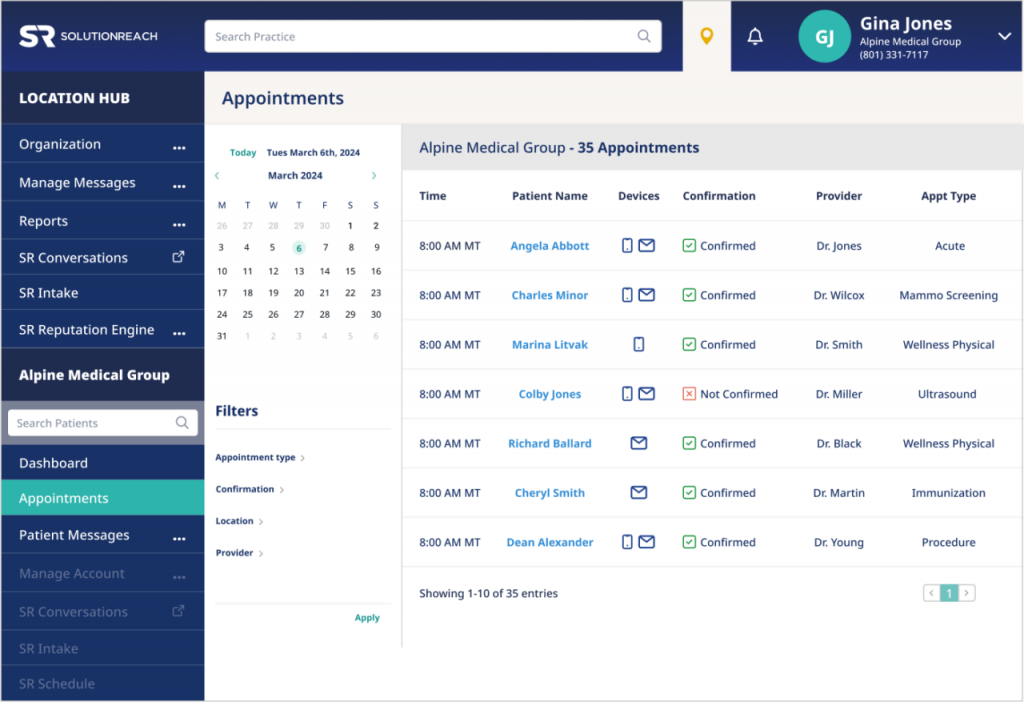
Solutionreach is a patient engagement tool that provides automated patient recalls and reminders and basic survey functionality. Solutionreach is a patient engagement tool that was created to help practices communicate with patients while keeping schedules full and improving patient retention.
Features:
- Automated appointment reminders
- User-friendly interface for promoting appointments
- Recalls of lapsed appointments
- Patient communications (two-way text, email)
- Ability to create basic patient satisfaction surveys
- Ability to create templates for surveys
- Integration with online scheduling
Pros:
- Great at automated reminders and recalls which is a core need for many practices
- Creates general patient engagement
- Easy to use at a basic level
Cons:
- Limited capabilities at times when it comes to patient satisfaction surveys vs purpose-built patient survey software
- Analytics may not be as robust
- Less mature in AI & multi-channel communications besides simple reminders
Pricing:
Custom pricing.
Ratings:
G2 Rating: 4.4/5
Support Channels:
- Basic customer support.
- Onboarding assistance.
4. Weave
Overview:
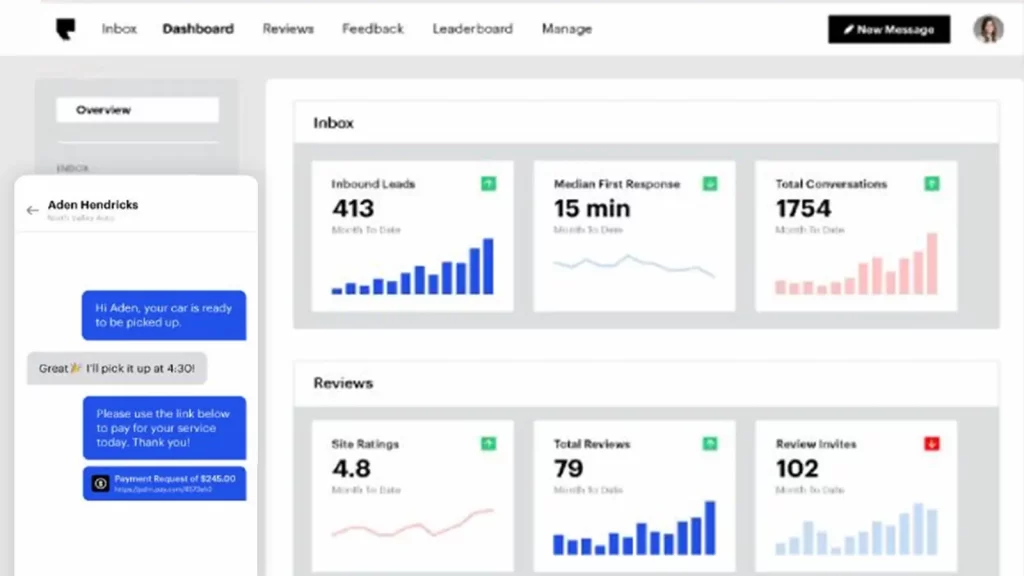
Weave is a patient communication software designed primarily for small to mid-sized practices, such as dental and optometry. A platform that was built to increase front office efficiency, it encompasses 2-way text, VoIP phones, and integrated payments, providing a wide-ranging communication solution.
Features:
- Two-way messaging (texting).
- VoIP phone system.
- Automatic appointment reminders.
- Payment acceptance (with integrated payment processing).
- Basic patient satisfaction survey requests (set up with links to other tools).
- Reputation management (collect and monitor reviews).
Pros:
- Excellent at creating an efficient front office communications system.
- Excellent at patient texting and generating reviews for local businesses.
- Easy to use for smaller practices.
- All front office functions are bundled together.
Cons:
- Patient satisfaction survey tools are basic compared to dedicated patient feedback software.
- Analytics do not provide as much depth as competitor tools and may limit insights into patient satisfaction.
- Limited focus on patient feedback analysis due to focus on communication and payments.
Pricing:
Custom pricing
Ratings:
G2 Rating: 4.5/5
Support Channels:
- Good for basic features.
- Online product information.
5. SurveySparrow
Overview:
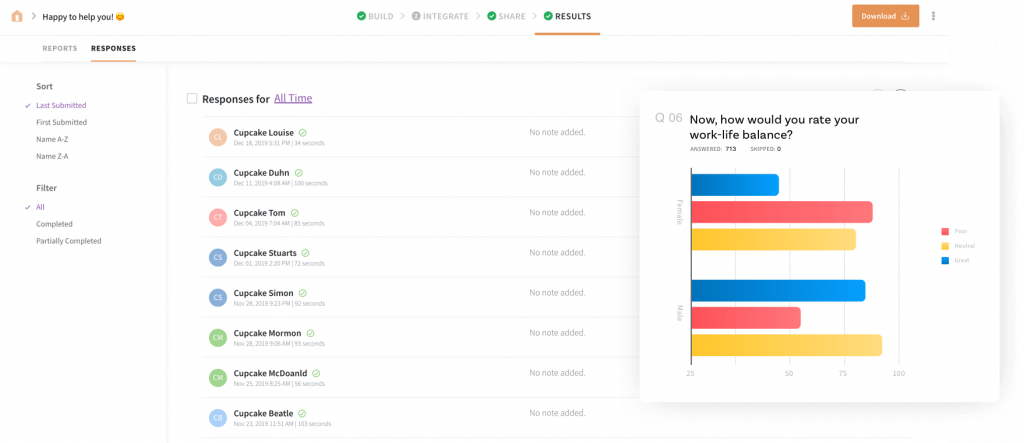
SurveySparrow is a general survey software and has a focus on “conversational surveys” which is to conduct a survey in a conversational and sometimes chat-like fashion. They have specific features for industries, such as healthcare, with an overall goal of improving completion via user experience.
Features:
- Conversational interface
- Chat-based survey
- NPS (Net Promoter Score) surveys
- Offline survey capabilities (kiosk mode)
- Multiple question types (e.g. Likert scales, open-ended)
- Simple reporting and analytics
Pros:
- Highly engaged survey layout and design.
- Survey capabilities of mobile to provide high completion.
- User-friendly for designing beautiful surveys.
- Offline survey capabilities so you can conduct in-person feedback.
Cons:
- It is not healthcare-specific so it may lack key EMR/EHR integrations.
- HIPAA compliance may require additional configuration and may not be as inherent as expected with healthcare-centered tools.
- Lacks key advanced healthcare-focused analytics and direct reputation management.
Pricing
The basic plan starts at $19/month, and the higher tiers have additional features.
Ratings:
G2 Rating: 4.4/5
Support Channels:
- Total customer support for a diverse audience.
- Live chat
- Help documentation
6. Artera (previously WELL Health)
Overview:
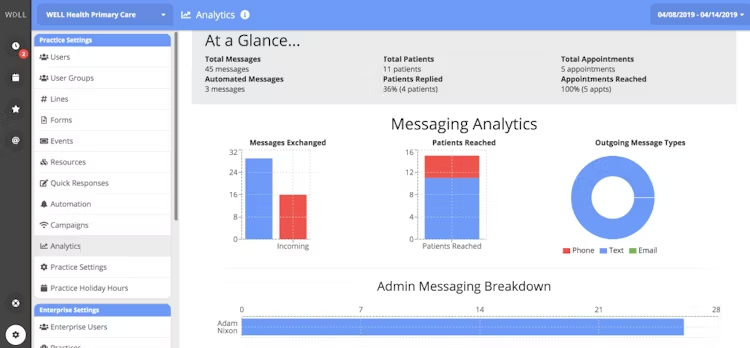
Artera is a patient communication platform with an emphasis on integrated messaging and automation throughout a patient’s journey. Artera is viewed as having strong EMR integrations, to help unify communication in complex health systems and individual practices.
Features:
- Automated messaging for appointments, recalls, and patient instructions.
- Secure two-way patient chat.
- Sophisticated EMR integrations (depending on your vendor)
- Some capabilities for conducting basic patient satisfaction surveys (usually via links).
- Automated outreach for health campaigns.
Pros:
- Strong EMR integration minimizes manual data entry.
- Strong automated outreach for patient engagement.
- Good for unifying patient communication across multiple channels.
Cons:
- While the platform does provide messaging functionalities, it is not as robust/in development commercially, as a dedicated patient satisfaction survey and analytics offering, like more advanced patient feedback software.
- There’s less emphasis on granular analysis of feedback than messaging.
Pricing:
Fee-for-service – custom pricing.
Ratings
G2 Rating: 4.5/5
Support Channels:
- Excellent enterprise-class style support.
- Dedicated account management (for larger clients).
- Online resources.
7. Zonka Feedback
Overview:
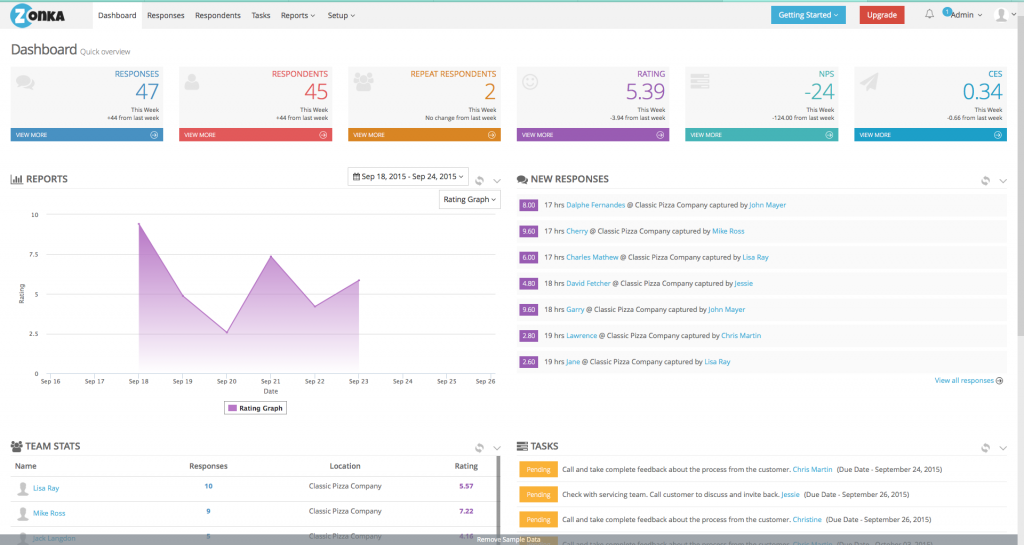
Zonka Feedback is a full-service feedback platform that is appealing to many industries including healthcare. The primary purpose of Zonka Feedback is to collect feedback at all stages and tie it back to the customer (patient) experience, providing the most comprehensive view of satisfaction.
Features:
- Multi-channel surveys (SMS, email, in-app, kiosk).
- Real-time alerts for negative feedback.
- Advanced analytic and reporting capabilities.
- Closed loop feedback management.
- Customizable templates.
- NPS, CSAT, and CES surveys.
Pros:
- Good versatility in collecting feedback at several different points.
- Good real-time alerts for negative feedback which allows immediate action.
- Self-reported fairly good predictive analytics features based on overall customer experience.
Cons:
- While very versatile, it is not a food-centric focus nor purely healthcare-focused, so any required integrations and any specific features that are related to HIPAA compliance are going to require a bit more configuration.
- May be a bit more complex for mid-sized providers that do not necessarily need all general feedback features.
Pricing:
Approximately $59/month at the Basic tier, with higher pricing levels with advanced features.
Ratings
G2 Rating: 4.6/5.
Support Channels:
- General customer support.
- Email.
- Chat.
- Online knowledge base.
8. Qualaroo
Overview:
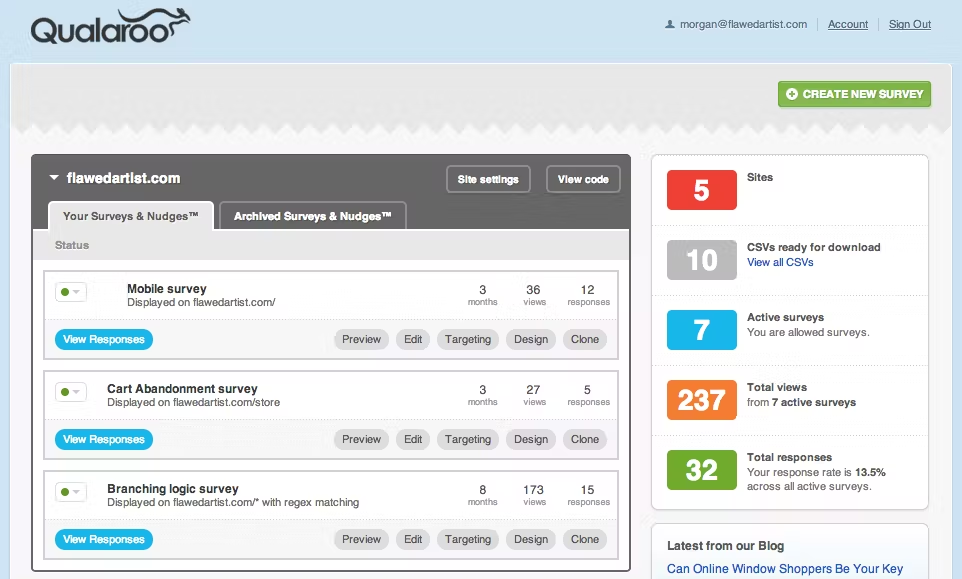
Qualaroo is popular for providing short and simple “Nudges” or surveys within a website or app. Not specifically healthcare applicable, Qualaroo does allow for the potential to request real-time feedback from patients about using the patient portal or virtual care programs with a focus on contextual feedback.
Features:
- In-app/on-website survey “Nudges”.
- Sentiment analysis on open-ended comments.
- Logic branching for customized questions.
- NPS surveys.
- Integrations with the most popular CRM platforms.
Pros:
- Awesome for asking for real-time feedback from the interface.
- Good for very direct, shorter questions.
- Sentiment analysis of open-ended/personal comments is solid.
Cons:
- Not built for patient journey comprehensive surveys (e.g., post-visit survey sent continuously via SMS/email).
- Less intent on overall patient communication without the in-app experience.
- Not considered HIPAA compliant for inherently collecting patient health data directly, although it takes careful setup.
Pricing:
Starts at $80/month for a basic plan moving higher for additional features.
Ratings:
G2 Rating: 4.5/5
Support Channels:
- General customer service.
- Email.
- Online documents.
9. Birdeye
Overview:
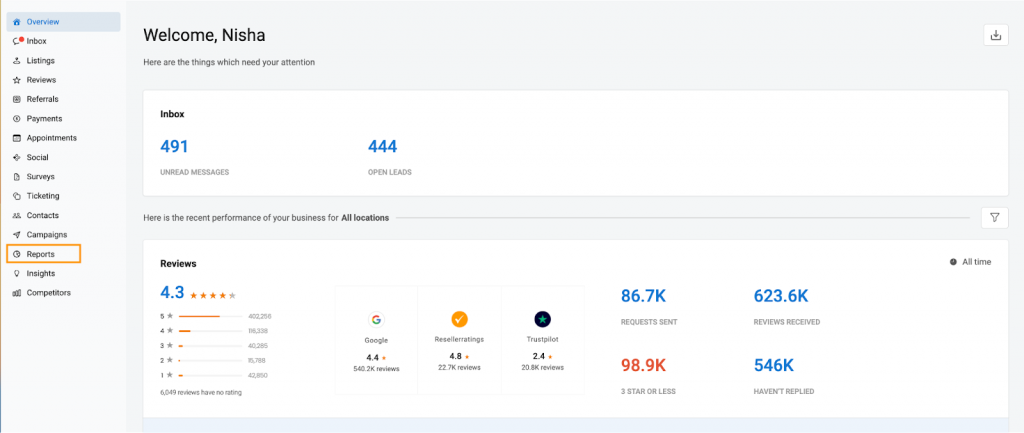
Birdeye is a widely recognized reputation management platform for soliciting online reviews and managing an online reputation, and it offers a more basic introduction survey platform (for businesses, including healthcare). Its primary aim is online visibility and trust.
Features:
- Review generation (ability to send review requests via text/email).
- Review monitoring across multiple platforms.
- Reputation management dashboard.
- NPS tracking.
- Basic patient satisfaction survey builder.
- Unified inbox for messaging.
Pros:
- Great for generating online reviews and boosting local SEO.
- Good at monitoring all the major review sites from one dashboard.
- Simple to navigate platform to manage your overall online reputation.
- Can assist with initial feedback collection.
Cons:
- Focus on reputation management as the core primary function.
- When it comes to patient satisfaction survey offerings, it is usually less robust in terms of analytical detail or complete patient journey management software.
- Less focus on routing internal feedback based on survey responses.
Pricing:
Custom pricing.
Ratings:
G2 Rating: 4.4/5
Support Channels:
- Good support in the aspects of reputation management.
- Phone
- Online knowledge base.
10. Podium
Overview
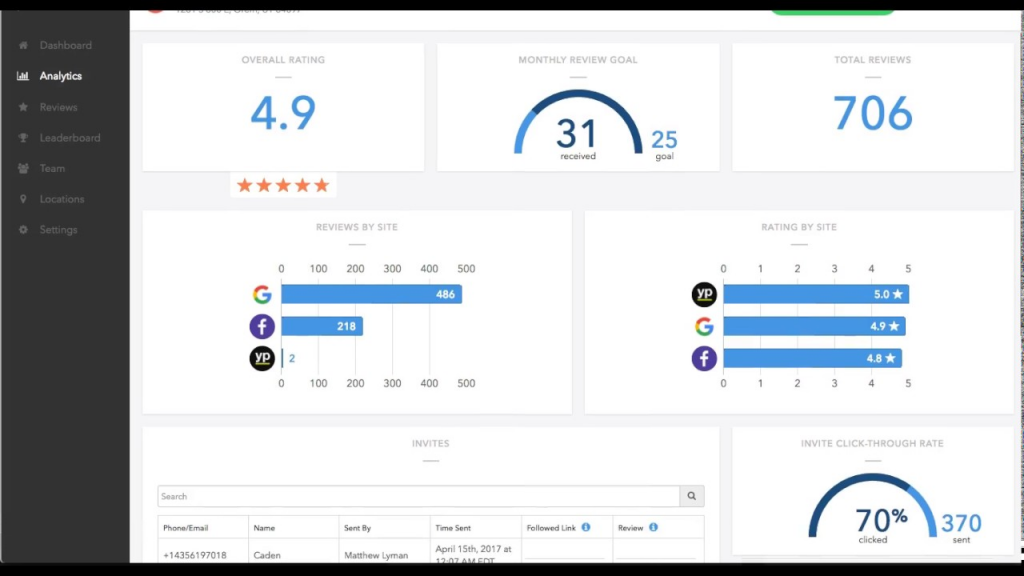
Podium offers local business customer interaction software for messaging, online reviews, and payment functionality, with a focus on local clinics and dental practices. Its primary mission focuses on transforming local patient interactions towards modernization.
Features:
- Two-way texting for communication with patients.
- Management of online reviews (review requesting and management).
- Pay by text message functionality.
- Simple survey message links.
- Web chat for website visitors.
- Management of Google Business Profile.
Pros:
- Strong for local businesses – great front-office efficiencies.
- Great for patient messaging and online review generation.
- Inexpensive/easy for the front office to use.
- Combines channels of communication.
Cons:
- Similar to Birdeye – once again, its strength lies primarily in local interactions and reviews.
- Their patient satisfaction survey has software-limited integration and is more about linking out to external surveys with very limited analytics post-survey.
- Not as robust with EMR integration as healthcare-specific EMR vendor platforms.
Pricing:
Custom pricing.
Ratings:
G2 Rating: 4.3/5
Support Channels:
- Good general support for local businesses.
- Phone
- Live chat
- Online help center.
Why Emitrr is The Best Patient Satisfaction Survey Software in 2025
Out of all the choices, Emitrr is the leading patient satisfaction survey software in 2025 because of its AI-based feedback and communication built-in capabilities
- Smart Automation: Emitrr automates the entire feedback loop — smartly launching surveys at the right time, and routing negative feedback in real-time to the right team in your organization. This means that problems are addressed before they become bigger.
- AI-Powered Engagement: SMS-first, mobile-optimized forms, and intelligent AI nudges for incomplete responses drive completion without wasting time on manual follow-ups.
- All-in-One Communication Suite: Emitrr consolidates your surveys, two-way SMS, web chat, AI reception, and automated review reminders into one fully integrated system, offering patients a seamless experience from start to finish.
- Actionable Insights & Analytics: Emitrr develops easy-to-read dashboards that help turn feedback into clear next steps. You do not need a data team to find trends, you can effortlessly review and analyze trends in responses yourself! Emitrr uses AI to analyze sentiments in open-ended responses for even more actionable insights.
- Healthcare-Specific Support: Emitrr offers healthcare-specific onboarding and support, deliberately built for clinics and hospitals so that you realize value from day one.
- HIPAA Compliant & Secure: Patient data is safe with Emitrr’s complete HIPAA compliance, encryption, and secure protocols.
- Scalable for All Sizes: Emitrr is equally appropriate for a solo dental clinic and a large hospital. Whether you implement patient feedback software or full patient journey management software, Emitrr can scale with your needs.
- AI-Driven Feedback Intelligence: Emitrr will empower your system with AI to send surveys at the most effective time, evaluate sentiment in qualitative responses, and instantly alert you to critical issues. In addition, Emitrr can automatically respond to feedback (e.g., “Thanks for your 5-star rating!)”, route responses to the appropriate team based on keywords or scores, and assess patient retention score (potential churn) so you can intervene before losing your patient.
Turn everyday interactions into measurable insights. Access patient satisfaction survey templates to increase response rates and strengthen patient relationships
Frequently Asked Questions
Keep it short. A length of 5–10 questions is ideal for comprehensive completion to increase your response rates, especially in digital formats. For more in-depth patient insights consider sending shorter surveys, over time.
You can state in your survey messaging whether the survey is anonymous (i.e., no identifiers) or confidential (i.e., you take information from the survey, but do not share). Most patient feedback software will have options to ensure anonymity.
Yes, as long as the survey data is used wisely. Survey data helps provide insight into team strengths and team gaps, but using survey data cannot replace broader team evaluation practices. Please focus on team growth, not blame.
Response rates vary: paper-based (10% – 20%), e-mail (20% – 40%), SMS (40% – 60%+ with Emitrr’s AI nudges). The more responses you get = the better data, so use digital-first and outreach consistently.
Within 24 – 48 hours. Responding quickly helps prevent escalation. Using tools like Emitrr, you can set up automated alerts to act immediately to protect your patient relationship.
Conclusion: Let Patients Be Your Guide
In 2025, surveys that measure patient satisfaction are not a luxury, they are a requirement to grow, drive loyalty, and build a reputation. Our patients provide us with information on how to improve care. These surveys are the only way to listen to them.
Selecting the right platform is a strategic decision. Your platform should meet your goals and workflows while enhancing your patient experience at every point of interaction.
Are you ready to turn patient feedback into meaningful growth?
See how Emitrr makes it easy for healthcare organizations to conduct surveys, take action, and make a meaningful impact. Book a Demo today!


 4.9 (400+
reviews)
4.9 (400+
reviews)