
Introduction to Therapist Testing
Texting is fast, convenient, and helps therapists stay connected with clients. From appointment reminders to follow-ups, secure messaging can improve engagement, reduce no-shows, and streamline workflows. But therapists must ensure texts are HIPAA-compliant, respect client boundaries, and maintain proper documentation.
In this guide, you’ll learn how to text clients safely, get HIPAA-compliant templates, see real-world therapist examples, and discover tools that make secure texting easy.
📥 Free Download: [HIPAA-Compliant Therapist Texting Checklist & Scripts]
Why Text Messaging for Therapists is Essential
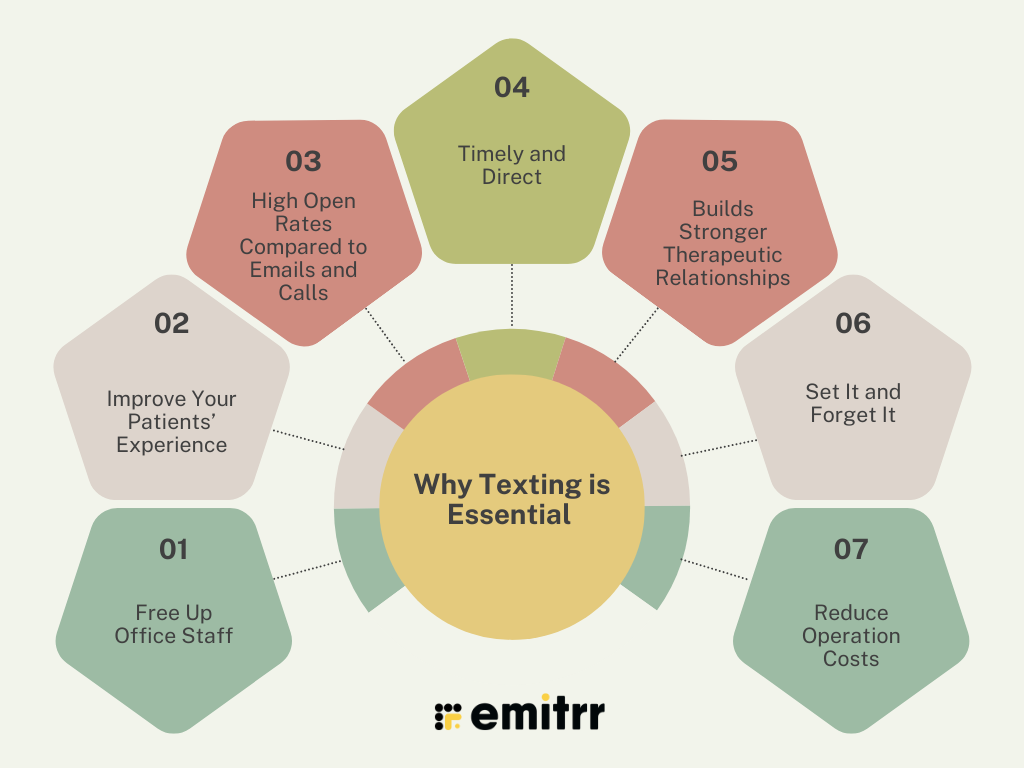
Free Up Office Staff
There are various tasks when it comes to front desk staff, from answering all calls to managing paperwork. By using automated texting for therapy practices, these repetitive admin duties can be streamlined. A HIPAA-compliant texting platform allows staff to focus more on patient care while reducing the burden of manual outreach. Fewer calls, fewer SMS scheduling hassles, and more attention on clients.
Improve Your Patients’ Experience
Therapy is still considered taboo and can also be intimidating for new clients. HIPAA-compliant texting for therapists allows for timely, friendly appointment confirmations and follow-up texts that feel personal yet non-intrusive. Using a secure client communication for therapists, you can build trust while making your practice more approachable. These small, thoughtful interactions help reduce anxiety and make therapy feel more welcoming.
High Open Rates Compared to Emails and Calls.
Text messaging in mental health practices stands out for its efficiency. With open rates exceeding 90%, texts outperform both emails and calls. Whether it’s an appointment reminder, a last-minute slot opening, or a wellness check-in, text messages ensure your communication reaches clients instantly. For therapist communication tools, speed and visibility are key.
Timely and Direct
Missed appointments can be frustrating at times for both clients as well as therapists. A simple, scheduled SMS appointment reminder can dramatically reduce no-shows. Texting for therapy sessions not only nudges the client in time but also allows for quick rescheduling. This is essential for maintaining continuity of care and maximizing your availability.
Builds Stronger Therapeutic Relationships Through Consistent Touchpoints
Therapy is not just a once-a-week session; it’s a process. With text messaging for therapists, you can send supportive messages between appointments: client check-ins, a quick follow-up, or a reminder to journal or reflect. These small, meaningful interactions, powered by two-way texting platforms, help strengthen the therapist-client relationship and foster ongoing engagement.
Automates Certain Therapy Texts
Using a HIPAA-compliant text messaging app like Emitrr allows you to automate your workflow. From birthday wishes to pre-session reminders, you can set up recurring messages without manual effort. This is how modern therapy practices streamline communication, saving time while improving patient experience.
Reduce Operation Costs
Phone calls are time-consuming, and missed calls lead to costly follow-ups. By transitioning to a secure, HIPAA-compliant texting platform, therapists reduce administrative load and lower overhead. Whether it’s sending forms, rescheduling via text, or confirming insurance details, text messaging for therapy practices helps cut costs while maintaining professionalism and privacy.

Benefits of HIPAA Compliant Texting for Therapists
Improved Client Engagement Between Sessions
As we already talked about that therapy is not just a one-hour session. Texting for therapy practices allows them to stay in touch with the clients in meaningful ways. A check-in message, a reminder to practice a coping skill, or a quick note of encouragement can go a long way in helping clients feel supported throughout the week.
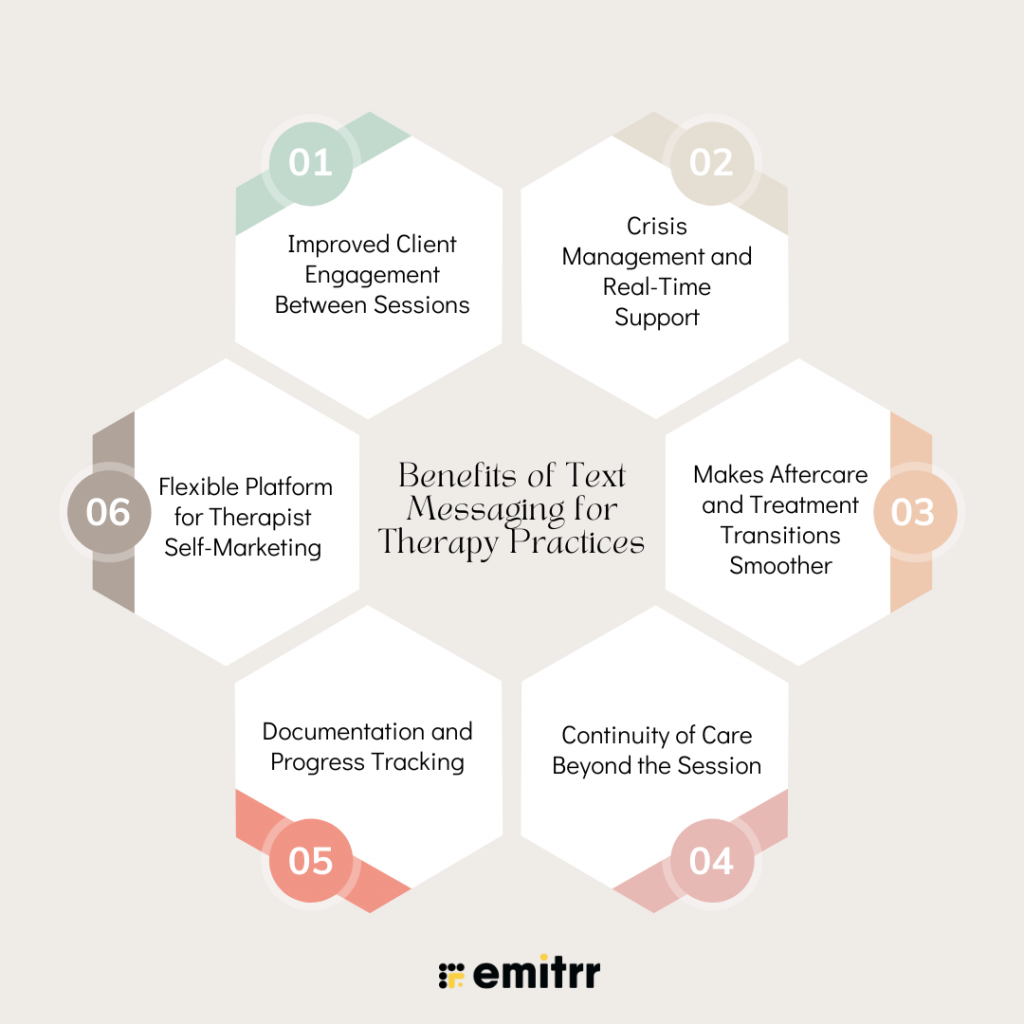
Crisis Management and Real-Time Support
Clients expect the therapist to be available for them at any hour of the day, and especially when they face any crisis-like situation. Well, it is not a replacement for emergency care, but in such moments, texting can prove to be a game-changer. Whether it’s a reminder of grounding techniques or encouraging a client to use their safety plan, texting allows therapists to respond promptly.
Makes Aftercare and Treatment Transitions Smoother
There are times when a client completes the course of therapy sessions and transitions to a different level, Texting helps in keeping the communication channel open for clients. A subtle yet thoughtful follow-up text after the session offers clients reassurance and support, also making sure that they can still reach out to their therapist whenever they need them.
Continuity of Care Beyond the Session
Therapy is most effective, especially when it is a part of the client’s everyday life. Here is when therapy texting can go a long way, as with texting, it is quite easy to share small prompts like journaling cues, affirmations, or reminders of session goals, that help clients to apply what they’ve learned. It keeps the therapeutic process alive between appointments and strengthens the connection between sessions.
Documentation and Progress Tracking
For therapy practices, it is vital to maintain a record of clients, their journey, and insights of each session, and with texting, therapists can do it effortlessly. Not only this texting make it easier to track client concerns, follow-up messages, and overall engagement.
Provides a Flexible Platform for Therapist Self-Marketing Without Selling
When it comes to marketing traditional approach can be a bit awkward for therapists who indeed value authenticity and connection over promotion. Texting opens the door to marketing for therapists in a subtle yet effective way. Therapists can send helpful mental health tips, wellness resources, or announcements about group sessions that help them to stay visible without being pushy.
HIPAA Compliance Requirements for Therapist Texting
To protect clients and your practice, texting must meet HIPAA standards. Here’s what therapists need to know:
1. Get Written Consent
Clients must opt-in to receive text messages. Consent forms should include:
- Purpose of messages (reminders, check-ins, notifications)
- Risks associated with texting
- Option to withdraw consent anytime
2. Maintain Minimum Necessary Rule
Only share the essential information required for the task. For example, “Appointment at 3 PM” is fine; sharing diagnosis over text is not.
3. Business Associate Agreement (BAA)
Ensure your texting platform has a BAA in place. This legally obligates the vendor to handle PHI securely.
4. Audit Trails & Record Keeping
HIPAA requires logging all messages and maintaining records for compliance audits.
5. Encryption & Secure Platforms
Never use standard SMS for sensitive information. Use HIPAA-compliant tools like Emitrr that provide end-to-end encryption and secure storage.
Step-by-Step Guide: Setting Up HIPAA-Compliant Texting
Here’s how to start texting clients safely:
- Choose a secure platform that’s HIPAA-compliant (e.g., Emitrr).
- Collect written consent digitally during intake or via email.
- Set up automated reminders & follow-ups to reduce manual work.
- Train staff on texting boundaries, documentation, and escalation protocols.
- Document messages in your EHR or secure logs for audit purposes.
Tip: Automating reminders and follow-ups can save hours weekly while keeping communication compliant.
Therapist Texting Scripts & Templates
Use these HIPAA-safe examples to communicate efficiently:
| Type | Sample Script |
|---|---|
| Appointment Reminder | “Hi [Name], this is [Practice Name]. Just a reminder of your appointment on [Date] at [Time]. Reply YES to confirm.” |
| Follow-up Check-in | “Hi [Name], hope you’re doing well. Please let us know if you need to reschedule your next session.” |
| Intake Form Link | “Welcome! Please complete your intake form here: [Secure Link]” |
| Crisis / Urgent Notice | “Our office is closed today. If you need immediate support, contact your emergency provider or dial 911.” |
Key Use Cases of Therapist Texting
Appointment Reminders and Confirmations
Very often, therapists have a tight schedule, and the clients also have busy lives. Here’s when texting can benefit therapists in many ways, such as sending gentle reminders to clients a day before their appointment, which helps in reducing no-shows. Whereas text confirmations also give clients the peace of mind that their therapy session is booked and on track, which also creates a more reliable and professional experience
Intake and Onboarding Messages
For new clients, especially the new ones, therapy can feel overwhelming. This overwhelming situation can be tackled with texting by sending the clients a warm welcome text with links to intake forms or initial instructions that can help ease the transition.
Ongoing Communication
There are times when a therapist needs to share any small details, homework assignments, or follow-up thoughts between sessions. Texting provides a non-intrusive way to update the clients with necessary information.
Last-Minute Cancellations or Reschedules
Life is full of uncertainties, and where clients can get sick, therapists might have some emergencies or other schedule shifts. A simple text message makes it easy to inform or update the clients, or vice versa. This not only reduces miscommunication but also keeps the clients as well as therapists informed.
Therapy Patient Form Collection
Therapy begins with collecting the information about the clients, like consent forms or a mental health questionnaire, and asking these questions through texts and secure links saves the time of clients and therapists by eliminating the process of printing, scanning, or dealing with paperwork in person.
Feedback Requests
It is important for therapists that after a few sessions or a certain time, they should ask their clients how they are feeling about the process or the sessions. Sending a text here can change the game for asking the feedback that not only tells how satisfied the client is but also helps the therapist to get meaningful insights to improve their services.
Waitlist Management
Waitlist management is extremely important for any kind of service in healthcare, as there are always chances of opening up a slot unexpectedly, and texting makes it very easy to reach out to clients who are on the waitlist. It allows them to grab a spot without delay and helps therapists make the most of their available hours.
Payment and Insurance Reminders
For therapists, talking about payments directly with clients can feel a bit awkward. A polite and automated text reminder not only keeps things professional but also ensures that there are timely payments from the client’s end.
Re-engagement of Inactive Clients
There are times when clients pause the therapy and then fall off the radar. A thoughtful check-in text that is sent after a few weeks or months can be a simple nudge for them to return. It shows care and also reminds them that the support is available when they’re ready.
Best Practices for Therapists Using Text Messaging
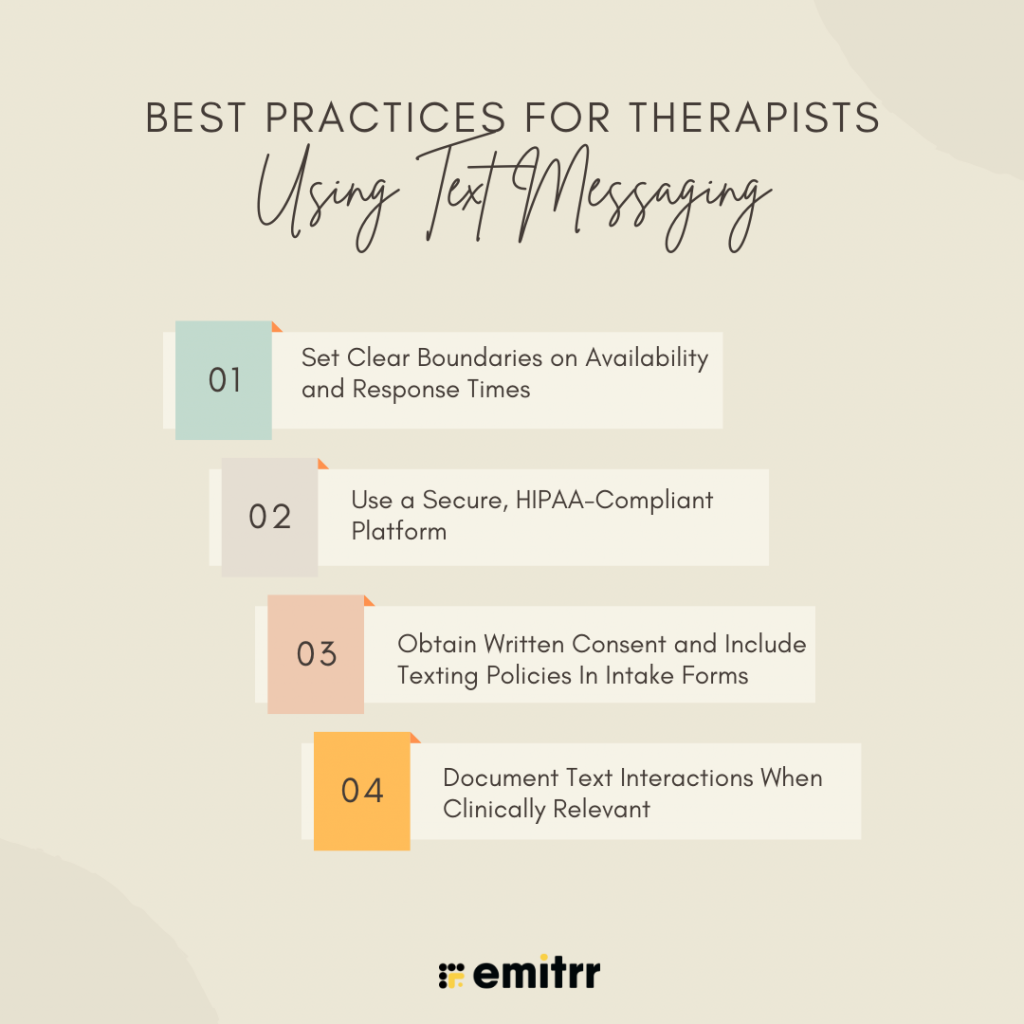
Set Clear Boundaries on Availability and Response Times
Texting at times can also feel casual as well as quick, but when it comes to a therapeutic setting, it is very critical to set expectations. You need to let the clients know when you are available to respond and how much time they should expect for a reply. This not only helps prevent misunderstanding but also supports a healthy and professional relationship between the clients and therapists.
Use a Secure, HIPAA-Compliant Software for Therapists
Privacy is non-negotiable when it comes to the healthcare industry, but in therapy, it is of utmost importance. There are texting apps that are built for regular conversation but lack the basic privacy and security standards. Here’s when a HIPAA-compliant texting for therapists like Emitrr comes into the picture that ensuring that clients’ information and communication both remain confidential.
Obtain Written Consent and Include Texting Policies In Intake Forms
It is always a good practice that before sending any texts, you obtain a clear and written consent from the client. This shows the client transparency and also gives them clarity on how text messaging will be used.
Document Therapy Text Interactions When Clinically Relevant
If a text conversation includes information that affects the client’s care, like reporting a crisis, sharing symptoms, or making important disclosures, it should be noted in their clinical record. This helps maintain a clear picture of the therapeutic journey and ensures continuity and accountability in care.
Challenges of Therapy Texting
Miscommunication
Therapy texting is undoubtedly quick and convenient, but it has its own set of challenges, such as messaging that can easily be misinterpreted. Without any verbal communication or expression, even in cases of well-intended texts, they can also come across as cold, rushed, or confusing. This can also unintentionally lead to misunderstandings.
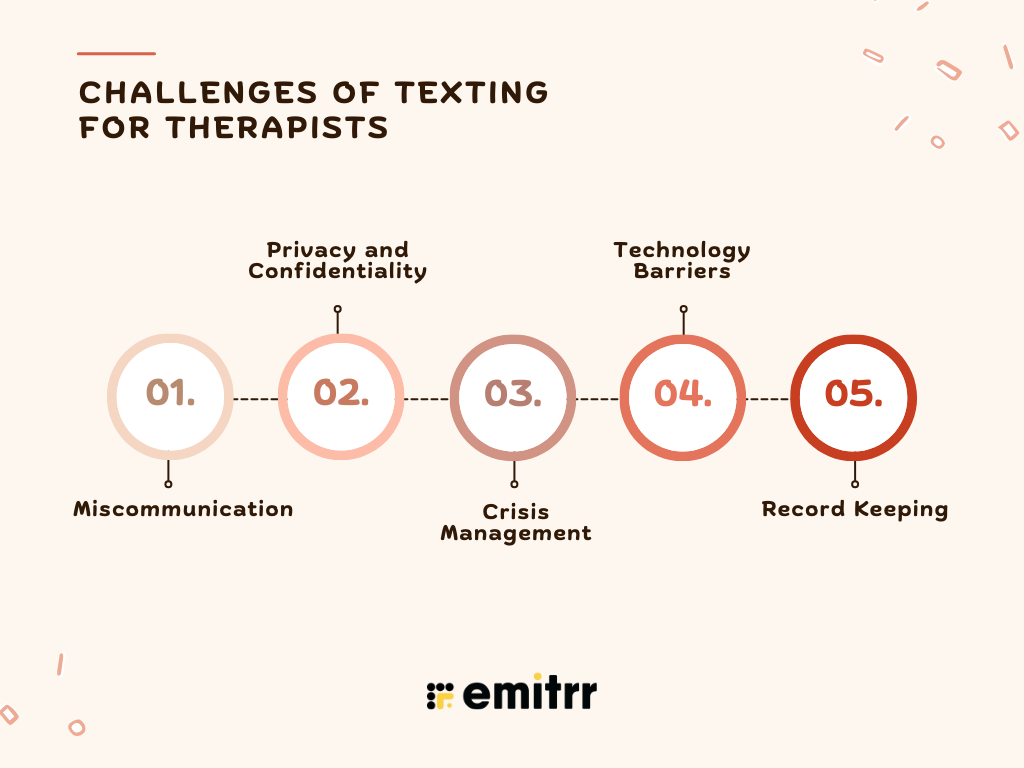
Privacy and Confidentiality
One of the major concerns with texting is protecting clients’ information. There are messaging platforms that support regular text based counseling but do not comply with basic industry standards such as HIPAA. Hence, it is very critical for any therapy practice they look for a platform like Emitrr that adheres to all the industry standards.
Crisis Management
Texting is not actually built for emergencies. If a client texts you while they are in distress or in a crisis, in those cases, no response or a delayed response can indeed have serious consequences. Hence, it is important for a therapist to make sure that clients know that texts are not for urgent situations.
Technology Barriers
Yes, in today’s modern world, everyone is familiar with technology, but there are still certain sections that are not tech-savvy, and it is also a possibility that they do not have access to smartphones or texting services. These barriers can also make the communication between the therapist and the clients inconsistent and frustrating.
Record Keeping
At times, keeping track of text conversations can be quite tricky, and important messages might get lost in everyday notifications. Without a proper system, there are chances that the therapist may miss the details or important information about the client, which can also impact the treatment planning and continuity.
Therapy Texting Do’s and Don’ts
Do’s:
- Use a HIPAA-compliant platform
- Keep therapy text messages short and clear
- Automate where appropriate
- Always identify your practice name in messages
- Document important conversations in the client record
Don’ts:
- Don’t use personal phones or unencrypted apps
- Don’t provide clinical advice over text
- Don’t assume consent always get written approval
- Don’t ignore client texts outside office hours
Why is Emitrr the Best Texting App for Therapists
Secure Text Messaging
When it comes to therapy, privacy is not optional; it is a must. Hence, Emitrr offers secure texting for therapists, ensuring that every message you send and every communication you have is encrypted. So you can communicate confidently without any tension of worrying about data breaches or client confidentiality.
Appointment Reminders
Missed appointments are something that can be very costly for both therapists and clients, and Emitrr helps solve this problem by reducing no-shows with its automated reminder feature. With HIPAA-compliant appointment reminders for therapists, all you need to do is set it, and the system will send gentle reminders via text message, ensuring timely communication while protecting client privacy.
HIPAA-Compliant Software for Therapists
This HIPAA-compliant software for therapists is built with healthcare standards in mind. Emitrr follows HIPAA regulations to the letter, making it a safe and legal choice for sending sensitive information without compromising patient privacy.
Two-Way Texting
Therapy always works when it is from both sides, and so is communication on Emitrr. Clients can text therapists in case of any issues, if they have any questions, or be it’s about just the appointment, and get an instant response without facing the hassle of calling, which makes the experience way smoother and more accessible.
Emergency Alerts
In emergency cases, getting the message across quickly is very critical, and this HIPAA-compliant software for therapists excels in that; it not only allows the therapists to send emergency alerts but also keeps the clients informed.
Bulk SMS
With Emitrr feature of bulk texting comes in handy, and when you want to update something to all your clients at once, it makes it even smoother. Emitrr makes it easy to send therapy text messages to your entire client list in one go, saving time and effort.
Share Important Updates
Informing the clients about any changes or updates is very important, be it an introduction of a new service, changing session timing, or relocating. With Emitrr, you can broadcast updates directly to clients’ phones.
Automate Follow-Up
In therapy practice, following up with the clients after their session is critical, but at times it can also be time-consuming. Emitrr’s therapist texting app helps here by sending automated follow-up messages within a few clicks.
Send Personalized Encouragement and Support
In a therapeutic setting, a small text of encouragement can go a long way in a client’s progress. How Emitrr helps here is by sending personalized messages that feel thoughtful and human, which help the client feel seen and supported.
Request Feedback to Improve
Feedback collection for any practice is important for getting insights about their services to help understand and improve their services. This HIPAA-compliant software for therapists makes it super easy to request feedback via text.
Automate Therapy Note-Taking
As AI is everywhere and with AI-powered assistance, Emitrr can help reduce the time spent on clinical documentation by automating therapy note-taking. This means more time for sessions and less time buried in paperwork. It even offers AI texting agent, Sarah that can make the whole process seamless, fast, and so much easier. You can watch this video to know more:
Ample Integration Options
When it comes to integrating with your existing tool, it excels in going well with others. Whether you are using an EHR software or CRM system, it can be seamlessly integrated so that you can access all the information in one place without switching into other tabs.
FAQs
Yes, therapists can text their clients legally as long as it is HIPAA compliant. It is important that texting is used to improve communication, not replace in-session therapy.
It is important for your therapy practice to clearly outline the purpose of text communication, boundaries, consent requirements, how privacy is maintained, and how texting will be used.
It is evident that there are plenty of options available for texting, but ensuring the privacy of the client is the topmost priority; hence, to do the same, you need to opt for a HIPAA-compliant platform like Emitrr.
Yes, with platforms like Emitrr, you can automate almost all the front desk day-to-day routine tasks. Texting automation not only saves time but also ensures consistent communication without manual effort.
Messages like sending appointment reminders, confirmations, check-ins, onboarding instructions, patient form links, follow-ups, encouragements, and payment reminders are some of the examples that are appropriate to send to your client.
Always respect client preferences. Some clients may prefer phone calls or emails. Texting should be offered as an option, not a requirement, and used only after receiving explicit written consent.
Use secure platforms, follow the minimum necessary rule, log all communications, and avoid sensitive clinical content over SMS.
Purpose of texting, risks, opt-in/opt-out options, and acknowledgment of privacy policies should be included in a texting consent form.
Provide emergency contacts and avoid offering therapy via SMS. Document all guidance in your secure logs.
Conclusion
By now, it is evident that texting is transforming the way therapists communicate; it is now easier, offers more operational efficiency, and also strengthens the client and therapist relationship. But one thing which is very critical and needs to be kept in mind is doing it the right way. With the right tool like Emitrr and certain boundaries in place, texting can improve your practice without compromising professionalism, privacy, and care. automate, communicate, and stay connected with your clients effortlessly. Book a demo now to know how!!


 4.9 (400+
reviews)
4.9 (400+
reviews)