
Introduction
Reputation is a little fragile thing, and more so for nonprofits, where trust is the only currency and public perception:
- Directly impact funding.
- Influence partnerships.
- Shape overall mission success.
For a nonprofit organization, its mission is its lifeblood. And, any effort made to tarnish its reputation can seriously damage its prospects of business. This is why ensuring a strong, blot-free reputation is more than just critical.
In good news, we’ve curated a comprehensive, no-nonsense guide on why online reputation management (ORM) is an indispensable need for nonprofits working in a precarious world of clicks, comments, and shares. We’ve explained the proven ways nonprofits can ace digital reputation management and carve a consolidated presence in the market.
So, don’t leave it to chance. Take control of your narrative — with our guide.
What is Online Reputation Management (ORM)?
Online Reputation Management (ORM) is strategic monitoring that affects and controls an organization’s perception in the eyes of the public across the digital realm. For nonprofits, ORM spans the management of online reviews and social media interactions, along with search result rankings and whatever else might touch on their digital presence, to ensure that their mission and values are well represented.
Nonprofits operate in a unique space where trust is the cornerstone of their success. Unlike for-profit businesses, which focus on customer satisfaction and revenue, nonprofits rely on goodwill, donations, and volunteer support to achieve their goals. A strong online reputation is critical because:
- Volunteers seek credible organizations: 70% of volunteers research nonprofits online before committing (VolunteerHub).
- Public scrutiny is high: Nonprofits are held to higher ethical standards, and platforms like Charity Navigator and Guidestar amplify this scrutiny.
- A single negative review or viral criticism can erode trust, reduce funding, and deter volunteers, making proactive ORM essential.

Key Differences Between Nonprofit and For-Profit Reputation Needs
While both nonprofits and for-profits benefit from ORM, their needs differ significantly:
Mission over Profit: Nonprofits must build their reputation in a way consistent with their mission. This means working for social good rather than for profit. For-profit organizations, however, place value on product quality and customer experience.
Stakeholder Diversity: Nonprofits must answer to donors, volunteers, beneficiaries, and partners who each carry their own expectations. Negative opinions from any of these parties can carry more weight because of the deeply emotional nature of nonprofit work.
Restricted Resources: Nonprofits often have limited marketing budgets, few staff members, and no dedicated marketing department, unlike for-profit counterparts, which are endowed with full teams.
Transparency Expectations: Nonprofits are required to be more transparent, especially on platforms such as Guidestar, where financial, operational, and procedural details are shared publicly.
These distinctions emphasize that ORM must be created based on mission alignment, stakeholder engagement, and resource availability.
Importance of Reputation and Review Management for Nonprofits
A nonprofit’s online reputation is a cornerstone of its mission, driving trust, resources, and impact. Here are five key reasons why effective reputation and review management are essential, each tailored to unique aspects of nonprofit success.
Builds Donor Confidence
A strong online reputation fosters donor trust, ensuring contributions make a difference. Positive reviews on Charity Navigator or Guidestar signal transparency, reassuring supporters about programs like education or healthcare. Engaging testimonials showcase impact, encouraging consistent giving.
Transparent reporting and an active social media presence build long-term loyalty. By maintaining a trusted reputation, nonprofits secure steady funding, enabling them to expand initiatives. This credibility strengthens donor relationships, empowering organizations to drive meaningful community change and sustain their mission effectively.
Secures Strategic Partnerships
A positive online reputation attracts grantmakers and corporate partners seeking reliable collaborators. High ratings and Guidestar’s Gold Seal of Transparency demonstrate accountability, making nonprofits competitive for grants and sponsorships.
A vibrant social media presence highlights impact, encouraging businesses to support initiatives like literacy programs. These partnerships provide resources such as funding or event spaces, amplifying outreach. A strong reputation builds confidence, fostering collaborations that align with shared goals, enhancing a nonprofit’s ability to create sustainable impact locally and globally.
Strengthens Community Trust
A nonprofit’s online presence mirrors its real-world impact, creating trust in both local and global communities. Positive reviews on Google My Business or social platforms validate the work of organizations like shelters, building local confidence. On a global scale, a strong reputation attracts support for projects such as clean water initiatives.
Consistent online activity and transparent reporting demonstrate accountability, strengthening community ties. This trust leads to increased engagement and recognition, enabling nonprofits to expand their objectives and effect real change in diverse communities with lasting impacts.
Drives Volunteer Commitment
A strong online presence helps nonprofits attract and retain volunteers. Positive feedback on platforms like GreatNonprofits or Google My Business demonstrates a nonprofit’s commitment, encouraging people to participate in activities such as food drives. Inspiring success stories can turn volunteers into advocates who promote the organization. Transparent communication fosters a sense of belonging among volunteers, encouraging long-term engagement.
When nonprofits leverage their positive reputation, it makes volunteers feel valued. This enhances their dedication and effectiveness in supporting communities, contributing to the mission’s success.
Key Elements of Reputation and Review Management for Nonprofits
Effective online reputation management (ORM) is crucial for nonprofits to maintain trust and amplify impact.
Centralized Feedback System
A centralized system simplifies review management across multiple platforms such as Google, Yelp, and GuideStar. Software like Emitrr provides dashboards to monitor all comments, ensuring nothing is overlooked. This streamlines the process for busy nonprofits, enabling efficient monitoring and responses without wasting time. Centralization enhances transparency, builds stakeholder confidence, and boosts the nonprofit’s credibility.
By consolidating feedback in one location, organizations can promptly address concerns, highlight positive impacts, and maintain a consistent online presence aligned with their mission. This ultimately maximizes donor and volunteer engagement.
Unified Branding Strategy
Consistent branding across websites, social media, and review platforms reinforces a nonprofit’s mission and values. Using a cohesive logo, tone, and messaging creates a recognizable identity that resonates with stakeholders; many organizations use a logo generator to quickly create consistent visual branding. Inconsistent branding can confuse donors and weaken trust. A unified strategy ensures all communications reflect the nonprofit’s purpose, from event promotions to review responses.
This clarity strengthens credibility, fosters stakeholder loyalty, and amplifies impact. By maintaining a consistent online presence, nonprofits can effectively communicate their story, attracting support for initiatives like education or community development.
Prompt Review Responses
Timely responses to reviews, whether positive or negative, demonstrate a nonprofit’s commitment to feedback. Professional, empathetic replies aligned with the organization’s mission show stakeholders their voices matter. Responding promptly builds trust, mitigates negative sentiment, and enhances credibility.
For example, addressing concerns on Google My Business can turn criticism into constructive dialogue. This engagement encourages donor and volunteer loyalty, reinforcing the nonprofit’s reputation. By prioritizing swift, mission-driven responses, nonprofits strengthen relationships, showcase transparency, and maintain a positive online presence that supports their community and global initiatives.
Proactive Review Encouragement
Actively encouraging positive reviews from satisfied stakeholders ensures a steady flow of supportive feedback. Post-event emails, thank-you notes, or tools like Emitrr can prompt donors and volunteers to share experiences.
This strategy highlights impact, balances negative feedback, and boosts credibility on platforms like GreatNonprofits. Proactive review generation showcases success stories, attracting new supporters and volunteers. By fostering a culture of feedback, nonprofits strengthen their reputation, build trust, and amplify their mission’s reach, driving engagement in initiatives like food drives or education programs.
Continuous Channel Monitoring
Monitoring online presence across platforms like Google My Business, Charity Navigator, and Instagram is essential. Tools like Google Alerts or Emitrr’s dashboard provide real-time tracking of mentions, helping nonprofits identify issues early. Regular monitoring prevents negative feedback from escalating and ensures consistent engagement. This vigilance strengthens credibility, as stakeholders see proactive management. By staying active across channels, nonprofits maintain a positive reputation, foster trust, and support their mission’s growth in community and global initiatives, enhancing overall impact.
Staff and Volunteer Training
Training staff and volunteers on ORM protocols ensures consistent, professional online interactions. Clear guidelines on responding to reviews and representing the nonprofit online maintain a unified voice. Internal communication fosters alignment with the mission, preventing missteps that could harm reputation.
Well-trained teams enhance stakeholder trust by showcasing professionalism on platforms like Facebook. This preparation empowers nonprofits to manage feedback effectively, strengthen their online presence, and support initiatives like community development with confidence and credibility.
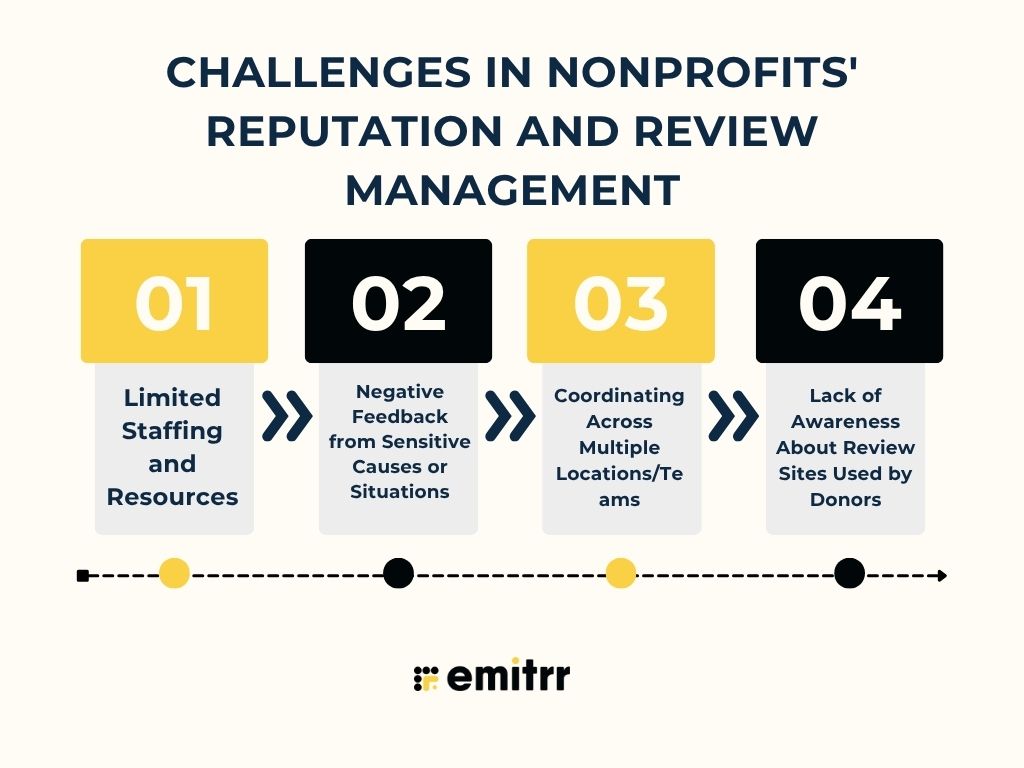
Challenges in Nonprofits’ Reputation and Review Management
Nonprofits face unique hurdles in managing their online reputation, but understanding these challenges can lead to effective solutions that strengthen their digital presence and mission impact.
1. Limited Staffing and Resources
Most nonprofits operate with small teams and budgets while having few resources in time to be devoted to online reputation management (ORM). With staff members often assigned to fundraising, program delivery, volunteer coordination, and other tasks, monitoring reviews or online feedback may feel like an afterthought. This limitation could mean neglecting negative remarks or missing opportunities to promote positive stories, which threatens credibility.
For instance, a small animal shelter might find it challenging to keep track of feedback across Google and social media while running its day-to-day operations.
Solution: Use affordable tools like Emitrr to manage ORM. Emitrr automates sending review requests after events or donations and gathers feedback from Google, Guidestar, etc., in a single dashboard. This completely reduces manual work, so now just one staff member is capable of managing reputation operations. By automating mundane tasks, nonprofits can focus on their purpose while easily nurturing their online presence, even with scarce resources.
2. Negative Feedback from Sensitive Causes or Situations
Nonprofits addressing sensitive matters such as homelessness, mental health, or disaster relief may be subject to criticism or emotional backlash from the public. Donors or other community members will often express frustrations over complicated issues without really understanding or with some misunderstanding of what the nonprofit was able to achieve. For example, a mental health organization could receive bad reviews when a service did not meet expectations, even though it was creating a positive measurable impact. Such ratings, comments, or reviews can go viral on social media, destroying trust.
Solution: Respond with empathy and transparency to reduce criticism. Acknowledge the reviewers’ concerns, apologize if necessary, and mention the nonprofit’s work in rectifying the issue. For instance, they could say, “We’re sorry for your experience and value your feedback. Our team is working tirelessly to provide shelter and support—please reach out to us for more information.” This way, the critic is met with care, and the organization reiterates its mission.
3. Coordinating Across Multiple Locations/Teams
Larger nonprofits with multiple locations or distributed teams often struggle to maintain consistent messaging and responses across platforms. A national food bank, for example, may have regional branches posting conflicting updates or responding differently to reviews, confusing stakeholders. Inconsistent branding or tone can weaken the nonprofit’s identity and credibility, especially when donors expect a unified mission.
Solution: Implement centralized tools like Emitrr to streamline communication and ensure uniformity. Establish clear protocols for tone, response timing, and branding across all locations. For instance, a national nonprofit could create a shared ORM guide and use Emitrr’s dashboard to monitor reviews centrally, ensuring all teams align with the organization’s voice. Regular training reinforces these standards, fostering a cohesive online presence.
4. Lack of Awareness About Review Sites Used by Donors
Donors often post evaluations on niche platforms, like GreatNonprofits, local forums, or Charity Navigator, which nonprofits may leave unchecked. If left unattended on these sites, such feedback may go unheeded, forgoing the option to engage supporters or address criticism. A community arts nonprofit could miss out on potential donors by overlooking reviews on a local forum.
Solution: Find out where stakeholders frequent online and claim profiles on major sites such as GreatNonprofits or Guidestar, or even local review sites. Set Google Alerts on the nonprofit’s name, its programs, or its leadership to keep track of mentions across the web. Emitrr is another useful tool that combines reviews from multiple sites and helps avoid missing any reviews. This way, the well-informed and responsive nature of nonprofits could garner the trust of donors themselves.
Best Practices for Nonprofits Reputation and Review Management
To build a strong online reputation, nonprofits should adopt these best practices:
Optimize Review Site Profiles
Nonprofits should claim and enhance profiles on platforms like Google My Business, Charity Navigator, and Guidestar. Complete profiles with updated mission statements, photos, and contact details boost visibility and credibility. Optimized profiles showcase the nonprofit’s impact, attracting donors and volunteers while reinforcing trust.
This proactive step ensures stakeholders find accurate, compelling information, strengthening the organization’s online presence and supporting its mission to drive community and global change.
Train for Empathetic Responses
Training staff and volunteers to handle reviews with empathy ensures professional, mission-aligned responses. Empathetic replies to both positive and negative feedback demonstrate the nonprofit’s commitment to stakeholders. For example, addressing concerns with offers to resolve issues builds trust.
Training fosters consistency, turning feedback into opportunities for engagement. This approach strengthens relationships with donors and volunteers, enhancing the nonprofit’s reputation and supporting its community-focused initiatives.
Establish Communication Guidelines
Clear protocols for responding to reviews ensure consistency and professionalism. Guidelines should define tone, timing, and escalation processes for complex issues. Assigning a dedicated team to oversee online reputation management maintains a unified voice.
These protocols prevent missteps, align interactions with the nonprofit’s mission, and build stakeholder confidence. Effective communication strengthens credibility, supporting initiatives like education programs by fostering trust and engagement across platforms.
Leverage Social Media Engagement
An active social media presence on platforms like Facebook and Instagram builds community trust. Sharing success stories and responding promptly to comments fosters engagement. Highlighting events or initiatives like food drives creates excitement and encourages participation.
A vibrant social media strategy amplifies impact, strengthens stakeholder relationships, and enhances the nonprofit’s reputation, supporting its mission across local and global communities.
Consolidated Best Practices
Nonprofits can build a strong online reputation by optimizing profiles on Google My Business, Charity Navigator, and Guidestar for visibility, training teams for empathetic review responses, and establishing clear communication guidelines for consistency.
Proactively encouraging positive feedback via tools sustains credibility, while active social media engagement on platforms like Facebook fosters trust and participation. This comprehensive strategy ensures a cohesive, mission-aligned online presence, amplifying impact by attracting donors, volunteers, and partners and supporting initiatives like community development with a trusted reputation.
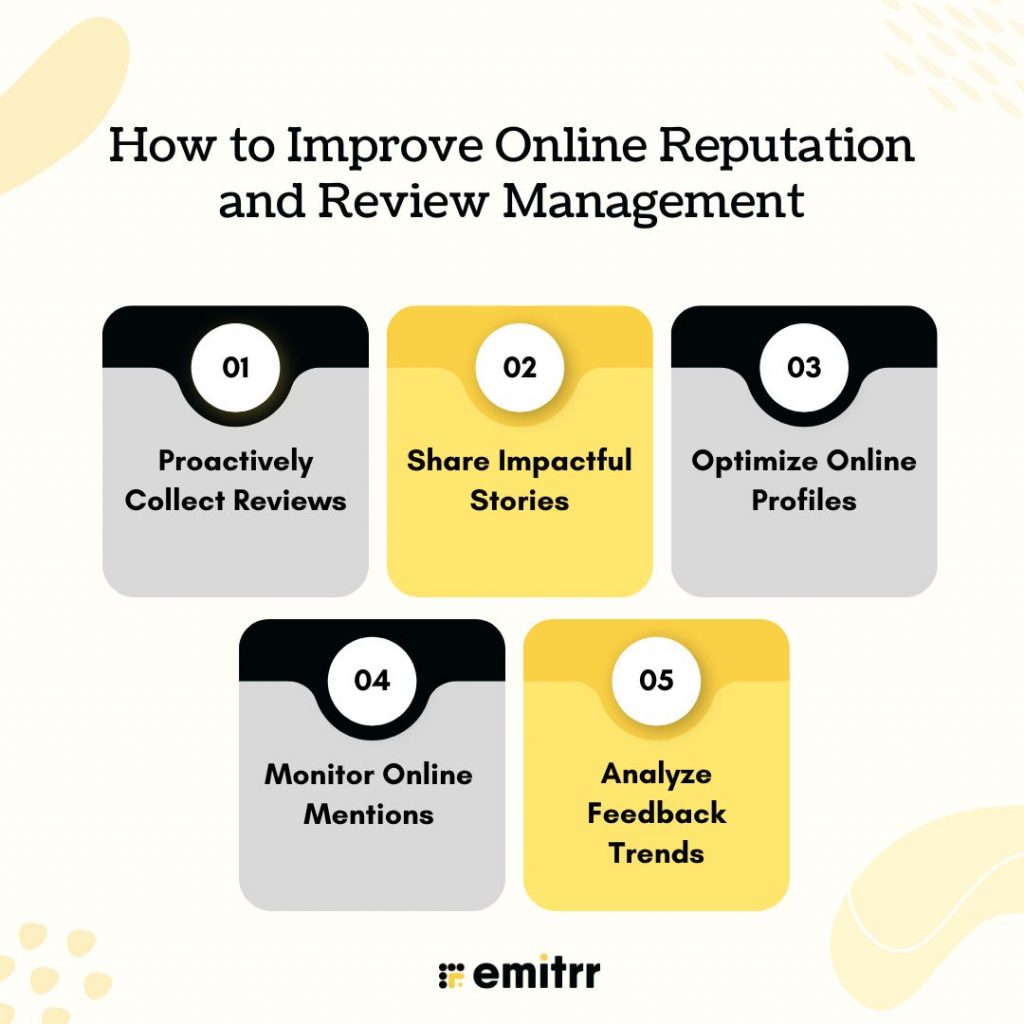
How to Improve Online Reputation and Review Management
Improving a nonprofit’s online reputation requires proactive and consistent effort. Here are key strategies:
Proactively Collect Reviews
Encourage reviews after donations, events, or volunteer shifts through thank-you emails or automated tools like Emitrr. A simple request, such as “Share your experience on Google or Guidestar,” motivates stakeholders to provide feedback. This proactive approach builds a steady stream of positive reviews, showcasing impact and enhancing credibility.
Regularly collecting feedback highlights successes, attracts supporters, and strengthens trust, supporting the nonprofit’s mission in community initiatives like education or food drives.
Share Impactful Stories
Share success stories and testimonials on social media using visuals, videos, or infographics to create a compelling narrative. Highlighting a beneficiary’s journey, like a video of a community program’s impact, engages audiences and builds trust. This strategy amplifies the nonprofit’s mission, fosters stakeholder connection, and encourages participation.
By consistently showcasing achievements, nonprofits strengthen their reputation and attract support for initiatives like healthcare or literacy programs.
Optimize Online Profiles
Complete profiles on Google My Business and Yelp with photos, hours, and services to boost search visibility. Encouraging stakeholders to leave reviews on these platforms enhances local credibility. Optimized profiles attract supporters, showcase the nonprofit’s mission, and build trust.
This effort ensures stakeholders find accurate, engaging information, strengthening the organization’s reputation and supporting community-focused initiatives like shelters or food banks.
Monitor Online Mentions
Use Google Alerts or Emitrr’s dashboard to track mentions of the nonprofit’s name, leadership, or programs in real time. Monitoring platforms like Guidestar or social media helps identify feedback early, preventing issues from escalating. This proactive vigilance ensures consistent engagement, builds stakeholder trust, and maintains a positive reputation.
Tracking mentions supports the nonprofit’s mission by addressing concerns and highlighting successes in initiatives like community development.
Analyze Feedback Trends
Regularly analyze review sentiment and themes to identify areas for improvement. Using analytics tools, nonprofits can address recurring issues, like slow response times, and communicate changes to stakeholders.
This data-driven approach enhances credibility, showing responsiveness to feedback. By making informed adjustments, nonprofits strengthen trust, support their mission, and improve engagement in programs like education or food drives, ensuring a positive online reputation.
How to Respond to Online Reviews
Responding to online reviews is a cornerstone of effective Online Reputation Management (ORM) for nonprofits. Thoughtful, timely responses strengthen trust and engagement with stakeholders. Here’s how nonprofits can handle feedback strategically:
Framework for Responding to Positive Reviews
Responding to positive reviews reinforces supporter loyalty and amplifies impact. Start by thanking the reviewer sincerely to show appreciation, such as, “We’re so grateful for your support!” Next, connect their feedback to the nonprofit’s mission to highlight tangible outcomes, like how their donation funded school supplies for children. Finally, encourage ongoing engagement by inviting them to events or volunteer opportunities.
For example: “Thank you for your kind words! Your support helps us provide meals to families in need. Join us at our next community food drive!” This approach not only acknowledges the reviewer but also inspires continued involvement, fostering a deeper connection with the organization’s cause. By consistently responding to positive feedback, nonprofits can build a loyal community of advocates who amplify their mission through word-of-mouth and further reviews.
Steps to Handle Negative Feedback Professionally
Negative feedback requires careful handling to maintain trust. First, acknowledge the reviewer’s concern to show you’ve listened, such as, “We understand your frustration with our event.” If appropriate, offer a sincere apology to demonstrate accountability, like, “We’re sorry for any inconvenience caused.” Next, provide a solution by inviting them to discuss further, sharing contact details like an email or phone number. Finally, follow up after resolution to request an updated review, reinforcing goodwill.
For example: “We’re sorry to hear about your experience. Please contact us at info@nonprofit.org to address this promptly.” This structured approach turns criticism into an opportunity to showcase responsiveness and commitment to improvement, preserving the nonprofit’s reputation.
When to Escalate Internally
Not all reviews can be handled by frontline staff; some require escalation to senior leadership. Escalate reviews that highlight systemic issues, such as repeated complaints about a program’s effectiveness, like slow response times in disaster relief efforts. Reviews involving legal or ethical concerns, such as allegations of fund misuse, also warrant escalation to ensure compliance and transparency.
Additionally, feedback that could significantly impact the nonprofit’s reputation, like a viral social media post, needs prompt attention from leadership. Internal escalation ensures serious issues are addressed strategically, with clear communication to stakeholders, protecting the organization’s credibility and mission integrity.
Templates or Tone Guidelines for Nonprofit Responses
Responses should reflect a mission-driven, empathetic, and professional tone, aligning with the nonprofit’s values. Avoid defensive language, focusing instead on solutions and improvement.
For negative reviews, use a template like: “Thank you for your feedback. We’re sorry for [specific issue]. We’re committed to improving and invite you to contact us at info@nonprofit.org for further discussion.” For positive reviews, try: “We deeply appreciate your support! Your generosity fuels our work to provide clean water. Join our next fundraiser!” These templates ensure consistency while allowing personalization, reinforcing trust and engagement across all interactions.
Using Emitrr’s Platform for Centralized Review Replies
Emitrr streamlines review management by consolidating feedback from platforms like Google, Charity Navigator, and GreatNonprofits into one dashboard. This enables timely, consistent responses, critical for nonprofits with limited staff.
Emitrr offers customizable templates to align responses with the nonprofit’s voice and analytics to track sentiment trends, helping identify areas for improvement. For example, a shelter can quickly respond to Yelp reviews using pre-set templates, saving time while maintaining professionalism. Emitrr’s efficiency empowers nonprofits to stay responsive, enhancing their reputation effortlessly.
Why Emitrr is the Best Choice for Nonprofit Review Management
Emitrr is the most reliable and one of the fastest growing customer interaction and engagement platforms, having features for end-to-end reputation management. Designed to work across every online touchpoint, it’s uniquely positioned to optimize your digital reputation and push your nonprofit to growth excellence. Here’s how.
Tailored Automation for Nonprofits
Emitrr’s automation aligns with nonprofit workflows, streamlining review requests after events, donations, or volunteer shifts. Customizable SMS and email templates prompt stakeholders to share feedback on platforms like Google or Guidestar, reducing manual effort.
This tailored approach ensures a steady flow of positive reviews, boosting credibility. By automating repetitive tasks, Emitrr saves time for resource-constrained teams, allowing focus on mission-driven activities like community development or education while enhancing stakeholder engagement and trust.
User-Friendly Dashboard
Emitrr’s intuitive dashboard consolidates reviews from Google, Yelp, Guidestar, and GreatNonprofits, enabling small nonprofit teams to monitor feedback efficiently. Real-time notifications ensure prompt responses, fostering transparency and trust. The centralized platform simplifies tracking mentions and sentiment, saving time and resources.
This accessibility empowers nonprofits to maintain a consistent online presence, address concerns quickly, and highlight successes, strengthening their reputation and supporting initiatives like food drives or literacy programs.
Affordable Pricing Plans
Emitrr offers budget-friendly plans tailored for nonprofits, making robust ORM accessible without straining limited resources. Unlike costlier alternatives, its pricing ensures small organizations can leverage advanced features like automated review requests and analytics.
This affordability enables nonprofits to invest in mission-critical activities while maintaining a strong online presence. Emitrr’s cost-effective solution supports stakeholder engagement, driving trust and support for community initiatives like healthcare or education.
Seamless System Integration
Emitrr integrates with over 500 CRM and scheduling tools, ensuring smooth adoption into existing nonprofit systems. This compatibility minimizes disruptions, allowing teams to manage reviews without overhauling workflows. Integration with platforms like Google My Business enhances visibility, while automated follow-ups maintain engagement. This seamless connectivity empowers nonprofits to build a consistent reputation, attract supporters, and amplify impact for programs like shelters or clean water initiatives.
Trusted by Nonprofits
Emitrr’s proven track record with mission-driven organizations underscores its reliability. Trusted by numerous nonprofits, it delivers consistent results in boosting online visibility and stakeholder trust.
Features like customizable templates and real-time analytics empower organizations to showcase impact, address feedback, and strengthen their reputation. This trust makes Emitrr a go-to choice for nonprofits aiming to enhance credibility and support initiatives like community development or education.
Consolidated Reason
Emitrr excels for nonprofits with tailored automation for review requests, a user-friendly dashboard consolidating feedback from Google and Guidestar, and affordable plans fitting tight budgets. Its seamless integration with CRM tools ensures easy adoption, while its trusted use by mission-driven organizations proves reliability.
These features streamline ORM, save time, and enhance credibility, empowering nonprofits to build trust, attract supporters, and amplify impact for initiatives like community development.
Case Study: Nonprofit Reputation and Review Turnaround
The Problem
A mid-sized nonprofit faced public backlash due to misconceptions about its operations. Negative articles and social media posts spread misinformation, leading to a 20% drop in donations and reduced volunteer engagement. The nonprofit’s online reputation was at risk, threatening its mission.
The Solution
The nonprofit implemented a strategic ORM plan:
- Engaging Influencers and Supporters: Partnered with local influencers and loyal supporters to share positive testimonials about the organization’s impact.
- Addressing Misconceptions: Published blog posts, videos, and social media content to clarify its mission and achievements, emphasizing transparency.
- Building Partnerships: Formed alliances with reputable nonprofits to enhance credibility and reinforce its positive image.
The Results
- Restored Trust: Positive mentions increased by 30%, outweighing negative feedback.
- Increased Donations: Donations rose by 25% within six months.
- Higher Engagement: Volunteer sign-ups and event participation grew by 20%, driven by renewed trust.
FAQs
Emitrr is highly recommended for nonprofits because it offers a user-friendly dashboard to manage reviews from platforms like Google and Guidestar. Its automation features save time by sending review requests after events, and its affordable plans fit tight budgets. Emitrr is designed to meet nonprofit needs, making it easy to stay organized and boost your online presence.
Yes, managing reviews builds trust, which is key for donations. Studies show 85% of donors check online feedback before giving (iMission). Positive reviews on sites like Charity Navigator reassure donors their money is used well. A strong reputation encourages more contributions, helping your nonprofit fund programs and expand its impact over time.
Key platforms for nonprofits include Google My Business, Charity Navigator, Guidestar, and GreatNonprofits, where donors and volunteers look for information. Social media, like Facebook and Instagram, also matters for sharing stories and engaging supporters. Having active, updated profiles on these sites boosts credibility and helps attract more support for your mission.
Small nonprofits can use tools like Emitrr to automate review requests and gather feedback from multiple platforms in one place. Assign one staff member to oversee reputation management and train the team on simple response guidelines. This approach saves time, keeps things organized, and ensures your nonprofit looks professional without needing a big team.
Yes, review automation is ethical if it’s transparent and follows privacy rules. Tools like Emitrr send clear, honest review requests after events or donations, with opt-out options included. This respects supporters’ choices while encouraging feedback. Automation helps nonprofits save time and maintain a positive online presence without compromising trust or integrity.
Emitrr offers fast onboarding, often within a few days, so nonprofits can start managing reviews quickly. Their team provides support to customize the platform for your specific needs, like setting up automated review requests. This quick setup is perfect for busy nonprofits looking to boost their reputation without delays or complicated processes.
Conclusion
Reputation and review management are vital for nonprofits to build trust, attract support, and advance their missions. By proactively managing their online presence, nonprofits can overcome challenges like limited resources and negative feedback, turning their digital footprint into a powerful asset.
Out of every platform available, Emitrr makes a case for itself for being accessible, affordable and uber-efficient, enabling even small nonprofits to grow and thrive. If what Emitrr does intrigues you, start today and try our 20-min demo free.

 4.9 (400+
reviews)
4.9 (400+
reviews)