
Introduction to VoIP for Dermatologists
Efficient communication isn’t a luxury—it’s a necessity in modern healthcare. For dermatology clinics juggling appointment scheduling, follow-ups, consultations, and patient inquiries, traditional phone systems often fall short. Enter VoIP for healthcare—a modern, internet-based phone system designed to meet the dynamic needs of medical practices.
VoIP healthcare systems allow dermatologists to move beyond the limitations of landlines, offering flexibility, scalability, and cost-efficiency. These systems enable seamless communication through voice, video, and messaging, integrated into a single platform tailored for clinical workflows. Whether it’s managing high call volumes or streamlining patient interactions, VoIP for healthcare provides an agile solution that traditional healthcare phone systems simply can’t match.
As dermatology clinics face growing patient expectations and digital transformation trends, switching to a VoIP healthcare system isn’t just about upgrading phones—it’s about improving the entire patient experience. From smaller private practices to multi-location dermatology centers, more clinics are embracing healthcare VoIP to stay ahead of the competition.
This guide explores why voice-over-Internet is rapidly replacing traditional phone lines in clinics, the key benefits for dermatologists, and how to choose the right healthcare phone system for your practice.
Importance of VoIP for Dermatologists
For clinics managing high patient volumes, coordinating appointments and utilizing multi-channel communication, a VoIP software for dermatologists has become essential. It ensures reliable, secure, and scalable phone systems that streamline communication workflows, reduce staff load, and enhance patient experience across locations and consultation modes.
Efficient and Reliable Patient Communication
VoIP ensures that all patient calls—whether received or missed—are logged and accessible in one place. This enables staff to respond promptly, manage follow-ups efficiently without delays, and minimize call drops. The result is improved responsiveness, faster appointment scheduling, and enhanced patient satisfaction throughout the care journey.
Handling High Call Volumes
Dermatology clinics often face peak-hour call surges. VoIP systems support auto-attendants, call queues, and intelligent routing, enabling the management of multiple simultaneous calls without overwhelming the front desk. This minimizes missed calls, reduces patient wait times, and allows your team to stay focused and organized during busy hours.
Multi-Location Practices and Teledermatology Support
Whether operating multiple clinics or providing virtual consultations, VoIP creates a centralized communication hub. It routes calls to the correct location or specialist based on predefined rules, eliminating the need for separate phone systems. This simplifies communication for both patients and providers, supporting seamless virtual care.
Improved Administrative Efficiency
By integrating with Electronic Health Records (EHRs) and scheduling tools, VoIP enables staff to manage calls, view patient records, and schedule appointments from a single platform. This reduces time spent switching between systems, lowers the risk of manual errors, and allows front-desk teams to handle more tasks with greater accuracy.
Professional Branding and Customer Experience
VoIP enables clinics to customize greetings, set hold messages, and create professional interactive voice response (IVR) systems. This enhances the patient’s first impression and reinforces your clinic’s brand. A consistent and polished caller experience builds trust, ensures patients feel cared for, and helps differentiate your dermatology practice from competitors.

Benefits of VoIP for Dermatologists
VoIP simplifies communication, reduces operational costs, and enables flexibility for dermatology clinics—whether in-office, remote, or multi-location setups.
- Cost-Effective Communication System: VoIP eliminates the need for expensive hardware and long-distance call charges. Clinics only need an internet connection to handle all calls, saving on monthly bills, hardware maintenance, and service charges while scaling communication affordably across branches or team members.
- High-Quality Calls and Smart Routing: VoIP delivers crisp audio and advanced call routing features like ring groups, call forwarding, and voicemail transcription. This reduces dropped calls, misdirected patients, and long hold times, ensuring each caller connects with the right person quickly and efficiently.
- Work-from-Anywhere Flexibility: Dermatologists and staff can utilize VoIP apps on smartphones, tablets, or desktop computers. Whether working remotely or across locations, team members can take calls from anywhere with internet access, offering better work-life balance and uninterrupted patient service during emergencies or travel.
- EHR and Practice Management System Integration: VoIP integrates with EHRs and PMS, allowing staff to view patient records, update appointments, or log notes during calls. This saves time, reduces duplication, and improves continuity of care through connected, context-aware communication with patients.
- Enhanced Patient Experience: With features like automated reminders, shorter wait times, and personalized call flows, patients feel heard and cared for. A professional, prompt response system builds trust and reduces the frustration often associated with traditional clinic phone systems.
Use Cases of VoIP for Dermatologists
VoIP helps dermatology clinics automate tasks, enhance patient communication, and streamline coordination across multiple locations for efficient and seamless care delivery.
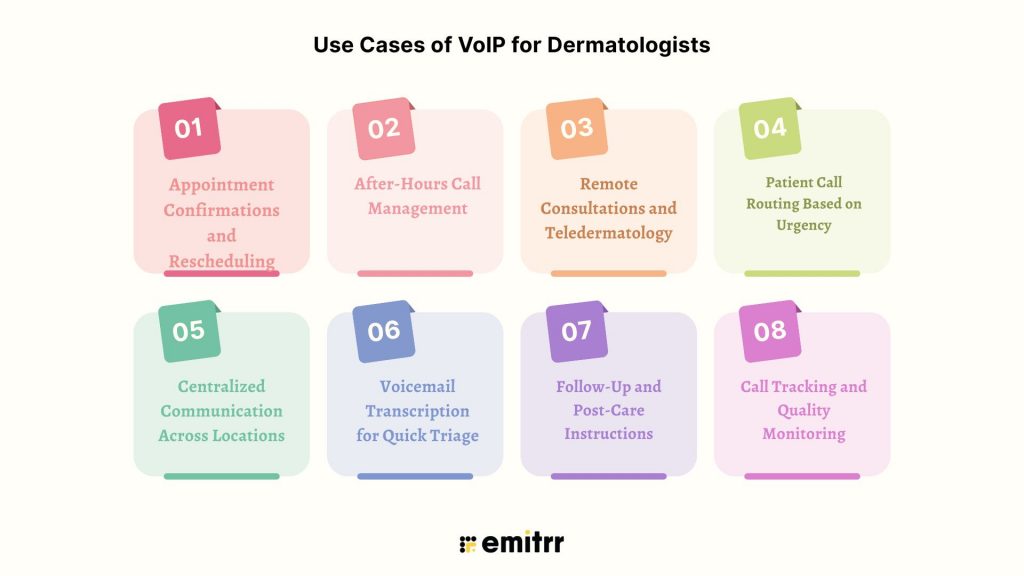
Appointment Confirmations and Rescheduling
VoIP systems with automated SMS or voice reminders help reduce the number of missed appointments. Patients can confirm or reschedule appointments in seconds, allowing clinics to proactively fill openings. This reduces manual call loads for front-desk staff and ensures smoother calendar management with fewer disruptions to the daily appointment schedule.
After-Hours Call Management
When clinics are closed, VoIP routes calls to on-call staff or voicemail-to-email services. This ensures patients are supported 24/7 without relying on manual effort. Messages are logged and tracked, reducing the risk of missed urgent concerns and allowing your practice to offer consistent, professional care outside business hours.
Remote Consultations and Teledermatology
VoIP platforms support secure, high-quality voice and video calls. Dermatologists can conduct remote assessments, prescribe medications, or deliver post-treatment care virtually. This is particularly beneficial for patients in rural or underserved areas, as it helps reduce unnecessary in-person visits while maintaining continuity of care.
Patient Call Routing Based on Urgency
With intelligent call flows, VoIP systems automatically triage calls. Emergencies or urgent concerns are directed to clinical staff, while the front desk handles routine questions. This improves response times, prioritizes care, and ensures patients receive appropriate attention without unnecessary delays or bottlenecks.
Centralized Communication Across Locations
For practices with multiple branches, a unified VoIP healthcare system streamlines internal communication. Staff can transfer calls seamlessly between clinics, ensuring patients reach the right team without being rerouted repeatedly. It supports consistency in patient experience and simplifies coordination across all locations.
Voicemail Transcription for Quick Triage
VoIP technology can convert voicemails into readable text. This enables staff to review messages efficiently, prioritize callbacks based on urgency, and prevent missing important details during peak hours or staff shortages. It also enables faster decision-making and documentation for patient interactions.
Here’s a quick video showing how voicemail transcription works:
Follow-Up and Post-Care Instructions
Clinics can schedule automated calls or texts with care instructions, medication reminders, or skincare tips. This proactive approach supports treatment adherence, improves patient outcomes, and reduces manual outreach efforts. VoIP helps ensure patients stay engaged and informed even after they leave the clinic.
Call Tracking and Quality Monitoring
VoIP enables call recording and analytics dashboards that track key performance metrics. Managers can review call quality, evaluate staff interactions, and utilize these insights for training purposes. It ensures consistent communication standards, reinforces compliance, and supports ongoing improvement in patient service delivery.
Best Practices for VoIP for Dermatologists
Implementing VoIP effectively requires more than just setting it up. It demands secure configurations, regular training, and ongoing optimization to ensure dermatology clinics operate safely, efficiently, and professionally.
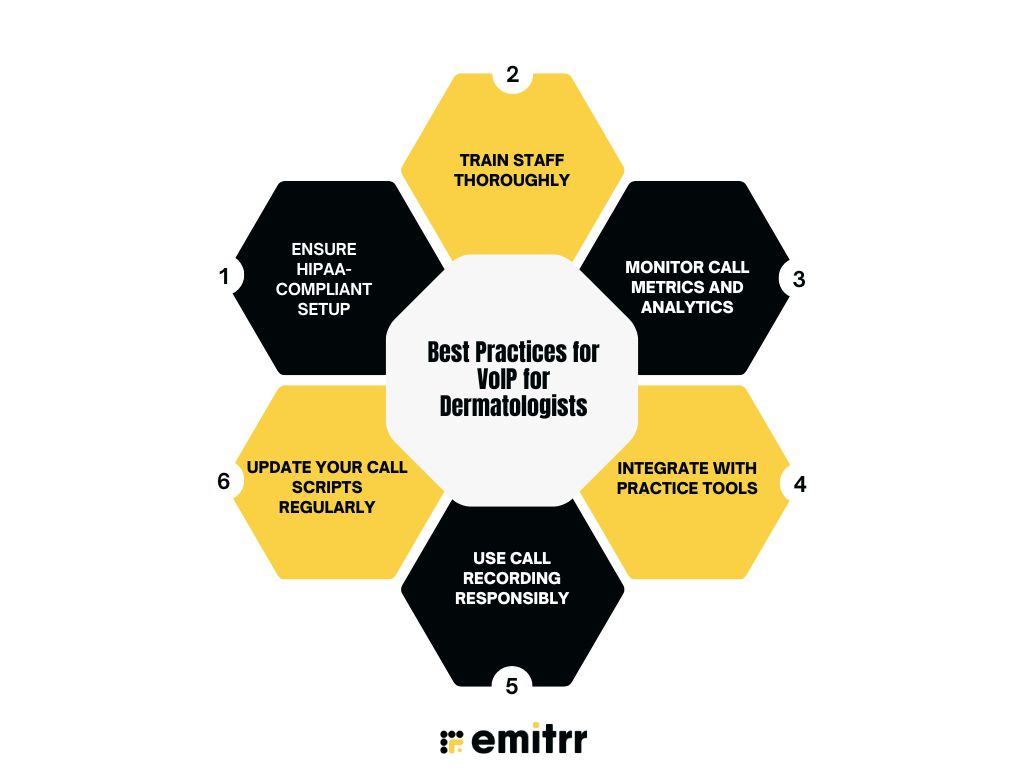
Ensure HIPAA-Compliant Setup
Choose a VoIP healthcare system that offers end-to-end encryption, access controls, and secure cloud storage. This ensures your patient communications remain private and compliant with HIPAA regulations, protecting sensitive medical data and minimizing the risk of breaches or penalties.
Train Staff Thoroughly
Proper staff training is critical. From call forwarding and voicemail retrieval to utilizing analytics dashboards, your team should know how to leverage the VoIP system’s full potential for improved communication, reduced errors, and smoother patient interactions throughout the clinic.
Monitor Call Metrics and Analytics
Track call data like response times, missed calls, and volume trends. Emitrr AI offers real-time dashboards that help identify communication gaps, improve staffing decisions, and ensure patients are never left waiting too long on hold or without follow-up.
Integrate with Practice Tools
Your VoIP healthcare system should integrate seamlessly with practice management software and Electronic Health Records (EHRs). This enables real-time appointment scheduling, patient record access, and task automation, reducing administrative workload and enhancing clinic productivity without the need to switch between disconnected platforms.
Use Call Recording Responsibly
Call recordings can improve staff training and ensure compliance. Always inform patients beforehand and store recordings securely. Review them regularly to maintain quality standards, resolve disputes, and ensure consistent communication across all patient interactions and departments.
Update Your Call Scripts Regularly
Voice prompts, IVRs, and greetings must reflect your current operations. Review scripts frequently to include updated doctor schedules, clinic hours, and service changes, ensuring every caller receives clear, accurate, and timely information without confusion or frustration.
Challenges of VoIP for Dermatologists
While VoIP offers clear advantages, successful adoption requires addressing several operational and technical hurdles that may impact communication quality, compliance, and staff adaptation.
- Dependence on Internet Stability: VoIP relies on uninterrupted internet access. Clinics should invest in high-speed broadband, dedicated VoIP lines, and backup connections to minimize dropped calls and lag, especially during peak consultation hours when every second matters for patient communication.
- Security and Privacy Concerns: Handling patient data over the internet raises privacy issues. Utilize a secure healthcare VoIP provider, such as Emitrr AI, that ensures end-to-end encryption, HIPAA compliance, and secure cloud storage, thereby safeguarding sensitive medical communications across all devices and users.
- Transition from Legacy Systems: Migrating from traditional landlines can seem daunting. Emitrr AI streamlines the process with number porting, data migration, and white-glove onboarding support, enabling dermatology clinics to upgrade without disrupting daily operations or risking data loss during the transition.
- Learning Curve for New Features: Switching to a modern VoIP healthcare system may overwhelm some team members. User-friendly interfaces, ongoing training, and responsive support from providers like Emitrr AI ensure staff get comfortable quickly and make full use of advanced tools for improved care delivery.
How to Set Up VoIP for Dermatologists Using Emitrr
Emitrr AI makes setting up a healthcare VoIP system simple and efficient. With guided onboarding, intuitive tools, and seamless integration, dermatology clinics can get started quickly, without disrupting existing workflows or compromising patient communication.
- Step-by-Step Onboarding: Emitrr AI assigns onboarding experts to guide your team through setup, from device connections to call routing, ensuring your system is customized for dermatology clinic workflows and HIPAA compliance.
- Port Existing Numbers: Keep your current clinic numbers active. Emitrr AI supports number porting during setup, helping you maintain continuity in patient communication with zero downtime or disruption during the transition.
- Configure Call Flows and IVR: Create interactive voice response (IVR) menus and call flows tailored to various departments. Emitrr AI enables you to automate routing for appointments, prescriptions, billing, or emergencies with just a few clicks.
- Set User Roles and Permissions: Control access based on user roles. Emitrr AI allows admins, doctors, and front-desk staff to have tailored permissions, ensuring privacy, efficiency, and simplified workflows across the team.
- Use Analytics and Dashboards: Emitrr AI’s dashboard provides real-time insights into call volumes, missed calls, staff responsiveness, and patient satisfaction, helping you make data-driven decisions to continuously improve your communication process.
Frequently Asked Questions
Yes, VoIP is HIPAA-compliant when using a provider like Emitrr AI, which offers encrypted data transmission, secure cloud storage, and role-based access controls to ensure full compliance with healthcare privacy regulations.
Yes, Emitrr AI enables both calling and texting from a single dedicated number. This unified communication streamlines follow-ups, appointment reminders, and patient engagement—all while maintaining professionalism and consistency across channels.
For clear voice quality, a minimum of 100 kbps is required per concurrent call. Emitrr AI recommends a stable, high-speed broadband connection to support high-definition (HD) voice, video, and multiple simultaneous users in the clinic.
Emitrr AI securely records calls with full encryption and allows role-based access. Clinics control who can access recordings, ensuring compliance, training support, and documentation integrity across all patient interactions.
Absolutely. Emitrr AI integrates seamlessly with major EHR and practice management systems, such as Athenahealth, eClinicalWorks, and Kareo, allowing for synced patient records and streamlined workflows without manual data entry.
Conclusion
VoIP for dermatologists is a powerful upgrade for today’s busy, multi-tasking clinics. It simplifies communication, improves patient experience, reduces costs, and enables scalability like never before. By transitioning to a VoIP healthcare system, dermatologists can streamline operations, offer teleconsultations, and maintain patient engagement throughout their care journey.
Emitrr AI is purpose-built for healthcare VoIP, offering unmatched HIPAA-compliant solutions, seamless integration with EHRs, and a user-friendly dashboard to manage all communication in one place.
Now is the time to future-proof your healthcare phone system. Schedule a free demo with Emitrr AI and discover how your dermatology clinic can benefit from smarter, safer, and more efficient communication.

 4.9 (400+
reviews)
4.9 (400+
reviews)