
Introduction
Ever feel like you’re doing all the right things clinically, but something’s still missing in how you stay connected with patients?
In psychiatry, communication is part of healing. It’s not just what happens during the session. It’s also how you reach out and communicate between sessions. Something like a quick SMS reminder or a thoughtful voicemail may seem really basic. But it’s these thoughtful details that can make your patients feel supported, seen, and safe.
Texts have an open rate of around 98%, and most are read within minutes. This is what makes them excellent for sending appointment reminders, medication nudges, or friendly follow-ups. In fact, most patients now prefer texts over phone calls. Because they’re quick, easy, and non-intrusive.
Now, you don’t have to take up the extra work of drafting each SMS template. We’ve got you covered. This guide will walk you through simple, thoughtful ways to use texts in your practice. You’ll get tips and ready-to-use scripts to make daily communication easier, without adding to your workload. So, let’s dive in!
SMS in Psychiatry
Texting has become second nature. Patients text their friends, their kids, and even their dentist. So it’s only natural that they’d want to text their psychiatrist, too. But in mental health care, texting isn’t just convenient. When done right, texting helps you stay connected in a way that feels respectful, supportive, and efficient.
The Role of SMS in Mental Health Practice
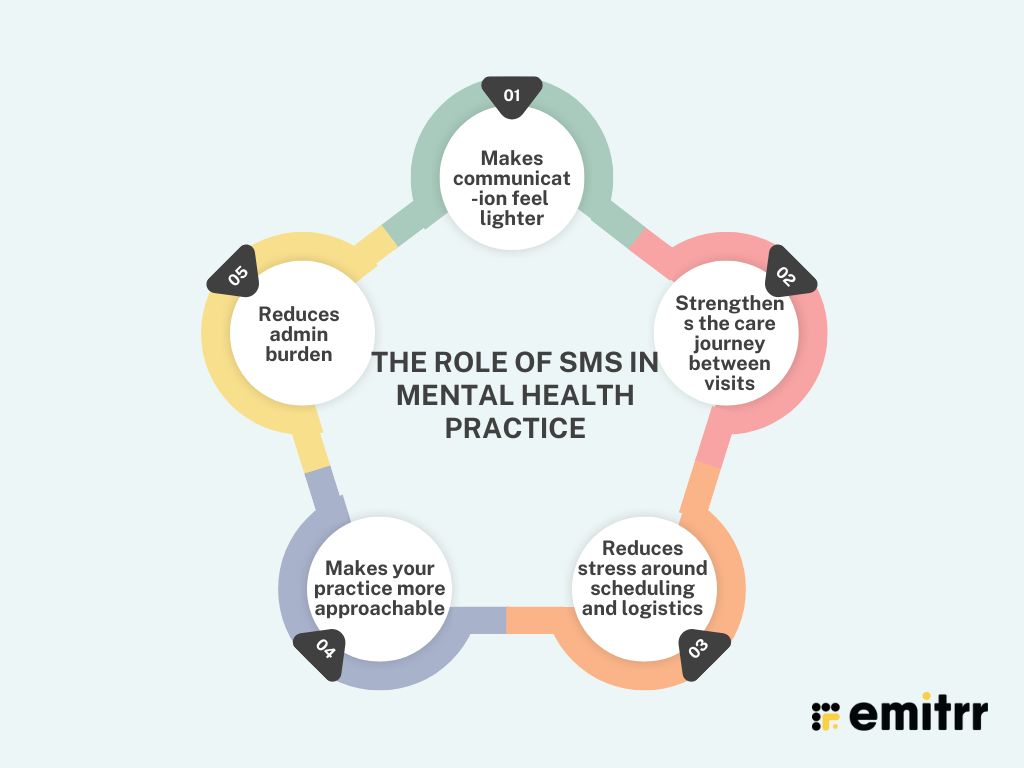
Makes communication feel lighter
Texting doesn’t demand a response right away, and that’s exactly why it works so well in mental health. It lets patients absorb the message when they’re ready. For someone who’s anxious or overwhelmed, that pause can be helpful. It lowers the pressure compared to a live phone call. A short message gives them time and space, which matters more than we think.
Strengthens the care journey between visits
Therapy isn’t just about what happens in the room. It’s also about what happens between sessions. A simple text to check in, share a reminder, or offer encouragement can help patients feel like you’re walking with them. It builds continuity and support without being intrusive.
Reduces stress around scheduling and logistics
Missed appointments, forgotten times, rescheduling calls, they all add stress. But a quick text can confirm, remind, or adjust without the back-and-forth. It simplifies the process, especially for patients juggling work, family, or other therapies.
Makes your practice more approachable
Some patients hesitate to call, especially if they’re new or unsure. A friendly text feels less intimidating. It opens the door for engagement in a softer way, especially for younger patients or those who communicate better in writing.
Reduces admin burden
Phone tag can waste time, drain staff energy, and frustrate patients. With SMS, a lot of common tasks like confirming appointments, sharing hours, or updating records can be handled in seconds. It will also end up reducing your call volume. Which helps your team focus on patients who really need to talk. Ultimately, it will lead to less stress for everyone, without sacrificing care!
Best Practices for SMS Communication
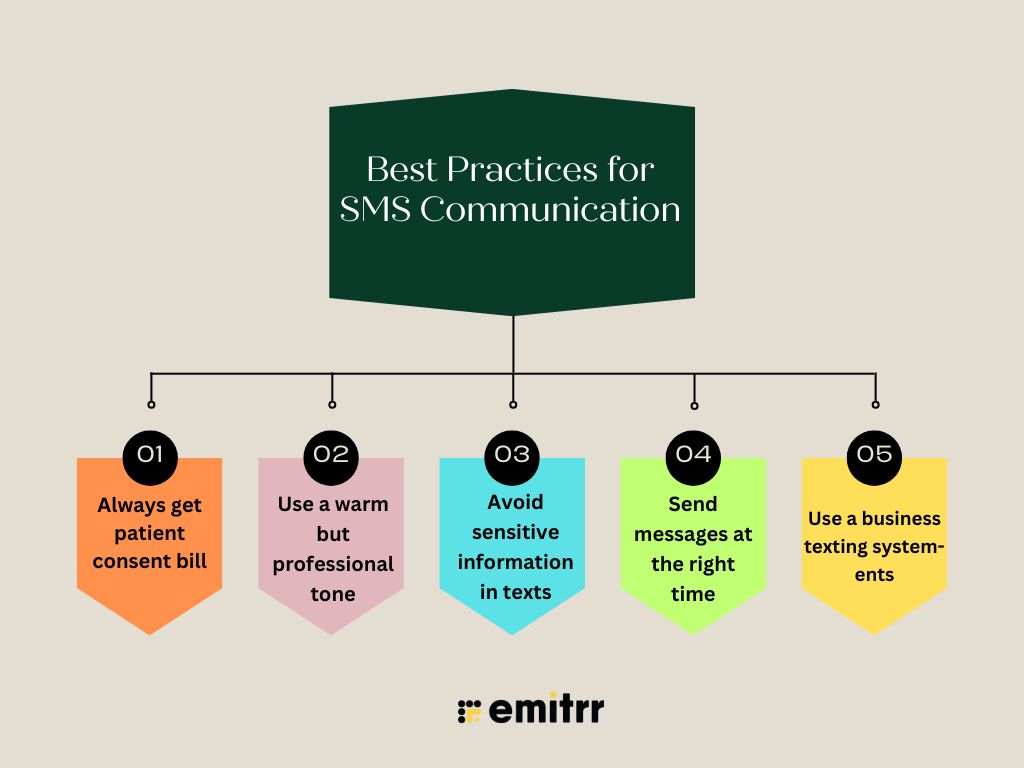
Always get patient consent
Never assume it’s okay to start texting patients. Add a consent checkbox to your intake form. You can even ask them directly during onboarding. This shows respect for their comfort level and ensures you’re following HIPAA guidelines. It also builds trust right from day 1, showing that you take privacy seriously.
Use a warm but professional tone
Even if texting feels casual, your message should still sound respectful. Instead of “Appt tomorrow 3PM,” try “Hi Sarah, just a reminder your session is tomorrow at 3.” That extra warmth makes a difference. Patients want to feel like you’re speaking to them, not just sending a system-generated alert.
Avoid sensitive information in texts
Texting is just not the place for diagnoses, test results, or therapy details. Messages can be seen by others, especially if patients share their phones. It’s better to stick to general things like appointment times or light wellness check-ins. For anything clinical, use secure platforms or talk in person.
Send messages at the right time
Timing matters more than you think. A 7 AM ping might wake someone up, or a 10 PM reminder could cause unnecessary stress. Try texting between 10 AM and 4 PM. Those windows tend to be safe and well-received. Respectful timing makes your message feel helpful, not intrusive.
Use a business texting system
Never use your personal number to text patients. Platforms like Emitrr let you text from your clinic’s number, track conversations, and stay HIPAA-compliant. They also let staff members reply on your behalf if needed. It keeps things smooth, secure, and professional.
Common Use Cases for SMS in Psychiatry
Appointment reminders and confirmations
Texting is perfect for reminders. They’re fast, reliable, and get seen. Whether it’s a weekly therapy session or a one-time consult, a reminder can help your patients plan their day in advance. This extra step won’t just make life easier for your patients. It will help you reduce no-shows as well. Some platforms even let patients confirm or reschedule with one tap. So if any last-minute cancellations pop up, your clinic can always accommodate accordingly.
Medication reminders and refill alerts
What helps patients stay on track with their meds? Sometimes, just a simple text. For patients managing prescriptions, a quick reminder can make a big difference. It could be a daily nudge or a refill alert. But SMS keeps them consistent. It’s extra helpful during med changes, when sticking to a routine really counts.
Well-being check-ins after sessions
A quick “How are you feeling today?” message after a tough session shows patients you’re thinking of them. These small check-ins can open the door for further support if needed. It will also end up strengthening the therapeutic bond between appointments.
Office closures or schedule updates
Holiday season coming up? Taking a quick break? If your hours change or you’re closing the office, a quick text does the trick. No need to call everyone one by one. Patients get a heads-up, and you skip the confusion, no-shows, or surprise walk-ins when you’re out.
Personal touches like birthdays
A quick “Happy Birthday!” or “Hope you’re enjoying the holidays” goes a long way. It shows patients you’re thinking of them, not just when they’re due for a session. These little check-ins make your practice feel more human and less like a clinic. No big effort needed, just a warm message that says, “Hey, we care.” Over time, these little things can really help more than you’d imagine.

When to Use SMS vs. Voicemail in Psychiatry
Both SMS and voicemail are helpful tools in a psychiatric practice. Choosing the right one depends on a few simple things. What do you want to say? Is it urgent? And how does your patient prefer to hear from you?
Here’s a quick breakdown to help you decide:
| Scenario | SMS is Best When | Voicemail is Better When |
| Appointment Reminder | You want a quick confirmation or reminder | Patient doesn’t use texting or prefers calls |
| Medication Reminder | You’re sending a daily or weekly nudge | You need to explain a change in medication or dose |
| Wellness Check-In | You want to see how they’re doing post-session | You want to express concern after a tough session |
| Office Closure | You’re notifying many patients at once | A patient calls, unaware that your office is closed |
| Missed Call Follow-Up | You want to reply quickly with a “Sorry, we missed your call” message | Patient left a message you need to respond to personally |
| Prescription Refill Request | You’re confirming receipt of a refill request | You’re asking for clarification or need additional info |
| New Patient Inquiry | You’re replying to an initial question or scheduling need | Caller left a message, and you want to give a more personal reply |
Text messages are great for speed and convenience. They’re read within minutes, if not seconds. But voicemail allows you to show tone, emotion, and detail in a way that texts can’t. However, the usage can overlap based on what you and your patients prefer.
If you’re still confused about where to use what, just follow a simple thumb rule:
- Use SMS for routine communication.
- Use voicemail when the message is more emotional, complex, or private.
Ready-to-Use SMS Templates for Psychiatrists
Here are some ready-to-use SMS templates for common scenarios at your psychiatric clinic. You can pop these messages into your system and simply add details like the patient’s name, appointment date, or time.
Appointment reminders and confirmations
Template 1:
“Hi [First Name], just a reminder about your session tomorrow at [Time]. If you need to reschedule, feel free to reply here. Looking forward to seeing you!”
Template 2:
“Hey [First Name], your appointment with Dr. [Last Name] is set for [Day] at [Time]. Reply “C” to confirm or “R” to reschedule”.
Template 3:
“Good evening! This is a quick heads-up that you’re scheduled for your therapy session tomorrow at [Time]. Let us know if anything changes.”
Template 4:
“Hi [First Name], we’ve got you down for an appointment on [Day] at [Time]. Let us know if you have any questions or need assistance before then.”
Medication reminders and refill alerts
Template 5:
“Hi [First Name], just a friendly reminder to take your medication this evening. You’re doing a great job, keep it going!”
Template 6:
“Hello [First Name], time for your morning meds. If anything feels off or you have questions, feel free to reply.”
Template 7:
“Hi [First Name], your medication refill might be due soon. Let us know if you’d like help placing the request.”
Template 8:
“Just checking in, [First Name], it’s time for your [Medication Name] refill. If your pharmacy needs anything from us, we’re here to help.”
Well-being check-ins after sessions
Template 9:
“Hey [First Name], just checking in after our session. Hope you’re feeling okay today. Let us know if there’s anything on your mind.”
Template 10:
“Hi [First Name], thank you for today’s session. Please take care. You can reply anytime if you’d like to talk more.”
Template 11:
“Hello [First Name], I hope your day is going well. If anything comes up from our session or you need to connect, feel free to reach out.”
Template 12:
“Hi [First Name], thinking of you after our chat yesterday. If you’d like a quick check-in before our next session, just reply here.”
Office closures or schedule updates
Template 13:
“Hi [First Name], our office will be closed this [Day] for [Reason]. If you have any concerns or need to reschedule, we’re happy to help!”
Template 14:
“Just a quick update, our hours have changed this week. If your session is affected, we’ll be in touch soon.”
Template 15:
“Hello [First Name], our clinic is closed today due to [Reason]. We’ll reopen tomorrow as usual. Let us know if you need anything urgent.”
Template 16:
“Hi [First Name], Dr. [Last Name] won’t be available on [Day]. Let us know if you’d like to reschedule your session.”
Personal touches like birthdays
Template 17:
“Happy Birthday, [First Name]! Wishing you a peaceful and joyful year ahead. We’re so glad to have you with us.”
Template 18:
“Hi [First Name], sending warm wishes on your special day. Hope it’s full of kindness and calm moments.”
Template 19:
“Hello [First Name], just wanted to say happy birthday! Take some time for yourself, enjoy your day.”
Template 20:
“Hi [First Name], wish you a very happy birthday. Thank you for being part of our care community.”
How to Use These Templates in Your Practice
Here’s how you can get started:
Step 1: Choose the right message for the moment
You don’t need to type out a new message every time. If it’s a refill reminder or an appointment check-in, just use the matching template. That’s what they’re there for, to save you time and effort. Keep it relevant and pick one that fits the situation exactly. A well-timed message always feels more thoughtful.
Step 2: Add personal details before sending
Templates are a base, but a little personal touch makes them shine. Always add the patient’s name, appointment date, or specific info before hitting send. It takes just a second but goes a long way in making the message feel real. Patients can tell when a message is for them, not just any inbox. That small effort builds trust.
Step 3: Use a system that keeps your work number separate
Never text from your personal number. It blurs lines, gets messy, and can compromise privacy. A tool like Emitrr lets you text from your clinic number while keeping things professional. Your team stays on the same page and everything is stored securely. It’s a cleaner, safer way to manage communication.
Step 4: Set up automation for the repeat tasks
Not every text needs to be manual. Automate the messages you send often, like appointment reminders, refill alerts, or birthday wishes. Platforms like Emitrr let you schedule texts in advance or auto-trigger them. That means less chasing and more time for care. Automation doesn’t make you less human, it helps you stay consistent.
Step 5: Train your team
If you have a team, they should all be on the same page. Show them how to use the templates, personalize the text, and know when a message needs a call instead. Keep a quick guide ready. It could be a shared doc or a folder in your texting app. That way, your patient experience stays smooth, even when you’re not the one texting.
Step 6: Review your templates every few months
What worked last season might feel outdated now. Schedules change, language evolves, and so do your patients’ needs. Take time every few months to read through your templates. Are they still clear? Do they still sound like you? If people seem confused or stop replying, it might be time for a small tweak.
And that’s it! Getting started is really that simple. With just a few thoughtful templates and the right approach, you can make every message feel personal, clear, and supportive.
How Emitrr Simplifies Patient Engagement for Psychiatrists
Staying connected with patients shouldn’t feel like a chore. Emitrr gives you all the tools you need to text, call, and follow up, without losing the human touch. Whether you’re a solo psychiatrist or part of a busy group practice, here’s how Emitrr helps you keep communication smooth and stress free.
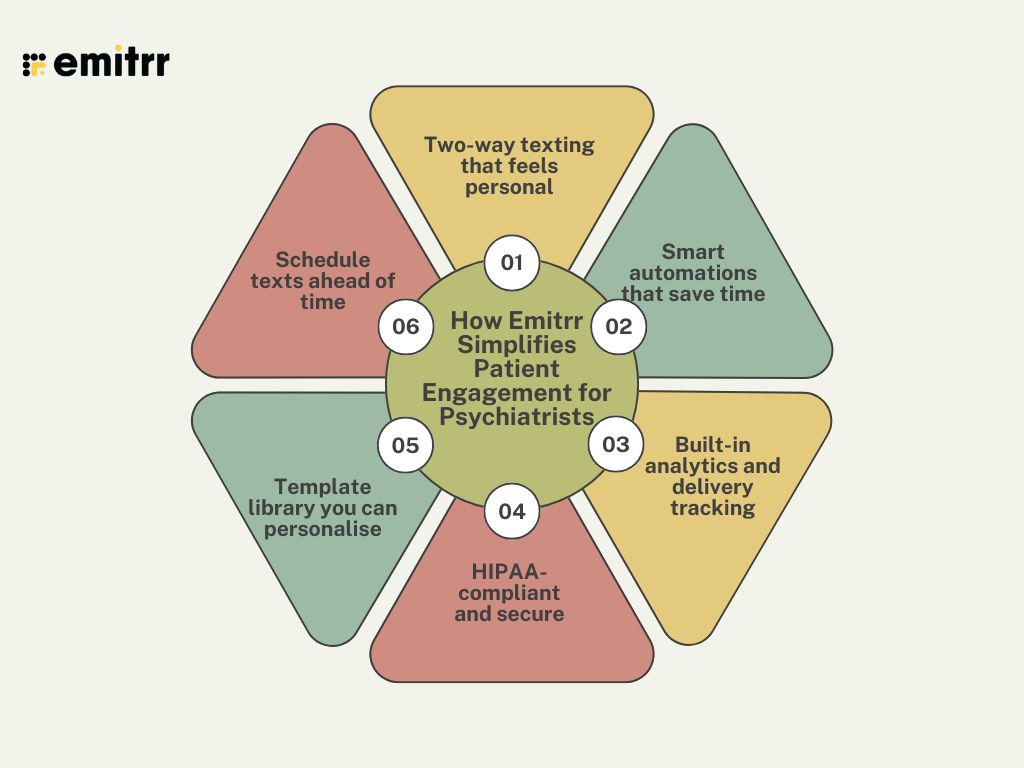
Two-way texting that feels personal
With Emitrr, you can have real conversations over text. Patients can reply directly, and your whole team can see the thread in one shared inbox. No more switching devices or forwarding messages, everything’s right where you need it. It keeps your clinic responsive and patients reassured with two-way texting.
Smart automations that save time
Set up automated reminders, birthday messages, post-session check-ins, and more. Once they’re in place, Emitrr handles them on schedule, freeing you up for actual care instead of repeat admin. You’ll never forget a follow-up or reminder again. It’s like having a virtual assistant, on autopilot.
Built-in analytics and delivery tracking
Want to know if patients are seeing your texts? Emitrr tracks delivery and read rates so you’re not left guessing. You can also see which messages get the best responses and adjust as needed. That means smarter communication over time, with real data to back it.
HIPAA-compliant and secure
Emitrr is fully HIPAA-compliant, so you can send and receive texts without worry. All data is encrypted, and you’ll get a signed BAA for peace of mind. It’s built for healthcare from the ground up. So your messages stay private, protected, and professional.
Template library you can personalise
You get access to ready-to-use templates for reminders, reschedules, follow-ups, and more. But they’re not one-size-fits-all. You can edit them with patient names, times, and context to make every message feel thoughtful and relevant.
Schedule texts ahead of time
Need to send check-ins or reminders on the weekend? With Emitrr, you can write them now and schedule for later. It helps you stay consistent without needing to be “always on.” Great for solo psychiatrists who like to plan ahead.
FAQs
Yes, it is. Emitrr is built for healthcare. So everything, right from texts to voicemails is encrypted and secure. You’ll also get a signed BAA (Business Associate Agreement) from them, which means you can use it confidently without worrying about privacy issues.
Absolutely. Emitrr is team-friendly. You and your staff can all log in to the same dashboard, view the same inbox, and respond to texts or calls as needed. This helps avoid confusion and makes sure no patient messages get missed, even on busy days.
Yes. SMS is great for quick reminders, while voicemail adds a personal touch when patients call. Together, they help cover all your communication needs.
Conclusion
Staying in touch with patients shouldn’t feel hard. A quick text or a friendly SMS can make all the difference. It shows patients you care, even when you’re not speaking in person.
Templates help. The right tools make it easier. And when it all works together, communication just flows better! So, Want to keep things simple and personal? Book a free demo with Emitrr today and see how easy it can be!

 4.9 (400+
reviews)
4.9 (400+
reviews)