
Introduction to Psychiatrists’ Reputation and Review Management
Let’s say someone is finally ready to get help. They’ve been debating it for weeks. Maybe even months. One night, they pull out their phone and type “psychiatrist near me” into Google. A few names pop up. What do they look at next?
The reviews.
They’re not checking for just the star ratings. They want to see if other people felt heard, if someone mentions how kind you were, or whether your front desk was easy to deal with. They’re searching for reassurance before they even think about booking. In fact, nearly 73% of patients check online reviews before choosing a doctor. And when it comes to psychiatry, that number feels even more real. Mental health is personal. People may not ask friends or family for recommendations. They rely on what strangers have shared online.
These days, people check your reviews before they even think about calling. A few kind words from happy patients can go a long way. But if your online presence feels cold or negative, it might turn someone away. That’s why managing your reputation matters.
Importance of Reputation and Review Management for Psychiatrists
Let’s break down why reputation management even matters for psychiatrists:
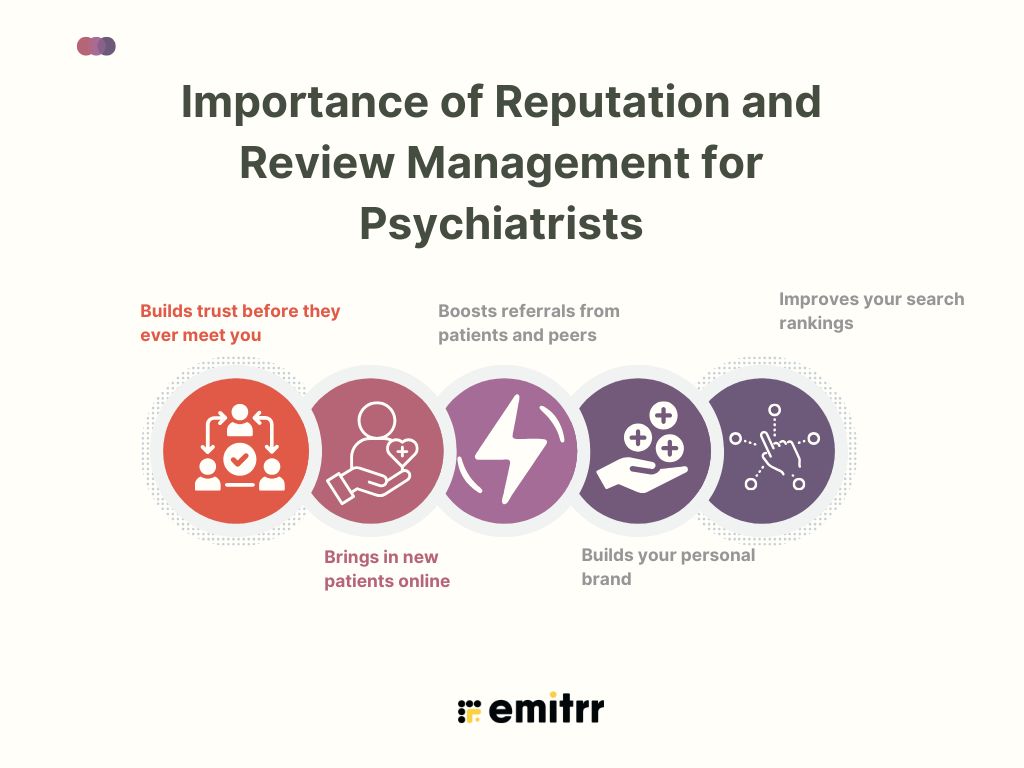
Builds trust before they ever meet you
Almost everyone checks reviews before they book appointments. This can’t be more true in the case of mental health. Patients want to know that they’ll feel safe and heard when they walk in. Now imagine if someone who was first hesitant reads that you were kind and easy to talk to, how would it make them feel? It can make a world of difference. That one review might be what gives them the courage to finally book that first session.
Brings in new patients online
A good online presence helps you show up when someone types “psychiatrist near me” into Google. If they see a bunch of positive reviews, there’s a much better chance they’ll click and call. Think of it as free marketing that works 24/7, even while you sleep.
Boosts referrals from patients and peers
Happy patients talk. They tell their friends. They leave nice reviews. That kind of organic marketing will build your credibility. Other providers notice too. A primary care doctor or therapist might check your reviews before sending someone your way. A solid reputation gives them more confidence in referring to you.
Builds your personal brand
Your reviews say a lot about your practice. Are you thoughtful? Do you follow up? Do you care about feedback? When you respond to reviews (even just a thank-you), it shows you’re present and professional. Over time, this builds your brand as someone who listens and values the patient experience.
Improves your search rankings
It’s not just patients who will look at your reviews. Google will too! More reviews (especially good ones) mean you will show up higher in search results. So when someone’s looking for help nearby, you’re easier to find. It’s the same for healthcare platforms like Zocdoc or Healthgrades. If your ratings are high, you’ll likely be listed higher, and that will lead to more eyes on your profile.
At the end of the day, managing your reputation is about showing up when people need you. This will make them feel safe even before they pick up the phone. A few small actions, like asking for reviews and replying kindly, can go a long way in helping you help more people.
Key Elements of Reputation and Review Management for Psychiatrists
Managing your reputation online can feel like a lot. But honestly, it comes down to just a few things done right. Let’s walk through them.
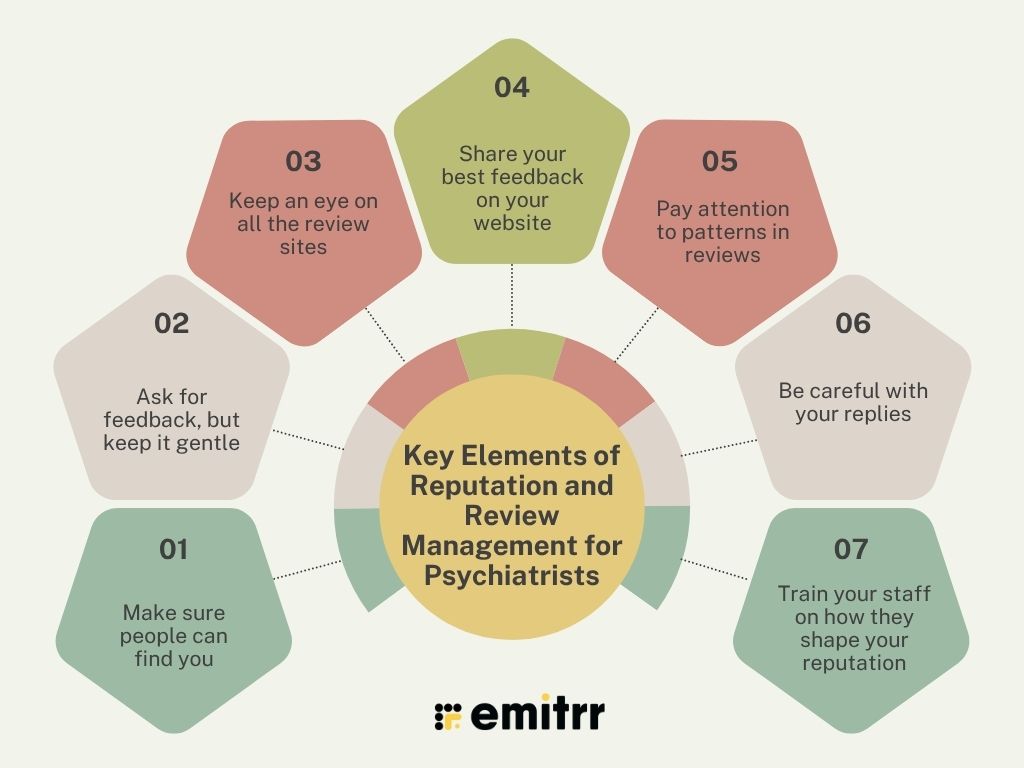
Make sure people can find you
First up, claim your online profiles. That means Google, Healthgrades, Zocdoc, WebMD, even Facebook or Yelp. Anywhere a patient might look for you. If your phone number or address is outdated on one site, it makes things confusing. Worse, it can look sloppy. Keeping everything accurate shows you’re present and professional. Just update these whenever something changes. You can set aside some time each week for this quick check-up, which will help you stay on top of things.
Ask for feedback, but keep it gentle
Happy patients won’t always leave a review unless you nudge them. And by nudge, we mean a soft, respectful reminder. You could say something like, “If you ever feel like sharing feedback, we’d appreciate it.” Or, send a simple follow-up email with a link. No pressure, no guilt. Just making it easy for those who want to say something nice. Remember, psychiatry is personal, so always be mindful. Keep it low-pressure and never ask in a way that feels pushy or inappropriate.
Keep an eye on all the review sites
Reviews can pop up anywhere, Google, Zocdoc, Healthgrades, just to name a few. Don’t just check one and forget the rest. Set aside a few minutes each week to take a quick look. Some tools can actually bring all your reviews into one dashboard. That way, you’re not logging in and out of five places. Staying on top of what’s being said means you can respond fast and fix anything that needs attention.
Share your best feedback on your website
Your website is prime real estate. Add a little section that highlights what patients are saying, just a few kind quotes. Something like, “Dr. Thompson really listens” or “I felt understood here.” You can even pull in Google reviews if your platform supports it. Just remember, always keep patient privacy in mind. Use initials or vague identifiers, and never post anything that reveals too much.
Pay attention to patterns in reviews
Reviews can be more than just praise or complaints. They’re feedback. Maybe people keep saying your front desk is friendly, great! Keep that going. Or maybe a few mention long wait times. That’s something to look into. These little trends can help you improve how things run. Over time, you might even see your ratings improve just from making a few small changes.
Be careful with your replies
This one’s important. When you respond to reviews, never confirm that someone was your patient. Even if they say it themselves. A simple “Thanks for the feedback, we appreciate it” is enough. Keep it professional, neutral, and always HIPAA-safe. Avoid using names, symptoms, or anything that could count as private info. It might feel like you’re holding back, but it actually builds trust. You’re showing people that you respect privacy.
Train your staff on how they shape your reputation
Your team is a big part of the patient experience, sometimes even more than the session itself. A calm voice on the phone, a smooth check-in, or just a little patience during a busy day can leave a strong impression. Make sure your staff knows that every small interaction matters. When people feel respected and cared for at every touchpoint, they’re much more likely to leave a kind review.
These elements are the foundation. You don’t need to do anything flashy. Just be consistent, ethical, and kind. That’s what patients notice and that’s how you build a reputation that reflects who you really are.

Challenges in Psychiatrists’ Reputation and Review Management
Managing online reviews isn’t always smooth sailing. And for psychiatrists, it comes with a few extra compliance issues. Here are some common roadblocks you might face, and how to deal with them smartly.
Feeling hesitant about asking for reviews
This one’s the most common challenge. You might think asking for reviews feels awkward. Or too self-promotional. But the truth is, most patients won’t think to leave a review unless you gently bring it up. And when asked the right way, most are happy to share something positive. Try a short, friendly message after their visit, something like, “If you found today’s visit helpful, your feedback really helps others find care too.” Keep it optional and respectful. That one small nudge can go a long way in building up a collection of honest, kind words from people you’ve helped.
Responding without breaking HIPAA
You see a review pop up. Maybe it’s great, maybe it’s tough. Your instinct might be to thank the patient or explain your side. But hold on. You can’t confirm they’re your patient at all. Even saying “Thanks for coming in” can be a HIPAA violation. So, how do you reply? Keep it general. Something like “Thank you for your feedback. We work hard to create a supportive space for everyone.” No names. No conditions. No details. Just kindness and professionalism. You can even create a set of go-to replies to make this easier.
Getting fewer reviews
Psychiatry is different. People often don’t feel comfortable leaving public reviews about their mental health care. They might worry about judgment or just want to keep their experience private. That means you’ll likely get fewer reviews than, say, a dermatologist. And that’s okay. But it also means a single negative review can really stand out. To balance this, gently ask for feedback when appropriate. A kind follow-up message works well. Just make sure it’s optional, respectful, and low-pressure. You can even suggest that patients don’t need to mention personal details, just share if they had a good experience. Over time, those quiet wins will add up.
Dealing with unfair or fake reviews
Sometimes, reviews aren’t honest. They might come from someone who never saw you or got any actual treatment from you. It’s frustrating, no doubt. But you still can’t say, “You weren’t my patient.” Instead, go with something like, “We can’t verify this situation, but we’re open to resolving concerns directly.” It shows professionalism without stepping over privacy lines. You can also flag fake reviews to the platforms. When in doubt, stick to calm, neutral replies that show you’re listening, even if the review feels off.
Too many platforms to track
Let’s face it, patients don’t all leave reviews in one place. One person might post on Google. Another on Yelp. Someone else drops a comment on Facebook or Healthgrades. And now you’re left juggling five different sites, wondering where to even look. It can feel like a full-time job just keeping up. The easiest fix? Use a software tool that pulls all your reviews into one dashboard. That way, you’re not jumping from tab to tab every week. You can quickly scan what’s new, respond where needed, and keep your reputation solid across the board.
By knowing these challenges in advance, you’re better prepared to handle them. The key is to stay calm, ethical, and consistent.
Best Practices for Psychiatrists’ Reputation and Review Management
Managing reviews isn’t just damage control, it’s about keeping your good work visible. Here are some simple, effective ways to do it right.
Timing your review request
Now, not every session is the right time to ask for a review. But if a patient just thanked you or mentioned how much better they’re feeling, that’s a green light. Never ask for feedback after a heavy or emotional session. It will make you look pushy.
Using discreet and respectful language in follow-ups
When you follow up with a text or email, keep it kind and casual. No pressure. Say something like:
“We’d love your feedback. It helps others feel confident reaching out. No need to include personal details, just what you’re comfortable with.” Avoid anything that sounds like a push for a 5-star rating or breaks confidentiality rules.
Offering multiple channels to leave feedback (email, SMS, links)
Some patients prefer texting. Others might go for email or scan a QR code at your desk. You could even let them write something by hand that you post anonymously (with permission). Make it easy. Keep it flexible. The less effort it takes, the more likely they’ll leave a review.
Training front-desk staff to assist in the process
Did you know your team plays a huge role in how patients feel? Well, sometimes even more than the session itself. A friendly voice on the phone, a smooth check-in, or a bit of patience on a hectic day can stick with someone. So make sure your staff knows it all counts. When patients feel cared for at every step, they’re way more likely to leave a kind review.
Monitoring profiles weekly and flagging inappropriate content
Don’t let reviews pile up without noticing. Check your platforms weekly or even better use a reputation management tool that alerts you. Look out for spam, fake reviews, or anything inappropriate. Flag what doesn’t belong. Make sure your contact info is current. A quick, calm response to a bad review can show you care and turn the tide. But don’t get into arguments, one clear, kind reply is usually enough.
Staying HIPAA-compliant while managing reviews
As a psychiatrist, you have to be extra careful with how you respond to reviews. Even saying “Thanks for making it to today’s session” could count as revealing private information. That’s why it’s important to keep replies general without getting into details. And if you’re using software to request or manage reviews, make sure it’s HIPAA-compliant.
Creating a workflow for the escalation of negative reviews
Have a simple workflow in place. That way, you don’t react emotionally. Start by pausing before replying. Talk to your team if needed. If the review breaks rules, report it. If you do reply, stay generic and HIPAA-safe. If you know who the patient might be, consider reaching out privately, without pressure. One bad review won’t break your reputation, how you handle it matters more.
Managing reviews can feel like a lot when you’re already handling patients, notes, and follow-ups. That’s where a tool like Emitrr makes life easier. It sends out review requests, pulls in feedback from different sites, and keeps it all in one place. And because it’s built for psychiatry, it helps you stay HIPAA-compliant while building a strong online presence without the stress.
How to Improve Online Reputation and Reviews for a Psychiatrist Using Emitrr
Emitrr is a HIPAA-compliant tool built for healthcare providers, including mental health practices. It’s great for solo psychiatrists or small clinics who want to manage their online reputation without juggling five tools at once. Here’s how it helps:
Automates review invites after appointments
Emitrr sends review requests automatically after a patient’s visit, via SMS or email. You can customise the message and set the timing. For example, send a message two hours after the session, thanking the patient and sharing a link to leave a review. This helps you collect more feedback without extra effort.
Personalizes messages without breaking HIPAA rules
You can include the patient’s first name in your messages and tailor them to your style. Emitrr makes sure these are HIPAA-safe, no session details, just a kind nudge. You can even customise messages based on the type of visit.
Chooses smart timing for review requests
Not every moment is right to ask for a review. Emitrr lets you delay or schedule messages based on session type or time of day. For example, you can avoid sending invites right after a tough session or late at night.
Puts all your reviews on one dashboard
Instead of checking Google, Healthgrades, and Facebook separately, Emitrr pulls everything into one dashboard. You’ll see new reviews, where they came from, and can respond quickly without logging into multiple sites.
Highlights your best reviews on your website
With Emitrr, you can show off your top 5-star reviews directly on your website. It filters and updates reviews automatically, no need to copy and paste. Plus, this helps boost patient trust and SEO.
Tracks feedback for analysis, which can be used for internal improvements
Emitrr lets you download your reviews and feedback into reports. You can use them for team discussions, performance reviews, or quality checks. It turns patient feedback into insights you can act on.
Sets off alerts for critical reviews
Emitrr notifies you instantly when you get a new review, especially if it’s negative. You can address issues quickly or celebrate great feedback with your team. No more missing a review until it’s too late.
Adds review links to everyday messages
Include a review link in your follow-up emails, appointment reminders, or even on your intake forms. Emitrr generates short links and QR codes so patients can review you wherever they’re comfortable.
Segments your requests by patient type
Emitrr lets you set rules, so different types of patients get different review messages. You can avoid asking during a crisis, or tailor your message depending on whether the patient is new or long-term.
Sends one gentle reminder
If a patient forgets to review, Emitrr sends a kind follow-up. Just one, timed right. This small nudge can help you get more responses without bothering anyone.
Easily integrates with your existing tools
Emitrr connects with over 500+ platforms including EHRs like DrChrono, Kareo, Athenahealth, and patient communication tools. That means it fits right into your workflow without needing extra setup or switching systems. Whether you use Google Calendar, your practice management software, or intake forms, Emitrr helps tie everything together smoothly.
Offers affordable pricing for small practices
Emitrr is built with solo psychiatrists and small clinics in mind. Plans are transparent and based on what you need. You get full access to HIPAA-compliant review management, texting, and automation without breaking the bank.
Responsive and helpful customer support
Need help setting up review workflows or connecting your Google profile? Emitrr’s support team is known for being quick, friendly, and easy to reach. Whether by live chat, email, or scheduled walkthroughs, they guide you through every step to make sure your setup runs smoothly.
In a nutshell, Emitrr works like your behind-the-scenes assistant. It saves time, protects patient privacy, and helps you build trust with future patients. Whether you’re just starting out or growing your practice, it’s a smart way to stay on top of your online reputation.
Recommended for watching:
How to Respond to Online Reviews
Here’s how to handle online reviews in a thoughtful, professional way:
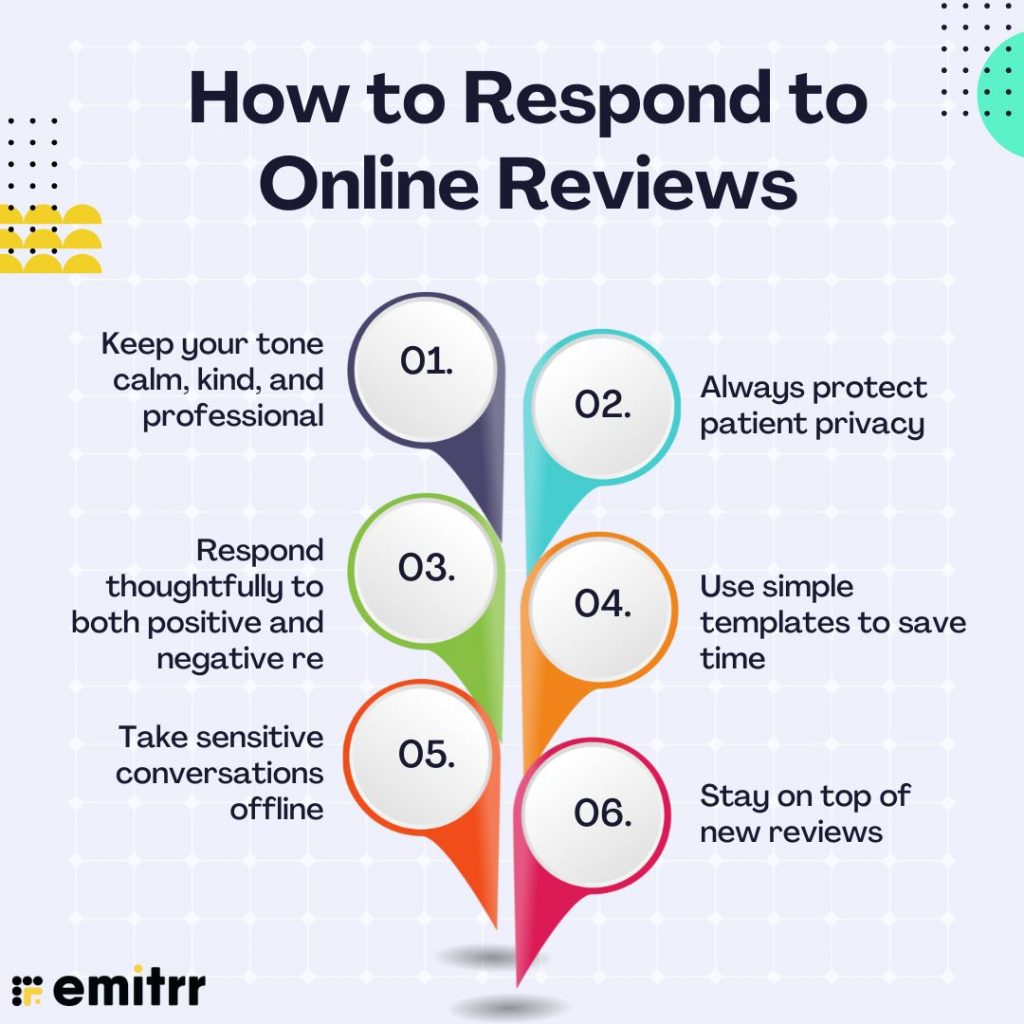
Step 1: Keep your tone calm, kind, and professional
Start every reply with empathy. Whether the review is positive or negative, your response should feel warm and respectful. Say thank you, acknowledge their feelings, and never sound defensive. A simple, steady tone shows readers that you care and take feedback seriously.
Step 2: Always protect patient privacy
Never confirm someone is your patient. Don’t mention treatment details, diagnoses, names, or even appointment dates. Use general language like “Thank you for your feedback” or “We aim to support every visitor.” Even when replying to kind reviews, keep it vague. Privacy always comes first.
Step 3: Respond thoughtfully to both positive and negative reviews
Replying to praise? Say thank you and express your appreciation. It shows you’re engaged. For negative reviews, acknowledge the frustration, express empathy, and avoid arguing. Offer a path to talk privately. This shows professionalism without getting into the details publicly.
Step 4: Use simple templates to save time
Having pre-drafted templates makes the process easier and safer. Prepare quick replies for common scenarios like long wait times, feeling unheard, or medication concerns. Just adjust the wording slightly each time so it feels personal and not robotic, but still consistent.
Step 5: Take sensitive conversations offline
Always offer to continue the conversation privately. For example: “We’d love to speak with you directly. Please contact our office.” This helps you resolve issues properly and keeps patient information out of public view. It also shows you’re serious about listening and improving.
Step 6: Stay on top of new reviews
Check platforms weekly (or set up alerts via tools like Emitrr). Quick responses make a great impression. Thank positive reviewers promptly and address concerns before they escalate. If you’re too busy to handle it alone, assign someone or automate alerts, just don’t let reviews sit for weeks.
Case Study for Psychiatrists’ Reputation and Review Management
The challenge: Limited online visibility and poor review collection
A small psychiatry clinic had just 3 Google reviews, averaging 3.7 stars. One was negative. No reviews on Healthgrades, no responses, and no system in place to ask happy patients for feedback. As a result, new patient calls dropped, and intake callers often said, “I wasn’t sure because there weren’t many reviews.”
The strategy: Implemented Emitrr’s automation and review tracking
They set up Emitrr to send automated, HIPAA-compliant review requests via text after appointments. The tool pulled in reviews from Google, Healthgrades, and Facebook into one dashboard. Alerts were turned on for new reviews, and quick-reply templates helped staff respond fast. Review links were also added to follow-up texts and emails.
The results: 6-month transformation
- 40+ new reviews collected (up from 3), average rating improved to 4.8 stars
- 3X more new patient calls from Google
- 100% review response rate using templates
- 800+ two-way patient texts handled via Emitrr
- 40% drop in no-shows with reminder texts
- Patients started mentioning reviews during intake, saying it built early trust
The clinic went from nearly invisible online to a trusted, well-reviewed practice, without adding admin work or chasing patients manually!
Frequently Asked Questions
Keep it light and respectful. A short text after the session works best. Something like, “We’d love your feedback, it helps other patients find us.” Most people are happy to help when asked the right way.
Yes, completely! Emitrr is built for psychiatry. All communication is encrypted, and no PHI is included in review requests. They also sign a BAA with your practice for added peace of mind.
Don’t panic. Stay professional. Respond with empathy, offer to continue the conversation offline, and avoid getting defensive. Many patients will judge you more by your response than the review itself.
Absolutely! You can set it to send review requests via text or email after each visit, automatically. No manual follow-up needed, and you choose the timing.
Yes. Emitrr pulls all your reviews into one dashboard. You can respond, get alerts, and see trends, without logging into five different places.
Conclusion
Your reputation already exists. The question is, are you in control of it? For psychiatrists, building trust online matters just as much as in the therapy room. With the right approach and tools like Emitrr, collecting great reviews doesn’t have to be awkward or time-consuming. It just becomes part of how your practice runs.
Want to simplify how you manage reviews? Book a free demo with Emitrr today and explore how it can support your practice’s reputation, quietly, effectively, and on your terms!


 4.9 (400+
reviews)
4.9 (400+
reviews)