
Introduction
Speech therapy clinics face many communication challenges today. Therapists often struggle to give every patient enough attention, keep up with paperwork, and make sure instructions are clear, especially when patients have different languages, ages, or abilities. Missed messages, slow feedback, and scheduling mix-ups can make it hard for patients to stay motivated and make steady progress.
AI is currently enhancing and optimizing communication in speech therapy significantly. By employing intelligent tools and VOIP technology, AI enables therapists to quickly connect with patients, offer immediate feedback, and ensure cohesion among all participants, regardless of whether sessions occur in person or online. It additionally aids in automating reminders, translating languages, and consolidating all patient information in a single location.
In this article, we’ll explore the biggest communication challenges in speech therapy, how AI-powered communication and VOIP are solving these problems, and the benefits, use cases, and future of AI in this important field.
Why do Speech Therapists Need AI Communication?
Speech therapy is a specialized area that demands patience, knowledge, and excellent communication abilities. Each client is distinct, facing various challenges—some might struggle with word formation, whereas others require assistance with comprehension, fluency, or self-assurance. Speech therapists need to pay close attention, provide straightforward guidance, and monitor each minor advancement. Simultaneously, they handle hectic schedules, maintain comprehensive records, and frequently collaborate with families, educators, or other specialists to aid in each individual’s development
Despite their dedication, speech therapists face several real-world challenges. Sessions might be limited in duration, making it difficult to give each client the attention they need. Documentation and progress reports require considerable time. Many clients speak different languages or find it challenging to understand instructions, which can impede progress. At times, clients experience frustration or become demotivated when they don’t observe rapid results, or they find it challenging to practice between therapy sessions
AI communication tools are revolutionizing the field for speech therapists. Therapists can provide immediate feedback during practice with AI, assisting clients in promptly rectifying errors. AI enables instant language translation, enhancing therapy accessibility for all. It can additionally recommend customized workouts, monitor progress automatically, and manage routine documentation such as session notes and reminders. This allows therapists to spend more time with their clients while providing therapy that is more engaging, effective, and tailored to individual needs. In summary, AI communication aids speech therapists in overcoming obstacles, enhancing outcomes, and maximizing the effectiveness of each session.
Benefits of AI Communication for Speech Therapy
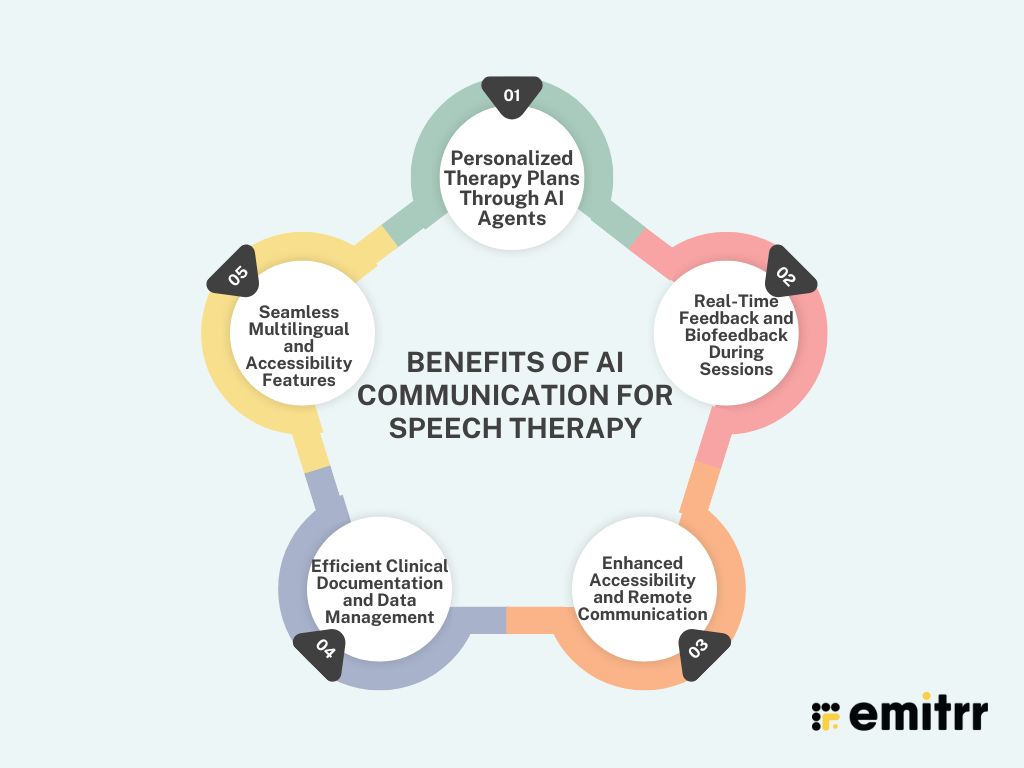
Personalized Therapy Plans Through AI Agents
AI agents can carefully listen to how each person speaks and notice their unique strengths and challenges. Through the examination of this data, the AI formulates a therapy plan tailored specifically for that person, rather than employing a “one-size-fits-all” method. As the individual advances, the AI can revise and modify the strategy to maintain its effectiveness and engagement. This means therapy always matches what you need most, helping you improve in the best way possible.
Real-Time Feedback and Biofeedback During Sessions
Tools powered by AI can provide instant feedback while you talk during your therapy session. For instance, if you say a word or sound incorrectly, the AI will immediately inform you and demonstrate how to correct it. This prompt feedback accelerates your learning since you can fix errors right away, rather than postponing it until your next meeting. Certain tools also provide visual indicators or charts, allowing you to monitor your progress instantly.
Enhanced Accessibility and Remote Communication
AI enables speech therapy for individuals who may not be able to attend a clinic physically. With AI-based online platforms, you can engage in therapy sessions through video calls, audio chats, or text conversations. This is especially advantageous for people living in remote areas, those with busy schedules, or anyone facing transportation challenges.
Efficient Clinical Documentation and Data Management
AI can autonomously document everything that occurs in each therapy session, encompassing notes on your progress and any significant information. This allows therapists to reduce time spent on documentation and concentrate more on assisting their clients. All the data is structured and readily accessible, allowing you to easily monitor your progress over time and to share updates with other professionals if necessary
Seamless Multilingual and Accessibility Features
AI tools can instantly translate spoken words into different languages, making it easier for people who don’t speak the same language as their therapist to understand and join in. They can also turn speech into text, which is very helpful for people who are deaf or hard of hearing. These features make speech therapy more inclusive, so everyone can benefit, no matter their language or ability.

Use Cases For AI in Speech Therapy
AI Agents for Speech Pattern Recognition and Diagnosis
AI-driven tools can hear and assess speech samples, identifying subtle patterns and mistakes that could indicate speech disorders such as dysarthria or aphasia. These systems employ sophisticated algorithms to match an individual’s speech against standard speech patterns, aiding therapists in identifying problems sooner and with greater precision than conventional techniques. By automating this initial stage, AI conserves time and guarantees that every detail is accounted for, even amid extensive caseloads. This results in faster, more accurate diagnoses and enables therapists to concentrate on developing the appropriate treatment plan for every client
Conversational AI for Interactive Therapy Exercises
Virtual assistants and chatbots can guide patients through speech exercises using voice or text, making therapy more engaging and interactive. These AI agents modify the exercises’ difficulty and content instantly, reacting to every patient’s performance and requirements. This ensures that patients receive practice that is consistently at the appropriate level, helping maintain their motivation and aiding faster improvement. Interactive tools are particularly beneficial for remote or self-directed therapy, providing support and motivation even beyond standard sessions
Predictive Progress Tracking and Outcome Forecasting
AI systems can monitor a patient’s condition over time, identifying trends and forecasting future improvements or potential challenges. Through the examination of data from every session, AI can alert therapists if a patient may reach a plateau or decline, allowing them to adjust the therapy plan proactively. This forward-thinking strategy enables therapists to make more informed choices and maintain therapy’s direction for optimal outcomes. It also provides patients and families with a better understanding of what to anticipate and how their progress is developing
Multimodal Communication Support (Voice, Text, Visuals)
AI systems can integrate speech recognition, texting, and visual signals to assist patients who have various communication capabilities. For example, someone who struggles with speaking might use text or images, while others might benefit from visual cues related to their speech sounds. This flexibility improves the inclusiveness and effectiveness of therapy, allowing therapists to engage with each patient at their present stage. Multimodal support fosters patient involvement and improves the acquisition of new skills, rendering it easier and more enjoyable
Challenges of AI Communication Adoption in Speech Therapy
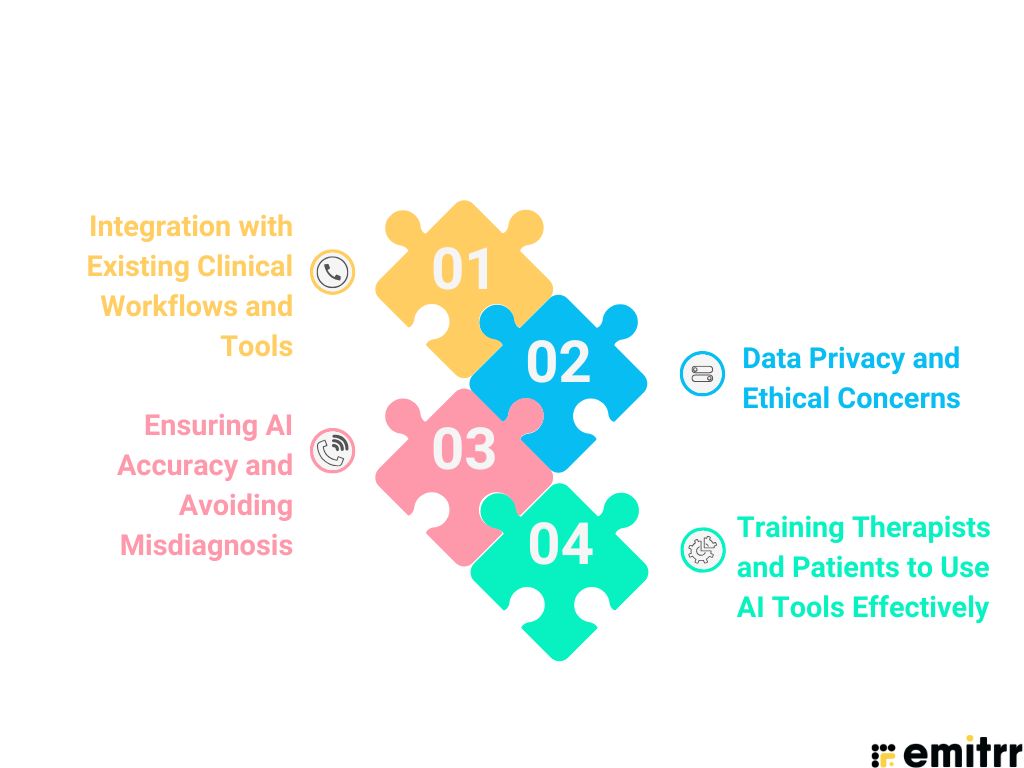
Integration with Existing Clinical Workflows and Tools
Adding AI to speech therapy only works well if it fits smoothly with the software and systems therapists already use. If AI tools don’t connect or share data easily, they can slow down work and cause confusion. Therapists need everything in one place to keep sessions running smoothly and avoid mistakes. Good integration means AI helps, not hinders, the daily routine—making therapy more efficient and organized.
Data Privacy and Ethical Concerns
AI in speech therapy handles very private information, like voice recordings and health details. It’s important to follow strict privacy laws and ethical rules to keep this data safe and confidential. Any misuse or leaks of patient data can break trust and harm the therapist-patient relationship. Protecting privacy is a must for using AI responsibly and maintaining confidence in therapy services.
Ensuring AI Accuracy and Avoiding Misdiagnosis
AI must be carefully tested to make sure it understands and analyzes speech correctly. Mistakes in recognizing words or diagnosing problems can lead to wrong therapy plans and slow down progress. Therapists should always double-check AI results before making decisions. Accurate, well-checked AI supports therapists and helps patients get the right care.
Training Therapists and Patients to Use AI Tools Effectively
For AI to work well, both therapists and patients need to know how to use it confidently. If tools are confusing or hard to use, people may avoid them or make mistakes. Clear training and simple design help everyone feel comfortable and get the most from AI. Good support and easy instructions make AI a real help in speech therapy.
Where Human Communication Should Still Be Prioritized?
Complex Diagnostic Assessments and Treatment Decisions
Human therapists are essential for deep and careful evaluations that go beyond what AI can do. They consider a person’s emotions, life situation, and unique needs, which AI cannot fully understand. This helps create therapy plans that truly fit each individual’s situation. Such personalized care ensures therapy is safe, effective, and meaningful.
Therapists also use their experience to notice subtle signs or changes that AI might miss. They can adjust treatment based on these insights and the patient’s overall well-being. This human judgment is critical for complex cases where many factors affect progress. Without it, therapy might not address all the patient’s needs.
Empathy-Driven Patient Support and Motivation
Real human connection is key to encouraging patients during therapy, especially when progress feels slow or hard. Therapists use empathy, kindness, and understanding to build trust and motivate patients to keep trying. This emotional support helps patients feel valued and understood, which AI cannot provide.
Motivation often comes from personal interactions, like celebrating small wins or comforting patients during setbacks. Therapists can sense when someone needs extra encouragement or a different approach. This human touch helps patients stay engaged and hopeful throughout their therapy journey.
Managing Ethical and Sensitive Conversations
Talking about difficult topics like diagnosis, progress, or setbacks requires compassion and clear communication. Human therapists can read emotions and respond with care, making sure patients and families feel supported. These sensitive conversations need a personal touch to avoid misunderstandings or distress.
Therapists can also answer questions, clarify doubts, and provide reassurance in ways AI cannot. They adapt their tone and words based on the situation and the person’s feelings. This helps build a strong, trusting relationship that supports healing and growth.
Oversight of AI Recommendations and Quality Assurance
Even the best AI tools can make mistakes or miss important details. That’s why therapists must carefully review AI suggestions before using them in therapy. Human oversight ensures that AI advice fits the patient’s real needs and keeps care safe and effective.
Therapists combine AI insights with their own knowledge and experience to make the best decisions. This teamwork between AI and humans raises the quality of therapy. It also helps catch errors early and maintain high standards of care for every patient.
How Emitrr Helps Speech Therapy with AI-driven Communication?
Speech therapy practices face unique communication challenges: coordinating with parents, teachers, and caregivers; tracking progress across diverse communication goals; managing complex scheduling for pediatric and adult clients; and maintaining consistent home practice routines. Traditional fragmented systems create gaps in care coordination and missed opportunities for progress. Emitrr’s AI-driven communication platform bridges these gaps, creating seamless collaboration that accelerates speech and language development outcomes.
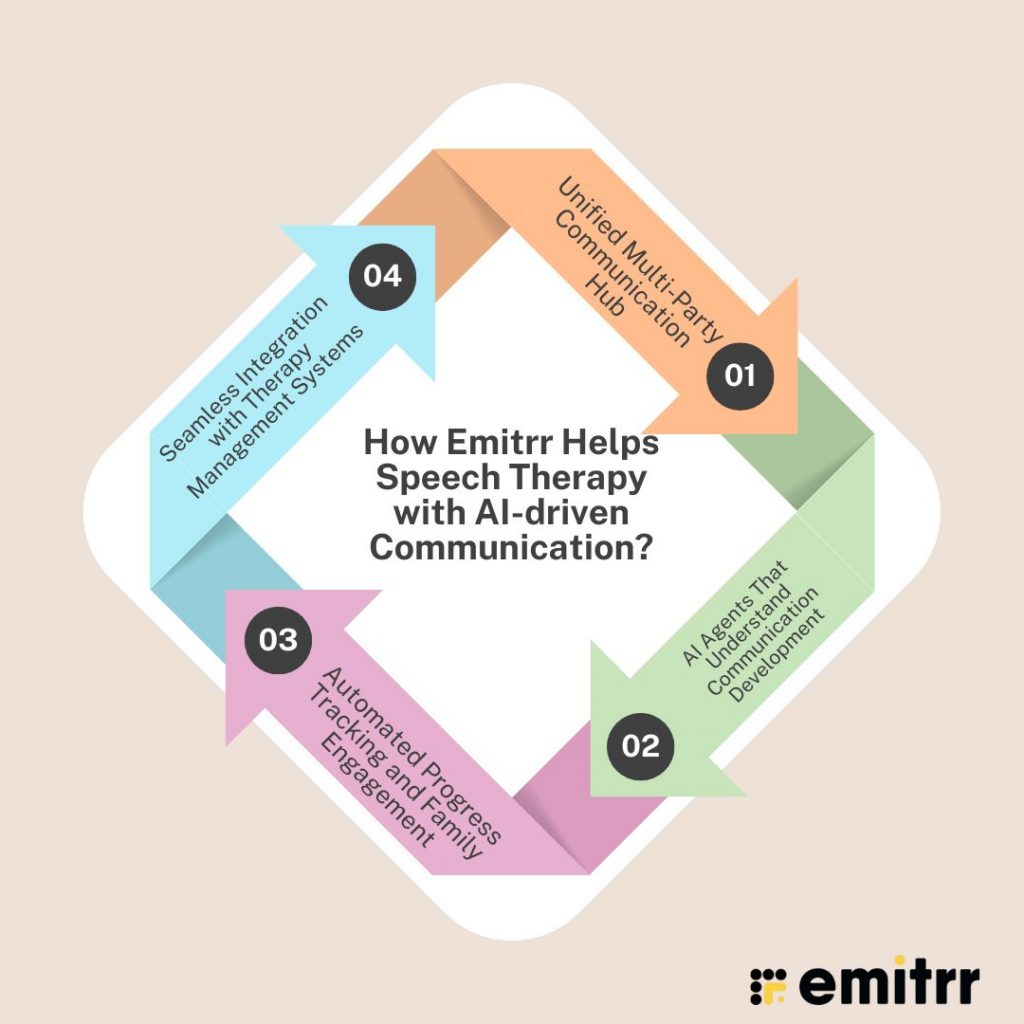
Unified Multi-Party Communication Hub
Emitrr centralizes texting, VOIP, calls, and emails into one comprehensive dashboard designed for speech therapy’s collaborative nature. Speech-language pathologists can coordinate with parents about home practice, share progress videos with teachers, send articulation exercises to clients, and communicate with healthcare teams—all from the same interface. This eliminates the complexity of managing separate communication channels for each stakeholder in a client’s care team.
AI Agents That Understand Communication Development
Emitrr’s AI agents learn from every interaction to personalize outreach based on each client’s communication goals, learning style, and progress patterns. For speech therapy, this means automatically adjusting practice reminder frequency for clients struggling with consistency, sending age-appropriate motivational messages to pediatric clients, and identifying communication patterns that indicate breakthrough moments or potential setbacks. The AI recognizes when clients need additional support or are ready for advanced challenges.
Automated Progress Tracking and Family Engagement
The platform provides real-time alerts when home practice sessions are missed, progress milestones are reached, or communication difficulties arise. Automated engagement includes pre-session preparation for families, post-therapy practice instructions with audio examples, and progressive skill-building reminders that maintain momentum between sessions. Parents receive timely guidance and encouragement while therapists get actionable insights about which clients need immediate attention or celebration.
Seamless Integration with Therapy Management Systems
Emitrr integrates effortlessly with existing speech therapy software, EMR systems, school district platforms, and telehealth tools. This creates unified operations where treatment plans, progress data, and communication history work together seamlessly. Whether you’re working with specialized SLP software, IEP management systems, or general healthcare platforms, Emitrr enhances your collaborative workflow without disrupting established processes.
Why Emitrr is Perfect for Speech Therapy Practices
Speech therapy requires intensive family involvement and multi-disciplinary coordination that generic communication tools can’t support effectively. Emitrr offers specialized AI communication capabilities at pricing that works for private practices, school districts, and healthcare systems alike. The platform delivers comprehensive support for the entire communication development journey, automates routine coordination tasks that consume clinical time, and maintains the personal relationships essential for speech therapy success. With HIPAA-compliant security and educational system integration capabilities, Emitrr transforms communication coordination from an administrative burden into a therapeutic enhancement tool.
Effective speech therapy depends on consistent communication between all stakeholders. Emitrr helps speech-language pathologists create a coordinated support network that accelerates client progress while reducing administrative complexity—turning communication management into a catalyst for better outcomes.
The Future of AI Communication in Speech Therapy
AI Will Make Speech Therapy More Personalized and Accessible
AI is set to make speech therapy even more tailored to each person’s needs. It can listen to how someone speaks, quickly spot problems, and create therapy plans that change as the person improves. This means therapy will fit each person better, helping them make faster progress. AI will also let more people get help from home or remote places, making therapy easier to access for everyone—even if they can’t visit a clinic.
Real-Time Feedback and Smarter Tools for Better Results
In the future, AI tools will give instant feedback during practice, so people can fix mistakes right away and learn faster. These smart tools will also help therapists save time by automatically writing notes, tracking progress, and even suggesting new exercises. This will let therapists spend more time with patients and less on paperwork, making therapy more effective and enjoyable for everyone.
New Ways to Communicate and Support for All Abilities
AI will bring new ways for people to communicate, like voice banking and speech-to-text for those who might lose their voice. It will also help those with severe speech problems by creating custom voices or using brain-computer interfaces to turn thoughts into speech. These advances mean that even people with the most challenging conditions can be heard and understood.
AI Will Help Therapists and Patients Work Together
AI will not replace human therapists, but it will help them do their jobs better. Therapists will use AI to get more accurate information, make smarter decisions, and offer more support to their patients. With AI handling routine tasks, therapists can focus on what matters most: building trust, giving encouragement, and guiding each person’s unique journey to better communication.
FAQs for AI in the Speech Therapy
AI helps speech therapists by analyzing speech patterns, offering real-time feedback, personalizing therapy plans, and making it easier to track progress and manage documentation.
AI will not replace speech therapists, but it will support them by handling routine tasks and providing helpful tools, while therapists still make important decisions and offer human care.
AI in speech recognition listens to and transcribes spoken words, identifies speech issues, and gives instant feedback, helping both assessment and ongoing therapy.
AI is used to create custom exercises, monitor patient progress, give immediate feedback, and automate paperwork, making therapy more effective and accessible for everyone.
Conclusion
AI is quickly becoming a must-have for speech therapy clinics that want to give the best care and make life easier for both therapists and patients. With AI, speech therapy is more personalized, progress is tracked automatically, and paperwork is much simpler. AI tools can give instant feedback, help with practice at home, and even translate languages, so more people can get the help they need, no matter where they are.
By using AI, clinics can save time on routine tasks and spend more time supporting their patients. AI also keeps patients motivated with fun exercises and real-time tips, making therapy more engaging and effective. To get the full benefits, it’s important to have an AI system that works all the time, making sure no patient message or call is missed.
That’s where Emitrr comes in. Emitrr’s AI-powered communication platform gives your clinic 24/7 patient support, quick updates, and smooth teamwork for your whole staff.
Want to see how AI can make speech therapy better for everyone? Book a demo with Emitrr today and discover how easy it is to transform your speech therapy clinic with smart, always-on AI communication.

 4.9 (400+
reviews)
4.9 (400+
reviews)