
Introduction
Artificial intelligence is no longer futuristic in healthcare — it’s already transforming how doctors diagnose, treat, and communicate with patients. One of the biggest advancements driving this change is the rise of AI agents, intelligent systems capable of analyzing data, predicting outcomes, and performing tasks autonomously in real time.
Today, medical AI agents are being integrated into clinical workflows to improve diagnostic accuracy, support decision-making, manage patient records, and reduce administrative workload. From automated scheduling and real-time monitoring to virtual assistants handling initial patient queries, AI is helping doctors save time and provide more efficient care.
As adoption accelerates, healthcare teams are discovering both the opportunities and challenges that come with AI, including privacy, compliance, training, and trust. This guide explores how AI agents are reshaping modern medical practice and how platforms like Emitrr are helping healthcare providers streamline communication, automation, and patient experience.
Understanding AI Agents in Healthcare
AI agents are intelligent software systems designed to perform tasks, make decisions, and interact with users autonomously. Unlike traditional AI systems that require manual input or function in isolated workflows, AI agents continuously learn, adapt, and respond based on real-time data and context. They operate more like digital assistants rather than simple programmed tools.
In healthcare, these agents can analyze medical records, lab reports, imaging data, and patient journey history to support decision-making and treatment planning. They also automate repetitive tasks such as documentation, scheduling, reminders, and data entry, allowing AI for doctors and healthcare staff to focus more on patient care rather than administrative work.
What makes AI agents especially powerful is their ability to communicate and interact in real time. Whether through chat, voice, or integrated systems, they assist doctors during consultations, respond to patient queries, and trigger alerts when a patient’s vitals or symptoms signal concern — creating a faster, smarter, and more connected healthcare ecosystem.
The Role of AI Agents in Modern Medicine
AI agents are becoming essential in healthcare by assisting doctors with data-driven insights, automation, and real-time support, ultimately improving decision-making, efficiency, and patient care.
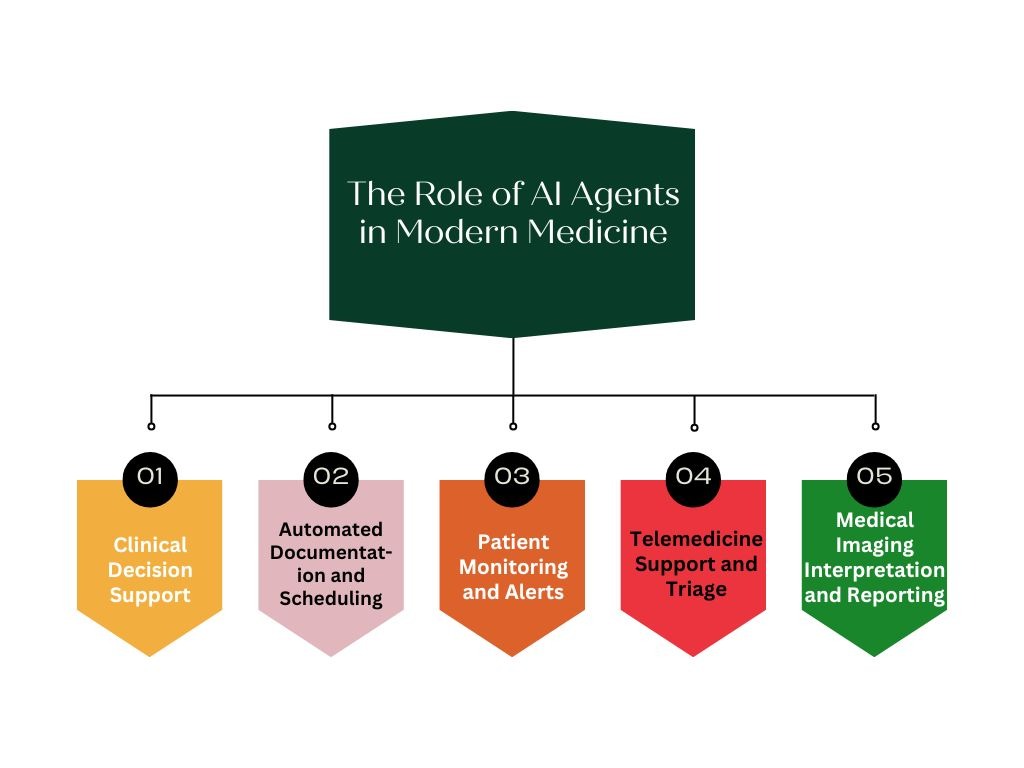
Clinical Decision Support
AI agents analyze patient symptoms, medical history, lab results, and clinical guidelines to suggest possible diagnoses or treatment paths. They help doctors make faster, more informed decisions and reduce human error by offering evidence-based recommendations during patient consultations.
Automated Documentation and Scheduling
AI systems automate repetitive administrative tasks such as appointment scheduling, chart updates, billing codes, and patient follow-ups. This removes manual workload from staff and doctors, helping clinics operate more efficiently while improving accuracy in medical records.
Patient Monitoring and Alerts
With connected devices and real-time analytics, AI monitors patient vitals, medication adherence, and chronic conditions. When abnormalities occur, alerts are instantly sent to clinicians, ensuring faster intervention and better management of high-risk patients.
Telemedicine Support and Triage
AI-powered virtual assistants help triage patients by collecting symptoms, answering common medical questions, and directing them to the appropriate care level. This reduces wait times and ensures that doctors focus on cases requiring clinical expertise.
Medical Imaging Interpretation and Reporting
AI agents assist radiologists by detecting patterns in X-rays, MRIs, and CT scans with high accuracy. They highlight abnormalities, generate preliminary reports, and speed up diagnosis — especially in high-volume environments like emergency care and radiology centers.
How AI Agents Are Transforming Doctors’ Workflows
AI agents are reshaping clinical workflows by improving accuracy, reducing manual work, and enabling faster decision-making. From diagnosis support to automation and remote monitoring, they help doctors deliver more efficient, personalized, and proactive patient care.
Clinical Decision Support
AI analyzes patient symptoms, medical history, and diagnostic records to suggest possible conditions or treatment approaches. This helps doctors validate decisions, reduce human error, and improve diagnostic accuracy, especially in complex or ambiguous cases requiring deeper data-driven insight.
Automated Administrative Tasks
AI agents handle repetitive administrative tasks such as scheduling, billing, documentation, and reminders. By minimizing paperwork and manual intervention, they free up valuable time for doctors and staff, improving operational efficiency and reducing stress and burnout.
Personalized Treatment Planning
Using patient-specific data, genetic information, lifestyle patterns, and treatment history, AI agents help design personalized care plans. This ensures that treatment strategies are highly tailored, improving outcomes and enabling precision medicine rather than generalized medical approaches.
Real-Time Monitoring & Alerts
AI-powered wearables and connected health systems track patient vitals and behavior continuously. When abnormalities occur—such as irregular heartbeat or sudden glucose spikes real-time alerts notify doctors, allowing early intervention and preventing complications.
Telemedicine & Virtual Assistance
AI agents enhance telemedicine by managing patient queries, assisting triage, and providing symptom-based guidance before appointments. They improve virtual care efficiency by filtering routine questions and ensuring that doctors focus on high-priority or complex consultations.
Medical Imaging & Diagnostics
AI assists radiologists and specialists by rapidly analyzing X-rays, MRIs, CT scans, and pathology images. It identifies patterns and abnormalities, producing preliminary reports that help doctors diagnose faster and more accurately, even in high-volume or time-critical medical settings.
Benefits of AI Agents for Doctors
AI agents offer significant advantages in healthcare by improving accuracy, reducing workload, and enhancing patient experience. They help doctors operate more efficiently while delivering faster, safer, and more personalized medical care.
Improved Diagnostic Accuracy
AI analyzes medical history, symptoms, and imaging data to help identify patterns and potential diagnoses. This reduces diagnostic errors and supports faster, evidence-based clinical decisions.
Faster Patient Management
Automation and AI-driven workflows reduce waiting time and speed up tasks like appointment handling, triage, and record access, allowing doctors to manage more patients efficiently.
Reduced Documentation Effort
AI tools streamline note-taking, transcription, and record updates. This minimizes manual work, improves documentation accuracy, and frees up meaningful time for patient care.
Improved Patient Engagement
AI-powered reminders, chat support, and follow-ups keep patients engaged between visits, resulting in better compliance, communication, and health outcomes.
Predictive Analytics for Better Care
AI predicts disease risks and progression based on patient trends, enabling preventive care and timely intervention before conditions worsen.
Lower Administrative Load
By automating tasks like billing, scheduling, and reporting, AI reduces non-clinical workload for healthcare teams, improving overall efficiency.
Enhanced Telemedicine Workflows
AI supports virtual consultations by managing FAQs, triaging symptoms, and organizing patient data, creating seamless digital care experiences.
Better Clinical Decision Support
AI provides data-driven recommendations and treatment insights, helping doctors validate decisions and improve care accuracy.
Scalability for Growing Practices
AI systems expand easily with patient volume, helping clinics scale without increasing staffing pressure or compromising care quality.
Reduced Burnout and Fatigue
By reducing repetitive tasks and administrative stress, AI supports better work-life balance and lowers physician fatigue across clinical environments.
Use Cases of AI Agents in Healthcare
AI agents are actively reshaping real-world medical workflows, supporting both clinical and operational functions. From disease prevention to diagnostics and patient communication, they enable smarter, faster, and more personalized healthcare delivery across diverse medical environments.
Predictive Analytics for Disease Prevention
AI agents analyze patient history, lifestyle data, and clinical patterns to identify disease risks early. This helps providers intervene proactively, improving patient outcomes and reducing long-term treatment costs through preventive care rather than reactive medical response.
Remote Patient Monitoring for Chronic Illness
With connected devices and continuous data tracking, AI agents monitor patients with conditions like diabetes, hypertension, or heart disease. Real-time alerts notify doctors of critical changes, improving patient safety and empowering earlier intervention from anywhere.
AI-Powered Diagnostics for Radiology & Pathology
AI analyzes imaging and lab data to detect abnormalities faster and with high accuracy. This assists radiologists and pathologists, reducing reporting delays and improving diagnostic confidence, especially in high-volume or complex cases.
Virtual Health Assistants for Patient Queries
AI chat and voice assistants handle routine patient questions, appointment requests, and symptom triage. This reduces the workload on staff while improving patient accessibility and communication, especially outside normal working hours.
Drug Discovery and Treatment Optimization
AI agents accelerate drug development by analyzing molecular structures, predicting response outcomes, and identifying potential treatment paths. They also help optimize medication combinations personalized to patient needs, improving effectiveness and reducing adverse reactions.
Here are a few voicemail greetings that you can download for various patient communication use cases.
Challenges in Adopting AI Agents in Healthcare
While AI agents bring major advantages to modern medicine, adopting them comes with challenges that healthcare organizations must navigate carefully. These include compliance requirements, system compatibility, staff readiness, and ongoing monitoring to ensure accuracy and safety.
Data Privacy and HIPAA Compliance Concerns
AI systems must handle sensitive patient information securely. Maintaining HIPAA-compliant, encryption, and strict access control is essential to prevent data breaches and ensure ethical use of medical records in AI-driven environments.
Ethical Limitations in Clinical Decision-Making
AI may suggest diagnosis or treatment paths, but it lacks human empathy and contextual judgment. Ethical concerns arise when automation influences decisions traditionally made by physicians based on patient relationships and clinical experience.
Resistance to Change Among Medical Teams
Doctors and staff may feel skeptical or overwhelmed by new AI workflows. Proper onboarding, training, and clear communication are essential to build trust and encourage adoption.
Integration Challenges with Legacy EHR Systems
Many clinics use outdated or fragmented systems. Connecting AI tools with existing EHR platforms can be technically challenging and requires investment in digital infrastructure.
Continuous Training and Validation Requirements
AI models need ongoing data updates, monitoring, and refinement to remain reliable. Without continuous evaluation, accuracy may decline, risking clinical errors or outdated recommendations.
The Future of AI Agents in Medicine
AI agents are rapidly advancing and are expected to shift from supportive tools to active clinical collaborators. As technology evolves, they will play a deeper role in decision-making, automation, and personalized care — enabling smarter, proactive, and precision-driven medicine.
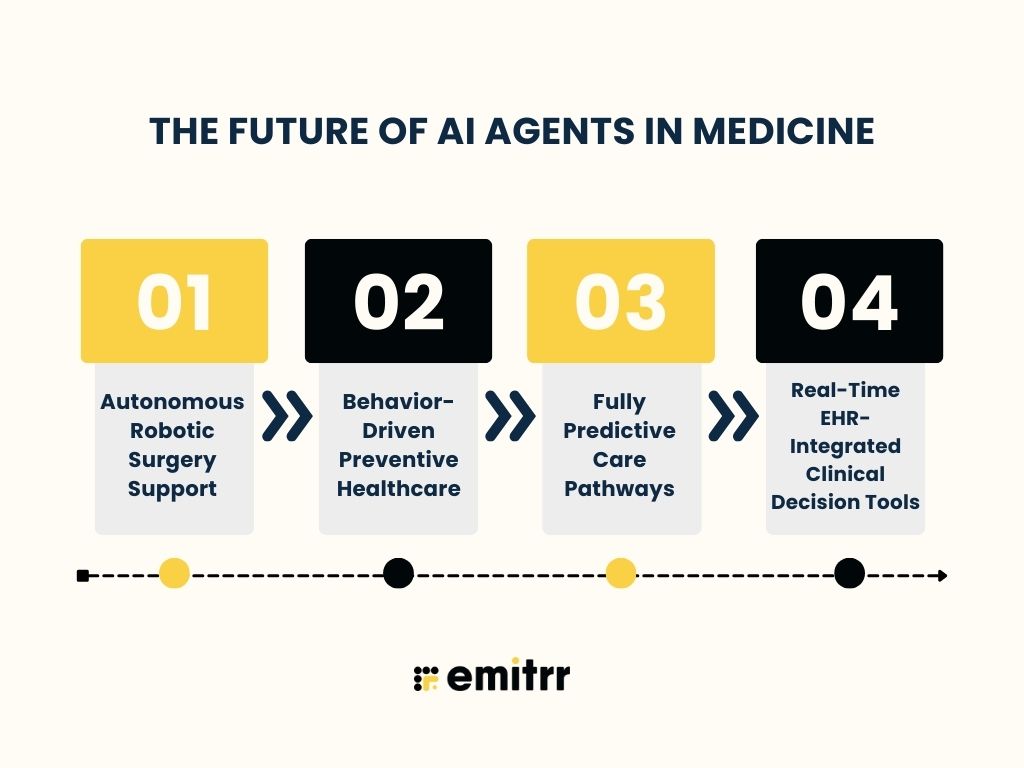
Autonomous Robotic Surgery Support
AI agents will work alongside robotic surgical systems to assist surgeons with precision planning, real-time adjustments, and outcome predictions. This can help reduce risk, shorten operating times, and improve surgical accuracy.
Behavior-Driven Preventive Healthcare
Future AI systems will monitor lifestyle patterns, vitals, and environmental factors to recommend preventive actions before a condition develops. This shifts healthcare from treatment-focused to prevention-first.
Fully Predictive Care Pathways
AI will use longitudinal patient data to map disease progression and recommend care workflows before symptoms escalate. This ensures early intervention, fewer emergency visits, and better long-term outcomes.
Real-Time EHR-Integrated Clinical Decision Tools
With seamless integration into EHR systems, AI agents will deliver instant insights during consultations — such as risk score alerts, treatment comparisons, or medication interactions — supporting informed and confident medical decisions.
Why Doctors Should Embrace AI Agents
Healthcare systems globally are experiencing rising patient demand, staffing shortages, and increasing administrative pressure. As AI agents become more capable, they offer a powerful opportunity for doctors to streamline workflows, enhance care delivery, and improve overall practice efficiency.
AI adoption unlocks long-term advantages—not just in diagnostics, but in everyday operations such as scheduling, documentation, patient monitoring, and treatment planning. By offloading repetitive and time-consuming tasks, AI gives doctors more time to focus on what matters most: patient care.
Doctors who embrace AI agents can experience reduced burnout, faster decision-making support, better patient engagement, and improved clinical outcomes. Meanwhile, organizations that delay technological adoption may struggle to keep pace with evolving healthcare standards, patient expectations, and competitive efficiency.
Ultimately, integrating AI agents isn’t just a modern upgrade — it’s a strategic shift that positions healthcare providers for sustainable growth, better patient experience, and smarter medical practice.
Take a look at what the Emitrr AI agent can do:
Emitrr’s Role in Healthcare Automation
Emitrr is transforming healthcare operations by automating patient communication, reducing manual tasks, and supporting care teams with AI-driven tools. With smart workflows, real-time messaging, and automated engagement, Emitrr helps clinics run more efficiently while improving patient satisfaction and operational accuracy.
Emitrr Features for Doctors and Clinics
- AI-Based Appointment Scheduling: Emitrr enables automated scheduling by analyzing availability, patient preferences, and clinic workflows. It reduces back-and-forth communication and ensures patients are booked accurately and quickly without staff involvement.
- Missed Call-to-Text Automation: If a patient calls and no one is available to answer, Emitrr instantly sends an automated text message. This ensures no inquiry is missed, makes communication more accessible, and allows clinics to convert more leads into booked appointments. With advanced texting for doctors, Emitrr helps practices stay responsive and available — even when phone lines are busy.
- Patient Reminders and Feedback Collection: Emitrr automates appointment reminders, follow-up messages, and feedback requests, helping reduce no-shows and improving patient engagement. The process improves communication consistency while saving staff hours of repetitive outreach.
- Secure Messaging and Data Compliance: Emitrr supports secure, encrypted communication built to meet healthcare compliance standards, including HIPAA. This ensures sensitive patient data stays protected while enabling safe digital conversations between clinicians and patients.
Want a HIPAA-compliant Voicemail script for patient communication? Download ready-to-use voicemail greeting scripts designed specifically for doctors and clinics to ensure every missed call sounds professional, reassuring, and patient-friendly.
Emitrr Benefits in Healthcare
- Enhances Operational Efficiency: By automating reminders, responses, and scheduling, Emitrr reduces manual work and streamlines workflows, allowing clinics to operate more efficiently and allocate resources where they matter most.
- Improves Patient Response Rate: Automation ensures timely follow-ups and consistent communication, increasing patient engagement and responsiveness. This leads to better attendance, faster answers, and improved patient satisfaction.
- Reduces Administrative Load on Healthcare Staff: Emitrr eliminates repetitive tasks like calling, data entry, and reminder management. This reduces workload on staff, supports better time management, and helps create a less stressful work environment.
Watch how businesses like yours save time and costs with Emitrr AI –
Frequently Asked Questions
An AI agent in healthcare is an intelligent system that assists doctors by analyzing data, supporting decision-making, automating tasks, and improving patient communication in real time.
They are used for diagnostics, scheduling, patient monitoring, administrative automation, triage support, and predictive analytics to enhance workflow efficiency and clinical accuracy.
No. AI agents support doctors but do not replace clinical expertise, empathy, or judgment. They function as assistants, enhancing speed and accuracy in care delivery.
Risks include privacy concerns, biased data models, and the possibility of inaccurate recommendations if systems are not continuously validated or monitored.
Begin with simple automation like appointment reminders, scheduling, and texting workflows. Gradually adopt advanced diagnostics, monitoring, and predictive care solutions as familiarity and trust grow.
Conclusion
AI agents are reshaping healthcare by helping doctors deliver faster, smarter, and more efficient patient care. From automation to decision support, they reduce manual effort and streamline everyday workflows.
As clinics adopt AI-powered tools, patient satisfaction increases, appointment gaps reduce, and communication becomes more consistent. Intelligent automation is no longer optional — it’s becoming essential for modern healthcare systems to stay effective and future-ready.Solutions like Emitrr make this transformation easy, scalable, and secure. Clinics that take the first step today gain a strong competitive advantage. If you’re ready to improve efficiency and patient engagement, schedule a demo with Emitrr and explore what’s possible.


 4.9 (400+
reviews)
4.9 (400+
reviews)