
 4.9 (400+
reviews)
4.9 (400+
reviews)
Introduction
Your business depends on good communication every day, like order updates, tracking shipments, and quick alerts to keep everything moving smoothly. But what happens when messages get lost, shipments are late, or your team can’t respond fast enough to changes?
Delays and mistakes can lead to unhappy customers, lost sales, and extra costs. Today’s supply chains are more complicated than ever, with many partners, lots of data, and customers who want fast, clear updates. Old ways of communicating—like emails and phone calls—can’t keep up, causing confusion and slow responses. AI communication tools are now a must-have for supply chains. They can automatically track shipments, check inventory, and send alerts when something needs attention. AI chatbots can answer simple questions right away, and AI can even predict problems before they happen. This helps teams fix issues faster and work better together.
Supply chains need AI to stay ahead. AI makes it easier to share information, handle busy times, and react quickly to changes. It helps your business save money, avoid mistakes, and keep customers happy.
In this article, we’ll show how AI is changing supply chain communication for businesses like yours. You’ll learn how AI can make daily work easier, stop problems early, and help your supply chain run smoothly—so you can focus on growing your business.
Why does the Supply Chain Management Industry Need AI Communication?
The supply chain management industry faces many tough challenges today. Companies must coordinate with suppliers, warehouses, transporters, and customers across the globe, often dealing with unexpected disruptions, changing demand, and tight deadlines. There’s constant pressure to deliver products faster, keep costs down, and avoid mistakes like lost shipments or stock shortages. At the same time, supply chains are becoming more complex, with more partners, more data, and higher expectations for real-time updates and transparency. Traditional communication methods—like emails, phone calls, and spreadsheets—often lead to delays, miscommunication, and missed opportunities, especially when teams are spread out or working around the clock.
AI communication is becoming essential for supply chain management because it solves many of these problems. AI-powered systems can track shipments, inventory, and orders in real time, automatically alerting the right people when there’s a delay, shortage, or urgent issue. AI chatbots and virtual assistants can answer routine questions from suppliers or customers instantly, freeing up staff to handle more complex tasks. By analyzing large amounts of data, AI can also predict risks—like weather disruptions or supplier delays—and communicate warnings early, so teams can act fast and avoid bigger problems.
AI also helps supply chain companies work more efficiently and save money. By automating routine updates, scheduling, and reporting, AI reduces manual work and cuts down on errors. It helps everyone in the supply chain stay connected and informed, no matter where they are or what time it is. As supply chains grow larger and more complicated, and as customer expectations rise, AI communication is key to keeping everything running smoothly, improving service, and staying competitive. In short, AI communication is now a must-have for supply chain management, helping companies overcome modern challenges and deliver better results for everyone involved.
Benefits of AI Communication for Supply Chain Management
Predictive Analytics for Proactive Supply Chain Communication
AI agents use predictive analytics to look at past trends and real-time data, helping teams spot possible problems like delays, demand changes, or low inventory before they happen. These smart systems send early alerts to the right people, so teams can react quickly and avoid costly disruptions. By knowing what’s likely to happen next, companies can plan better and reduce surprises in their supply chain. This leads to smoother operations, fewer emergencies, and happier customers.
Real-Time, Autonomous Information Flow Across Channels
AI agents make sure important updates travel instantly across emails, texts, and messaging apps, so everyone in the supply chain stays informed. No matter where team members or partners are, they get real-time notifications about changes, delays, or urgent issues. This quick, automatic communication helps teams solve problems faster and keeps operations running smoothly. It also cuts down on confusion and makes sure nothing important is missed.
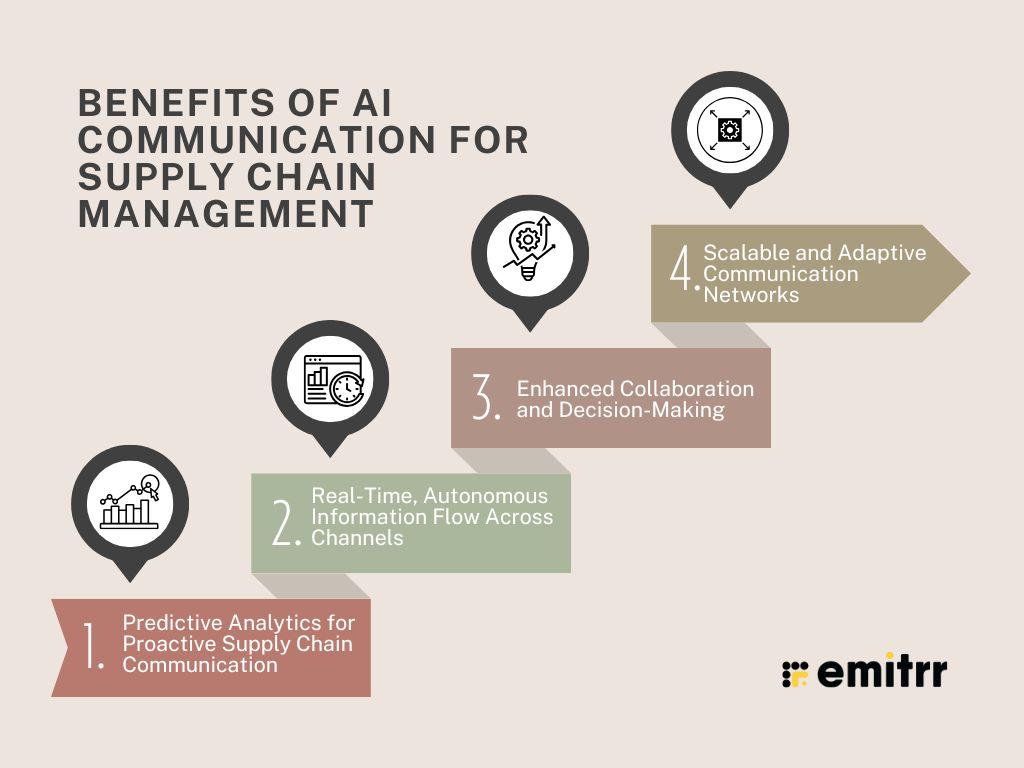
Enhanced Collaboration and Decision-Making
AI brings together all the data and insights from different parts of the supply chain into one place, making it easier for teams and partners to work together. With clear, up-to-date information, everyone can make smarter decisions quickly and respond to changes as a team. This boosts efficiency, improves problem-solving, and helps the whole supply chain run better. Better collaboration also means fewer mistakes and more successful deliveries.
Scalable and Adaptive Communication Networks
AI agents can handle more messages and more complex situations as your business grows, without slowing down. They automatically adjust how and when they send updates, so communication always fits the current needs of the supply chain. Whether it’s a busy season or a sudden disruption, AI keeps everyone connected and informed. This flexibility means your supply chain can adapt and stay strong, no matter what challenges come up.

Use Cases For AI in Supply Chain Management
AI Agents for Automated Order and Shipment Updates
AI agents can automatically send real-time updates about order status, shipment tracking, and any delays to customers and logistics partners through email, SMS, or messaging apps. This keeps everyone in the loop, reduces manual follow-ups, and improves customer satisfaction by making sure people always know where their orders are.
It also helps companies handle more orders without extra staff, and customers feel more confident because they get updates without having to ask. Over time, this builds trust and makes the whole shipping process smoother.
Conversational AI for Supplier and Customer Support
AI-powered chatbots and virtual assistants can answer routine questions from suppliers and customers, solve simple issues, and provide support 24/7 across different digital channels. This means suppliers and customers get help quickly, even outside working hours, and staff can focus on more complex tasks.
These chatbots can also collect feedback and spot common problems, helping companies improve their service. Plus, they make it easier for people to get answers anytime, which keeps everyone happy and informed.
Predictive Risk Communication and Disruption Alerts
AI agents can look at lots of data to predict risks like bad weather, political events, or supplier problems, and then send early warnings to the right teams. By alerting people ahead of time, companies can act fast to avoid or reduce disruptions in the supply chain.
This proactive approach means fewer surprises and less downtime, which saves money and keeps deliveries on track. Teams can also plan backup solutions earlier, reducing the impact of unexpected events.
Dynamic Inventory and Demand Communication
AI can automatically notify procurement, warehouse, and sales teams about changing inventory levels, sudden demand spikes, or stockouts. This helps teams respond quickly, reduces manual checking, and makes sure products are always available when needed. With AI, companies can avoid running out of stock or over-ordering, which saves money and keeps customers satisfied. It also helps everyone work together better, since everyone has the same up-to-date information.
Challenges of AI Communication Adoption in Supply Chain Management
Integration with Legacy Communication Systems
Many supply chains still use old systems, so adding new AI tools can be tricky. It takes time and effort to connect AI with existing ERP, warehouse, and messaging platforms, and make sure everything works smoothly together. If the systems don’t “talk” to each other well, it can cause delays or errors in communication. Companies may need to invest in upgrades or special connectors to get the full benefits of AI.
Data Privacy, Security, and Compliance
AI communication tools handle sensitive business data, so keeping information private and secure is a top concern. Companies need to follow strict rules and protect against data leaks, hacking, or misuse of information. Any breach can damage a company’s reputation and lead to legal trouble. That’s why strong security measures and regular checks are essential when using AI in the supply chain.
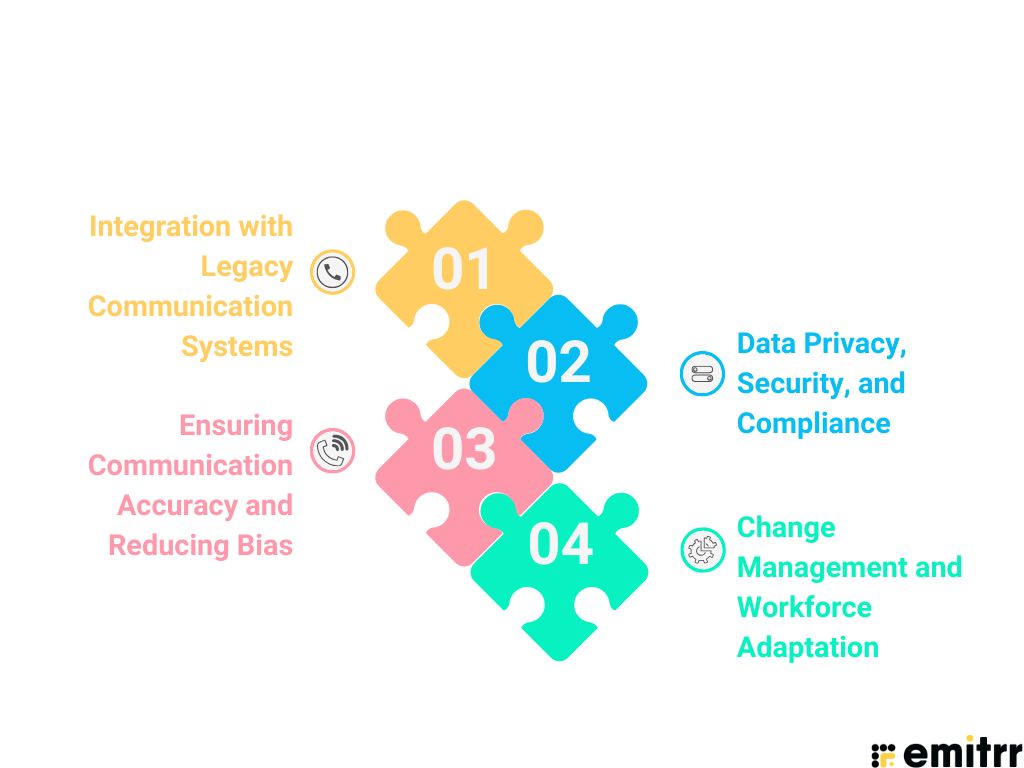
Ensuring Communication Accuracy and Reducing Bias
AI agents must send out the right information and avoid making mistakes or showing bias. If an AI sends wrong or unfair messages, it could cause confusion, errors, or even damage business relationships. Regular testing and updates are needed to keep AI communication accurate and fair. Human oversight is important to catch mistakes and make sure messages are clear and correct.
Change Management and Workforce Adaptation
Switching to AI-driven communication means people need to learn new tools and sometimes change how they work. It’s important to train teams, address concerns, and help everyone get comfortable working alongside AI agents.
Good communication and support during the change make it easier for staff to adapt. When everyone understands the benefits, they’re more likely to embrace the new technology and use it well.
Where Human Communication Should Still Be Prioritized?
Managing High-Stakes Supplier Negotiations and Escalations
When it comes to big deals or sensitive supplier issues, human communication is essential. People bring empathy, intuition, and nuanced judgment to the table—qualities that AI simply can’t match. A personal touch is often needed to solve tough problems, adapt to subtle cues like tone and body language, and find creative solutions that work for everyone. In these high-stakes situations, human expertise helps build trust, reach fair agreements, and maintain strong, lasting relationships.
Oversight of Critical Incident Communication
During major disruptions or crises, it’s crucial for humans to take the lead in communication. While AI can quickly flag issues and send alerts, people are needed to ensure messages are clear, trustworthy, and sensitive to the situation. Human leaders can answer tough questions, calm concerns, and coordinate a unified response across departments. Their judgment and presence help avoid misunderstandings, maintain confidence among customers and partners, and guide everyone through challenging times.
Relationship Building and Long-Term Partnerships
Building strong business partnerships relies on real human connection, not just data and automated messages. Face-to-face meetings, phone calls, and genuine conversations help foster loyalty, trust, and understanding between partners. Humans can pick up on emotions, share personal stories, and show real care—things that AI simply can’t replicate. These personal interactions not only resolve conflicts more quickly but also lay the foundation for long-term collaboration and mutual success.
Ethical and Regulatory Communications
When dealing with sensitive topics like recalls, compliance issues, or ethical concerns, it’s important for humans to deliver these messages. People can explain the situation clearly, answer questions, and demonstrate accountability, showing that the company values honesty and responsibility. Human-led communication helps protect the company’s reputation, builds trust with partners and customers, and allows for thoughtful dialogue and appropriate follow-up. This approach ensures transparency and respects the concerns of everyone involved.
How Emittr Helps Supply Chain Management with AI-driven Communication?
Supply chain management involves complex coordination between suppliers, manufacturers, distributors, logistics providers, and customers across multiple time zones and communication channels. Traditional fragmented communication systems create delays, miscommunications, and visibility gaps that lead to costly disruptions, inventory issues, and customer dissatisfaction. Emittr’s AI-driven communication platform transforms supply chain chaos into streamlined, proactive coordination that prevents problems before they impact operations.
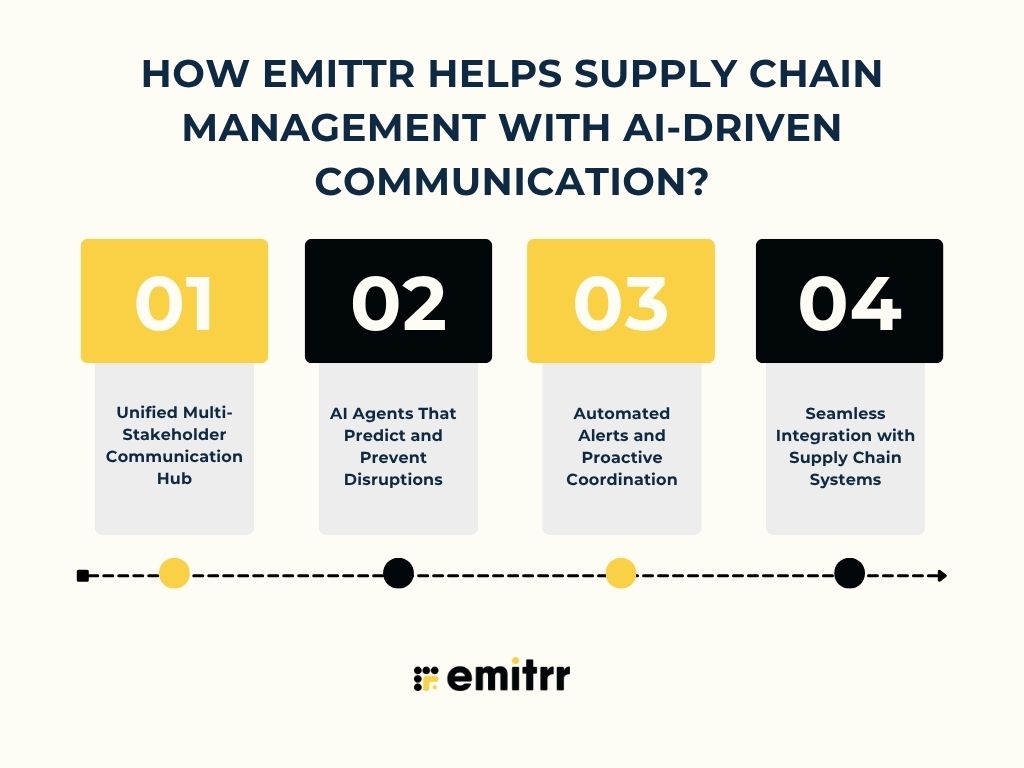
Unified Multi-Stakeholder Communication Hub
Emittr centralizes texting, VOIP, calls, and emails into one comprehensive dashboard designed for supply chain complexity. Supply chain managers can coordinate shipment updates with logistics partners, communicate quality issues with suppliers, notify customers about delivery changes, and escalate urgent matters to executives—all from the same interface. This eliminates the inefficiency of managing separate communication channels for each link in your supply chain network.
AI Agents That Predict and Prevent Disruptions
Emittr’s AI agents learn from every interaction to predict potential supply chain disruptions, optimize vendor communications, and identify patterns that indicate emerging issues. For supply chain operations, this means automatically flagging suppliers with increasing delivery delays, predicting inventory shortages based on communication patterns, and proactively reaching out to alternative vendors when primary sources show risk indicators. The AI continuously analyzes communication data to prevent small issues from becoming major disruptions.
Automated Alerts and Proactive Coordination
The platform provides real-time alerts when shipments are delayed, quality issues arise, or inventory levels reach critical thresholds. Automated engagement includes proactive supplier check-ins, customer delivery notifications with tracking updates, and escalation protocols that ensure urgent issues reach decision-makers immediately. Stakeholders receive timely information while supply chain managers get actionable insights about which situations require immediate intervention or strategic adjustment.
Seamless Integration with Supply Chain Systems
Emittr integrates effortlessly with existing ERP systems, warehouse management platforms, transportation management software, and procurement tools. This creates unified operations where inventory data, shipment tracking, and communication history work together seamlessly. Whether you’re using specialized logistics software, manufacturing execution systems, or general business platforms, Emittr enhances your coordination workflow without disrupting established processes.
Why Emittr is Perfect for Supply Chain Operations
Supply chain management requires real-time coordination across multiple organizations, time zones, and communication preferences that standard business tools can’t handle effectively. Emittr offers enterprise-grade AI communication capabilities at pricing that scales from small distributors to global supply networks. The platform delivers end-to-end visibility throughout the entire supply chain journey, automates routine coordination tasks that consume operational time, and maintains the responsive relationships essential for supply chain resilience. With robust security and comprehensive integration capabilities, Emittr transforms supply chain communication from a reactive necessity into a proactive competitive advantage.
Modern supply chains succeed through seamless information flow and rapid response capabilities. Emittr helps supply chain professionals create a coordinated network that prevents disruptions while optimizing operational efficiency, turning communication management into a strategic supply chain asset.
The Future of AI Communication in Supply Chain Management
AI is set to make communication in supply chain management much smarter and more responsive. In the near future, AI will handle thousands of emails, texts, and VoIP calls every day, quickly sorting messages, flagging urgent issues, and even sending personalized updates to the right people, whether it’s a shipment delay or a low-stock alert. This means problems can be solved faster, and everyone stays informed without having to dig through endless messages.
AI will also make VoIP communication in the supply chain more efficient and reliable. For example, AI-powered virtual assistants and chatbots will answer routine questions instantly and help teams connect with the right contacts, all through voice, text, or email. Advanced features like automated call routing, voicemail-to-email, and real-time translations will make it easier for global teams to collaborate and for urgent updates to reach the right person, no matter the language or time zone.
As AI continues to evolve, supply chain communication will become even more proactive and secure. AI will predict risks—like equipment failures or delivery delays—before they happen, automatically alerting the right teams via VoIP calls or texts. It will also help keep communication channels safe from fraud and errors by monitoring for unusual patterns and ensuring every message is accurate and timely. With these advancements, supply chain operations will run smoother, decisions will be made faster, and teams will be ready for whatever comes next.
Building on these advancements, AI will also enable seamless integration across various communication platforms used in supply chain management. Whether it’s coordinating through emails, instant messaging apps, or VoIP calls, AI will ensure that information flows effortlessly between suppliers, logistics providers, warehouses, and retailers. This unified communication approach will reduce misunderstandings, speed up decision-making, and enhance collaboration across the entire supply chain.
Moreover, AI’s ability to analyze communication patterns and data will offer valuable insights into operational efficiency. By understanding how teams interact and where delays or miscommunications occur, AI can recommend improvements to workflows and communication strategies. This continuous learning process will help supply chains become more agile and responsive, adapting quickly to changes in demand or unexpected disruptions.
In summary, the future of AI communication in supply chain management promises smarter, faster, and more secure interactions. By enhancing VoIP calls, texts, emails, and messaging systems, AI will transform how supply chains operate, making them more connected, proactive, and efficient. This evolution will not only improve day-to-day communication but also empower supply chain networks to meet the challenges of tomorrow with confidence.
FAQs for AI in Supply Chain Management
AI helps companies plan better, keep track of stock, and predict what customers will need. It makes work faster and helps avoid problems like delays or running out of products.
AI can send automatic updates and answer common questions from suppliers or customers anytime. This helps everyone stay informed and work together without waiting.
Generative AI can write reports, explain data in easy words, and help teams understand complex supply chain details. It makes it easier for people to get useful information and make smart choices.
AI is built into supply chain software to do tasks automatically and give advice on things like shipping routes or stock levels. It connects different parts of the supply chain so everything runs smoothly and teams can see what’s happening in real time.
Conclusion
AI is now essential for supply chain companies that want to deliver fast, reliable service and stay ahead in a busy, competitive world. By using AI in supply chain communication, businesses can fix common problems like late shipments, stock shortages, and slow updates—while making sure every order and delivery goes as planned. With AI, supply chain operations become smoother, more accurate, and much easier to manage, even as your business grows and customer expectations rise.
To get the most out of these benefits, it’s important to choose a solution that offers real-time tracking, instant alerts, and smart automation—so your supply chain keeps moving, day and night. That’s where Emitrr comes in. Emitrr’s AI-powered platform gives supply chain teams 24/7 shipment tracking, quick notifications about any issues, and easy-to-use tools to keep everything running smoothly from start to finish.
Ready to make your supply chain stronger and more efficient? Book your demo with Emitrr today and see how simple it is to upgrade your supply chain operations with smart, always-on AI communication.