
Introduction
In today’s fast-paced healthcare environment, efficient and secure communication is paramount. Healthcare professionals often need to collaborate quickly to discuss patient care, coordinate appointments, and share critical information. Traditional communication methods, such as pagers or unsecured email, are often too slow or too risky. This is where HIPAA-compliant group messaging emerges as a vital solution. But what exactly does “HIPAA-compliant” mean in the context of group messaging, and how can healthcare organizations ensure they are using these tools safely and effectively? This comprehensive guide will delve into the nuances of HIPAA-compliant group messaging, its benefits, challenges, and best practices.
The Health Insurance Portability and Accountability Act of 1996 (HIPAA) is a U.S. federal law that sets standards for the protection of sensitive patient health information. It establishes national standards for electronic healthcare transactions and, crucially for our discussion, mandates the protection of Protected Health Information (PHI). When healthcare providers, their business associates, or any entity that handles PHI uses electronic communication tools, those tools must adhere to HIPAA’s Security Rule and Privacy Rule. This includes group messaging applications.
Consider this staggering statistic: In 2023, the healthcare industry experienced over 500 data breaches, impacting millions of patient records. [^1] These breaches often stem from unsecured communication channels, highlighting the urgent need for robust security measures.

Understanding HIPAA and Its Relevance to Group Messaging
HIPAA’s primary goal is to protect the privacy and security of individuals’ health information. It applies to “covered entities,” which include healthcare providers (doctors, hospitals, clinics), health plans, and healthcare clearinghouses, as well as their “business associates” – individuals or organizations that perform certain functions involving PHI on behalf of a covered entity.
The HIPAA Security Rule specifically addresses the safeguarding of electronic PHI (ePHI). It requires covered entities to implement administrative, physical, and technical safeguards to ensure the confidentiality, integrity, and availability of ePHI. When it comes to group messaging, this translates to ensuring:
- Confidentiality: Only authorized individuals can access the information.
- Integrity: The information is accurate and has not been altered or destroyed improperly.
- Availability: Authorized users can access the information when needed.
The HIPAA Privacy Rule, on the other hand, sets national standards for when covered entities can use and disclose individuals’ PHI. It gives patients rights over their health information and outlines how this information can be used and shared. For group messaging, this means that PHI should only be shared with those who have a legitimate need to know for treatment, payment, or healthcare operations purposes, and with proper patient authorization if required.
What Constitutes PHI in Group Messaging?
Any information that can identify an individual and relates to their past, present, or future physical or mental health condition, the provision of healthcare to the individual, or the past, present, or future payment for the provision of healthcare to the individual is considered PHI. In the context of group messaging, this could include:
- Patient names
- Dates of birth
- Medical record numbers
- Specific diagnoses or symptoms
- Treatment plans
- Appointment details
- Insurance information
- Photographs or videos of patients
Even seemingly innocuous information, when combined with other data points, can become PHI. Therefore, extreme caution is necessary when discussing any patient-related matters in a group chat.
Why Unsecured Group Messaging is a High-Risk Proposition
Many popular messaging apps, like WhatsApp, Signal, or even standard SMS text messaging, are not inherently HIPAA-compliant. While some may offer end-to-end encryption, this is only one piece of the puzzle. Other critical security and privacy features are often missing, making them unsuitable for sensitive healthcare communications.
Here’s why relying on non-compliant apps is dangerous:
- Lack of Business Associate Agreements (BAAs): For a third-party service to be HIPAA-compliant, covered entities must have a signed Business Associate Agreement (BAA) with the vendor. This legal document outlines the responsibilities of both parties in protecting PHI. Most consumer-grade messaging apps will not sign BAAs.
- Inadequate Access Controls: Non-compliant apps may lack robust user authentication, granular access controls, or audit trails to track who accessed what information and when.
- Data Storage and Retention Policies: The way data is stored, backed up, and eventually deleted by the app provider is often not aligned with HIPAA requirements. PHI might be stored on servers in unsecure locations or retained for longer than necessary.
- Lack of Audit Trails: HIPAA requires covered entities to maintain audit logs of access and activity within their systems. Consumer messaging apps typically do not provide comprehensive audit trails that meet HIPAA standards.
- Potential for Data Interception: While end-to-end encryption is a good start, it doesn’t guarantee protection against all threats, especially if the device itself is compromised or if the platform has backdoors.
- Inadvertent Disclosure: Group chats can easily lead to accidental sharing of PHI with the wrong people, especially if contacts are not meticulously managed or if messages are forwarded incorrectly.
A report by the Ponemon Institute found that the average cost of a healthcare data breach in 2023 was $10.93 million, significantly higher than any other industry. [^2] This underscores the immense financial and reputational damage that can result from non-compliance.
The Benefits of HIPAA-Compliant Group Messaging
Despite the complexities, the adoption of HIPAA-compliant group messaging platforms offers significant advantages for healthcare organizations:
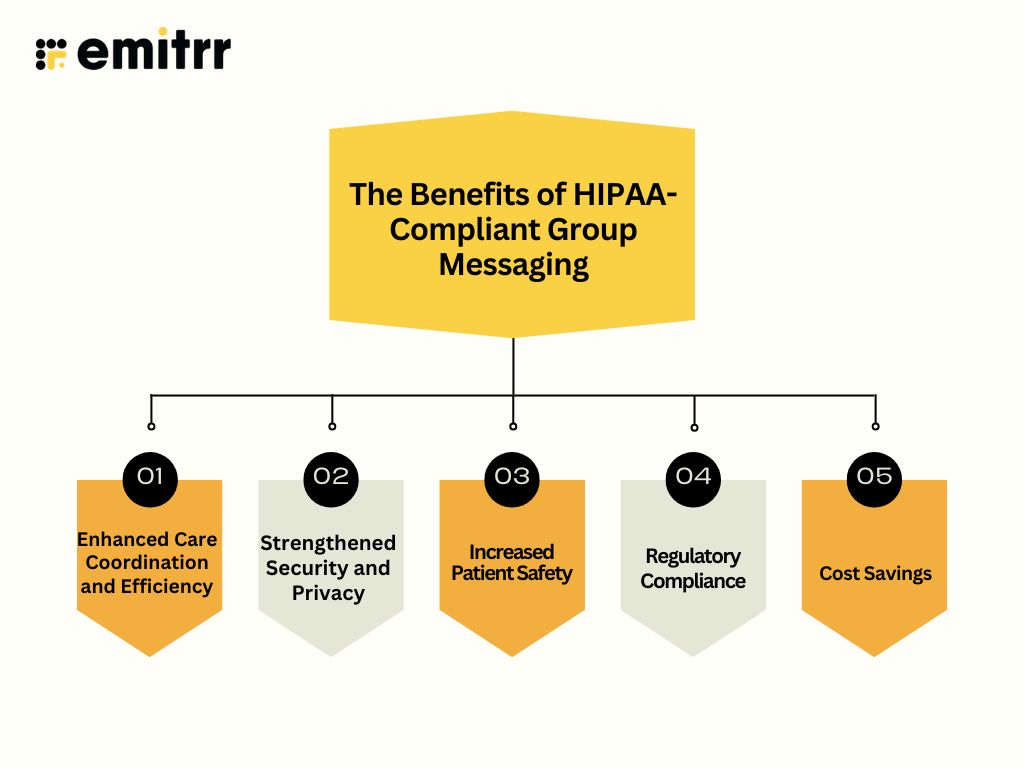
1. Enhanced Care Coordination and Efficiency
- Real-time Communication: Healthcare teams can communicate instantly, allowing for rapid decision-making regarding patient care. This is crucial in emergency situations or when managing complex cases.
- Streamlined Workflows: Information can be shared quickly among physicians, nurses, specialists, and administrative staff, reducing delays in treatment and administrative tasks. For example, a nurse can send a quick update about a patient’s vital signs to the attending physician directly through a secure channel, rather than waiting for a phone call or a physical chart review.
- Improved Collaboration: Specialists can be brought into discussions seamlessly, providing timely input without the need for lengthy conference calls or email chains.
2. Strengthened Security and Privacy
- PHI Protection: These platforms are specifically designed with security features to protect ePHI, minimizing the risk of breaches and unauthorized access. HIPAA-compliant secure text messaging further ensures that every conversation remains encrypted, accessible only to authorized users, and aligned with regulatory requirements.
- Audit Trails: Comprehensive logs provide a record of all communications, which is essential for compliance, investigations, and quality assurance.
- Secure Data Transmission: Information is encrypted both in transit and at rest, safeguarding it from interception.
- Controlled Access: Features like user authentication, role-based access, and secure login protocols ensure that only authorized personnel can participate in discussions.
3. Increased Patient Safety
- Reduced Errors: Clear, immediate communication can help prevent medical errors that might arise from miscommunication or delayed information. For instance, a physician can quickly clarify medication orders or treatment protocols via a secure message.
- Faster Response Times: When a patient’s condition changes, the care team can be alerted and respond more rapidly.
4. Regulatory Compliance
- Meeting HIPAA Mandates: Using a compliant platform is a critical step towards meeting the stringent requirements of HIPAA, avoiding hefty fines and legal repercussions.
- Peace of Mind: Knowing that communications are secure and compliant allows healthcare professionals to focus on patient care without the constant worry of data breaches.
5. Cost Savings
- Reduced Breach Costs: The cost of a data breach far outweighs the investment in a compliant messaging solution.
- Improved Productivity: Faster communication and better coordination lead to increased staff productivity and potentially shorter patient stays.
Key Features to Look for in a HIPAA-Compliant Group Messaging Solution
When evaluating potential HIPAA-compliant group messaging platforms, several essential features should be considered. Comparing leading HIPAA-compliant chat apps can also help healthcare organizations identify solutions that combine robust security with efficient team collaboration.
- End-to-End Encryption: This ensures that messages can only be read by the sender and intended recipients. Even the platform provider cannot access the content of the messages.
- Business Associate Agreement (BAA): A vendor must be willing to sign a BAA with your organization. This is non-negotiable for HIPAA compliance. Carefully review the BAA to understand the vendor’s responsibilities.
- Secure User Authentication: Strong authentication methods, such as multi-factor authentication (MFA), are crucial to verify user identities and prevent unauthorized access.
- Role-Based Access Controls: The ability to assign different levels of access and permissions to users based on their roles within the organization is vital for controlling PHI exposure.
- Audit Trails and Reporting: The platform should maintain detailed logs of all message activity, including who sent messages, who received them, when they were sent, and any access attempts. These logs should be easily accessible for compliance purposes.
- Data Encryption at Rest: PHI stored on servers or devices should be encrypted to protect it even if the device is lost or stolen.
- Secure Data Deletion Policies: The platform should offer clear policies and mechanisms for securely deleting messages and data when they are no longer needed, in accordance with retention policies.
- Device Security: Features that allow administrators to remotely wipe data from lost or stolen devices add another layer of security.
- Integration Capabilities: The ability to integrate with existing Electronic Health Record (EHR) systems or other healthcare IT infrastructure can further streamline workflows.
- On-Premise or Cloud Deployment Options: Some organizations may prefer on-premise solutions for greater control, while others opt for secure cloud-based services. Ensure the vendor offers a deployment model that fits your organization’s needs and security posture.
- HIPAA Training and Support: Ideally, the vendor should provide resources or training on how to use their platform in a HIPAA-compliant manner.
Implementing HIPAA-Compliant Group Messaging: Best Practices
A vibrant, flat illustration depicting a secure group messaging interface on a smartphone screen, with blurred, stylized conversation bubbles representing messages containing medical symbols (like a caduceus, heart, or brain icon) within a protective digital shield or lock icon. Surrounding the phone are subtle, abstract representations of security measures like firewalls or encryption keys. The overall impression should be modern, trustworthy, and clearly communicate ‘HIPAA compliant’ without explicitly stating it in text within the image. Use a clean, professional aesthetic with a palette of blues, greens, and grays, signifying trust and technology.
Simply choosing a HIPAA-compliant platform is not enough. Organizations must implement and manage these tools effectively to maintain compliance.
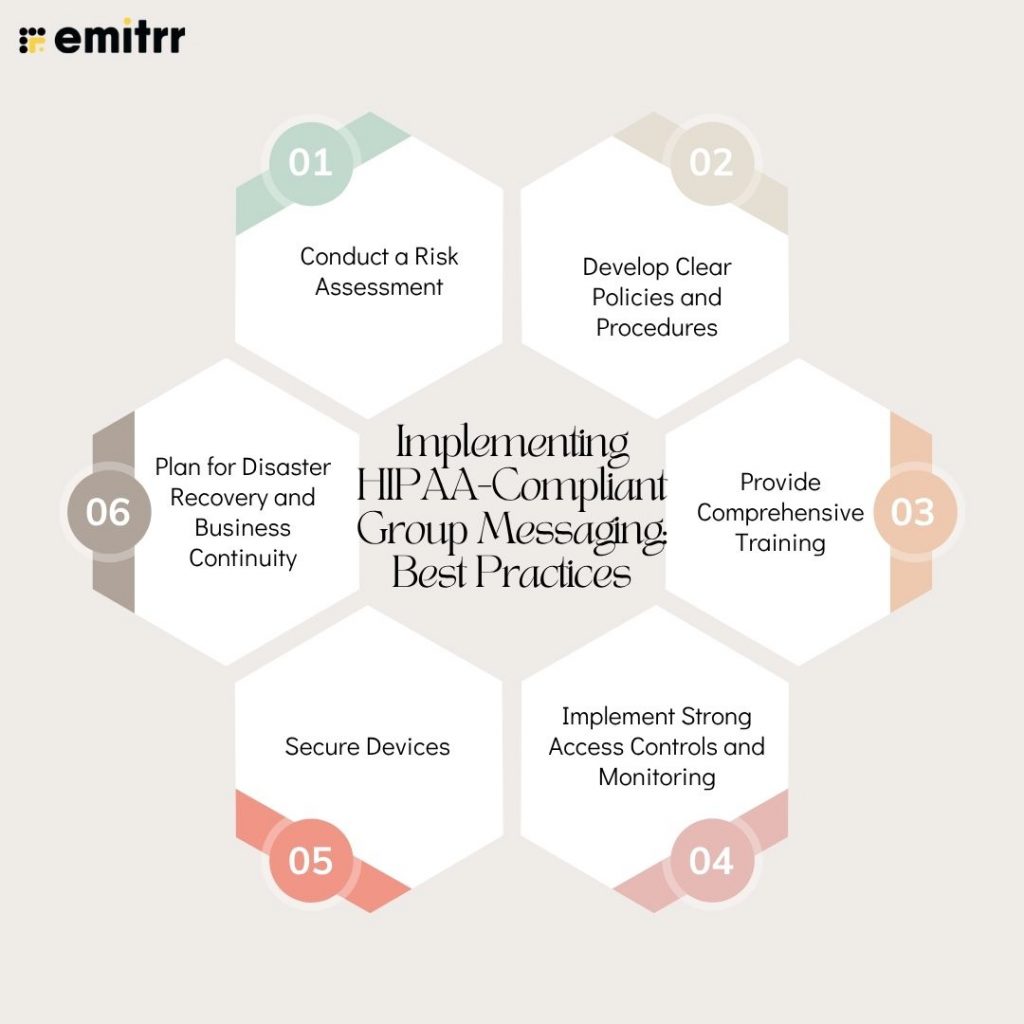
1. Conduct a Risk Assessment
Before deploying any new technology, perform a thorough risk assessment to identify potential vulnerabilities related to communication and PHI. Using a HIPAA-compliant texting checklist during implementation can help verify that your messaging workflows, security controls, and compliance requirements are fully addressed before launch.
2. Develop Clear Policies and Procedures
- Define Permitted Use: Clearly outline what types of information can and cannot be shared via the messaging platform. Emphasize that only PHI necessary for treatment, payment, or operations should be discussed. Your internal policies should also reflect HIPAA-compliant texting rules so employees have clear guidance for secure patient communication.
- User Guidelines: Establish rules for user conduct, including password management, device security, and reporting suspicious activity.
- Patient Consent: Understand when patient consent is required for sharing their information, even within a compliant platform.
- Data Retention and Deletion: Define how long messages should be retained and establish procedures for secure deletion.
3. Provide Comprehensive Training
- Mandatory Training: All users who will be using the messaging platform must receive thorough training on HIPAA regulations, the platform’s features, and the organization’s policies.
- Regular Refresher Courses: Conduct periodic training sessions to reinforce best practices and update users on any changes.
- Focus on PHI Identification: Train staff to recognize what constitutes PHI and the importance of protecting it.
4. Implement Strong Access Controls and Monitoring
- Least Privilege Principle: Grant users only the minimum access necessary to perform their job functions.
- Regular Audits: Periodically review audit logs to detect any unusual activity or potential security breaches.
- Prompt Deactivation: Ensure that user accounts are promptly deactivated when an employee leaves the organization or changes roles.
5. Secure Devices
- Mobile Device Management (MDM): If staff use personal or company-issued mobile devices, implement MDM solutions to enforce security policies, such as strong passwords, remote wiping capabilities, and encryption.
- Device Security Best Practices: Encourage users to keep their devices updated with the latest security patches and to avoid jailbreaking or rooting their devices.
6. Plan for Disaster Recovery and Business Continuity
Ensure that your messaging solution is part of your overall disaster recovery plan. Understand how data can be recovered in case of system failure or other emergencies.
Common Pitfalls to Avoid
- Assuming All Encrypted Apps are HIPAA-Compliant: End-to-end encryption is a feature, not a guarantee of full HIPAA compliance.
- Failing to Sign a BAA: This is a critical compliance failure. Always ensure a BAA is in place with your vendor.
- Inadequate User Training: Untrained users are a significant security risk.
- Over-Sharing Information: Even within a compliant system, sharing unnecessary PHI can lead to breaches.
- Ignoring Audit Trails: These logs are essential for monitoring and compliance.
- Using Personal Devices Insecurely: Unsecured personal devices used for work can be a major vulnerability.
The Future of Healthcare Communication
As technology continues to evolve, so too will the landscape of healthcare communication. We can expect to see further integration of AI for intelligent routing of messages, enhanced security protocols, and more seamless interoperability between different healthcare systems. The demand for secure, efficient, and compliant communication tools will only grow, making HIPAA-compliant group messaging an indispensable part of modern healthcare delivery. Investing in HIPAA-compliant communication solutions will help healthcare organizations improve collaboration, strengthen patient trust, and stay prepared for evolving regulatory requirements.
The shift towards value-based care and increased patient engagement further emphasizes the need for effective communication. Patients are increasingly expecting to interact with their healthcare providers through digital channels, and HIPAA-compliant platforms are the key to enabling this safely.
Frequently Asked Questions (FAQs)
Regular messaging apps (like WhatsApp, Signal, standard SMS) are designed for general consumer use and often lack the specific security features and legal agreements required by HIPAA. HIPAA-compliant messaging apps are purpose-built for healthcare, offering end-to-end encryption, robust access controls, audit trails, and the ability to sign a Business Associate Agreement (BAA), which is essential for legal compliance when handling Protected Health Information (PHI).
Yes, absolutely. A Business Associate Agreement (BAA) is a legally binding contract between a covered entity (like a hospital or clinic) and a business associate (the vendor of the messaging service) that outlines how the business associate will protect PHI on behalf of the covered entity. Without a signed BAA, any use of a messaging service to transmit PHI is a violation of HIPAA.
You can, but only if your organization has implemented strict security measures for personal devices used for work purposes. This typically involves Mobile Device Management (MDM) software that enforces policies like strong passwords, encryption, remote wiping capabilities, and ensures that the messaging app itself is HIPAA-compliant and configured correctly. It’s crucial to have clear organizational policies on Bring Your Own Device (BYOD) and ensure that PHI is not stored insecurely on personal devices.
Non-compliance with HIPAA can result in severe penalties, including substantial fines, corrective action plans, and potential legal action. Fines can range from hundreds to thousands of dollars per violation, with annual caps that can reach millions. Beyond financial penalties, non-compliance can lead to significant damage to an organization’s reputation and loss of patient trust.
No, end-to-end encryption is a critical security feature but is not sufficient on its own for HIPAA compliance. HIPAA compliance requires a comprehensive set of safeguards, including administrative, physical, and technical measures. This also includes having a BAA in place, robust access controls, audit trails, secure data storage, and clear policies and procedures for handling PHI. Many consumer apps offer end-to-end encryption but lack these other essential components.
Comprehensive and ongoing training is key. Staff must be educated on HIPAA regulations, the specific policies of your organization regarding messaging and PHI, and how to use the compliant platform securely. Training should cover identifying PHI, understanding access controls, password security, device security, and reporting procedures for any suspicious activity. Regular refresher training and audits of usage can help reinforce correct practices.
Conclusion
HIPAA-compliant group messaging is no longer a luxury but a necessity for healthcare organizations striving to deliver high-quality patient care while adhering to strict privacy and security regulations. By understanding HIPAA’s requirements, choosing the right platform, and implementing robust policies and training, healthcare professionals can harness the power of instant communication to improve efficiency, enhance patient safety, and maintain regulatory compliance. The risks associated with unsecured communication are simply too great to ignore, making a strategic investment in HIPAA-compliant group messaging a critical step towards a more secure and effective healthcare future.


 4.9 (400+
reviews)
4.9 (400+
reviews)