
 4.9 (400+
reviews)
4.9 (400+
reviews)
Introduction
The education sector faces unprecedented demands: delivering personalized, equitable learning experiences while managing rising operational costs and stakeholder expectations. For educational businesses, the pressure to scale quality without compromising efficiency has exposed critical gaps in communication and workflow management. Outdated systems still reliant on manual outreach, fragmented messaging, and reactive support are struggling to keep pace with the needs of modern students, families, and staff.
At the core of this challenge lies a communication crisis: delayed parent-teacher replies, generic mass emails, and inaccessible support channels leave stakeholders frustrated, while administrative teams drown in repetitive tasks like scheduling, compliance paperwork, and data entry. Traditional approaches not only hinder engagement but also strain resources, risking burnout and missed growth opportunities.
AI agents are emerging as the definitive solution for educational businesses. By automating routine communications, personalizing interactions at scale, and turning data into actionable insights, these tools are revolutionizing how institutions connect with their communities. From AI-driven chatbots handling 24/7 inquiries to predictive analytics flagging at-risk students via communication patterns, AI agents are bridging the efficiency gap while unlocking new levels of engagement and accessibility.
For businesses in education, this isn’t just innovation; it’s transformation, reducing costs, boosting retention, and future-proofing operations in an era where communication is the cornerstone of success.
In this article, we shall explore how AI agents are redefining communication, streamlining administrative workflows, and empowering educational businesses to deliver scalable, equitable, and impactful learning experiences.
Key Challenges Facing the Education Sector Today
The education sector in 2025 faces significant operational and engagement challenges that directly impact business outcomes such as productivity, customer satisfaction, and cost efficiency. For businesses serving this sector, leveraging AI agents, especially in communication-offers transformative solutions to these persistent issues.
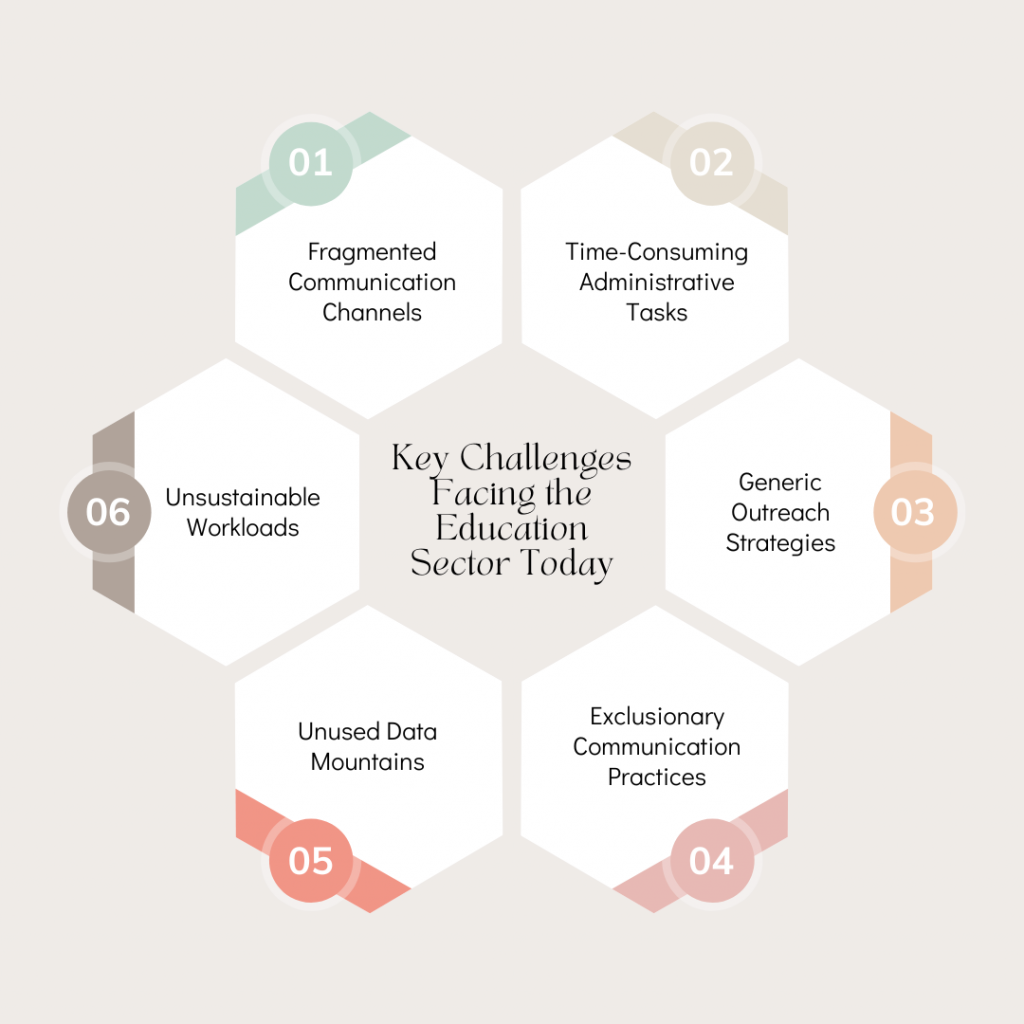
Fragmented Communication Channels
Delayed parent-teacher replies and reliance on one-way announcements leave critical questions unanswered, while scattered outreach logs across SMS, email, and phone make it impossible to track conversations effectively. This inefficiency strains relationships and creates operational blind spots. AI communication agents step in by automating instant, two-way responses (e.g., chatbots for FAQs) and unifying all messages into a single platform. Businesses gain real-time visibility into every interaction, reducing missed deadlines and improving stakeholder trust.
Time-Consuming Administrative Tasks
Educators lose hours each week to manual grading, attendance tracking, and compliance paperwork that drains productivity and inflates operational costs. Scheduling meetings and assessments manually further compounds inefficiencies. AI agents automate these workflows: grading essays, logging attendance via facial recognition, and generating compliance reports in seconds. Smart scheduling tools sync calendars, prioritize tasks, and send reminders-freeing staff to focus on strategic goals and reducing labor expenses.
Generic Outreach Strategies
Mass emails and printed memos fail to resonate with students and families, leading to disengagement and missed opportunities for personalized support. This one-size-fits-all approach limits retention and customer satisfaction. AI analyzes individual preferences and engagement history to craft tailored messages, from adaptive learning recommendations to progress updates. Businesses create deeper connections with stakeholders, boosting loyalty and differentiating their services in crowded markets.
Exclusionary Communication Practices
Students with hearing, visual, or language barriers often receive inadequate support, leaving them behind and damaging institutional credibility.
AI-powered tools bridge these gaps with real-time translation, voice-to-text transcription, and accessible content formats. Businesses not only comply with accessibility standards but also tap into underserved demographics, expanding their market reach.
Unused Data Mountains
Schools collect vast amounts of LMS/SIS data but struggle to turn it into actionable insights for early intervention or strategy optimization. AI analytics sift through communication patterns, attendance records, and engagement metrics to flag at-risk students and recommend targeted actions. Businesses transform this data into predictive support services, offering clients proactive solutions that improve outcomes.
Unsustainable Workloads
High administrative burdens and low morale drive educator burnout, risking talent loss and increased recruitment costs. AI agents handle repetitive tasks like grading and reminders, streamlining workflows, and reducing stress. Businesses retain experienced staff, ensure service consistency, and build reputations as employee-centric organizations.
Why This Matters for Education Businesses like yours?
- Cost Efficiency: Automation slashes labor costs and operational waste.
- Competitive Edge: Personalized, inclusive communication builds brand loyalty.
- Data Monetization: Predictive insights become premium services for clients.
- Sustainability: Happier staff and students drive long-term growth.
By addressing these challenges with AI communication agents, businesses position themselves as innovators-solving today’s pain points while future-proofing their offerings.

How Educational Teams Benefit From AI-driven Platforms?
Educational institutions and businesses face mounting pressure to streamline operations, enhance stakeholder engagement, and deliver measurable results. AI-driven communication platforms address these challenges head-on, offering scalable, cost-effective solutions that redefine efficiency and customer satisfaction. Here’s how they deliver value:
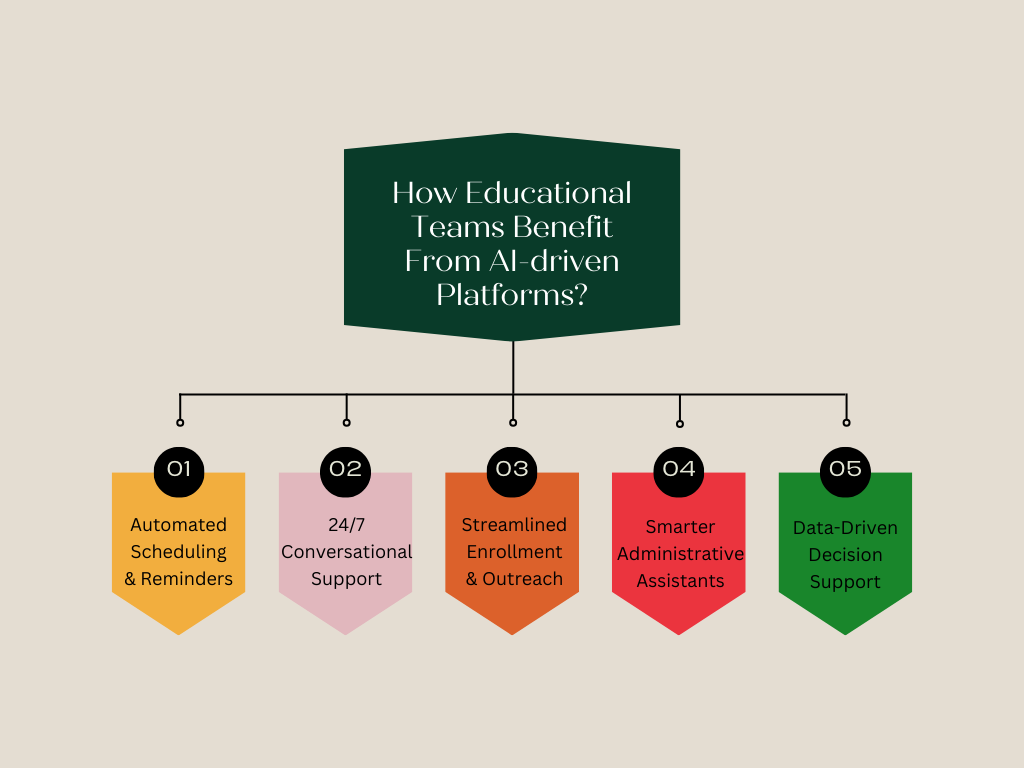
Automated Scheduling & Reminders
- Attendance Alerts via SMS/voice when students miss classes: AI agents instantly notify parents and staff, reducing follow-up time and improving accountability.
- Fee & Form Deadlines: Proactive tuition and document nudges minimize late submissions, ensuring steady cash flow and compliance.
- Parent-Teacher Conference Slots: Two-way booking bots eliminate scheduling conflicts, saving hours of administrative work while enhancing parent satisfaction.
24/7 Conversational Support
- Virtual Parent Liaison Agent: Instant answers on grades, events, and policies via text reduce call-center costs and improve response times.
- Sentiment analysis flags urgent queries, escalating them to live staff to ensure critical issues receive human empathy.
- Student Support Bot: Homework Q&A, deadline reminders, and mental-health check-ins keep students engaged. Speech-to-text and translation tools break language barriers, making support inclusive and accessible.
Streamlined Enrollment & Outreach
- Automated Lead Nurturing: AI tracks application statuses, sends reminders for missing documents, and nudges prospects with personalized next-step prompts, boosting conversion rates.
- Instant Qualification: Text-based intake forms prioritize high-potential leads, routing them to admissions counselors for immediate follow-up.
- Outbound Campaigns: Voice-bot invitations to virtual open houses expand reach without increasing staff workload, driving attendance and interest.
Smarter Administrative Assistants
- Auto-Grading & Feedback Drafts: AI pre-populates gradebooks and suggests comment templates, cutting grading time by 50% while maintaining consistency.
- Lesson-Plan Generation: LLMs create standards-aligned draft outlines, which teachers customize, freeing them to focus on creativity and student interaction.
- Report & Compliance Bundling: Automated collation of attendance, performance, and behavior logs simplifies audits and reduces compliance risks.
Data-Driven Decision Support
- Early Intervention Alerts: Predictive AI flags at-risk students by analyzing communication patterns (e.g., declining engagement in messages), enabling timely support.
- Sentiment & Engagement Dashboards: Track response rates, call-completion times, and top FAQs to optimize communication strategies and resource allocation.
- Resource Optimization: Analyze outreach efficacy to allocate staff where most needed, maximizing ROI on campaigns and support services.
Why Your Businesses Must Choose AI-Driven Communication Platforms?
- Cost Efficiency: Automating routine tasks reduces labor costs and operational waste.
- Enhanced Engagement: Personalized, 24/7 support boosts parent and student satisfaction, improving retention.
- Scalability: Handle growing enrollments and inquiries without proportional staff increases.
- Actionable Insights: Turn communication data into predictive analytics, enabling proactive decision-making.
- Competitive Differentiation: Offer cutting-edge, inclusive support that sets institutions apart in crowded markets.
Hence, AI-driven communication platforms aren’t just tools, they’re strategic assets that solve operational inefficiencies, drive enrollment, and foster long-term loyalty. By automating workflows, personalizing interactions, and delivering data-driven insights, these platforms empower businesses to thrive in the evolving education landscape.
How AI Agents Are Transforming Education in Practice?
AI agents are rapidly reshaping the educational landscape, driving efficiency, personalization, and inclusivity across K–12 schools, higher education, and administrative operations. Their impact is especially visible in communication, where automation, real-time analytics, and adaptive messaging are elevating engagement and outcomes for students, families, and institutions alike.
K–12 Attendance & Engagement
AI agents analyze historical attendance patterns to predict chronic absenteeism risks, enabling early interventions. They personalize outreach by adapting message tone, language, and channel (SMS/voice) based on family response history, while optimizing send times for maximum engagement. Sentiment analysis flags urgent replies (e.g., “I’m worried…”), ensuring human staff prioritize high-stakes cases.
Predictive Risk Scoring
AI agents analyze vast amounts of historical attendance data to detect subtle patterns that may indicate a student is at risk of chronic absenteeism. By leveraging predictive analytics, these systems can flag students likely to slip into problematic attendance habits before it becomes a crisis, enabling schools to proactively reach out and provide tailored support. This early intervention approach not only helps individual students but also improves overall attendance rates, a key metric for educational success.
Dynamic Message Personalization
Modern AI-driven platforms don’t rely on generic, one-size-fits-all communication. Instead, templates automatically adapt the tone, language, and delivery channel (such as SMS or voice) based on each family’s response history and preferences. This dynamic personalization ensures that messages are both engaging and accessible, increasing the likelihood of a positive response and fostering stronger school-family relationships.
Optimized Send Times
AI agents use data-driven insights to determine the best hour and day to contact each household, maximizing reply rates and minimizing missed communications. By learning from past interactions and response patterns, these systems ensure that important messages-whether about attendance, assignments, or events-arrive when families are most receptive. This optimization not only boosts engagement but also reduces administrative follow-up work.
Sentiment-Driven Escalation
Beyond just delivering messages, AI agents can analyze the sentiment of replies. If a parent responds with concern or worry (e.g., “I’m worried about my child’s progress”), the system flags the message for immediate human follow-up. This sentiment-driven escalation ensures that sensitive situations receive the empathy and attention of school staff, combining the efficiency of AI with the irreplaceable value of human care.
By integrating these AI-powered features, educational businesses and institutions can dramatically improve attendance management, strengthen family engagement, and deliver more responsive, personalized communication-ultimately driving better student outcomes and operational efficiency
Higher-Ed Admissions & Lead Nurturing
AI agents streamline admissions with adaptive qualification flows that skip irrelevant questions and focus on applicant interests. Predictive lead scoring correlates past engagement with enrollment outcomes, while A/B-tested messaging variants refine outreach in real time. Channel optimization ensures prospects receive communications via their preferred medium (SMS/voice).
Adaptive Qualification Flows
AI agents transform the admissions journey by dynamically adjusting follow-up questions based on each prospect’s replies, skipping irrelevant queries, and focusing on what truly matters to the applicant. This personalized approach not only saves time for admissions teams but also creates a more engaging experience for prospective students, ensuring that every interaction feels relevant and tailored to their interests. Universities leveraging such AI-driven flows report higher applicant satisfaction and more efficient qualification of leads.
Predictive Lead Scoring
Gone are the days of static, one-size-fits-all lead evaluation. AI agents continuously refine lead scores by analyzing past messaging engagement and correlating it with actual enrollment outcomes. This enables admissions teams to prioritize the most promising prospects and allocate resources where they will have the greatest impact. Institutions using predictive lead scoring have seen improved enrollment rates and more effective use of their recruitment budgets.
Channel Optimization
AI agents learn and adapt to each prospect’s preferred communication channel, whether SMS, email, or voice can seamlessly switch between them mid-campaign. This ensures that applicants receive updates and prompts in the way that is most convenient and engaging for them, increasing response rates and keeping prospects moving smoothly through the admissions funnel.
A/B-Tested Messaging Variants
To maximize engagement, AI agents run micro-experiments with different subject lines and calls-to-action, automatically promoting the most effective messaging in real time. This data-driven approach enables admissions teams to continually refine their outreach strategies and achieve higher conversion rates without manual trial and error.
By integrating these AI-powered features, higher education institutions and education businesses can:
- Boost applicant engagement and satisfaction through personalized, responsive communication.
- Increase enrollment rates by focusing on the most qualified and interested prospects.
- Optimize marketing spend and staff time with targeted, automated outreach.
- Stay competitive in a rapidly evolving admissions landscape where efficiency and personalization are key differentiators.
AI agents are not just streamlining admissions; they are setting a new standard for how educational institutions attract, nurture, and enroll the next generation of students
24/7 Student Support & Inclusion
AI agents provide continuous, accessible support for students around the clock. Contextual tutoring tools remember prior sessions, delivering coherent, step-by-step explanations rather than isolated answers. Multimodal accessibility features-such as auto-detecting hearing or visual needs and offering text, audio, or translated responses-ensure all students can participate fully, regardless of ability or language background.
Contextual Tutoring
AI agents now act as always-available personal tutors, recalling each student’s previous sessions and learning history to deliver coherent, multi-step explanations rather than isolated answers. This means when a student returns for help, the AI can build on prior conversations, offering tailored guidance that adapts to their unique learning journey. Such contextual, personalized support not only improves comprehension but also boosts student confidence and engagement, much like a dedicated 6th-grade math tutor who understands where a student left off and where they need to go next.
Multimodal Accessibility
Accessibility is no longer an afterthought. AI agents can automatically detect if a student has hearing, visual, or language needs and instantly provide support in the most suitable format-be it text, audio, or translated responses. This ensures that every learner, regardless of ability or background, receives equitable access to educational resources and support, helping institutions meet both ethical and regulatory standards.
Emotion & Engagement Tracking
AI-driven tutoring systems go beyond academic assistance by analyzing speech patterns, written responses, and engagement cues for signs of stress, confusion, or disengagement. When the AI detects these emotional signals, it can adapt its communication style, offer encouragement, or escalate the session to a human counselor if needed. This emotional intelligence creates a more supportive, motivating environment and helps prevent students from falling through the cracks.
Curriculum-Aware Content Retrieval
AI agents leverage semantic search technology to scan syllabi, past lectures, and resource libraries, surfacing the most relevant help for each student’s current need. Whether a student is stuck on a concept from last week’s lesson or needs a specific example from a previous unit, the AI can quickly retrieve and present the best available content, making support timely, targeted, and highly effective.
By integrating these advanced AI-driven support features, educational businesses and institutions can offer scalable, round-the-clock, and fully personalized student assistance. This not only enhances learning outcomes and student satisfaction but also positions organizations as leaders in accessibility, inclusivity, and innovation in the education sector.
Administrative Efficiency & Compliance
AI agents automate grading with rubric-aligned evaluations and draft feedback, reducing manual workload. Smart summaries highlight critical attendance/behavior trends, while anomaly detection flags risks like missing consent forms. Workflow optimization tools reorder tasks to eliminate bottlenecks and ensure compliance.
AI Agentic Grading
Manual grading of essays and short-answer responses is notoriously time-consuming and can introduce inconsistencies across large cohorts. AI agents now automate this process by evaluating student work against customizable rubrics, instantly generating draft scores and tailored feedback language. This not only saves teachers up to 80% of their grading time but also ensures fair, objective, and standards-aligned assessments across subjects. With scalable AI grading, educators can focus more on personalized student support and instructional planning, while institutions benefit from faster turnaround and greater transparency in evaluation.
Smart Report Summaries
Tracking attendance, behavior, and performance trends is essential for compliance and early intervention, yet sifting through raw data can overwhelm administrators. AI agents simplify this by automatically generating concise executive summaries that highlight only significant deviations or emerging patterns. These smart summaries allow school leaders and compliance officers to quickly spot issues, prioritize action, and maintain oversight without drowning in paperwork.
Anomaly Detection
Compliance risks often arise from inconsistent data entries or overlooked policy requirements, such as missing consent forms. AI agents proactively scan records for anomalies-flagging sudden changes, incomplete documentation, or data inconsistencies for immediate review. This early warning system helps institutions avoid costly compliance breaches and ensures that no critical detail is missed in the administrative process.
Automated Workflow Optimization
Bottlenecks in approvals, reminders, or task completion can stall critical processes and frustrate staff. AI agents monitor workflow timings in real time, intelligently reordering tasks, sending automated nudges, and reallocating approvals to eliminate delays. This dynamic optimization not only accelerates operations but also reduces administrative burden, freeing up resources for strategic initiatives and student-facing activities.
By integrating AI-driven administrative tools, educational businesses and institutions can achieve:
- Significant time and cost savings through automated grading and reporting
- Greater fairness and consistency in assessments, enhancing trust and satisfaction
- Proactive compliance management that minimizes risk and regulatory headaches
- Streamlined operations that boost productivity and allow staff to focus on high-value work
AI agents are not just making administration easier; they are setting a new standard for efficiency, accuracy, and compliance in education
Where Do Humans Still Overtake AI Agents in the Education Sector?
AI agents are powerful tools for enhancing communication and operational efficiency in education, but businesses must continue to rely on human educators for empathy, motivation, complex problem-solving, ethical judgment, creativity, sensitive issue management, and community building. The most successful strategies will blend the strengths of both AI and humans to create a balanced, effective educational ecosystem.
Human Empathy and Emotional Intelligence
While AI agents excel at automating communication and delivering instant responses, they cannot replicate the empathy, intuition, and nuanced understanding that human educators bring to interactions. Teachers can read subtle social cues, provide emotional support, and adapt their communication style based on a student’s mood or personal circumstances—qualities that are essential for building trust and motivation in the learning process. For businesses, this means that human involvement remains critical in situations requiring sensitive conversations, conflict resolution, or mentorship.
Motivation and Relationship Building
AI-powered communication tools can answer questions 24/7 and provide personalized feedback, but they cannot foster the deep relationships and sense of belonging that motivate students to persist in their studies. Human educators inspire, encourage, and connect with students on a personal level, which is vital for long-term engagement and retention. Businesses should recognize that, while AI can enhance efficiency, the human touch is indispensable for sustaining student motivation and loyalty.
Complex Problem-Solving and Critical Thinking
AI agents can provide data-driven insights and automate routine queries, but they are limited when it comes to guiding students through complex, open-ended problems or fostering critical thinking skills. Human teachers facilitate group discussions, encourage debate, and challenge students to think beyond standard answers—skills that AI communication tools currently cannot fully replicate. Businesses must continue to invest in human expertise for advanced instructional support and curriculum development.
Ethical Judgement and Contextual Decision-Making
AI can follow programmed ethical guidelines, but only humans can interpret unique situations and make context-sensitive decisions. When addressing issues like academic integrity, student well-being, or cultural sensitivities, human judgment is irreplaceable. For business leaders, maintaining a human oversight layer ensures responsible use of AI in all communication and decision-making processes.
Creativity and Inspiration
AI can generate content and automate reminders, but it cannot match the creativity and inspirational leadership that human educators provide. Teachers design engaging lessons, adapt to classroom dynamics, and inspire students to explore new ideas—roles that remain beyond the reach of current AI technology. Businesses should leverage AI to handle repetitive communication tasks, freeing up educators to focus on creative and high-impact activities.
Handling Sensitive and Confidential Issues
AI communication agents are not equipped to manage sensitive topics such as mental health, bullying, or family crises. Human educators are trained to approach these issues with care, confidentiality, and appropriate intervention, ensuring student safety and well-being. Businesses must ensure that escalation protocols are in place so that such matters are always handled by qualified professionals.
Building Trust and Community
Finally, trust and a sense of community are built through authentic human interactions. While AI can facilitate communication, only humans can create the sense of belonging and community that defines successful educational environments. For businesses, combining AI efficiency with human connection is the best way to deliver transformative educational experiences.
How Emitrr Helps Educational Institutes As An AI-Driven Platform?
At Emitrr, we’re transforming how educational institutes connect with students, parents, and prospects around the clock, across both voice and text channels.
Our AI-powered agents go beyond simply answering calls or messages; they act as intelligent administrative assistants, ensuring every inquiry is addressed, every appointment or meeting is scheduled, and every follow-up is timely.
By automating routine communication tasks, Emitrr helps institutes streamline admissions, boost event participation, reduce administrative delays, and create a seamless communication experience across the student lifecycle.
Voice AI Agent – Your 24/7 Virtual Front Desk
100% Inquiry Capture, Zero Missed Opportunities
Our AI Receptionist ensures that every call, whether from prospective students, parents, or vendors, is answered instantly, even after office hours. No lead, inquiry, or important question ever slips through the cracks.
Smarter Scheduling for Admissions, Tours, and Meetings
Students and parents can book campus tours, counseling sessions, and admission interviews at their convenience. The AI agent automatically updates your CRM or SIS (Student Information System) and sends reminders, saving your administrative staff hundreds of hours annually and drastically reducing no-shows.
Instant Information Sharing
From course details and fee structures to important deadlines and FAQs, the AI Receptionist provides real-time, accurate information, cutting response times by up to 75% and ensuring consistent, professional communication.
Proactive Engagement That Increases Enrollment
Beyond answering calls, the AI proactively follows up on missed inquiries, confirms appointments, sends payment reminders, and engages prospects through voice or SMS, helping to maximize event attendance and enrollment rates.
Intelligent Call Routing
Depending on the nature of the inquiry — admissions, financial aid, course counseling, or administrative support — the AI routes calls to the right department, reducing wait times by 60% and ensuring faster resolutions.
Text AI Agent – Intelligent Conversations at Scale
Automated Text Conversations for Admissions and Student Support
Emitrr’s upcoming Text AI Agent empowers educational institutes to manage inbound and outbound SMS interactions intelligently. Whether answering FAQs, booking appointments, sending event invites, or supporting students, the Text AI ensures every message gets a timely, personalized response.
Frictionless, Student-Friendly Experience
Today’s students prefer texting. Emitrr’s Text AI creates a natural, conversational experience, mirroring human interactions while maintaining context, making it easier for institutions to engage digitally-savvy students.
Amplify Support Without Adding Staff
With the ability to manage multiple student conversations simultaneously, the Text AI scales your support, admissions, and outreach operations without increasing your team size, freeing up staff to focus on high-value activities like counseling and engagement.
Navigating Implementation: Best Practices and Considerations
AI agents are fundamentally transforming the education sector, especially through their ability to enhance communication, automate routine processes, and deliver personalized learning experiences. For businesses operating in the education space, the successful adoption of AI agents requires a strategic approach that balances innovation with operational realities. Here are seven key best practices and considerations to guide effective implementation:
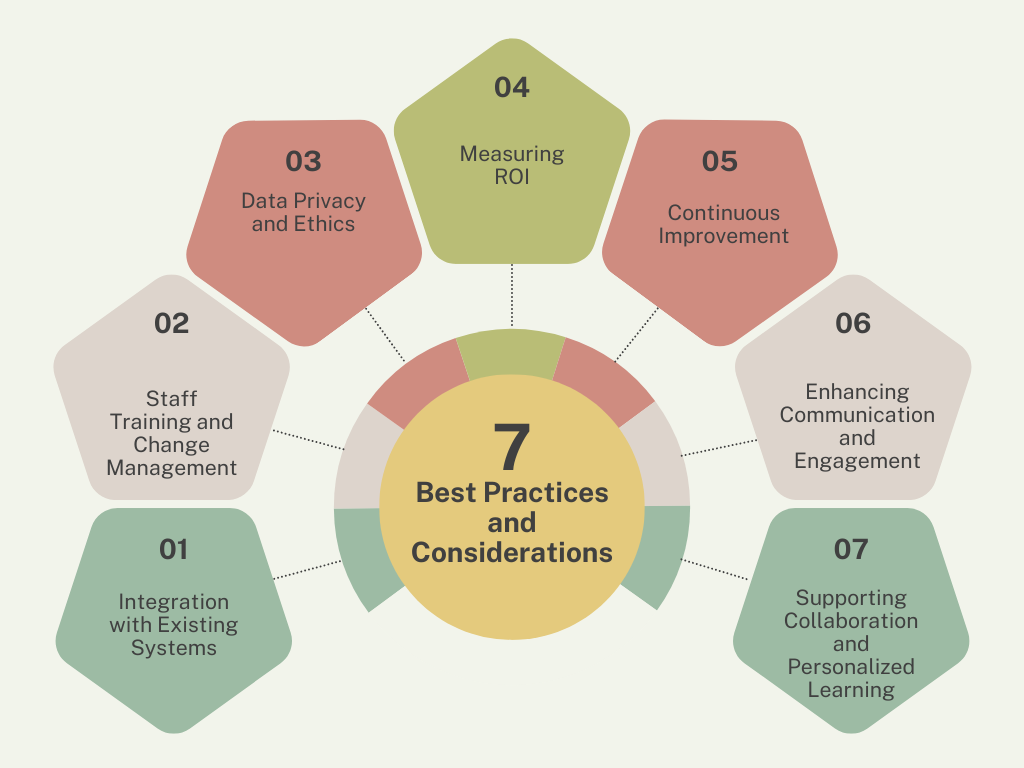
Integration with Existing Systems
Seamless integration is critical to ensure that AI agents complement, rather than disrupt, current educational platforms and workflows. Businesses should prioritize AI solutions that offer compatibility with popular Learning Management Systems (LMS), messaging platforms, and administrative tools. This allows AI-powered communication, such as automated notifications, chatbots, and real-time feedback, to be embedded directly into daily operations, streamlining processes for both staff and students. Early-stage pilots and phased rollouts can help identify integration challenges and minimize disruption.
Staff Training and Change Management
Empowering educators and administrative staff to work effectively alongside AI agents is essential. Comprehensive training programs should focus on practical use cases, such as leveraging AI chatbots for student inquiries or automating parent communications, while addressing concerns about job roles and technology adoption. Involving staff in the design and feedback process fosters ownership, reduces resistance, and ensures that AI enhances rather than replaces human expertise.
Data Privacy and Ethics
With AI agents handling sensitive student and institutional data, robust data privacy and ethical standards are non-negotiable. Businesses must implement transparent data usage policies, adhere to relevant regulations, and ensure AI systems are regularly audited for bias and security. Building trust with users requires clear communication about how AI-driven communication tools work and how data is protected at every stage.
Measuring ROI
To demonstrate the value of AI investments, businesses should define clear metrics for success. These may include improvements in communication efficiency (e.g., faster response times, reduced administrative workload), increased student engagement, and enhanced learning outcomes. AI systems analyze individual student data to tailor messages and learning materials, ensuring that communication is relevant and accessible to diverse learners. This personalization extends to language translation and content adaptation, making education more inclusive and responsive to student needs.
Continuous Improvement
AI strategies must evolve in response to feedback and changing educational needs. Establishing feedback loops with educators, students, and parents enables ongoing refinement of AI communication tools. Regular updates based on analytics and user input ensure that AI agents remain relevant, effective, and aligned with institutional goals. AI automates routine communication tasks such as sending reminders, managing schedules, and providing updates. This reduces the administrative burden on educators and allows them to focus more on direct student interaction and instructional quality.
Enhancing Communication and Engagement
AI agents, particularly conversational agents and chatbots, are redefining how educational institutions interact with students, parents, and staff. These tools provide instant, personalized responses to queries, facilitate 24/7 support, and automate routine communications such as reminders and notifications. To make automated responses feel more authentic, many institutions now use solutions that humanize AI-generated text, ensuring conversations sound natural rather than robotic. AI agents provide immediate, unbiased feedback to students, fostering a supportive learning environment where students feel comfortable asking questions and making mistakes. This real-time communication helps address learning gaps promptly and encourages active participation
Supporting Collaboration and Personalized Learning
Beyond automating communication, AI agents foster collaboration and personalized learning by analyzing interaction patterns, recommending resources, and adapting content delivery to individual needs. For example, AI can mediate group discussions, suggest optimal team compositions, and provide tailored feedback, making learning more inclusive and effective. By analyzing communication patterns and engagement data, AI helps educators identify students who may need additional support and adjust their communication strategies accordingly. This ensures that interventions are timely and targeted, improving overall educational outcomes.
FAQs
AI is changing education by making learning personal, handling admin work automatically, and helping students everywhere learn better. It also makes remote learning easier, so kids in different places get equal chances.
AI acts like a smart helper, creating lessons that fit each student’s needs, answering questions via chatbots, and checking tests quickly. It gives instant feedback and lets students learn at their own speed.
Personalizes lessons, automates grading/scheduling, creates interactive content (virtual labs), and provides real-time feedback. Helps teachers with data insights.
Customizes courses, streamlines admin tasks, tracks performance, and simulates real-world challenges (medical/engineering). Prepares students with job-ready skills.
Conclusion
AI agents are fundamentally reshaping the education sector, not only by addressing today’s most pressing communication and efficiency challenges but also by setting the stage for a smarter, more connected, and more effective future. For educational businesses, the evidence is clear: AI-driven communication tools deliver 24/7 availability, personalized engagement, and actionable insights that streamline operations, boost stakeholder satisfaction, and unlock new growth opportunities. In a landscape where quality, scalability, and responsiveness are non-negotiable, embracing AI is no longer optional’s a business imperative for those who want to stay competitive and future-proof their organizations.
At Emitrr, we’re committed to leading this transformation. As an all-in-one communication platform, Emitrr empowers educational businesses to harness the full potential of AI-from automating outreach and managing multi-channel engagement to delivering seamless, personalized support. And we’re not stopping there: Emitrr will soon introduce an advanced AI-powered virtual receptionist capable of handling inbound calls, scheduling appointments, and providing round-the-clock customer support. As we expand our AI capabilities, Emitrr is set to become the comprehensive voice AI solution your business needs to thrive in the digital age.
What are you waiting for? Schedule your demo today!