
 4.9 (400+
reviews)
4.9 (400+
reviews)
Introduction to Psychiatrist Scheduling
Picture this. One of your patients has had a rough week. It’s 10:30 at night. Your clinic is closed. Your patient wants to book a follow-up but doesn’t feel like calling or leaving a voicemail. If they could just click a link and see your availability, they’d book it right away!
That’s what online scheduling makes possible. It removes friction when motivation is low and timing is unpredictable. Which is something very common in psychiatry. For patients struggling with anxiety, depression, or decision fatigue, simple booking options can be a game-changer.
And for you? It means fewer missed calls, less staff workload, and more structure in your day. You can manage follow-ups, cancellations, and emergency slots with less back-and-forth. This is what online scheduling helps with. Making your care more accessible, efficient, and consistent.
Importance of Scheduling for Psychiatrists
A solid schedule isn’t just about managing time. It’s what keeps your whole day from spiraling. In a psychiatry practice, things can get unpredictable. Patients cancel last minute, sessions run over, emergencies come up. Without a good schedule, it’s easy for your whole team to feel scattered. But with the right setup, your staff knows what’s happening, patients feel cared for, and things actually flow. It’s not just better care, it’s a calmer, organised clinic.
Why scheduling matters for a Psychiatric clinic
In psychiatry, every appointment counts. Unlike a standard medical check-up, sessions here are emotionally involved and often unpredictable. A patient might need an extra 15 minutes to talk through something heavy. Someone else might cancel without warning. Without a well-planned schedule, your whole day can feel like a domino effect, off-balance and overwhelming.
A strong online scheduling system helps you manage your time, energy, and emotional bandwidth. It keeps your caseload organized, ensures you’re not overbooked, and makes room for emergencies or longer sessions. It also helps your front desk avoid mix-ups, backlogs, or last-minute chaos. Over time, better scheduling supports smoother operations and more consistent patient care.
Why scheduling matters for your patients
Booking an appointment shouldn’t feel like another chore. Especially for someone already struggling with depression, burnout, or anxiety. A complicated process can make them hesitate. Or worse, give up entirely. And that’s a real risk. Because when it comes to mental health, showing up consistently matters.
When patients can book on their own time, whether it’s late at night or between meetings, it gives them a little control back. It makes them feel like the process is working with them, not against them. This is why 80% of consumers say they prioritise clinics that offer online scheduling.
Add with friendly reminders, quick confirmations, and clear instructions, things start to feel more manageable. They’re more likely to follow through. To show up. To stay with the treatment. Because it doesn’t feel like another burden, it just feels doable. And that can make all the difference.

Types of Scheduling for Psychiatrists
There’s no single scheduling style that works for every patient or situation. Some patients like sticking to a fixed routine. Another might need more flexibility based on how they’re feeling that day. As a psychiatrist, you must offer a mix of appointment types. This will make it so much easier to meet your patients where they are – emotionally, mentally, and logistically.
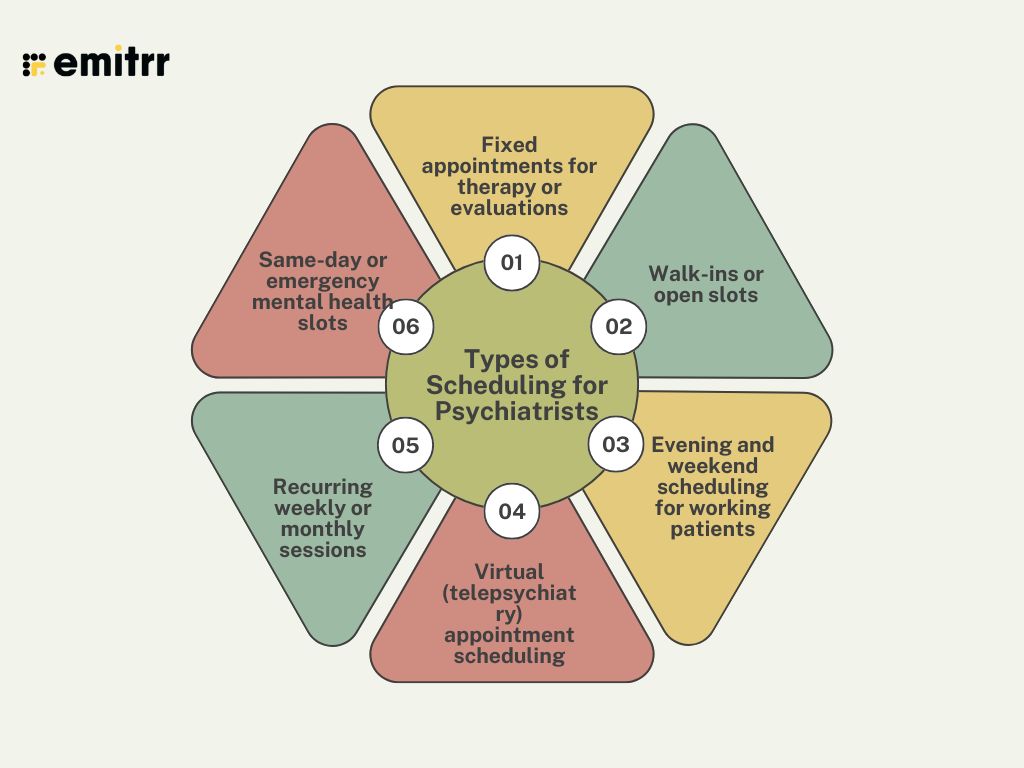
Fixed appointments for therapy or evaluations
First-time visits need much more time. Patients are opening up for the first time, you’re getting to know their history, and everything’s just a little slower. That’s why fixed appointments work so well. They let you block off the right amount of time without rushing. This makes the patient feel reassured that they have a dedicated space and time slot. And you can pace the session without pressure.
Walk-ins or open slots
Some patients won’t reach out until they really need to. That’s where open slots come in. Keeping a few walk-in-friendly gaps in your day lets you support those who finally feel ready to talk or who might be experiencing a flare-up in symptoms. It adds a sense of safety. Your patients will know they won’t always have to wait days for help. And for your clinic, it prevents emergency calls from throwing off the entire schedule.
Evening and weekend scheduling for working patients
A lot of people can’t make it to your office between 9 and 5. Offering evening or weekend slots means they don’t have to choose between their job and their mental health. It’s a game-changer for busy professionals, caregivers, and even teens in school. These after-hours appointments are more often than not more relaxing and accessible. You’re meeting patients on their terms, and that goes a long way in building trust.
Virtual (telepsychiatry) appointment scheduling
Not every patient is comfortable coming in person. Some may be dealing with anxiety, physical limitations, or probably just living far away. Virtual appointments will help you break down those barriers. Patients can join from the comfort of home, and it’s easier to fit into their schedule. For you, it means fewer cancellations and more consistent engagement. Plus, telepsychiatry is especially helpful during seasonal illnesses or bad weather.
Recurring weekly or monthly sessions
These are your regular, pre-booked sessions that follow a set schedule. Something like a weekly therapy session every Thursday at 10 AM. For many patients, that consistency provides a sense of structure, which is often calming in itself. It also helps them plan their week around care. On your end, it allows better time management and fewer surprises. Fixed appointments are just perfect for evaluations, medication reviews, and ongoing therapy sessions.
Same-day or emergency mental health slots
Mental health needs can shift quickly. One moment a patient is doing okay, the next they’re not. Holding aside one or two same-day slots can be life-saving in those moments. It gives you space to respond to urgent requests without derailing your whole day. For patients, knowing they can get help fast without waiting weeks makes a huge difference. It makes your clinic a safe space for them.
Use Cases of Psychiatrist Appointment Scheduling
Scheduling isn’t just about picking a time slot. It’s about catching people at the right moment. It makes care easier to access, keeping your practice running smoothly. Here are a few everyday situations where good scheduling can make a big difference.
Patients booking after hours when motivation strikes
Ever had a patient email you at 1 AM saying they finally want to talk? That’s real. Mental health motivation can come in waves, often late at night when things get quiet. Online scheduling means they don’t have to wait till morning or build up the courage again. They can just pick a slot then and there. For many, that moment of action is rare and valuable. If your system catches it, they’re more likely to show up and get help.
Filling last-minute cancellations from the waitlist
Someone cancels the night before. You now have a 4 PM slot open. Instead of letting that go to waste, your waitlisted patients could get a text saying, “Hey, we have a spot open, want it?” It’s a win-win. The slot gets filled, and someone waiting gets care sooner. Especially in psychiatry, waitlists are long. Smart scheduling helps you move people through it faster.
Reducing no-shows with timely reminders
It’s not always resistance. Sometimes, people just forget. A quick reminder the day before, and again a few hours before, can really make a difference. Let’s say a patient with ADHD booked a session last week. A gentle nudge saying, “Just a heads-up, your appointment is at 3 PM today” could be the reason they show up. No awkward calls. No lost time.
Making virtual mental health visits easier
Not every patient can make it in person. Maybe they’re anxious about traffic. Maybe they just don’t want to leave the house. When scheduling includes telehealth options, it meets people where they are. For a patient dealing with panic attacks or agoraphobia, the ability to choose “video session” from the calendar feels empowering. It removes a huge barrier to showing up.
Coordinating care across psychiatry and therapy
If a patient is seeing both a psychiatrist and a therapist, scheduling gets tricky. But a good system can help them line things up. For example, therapy at 1 PM, followed by a quick med review at 2 PM. When both providers can view or coordinate calendars, it saves everyone the back-and-forth. And it helps the patient feel like their care is connected, not scattered.
Starting patient intake right after booking
Imagine this: a new patient books a session online. Within minutes, they get a welcome text and an intake form to fill out. By the time they walk in (or log in), you already have their history, meds, and concerns. It skips the clipboard-and-pen phase and lets you dive into care faster. Plus, patients feel like their time matters.
Linking scheduling with texting for quick updates
Let’s say a patient’s session has to move from 3 PM to 4 PM. If your scheduling system talks to your texting tool, you can update the slot and send them a heads-up in one step. No extra calls. No missed messages. It keeps things smooth, especially when plans shift. Patients appreciate being informed without needing to chase info.
Best Practices for Psychiatrist Appointment Scheduling
You really don’t need a complicated system to keep things running smoothly at your clinic. Just follow these few simple habits. These will make life easier for you, your team, and your patients:
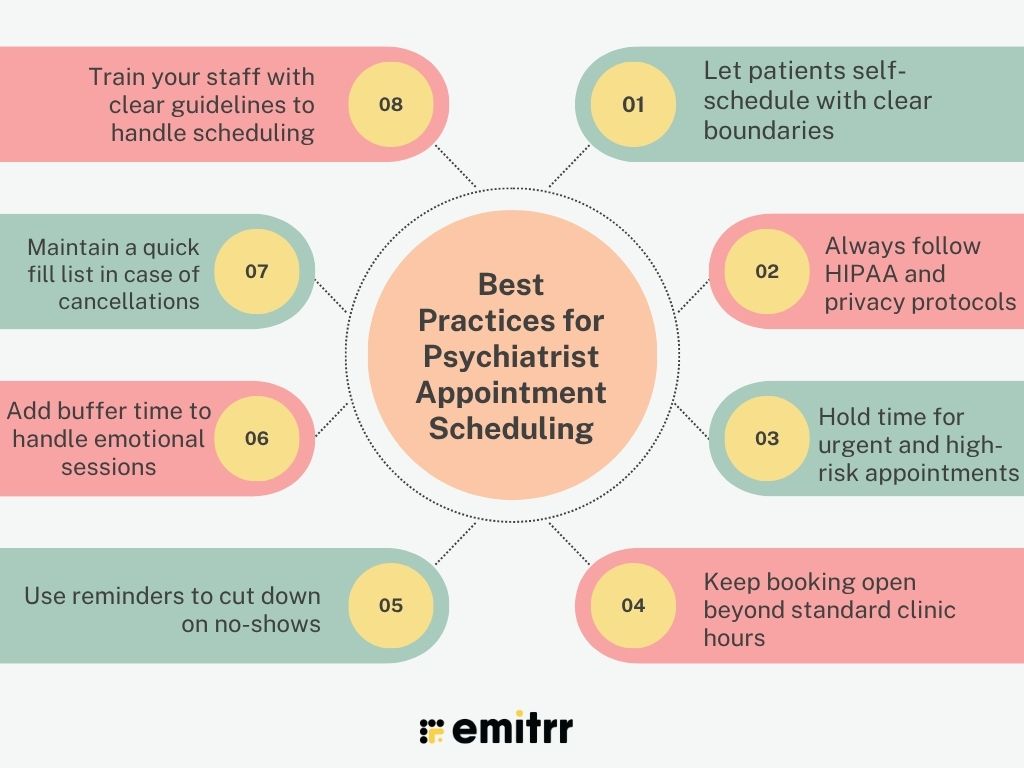
Let patients self-schedule with clear boundaries
When you let patients book their own appointments, it really makes them feel that they are calling the shots. This sense of control is absolutely necessary in mental health. It will also help your front-desk staff save time and energy. But, make sure they know what’s okay and what’s not. Like how soon patients can reschedule or if they can book back-to-back slots. A clear picture like this can help avoid confusion later.
Always follow HIPAA and privacy protocols
Even a simple appointment reminder can carry sensitive information. So always use HIPAA-compliant tools. Avoid confirming full names, diagnoses, or personal details in any unencrypted messages. Doing this is not just important for compliance. It also adds an extra layer of trust for your patients.
Hold time for urgent and high-risk appointments
Not every session can be planned weeks in advance. So, hold a few open slots each week. This will be super helpful for patients going through a tough time, starting a new medication, or those showing signs of crisis. This will make your patients feel a little more supported, knowing they won’t have to wait. It also reflects positively on your clinic.
Keep booking open beyond standard clinic hours
Mental health doesn’t follow a 9-to-5. Some patients, especially working professionals or parents, need evening or weekend options. Even if you’re not available then, a 24/7 online booking tool lets them reserve a time when they’re free to think about care.
Use reminders to cut down on no-shows
A quick “Hey, just a reminder!” text can make all the difference. Many patients appreciate a nudge the day before and the day of their appointment. It helps reduce forgetfulness, anxiety around commitment, and the awkwardness of accidentally missing a session.
Add buffer time to handle emotional sessions
Therapy can bring up a lot. Always spare 5–10 minutes between sessions so you’re not rushing out one patient while the next one waits. These situations can spike anxiety in your patients. By keeping a small buffer, your psychiatrists will also have some time and space to reset, take notes, or handle follow-up tasks. It respects your team’s emotional bandwidth and is just a very healthy practice.
Maintain a quick fill list in case of cancellations
Things happen. People cancel. But that empty spot doesn’t have to go to waste. Keep a short list of patients who’ve asked for sooner sessions and reach out when a slot opens. Less downtime for you and faster care for them! It’s a win-win situation for both your patients and your practice.
Train your staff with clear guidelines to handle scheduling
If you’re using an online scheduling system, make sure your staff knows how to use it well. Give them a quick guide: What to do if two patients pick the same time? How to handle last-minute emergencies? When should they loop you in? Clear steps help your team stay on the same page, avoid confusion, and make scheduling feel smooth for everyone.
Challenges in Scheduling for Psychiatrists
Here’s the thing: Online scheduling for a psychiatric clinic isn’t just about picking open slots. Mental health care brings its own set of challenges. Appointments can shift, patients may cancel last minute, and what looks good on a calendar might not work in real life. So let’s walk through some common hurdles you might have to deal with:
No-shows due to anxiety or forgetfulness
Mental health appointments do carry a lot of emotional weight. A patient struggling with anxiety might feel overwhelmed on the day of the visit and skip the appointment. Someone with depression may simply forget, even if they were looking forward to talking. It’s not about being careless, it’s about how their condition affects daily functioning. Friendly reminders or quick check-in texts on the day of the appointment can really help lower the chances of no-shows.
Matching appointment slots with unpredictable needs
Some patients need more time than others, and that’s hard to predict. One visit might go smoothly and wrap up in 30 minutes. Another might uncover a deeper crisis that needs more attention. This unpredictability can throw your whole schedule off, especially when back-to-back appointments are lined up. That’s why adding a buffer or having some flexible time blocks built in can be a game-changer.
Scheduling multiple visits for complex care plans
If a patient is seeing both a psychiatrist and a therapist, or needs a series of follow-ups for medication management, it can get complicated fast. Juggling different providers, time preferences, and clinic hours can lead to a lot of back and forth. Coordinated scheduling tools or shared calendars make it easier for everyone to stay aligned and for patients to get the full care they need without feeling overwhelmed.
Avoiding double-bookings and time conflicts
One wrong click, and you’ve got two patients showing up at the same time. Manual systems or separate tools for phone calls, walk-ins, and online bookings increase the risk. An integrated online scheduling platform helps you catch conflicts early. It shows you everything in one place, so you don’t accidentally double up or overbook your day.
Respecting patient preferences for providers or times
Some patients feel more comfortable with a specific provider or prefer late-afternoon slots after work. Others may only be available on weekends. If your system doesn’t account for these preferences, it can lead to frustration. Patients might end up missing appointments. So give them options, like provider filters or time-of-day preferences. This will make scheduling feel more patient-centered.
Systems that don’t sync with EHR or texting tools
If your scheduling software doesn’t talk to your EHR or communication tools, it’ll slow everything down. You might end up copying appointment details manually, missing reminders, or losing track of notes. That’s not just inefficient, it increases the chance of errors. But, choosing a platform that integrates smoothly with your existing tools like Emitrr, can keep things running smoothly.
How to Set Up Scheduling for Psychiatrists Using Emitrr
Here’s a step-by-step guide on how you can set up online scheduling for your psychiatric clinic with Emitrr:
Step 1: Set up your Emitrr account
First things first, head over to Emitrr and create your account. You’ll just need to fill in a few basics – your clinic name, working hours, and the list of providers. If you get stuck, their team is super helpful and can guide you through it.
Step 2: Add your providers and services
Next, start adding each psychiatrist or therapist in your clinic. For each one, you can list the types of appointments they handle. It could be therapy sessions, new patient evaluations, or medication reviews. You can also set how long each session should be. This step really helps keep the schedule clean and predictable.
Step 3: Set your booking rules
Now it’s time to decide how you want patients to book. Do you want to allow same-day appointments? Should there be a 24-hour notice? Want to add a little buffer between sessions? You can adjust all these rules based on how your clinic runs. It helps prevent chaos, especially on busy days.
Step 4: Connect your tools
Here’s where things get smoother. Sync Emitrr with your EHR, Google Calendar, or any other software you use. Once it’s connected, everything updates in real time. So, if someone books online, your calendar knows right away. No manual work, no double entries.
Step 5: Turn on reminders
Lastly, switch on the automated reminders. You can choose to send texts or emails, whatever works for your patients. This helps cut down no-shows and saves your front desk from making a hundred reminder calls. You can also set alerts for your team so everyone’s on the same page.
And that’s it! Once you’re up and running, Emitrr pretty much takes care of the rest. It handles the bookings, reminders, and even cancellations like a smart digital receptionist. You just focus on what you do best, caring for your patients!
Learn more about- How to Communicate Schedule Changes Without Calling On Emitrr?
Why is Emitrr the best Online Scheduling software for Psychiatrists?
Emitrr is designed with psychiatric practices in mind. You could be a solo practitioner or part of a large group. Emitrr takes away the stress of managing your schedule and makes things smoother for your patients too. Here’s how:
- Patients can book anytime: Whether it’s late at night or early morning, Emitrr keeps your calendar open 24/7 so patients can schedule when they’re ready.
- Recurring appointments are easy to set up: Weekly therapy or monthly follow-ups can be scheduled automatically. No need to rebook the same time every time.
- No-shows drop with smart reminders: Text, email, or voice reminders go out automatically. This really helps patients dealing with anxiety or forgetfulness.
- Everything stays HIPAA-compliant: Emitrr encrypts all messages and appointment data. You stay compliant without extra effort.
- Live updates for your whole team: Everyone sees the same calendar in real time. No more “who booked this?” confusion.
- Cancelled slots don’t go to waste: If someone cancels, Emitrr alerts patients on your waitlist so you can fill that spot quickly.
- Built-in texting with patients: Need to reschedule or send a quick update? You can text right from the platform, secure and easy.
- Works with your tools: Emitrr syncs with 500+ EHRs, telehealth software, and other platforms so everything stays connected.
- Custom rules to match your flow: Add buffers after intense sessions, control when and how patients can book, and tailor everything to your pace.
- Supports multiple clinics and providers: Manage different locations and provider schedules all in one place and on one dashboard.
- Simple for your staff to use: No special training needed. The interface is clean and easy to learn.
- Data that helps you plan better: See when no-shows happen, which slots fill fastest, or when patients prefer to book.
- Pricing that makes sense: No hidden costs. Emitrr grows with your practice, whether you’re just starting or scaling.
- Responsive back-end support team: If you need help, the support team is available on chat, call, or email.
Frequently Asked Questions
Yes! That’s one of the biggest perks of using online scheduling. Patients can book whenever it works for them. Even late at night, when they’re finally feeling ready to reach out. It removes the pressure of calling during work hours or waiting for the front desk to open.
Absolutely. Whether your patients come in every week or once a month, Emitrr can set those up automatically. It keeps things consistent for them and saves your team from rebooking the same slot over and over.
Have a quick-fill list or waitlist ready. If someone cancels at the last minute, you can offer that slot to another patient who’s been waiting. Scheduling tools like Emitrr can even notify waitlisted patients automatically.
Simple reminders go a long way. Online scheduling platforms send auto-reminders by text or email, which helps patients stay on track. It’s especially useful for those dealing with anxiety or ADHD who might otherwise forget.
Yes, absolutely it does! Emitrr plays well with tools you already use, so your appointments, notes, and billing details can stay synced. It helps reduce manual work and keeps everything in one place.
Conclusion
At the end of the day, scheduling is more than just filling up time slots. It’s mainly about making care easier to access and easier to stick with. For psychiatry, where timing, consistency, and patient comfort really matter, a smooth booking experience can make a world of difference.
With online scheduling, you’re not just staying organized, you’re opening the door wider for patients who need support. Whether they’re booking at midnight, juggling work, or managing mental health challenges, a simple scheduling tool helps them take the first step.
Want to see how it all works? Book a free demo with Emitrr and explore how it can help your practice run smoother and support your patients better!