
 4.9 (400+
reviews)
4.9 (400+
reviews)
Introduction
Healthcare organizations operating across multiple locations often face increasing challenges in managing patient referrals efficiently. Referral intake, which involves receiving, documenting, verifying, and routing referrals, plays a crucial role in ensuring timely patient care and smooth provider coordination. As practices expand, referral volumes grow, workflows become more complex, and maintaining consistency across multiple locations becomes difficult, often leading to delays, administrative burden, and communication gaps.
Without standardized referral processes and centralized tracking systems, healthcare teams struggle to manage referrals effectively across locations. Modern solutions like Emitrr help streamline referral intake, automate communication, and improve workflow visibility across locations. In this blog, we will explore common referral intake challenges faced by multi-location healthcare practices and practical solutions to overcome them.
What Is Referral Intake in Multi-Location Healthcare Practices?
Referral intake in multi-location healthcare practices refers to the process of receiving, verifying, documenting, and routing patient referrals across multiple facilities or branches. It ensures patients are directed to the right provider, department, or location for appropriate care.
Typically, different locations manage referrals using separate administrative teams, HIPAA- Compliant communication channels, or documentation systems. Many practices still rely on manual workflows, phone calls, emails, or fax systems to process referrals.
As healthcare organizations scale, referral coordination becomes more complex due to increased referral volume, workflow inconsistencies, and communication gaps. Digital referral intake tools help centralize tracking, automate routing, and improve coordination across locations.

Why Is Referral Intake More Challenging for Multi-Location Healthcare Practices?
Managing referral intake across multiple healthcare locations introduces operational complexities, workflow inconsistencies, and communication challenges. As practices expand, referral coordination becomes harder due to increased patient volume, varied intake procedures, and lack of standardized systems, which can lead to inefficiencies, delays, and referral management errors.
Different Intake Procedures Across Locations
Each healthcare location often develops its own referral intake workflow based on staffing structures, available technology, and administrative preferences. These procedural differences lead to inconsistent documentation, verification processes, and scheduling methods, making it difficult to maintain standardized patient handling and creating delays in coordinated care delivery.
Lack of Standardized Referral Protocols
When referral intake protocols are not standardized, organizations face variations in data collection, referral verification, and patient routing. This inconsistency increases the chances of referral errors, incomplete documentation, and miscommunication between teams, which ultimately impacts patient satisfaction and operational efficiency across healthcare locations.
Higher Referral Traffic
Multi-location healthcare organizations receive referrals from several online scheduling for hospital, primary care providers, and specialty clinics. Managing large referral volumes requires administrative teams to process extensive patient information, documentation, and scheduling requests, often overwhelming staff and increasing the likelihood of processing delays and operational inefficiencies.
Increased Administrative Workload
As referral numbers grow, administrative teams must manage verification processes, patient data entry, online appointment scheduling, and communication with referring providers. This growing workload increases manual effort, raises the risk of human errors, and reduces staff productivity, making referral intake management increasingly difficult.
Lack of Centralized Communication Systems
Healthcare organizations with multiple locations often rely on disconnected communication tools across branches. Without centralized communication systems, staff struggle to collaborate, share referral updates, and monitor referral progress efficiently, which results in coordination gaps, slower workflows, and reduced visibility across locations.
Delayed Referral Updates
Without real-time referral status tracking, providers, administrative staff, and referring physicians may not receive timely updates. These delays create confusion regarding referral progress, disrupt appointment scheduling, and negatively impact provider relationships, patient trust, and overall care coordination across healthcare facilities.
What Are the Most Common Referral Intake Problems in Multi-Location Practices?
Managing referral intake across multiple healthcare locations often leads to operational inefficiencies, visibility challenges, and communication breakdowns. These issues increase administrative workload, delay patient scheduling, and create difficulties in maintaining consistent referral workflows across locations, ultimately impacting patient care quality and organizational performance.
Centralized Visibility Gaps
When referral data is stored across different systems or locations, healthcare teams struggle to gain complete visibility into referral progress. This fragmentation prevents staff from monitoring referral status effectively, increases the risk of overlooked referrals, and creates inefficiencies in patient scheduling and care coordination processes.
Status Tracking Challenges
Tracking referrals across multiple branches becomes difficult without centralized dashboards or tracking systems. Staff often rely on manual follow-ups, which slows workflow efficiency, creates communication gaps, and increases the likelihood of delayed appointments or incomplete referral processing across healthcare facilities.
Manual Processing
Manual referral processing requires administrative staff to manage documentation, verification, and scheduling tasks individually. This approach increases the likelihood of missed referrals, delays in patient communication, and workflow inefficiencies, particularly when handling large referral volumes across multiple healthcare locations and departments.
Paper and Fax Dependence
Paper and fax-based referral workflows are highly prone to documentation loss, illegible information, and processing delays. These outdated systems limit referral tracking capabilities, slow communication between providers, and increase administrative burden, making it difficult for healthcare organizations to manage referrals efficiently across locations.
Data Entry Mistakes
Manual data entry often results in incorrect patient details, referral information, or insurance documentation. These inaccuracies cause appointment scheduling errors, billing complications, and referral processing delays, ultimately disrupting patient care coordination and increasing administrative workload across multi-location healthcare practices.
Internal Coordination Gaps
Disconnected communication workflows between front desk staff, healthcare providers, and administrative teams create referral coordination gaps. These gaps delay referral verification, disrupt scheduling processes, and reduce collaboration efficiency, making it difficult for healthcare organizations to maintain seamless patient referral management across multiple locations.
Slow Provider Responses
Slow or inconsistent communication with referring physicians affects referral relationships and patient care timelines. When referral confirmations or updates are delayed, providers lose visibility into patient progress, which reduces trust, weakens professional collaboration, and negatively impacts referral network growth opportunities.
Limited Appointment Access
Without centralized scheduling systems, administrative staff cannot view provider availability across all locations. This limitation causes appointment delays, inefficient resource utilization, and patient dissatisfaction, as staff may struggle to identify the earliest available appointment or the most appropriate care location.
Inefficient Patient Routing
Without automated referral routing, patients may be assigned to incorrect providers or locations. Inefficient routing increases appointment rescheduling, delays treatment initiation, and creates additional administrative work, reducing operational efficiency and negatively affecting patient care continuity across healthcare facilities.
Weak Reporting Tools
Healthcare organizations without advanced reporting tools struggle to analyze referral volumes, source performance, and workflow efficiency. Limited reporting reduces visibility into operational trends and prevents organizations from identifying referral bottlenecks, resource gaps, and improvement opportunities across multiple locations.
Performance Tracking Difficulties
Without referral analytics, organizations cannot accurately measure referral conversion rates, scheduling timelines, or provider utilization. This lack of performance tracking prevents data-driven decision-making, reduces operational transparency, and limits healthcare organizations from optimizing referral workflows and improving patient acquisition strategies.
How Do Referral Intake Problems Impact Patient Experience and Revenue?
Referral intake inefficiencies directly affect both patient satisfaction and healthcare organization revenue. Delayed referrals, communication gaps, and poor coordination create a negative patient experience, reduce treatment effectiveness, and limit practice growth by decreasing patient retention, referral conversions, and provider productivity across multiple healthcare locations.
Longer Wait Times
Delayed referral processing often increases patient wait times for consultations and treatments. When referrals are not reviewed or scheduled promptly, patients experience frustration, may seek alternative providers, and lose trust in healthcare services, ultimately affecting patient retention and overall satisfaction across multi-location healthcare organizations.
Poor Patient Communication
Inefficient referral workflows often lead to delayed or missing patient updates regarding appointment scheduling and referral progress. Lack of clear communication creates confusion and anxiety for patients, reduces engagement levels, and negatively impacts patient experience, making it difficult for healthcare organizations to maintain strong patient relationships.
Lost Patient Acquisition Opportunities
Missed or delayed referrals prevent healthcare organizations from converting referred patients into active appointments. When referral intake workflows are inefficient, potential patients may choose competitors with faster scheduling and better communication, leading to lost revenue opportunities and reduced referral network effectiveness across multiple healthcare locations.
Reduced Provider Utilization
Inefficient referral management often results in unfilled appointment slots and uneven patient distribution among providers. When referrals are delayed or lost, providers experience lower patient volumes, reducing operational efficiency, limiting practice growth, and negatively impacting overall revenue generation for healthcare organizations.
Fragmented Patient Journeys
Poor referral coordination disrupts patient care continuity by creating disjointed treatment experiences across departments or locations. Patients may face repeated documentation, delayed follow-ups, or incorrect provider assignments, which reduce care quality and increase frustration throughout their healthcare journey.
Reduced Treatment Outcomes
Delayed or poorly managed referrals can postpone diagnosis, treatment planning, and follow-up care. These disruptions reduce treatment effectiveness, increase patient health risks, and negatively affect clinical outcomes, ultimately impacting both patient satisfaction and the reputation of healthcare organizations managing multi-location care delivery.
Watch how businesses like yours save time and costs with Emitrr AI –
Why Do Manual and Fax-Based Referral Systems Fail Multi-Location Practices?
Manual and fax-based referral systems struggle to support the growing operational demands of multi-location healthcare organizations. These outdated methods create inefficiencies, increase administrative workload, and limit scalability, making it difficult for healthcare practices to manage high referral volumes and maintain consistent workflow efficiency across locations.
Staff Inefficiencies
Manual referral workflows require administrative teams to manage documentation, verification, and scheduling tasks individually. These time-consuming processes reduce staff productivity, increase the risk of human errors, and make it difficult for healthcare organizations to efficiently handle growing referral volumes across multiple locations and departments.
Increased Documentation Workload
Processing referrals manually involves handling paper forms, verification documents, and patient records, which significantly increases administrative workload. Excessive documentation slows referral processing timelines, creates workflow delays, and prevents healthcare staff from focusing on digital patient engagementand care coordination activities.
Lack of Automation
Fax-based referral systems rely entirely on manual processing and lack automation features such as referral routing, status tracking, and notifications. Without automation capabilities, healthcare organizations struggle to manage high referral volumes efficiently, leading to slower workflows and increased operational complexity across multiple locations.
Higher Risk of Referral Loss
Faxed referrals are highly vulnerable to misplacement, incomplete documentation, and processing delays. Missing or illegible fax information increases the chances of referral loss, disrupts patient scheduling, and negatively impacts provider communication, making fax-based systems unreliable for managing referrals in multi-location healthcare practices.
What Features Should Multi-Location Healthcare Practices Look for in Referral Intake Solutions?
Multi-location healthcare organizations require referral intake solutions that improve visibility, streamline workflows, and enhance coordination across locations. The right platform should support centralized tracking, automation, communication tools, analytics, and system integration to improve operational efficiency and patient care continuity.
Real-Time Referral Dashboards
Real-time dashboards provide healthcare teams with complete visibility into referral status, processing timelines, and scheduling progress. These dashboards help staff monitor referrals efficiently, identify delays quickly, and ensure patients receive timely appointments across multiple healthcare locations without workflow confusion.
Cross-Location Visibility
Cross-location referral visibility allows healthcare teams to monitor referrals from intake through appointment completion across all facilities. This transparency improves coordination between departments, prevents referral duplication, and helps organizations manage patient flow efficiently across multiple practice locations.
Automated Referral Routing
Automated referral routing ensures referrals are directed to the correct provider, department, or location based on patient needs. This automation reduce no-shows and manual intervention, speeds referral processing, and improves scheduling efficiency while minimizing routing errors across multiple healthcare locations.
Workflow Consistency
Standardized referral workflows ensure uniform data collection, documentation, and referral verification processes across locations. Consistent workflows improve operational efficiency, reduce administrative confusion, and help healthcare organizations maintain high-quality patient care standards across all facilities.
Referral Status Updates
Automated referral status notifications keep administrative teams and referring providers informed about referral progress. Real-time updates reduce manual follow-ups, improve transparency, and strengthen provider relationships while ensuring referral workflows remain organized and efficient across multiple locations.
Patient and Provider Notifications
Automated appointment reminders and communication alerts improve patient engagement and reduce missed appointments. These notifications ensure patients and providers remain informed about scheduling changes, referral progress, and follow-up requirements, improving overall patient experience and care coordination.
Referral Performance Tracking
Advanced analytics tools help healthcare organizations track referral volumes, conversion rates, and scheduling efficiency. Performance tracking enables organizations to identify workflow bottlenecks, optimize referral sources, and improve operational decision-making across multiple healthcare locations.
Location-Wise Referral Insights
Location-specific analytics provide detailed insights into referral performance across different facilities. These insights help organizations compare productivity levels, identify growth opportunities, and allocate resources effectively to improve patient flow and referral conversion rates across healthcare branches.
Seamless Data Sharing
Integration with EMR and EHR systems ensures referral data automatically flows into patient records, eliminating manual documentation gaps. Seamless data sharing improves clinical coordination, enhances patient care continuity, and ensures accurate patient information remains accessible across multiple healthcare locations.
Reduced Duplicate Data Entry
Automation eliminates repetitive data entry by synchronizing referral details with patient management systems. Reducing duplicate documentation saves administrative time, minimizes human errors, and improves workflow efficiency, allowing healthcare teams to focus more on patient care and engagement.
How Can Automation Improve Referral Intake for Multi-Location Healthcare Practices?
Automation reduces the administrative burden of handling referrals across locations while improving speed, accuracy, and coordination. Instead of relying on manual triage, phone calls, and disconnected systems, automated workflows ensure referrals move quickly from intake to scheduling with minimal errors.
Key ways automation improves referral intake:
- Intelligent routing: Assigns referrals to the right provider or facility based on specialty, location, availability, and patient needs.
- Faster scheduling: Reduces delays by instantly passing complete referrals to scheduling workflows.
- Two-way communication: Enables real-time clarification between patients, staff, and referring providers.
- Automated reminders: Decreases no-shows and keeps schedules consistent across locations.
- Status visibility: Keeps all stakeholders informed without manual follow-ups.
- Centralized records: Ensures patient information is accessible across departments and sites.
- Cross-location coordination: Shared dashboards help teams collaborate and prevent bottlenecks.
The result is a referral process that is scalable, consistent, and patient-centred, even for organizations handling high volumes across multiple facilities.
How Emitrr’s Automated Referral Intake Streamlines Multi-Location Healthcare Workflows
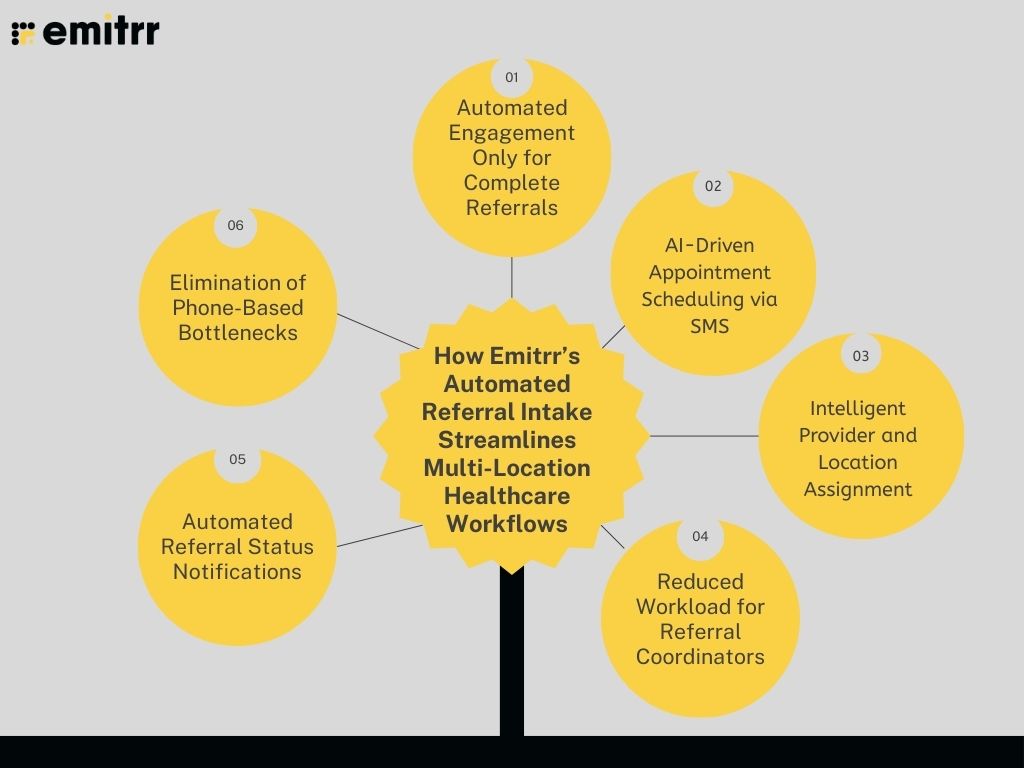
In traditional workflows, referrals arrive through fragmented channels—fax, email, SMS, phone, or EHR integrations and staff must manually review, validate, and contact patients. This process is time-consuming, error-prone, and difficult to scale across locations.
Emitrr automates the most labour-intensive stages after a referral becomes a patient chart, allowing practices to move from intake to scheduled appointment with minimal human intervention.
Automated Engagement Only for Complete Referrals
Once a patient chart is created in the EHR with required details (address, phone number, active insurance), Emitrr automatically identifies eligible referrals and initiates outreach. Incomplete or invalid referrals are filtered out, preventing wasted staff effort.
AI-Driven Appointment Scheduling via SMS
Emitrr’s AI agent contacts patients through SMS, eliminating phone tag and manual calling. The agent can:
- Ask for the patient’s preferred location
- Offer the earliest available appointment slots
- Suggest alternative times if the patient declines
- Confirm appointments instantly
This significantly reduces scheduling delays and improves patient responsiveness.
Intelligent Provider and Location Assignment
Based on patient preferences and availability, the system automatically assigns the appropriate provider and facility. This ensures optimal resource utilisation across multiple locations without requiring manual coordination.
Reduced Workload for Referral Coordinators
Traditionally, coordinators had to repeatedly call patients, verify details, and manage scheduling logistics. With Emitrr:
- Their role effectively ends after creating the patient chart
- Scheduling occurs automatically
- Staff can focus on complex cases and operational priorities
This increases throughput without increasing headcount.
Elimination of Phone-Based Bottlenecks
Phone-only scheduling creates delays, missed connections, and limited scalability. AI-driven SMS scheduling allows patients to respond at their convenience, improving contact rates and reducing administrative friction.
Automated Referral Status Notifications
Emitrr keeps referring providers informed automatically, sending updates when:
- The referral is received
- The patient is contacted
- An appointment is scheduled
This reduces inbound status inquiries and strengthens provider relationships.
Emitrr transforms referral intake from a manual, staff-dependent process into an automated, patient-responsive workflow. Multi-location healthcare organizations can process higher referral volumes, shorten time-to-appointment, and maintain consistent coordination across sites, all while improving both patient and provider experience.
Take a look at what the Emitrr AI agent can do:
Key Takeaways
- Referral intake becomes significantly more complex as healthcare practices expand across multiple locations.
- Manual and fax-based referral workflows create inefficiencies, lost referrals, and communication gaps.
- Centralized referral tracking and automation improve workflow consistency and operational efficiency.
- Automated communication enhances patient experience and provider coordination.
- Multi-location healthcare practices require scalable, integrated referral intake solutions to maintain efficiency and growth.
Frequently Asked Questions (FAQs)
Multiple locations increase referral volume, create communication barriers between teams, and introduce workflow inconsistencies, making coordination, tracking, scheduling, and patient management significantly more challenging for healthcare organizations.
Multi-location practices can improve referral tracking by implementing centralized dashboards, automated referral routing, and real-time status monitoring systems that enhance visibility, coordination, and workflow accuracy.
Automation simplifies referral intake by reducing manual processing, improving routing accuracy, enabling faster scheduling, enhancing communication, and ensuring efficient coordination across healthcare teams and locations.
Yes, modern referral intake software integrates with EMR systems to enable seamless data sharing, eliminate duplicate data entry, improve documentation accuracy, and streamline patient record management.
Referral intake problems lead to appointment delays, communication breakdowns, scheduling inefficiencies, and care coordination issues, reducing patient satisfaction, trust, and overall healthcare experience quality.
Organizations should prioritize centralized tracking, automated routing, communication tools, real-time analytics, reporting capabilities, and EMR integration to improve referral workflow efficiency and patient care coordination.