
 4.9 (400+
reviews)
4.9 (400+
reviews)
Introduction To Texting for Nurses
Texting for nurses refers to secure, HIPAA-compliant messaging used to communicate with patients and care teams in real time. In busy healthcare settings, traditional phone calls and voicemails often create delays and interruptions.
Secure healthcare texting helps reduce call volume, improve coordination, and streamline nurse workflows. This guide explains how texting supports nursing communication and what to consider when choosing a compliant solution.
AI Summary
Texting for nurses refers to the use of secure, HIPAA-compliant messaging systems to improve communication between nurses, patients, and healthcare staff. It replaces inefficient tools like phone calls, pagers, and voicemail with structured, real-time communication.
Nurses often face communication overload, including missed calls, incomplete messages, refill requests, appointment questions, and after-hours voicemail backlogs. These interruptions slow down clinical work and increase documentation burden.
Healthcare texting platforms help by:
- Enabling secure two-way patient messaging
- Automating appointment reminders and follow-ups
- Reducing phone call volume
- Capturing structured patient information
- Organizing after-hours communication
- Integrating with EHR systems
Some platforms also use AI to collect required patient details, route messages appropriately, and reduce manual re-entry of information.
Importance of Texting for Nurses
Texting has become essential in healthcare because it reduces the constant phone interruptions that slow nurses down. Instead of handling back-to-back calls, nurses can respond to patient messages in between clinical tasks. Texting also keeps communication organized in one thread, so details are not lost in voicemails or scattered portal messages. Patients are more likely to read and respond to a text quickly, which means fewer callback loops and faster issue resolution. Overall, texting gives nurses more control over their time while still keeping patients informed and engaged in post-care communication.
What Are the Benefits of Texting for Nurses
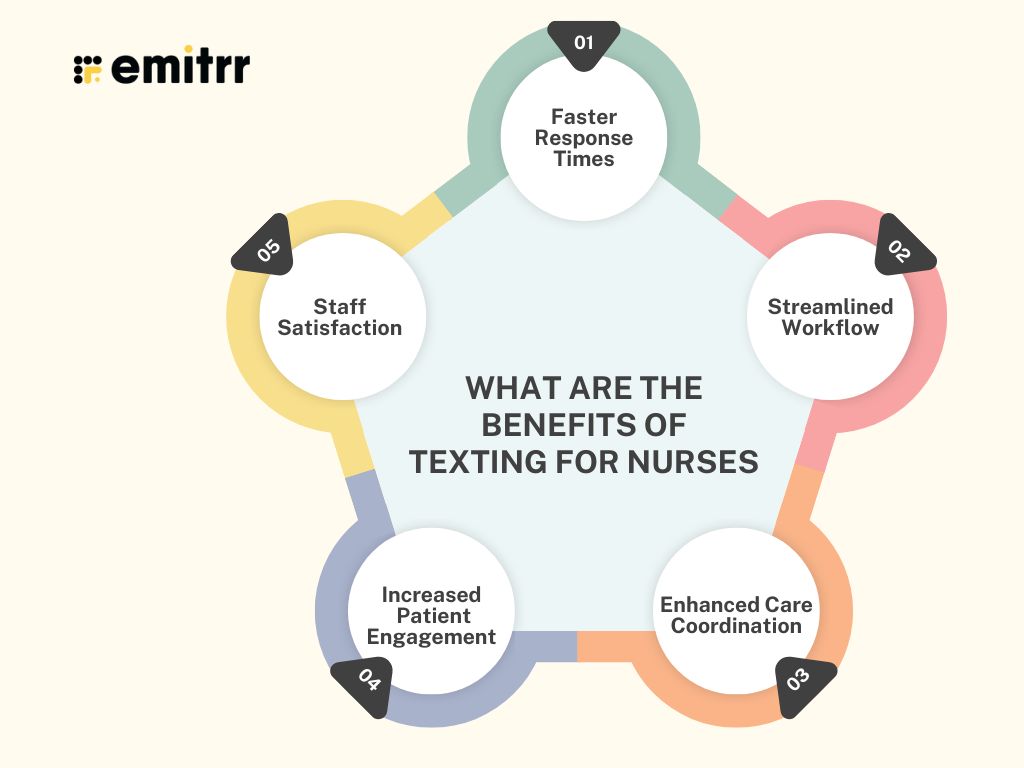
Faster Response Times
Texting helps shorten down the communication loops where it alerts a physician about a change in the coordination with another nurse or overall patient transfer. Text messages tend to be delivered and acknowledged in seconds without waiting or holding them in the hold.
Streamlined Workflow
Nurses spend less time chasing down colleagues and more time focusing on patient care. Texting reduces interruptions by allowing asynchronous communication, nurses can respond when it’s safe to do so, without abandoning tasks mid-way.
Enhanced Care Coordination
Texting supports better handoffs and interdepartmental collaboration. It helps avoid duplication of tasks, minimizes errors, and keeps everyone aligned, especially during shift changes or high-volume periods.
Increased Patient Engagement
Secure text messaging tools can be used to send reminders, check-in messages, or post-discharge instructions, keeping patients informed and involved in their care. This leads to better adherence and fewer readmissions.
Staff Satisfaction
Nurses are under constant pressure. Giving them a tool that makes their job easier, faster, and more predictable boosts morale and reduces burnout. Texting supports autonomy while improving communication clarity.
How AI-Powered Texting Can Reduce Nurse Workload Even Further
While SMS alone can clearly help Nurses, you can take it to another level by implementing an AI-powered SMS platform. Here’s how AI texting can help nurses even further:
Reducing Nurse Call Volume with AI-Based First-Line Triage
Staff manually call patients for reminders, cancellations, and confirmations. Nurses deal with callback volume and no-shows. AI texting automate two-way SMS reminders. Patients can confirm, cancel, or reschedule via text, reducing reminder calls and follow-up workload.
Reduces Manual Refill and Message Intake
AI collects patient details, medication information, and required identifiers upfront. Instead of decoding voicemails or retyping portal messages, nurses receive structured requests that are ready for review.
Filters Non-Urgent Questions Before They Reach Nurses
Many daily calls are about basic questions. AI can handle common inquiries and route only clinically relevant cases to nurses, reducing unnecessary interruptions.
Prevents Incomplete or Error-Prone Requests
AI re-asks unclear responses, checks for missing information, and flags mismatches. This reduces callback loops and eliminates avoidable rework.
Organizes After-Hours Communication
Instead of morning voicemail backlogs, nurses see organized, categorized cases. Urgent items are flagged, and routine requests are structured for quick review.
Reduces Documentation Burden
AI-generated transcripts and summaries attach to cases automatically. Nurses review and make decisions instead of writing notes from scratch or listening to entire voicemails.
If your nurses are also spending hours on voicemails, refill rework, and repetitive patient calls, and post-op communication, then the problem isn’t volume, it’s unstructured intake. Emitrr helps standardize communication before it reaches your clinical team, so nurses review complete, organized cases instead of chasing missing information.

Use Cases of Texting for Nurses
Texting in nursing is not limited to coordination, but it plays an important role across the administrative functions in healthcare organizations.
Let’s understand a few of them.
Shift Coordination and Staffing
Nurses can be quickly notified of open shifts, schedule changes, or emergency staffing needs, helping managers fill gaps without long call chains.
Patient Status Updates
Secure messaging allows nurses to alert doctors or specialists about sudden changes in patient vitals or condition in real time, minimizing risk and expediting care.
Discharge Instructions and Follow-Ups
Texting post-discharge reminders, medication instructions, or follow-up care details keeps patients informed and reduces readmission rates.
Appointment Reminders
Automated SMS helps nurses and front desk teams ensure patients show up on time, lowering no-show rates and improving clinic efficiency.
Interdisciplinary Team Communication
From PTs to lab techs, nurses can coordinate with the full care team to ensure aligned care plans without endless back-and-forth.
Home Health Monitoring
In home care settings, texting allows nurses to stay in touch with patients or caregivers for daily check-ins, symptom reporting, or medication adherence.
Patient Education
Short, digestible messages can reinforce health literacy by sending tips or resources directly to patients’ phones.
Here’s an all-in-one guide that offers SMS templates for all your use cases. Download now!!
Best Practices for Texting in Nursing
Texting is a dependable source of communication through which the patient and physicians coordinate, so it is important that a few things are thoughtfully avoided and especially around patient privacy and communication clarity.
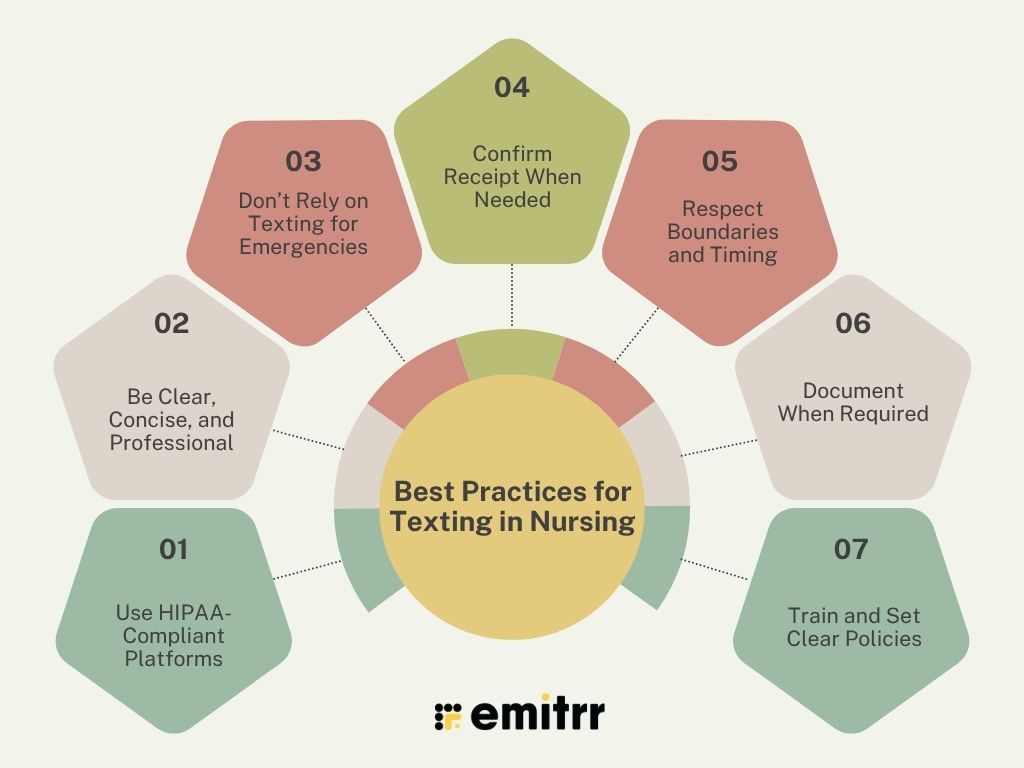
Let’s understand a few things that help to rock your texting in nursing.
Use HIPAA-Compliant Platforms
Never use personal messaging apps for communicating with patients. It is important to stick to secure, encrypted platforms that consist of HIPAA requirements that help in protecting sensitive health information in the healthcare organisation. There are various kinds of SMS templates for nurses are also available for your ease.
Use AI-driven Nurse Texting Software
Consider adding an AI-powered SMS platform to your practice so nurses don’t have to handle prescription requests manually, re-enter or verify patient data in the EHR, or manage language barriers on their own. AI texting can automate reminders, follow-ups, and basic patient questions, allowing nurses to focus on clinical care instead of repetitive communication tasks.
Be Clear, Concise, and Professional
Not every patient understands everything if you use complicated language. Text that you send to your patients should be clear, jargon-free, and up-to-the-mark. Clarity helps in preventing errors, and mostly it does not let patients feel that you are spamming them.
Don’t Rely on Texting for Emergencies
Texting is efficient, but not for critical or life-threatening situations. Always use phone or in-person communication when urgency demands immediate action.
Confirm Receipt When Needed
For messages that involve care changes, handoffs, or instructions, request a read receipt or confirmation to ensure the information has been received and understood.
Respect Boundaries and Timing
Limit texts to work hours unless it’s an on-call or urgent scenario. Over-texting can lead to fatigue and affect work-life balance, especially in 24/7 care environments.
Document When Required
If a text conversation includes medical decisions or instructions, make sure it’s documented in the patient’s health record to maintain continuity and legal accuracy.
Train and Set Clear Policies
Every nurse should know when and how to use texting. Provide training, define acceptable use cases, and establish policies that align with your institution’s compliance standards.
Challenges of Texting for Nurses
While texting can be a powerful tool in nursing, it’s not without complications. Below is a breakdown of key challenges and what they mean in real-world practice:
| Challenge | Description |
| Privacy & Compliance Risks | Texting on unsecured or personal devices can lead to HIPAA violations, patient data exposure, and potential legal penalties. |
| Miscommunication | Texts lack tone and immediate clarification. Vague or poorly worded messages can cause confusion or clinical errors. |
| Device Dependency | Critical messages may be delayed if devices are off, lost, silenced, or out of range, jeopardizing care coordination. |
| Fragmented Documentation | Important information shared via text may not be recorded in patient records, leading to gaps in documentation and continuity of care. |
| Message Overload | Constant notifications can overwhelm staff, disrupt focus, and contribute to burnout, especially if messages come outside scheduled work hours. |
| Lack of Standard Protocols | Without clear guidelines, messaging habits vary wildly between staff, reducing consistency and increasing the risk of miscommunication. |
How To Set Up SMS For Nurses Using Emitrr
Here’s how you can set-up SMS for nurses using Emitrr:
Step 1: Text Enable Your Existing Number
Turn your current office landline or VoIP number into a texting number so patients can text the same number they call.
Step 2: Import and Organize Your Patient Contacts
Easily upload your contact list into Emitrr and segment it based on visit history, appointment type, or patient status for more personalized messaging.
Step 3: Set Up Appointment Reminders and Confirmations
Create custom reminder templates and automate confirmations, reschedules, and cancellations based on your calendar and patient preferences.
Step 4: Enable Two-Way Messaging
Allow patients to ask questions, reschedule, or follow up via text, and manage all conversations from one unified inbox.
Step 5: Automate Follow-Ups and Review Requests
Set up post-visit messages to thank patients, manage reviews & reputation by sending request reviews, or share follow-up care instructions, all sent automatically, with a human tone.
Frequently Asked Questions
Texting is HIPAA compliant if conducted with a secure, encrypted end-user platform that matches healthcare privacy requirements. Personal texting platforms such as WhatsApp or iMessage are not HIPAA compliant and cannot be used for the discussion of patient-related matters.
Nurses can leverage texting for non-emergency coordination, shift changes, appointment reminders, and patient checks in a HIPAA-compliant manner using approved messaging tools.
Texting can supplement but should not supplant phone calls, which are more optimal for urgent or complex situations. It is best used for quick updates, task coordination, or asynchronous communication.
There are protocols for usage, designated time boundaries, and some platforms offer scheduling or “quiet hours” to allow the staff member some chance to avoid over-texting and fatigue.
Yes, when done securely. Texts are great for reminders, follow-up instructions, and general communication. Just be sure to obtain patient consent and use HIPAA-compliant tools.
Emitrr provides an all-in-one, HIPAA-compliant SMS solution tailored for healthcare teams. It streamlines internal coordination and patient messaging securely and efficiently.
Conclusion
Texting has become an indispensable part of modern nursing. From cutting delays in care to improving patient satisfaction and reducing burnout, it offers real-world advantages if done right.
But secure texting isn’t just about speed; it’s about protecting data, respecting workflows, and staying compliant.
If your nursing team is ready to modernize communication without compromising on safety or efficiency, Emitrr has you covered.
With HIPAA-compliant SMS tools like Emitrr, helps in build a perfect communication channel for healthcare, you can coordinate faster, respond smarter, and care better. Book a free demo now!