
 4.9 (400+
reviews)
4.9 (400+
reviews)
Introduction
Why wait weeks for an appointment when care can happen today? Why ask patients to travel for every visit when technology now makes remote care simple and effective? With the rapid advancement of digital health tools, telehealth has become an integral part of modern healthcare delivery.
Practices now look for telehealth solutions that fit smoothly into clinical workflows and patient expectations. Athena Telehealth enters this space as a way to bring virtual care into everyday practice. In this blog, we walk you through all you need to know about Athena Telehealth.
What is Athena Telehealth?
Athena Telehealth reflects how care delivery continues to change as digital tools expand access beyond clinic walls. Offered by Athenahealth, it allows patients to receive care in situations where in-person visits are not always practical. This includes people managing ongoing conditions, those dealing with contagious illnesses, and patients whose schedules or circumstances make travel difficult.
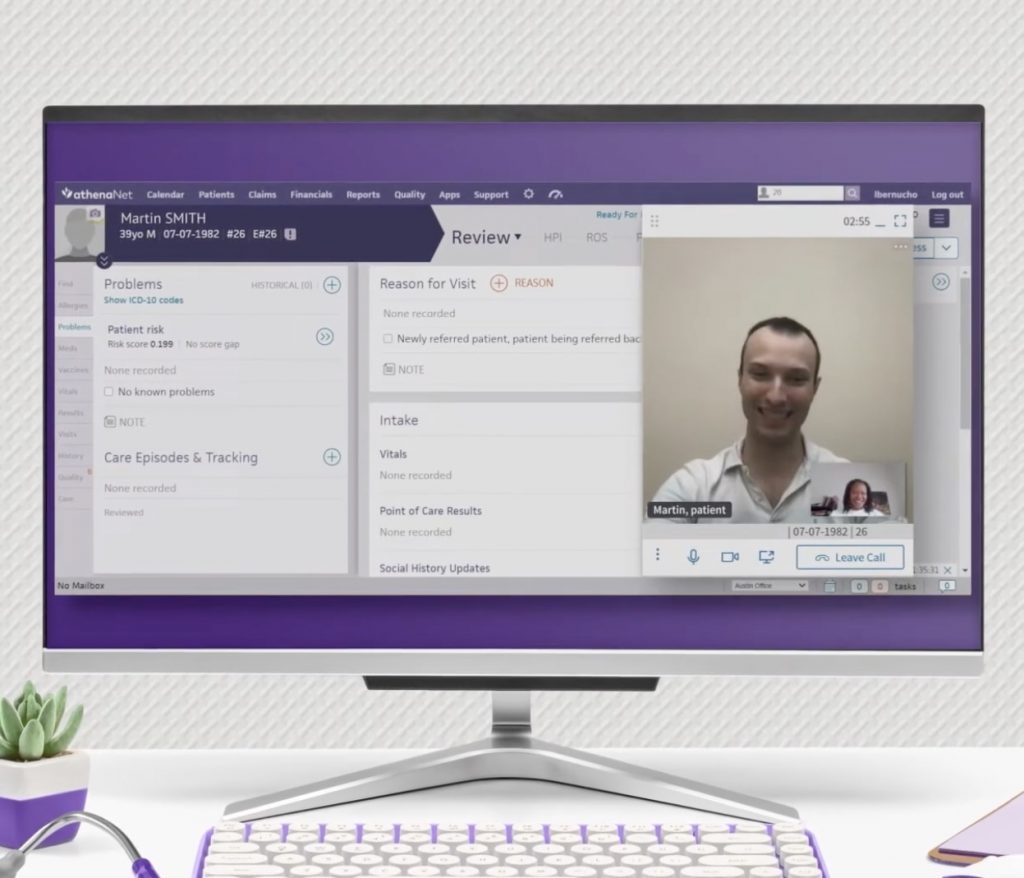
Athena Telehealth works alongside athenaOne, so virtual appointments take place within the same clinical environment that practices already rely on. Patient information, visit details, and clinical context remain connected to existing records, which keeps remote care aligned with in-office care rather than separate. This approach brings telemedicine into routine care delivery through familiar systems and workflows.
The impact goes beyond convenience. Athena Telehealth supports access for patients in rural areas, individuals with mobility challenges, and communities that often face gaps in care. As virtual visits become a routine part of healthcare, their connection to the Athena EHR keeps remote care tied to the same patient records and clinical context clinicians rely on every day.

How Athena Telehealth Works
Athena Telehealth follows the same rhythm as an in-person visit, with the difference that the interaction happens virtually. The process typically looks like this:
- Telehealth appointment is scheduled
A virtual visit is scheduled through the practice, just like any other appointment. Patients can book the visit through the Athena Patient Portal or using the athenaOne app, with the appointment clearly marked as a telehealth visit.
- Patient receives confirmation and reminders
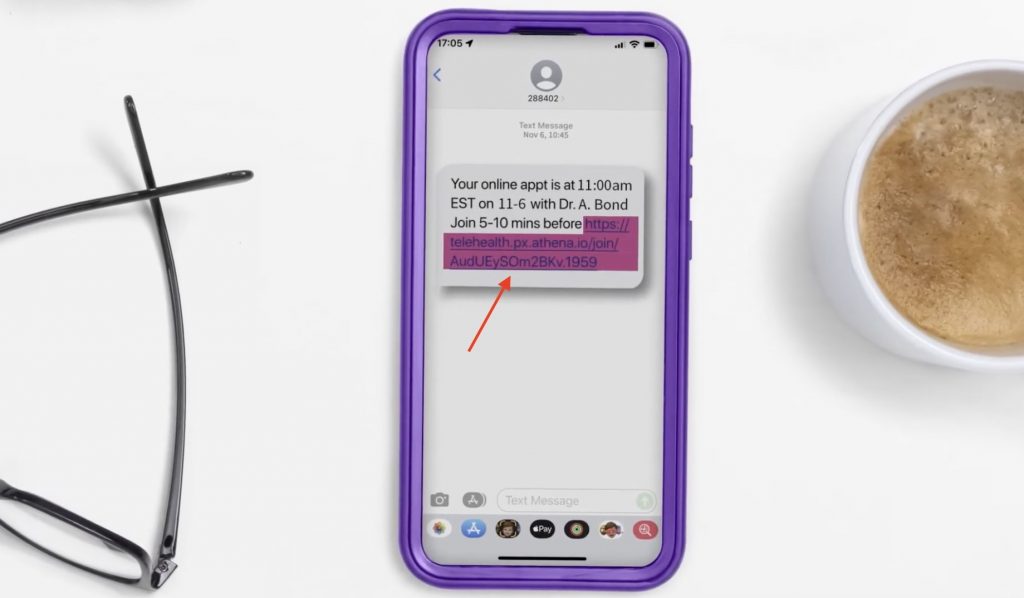
After scheduling, the patient receives a confirmation message. As the appointment approaches, a reminder text is sent that includes a secure link to join the video visit at the scheduled time.
- Patient joins the video visit
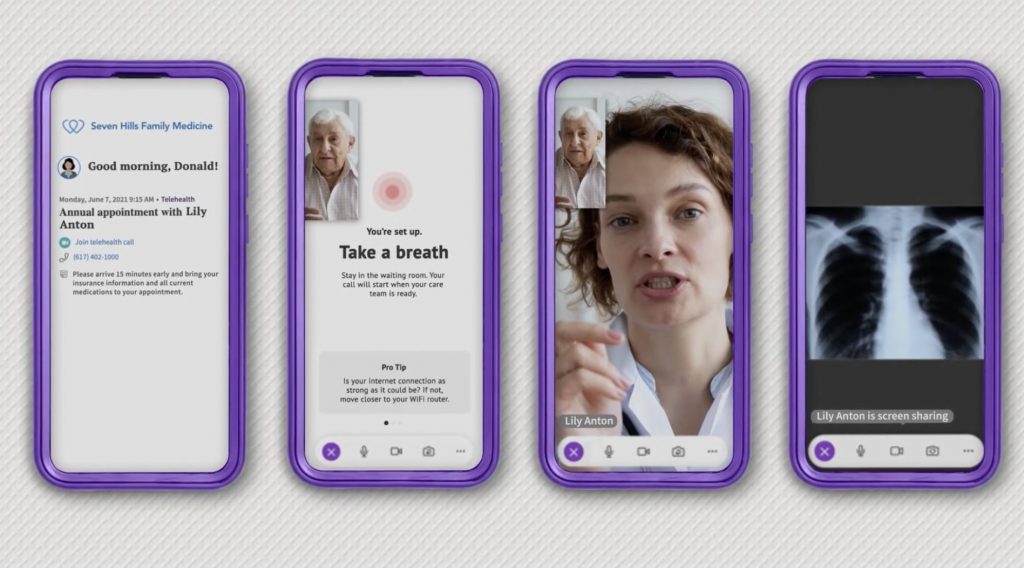
At the time of the appointment, the patient clicks the link from the reminder or portal to join the video session. The visit opens in a web browser or supported mobile device, using the camera and microphone for the interaction.
- Provider joins from the clinical system
The provider joins the same video visit directly from their athenaOne interface. The patient’s chart is available during the visit, so history, notes, and previous information are visible throughout the conversation.
- Virtual visit takes place
The provider and patient meet through live video to discuss symptoms, concerns, or follow-up care. Notes are entered during the visit, just as they would be during an in-office encounter.
- Visit details are saved to the patient record
After the session ends, documentation from the telehealth visit remains part of the patient’s medical record. The encounter is treated the same way as an in-person visit.
- Next steps continue as normal
Follow-ups, orders, billing, and any required actions proceed using the information captured during the virtual visit.
Where Athena Telehealth Is Commonly Used
Athena telehealth is used in very specific care scenarios where in-person visits are not always necessary or practical. Practices typically rely on it in the following situations:
Primary care practices for routine follow-ups, medication reviews, and minor symptom evaluations that do not require physical exams
Behavioral health and mental health clinics for therapy sessions, counseling, and ongoing care that benefit from continuity and privacy
Specialty practices such as endocrinology, cardiology, and dermatology for follow-up consultations and care plan discussions
Chronic care management programs to check in with patients managing long-term conditions like diabetes, hypertension, or asthma
Post-discharge and post-procedure follow-ups to monitor recovery without requiring patients to return to the clinic
Rural and underserved community practices where travel time, transportation access, or provider availability can delay care
Caregiver-inclusive visits, allowing family members to join remotely for care discussions and decision-making
Public health emergencies and high-risk situations, such as the COVID-19 pandemic, when in-person visits needed to be limited to reduce exposure
Seasonal illness spikes (flu season, viral outbreaks) to triage patients remotely and reduce in-office congestion
Key Features of Athena Telehealth
Athena Telehealth includes a set of capabilities that support how practices deliver and manage virtual visits. The following features show how Athena Telehealth fits into daily care delivery, patient communication, and operational workflows.
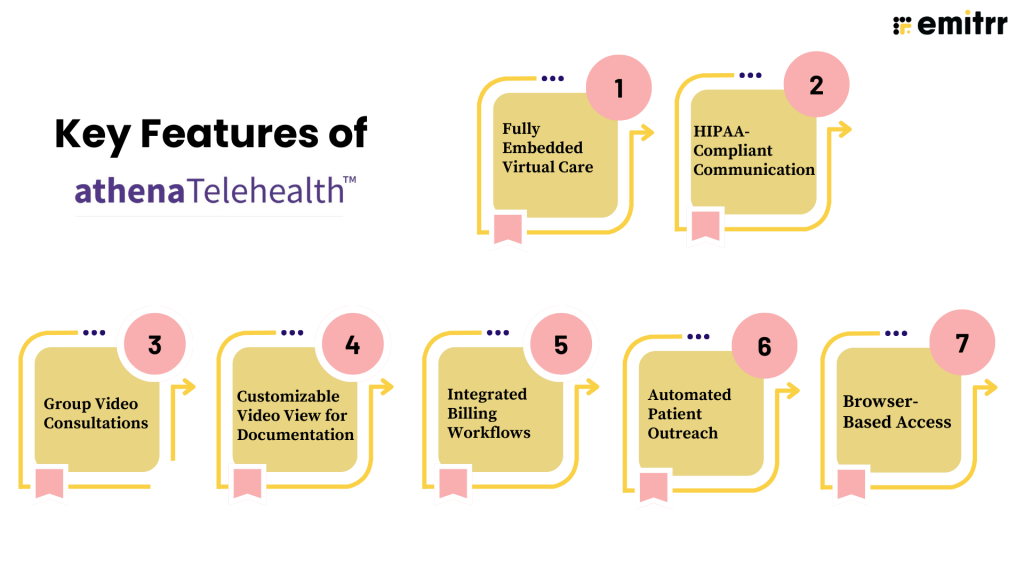
Fully Embedded Virtual Care
Athena Telehealth operates as part of athenaOne rather than a separate system. Providers schedule visits, conduct video consultations, document care, and complete billing from the same interface. This reduces context switching and makes virtual care aligned with existing clinical and administrative processes.
HIPAA-Compliant Communication
All telehealth interactions take place through secure, HIPAA-compliant communication channels. Patient emails, text reminders, and video visits follow the same compliance standards used across the broader athenaOne environment, supporting privacy throughout the virtual visit experience.
Group Video Consultations
Athena Telehealth supports group video visits, enabling multiple participants to join a single session. This is useful for involving caregivers, family members, or additional care team participants during a virtual encounter.
Customizable Video View for Documentation
The video window can be resized and repositioned during a visit. Providers can keep visual contact with the patient while entering notes or reviewing information, supporting a more natural interaction during documentation.
Integrated Billing Workflows
Telehealth-specific visit types connect directly to billing and coding workflows. Documentation from the virtual encounter feeds into the appropriate billing process, so revenue operations remain consistent with in-office visits.
Automated Patient Outreach
Patients receive appointment confirmations and reminders through the same email and text channels used for other visits. Communication remains consistent across in-person and virtual care, reducing confusion for patients.
Browser-Based Access
Patients join telehealth visits using a standard web browser on a computer or mobile device. The experience relies on existing device capabilities such as the camera and microphone, which lowers barriers to participation.
Benefits of Using Athena Telehealth
Athena Telehealth supports more than virtual visits. It plays a role in how practices engage patients, manage revenue, and operate efficiently in a changing healthcare environment. These benefits reflect how telehealth fits into real-world care delivery.
Patient Engagement
Secure virtual visits through video and audio options connect patients to care when in-person visits are not practical. Automated reminders and AI-driven follow-ups reduce missed appointments and support continuity for chronic and behavioral health care. Familiar communication channels improve patient responsiveness and overall satisfaction.
Want to engage with patients beyond virtual visits? See how easy it is to text patients directly from Athenahealth –
Revenue Assurance
Eligibility checks, claim edits, and real-time tracking are part of the telehealth visit process. This structure reduces the risk of denied or delayed payments and supports consistent billing across payers and locations. Practices gain more confidence in managing reimbursement as telehealth policies continue to evolve.
Operational Efficiency
AI-native workflows reduce administrative effort across online scheduling, documentation, and visit follow-ups. Staff spend less time managing manual tasks and more time supporting patients and care delivery, all within a single platform.
Equitable Access to Care
Support for both audio and video visits expands access for rural and underserved populations, as well as patients with limited technology options. Engagement tracking across visit types supports continuity of care across diverse patient groups.
FAQs
Athena Telehealth is used directly within the athenaOne system. A telehealth appointment is scheduled like a regular visit, marked as virtual. At the appointment time, the provider and patient join the visit through a secure video link, and the visit is documented in the same patient record used for in-person care.
Athena is used by healthcare practices to manage clinical care and operations in one place. It supports electronic health records (EHR), appointment scheduling, telehealth visits, patient communication, and billing workflows.
Athena uses its own built-in telehealth functionality that is fully integrated into the athenaOne platform. Video visits take place inside the same system providers use for charting, scheduling, and billing, rather than relying on an external video conferencing tool.
The telehealth process typically includes scheduling a virtual visit, sending the patient a secure join link, conducting the visit through live video, documenting the encounter, and completing billing. The overall flow mirrors an in-person visit, with the interaction happening remotely.
Athenahealth helps practices connect care delivery, patient records, and billing within a single system. When integrated with Emitrr, practices can extend this setup with AI-powered patient communication by automating reminders, follow-ups, and outreach to improve engagement and revenue performance.
Patients can use telehealth by scheduling a virtual appointment with their provider. Before the visit, they receive a reminder with a secure link. At the scheduled time, they click the link from their phone or computer to join the video visit, eliminating the need to travel to the clinic.
Yes. Patients can access Athenahealth through a mobile browser or the Athena Patient Portal app on their phone. Telehealth visits can be joined from a smartphone as long as it has internet access, a camera, and a microphone.
In a small or simple practice, telehealth is often used for follow-ups, medication reviews, and minor concerns. Staff schedule the visit as virtual, the provider meets the patient online, and documentation and billing are completed just like an office visit, using the same system.
Athenahealth connects patient visits to its billing workflows. Clinical documentation supports coding and claims processes. Emitrr helps automate billing-related patient communication, such as payment reminders and follow-ups, to improve collections and revenue efficiency.
Summary
Telehealth has changed how care is delivered, making access faster, more flexible, and less dependent on in-person visits. Athena Telehealth brings this shift into everyday practice by extending athenaOne and athena EHR to support virtual visits within the same system. This approach helps practices deliver remote care without disruption to existing workflows or added operational complexity.
For practices that want to build on this foundation, Emitrr complements the Athenahealth ecosystem with AI-powered automation. If this piques your interest, schedule a demo with Emitrr AI to see how these interactions can scale alongside your existing Athena setup.