

Introduction
Effective scheduling is essential for delivering high-quality patient care while maximizing hospital efficiency. Traditional appointment booking methods—like phone calls, paper diaries, and manual entries—can no longer keep up with the complexities and demands of modern healthcare settings. So what are the different types of scheduling, what is its importance and use cases, keep reading to find out!
Importance of Online Appointment Scheduling for Hospitals
Implementing online appointment scheduling in hospitals goes far beyond convenience—it’s a strategic move toward digital transformation.

1. Better Patient Experience
One of the primary benefits of online appointment scheduling is enhancing the patient experience. Traditional scheduling methods are often inconvenient and time-consuming for patients, requiring phone calls during business hours and long waits on hold.
Online scheduling platforms allow patients to book appointments anytime and from anywhere, through websites or mobile apps, making healthcare access far more patient-friendly.
Online systems also reduce wait times and minimize no-shows through automated reminders and confirmations sent via SMS or email. This proactive communication helps patients remember their appointments and reduces last-minute cancellations.
2. Improved Resource and Staff Utilization
Hospitals manage diverse resources such as doctors, nurses, rooms, and diagnostic equipment. Efficient use of these resources is critical to avoid bottlenecks and underutilization. Online scheduling enables hospitals to:
- Visualize real-time availability of doctors and facilities.
- Allocate shifts, rotations, and appointments based on actual demand.
- Avoid overbooking by automatically blocking unavailable slots.
These capabilities are significantly improved with the support of a patient scheduling platform, allowing staff to manage availability and appointments more effectively.
3. 24/7 Accessibility
Unlike traditional phone booking systems, which are limited to working hours, online scheduling tools offer 24/7 access. Patients can make or modify appointments even after hours or during holidays, improving access to care. This accessibility is especially important for urgent or routine care that does not require immediate emergency attention.
Hospitals using a patient appointment scheduling system ensure consistent accessibility, enhancing the patient experience beyond traditional constraints.
4. Enhanced Operational Efficiency
Online scheduling integrates with hospital systems like EHR, billing, and communication platforms, streamlining department operations. It automates appointment reminders, cancellations, and rescheduling, freeing administrative staff from repetitive tasks and reducing errors.
Hospitals also benefit from analytics provided by patient scheduling software, which helps track appointment trends, staff productivity, and no-show rates, informing continuous improvements.

Types of Online Scheduling for Hospitals
Hospitals have multifaceted scheduling needs spanning patients, staff, facilities, and equipment. Online scheduling platforms address these diverse requirements through distinct modules:
1. Patient Appointment Scheduling
This module allows patients to book new visits or follow-ups directly. It supports selecting specific providers, appointment types (consultations, diagnostics), and preferred times. Advanced systems may offer triage questions to guide patients toward the appropriate care.
2. Physician and Staff Scheduling
Hospitals use digital scheduling to manage shifts, rotations, on-call duties, and leave for physicians, nurses, and support staff. This ensures adequate coverage, reduces burnout, and complies with labor laws.
The right patient scheduling software can also integrate staff availability with patient demand, ensuring alignment across departments.
3. Procedure/Room Scheduling
Critical resources like operating rooms, MRI machines, or consultation rooms require careful coordination. Online systems allow real-time booking and conflict resolution, preventing double bookings and optimizing usage.
Such platforms improve the accuracy of scheduling patient appointments by accounting for both personnel and facility availability.
4. Telehealth and Remote Scheduling
The rise of telemedicine demands scheduling platforms that support virtual appointments. Patients can easily book remote consultations, with automatic links to video platforms and integration with EHRs. Online patient scheduling software ensures seamless access to care regardless of physical location, enhancing convenience for both patients and providers.
5. Emergency vs Routine Scheduling
Some hospitals use hybrid scheduling models to prioritize emergency walk-ins while maintaining routine appointment slots. Online systems can flag emergency capacity or provide fast-track booking options.
To balance urgent and planned care, hospitals need intelligent tools focused on improving patient scheduling while minimizing disruptions.
Use Cases of Hospital Scheduling
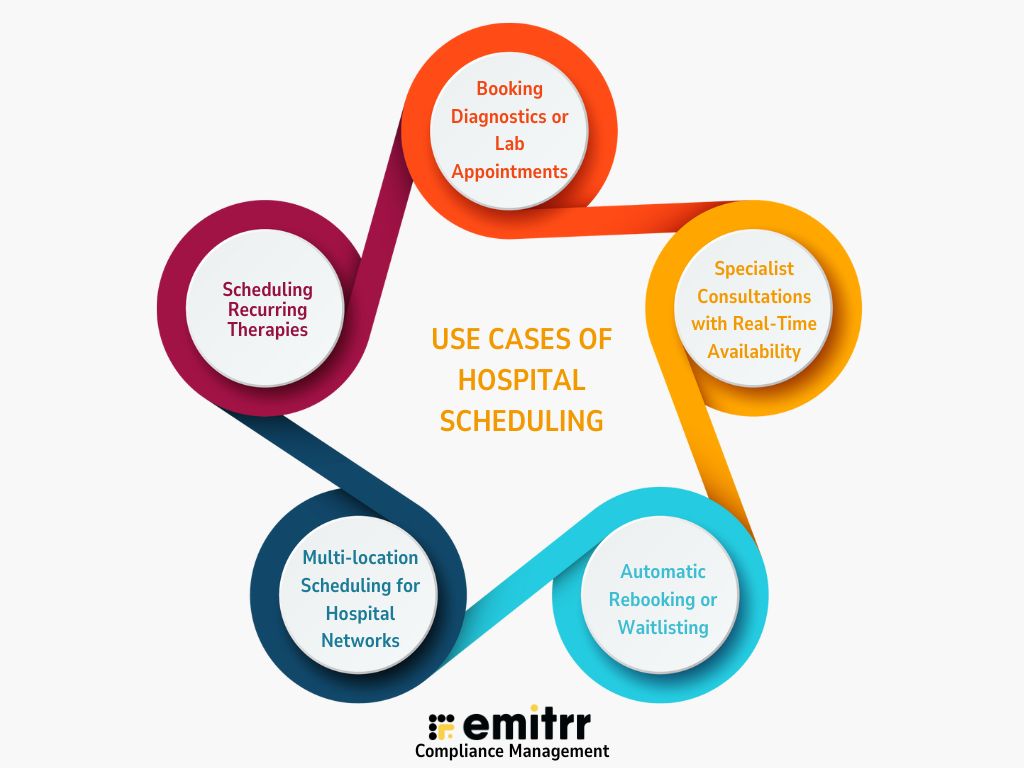
Real-world use cases of online hospital scheduling include:
- Booking Diagnostics or Lab Appointments: Patients can conveniently book lab tests, imaging scans, or other diagnostic services online, choosing preferred times and locations. This minimizes crowding at diagnostic centers and enhances overall patient flow and experience with patient self-scheduling.
- Specialist Consultations with Real-Time Availability: Specialist doctors’ limited availability is managed efficiently through patient scheduling platforms that display real-time slots. Patients can book immediately or join a waitlist, reducing administrative workload and ensuring better appointment management.
- Automatic Rebooking or Waitlisting: When appointment cancellations occur, advanced systems automatically notify waitlisted patients of newly available slots. This maximizes resource utilization, reduces scheduling gaps, and enhances satisfaction by improving patient scheduling through timely rebooking.
- Multi-location Scheduling for Hospital Networks: Hospital networks enable patients to book appointments across multiple locations online. This flexibility lets patients select the most convenient or nearest facility, supported by scalable patient booking systems.
- Scheduling Recurring Therapies: Patients requiring ongoing treatments, such as physiotherapy or chemotherapy, benefit from automated recurring appointment scheduling. This ensures consistent care through scheduling patient appointments without manual intervention.
Best Practices for Hospital Scheduling
To maximize the impact of online hospital scheduling, follow these best practices:
- Keep Buffers Between Appointments: Allow sufficient time between bookings to accommodate unexpected delays, emergencies, or longer consultations. This prevents overbooking, reduces patient wait times, and helps maintain a smooth daily schedule for healthcare providers, improving how to schedule patients effectively.
- Confirm Appointments via SMS or Email: Send automated reminders through SMS or email to patients before their appointments. This significantly lowers no-show rates, improves patient communication, and highlights the benefits of appointment scheduling software for better daily management.
- Allow Online Rescheduling or Cancellation: Enable patients to easily reschedule or cancel appointments online without needing to call the staff. This flexibility enhances patient convenience, reduces administrative workload, and leverages online patient scheduling software for seamless patient interaction.
- Integrate with EHR/EMR Systems: Connect scheduling software directly with Electronic Health Records (EHR) or Electronic Medical Records (EMR) systems. This ensures accurate patient data management, streamlines workflows, and is a key advantage of modern patient scheduling software.
- Provide Access on Mobile and Web Platforms: Offer patient-friendly scheduling through both mobile apps and web portals. This multi-platform access meets patients’ preferences, making scheduling appointments online easier anytime, anywhere, and helping hospitals increase appointment bookings.
Challenges in Scheduling for Hospitals
Despite the advantages, hospitals often face hurdles while implementing scheduling solutions:
- High Patient Volume: Hospitals handling large numbers of patients often struggle with overbooking, which can cause scheduling conflicts, longer wait times, and patient dissatisfaction due to delays and reduced appointment availability. This challenge highlights the need for patient scheduling platforms that can handle scheduling patients efficiently.
- Last-Minute Cancellations and No-Shows: Unexpected cancellations and no-shows disrupt daily schedules, leading to inefficient use of staff time and resources, as well as loss of revenue and difficulty in managing patient flow effectively. Leveraging patient appointment booking systems with automated reminders can help reduce these disruptions.
- Multi-provider Coordination: Coordinating schedules among multiple healthcare providers and departments is challenging, especially when each has different availability, leading to potential conflicts and delays in patient care delivery. Advanced patient scheduling software helps improve communication and supports improving patient scheduling across providers.
- Integration with Legacy Systems: Many hospitals use older EHR systems that lack compatibility with newer online patient scheduling software APIs, making integration complex, limiting real-time data sharing, and creating barriers to workflow automation.
- Walk-ins vs Scheduled Visits: Emergency walk-ins can disrupt carefully planned schedules, forcing hospitals to accommodate unplanned visits while maintaining timely care for scheduled patients. This requires flexible and adaptive patient scheduling solutions that balance both walk-ins and scheduled patient appointments.
How To Set Up Scheduling for Hospitals Using Emitrr
Emitrr simplifies hospital scheduling setup by offering an intuitive, step-by-step process that adapts to healthcare facilities’ unique workflows. This ensures seamless appointment management and improved operational efficiency.
- Workflow Onboarding: Emitrr begins by thoroughly understanding hospital workflows, including patient flow and staff coordination, to customize scheduling paths that fit specific departmental needs, helping to automate and streamline appointment booking effectively.
- Define Availability: Set precise availability for doctors, nurses, diagnostic labs, and other departments within Emitrr. This includes specifying working hours, break times, and special schedules to ensure accurate, conflict-free appointment slots for patients and staff.
- Configure Appointment Types: Customize appointment categories with defined durations, buffer times to avoid overlaps, and any prerequisites or preparation instructions, ensuring smooth transitions between appointments and reducing delays in hospital operations.
- Automate Reminders: Emitrr’s system automatically sends personalized SMS and email reminders to patients and staff, significantly decreasing no-shows and late cancellations, while improving overall appointment adherence and enhancing patient communication.
- Analytics and Reporting: Access detailed reports tracking missed appointments, peak booking times, and cancellation trends. These insights help hospital administrators optimize scheduling efficiency and improve resource allocation based on real data.
- Integrate Systems: Seamlessly connect Emitrr with existing EHR, VoIP, CRM, and billing systems, enabling smooth data exchange, unified communication, and efficient workflow management across various hospital departments and technologies.
See how easy communication gets with Emitrr’s AI agent Sarah:
Frequently Asked Questions
To book an online appointment with a hospital, simply visit the hospital’s website or use their mobile app, select your preferred doctor or service, choose a time slot, and fill in your basic details. Some platforms may require account registration or login.
Yes, most hospitals that offer online scheduling allow 24/7 access, so you can book an appointment anytime, even outside of normal business hours.
Yes, hospitals use secure, HIPAA-compliant platforms to ensure your personal and medical data is encrypted and protected.
Conclusion
Online appointment scheduling for hospitals has become a critical part of running a patient-centric business. It’s more than just setting appointments—it’s about creating a smoother, smarter, and more satisfying journey for both your team and your patients.
By automating reminders, offering 24/7 accessibility, integrating with other business tools, and providing valuable data insights, online scheduling systems save time, cut costs, and unlock new growth opportunities.
Among the many options available, Emitrr stands out as a powerful, next-gen solution. It goes beyond basic booking by offering robust automation, seamless CRM and payment integrations, two-way communication, and HIPAA-compliant security, making it ideal for businesses that want to elevate their customer service without adding extra workload. If you’re looking to streamline your operations and deliver an exceptional client experience, investing in a platform like Emitrr is one of the smartest moves you can make for your business’s future. Book a demo to learn more!


 4.9 (400+
reviews)
4.9 (400+
reviews)