
Introduction To Texting for Psychiatrists
Let’s face it, between no-shows, long call wait times, and scattered follow-ups, staying connected with patients isn’t always easy. That’s where texting is quietly changing the game for psychiatric practices. With nearly everyone glued to their phones, a simple text can do what calls and emails often can’t. Get noticed and get a response! Text messages have a 98% open rate. That makes them one of the most effective ways to reach people today.
No wonder 94% of healthcare providers say text reminders help patients follow their care plans. In psychiatry, that kind of timely support really matters. Texting is an easy, low-effort way for psychiatrists to stay in touch. You can send reminders, follow-ups, or check-ins—all without making a phone call. And most patients prefer the privacy and ease of a quick text.
That said, texting in healthcare needs to be secure and thoughtful. This guide will walk you through how texting fits into psychiatric care and how to do it the right way. By the end, you’ll know exactly how to bring texting into your practice, professionally and compliantly. So let’s dive in!
Importance of Texting for Psychiatrists
Before texting became mainstream, psychiatrists relied on calls, voicemails, and printed reminders. Now these methods are effective, but they often lead to long delays. Texting simplifies communication by making it direct, instant, and accessible for both patients and providers.
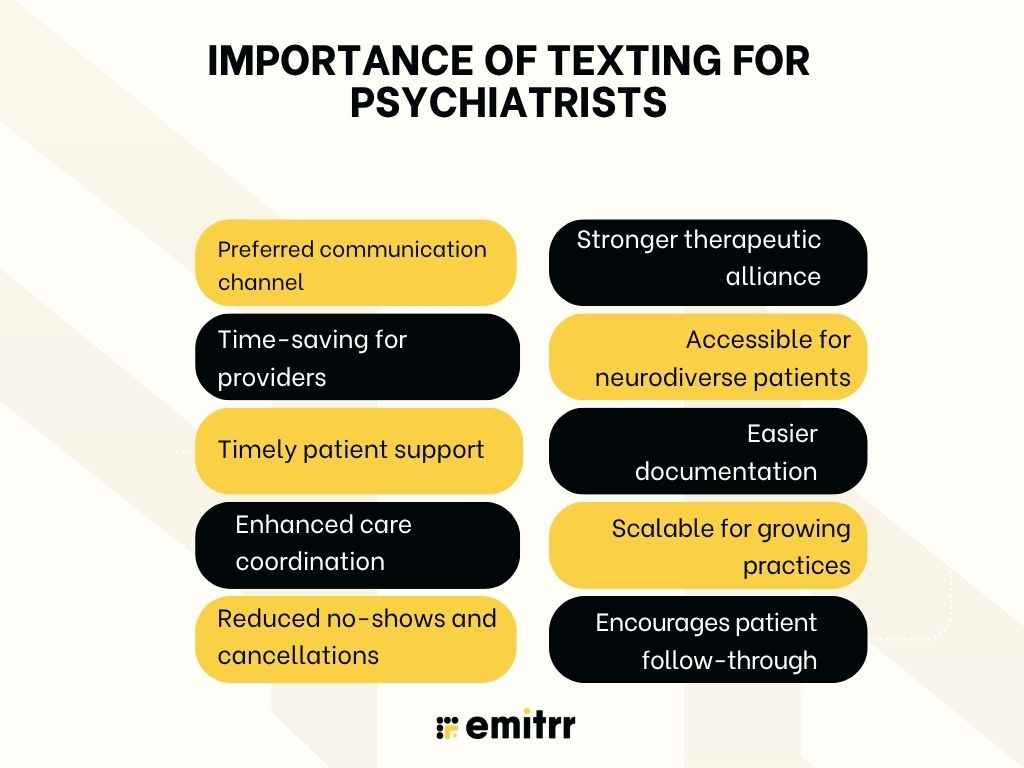
Preferred communication channel
Most patients today would rather get a quick text than a call or voicemail. And with SMS having sky-high open rates, your message almost never gets missed. That means faster replies and better engagement between appointments.
Time-saving for providers
Sending a quick appointment reminder or medication follow-up takes seconds via text. No need to wait for a call to be returned or leave voicemails. It saves hours every week, especially for high-volume practices.
Timely patient support
Mental health concerns can crop up between sessions. A short check-in text can provide reassurance or help flag a concern early. Patients are more likely to reply to a text, especially when they’re unsure whether a phone call is needed.
Enhanced care coordination
As a psychiatrist, you often need to work alongside therapists, primary care providers, or case managers. Texting makes it easier to sync up on patient updates without needing long calls or emails, as long as consent and privacy rules are followed.
Reduced no-shows and cancellations
Text reminders make it easier for patients to remember and plan for their visits. A short message the day before gives them time to adjust if needed. Studies show SMS reminders can boost appointment attendance by up to 50 percent. That means fewer gaps in your schedule and better continuity of care.
Stronger therapeutic alliance
When patients receive thoughtful, well-timed texts from their psychiatrist, whether it’s a reminder or a simple follow-up reinforces the sense of support. This strengthens the relationship and makes patients feel cared for between visits.
Accessible for neurodiverse patients
Psychiatric patients with anxiety, ADHD, or autism can find phone calls stressful. Texting gives them time to process emotions and respond comfortably. It removes the pressure of real-time conversation. This may eventually lead to more open and manageable communication.
Easier documentation
In psychiatric care, communication history matters. Texts leave a clear trail that can support clinical notes, treatment planning, or crisis tracking. It cuts down on manual logs and voicemails. That means more clarity and less guesswork during follow-ups.
Scalable for growing practices
Whether you’re adding therapists or seeing more patients, texting keeps things manageable. You can automate reminders for therapy, medication checks, or assessments. This reduces front desk overload and keeps patients engaged. So you can scale without having to worry about compromising patient care.
Encourages patient follow-through
Mental health progress depends on consistency. A gentle reminder about meds or journaling can help patients stay on track. And with texts landing exactly where they’re most likely to be seen, on their phones, it’s an easy way to support follow-through between sessions.

Benefits of Texting for Psychiatrists
Texting isn’t just convenient, it actually makes things better for everyone. Whether you’re the one getting care, giving it, or running the show behind the scenes, there’s something in it for all. Let’s break it down.
Benefits of texting for patients
Easy to stay in touch
Patients don’t have to call during working hours or wait on hold. A simple text lets them reach out when it suits them, at lunch, between errands, or late at night. This flexibility encourages more communication and fewer missed messages. It keeps patients connected without adding pressure.
Less pressure
Phone calls can feel overwhelming, especially when discussing mental health. Texting gives patients space to think before they respond. It’s quieter, more private, and more comfortable for those who struggle to express emotions verbally. This reduces anxiety and makes communication easier.
Fewer missed appointments
A quick reminder like “You’re scheduled tomorrow at 3 PM” helps patients remember and plan ahead. Many forget their appointments due to busy schedules. These reminders help reduce no-shows and last-minute cancellations. That means more consistent care and better time use for your team.
Feel more cared for
Texting isn’t just about logistics. A “Hope you’re doing okay” message midweek can offer emotional support. It shows patients you’re thinking of them beyond session time. These small check-ins build trust, connection, and loyalty to your clinic.
Quiet and private
Texts are silent and discreet, no ringing phones or overheard conversations. Patients can check or reply to a message without drawing attention. This makes it easier to stay engaged with care, especially when they’re in public or shared spaces.
Benefits of texting for psychiatrists and staff
Less phone tag
Phone tag eats up time. You call, they miss it. They call back, you’re busy. Texting skips that loop. Staff can send a message, move on, and respond when the patient replies. It’s more efficient and much less frustrating for everyone involved.
More gets done
Phone calls tie up one person at a time. Texting allows your team to handle several patient conversations at once. That means more questions answered and more tasks checked off in less time. It’s a smart way to scale your team’s output without extra hands.
Frees up time
Routine messages like appointment confirmations and reminders can be automated with texting. This frees up your staff for more meaningful patient care and administrative work. Instead of calling dozens of people a day, your team can focus on what really matters.
Better check-ins
You don’t need to wait until the next session to check on a patient. A midweek “How are you feeling?” message gives you early insight and keeps care continuous. It’s a gentle way to show support and stay engaged between visits.
Still works after hours
Patients often think of things outside your office hours. With texting, they can message whenever it’s on their mind. Your team can reply the next day. It gives patients an outlet without needing immediate attention, and that alone can offer peace of mind.
Clear message trail
Every text is saved. You can look back and see the exact words, date, and time of any conversation. This is useful for staff handoffs, continuity of care, and even legal clarity. No more wondering what was said or missed.
Benefits of texting for your practice
More patients show up
When patients get timely reminders, they’re less likely to forget or cancel at the last minute. This way, you can easily cut down on no-shows. This means your schedule runs smoother and you don’t lose money. Reducing no-shows also improves treatment consistency and patient outcomes.
Lower costs
Calling takes time and manpower. Texting lets your clinic do more without adding to the workload. You can reach hundreds of patients quickly without tying up phone lines or staff. Plus, it’s more cost-effective when messages are automated through your EHR or VoIP platform. This saves time, reduces burnout, and cuts down on call-related expenses.
Patients stick around
When communication is simple, friendly, and quick, patients stay loyal. They feel connected to your clinic and are more likely to return for follow-ups. Over time, this builds stronger relationships and higher retention rates.
Builds a solid rep
Patients who feel cared for are more likely to leave good reviews. Clear, timely communication stands out in healthcare. It makes patients feel respected and supported, which boosts your reputation in the community.
Better outcomes
Patients who feel heard and supported are more likely to stay on track with their treatment plans. Texting helps keep the care loop active between visits. This leads to better mental health outcomes and more positive experiences overall.
Use Cases of Texting for Psychiatrists
Texting isn’t just for sending appointment reminders anymore. In a psychiatric practice, it can serve as a simple but powerful way to stay in touch with patients, check on their progress, share helpful resources, and even handle basic admin work. Let’s walk through the real ways psychiatrists are using texts to make their day smoother and support patients better.
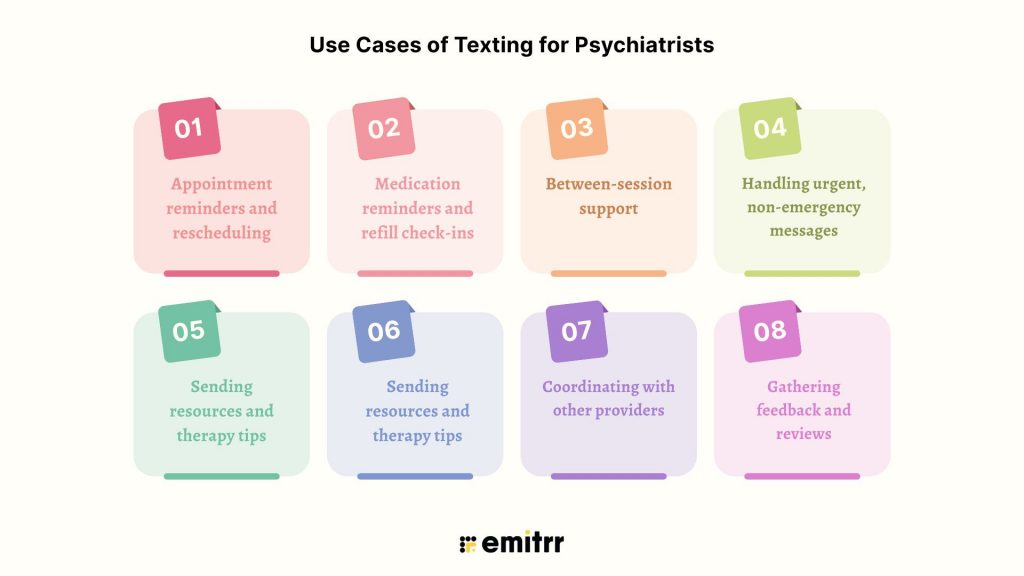
Appointment reminders and rescheduling
A quick text like “Hi Sarah, just a reminder about your session tomorrow at 3 PM. Reply C to confirm or R to reschedule” can go a long way. Most patients see the message right away, and it saves you from back-and-forth calls. If someone cancels, you can even fill that spot by texting folks on a waitlist.
Medication reminders and refill check-ins
Let’s say your patient is due for a refill on their antidepressant. A simple message like “Looks like your prescription is running low, need a refill sent over?” keeps things moving and reduces gaps in treatment. You can also use texting to check in on new meds: “Hey! How’s the new dosage treating you? Any side effects?”
Between-session support
You don’t have to wait until the next appointment to offer support. Maybe a patient had a tough session, you can check in a few days later with “How’s the journaling exercise going?” This shows patients you care, and it helps them stick with their care plan.
Handling urgent, non-emergency messages
Texting is not meant for emergencies, but it can help patients feel heard. If someone texts “I’m feeling overwhelmed today,” you can gently guide them: “I hear you. If you’re feeling unsafe, please call 911 or visit the ER. Otherwise, let’s talk first thing tomorrow.” It opens a door and lets patients know they’re not alone.
Sending resources and therapy tips
Let’s say a patient is struggling with sleep. After your session, you could text them a link to a handout on sleep hygiene. Or you could send reminders like “This week’s focus: try that grounding technique before bed.” Patients are more likely to read and use something that lands right on their phone.
Coordinating with other providers
Texting can be super helpful when working with a team. With patient consent, you can shoot a quick message to a primary care doc or therapist: “Patient X mentioned a spike in anxiety, mind syncing up this week?” In clinics or hospital settings, you can even coordinate care with nurses or case managers more efficiently.
Admin and billing tasks
Nobody enjoys paperwork. So why not let patients text a picture of their updated insurance card? Or send a secure link to the intake forms they can fill out before their first visit? Billing reminders like “Your balance is ready, click to pay” are more likely to be seen via text than email.
Gathering feedback and reviews
Happy patients? Ask them to share their thoughts. A quick message like “Thanks for visiting today! Got 30 seconds to share your experience? [feedback form link]” can help you collect valuable
. It’s also a great way to boost online reviews without being pushy.
Best Practices for Texting in Psychiatry
Texting patients is quick, helpful, and efficient, but only if done the right way. These simple practices will keep your communication smooth, private, and professional.
Always get consent
Before sending any texts, always ask for permission during intake. Explain what kind of messages they’ll receive, reminders, check-ins, or follow-ups. Patients should know texting is optional and can opt out anytime. This builds trust and keeps you legally covered.
Use secure tools
Never use your personal phone for patient communication. Instead, go with a HIPAA-compliant platform like Emitrr that encrypts every message. In psychiatry, messages generally hold sensitive information. A secure platform ensures that sensitive content never leaks or ends up in the wrong hands.
Keep messages private
Psychiatric care involves sensitive details that shouldn’t be casually texted. Stick to basics, “Appointment at 3 PM tomorrow” is safe, but “Follow-up on your anxiety meds” is not. Even if the patient is comfortable, avoid clinical terms or diagnoses in texts. Use secure links for forms or more detailed information if needed.
Set clear boundaries
Let patients know your texting hours, expected response times, and what texting is meant for. A note like, “Texts are checked Mon-Fri, 9 AM-5 PM. We don’t respond after hours,” sets the tone. This keeps patients from feeling ignored and protects your team from burnout. For emergencies, always remind patients to call 911.
Check before sending
Double-check every message for the correct name, date, and context. Mistakes can be embarrassing at best and harmful at worst, especially in psychiatry, where trust is crucial. A message sent to the wrong patient can create unnecessary confusion or distress. Always pause and proofread before tapping send.
Stick to simple templates
Use consistent, pre-approved templates for texts like appointment reminders, no-show follow-ups, or prescription refill nudges. This reduces room for error and helps staff sound professional across all communication. Keep templates brief, friendly, and free from slang or all-caps text. It’s especially helpful when patients are navigating mental health challenges.
Make texting part of your workflow
Don’t treat texting as a separate system. Pick a messaging platform that links with your EHR or scheduler. That way, all texts are automatically saved to the patient’s file, and staff don’t have to duplicate work. When communication is streamlined, your team can focus more on care and less on admin. Everything stays in one place, right where it belongs.
Follow the rules
HIPAA, TCPA, and state laws all apply to texting just like any other form of communication. Use encrypted tools, get documented consent, and include opt-out language where required. Following the rules won’t just avoid penalties for your practice. It will also do something important for the longer run – build patient trust.
Train your team
Everyone who handles texts, right from the front desk to clinicians, should understand the do’s and don’ts. Create a simple texting policy and review it during onboarding and team check-ins. Make sure your staff knows how to respond, what not to say, and when to escalate to a call or session. Training ensures consistency and protects both your practice and your patients.
Use AI smartly
Let AI handle the first layer, like sending reminders or answering basic FAQs. But always leave space for real human connection. Think of AI texting tools as your digital front desk. They support your team by handling simple stuff, so your staff can focus on real conversations that matter.
Challenges of Texting for Psychiatrists
Texting can make your practice more efficient and your patient relationships stronger. But only if it’s done right. Let’s take a look at the common challenges, so you know exactly what to avoid and how the right texting software can help you overcome them:
Privacy, HIPAA, and message control
The biggest concern is confidentiality. Standard texts aren’t encrypted, and there’s always a risk that someone else could read sensitive information on a patient’s phone. Plus, once a message is sent, you can’t control where it goes. That’s why secure texting platforms with opt-in flows and auto-warnings are a must.
Low opt-in rates from patients
Most patients are fine with texting, but a few may hold back, usually because they’re worried about privacy or just not used to digital tools. The fix? Walk them through the benefits during check-in, reassure them it’s secure, and make the opt-in part of your normal registration process. Keep it quick and easy.
Miscommunication and tone issues
Texts are short and lack voice or facial cues. A simple phrase can be misread or cause anxiety if the tone isn’t right. You might mean “We need to talk” kindly, but it can come across harsh. Use warm language, avoid sarcasm, and know when to move the conversation off text and into a session.
Too many texts or wrong timing
Even well-meaning messages can become overwhelming if there are too many of them. Patients may feel spammed or start ignoring updates. Stick to timely, relevant texts, and let patients choose what they want to receive, like appointment reminders only, or weekly check-ins. Smart texting tools make this easy to manage.
Blurred boundaries and 24/7 expectations
Texting feels casual, which makes some patients treat it like open access. You might get late-night messages, emotional check-ins on weekends, or therapy-by-text. To protect your staff’s time use office hour settings, clear response policies, and friendly reminders about when to expect replies.
Lack of integration with existing tools
If your texting system doesn’t connect to your EHR or scheduler, your staff ends up doing double work, copying messages, logging notes, or toggling between tabs. That increases the chance of mistakes and eats into clinical time. Look for platforms that sync messages directly to patient records.
Team consistency and training gaps
Without shared templates or policies, your team might send inconsistent or unclear texts. That leads to confusion and potentially even privacy slip-ups. Train everyone on tone, privacy, and how to use the software properly. The more standardized your approach, the smoother things run.
This is where Emitrr helps. It offers secure texting, built-in consent flows, and smart automation, all while keeping you compliant and connected to your EHR.
Key Texting Metrics Psychiatrists Should Track
Texting isn’t just about convenience, it should actually help improve how your practice runs. The right texting platform doesn’t just send messages, it shows you how those messages are working. Here are some key metrics to keep an eye on:
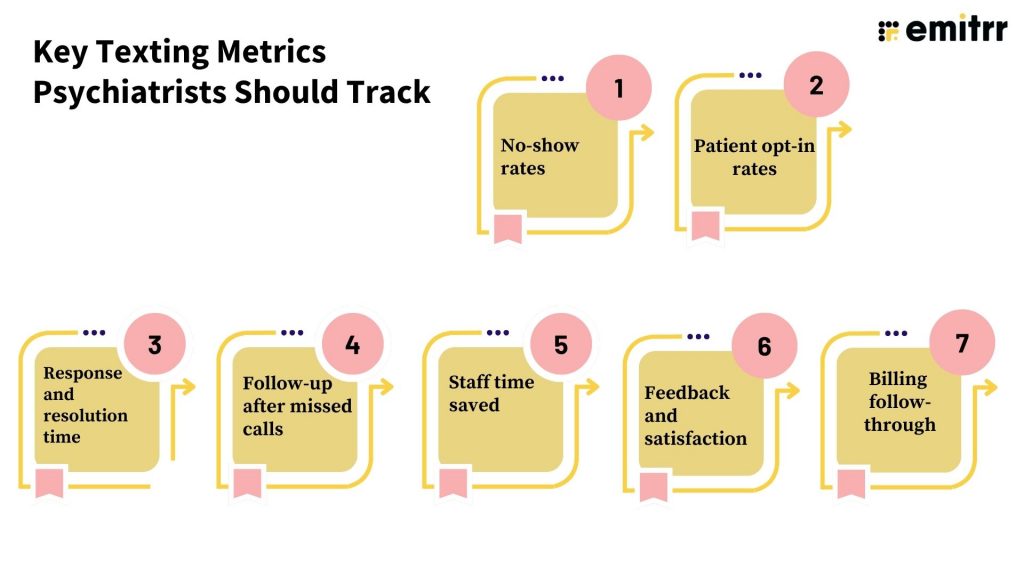
No-show rates
Text reminders can make a big difference. Track how your no-shows change before and after you start using SMS. Most practices see a drop pretty quickly with reminder and confirmation texts in place. For psychiatry clinics, this helps ensure consistent treatment and protects your team’s time.
Patient opt-in rates
How many patients are saying yes to text communication? A strong opt-in rate means more people are reachable. Make sure new patients understand the benefits at intake. You can also include it in welcome paperwork or have staff explain it during the first call or session.
Response and resolution time
If you’re using texting to answer common questions or confirm follow-ups, check how long it takes to reply and close the loop. Faster replies mean patients feel heard. In mental health care, quick reassurance can make a real difference in how supported someone feels.
Follow-up after missed calls
If someone calls and no one answers, are they getting a text instead? Track how often those texts lead to completed conversations or bookings. This is especially helpful when a patient calls with a last-minute need but doesn’t leave a voicemail.
Staff time saved
Automating reminders and refill checks cuts down phone time. See how much time your team is saving each week, those hours add up. Use can always use this extra saved time for tasks like insurance checks, care coordination, or just giving your staff a breather.
Feedback and satisfaction
Send a short survey via text or ask for reviews. If you start seeing more positive feedback about communication, that’s a win. Implementing small touches like these can really improve the overall care experience.
Billing follow-through
If you send billing reminders by text, track how often patients open, click, and pay. A shorter payment timeline is good for both sides. It reduces awkward follow-ups and ensures your revenue cycle doesn’t slow down.
With a platform like Emitrr, most of these numbers are tracked automatically. You can see what’s working and make changes easily, without extra work for your staff.
How To Setup SMS For Psychiatrists Using Emitrr
Switching to texting doesn’t have to be overwhelming. Here’s how you can get started with Emitrr in just a few easy steps:
Step 1: Book a free demo
Schedule a quick, personalised walkthrough. The Emitrr team will show you how texting fits into psychiatry, like sending appointment reminders, refill prompts, and weekly check-ins.
Step 2: Share your goals
Let Emitrr know what you’re looking to improve. Whether it’s reducing no-shows, handling missed calls, or cutting back on phone time, they’ll help you build the right setup.
Step 3: Connect with your systems
Emitrr integrates with top EHR and practice tools. Your messages, schedules, and patient records stay in sync, no duplicate entry, no extra admin.
Step 4: Train your team
Get onboarding support and simple training. Your staff will learn how to manage conversations, review AI replies, and step in when needed, no tech skills required.
Step 5: Go live and let it run
Once live, Emitrr handles the routine messages for you reminders, follow-ups, refill nudges, and more. You stay in control, while patients feel supported between visits.
Emitrr helps you bring texting into your psychiatry practice the smart way, secure, smooth, and always patient-friendly.
Here’s how SMS for doctor and staff communication works with Emitrr:
Case Study For the Psychiatrists Texting
A busy psychiatry clinic was facing common issues like missed appointments, too many calls, and low patient engagement between visits. After switching to a secure texting platform, things changed quickly.
Here’s what improved after implementing Emitrr’s AI-powered texting solution:
Fewer no-shows
Appointment no-shows dropped by over 80% thanks to automated SMS reminders and easy confirmations.
Saved staff time
The front desk team saved up to 2 hours daily, which was earlier spent on reminder calls and follow-ups.
Improved engagement
Patients felt more supported between sessions with short check-ins and post-appointment messages.
Quicker reschedules
A missed session didn’t mean lost care. Patients replied with a quick “R” and were rebooked within minutes.
Smarter follow-ups
Medication check-ins by text helped flag early issues before they escalated, without needing a call.
Streamlined forms
Annual screening forms were sent and completed via secure links before appointments, reducing in-office paperwork.
Boost in reviews
More patients left positive reviews after receiving friendly prompts over text, improving the clinic’s online presence.
Better continuity in care
Texting helped maintain a “between-session” connection, so therapy felt more continuous and focused.
By automating routine communication and making it easier for patients to stay in touch, texting made the practice smoother, more efficient, and more patient-friendly.
FAQs
Yes, but only if you use a secure, HIPAA-compliant platform and get the patient’s consent first. Keep messages short, private, and professional.
Absolutely! Practices using text reminders often see no-show rates drop by 30 percent. A quick SMS the day before can make all the difference.
You don’t. Always include a disclaimer in your texts that emergency situations should be handled by calling 911 or going to the ER. Texting is only for routine communication.
Yes. Most patients, especially in mental health, find texting less stressful and more private than phone calls. It gives them time to process and reply. In fact, 83% of patients say they prefer appointment reminders via text.
Yes. Emitrr is fully HIPAA-compliant. It encrypts all texts and has built-in tools to collect patient consent before messaging starts.
Yes, it can. Emitrr integrates smoothly with 500 top EHR and practice management tools, so your messages and records stay in sync without extra admin work.
Conclusion
Not having a proper texting solution can leave your practice stuck with no-shows, endless phone calls, and patients falling through the cracks. Manual reminders, delayed follow-ups, and scattered communication make it hard to deliver timely care, especially in psychiatry, where check-ins really matter.
That’s where an AI-powered platform like Emitrr changes everything. It automates the routine, keeps conversations secure, and helps your team stay responsive without burning out. Patients feel more supported, and your practice runs smoother every day.
Ready to bring texting into your workflow the smart way? Book a free demo with Emitrr today!


 4.9 (400+
reviews)
4.9 (400+
reviews)