
Introduction
Dental clinics handle sensitive patient information every day, including treatment plans, X-rays, insurance details, and medical histories. When this information is accessed, shared, or stored improperly, it can result in dental office HIPAA violations that compromise patient privacy and expose the practice to legal risks.
In this guide, we’ll explore real examples of dental HIPAA violations, common mistakes dental teams make, and notable dental HIPAA violation cases that show how easily privacy breaches can occur. Understanding these scenarios can help dental practices strengthen their compliance processes and protect patient information more effectively.
AI Summary: Examples of Dental HIPAA Violations
Here’s a quick overview of what you’ll learn in this guide:
- Common examples of dental HIPAA violations that occur in dental clinics.
- Frequent dental office HIPAA violations involving texting, conversations, and patient records.
- Real dental HIPAA violation cases and what happened to the practices involved.
- Everyday mistakes that lead to dental HIPAA violations in front desks and treatment rooms.
- Practical steps dental practices can take to prevent HIPAA violations and protect patient privacy.
What Is a Dental HIPAA Violation?
A dental HIPAA violation occurs when a dental practice fails to protect a patient’s protected health information (PHI) as required under HIPAA privacy and security regulations.
In dental settings, PHI includes any information that can identify a patient and is connected to their care. This may include patient names, treatment details, dental X-rays, insurance information, appointment records, or billing data.
If this information is accessed, shared, or stored without proper safeguards or authorization, it may be considered a HIPAA violation in a dental office.
Because dental practices handle sensitive patient data daily- from appointment scheduling to treatment documentation- they must ensure that their systems, communication tools, and staff workflows comply with HIPAA texting rules. Failing to do so can result in dental office HIPAA violations, regulatory penalties, and loss of patient trust.
In the next section, we’ll look at real examples of dental HIPAA violations that commonly occur in dental clinics and practices.
Most Common Examples of Dental HIPAA Violations
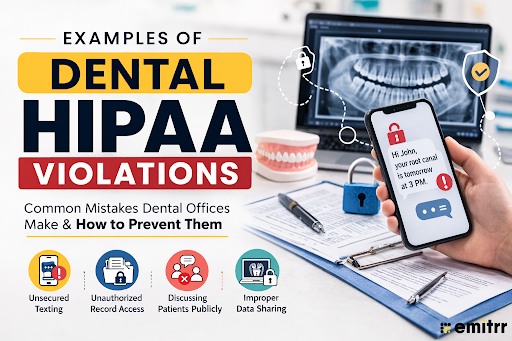
Understanding the most frequent examples of dental HIPAA violations can help dental teams recognize risks and prevent privacy breaches before they happen.
Below are some of the most common dental HIPAA violations seen in dental clinics and practices.
Texting Patients About Treatments Using Regular SMS
Many dental offices send dental appointment reminders or treatment updates through regular text messages. However, including patient names along with treatment information can lead to dental HIPAA violations if the message is sent through unsecured SMS.
Example message: “Hi Alex, confirming your wisdom tooth extraction tomorrow at 2 PM.”
Because this message includes identifiable patient information and treatment details, it can result in a dental office HIPAA violation when sent through personal or unsecured messaging tools.
Avoid common HIPAA mistakes on social media by watching this quick guide.
Sharing Dental X-Rays or Images Through Personal Phones
Sending patient images through unsecured channels is a common example of dental HIPAA violations. Dental staff sometimes take photos of X-rays or treatment images to share with colleagues for quick consultations. If these images are sent through personal messaging apps or email, they may expose protected health information.
Example message: “Can you check this X-ray from our patient Maria? Looks like she might need a crown.”
Discussing Patient Procedures at the Front Desk
Front desk staff often coordinate schedules, billing, and procedures, but discussing treatment details in front of other patients can create privacy violations in dental offices. If others overhear the conversation, it may result in dental office HIPAA violations.
Example conversation: “John is here for his root canal follow-up. The infection was pretty bad last visit.”
(ADD CTA IMAGE)
Posting Smile Transformations Without Patient Authorization
Many dental clinics showcase before-and-after photos of procedures like veneers or Invisalign. However, posting identifiable images without written patient consent can create serious dental HIPAA violations.
Example post: “Emily just completed her Invisalign treatment and loves her new smile!”
Leaving Patient Charts or Screens Visible
Dental practices often handle physical charts, treatment plans, and digital patient records. If these are left visible to other patients or visitors, sensitive information may be exposed.
Example internal message: “The monitor at reception is showing patient records facing the waiting room.”
Accessing Patient Records Without a Work Reason
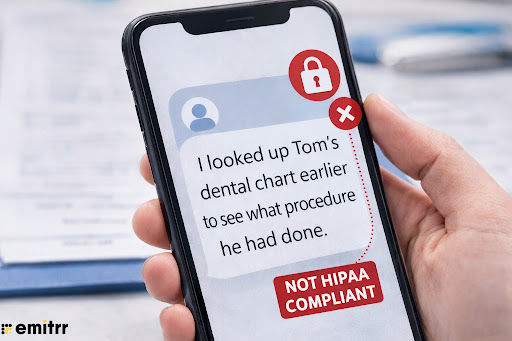
Another common example of dental HIPAA violations occurs when staff access patient records out of curiosity rather than for treatment or administrative purposes. Even if the information is not shared further, unauthorized access is still considered a dental HIPAA violation.
Example message: “I looked up Tom’s dental chart earlier to see what procedure he had done.”
Announcing Patient Procedures in the Waiting Room
Dental clinics often call patients from the waiting area, but mentioning treatment details along with the patient’s name can expose private health information.
Example message: “Lisa, the doctor is ready for your gum surgery consultation.”
Sending Insurance or Billing Details Through Unsecured Messages
Dental front desk teams frequently communicate with patients about insurance claims or treatment costs. If these messages include identifiable patient details and are sent through regular SMS or email, they may lead to dental HIPAA violations. You must know the dos and don’ts of HIPAA-texting properly.
Example message: “Your insurance only covered part of the root canal, so your remaining balance is $450.”
Sharing Patient Information With Family Members Without Authorization
Dental offices sometimes communicate with spouses or parents about appointments or treatments. However, sharing patient details without proper authorization can result in dental office HIPAA violations.
Example message: “Your husband John’s dental surgery went well and he will need antibiotics.”
Discussing Patient Cases With Other Staff Not Involved in Treatment
Another common example of dental HIPAA violations occurs when employees discuss patient cases with coworkers who are not directly involved in that patient’s care.
Example message: “Did you hear about the patient who needed four implants today? That was a tough case.”
Storing Patient Photos or X-Rays on Personal Devices
Dental assistants or hygienists may sometimes store treatment photos or X-rays on personal phones or laptops for convenience. If these devices are not secured, patient information could be exposed.
Example message: “I saved the patient’s implant X-ray on my phone so we can review it tomorrow.”
Emailing Patient Information Without Encryption
Email is commonly used in dental offices for sending treatment plans, referrals, or documents. Sending identifiable patient information through unencrypted email can create privacy risks.
Example message: “Attached is Sarah’s dental X-ray and treatment plan for her upcoming crown.”
Leaving Appointment Schedules Visible to Other Patients
Appointment boards or computer screens that display patient names and procedures can expose sensitive information to other patients in the clinic.
Example message: “Today’s schedule shows Michael – wisdom tooth extraction at 10 AM.”
Want to avoid common HIPAA violations in dental clinic? Use these HIPAA-compliant text message templates instead.
To summarize, the table below highlights some of the most common dental office HIPAA violations and how they typically occur in dental clinics.
| Dental HIPAA Violation | Example Message / Scenario | Why It Violates HIPAA |
| Texting treatment details via regular SMS | “Hi Alex, confirming your wisdom tooth extraction tomorrow at 2 PM.” | Includes patient name and procedure sent through unsecured texting. |
| Sharing dental X-rays through personal devices | “Can you check this X-ray from our patient Maria? Looks like she may need a crown.” | Patient diagnostic images shared through unsecured messaging apps. |
| Discussing procedures at the front desk | “John is here for his root canal follow-up.” | Patient treatment information discussed in a public area. |
| Posting smile transformation photos online | “Emily just finished her Invisalign treatment. Look at this smile!” | Identifiable patient information shared without authorization. |
| Sending insurance or billing details through SMS | “Your insurance only covered part of the root canal, so your balance is $450.” | Links patient identity with treatment information in unsecured communication. |
| Sharing patient details with family members | “Your husband John’s dental surgery went well.” | Patient information shared without verified authorization. |
| Discussing patient cases with unrelated staff | “Did you hear about the patient who needed four implants today?” | Patient information shared with staff not involved in care. |
| Storing patient images on personal phones | “I saved the patient’s implant X-ray on my phone to review later.” | Patient data stored on unsecured personal devices. |
| Emailing treatment plans without encryption | “Attached is Sarah’s dental X-ray and treatment plan.” | Patient health information sent through unsecured email. |
| Leaving schedules visible to patients | Reception board shows “Michael – wisdom tooth extraction at 10 AM.” | Patient names linked with procedures visible to others. |
Learn more about whether your messages are HIPAA-compliant or not:
Real Dental HIPAA Violation Cases
Looking at real dental HIPAA violation cases helps dental practices understand how privacy breaches occur in real-world situations.
Here are a few real examples that highlight the risks dental clinics face.
1. Dental Office Fined $10,000 for Improper Disclosure
A dental practice in Dallas was fined $10,000 after it publicly disclosed a patient’s protected health information in response to an online review. Instead of addressing the complaint privately, the dental office posted details about the patient’s treatment and billing situation, revealing identifiable health information.
The case demonstrated that even online responses can lead to serious dental HIPAA violations if patient details are disclosed without authorization.
2. Unencrypted Laptop Containing Dental Patient Records Stolen
In another case, a dental practice experienced a breach when a stolen laptop containing patient records exposed sensitive information. The device stored patient names, treatment information, and other protected health data but was not properly encrypted.
Because the information could potentially be accessed by unauthorized individuals, the incident was considered a dental HIPAA violation, and the practice had to notify affected patients.
3. Staff Member Accessed Patient Records Without Authorization
Unauthorized access is another common dental HIPAA violation case. In some dental clinics, employees have accessed patient charts out of curiosity rather than for legitimate work purposes.
Even when no information is shared externally, simply viewing a patient’s dental record without a valid treatment or administrative reason can be classified as a dental office HIPAA violation and may lead to disciplinary action.
Recommended for reading: Examples of Employee HIPAA violations

How Dental Practices Can Prevent HIPAA Violations
Preventing dental HIPAA violations requires a combination of staff training, secure communication systems, and clear privacy policies. Since many dental office HIPAA violations occur during routine tasks like scheduling appointments, sharing X-rays, or discussing treatment plans, implementing strong privacy practices is essential.
Below are key steps dental clinics can take to reduce compliance risks.
Provide Regular HIPAA Training for Dental Staff
One of the most effective ways to prevent dental HIPAA violations is to ensure that all team members understand how patient privacy rules apply to their daily responsibilities.
Dental assistants, hygienists, and front desk staff should receive training on:
- handling patient charts and digital records
- discussing treatments in appropriate settings
- communicating with patients securely
- protecting sensitive dental images and documents
Use Secure Communication Tools for Patient Messaging
Many privacy breaches in dental practices occur when staff communicate with patients through unsecured texting or personal messaging apps.
Dental practices should use HIPAA-compliant communication platforms that allow staff to:
- send secure appointment reminders
- communicate with patients without exposing protected health information
- maintain audit trails for conversations
- manage patient communication from a centralized platform
Using secure tools reduces the risk of dental HIPAA violations caused by everyday communication.
Limit Access to Dental Patient Records
Dental clinics should implement access controls so that only authorized staff members can view patient information.
Best practices include:
- role-based access to dental records
- tracking who accesses patient charts
- automatically logging out inactive systems
These safeguards help prevent unauthorized access, one of the most common dental office HIPAA violations.
Secure Devices That Store Patient Information
Dental practices often use laptops, tablets, and imaging systems that store sensitive patient data. If these devices are lost or stolen without proper protection, they can expose patient information.
To reduce risks, dental clinics should:
- encrypt devices containing patient records
- use strong passwords and multi-factor authentication
- avoid storing patient data on personal devices
Establish Clear Policies for Dental Marketing and Social Media
Dental marketing often involves before-and-after photos, testimonials, or case discussions. However, sharing identifiable patient information without consent can result in serious dental HIPAA violations.
Dental practices should ensure:
- written patient authorization before posting photos
- removal of identifiable patient details in case discussions
- staff awareness of social media privacy rules
How Emitrr Helps Dental Practices Prevent HIPAA Violations
Many dental HIPAA violations occur during everyday communication, appointment reminders, treatment follow-ups, or staff coordination. When dental teams rely on regular SMS, personal phones, or unsecured messaging apps, patient information can easily be exposed, leading to dental office HIPAA violations.
This is where a HIPAA-compliant communication platform like Emitrr can help dental practices communicate with patients while protecting sensitive information.
See how you can send HIPAA-Compliant SMS using Emitrr:
Emitrr is designed for healthcare and dental clinics that need to manage patient communication securely while keeping workflows simple for front desk staff and providers.
With Emitrr, dental practices can:
- Send HIPAA-compliant patient text messages for appointment reminders and follow-ups
- Centralize all patient conversations in one platform instead of using personal phones
- Maintain audit trails for messages involving patient information
- Automate appointment reminders to reduce missed visits while staying compliant
- Control staff access so only authorized users can view patient conversations
By replacing unsecured texting and scattered communication tools, Emitrr helps reduce the everyday risks that often lead to dental HIPAA violations and privacy breaches in dental offices.
FAQs About Dental HIPAA Violations
Common examples of dental HIPAA violations include texting patient treatment details through regular SMS, discussing patient procedures in waiting areas, posting patient photos without consent, and accessing dental records without a legitimate work reason. These situations can expose protected health information and create compliance risks for dental practices.
Yes, dental practices can face penalties if they commit dental HIPAA violations. Regulatory authorities may impose fines depending on the severity of the violation, the number of patients affected, and whether the practice took reasonable steps to protect patient information.
Texting patients is not automatically a violation, but it can become one if protected health information is shared through unsecured messaging platforms. Using regular SMS to send treatment details or patient identifiers can result in dental office HIPAA violations unless the communication tool is HIPAA compliant.
Dental practices can reduce dental HIPAA violations by training staff on privacy rules, using secure communication tools like Emitrr, limiting access to patient records, encrypting devices, and creating clear policies for handling patient information.
Key Takeaways
- Many examples of dental HIPAA violations occur during everyday activities like texting patients, discussing treatments, or sharing dental images.
- Dental office HIPAA violations often happen due to unsecured communication tools, human error, or lack of staff training.
- Real dental HIPAA violation cases show that even small mistakes can lead to privacy breaches and regulatory penalties.
- Dental practices can reduce risks by improving staff training, strengthening privacy policies, and securing patient communication.
Using a HIPAA-compliant communication platform like Emitrr helps dental practices send secure patient messages, automate reminders, and manage communication without exposing protected health information.
Explore how Emitrr helps dental clinics communicate securely while staying HIPAA compliant. Book a demo now!

 4.9 (400+
reviews)
4.9 (400+
reviews)