
Introduction
Phone calls remain one of the most common ways healthcare practices communicate with patients. Clinics often call patients to confirm appointments, discuss treatment plans, share test results, or provide follow-up instructions. Since these conversations may involve sensitive patient information, many healthcare providers wonder: Does HIPAA apply to phone calls?
The short answer is yes, phone calls can be HIPAA-compliant, but only when healthcare providers follow the proper privacy and security safeguards. Understanding how HIPAA regulations apply to phone communication is essential to ensure patient information remains protected and your practice stays compliant.
In this blog, we’ll explain whether phone calls are HIPAA-compliant, the risks involved, and the best practices healthcare professionals should follow.
AI Summary
- Phone calls are allowed under HIPAA if healthcare providers protect patient information and follow privacy rules.
- Staff must verify the patient’s identity before sharing any Protected Health Information (PHI).
- Voicemail messages should stay brief and avoid sensitive medical details.
- Phone conversations should happen in private spaces where others cannot overhear patient information.
- Healthcare practices should follow the minimum necessary rule and only share relevant information during calls.
- Secure phone systems and proper staff training help reduce compliance risks.
- Platforms like Emitrr help healthcare practices manage secure and HIPAA-compliant phone calls.

What Does HIPAA Say About Phone Calls?
The Health Insurance Portability and Accountability Act (HIPAA) allows healthcare providers to communicate with patients through different channels, including phone calls, as long as patient information is protected. Under the HIPAA Privacy Rule, healthcare organizations must ensure that any form of communication involving Protected Health Information (PHI) follows strict privacy safeguards. This applies to calls, voicemails, text messages, emails, and other forms of HIPAA-compliant communication.
According to HIPAA telephone rules, healthcare providers are permitted to make a HIPAA-compliant phone call to patients for purposes such as appointment reminders, follow-ups, treatment discussions, billing updates, or care coordination. However, providers must follow the “minimum necessary” rule, which means they should only share the information required for that specific communication.
For example, a clinic staff member can call a patient to confirm an upcoming appointment and say, “This is a reminder about your appointment scheduled tomorrow at 10 AM.” This type of message follows HIPAA-compliant communication practices because it avoids sharing unnecessary medical details. However, revealing sensitive information such as diagnosis, treatment plans, or test results without verifying the patient’s identity may violate these rules.
Find out everything you need to know about a HIPAA-compliant phone system in this video
Are Phone Calls HIPAA-Compliant?
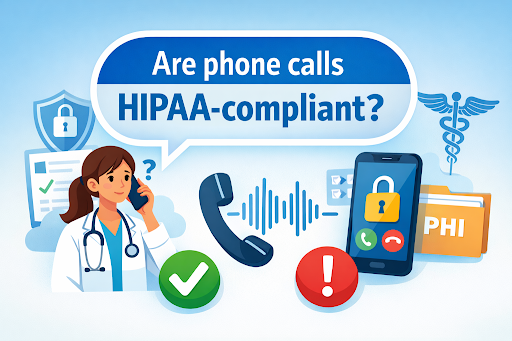
Yes, phone calls can be HIPAA-compliant as long as healthcare providers follow the privacy and security safeguards required under HIPAA regulations. The law does not prohibit phone communication with patients. Instead, it focuses on ensuring that Protected Health Information (PHI) is shared responsibly and only with the right person.
Healthcare providers commonly use phone calls for various purposes. These conversations are generally allowed because they are part of normal healthcare operations. However, providers must take reasonable steps to confirm they are speaking with the correct patient before discussing any sensitive information.
For example, a clinic staff member might first verify details such as the patient’s date of birth or address before discussing lab results. This simple step helps protect patient privacy and ensures that the call complies with HIPAA guidelines.
Healthcare organizations also rely on secure communication systems to reduce privacy risks. For instance, staff may use a HIPAA-compliant cellphone setup when making patient calls.
Similarly, many practices adopt a HIPAA-compliant VoIP phone system to manage and document calls securely. When leaving messages for patients, following proper HIPAA-compliant voicemail practices also helps prevent accidental disclosure of sensitive information.
In short, phone calls are allowed under HIPAA, but they must be handled carefully to ensure patient information remains protected.
When Can Phone Calls Violate HIPAA?
HIPAA and phone calls are closely connected because phone conversations often involve Protected Health Information (PHI). While phone calls are allowed under HIPAA, they can lead to compliance issues if patient information is shared carelessly or without proper safeguards. Healthcare providers must ensure that PHI is only shared with the right person and in a secure manner. To understand where risks may occur, check the situations below where HIPAA phone calls may lead to violations:
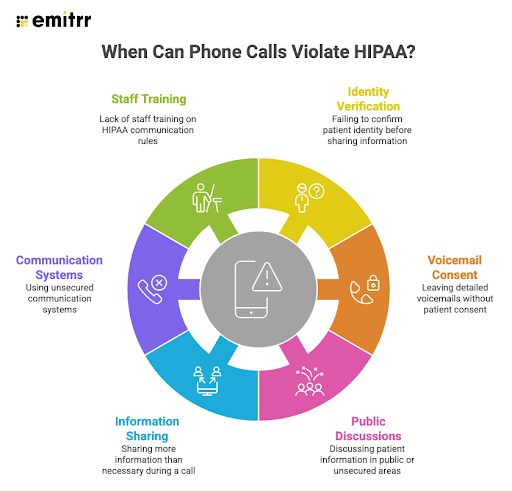
Not verifying the patient’s identity before sharing information
If a staff member discusses medical details without confirming the identity of the person on the call, sensitive information may be shared with the wrong individual. Basic verification steps, such as confirming the patient’s date of birth or address, help prevent this issue.
Leaving detailed voicemails without patient consent
Voicemail messages that include diagnoses, treatment details, or test results may expose PHI if someone else listens to the message. Healthcare providers should keep voicemail messages limited and follow proper voicemail policies.
Discussing patient information in public or unsecured environments
Phone conversations that happen in busy areas such as waiting rooms, hallways, or public places can be overheard by others. This may unintentionally expose confidential patient information.
Sharing more information than necessary during a call
HIPAA requires providers to follow the “minimum necessary rule,” which means only the essential information should be discussed during phone conversations.
Using unsecured communication systems
When healthcare organizations use unsecured phone systems or personal devices without proper safeguards, it increases the risk of unauthorized access to patient information.
Lack of staff training on HIPAA communication rules
If employees are not properly trained on how to handle patient calls, they may unintentionally disclose protected information or fail to follow secure patient communication practices.
Best Practices for HIPAA-Compliant Phone Calls in Healthcare Practices
To reduce privacy risks and maintain compliance, healthcare practices should follow clear protocols when communicating with patients over the phone. Implementing the following best practices can help ensure patient information remains secure and improve communication workflows.
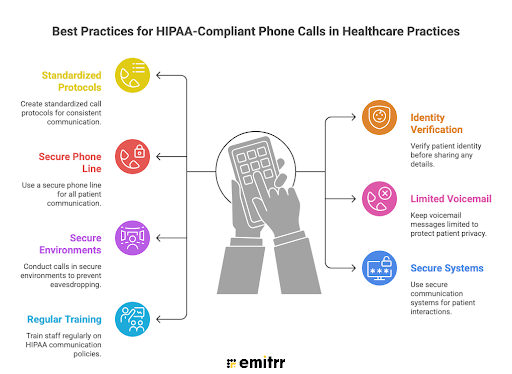
Create standardized call protocols
Establish clear guidelines on what staff can and cannot discuss during patient calls to prevent accidental disclosure of sensitive information.
Verify patient identity before sharing details
Always confirm basic identifiers, such as date of birth or another verification detail, before discussing any patient-related information.
Use a secure phone line for patient communication
Healthcare practices should communicate through an official HIPAA-compliant phone number so patient calls remain secure, traceable, and properly managed.
Keep voicemail messages limited
Use a simple HIPAA-compliant voicemail script that avoids sharing sensitive medical details while still informing the patient about the purpose of the call.
Conduct calls in secure environments
Ensure staff members make and receive calls in private spaces where patient information cannot be overheard.
Use secure communication systems
Implement approved communication tools and phone systems that help manage calls securely and maintain proper records.
Train staff regularly on HIPAA communication policies
Provide ongoing training so employees understand how to handle patient calls responsibly and follow compliance guidelines.
HIPAA-Compliant Phone Call Checklist
Even though phone calls are allowed under HIPAA, healthcare staff must follow certain safeguards to protect patient privacy. Small mistakes during phone conversations can lead to unintended disclosure of Protected Health Information (PHI). Use the checklist below to ensure every patient call follows proper HIPAA guidelines.
| Required Step | Why It’s Important |
| Verify patient identity | Confirm key details such as date of birth or another identifier before discussing any Protected Health Information (PHI). |
| Limit information shared | Follow the minimum necessary rule and only discuss information relevant to the purpose of the call. |
| Ensure a private calling environment | Make or take calls in a secure location where conversations cannot be overheard by unauthorized individuals. |
| Use secure phone systems | Communicate through approved practice devices or secure phone systems instead of unsecured personal devices. |
| Follow safe voicemail practices | Keep voicemail messages brief and avoid sharing sensitive medical details unless the patient has given permission. |
| Document the call properly | Record essential details such as the date, time, and purpose of the call in the patient record without exposing unnecessary PHI. |
| Train staff on call protocols | Ensure team members understand HIPAA rules for phone conversations and know what information can and cannot be shared. |
How Emitrr Makes Patient Phone Calls HIPAA-Compliant
Emitrr is one of the best HIPAA-compliant VoIP phone systems for secure healthcare communication that helps practices manage patient calls with strong privacy safeguards. Emitrr signs a Business Associate Agreement (BAA) with healthcare organizations and follows strict administrative, technical, and physical safeguards required under HIPAA. These safeguards protect Protected Health Information (PHI) during patient communication.
Emitrr uses encrypted communication, role-based access controls, and secure data infrastructure to protect patient information during every HIPAA-compliant phone call. Every interaction remains traceable through detailed communication logs and controlled user access. This level of security helps healthcare practices reduce compliance risks and maintain proper documentation.
Emitrr supports healthcare teams through automation and AI-powered communication tools. The platform functions as a HIPAA-compliant medical answering service that helps practices handle patient calls even outside regular office hours.
Here’s how Emitrr ensures secure and HIPAA-compliant patient phone calls
- Secure VoIP Calling System: Healthcare practices can manage patient calls through a protected phone infrastructure that supports every HIPAA-compliant phone call with encryption and controlled access.
- AI-Powered Call Assistance: The platform supports patient inquiries, appointment requests, and routine communication through a HIPAA-compliant AI agent that assists staff with patient call management.
Watch Emitrr’s AI voice agent in action
- Centralized Call Dashboard: All patient calls appear in one secure interface. Staff members can review call history, track conversations, and maintain organized patient communication.
- Smart Call Routing: Calls reach the correct department or staff member through automated routing supported by a HIPAA-compliant virtual assistant, which improves response time and patient experience.
- Secure Call Records and Logs: Each call record includes timestamps and communication details that support accountability and compliance monitoring.
- Unified Patient Communication System: Healthcare teams manage calls, text messages, and patient conversations through one secure platform that supports consistent and compliant communication workflows.
Key Takeaways for HIPAA-Compliant Phone Calls
- Phone calls can be HIPAA-compliant if healthcare providers follow proper privacy and security safeguards when sharing Protected Health Information (PHI).
- Identity verification is essential before discussing any patient information during phone conversations.
- Voicemail and call communication must stay limited to necessary details to prevent accidental disclosure of sensitive information.
- Secure phone systems help reduce compliance risks and support safe patient communication.
- Staff training and clear call protocols help healthcare practices handle patient phone conversations responsibly.
- Platforms like Emitrr support HIPAA-compliant phone calls with secure VoIP communication, AI-powered call handling, and compliance-focused features.
Frequently Asked Questions
Yes, cell phone calls can be HIPAA-compliant if healthcare providers take reasonable steps to protect patient information. Providers must verify the patient’s identity before sharing Protected Health Information (PHI) and avoid discussing sensitive details in public or unsecured environments. Many healthcare practices also use secure communication systems to ensure safer phone communication.
Leaving a voicemail is not automatically a HIPAA violation. However, providers should avoid including sensitive details such as diagnoses, treatment plans, or test results unless the patient has given permission. Most practices keep voicemail messages brief, such as requesting the patient to call back.
Yes, healthcare providers can discuss test results over the phone if they confirm the patient’s identity first. Providers must ensure they are speaking directly with the patient or an authorized individual before sharing any medical information.
Recorded calls are allowed under HIPAA, but healthcare practices must follow strict privacy and security safeguards. Patients may need to be informed that the call is being recorded, and the recordings must be stored securely to protect PHI.
Healthcare practices can improve call security by verifying patient identity, limiting the information shared during calls, avoiding conversations in public spaces, and using secure phone systems that support compliant patient communication.


 4.9 (400+
reviews)
4.9 (400+
reviews)