
 4.9 (400+
reviews)
4.9 (400+
reviews)
Introduction
Contemporary churches face a complex web of communication challenges. Important notifications often get lost in crowded inboxes, event details are missed due to disorganized messaging, and many members experience loneliness because their preferred method of receiving updates—text, call, or email—is not regularly employed. With diverse congregations, evolving online habits, and the rise of hybrid worship, keeping everyone informed and engaged has become increasingly difficult. Traditional VOIP and communication systems can pose difficulties, especially when trying to manage multilingual messaging, accessibility, and real-time updates across different platforms
This is the moment when AI becomes a transformative power for churches. AI-driven communication platforms offer more than just basic task automation—they analyze member interactions, identify trends, and anticipate needs, enabling smarter and more tailored outreach. AI assists churches in enhancing engagement and streamlining operations, whether by designing tailored event invitations, translating communications for various communities, or delivering quick replies to prayer requests. By utilizing these advanced tools, church leaders can guarantee that every member feels acknowledged, listened to, and connected regardless of how or where they worship.
In this article, we will provide you with an in-depth guide on how AI can enhance your church’s communication methods. You will find practical examples, understand how to tackle typical obstacles, and observe how a comprehensive platform like Emittr can assist you in consolidating your communication approach for optimal ministry effectiveness.
Why Churches Need AI?
Churches today are facing more challenges than ever when it comes to keeping their members connected and involved. Think about it-churches have people from all kinds of backgrounds, ages, and cultures. Some are tech-savvy, while others may not use smartphones or social media much. This makes it really hard to send messages that everyone understands and cares about.
Moreover, churches arrange various events, programs, and volunteer projects. Handling all of this solely through emails, notice boards, or phone calls can quickly become overwhelming. Important announcements might be missed, people may forget about events, and volunteers occasionally do not have details on when or where their help is needed. This leads to frustration, doubt, and some people separating themselves from the church community.
That’s why churches require more intelligent AI communication tools—tools that not only convey messages but also comprehend the congregation. Platforms powered by AI accomplish just that. They observe people’s reactions and determine the most effective way to connect with each individual. For instance, certain members may favor a brief text message, whereas others may react more positively to a phone call or a post on social media. AI ensures that the correct message is delivered to the appropriate person at the perfect moment.
Envision possessing the capability to effortlessly categorize individuals based on their language, interests, or availability. AI for Churches can offer tailored notifications regarding events or volunteer opportunities, ensuring that all individuals feel involved and updated. It can additionally recognize when specific groups are becoming less engaged and notify church leaders to intervene before members disconnect. Without these resources, churches may struggle to stay connected with their members. Messages are overlooked, gatherings draw limited attendees, and volunteers feel there is insufficient recognition or understanding. This could damage the sense of community and impede churches’ ability to accomplish their purpose
In summary, communication driven by AI is not merely optional—it’s becoming crucial. It aids churches in maintaining unity, enhances connections, and allows staff and volunteers to concentrate on what truly counts: serving their congregation and expanding their community
Benefits of AI in Church Operations
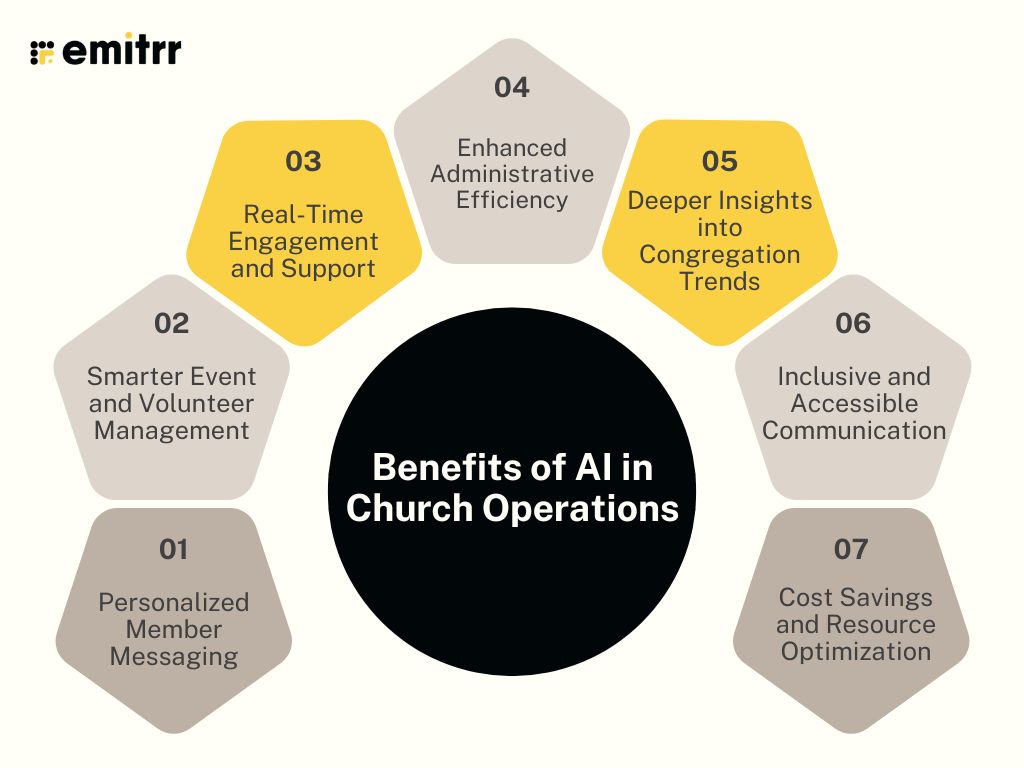
Personalized Member Messaging
AI helps churches communicate with each member in a way that feels personal and meaningful.By examining data such as attendance records, participation in events, and prayer requests, AI can propose or dispatch messages tailored to individual interests and needs. For instance, an individual participating in youth events may receive notifications regarding future youth activities, whereas another member could get alerts for family get-togethers or Bible study. This type of individualized communication makes members feel acknowledged and valued, resulting in deeper relationships and increased participation
Smarter Event and Volunteer Management
Coordinating church events and managing volunteers can be complex and require significant time. AI simplifies this process by examining past events and the actions of volunteers. It can suggest optimal dates and times for events when most participants are free, assign volunteers to roles suited to their skills, and dispatch reminders to keep everyone informed. This minimizes scheduling issues and unexpected confusion, allowing church events to proceed more seamlessly and effectively.
Real-Time Engagement and Support
By utilizing AI-driven messaging for Churches and chatbots, you can provide immediate assistance to their members at any time. Regardless of whether an individual has inquiries about service timings, requires directions, or wishes to make a prayer request, AI can deliver prompt and precise answers through text or voice calls. This means members get the help they need right away, even outside office hours, which builds trust and keeps people more connected to the church community.
Enhanced Administrative Efficiency
Tasks such as monitoring attendance, gathering feedback, and revising contact lists can consume significant amounts of time for staff and volunteers. AI has the ability to carry out these repetitive tasks automatically and accurately. For example, after an event, AI can send out feedback surveys, record responses, and highlight important trends for church leaders. This enables church staff and volunteers to focus more time on important activities, like ministry and community service
Deeper Insights into Congregation Trends
AI not only collects information but also helps church leaders understand the dynamics within their community. By analyzing patterns in attendance, event participation, and feedback, AI can reveal important insights, including which services are preferred, what topics engage the congregation, or areas where people might need further support. This information helps leaders make better decisions about programs, outreach, and spiritual assistance, ensuring that the church meets the true needs of its members
Inclusive and Accessible Communication
Churches welcome people from many different backgrounds, languages, and abilities. AI can help by automatically translating messages into different languages and making changes like using bigger text for people who have trouble seeing. This way, everyone in the church can get and understand important information, making the church a more welcoming and friendly place for all.
Cost Savings and Resource Optimization
AI helps churches by making daily tasks like planning and paperwork easier and faster. This means they need fewer workers and make fewer mistakes. The church can then use its time, helpers, and money better to do important things like helping people, running programs, or fixing the building.
AI tools assist churches in communicating with members warmly, managing events and volunteers effortlessly, providing prompt support, and grasping the needs of the community. These resources ensure that all receive accurate information, involve more individuals, and reduce costs and effort, allowing the church to accomplish greater good.

Use Cases of AI in Churches
Personalized Member Communication
AI assists churches in engaging with each member in a manner that appears personal and significant. Through examining information such as attendance records, event involvement, and prayer requests, AI can offer or communicate messages that align with individual interests and requirements. For instance, an individual who participates in youth events could receive notifications about future youth activities, whereas another member may get reminders for family events or Bible study sessions. This type of tailored communication helps members feel acknowledged and valued, resulting in deeper relationships and increased participation
Virtual Assistance and AI Agents
AI-powered virtual assistants and chatbots are revolutionizing how churches handle inquiries and support. These agents can provide instant responses to frequently asked questions about service times, directions, or event details, offering 24/7 support without requiring staff to be constantly available. For prayer requests, AI can acknowledge submissions, route them to the appropriate ministry team, and even offer comforting scripture or encouragement in real time. This frees up church staff and volunteers for more meaningful, high-touch pastoral care, while ensuring no request goes unanswered.
Beyond basic Q&A, AI agents can moderate online prayer groups, manage digital Bible studies, and facilitate interactive engagement in virtual spaces. For example, during online events, AI can help organize breakout sessions, monitor chat for inappropriate content, and guide discussions with relevant scripture or questions. These capabilities not only enhance digital ministry but also extend the church’s reach to members who may be homebound or geographically distant, creating vibrant online communities that mirror in-person fellowship.
Smart Scheduling and Event Management
AI transforms event planning by leveraging historical data and engagement patterns to predict which events will attract the most participation and when they should be scheduled. By analyzing factors like past attendance, demographic trends, and even weather or local events, AI can recommend optimal dates and times, reducing scheduling conflicts and maximizing turnout. This ensures that church resources-such as facilities, volunteers, and materials-are used efficiently and that events are more likely to succeed.
Additionally, AI can proactively suggest new event types or formats based on congregation interests and feedback. For instance, if AI detects growing interest in wellness or family support, it might recommend launching a health seminar or parenting workshop. It can also flag potential resource shortages or overbookings, helping leaders address issues before they arise. This predictive, data-driven approach enables churches to be more agile, responsive, and impactful in their programming.
Smart Volunteer Coordination
Coordinating volunteers is often one of the most complex and time-consuming aspects of church operations. AI simplifies this by predicting volunteer availability, engagement patterns, and preferred roles. By matching individuals to opportunities based on their skills, past involvement, and interests, AI ensures that every ministry and event is optimally staffed. For example, someone who enjoys working with children and is available on weekdays might be automatically assigned to after-school programs, while another who prefers behind-the-scenes work could be scheduled for setup or technical support.
Automated reminders and personalized follow-ups further reduce no-shows and last-minute cancellations. AI can even identify volunteers who are at risk of burnout or disengagement, prompting leaders to offer support or rotate responsibilities. This not only strengthens volunteer retention but also builds a culture of appreciation and teamwork, ensuring that every volunteer feels valued and supported.
Donation and Financial Engagement
AI brings a new level of sophistication to church fundraising and stewardship. By analyzing giving patterns, seasonal trends, and donor preferences, AI can help churches design personalized fundraising campaigns that resonate with each supporter. For example, donors who consistently give to youth missions can receive tailored updates and appeals related to that ministry, while those interested in building projects might get progress reports and invitations to special tours. This targeted approach deepens donor relationships and increases the effectiveness of fundraising efforts.
AI can also predict future giving trends, identify lapses in donations, and send timely thank-you messages or reminders. These insights enable church leaders to plan budgets more accurately, allocate resources wisely, and maintain financial stability. Automated, personalized stewardship communication ensures that every donor feels appreciated and informed about the impact of their generosity.
Data-Driven Community Outreach
AI enables churches to move from reactive to proactive outreach by analyzing both internal congregation data and external community needs. By scanning local demographics, social media trends, and feedback from members, AI can identify gaps in services or emerging needs, such as food insecurity, mental health support, or youth mentorship. This allows churches to launch targeted outreach programs that address real challenges in their communities.
Furthermore, AI can help track the impact of outreach initiatives, measuring participation, outcomes, and community feedback. These insights help leaders refine their strategies, allocate resources more effectively, and demonstrate the tangible difference the church is making. Data-driven outreach not only increases the church’s relevance but also builds trust and credibility with both members and the wider community.
Accessibility and Inclusion
AI-powered tools significantly enhance accessibility for all members, regardless of language, hearing, or visual ability. Automated transcription and translation services make sermons, teachings, and announcements available in multiple languages and formats, ensuring that everyone can participate fully in church life. For example, live captions during services help the hearing-impaired, while translated materials ensure non-native speakers feel included.
Additionally, AI can convert written content into natural-sounding audio, making it accessible to those with visual impairments or reading difficulties. These features help churches create a more inclusive environment where every member can engage with spiritual content in the way that suits them best. By prioritizing accessibility, churches demonstrate their commitment to welcoming and serving all people.
Operational Impact of AI in Church Communication
1. Streamlined Multi-Channel Messaging
AI-powered communication platforms unify texting, calling (VOIP), and email into a single, easy-to-manage system. This integration allows church teams to send messages through the channel most preferred by each member, increasing the chances that important information is received and understood. For example, younger members might respond better to texts, while older members may prefer phone calls. AI learns these preferences over time and adjusts communication accordingly, reducing wasted effort and improving engagement.
Beyond just sending messages, AI helps schedule and prioritize communication to avoid overwhelming members. It can space out messages and choose optimal times based on past engagement data, ensuring that outreach feels thoughtful rather than intrusive. This intelligent management of multiple channels helps churches maintain consistent, relevant contact with their congregation without burdening staff or volunteers.
2. Automated and Intelligent Follow-Ups
One of the biggest challenges in church communication is ensuring that messages lead to action-whether that’s attending a service, volunteering, or responding to a prayer request. AI tracks who has engaged and who hasn’t, automatically sending follow-up texts or calls to those who may have missed the initial message. This ensures no one is overlooked and helps maintain strong connections with every member.
These follow-ups are not generic but personalized based on previous interactions and preferences. For instance, if a member consistently misses youth group events, AI might prompt a volunteer or leader to reach out personally or offer alternative ways to stay involved. This targeted approach increases the effectiveness of communication and helps church leaders address disengagement early.
3. Real-Time Communication Insights
AI-powered platforms provide church teams with dashboards and reports that show how messages are performing in real time. Leaders can see who opened texts or emails, who responded, and which calls were answered. These insights allow teams to quickly identify what’s working and where adjustments are needed, rather than waiting weeks for feedback.
Having access to this data also supports more informed decision-making. For example, if a particular outreach campaign shows low engagement, leaders can pivot strategies immediately-maybe by changing the message tone, switching communication channels, or targeting different groups. This agility helps churches stay connected and responsive to their congregation’s needs.
4. Proactive Outreach and Anticipation
AI’s predictive analytics enable churches to anticipate member needs before they arise. By analyzing attendance patterns, past engagement, and even seasonal trends, AI can suggest when to send encouragement messages, reminders, or invitations to specific groups. This proactive communication fosters a caring environment where members feel supported and valued.
Additionally, AI can flag urgent issues, such as members who have stopped attending or those who may need pastoral care, allowing church leaders to intervene promptly. This early warning system helps prevent disengagement and strengthens the church’s ability to provide timely spiritual and emotional support.
5. Efficient Scheduling and Coordination
Coordinating events, meetings, and volunteer shifts is often a complex puzzle for church staff. AI-powered communication tools can automatically find the best times for gatherings by analyzing everyone’s availability and preferences, significantly reducing scheduling conflicts. This saves time and minimizes frustration for both organizers and participants.
Moreover, AI can send automated reminders and updates via text or call, ensuring volunteers and attendees don’t forget their commitments. This level of coordination improves attendance, reduces no-shows, and helps church operations run smoothly, even when managing multiple ministries or outreach programs simultaneously.
6. Personalized Content Delivery
AI analyzes data on what types of messages resonate with different segments of the congregation-whether it’s sermon topics, community events, or devotional materials. Using this information, AI customizes communication to match the interests and spiritual needs of each group, making outreach more relevant and impactful.
This personalization extends to the timing and format of messages, ensuring that each member receives content in a way that suits them best. For example, some might prefer a weekly email newsletter, while others respond better to short, frequent text updates. By tailoring communication, AI helps deepen engagement and fosters a stronger sense of belonging.
7. Enhanced Accessibility and Inclusion
Churches serve diverse communities, and AI-powered communication platforms support this by offering multilingual messaging and accessibility features. AI can automatically translate texts or emails into different languages, ensuring non-native speakers receive information in their preferred language without extra effort from staff.
In addition, AI can adapt messages for members with disabilities, such as providing larger font sizes or voice call options for those with vision impairments. This commitment to inclusivity ensures that all members feel informed and welcomed, regardless of language or ability, strengthening the church’s mission to serve everyone.
Challenges of AI Adoption for Churches
1. Data Privacy and Security
Churches collect and store sensitive information about their members, such as contact details, attendance records, prayer requests, and sometimes even personal or family issues. With AI-powered communication platforms, this data is often centralized and analyzed to deliver better messaging and outreach. However, this increases the risk if the data is not properly protected. A breach or misuse of this information could not only harm individuals but also damage the trust that is foundational to any faith community.
To address these risks, churches must adopt strict data privacy policies and use secure, reputable AI communication providers. This includes using encrypted VOIP calls and secure texting platforms, regularly updating security protocols, and training staff on best practices for data handling. Transparency with congregants about how their data is used, stored, and protected is also essential for maintaining trust and ensuring compliance with legal and ethical standards.
2. Ethical and Spiritual Considerations
The use of AI in church communication raises important ethical questions. For instance, should an algorithm decide which members receive urgent pastoral care follow-ups or who gets invited to certain events? There is a risk that AI, if not carefully guided, could unintentionally reinforce biases or make decisions that do not align with the church’s spiritual mission and values.
Church leaders must remain actively involved in setting the parameters for AI tools, ensuring that all communication and decision-making reflect the church’s core beliefs and ethical standards. This may mean customizing AI systems or regularly reviewing automated communications for appropriateness. Ultimately, AI should serve as a support tool for ministry, not as a replacement for the discernment and compassion that are central to pastoral care.
3. Maintaining the Human Touch
While AI can efficiently handle routine communication tasks, it cannot replace the empathy, understanding, and personal connection that come from human interaction. In faith communities, relationships are built on trust, shared experiences, and genuine care. Over-reliance on automated texts, calls, or emails risks making communication feel impersonal or transactional, which can alienate members.
To avoid this, churches should use AI to enhance-not replace-personal relationships. For example, AI can handle reminders and scheduling, freeing up staff and volunteers to focus on meaningful conversations, pastoral visits, and spiritual support. It’s important to ensure that every member still has opportunities for direct, human contact, especially during times of need or crisis.
4. Technology Access and Comfort
Not all church members have the same level of comfort with digital technology or access to devices like smartphones, computers, or high-speed internet. Relying heavily on AI-powered communication tools could unintentionally exclude older adults, those with limited resources, or anyone less familiar with technology. This digital divide can lead to feelings of isolation or frustration among certain groups.
Churches must be mindful of these disparities and offer alternative communication methods, such as printed newsletters, phone trees, or in-person announcements. Providing training or tech support for members who want to learn can also help bridge the gap. The goal should be to make communication more inclusive, ensuring everyone is reached and valued, regardless of their technological abilities.
5. Financial Investment
Adopting AI-powered communication platforms often requires significant financial resources, including software subscriptions, hardware upgrades, and staff training. For smaller churches or those with limited budgets, these costs can be a barrier to adoption. There may also be ongoing expenses for technical support, updates, and data security measures.
To manage these challenges, churches should carefully evaluate the potential return on investment and consider scalable solutions that grow with their needs. Some AI providers offer flexible pricing or nonprofit discounts, which can make advanced communication tools more accessible. Strategic planning and clear communication about the benefits can help justify the investment and ensure resources are used wisely.
6. Training and Change Management
Introducing new AI tools and workflows can be daunting for church staff and volunteers, especially those who are less tech-savvy. Without proper training and support, there may be resistance to change, mistakes in using the system, or underutilization of valuable features. This can limit the overall effectiveness of the technology and create frustration within the team.
To ensure successful adoption, churches should invest in comprehensive training programs and provide ongoing support. This might include step-by-step guides, video tutorials, or hands-on workshops. Encouraging a culture of openness and learning can help staff and volunteers feel more comfortable with the changes, leading to smoother transitions and better outcomes.
7. Dependence on Technology
As churches become more reliant on AI and digital communication platforms, there is a risk of operational disruption if technology fails due to outages, cyberattacks, or technical glitches. Overdependence can also erode traditional skills in personal communication and problem-solving, making the church vulnerable during periods when digital tools are unavailable.
To mitigate these risks, churches should maintain backup plans and retain some manual processes for critical communications, such as emergency phone trees or paper attendance lists. Regularly reviewing and testing contingency plans ensures that the church can continue to serve its members effectively, regardless of technological challenges.
AI vs. Traditional Church Communication
| Aspect | AI-Driven Communication | Traditional Communication |
| Personalization | Highly personalized using data analytics and member preferences; messages tailored in real-time to individual needs. | Mostly generic, one-size-fits-all messaging; limited ability to tailor content to individuals. |
| Availability | 24/7 support via chatbots, automated texts, and calls; immediate response to inquiries at any time. | Limited to office hours or when staff/volunteers are available. |
| Insights & Reporting | Advanced analytics track engagement, attendance, and trends, providing actionable insights for leaders. | Minimal reporting, often anecdotal or based on manual tracking. |
| Efficiency | Automates routine tasks like reminders, scheduling, and follow-ups, freeing staff for ministry. | Staff-intensive; manual handling of most communication and administrative tasks. |
| Human Connection | Needs careful balance to avoid loss of personal touch; best used to supplement, not replace, human relationships. | Naturally strong due to direct, personal interactions. |
| Language & Accessibility | Instantly translates messages and adapts content for different languages and accessibility needs. | Limited language support; accessibility depends on staff resources and skills. |
| Engagement | AI analyzes engagement data to send timely, relevant messages and follow-ups, increasing participation. | Engagement relies on staff memory and manual outreach, which can be inconsistent. |
| Content Creation | AI assists with sermon prep, newsletters, and event materials, suggesting topics based on trends and member interests. | Content created manually; relies on staff creativity and time. |
| Scalability | Easily scales to handle large congregations and multiple communication channels without extra staff. | Scaling requires more staff/volunteers and increases workload. |
| Cost & Resource Use | Reduces long-term costs by automating tasks and optimizing resource allocation, though initial investment can be high. | Ongoing costs for staff time; less efficient use of resources; scaling up is expensive. |
How Emittr Helps Churches with AI-Driven Communication?
Answers Every Call with Grace and Clarity
When someone calls the church with a question or a prayer request, Emitrr’s AI answers right away. It shares service times, directions, or event details, even when the office is closed.
Connects with Members Through Text
Whether it’s a first-time visitor or a longtime member, Emitrr sends thoughtful and helpful messages. From Sunday reminders to small group updates, everyone stays informed and included.
Makes Event Scheduling Easy
Emitrr helps members RSVP for services, bible studies, or volunteer events by phone or text. It confirms attendance, handles changes, and keeps everything organized without any manual work.
Sends Timely Reminders and Updates
Need to update the congregation about a time change or special event? Emitrr sends real time voice and text messages to keep everyone in the loop.
Welcomes Newcomers with a Personal Touch
When someone new reaches out, Emitrr replies warmly and shares information about your church. It helps people feel welcomed and invited from the very first contact.
Collects Feedback and Prayer Requests
After services or gatherings, Emitrr can gently follow up to collect feedback or receive prayer requests. This helps the ministry team stay connected and support the community more personally.
Lightens the Load for Church Staff
Emitrr handles routine communication so your pastors and team can spend more time caring for people and less time chasing calls or managing calendars.
Watch this quick video to see Emitrr’s new AI feature that can help your Church improve communication with members:
The Future of AI in Churches
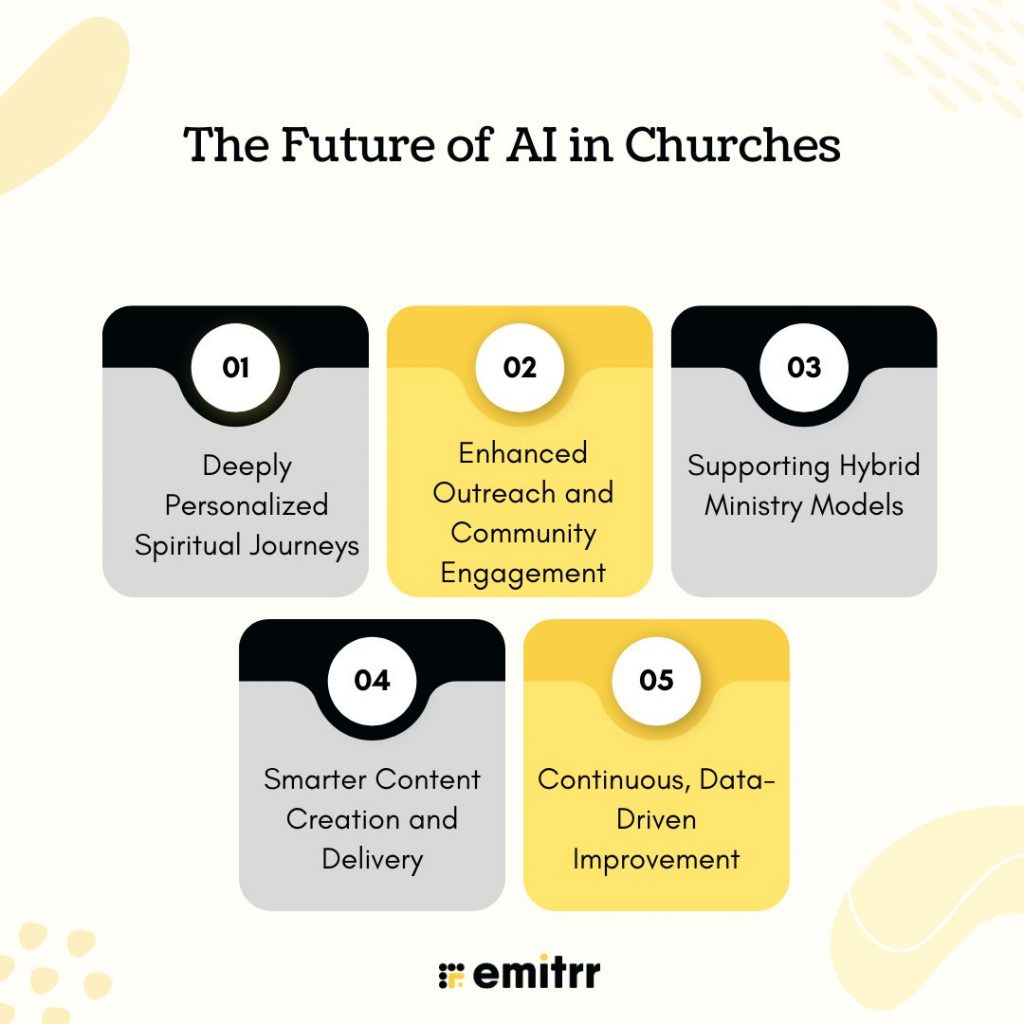
1. Deeply Personalized Spiritual Journeys
AI is set to make spiritual experiences more personal than ever before. By analyzing each member’s engagement patterns, spiritual interests, and even emotional states, AI can recommend scripture readings, devotionals, or prayer prompts that directly address individual needs and life circumstances. This means congregants can receive faith-based support and encouragement that feels uniquely relevant to them, fostering deeper spiritual growth and daily connection with their beliefs.
In practice, this could look like AI-driven apps that adjust content in real time, suggesting meditations or spiritual exercises based on how someone is feeling or what challenges they’re facing. These tools will help members feel seen and supported, making their faith journey more meaningful and consistent.
2. Enhanced Outreach and Community Engagement
AI will empower churches to reach more people, more effectively. By analyzing community demographics, social media trends, and engagement data, AI can help tailor outreach campaigns and digital content that resonate with both current members and those outside the church. This targeted approach ensures that messages are relevant and timely, increasing the likelihood of meaningful connections and broader community impact.
Additionally, AI-powered chatbots and virtual assistants will provide instant responses to inquiries about services, events, or spiritual questions, making the church more accessible and responsive 24/7. This constant availability will help churches build stronger relationships with their communities, both online and offline.
3. Supporting Hybrid Ministry Models
As churches continue to blend in-person and digital experiences, AI will play a crucial role in supporting hybrid ministry. AI can help manage and coordinate both physical and virtual events, ensuring seamless communication across all platforms. For example, AI can automate reminders for both in-person and online services, track attendance through facial recognition or digital check-ins, and personalize follow-ups based on participation.
AI will also make it easier to create and distribute digital content-such as sermon transcripts, video highlights, or interactive Bible studies-ensuring everyone, regardless of how they attend, feels included and engaged. This integration will help churches maintain unity and connection across diverse worship settings.
4. Smarter Content Creation and Delivery
AI is transforming how churches create and share content. Tools that analyze sermon feedback, trending topics, and scriptural relevance will help pastors craft messages that are timely, impactful, and tailored to their congregation’s needs. AI can also suggest music, prayers, or discussion topics that align with the theme of each service, creating a more cohesive and engaging worship experience.
For digital ministry, AI will streamline the production of newsletters, social media posts, and educational materials, ensuring content is always fresh, relevant, and accessible to all members. This will free up church staff to focus more on personal ministry and less on administrative tasks.
5. Continuous, Data-Driven Improvement
The future of AI in churches involves ongoing learning and adaptation. With advanced analytics, church leaders can gain deep insights into what’s working and what needs improvement-whether it’s engagement rates, outreach effectiveness, or spiritual growth metrics. AI will flag trends, anticipate needs, and suggest adjustments in real time, allowing churches to be more agile and responsive.
This data-driven approach means churches can continually refine their communication strategies, outreach programs, and ministry offerings, ensuring they remain relevant and impactful in a rapidly changing world.
FAQs
AI helps churches send messages that fit each person, organize events better, and answer questions quickly using chatbots. It also helps church staff save time on routine tasks.
There are special AI apps that help pastors prepare sermons, plan church services, and share teachings easily. These apps give ideas and organize information to make their work easier.
Many churches like using AI because it helps them reach more people and work smarter. But they also want to make sure AI is used in a way that respects their values and keeps personal care important.
Nonprofits use AI to send the right messages to donors and volunteers, answer questions fast, and handle simple tasks automatically. This helps them focus more on helping people and less on paperwork.
Conclusion
AI is quickly becoming the next essential tool for churches looking to grow, connect, and serve in a changing world. When thoughtfully integrated, AI-powered communication platforms can revolutionize how you engage your congregation-offering personalized messaging, smarter event management, seamless multilingual support, and real-time insights that drive meaningful ministry. The result? Stronger relationships, higher participation, and a more vibrant church community.
Yet, finding a single solution that brings together texting, calling, VOIP, and email-while adapting to the ever-changing demands of church life-can be tricky. That’s why Emittr is here: an all-in-one communication platform built for churches, backed by 24/7 support to help you listen, respond, and guide your community with confidence. With Emittr, you get every communication function you need in one place, making it easier than ever to keep your ministry connected and thriving.
So, what are you waiting for? Sign up for Emittr now and experience how AI can help your church communicate better, reach further, and serve with greater impact.