
 4.9 (400+
reviews)
4.9 (400+
reviews)
Introduction
Mental health care is undergoing a significant shift with the adoption of advanced technology. Psychiatrists today face multiple challenges, including rising patient volumes, time-consuming administrative work, and the constant need for timely follow-ups. In such a demanding environment, ensuring accuracy, efficiency, and meaningful patient engagement is not just important; it’s essential for effective care.
This is where psychiatry AI plays a vital role. By combining automation with intelligent data analysis, artificial intelligence in psychiatry enables practitioners to manage repetitive tasks, track patient progress, and detect subtle changes in symptoms that may otherwise be overlooked. From appointment scheduling to real-time crisis support, AI-powered solutions enable psychiatric practices to operate more efficiently and respond more effectively.
Most importantly, these tools allow psychiatrists to focus on what matters most: delivering empathetic, personalized care while technology handles the operational load. The result is a smarter, patient-first approach to mental health treatment.
Why Psychiatrists Need AI
Psychiatry involves complex decision-making, heavy documentation, and continuous patient care. AI for psychiatrists addresses these challenges by streamlining workflows, improving accuracy, and ensuring consistent patient engagement—ultimately enhancing both clinical efficiency and mental health outcomes.
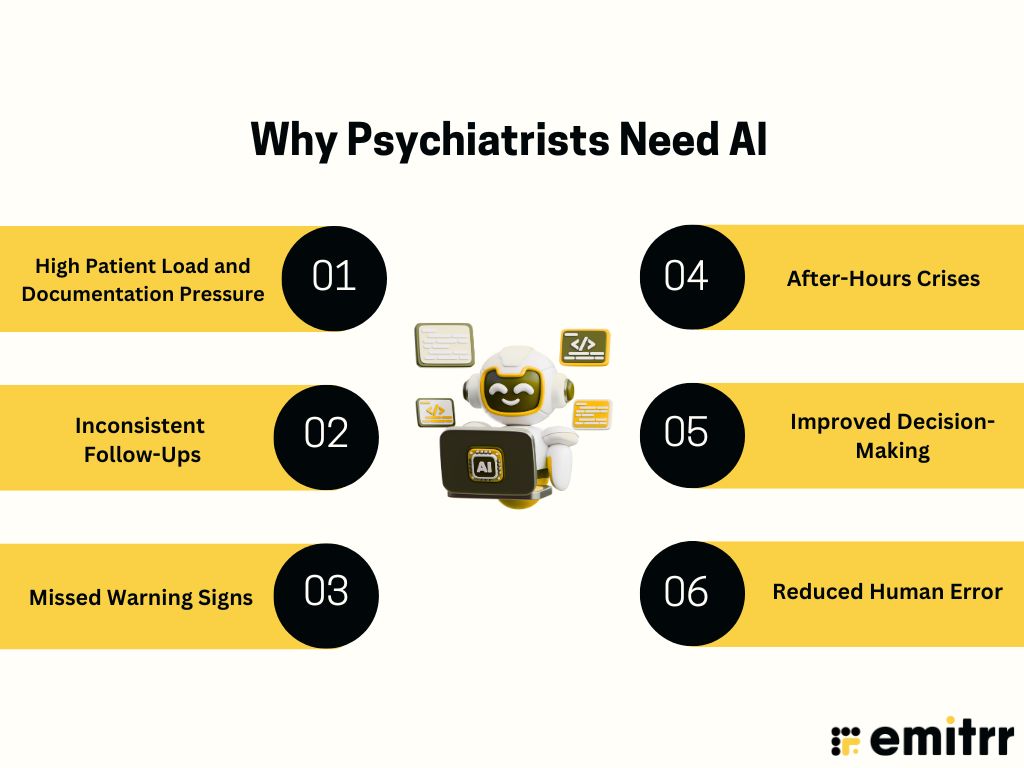
High Patient Load and Documentation Pressure
Psychiatrists often spend valuable hours on manual note-taking, record updates, and repetitive paperwork. This reduces the time available for meaningful patient interaction. By automating documentation, artificial intelligence for psychiatry allows professionals to devote more attention to accurate assessments and patient care.
Inconsistent Follow-Ups
Maintaining regular patient follow-ups is crucial for therapy adherence, yet manual reminders are often overlooked. AI psychiatrist apps can automate reminders, follow-up messages, and progress check-ins, ensuring patients stay on track with treatment while reducing administrative burden on clinicians.
Missed Warning Signs
Subtle shifts in mood, behavior, or communication can go unnoticed during routine sessions. Psychiatry AI tools continuously monitor patient-reported data, detect patterns, and highlight early warning signs, empowering psychiatrists to intervene before conditions worsen and improving overall patient outcomes.
After-Hours Crises
Mental health crises rarely follow clinic hours. With AI psychiatrist bots, patients can access immediate support, symptom triage, and guidance toward emergency care. This ensures patients receive timely help, while clinicians are alerted to urgent situations requiring personal intervention.
Improved Decision-Making
Accurate diagnosis in psychiatry demands thorough data analysis, which can be overwhelming manually. Artificial intelligence in psychiatry research, diagnosis, and therapy provides evidence-based insights from large datasets, supporting psychiatrists in making informed treatment choices tailored to each patient’s unique needs.
Reduced Human Error
Manual processes can lead to overlooked information, miscommunication, or documentation errors. Automating repetitive administrative and clinical tasks with AI for psychiatrists minimizes mistakes, improves accuracy, and ensures no critical patient details are missed during treatment planning.
Benefits of AI for Psychiatrists
Adopting AI psychiatrist apps and intelligent tools gives mental health professionals the power to reduce administrative strain, improve patient care, and build scalable, efficient practices—all while maintaining compliance and ensuring consistent patient engagement.
Faster Workflows
Administrative tasks like online appointment scheduling, intake forms, and reminders consume valuable clinical time. With AI for psychiatrists, these repetitive tasks are automated, reducing workload while ensuring smoother operations. This allows psychiatrists to focus more on patient interaction and treatment planning.
Better Patient Experience
Patients expect quick responses and seamless access to resources. Psychiatry AI tools provide instant answers, therapy information, and educational material. By minimizing wait times, AI ensures a smoother, more satisfying care patient journey while improving the clinic’s reputation.
Continuous Monitoring
Patient conditions often change between sessions, making regular check-ins critical. With mood tracking and symptom monitoring, artificial intelligence in psychiatry enables psychiatrists to identify early warning signs, intervene sooner, and provide proactive care that strengthens patient trust and outcomes.
Data-Driven Care
Accurate treatment planning requires analyzing complex data. Artificial intelligence for psychiatry processes large datasets and generates personalized recommendations based on individual progress, history, and risk factors. This leads to more targeted, effective interventions and long-term improvement in patient health.
24/7 Engagement
Patients may need help at any time, even outside clinic hours. AI psychiatrist bots provide round-the-clock support, answering common questions, assisting with reminders, and guiding patients to urgent help when required—ensuring continuity of care without additional staff effort.
Compliance-Ready
Handling sensitive psychiatric data requires adherence to strict regulations. Emitrr’s AI psychiatrist app ensures HIPAA Compliance, securing private information and minimizing legal risks. Psychiatrists can confidently adopt AI while prioritizing patient safety, confidentiality, and ethical care delivery.

Use Cases of AI in Psychiatry
The integration of AI for psychiatry is not limited to automation; it directly supports psychiatrists in delivering smarter care. From patient engagement software to clinical insights, these use cases show how psychiatry AI enhances efficiency and outcomes.
Virtual Assistants for FAQs and Scheduling
AI-powered virtual assistants streamline patient communication by handling queries, booking appointments, and providing instant answers. With a psychiatrist AI bot, clinics can ensure patients receive timely support, reducing administrative workload and improving overall clinic responsiveness.
Automated Reminders to Reduce No-Shows
Missed appointments disrupt care and reduce revenue. AI psychiatrist apps send automated reminders via texting for Psychiatrists, email, or AI voicemail, ensuring patients remember sessions. This strengthens adherence to therapy plans and minimizes Online Scheduling for Psychiatrists.
Mood-Tracking Apps With Symptom Check-Ins
Ongoing progress monitoring is critical in psychiatry. Artificial intelligence in psychiatry tools prompt patients to log daily moods and symptoms. This data helps psychiatrists track changes, identify relapse risks, and adjust treatment plans proactively between visits.
Ai-Powered Self-Assessment Tools for Patients
Self-assessment tools supported by artificial intelligence for psychiatry allow patients to evaluate symptoms early. These insights help psychiatrists prioritize cases, recommend timely interventions, and encourage patients to become more engaged in their mental health journey.
Secure Two-Way Texting for Therapy Updates
Patients often need quick, private communication with their psychiatrists. With HIPAA-compliant psychiatry AI two-way texting systems, psychiatrists can exchange secure updates, medication reminders, and therapy adjustments strengthening trust while ensuring confidentiality.
Crisis Triage Directs Patients to Urgent Care
During emergencies, AI can evaluate symptoms, identify severity, and direct patients to appropriate care. This ensures urgent cases are prioritized, while psychiatrists remain informed about critical situations needing immediate intervention.
Predictive Analytics for Relapse Prevention
Using artificial intelligence in psychiatry research, diagnosis, and therapy, AI analyzes patient history and identifies relapse risks before they occur. These predictive insights help psychiatrists intervene earlier and improve long-term recovery outcomes.
AI Psychiatrist Bots Providing Webchat Engagement
On websites, AI psychiatrist bots engage visitors in real time—answering therapy-related questions, guiding them through services, and booking appointments. This ensures potential patients receive immediate attention, improving clinic accessibility and conversion rates.
Data-Driven Insights for Better Treatment Adjustments
By analyzing clinical and behavioral data, AI for psychiatrists highlights patterns in patient progress. These insights help psychiatrists make more informed treatment adjustments, enhancing personalization and improving therapy effectiveness.
Challenges in AI Adoption for Psychiatry
While artificial intelligence in psychiatry research, diagnosis, and therapy offers immense promise, its adoption is not without obstacles. Psychiatrists and clinics must address technical, ethical, and financial barriers before fully realizing the benefits of psychiatry AI.
Privacy and HIPAA Compliance Concerns
Psychiatric care involves highly sensitive information. Ensuring patient confidentiality is critical, and improper use of AI for psychiatry raises risks of data leaks. Compliance with HIPAA and GDPR remains a top concern for clinics adopting new technologies.
High Upfront Investment
Deploying AI psychiatrist apps requires substantial initial funding for software, hardware, and training. Smaller practices may find these costs challenging, even though long-term efficiency and savings often outweigh the initial financial burden.
Limited Specialized Psychiatric Datasets
Machine learning models rely on large, diverse datasets to function effectively. Unfortunately, psychiatric-specific data remains limited. This makes it harder for artificial intelligence in psychiatry tools to provide accurate predictions across different patient demographics and conditions.
Professional Resistance to Replacing Traditional Approaches
Many psychiatrists are cautious about adopting AI psychiatrist bots or apps, fearing technology may reduce the personal connection essential to therapy. Overcoming skepticism requires education, proof of clinical value, and reassurance that AI complements, not replaces, human care.
Ethical Issues With Data Bias
AI models can inherit biases from their training data, leading to unfair or inaccurate outcomes. Ensuring psychiatry AI systems remain ethical, transparent, and free of discrimination is critical for building trust among practitioners and patients.
Integration Challenges in Outdated Systems
Many psychiatric practices still rely on outdated infrastructure. Integrating AI for psychiatrists with legacy EHRs, scheduling tools, and billing systems can be complex, requiring significant IT support and careful change management.
AI vs Conventional Communication in Psychiatry
Effective communication is at the heart of psychiatric care. While traditional methods have long served as the foundation, AI for psychiatrists introduces smarter, more scalable solutions that address limitations and enhance patient engagement beyond clinic hours.
AI Advantages
With psychiatry AI, patients gain access to faster responses, 24/7 availability, predictive insights, and structured follow-ups. Automated systems reduce delays, analyze patient data for early warnings, and ensure consistent engagement—helping psychiatrists deliver timely, proactive care without additional administrative effort.
Conventional Methods
Traditional communication in psychiatry relies heavily on human availability, making it prone to delays and errors. After-hours support is limited, follow-ups may be inconsistent, and patient concerns can go unanswered—ultimately reducing efficiency and weakening long-term patient outcomes.
Where AI Surpasses Human Strengths in Psychiatry
While the human element remains irreplaceable in mental health care, AI for psychiatrists offers unmatched efficiency in specific areas. Its speed, scalability, and precision empower psychiatrists to deliver smarter, more proactive care without compromising clinical quality.
Analyzing Vast Datasets Instantly
Psychiatry AI can process large amounts of patient data, medical histories, and clinical notes in seconds. This ability ensures psychiatrists gain valuable insights quickly—helping them make informed treatment decisions that would otherwise take hours of manual effort.
Detecting Subtle Early Symptoms
Machine learning in artificial intelligence for psychiatry identifies early signs of mood shifts or behavioral changes that humans may miss. Early detection allows psychiatrists to act sooner, preventing potential relapses and ensuring timely interventions.
Scaling Patient Support Cost-Effectively
With AI psychiatrist apps and bots, clinics can support thousands of patients simultaneously. Unlike human staff, AI scales effortlessly without proportional cost increases, ensuring mental health services remain accessible, affordable, and efficient for growing patient populations.
Predicting Relapse Risks
Using predictive analytics, artificial intelligence in psychiatry research, diagnosis, and therapy evaluates patient history and behavioral data to forecast relapses. Psychiatrists can then proactively modify treatment plans, reducing the likelihood of critical setbacks in patient progress.
Providing Error-Free Documentation
Administrative tasks often introduce human errors. With automated AI for psychiatrists, documentation, reminders, and follow-ups are handled accurately, ensuring critical patient details are never overlooked, improving both clinical outcomes and compliance with medical standards.
Always Available When Patients Need Support
Unlike human staff bound by clinic hours, AI psychiatrist bots provide 24/7 assistance. Whether answering FAQs, sending reminders, or guiding during emergencies, AI ensures patients never feel unsupported even outside traditional office times.
Watch this video to learn more about how to communicate schedule changes without calling on Emitrr.
Where Humans Supersede AI in Psychiatry
While AI in psychiatry offers speed and precision, there are vital dimensions of mental health care where human expertise remains irreplaceable. Psychiatrists bring empathy, intuition, and ethical judgment qualities that machines cannot replicate in patient care.
Deep Empathy and Emotional Understanding
Psychiatrists connect with patients through compassion, warmth, and empathy. Unlike AI, humans can understand unspoken emotions, offer reassurance, and create safe therapeutic spaces where patients feel truly heard and valued.
Complex Clinical Judgment
Treatment decisions often require weighing multiple factors such as medical history, social environment, and unique personality traits. Only human psychiatrists can blend science, intuition, and lived experience into truly holistic care.
Comforting Patients in Crises
In moments of suicidal ideation, panic, or severe distress, human presence provides reassurance AI cannot match. A psychiatrist’s tone, empathy, and human touch play a life-saving role in such sensitive interactions.
Cultural Awareness and Ethical Reasoning
Psychiatrists bring cultural sensitivity and moral reasoning into patient care. They can interpret behaviors within cultural contexts and navigate ethical dilemmas—something that AI in psychiatry struggles to handle without bias.
Instinctive Nuance Detection
Subtle cues, hesitation in speech, slight changes in body language, or contradictory emotions often carry critical meaning. Human psychiatrists instinctively detect these nuances, offering insights no algorithm can fully capture.
Future of AI in Psychiatry
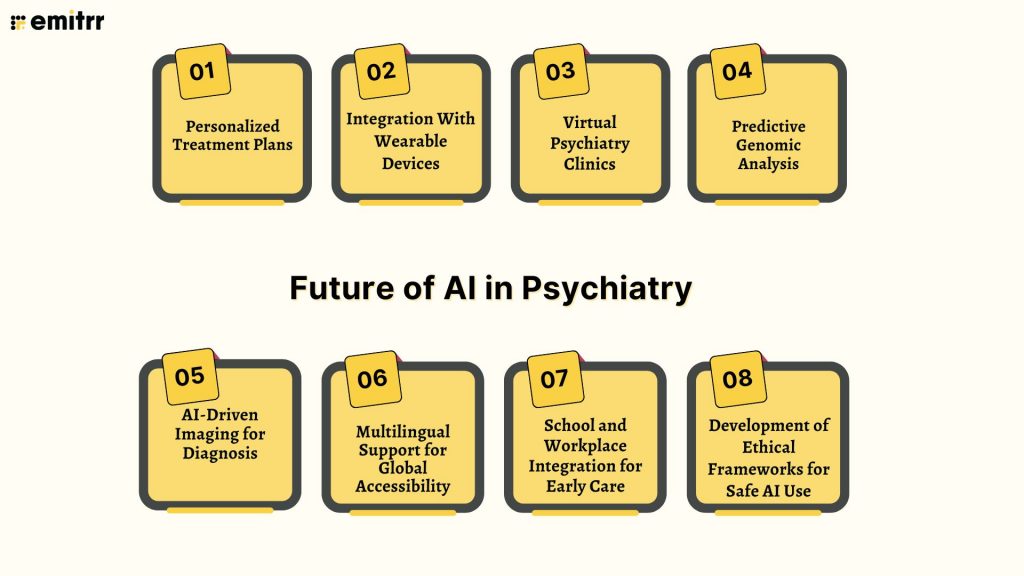
The future of artificial intelligence in psychiatry is filled with possibilities that can reshape how care is delivered, accessed, and personalized. As technology advances, AI tools will not only support psychiatrists but also empower patients, creating a more proactive and inclusive mental health ecosystem.
Personalized Treatment Plans
AI will enable psychiatrists to design care pathways tailored to each patient’s unique history, symptoms, and response patterns, ensuring higher treatment effectiveness and faster recovery.
Integration With Wearable Devices
Wearables will track real-time biomarkers such as sleep, heart rate, and stress levels, feeding data to AI systems for continuous monitoring and timely interventions.
Virtual Psychiatry Clinics
With AI-driven telepsychiatry platforms, patients will access therapy, assessments, and medication management from anywhere, breaking geographical and financial barriers.
Predictive Genomic Analysis
By analyzing genetic data, AI could predict susceptibility to certain mental health conditions, guiding psychiatrists in creating preventive and highly personalized care strategies.
AI-Driven Imaging for Diagnosis
Advanced AI imaging tools will support the identification of subtle brain changes, helping in the early diagnosis of conditions like depression, bipolar disorder, and schizophrenia.
Multilingual Support for Global Accessibility
AI-powered psychiatry apps will offer multilingual capabilities, making care more inclusive and bridging gaps in underserved regions worldwide.
School and Workplace Integration for Early Care
AI systems will be embedded in schools and organizations to detect early warning signs, provide mental health resources, and reduce stigma around seeking help.
Development of Ethical Frameworks for Safe AI Use
As adoption grows, robust ethical guidelines will ensure data privacy, unbiased decision-making, and the responsible use of AI in psychiatric practices.
Why Emitrr AI Is the Best AI Solution for Psychiatrists
Emitrr offers a purpose-built AI psychiatrist app designed to enhance clinic efficiency, patient engagement, and care quality. By combining automation with intelligent analytics, Emitrr empowers psychiatrists to focus on personalized treatment while AI handles routine workflows.
Virtual Receptionist
Emitrr’s AI virtual receptionist answers patient calls, schedules appointments, and addresses basic queries instantly. With this psychiatrist AI bot, clinics reduce wait times, ensure consistent communication, and free staff from repetitive tasks.
Automated Scheduling
Missed appointments and follow-ups disrupt care. Emitrr automates scheduling and sends reminders via text or email, enhancing patient adherence while minimizing administrative overhead for psychiatrists.
Mood Tracking SMS
Patients can log daily moods, symptoms, and therapy progress through secure SMS interactions. AI for psychiatrists analyzes this data to provide actionable insights and enable timely interventions.
Patient Query Bot
Emitrr’s HIPAA-compliant chatbot answers therapy questions, medication guidance, and general concerns. This ensures patients receive accurate, round-the-clock support while maintaining privacy and confidentiality.
Progress Analytics
The platform aggregates patient data to monitor treatment outcomes, identify trends, and support data-driven decisions. Artificial intelligence in psychiatry helps psychiatrists optimize care plans and enhance therapy effectiveness.
Workflow Automation
From intake forms to post-session follow-ups, Emitrr automates repetitive tasks, freeing psychiatrists to focus on clinical care and improving operational efficiency across the practice.
Secure Data Handling
Emitrr ensures sensitive patient information is stored and processed securely. Compliance with HIPAA and data protection standards builds trust and mitigates legal risks for psychiatric clinics.
Proven Results
Clinics using Emitrr report faster response times, more consistent follow-ups, and higher patient engagement. AI psychiatrist apps enhance both operational efficiency and the overall patient care experience.
Here’s how SMS for doctor and staff communication works with Emitrr:
Frequently Asked Questions
An AI psychiatrist app automates patient calls, schedules appointments, provides instant responses to FAQs, and manages basic clinic communications. This reduces administrative workload, improves efficiency, and ensures patients always receive timely, accurate support.
Yes, AI for psychiatrists can triage emergency situations, identify high-risk cases, and guide patients to immediate help. While it doesn’t replace human intervention, AI ensures urgent scenarios are prioritized and addressed promptly.
Emitrr is fully HIPAA-compliant and uses secure protocols for storing and handling psychiatric records. With psychiatry AI, patient confidentiality is maintained, ensuring sensitive information remains protected and clinics remain legally compliant.
Yes, Emitrr integrates seamlessly with major electronic health record (EHR) platforms. This ensures AI psychiatrist bots can access necessary clinical data, streamline workflows, and maintain accurate, up-to-date patient information across systems.
Pricing for AI for psychiatry solutions varies based on clinic size, features, and patient volume. Emitrr provides flexible, scalable packages, allowing practices to adopt AI tools efficiently without overextending budgets or compromising quality of care.
Absolutely. Artificial intelligence in psychiatry tracks mood, symptoms, therapy adherence, and post-session follow-ups. These insights allow psychiatrists to intervene early, adjust treatment plans, and provide continuous, personalized care outside traditional office hours.
Conclusion
The integration of AI for psychiatrists is no longer optional—it’s essential for modern mental health care. By automating administrative tasks, managing appointments, and monitoring patient progress, artificial intelligence in psychiatry allows psychiatrists to focus on delivering personalized, high-quality care.
Patients benefit from faster responses, continuous engagement, and data-driven insights that improve adherence to treatment plans and overall outcomes. With predictive analytics and mood-tracking tools, psychiatrists can intervene early, ensuring timely support for those in need.Emitrr’s AI psychiatrist app combines HIPAA-compliant security, workflow automation, and intelligent patient communication. Schedule a demo today to experience how Emitrr can enhance efficiency, patient satisfaction, and the overall effectiveness of your psychiatric practice.