
 4.9 (400+
reviews)
4.9 (400+
reviews)
Introduction
Call center speech analytics is rapidly becoming a game-changing tool for businesses focused on delivering exceptional customer experiences. It goes beyond simply recording calls by unlocking valuable insights from every conversation to enhance customer service, boost agent performance, and enable smarter decision-making.
Speech analytics refers to the process of capturing and analyzing spoken conversations between customers and call center agents. By using technologies like AI, NLP, and machine learning, this tool converts voice into actionable data.
This guide covers what speech analytics is and how it works, key use cases and benefits for call centers, essential features to look for in a speech analytics tool, how to get started with a solution like Emitrr, and strategies to overcome common challenges.
What is Call Center Speech Analytics?
Call center speech analytics refers to the application of artificial intelligence and natural language processing (NLP) to transcribe spoken conversations into text form and analyze the information for patterns, sentiment, compliance, and other key insights.
Difference Between Speech Analytics vs Voice Analytics
Although many use the terms interchangeably, there is a difference between voice analytics vs speech analytics:
- AI-powered speech analytics focuses on the words spoken—words, phrases, emotions, and intent.
- Voice analytics explores the tone, pitch, and rhythm of the voice to deduce mood, stress, or insincerity.
Mixing both voice analytics and speech analytics provides end-to-end visibility into customer interactions.
Real-time vs Post-call Speech Analytics
- Real-time speech analytics provides real-time information during a live call, enabling agents or supervisors to respond in real-time.
- Post-call review enables more thorough examination and long-term strategic changes.
Where It Fits in the Contact Center Ecosystem
Speech analytics sits at the intersection of customer service, quality assurance, agent training, and compliance. As part of call center analytics tools, it plays a central role in enabling proactive and data-driven customer engagement.
How Call Center Speech Analytics Works
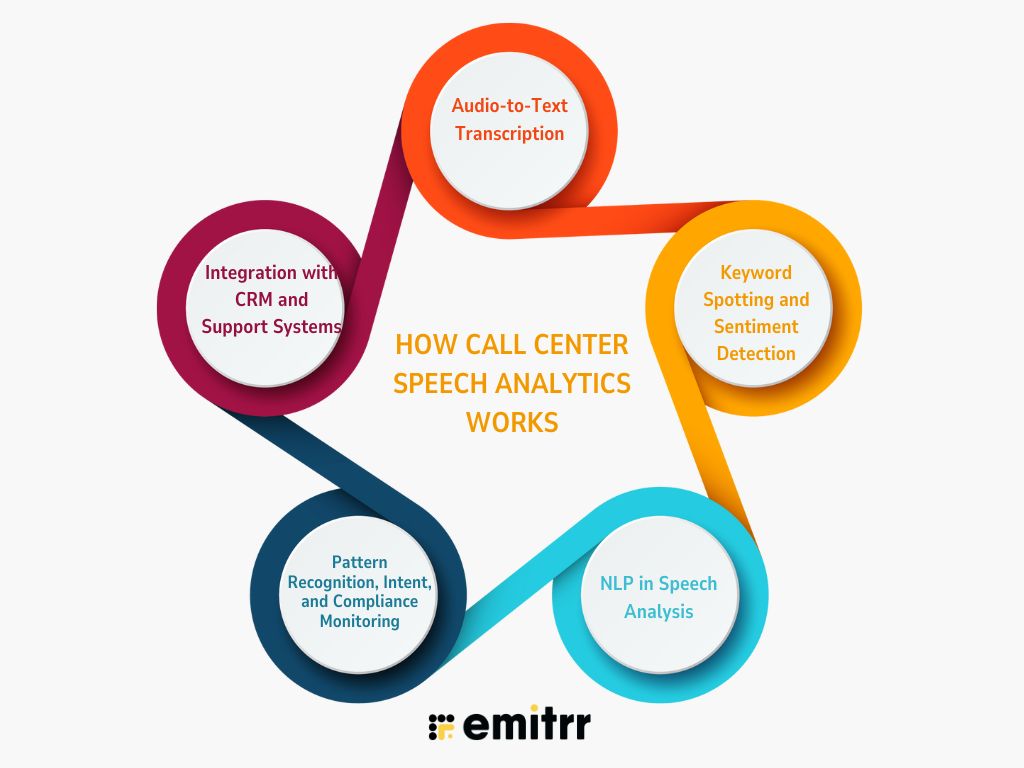
Call center speech analytics transforms call conversations into actionable insights using AI speech analytics, transcription, and sentiment analysis by helping contact center speech analytics teams enhance service, ensure compliance, and coach agents in real-time or through post-call evaluations.
Audio-to-Text Transcription
Real-time speech analytics software transcribes verbal conversations into searchable words through speech analytics enabled by AI. This is done in real-time or after calls, allowing for instantaneous data analysis, keyword monitoring, and precise record-keeping of customer interactions.
Watch this video to find out three essential things about voicemail transcription:
Keyword Spotting and Sentiment Detection
Voice analytics software reads transcripts for certain words or phrases while also recognizing caller sentiment. It detects emotional tones—positive, negative, or neutral—and provides real-time insights into customer satisfaction and agent responsiveness through real-time speech analytics.
NLP in Speech Analysis
Advanced speech analytics leverages natural language processing (NLP) to interpret the deeper meaning behind words, including context, emotion, and intent. This helps call center voice analytics teams understand not just what was said, but why it was said.
Pattern Recognition, Intent, and Compliance Monitoring
Emitrr and other speech analytics tools identify repeated themes, pick up on vocal stress or anger, and check for script compliance. This guarantees compliance with standards by agents and unearths hidden call center analytics trends in large volumes of voice data.
Integration with CRM and Support Systems
Nowadays, AI voice analytics is integrated with VoIP CRM, HIPAA-Compliant ticketing systems, and QA platforms for boosting call center analysis. The integration is seamlessly provided by support for coaching, enhanced workflows, and simpler analysis of voice calls for improved service.
Thinking about VoIP but stuck on landlines for business communication? Watch this before getting started:
Key Use Cases of Speech Analytics in Call Centers
Call center speech analytics unearths insights, enhances agent performance, and improves the customer experience by examining conversations in real-time and after calls.
Tracking the Customer’s Real-Time Sentiment
Real-time speech analytics detects in-the-moment emotional cues, allowing agents to adjust their tone, wording, or response approach in real-time, thereby increasing satisfaction and converting potentially negative calls into positive outcomes during the same call.
Identifying At-Risk Customers and Churn Indicators
By monitoring patterns and negative sentiment across repeated interactions, call center analytics identifies at-risk customers. Businesses can then proactively act with offers, escalations, or personalized care to mitigate churn.
Identifying Top Call Drivers
Call center analytics use cases include analyzing thousands of calls to uncover frequently asked questions or common complaints. These insights guide call management process improvements, reduce repetitive calls, and enhance self-service or automation strategies.
Agent Coaching and Performance Improvement
Voice analytics for call centers, powered by AI script-to-voice technology, evaluates agent adherence to scripts, speaking pace, and stress levels. Managers use this data to deliver targeted coaching, boost engagement, and increase first-call resolution rates over time.
Ensuring Compliance and Script Adherence
Call center speech analytics ensures agents follow industry regulations and internal scripts. It flags non-compliant language in real-time or during audits, helping businesses avoid legal risks and maintain quality standards.
Automating Call Categorization and Tagging
AI speech analytics automates tagging based on sentiment, keywords, or urgency, contributing to contact center automation. This reduces manual work, improves ticket routing, and supports faster response times, especially in high-volume or multi-department contact centers.
Benefits of Speech Analytics for Call Centers
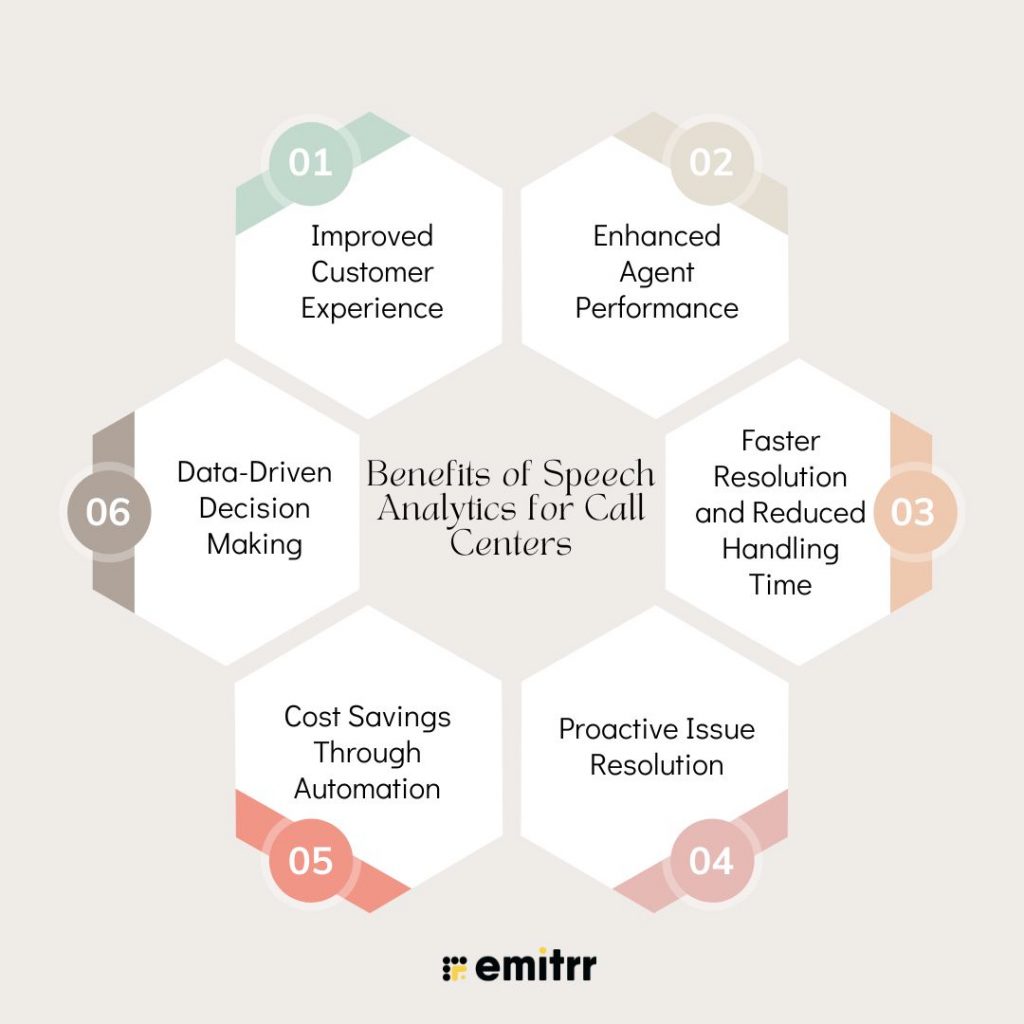
Speech analytics call center tools help transform customer interactions into measurable insights that enhance service, optimize agent performance, and improve operational efficiency.
Improved Customer Experience
Voice call analysis reveals pain points, emotions, and expectations from real conversations. This enables more empathetic and personalized service, directly improving the customer journey across channels and strengthening loyalty through a deeper, real-time understanding.
Enhanced Agent Performance
Feedback from speech analytics solutions allows managers to coach agents based on actual conversations. Agents gain insights into tone, word usage, and pacing, resulting in more effective communication, higher quality scores, and better call outcomes.
Faster Resolution and Reduced Handling Time
Call center analytics surface frequent questions and known issues, enabling agents to resolve problems more quickly. With better context and quick access to resolutions, average handling time is reduced, and customer satisfaction improves.
Proactive Issue Resolution
Speech analytics benefits include identifying trending issues early. For instance, a surge in complaints after a product launch can trigger immediate action, thereby avoiding escalations and preventing reputational damage before the issue becomes widespread.
Cost Savings Through Automation
AI-powered speech analytics eliminates the need for manual call reviews. Calls are automatically categorized and analyzed, reducing QA overhead, speeding up analysis, and significantly lowering operational costs across the contact center.
Data-Driven Decision Making
Executives use speech analytics for call centers to extract strategic insights from thousands of conversations. These insights inform product changes, marketing messages, and operational processes, making decisions more grounded in real customer feedback.
Must-Have Features in a Speech Analytics Solution
When selecting a speech analytics solution, consider these essential features that enable effective analysis, informed decision-making, and seamless adoption in modern contact centers.
Accurate Real-Time and Historical Transcription
High-quality transcription is the foundation of speech analytics technology. Ensure the tool accurately captures conversations live and post-call, enabling in-depth review and real-time alerts without missing critical details or emotional context.
Sentiment and Emotion Analysis
Detecting tone, stress, and customer mood is key. Advanced speech analytics should uncover sentiment shifts and emotional cues across calls, providing a comprehensive understanding of customer experiences that extends beyond just the spoken words.
Custom Keyword and Phrase Tracking
Your speech analytics call center tool should support flexible tracking of business-specific keywords, competitor mentions, or red flags, enabling targeted insights for compliance, product feedback, or high-priority conversations.
AI-Powered Insights and Recommendations
AI voice analytics should not just analyze but also suggest improvements. Look for tools that highlight trends, agent behaviors, or recurring issues with actionable next steps to drive performance and CX improvements.
Multilingual Support
For global operations, speech analytics solutions must support multiple languages and dialects, ensuring consistent and accurate analysis across regions without compromising contextual nuance or cultural sensitivity in interpretation.
Easy Integration with CRM and Voice Tools
Your solution should integrate effortlessly with CRM, ticketing, and call center voice analytics platforms. Seamless data sync ensures insights flow into existing workflows, making agents and supervisors more efficient.
Role-Based Dashboards and Reporting
Look for configurable dashboards tailored to agents, managers, and QA teams. Effective call center analytics tools should provide role-specific KPIs, visualizations, and reports to make data instantly actionable at every level of the organization.
How to Get Started with Call Center Speech Analytics
Begin by setting clear goals, selecting the right tool, and aligning processes to achieve maximum impact.
Define Business Goals and Use Cases
Establish measurable objectives such as improving CSAT, reducing AHT, or increasing compliance. These goals will guide your speech analytics call center strategy and help you track meaningful progress across customer interactions.
Choose the Right Software
Select a platform with AI speech analytics, real-time processing, and intuitive dashboards. Emitrr offers these capabilities while ensuring easy integration with your tech stack, making it ideal for contact center modernization efforts.
Integrate with CRM and Call Systems
Ensure your call center voice AI solution integrates seamlessly with CRM, ticketing, and telephony systems. Integration provides real-time context, improved customer profiles, and consolidated agent performance management.
Set Up Key Metrics and KPIs
Define key performance indicators (KPIs) such as sentiment scores, script adherence, and call tagging categories. A good speech analytics solution enables the tracking of tailored metrics aligned with your team’s performance targets and customer experience goals.
Train Teams
Provide hands-on training to agents and QA staff on interpreting dashboards and taking action based on insights. Understanding how to use voice analytics call center tools empowers your team to improve every customer interaction.
Monitor, Iterate, Improve
Utilize dashboards, reporting, and user feedback to make processes better on an ongoing basis. A feedback loop helps your call center’s speech analytics implementation improve in tandem with business requirements, bringing ongoing improvements in service quality and efficiency.
Common Challenges and How to Overcome Them
While call center speech analytics has enormous value, teams can encounter adoption, accuracy, or compliance issues if not planned and equipped correctly.
Poor Audio Quality
Low-quality recordings hinder accurate voicemail-to-text transcription. Use advanced noise-cancellation software and ensure a controlled call environment. Cleaner inputs lead to improved call center voice analytics and more accurate sentiment, keyword, and intent detection.
Data Privacy and Compliance
Contact center speech analytics must comply with regulations like GDPR and HIPAA. Select vendors that support data masking, encryption, and region-specific storage policies to safeguard customer data and mitigate potential legal liabilities.
False Positives in Sentiment Detection
Automated speech analytics AI can misinterpret sarcasm or accents. Improve accuracy by training models on real call data, conducting regular audits, and involving human QA teams to validate emotional insights and refine performance over time.
Aligning Insights with Business Goals
Many teams gather data but struggle to act on it. Link speech analytics call center insights to specific KPIs, such as NPS or churn rate, to ensure that analysis directly supports operational and customer experience goals.
Gaining Team Adoption
Agents and supervisors may resist new tools. Demonstrate how call center speech analytics reduces workloads, enhances coaching, and improves performance. Demonstrate ROI with real examples to foster buy-in across departments.
How Emitrr Uses Call Center Speech Analytics to Improve Conversations
Small businesses often face the challenge of delivering great customer support without adding extra overhead. Emitrr helps solve that by offering a smart and affordable call center solution built to support everyday operations. It doesn’t just manage calls but it listens, learns, and helps teams improve conversations through call center speech analytics. With real-time transcriptions and insights, businesses can understand customer concerns better, track agent performance, and make more informed decisions to improve the customer experience.
Think of Emitrr as your contact center made simpler. Its AI supports agents by handling repetitive tasks like follow ups, FAQs, and tagging important parts of conversations. This allows your team to focus on what truly matters building real connections with customers.
Some may ask, will AI replace call center agents? Emitrr shows that AI is not here to replace but to assist. It gives your team the tools to work smarter, respond faster, and maintain consistency. Whether you’re just getting started or looking to upgrade your setup, Emitrr brings everything you need to run an efficient and modern contact center with the help of call center speech analytics.
FAQs
Call recording only captures conversation audio. Speech analytics takes it a step further by incorporating transcription, content, sentiment, and tone analysis, providing actionable insights that improve agent performance and customer satisfaction.
Yes, live speech analytics reviews live calls in real-time, giving feedback and recommendations to agents or managers. Real-time feedback enables the resolution of issues in real-time, improving call outcomes and customer satisfaction.
Accuracy of sentiment detection varies with audio quality, sophistication of language models, and context perception. Advanced AI-based speech analytics platforms are highly reliable, continuously learning from heterogeneous call data and improving over time.
Absolutely. Even small groups can leverage speech analytics call center software by speeding up agent training, improving quality assurance, and enhancing customer experience through in-depth insights and quicker problem resolution.
Emitrr delivers complete call center speech analytics solutions such as accurate transcription, emotion and sentiment identification, real-time dashboards, and native CRM integration, enabling businesses to optimize customer interactions and agent productivity with ease.
Conclusion
Speech analytics has become crucial for any contact center aiming to deliver personalized, efficient, and compliant customer service. Platforms like Emitrr simplify AI voice analytics, making advanced insights accessible regardless of business size, from small startups to large BPOs.
By leveraging real-time transcription, sentiment detection, and seamless CRM integration, call centers can gain a deeper understanding of customer needs and enhance agent performance. Ready to transform your customer interactions and boost satisfaction?