
 4.9 (400+
reviews)
4.9 (400+
reviews)
Introduction
Selecting the best EMR for telemedicine is trickier than picking a regular in-clinic EHR. In 2026, virtual care is not just a “nice-to-have”; it is a revenue channel, an access tool, and a competitive differentiator.
The top telemedicine EMR must be more than just a video-visit host. It should include scheduling, documentation, billing, e-prescribing, patient engagement, and analytics — all within a single workflow. “Switching systems is going to mean migrating data, training staff, worrying about downtime, and paying to onboard new technology, so choosing the right telemedicine EMR software platform from the beginning is paramount.
To help you make the best choice, we’ve prepared this guide to the top 10 EMRs for telemedicine, showing a comparison across features/practice size/cost/pros & cons. So, let’s dive in.
AI Summary
If you’re looking for the best EMR for telemedicine in 2026, this guide breaks down the top 10 platforms based on usability, telehealth depth, billing strength, interoperability, pricing, and real-world friction points. We cover large enterprise systems like Epic and Oracle Health, cloud-native leaders like athenaOne and eClinicalWorks, and physician-friendly platforms like Elation and Praxis. You’ll also learn what features truly matter in a telemedicine EMR software, how implementation timelines look, and which system fits your practice size.
Key Features to Consider in a Telemedicine EMR
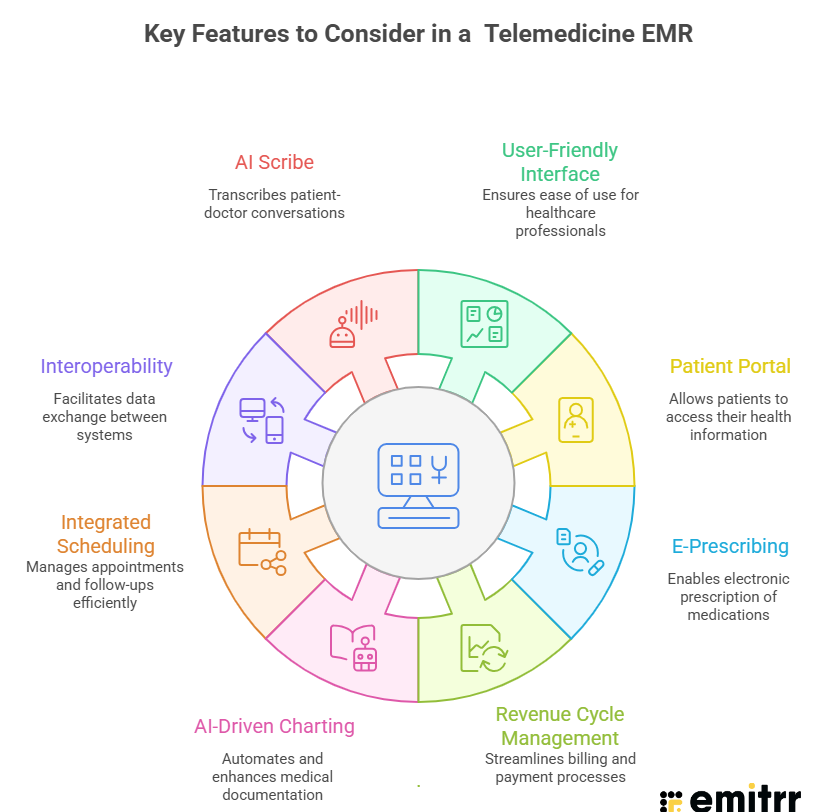
User-Friendly Interface
A clunky interface is a leading cause of physician burnout. During a virtual visit, you are often managing a video feed on one screen and documentation on the other. If the software requires dozens of clicks to find a patient’s history, the flow of the consultation is ruined.
Patient Portal
By 2026, patients want a “digital front door.” Your EMR needs to provide a portal for patients to join virtual waiting rooms, look at test results without having to call, and schedule their appointments online. This results in less administrative burden at your front desk and higher patient satisfaction.
E-Prescribing
Telemedicine requires immediate follow-through. Find a platform with an e-prescribing capability, which will send a prescription to the pharmacy automatically as opposed to by fax. And it should automatically screen for potential drug interactions and insurance coverage.
Pro Tip: If you have high levels of refill requests, with a tool like Emitrr (available for most EMRs), the entire process can be automated, and call volume can be decreased by 70%.
Revenue Cycle Management (RCM)
Telehealth billing codes (such as 99421-99423 or G2012) can be complicated and change constantly. Your EMR system should include an RCM capability that “scrubs” claims and verifies everything is correct before submission, so you definitely get paid for each virtual encounter.
AI-Driven “Template-Free” Charting
Fixed templates are the enemy of virtual eye contact. The best 2026 EMRs use AI-driven freehand templates that learn your style, allowing you to focus on the patient on the screen rather than a drop-down menu.
Integrated Scheduling & Follow-Ups
Scheduling is the key to a good virtual care experience. But unfortunately, advanced two-way communication is not always the case for many EMRs. If you incorporate a patient engagement platform like Emitrr, you can send automatic SMS based follow-ups and reminders that sync directly back to your EMR.
Interoperability
Your telemedicine EMR should not be an island. Surely it will use FHIR standards to exchange information among labs, specialists, and hospitals? This provides you with a complete 360-degree view of the patient’s health history from state to state.
AI Scribe & Voice Recognition
To limit screen time, look for systems that offer an AI scribe. They listen to the digital conversation and type a professional SOAP note that you read, so you can keep up a better rapport with the patient.
Core Problems Telemedicine EMR Systems Solve
Implementing a telemedicine-specific EMR solves several legacy pain points in healthcare:
Fragmented Access to Data
You have no physical chart in virtual care. Some EMRs even integrate the vitals, labs, and history into a single call screen.
Documentation Fatigue
With AI scribes and voice recognition, the “homework” of charting after a long day of virtual calls is significantly reduced.
No-Show Management
Virtual no-shows are everywhere. EMRs with integrated SMS reminders (and third-party tools like Emitrr) can reduce no-show rates by over 30%.
Reduced Payment Time
Telehealth-specific CPT codes are automated by medical coding in order to make sure that “virtual check-ins” are billed quickly and correctly.
Time-Consuming Administrative Tasks
Documenting visits, scheduling follow-up appointments, and managing billing eliminate “paperwork time”, which is now more available for seeing patients.
EMR Transition Timeline: What You Can Expect
Here’s a roadmap to help you make a seamless transition into your new telemedicine EMR:
- Week 1-2: Selection & BAA Signing: Finalize your vendor and ensure HIPAA compliance agreements (BAA) are in place.
- Week 3-6: Data Migration: Moving patient records from your old system to the new cloud-based environment.
- Week 7-9: Staff Training: Clinicians and admin staff learn the virtual room and charting workflows.
- Week 10: Go-Live: Starting with a small volume of virtual visits to test system stability.
- Week 11+: Optimization: Integrating tools like Emitrr for advanced patient engagement and AI automation.
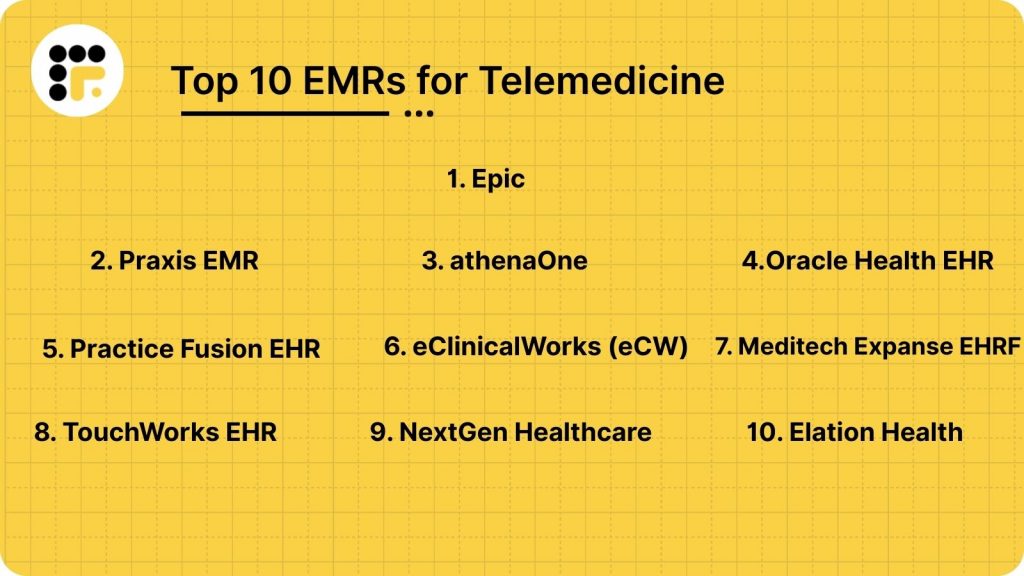
Top 10 EMRs for Telemedicine
- Epic
- Praxis EMR
- athenaOne
- Oracle Health EHR
- Practice Fusion EHR
- eClinicalWorks (eCW)
- Meditech Expanse EHR
- TouchWorks EHR
- NextGen Healthcare
- Elation Health
1. Epic
Overview:
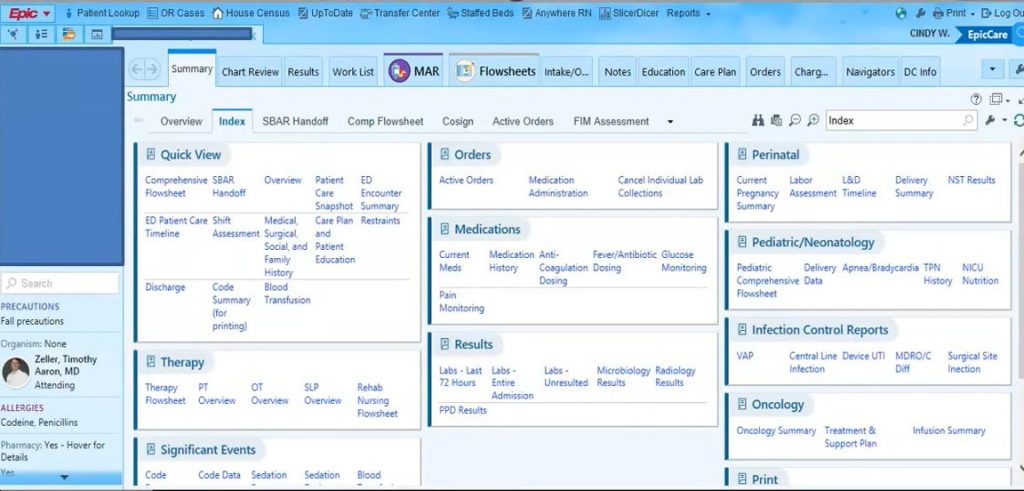
Epic EHR is a market leader known for its deep interoperability and comprehensive feature set. In 2026, its “MyChart Video Visits” provide one of the most stable virtual care experiences that are currently offered. It’s robust, but it can be expensive to implement; it would probably work best in a very high-volume, enterprise hospital or large multi-site practice.
Epic Features:
- MyChart Video Visits: The virtual room can be joined through MyChart to bring a database-derived list of patients.
- Care Everywhere Interoperability: Allows for integration with thousands of other healthcare providers worldwide.
- AI-Driven Summarization Tool: Leverages artificial intelligence to transform detailed patient records into useful summary notes for the provider.
- Payment Already Integrated: Patients are able to pay with two-way text or MyChart through Apple/Google Pay.
- Haiku/Canto Mobile Apps: Offers full EMR access and virtual visit functionality for use on tablets and smartphones.
- Automation of Claims Processing: Cuts down the manual administrative labor by automatically scrubbing insurance claims.
Pros of Epic EMR:
- Unprecedented integration with all hospital departments and subspecialties.
- Industry-leading security and HIPAA compliance protocols
- If someone already knows how to use MyChart, they can easily learn how to use the very intuitive portal we have.
Cons of Epic EMR:
- Prohibitively high implementation and training costs for small practices
- No free trial or published pricing available
Epic EMR Pricing:
Tends to begin at $500,000 or more for substantial installations; financial expenses will vary.
Epic EMR Reviews:
“Epic is extremely efficient and easy to navigate once trained.”
“The system can be overwhelming and requires significant training.”
Source: G2
2. Praxis EMR
Overview:
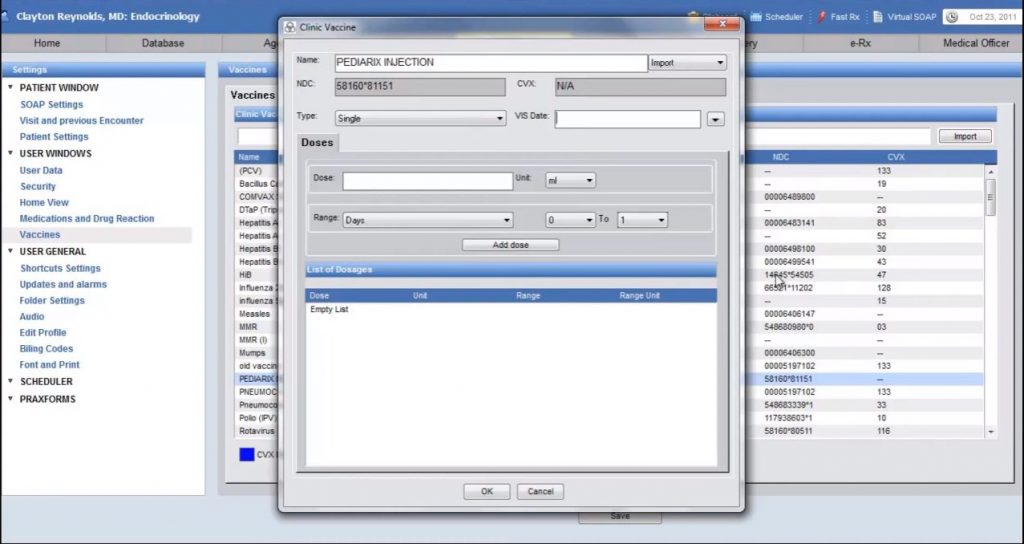
Praxis is a revolutionary, AI-driven EMR that abandons traditional templates in favor of “Concept Processing.”It has very high learning and gets faster as you type further. It’s designed for small to medium-sized practices with a focus on clinical freedom and speed.
Praxis EMR Features:
- Concept Processing AI: Learns your medical logic and applies it to future cases, ending the repetition of typing.
- No Templates: Every aspect of your chart is customizable, and there are endless design options.
- Built-in Telemedicine: Easily conduct virtual visits right inside a patient’s chart.
- Query Data Analytics: Provides the ability for providers to query their custom data for analytics, research, and reporting.
- Smooth Pharmacy Integration: Accelerates the e-prescribing flow by getting to know your most commonly used drugs.
- Real-Time Database Updates: Enable many staff members to access and update patient information at the same time without delays.
Pros of Praxis EMR:
- May save providers 2.5 hours/day in charting
- It is one of the top-rated EHRs in terms of customer satisfaction with physicians who have switched systems.
- An extremely responsive customer service team that has a short turnaround time.
Cons of Praxis EMR:
- Significant learning curve up front as AI has to “learn” your practice patterns
- Interface might seem a little dated, in contrast to the cloud-native competition.
Praxis EMR Pricing:
Ownership models: Approx $219/month (discounts apply when adding additional providers).
Praxis EMR Reviews:
“Praxis adapts to how I practice medicine.”
“Takes time to fully learn, but it’s worth it.”
Source: G2
3. athenaOne
Overview:
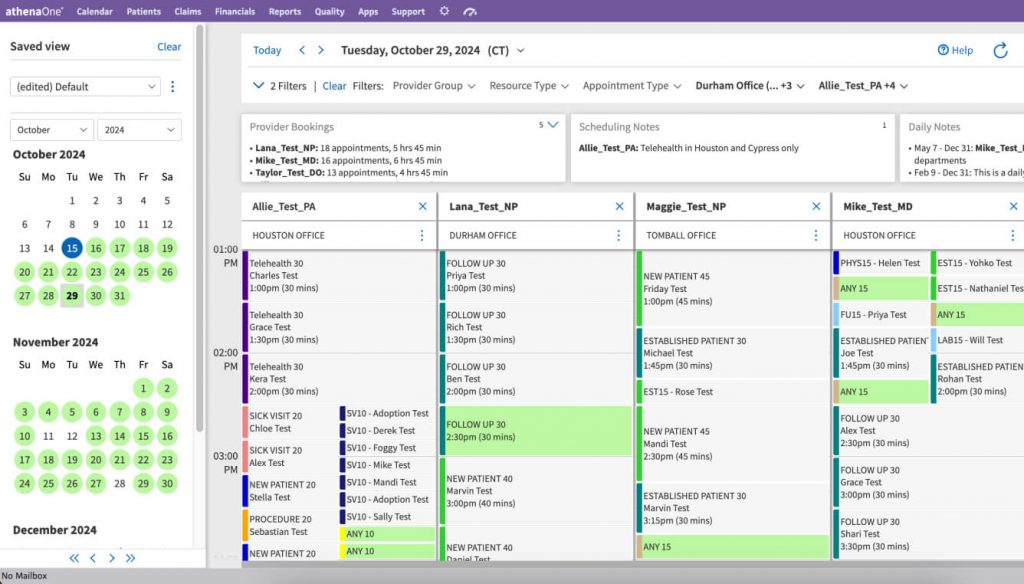
athenaOne is a cloud-based, comprehensive suite that enhances efficiency across both administrative and clinical workflows. In 2026, it is notable for its “AI-native” approach that automates document ingestion and care summaries. It is an especially good solution for practices that would like to have billing outsourced and mainly focus on seeing patients.
athenaOne Features:
- Ambient Notes AI: An AI medical scribe that listens in on virtual visits and generates notes to review.
- AI-Powered Chart Review: Pulls clinical contents from faxes and past records to deduplicate and organize the chart.
- athenaTeleHealth: Web-based virtual visit application with no patient downloads and seamless scheduling integration.
- Rule-Based Billing Engine: Relies on a vast database of data to fix claims errors before they are sent off.
- Direct Clinical Integrations: Connects natively with over 277,000 labs and pharmacies across the country.
- Authorization Management: A dedicated team and AI engine handle prior authorizations on behalf of the practice.
Pros of athenaOne:
- Pay as you perform with a percentage-based fee.
- Mobile charting can be accessed from a smartphone using mobile documentation
- Bestselling paperless charting solution for independent practices
Cons of athenaOne:
- Cost can begin to add up for very high-revenue practices
- Regular software updates have been known to introduce system bugs
athenaOne Pricing:
Usually, 4 percent to 7 percent of a practice’s collections.
athenaOne Reviews:
“Great appointment scheduling and telehealth integration.”
“Occasional system glitches.”
Source: G2
4. Oracle Health EHR
Overview:
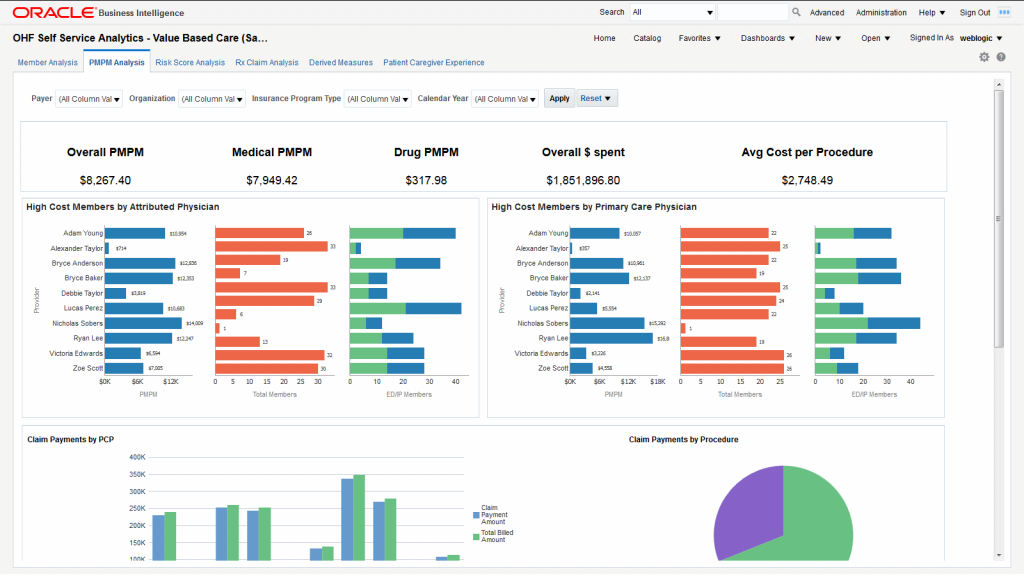
Formerly known as Cerner, Oracle Health offers a voice-first, intelligent EHR solution designed for scale. In 2026, it utilizes Oracle’s apply services and cloud architecture to deliver deeper AI-based automation and predictive analytics. It is a good option for multi-specialty groups who want a reliable, enterprise-level system centered on patient safety.
Oracle Health EHR Features:
- Clinical AI Bot: Voice-activated commands help clinicians access records or enter vitals without lifting a finger.
- Chart Search Function: Leverages natural language processing to enable providers to search for very specific medical information in seconds.
- Virtual Nursing Integrated: Enables remote patient monitoring and virtual check-ins for high acuity patients.
- Drug Error Alerts: Side effect and allergic reaction alerts that are part of the workflow right at dispensing.
- Unified Interoperability: Eases data sharing across ambulatory clinics and inpatient hospital units.
- Predictive Analytics Dashboards: Offers practice performance and patient outcomes insight across facilities.
Pros of Oracle Health EHR:
- Highly customizable workflows for over 55 different medical specialties
- Proven to increase patient collections and reduce medication errors
- Reliable system with minimal annual downtime compared to smaller vendors
Cons of Oracle Health EHR:
- A lot of ’useless clicks’ would be the most common issue raised by the users in their feedback when asked about navigating around the menu.
- Oracle’s after-acquisition contract negotiation can be protracted and complicated
Oracle Health EHR Pricing:
Quote-based only.
Oracle Health EHR Reviews:
“User-friendly once trained.”
“Repetitive documentation tasks.”
Source: G2
5. Practice Fusion EHR
Overview:
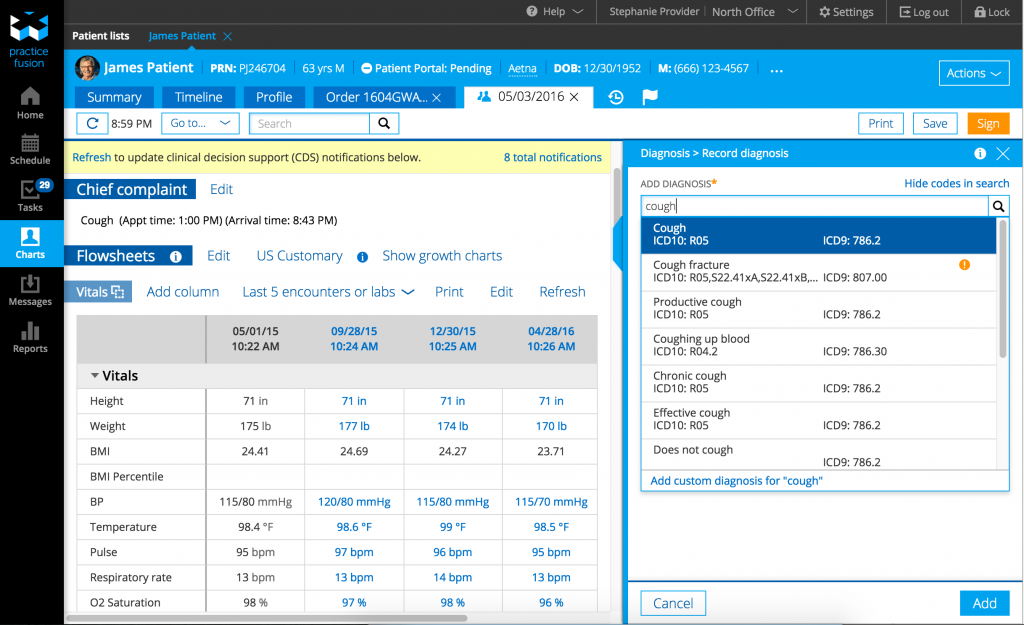
Fusion is 100% cloud-based and offers an affordable option for independent, budget-conscious providers. It provides an easy-to-use interface and rapid implementation, which fits well in small practices or for anyone who is transitioning into telemedicine. It is simple to use but has strong e-prescribing and lab integration functionality.
Practice Fusion EHR Features:
- Cloud-Based Accessibility: Access the complete EMR and telemedicine software from any standard browser on a PC or tablet.
- Free Template Library: Offers more than a thousand customizable charting templates for over 45 specialties.
- Integrated Lab Ordering: Order labs across hundreds of lab centers and receive structured results in the chart.
- Patient Engagement Portal: Premier messaging, forms, and access to your medical records.
- Automatic Updates: Cloud-based, so users are always on the latest version, no manual installs.
- Population Health Tools: Helps in following patient cohorts and closing gaps in care for chronic disease control.
Pros of Practice Fusion EHR:
- Very affordable starting price of $199/month per provider
- No complex hardware or servers required for implementation
- Intuitive design allows new staff to start using it with minimal training
- Reliable customer support with phone, chat, and ticket options included
Cons of Practice Fusion EHR:
- An annual commitment is required for the best pricing
- Limited customization options in comparison to the enterprise systems
- Practice Fusion EHR Pricing:
- Begins at $199 per month/provider (when billed annually).
Practice Fusion EHR Rating:
“Easy to scale for private clinics.”
“UI feels outdated.”
Source: G2

6. eClinicalWorks (eCW)
Overview:
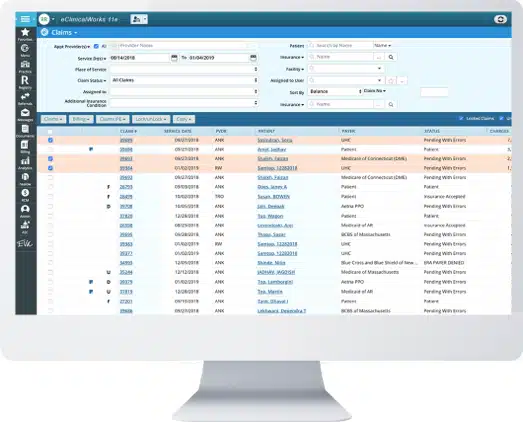
eClinicalWorks is an AI technology system that has been utilised by nearly 130,000 providers. In 2026, it includes the Healow ecosystem, which offers one of the most comprehensive patient engagement suites. The system is very configurable and optimal for mid-size practices wanting a comprehensive, feature-rich all-in-one solution.
eClinicalWorks Features:
- Healow Telehealth: Provides video visits with HD quality and offers screensharing as well as connecting an interpreter.
- AI Ambient Listening: Uses Sunoh.AI technology to convert patient-doctor conversations into structured notes.
- Color-Coded Scheduling: Allows for quick scanning and prioritization of the daily patient flow.
- Referral Management: Manages follow-up and incoming referrals in the context of workflow.
- Full Patient Portal: Enables patients to request refills, see labs, and secure message providers.
- Population Health Tracking: Dashboards to monitor MIPS and other quality measures.
Pros of eClinicalWorks EMR:
- Comes with a comprehensive suite of billing, scheduling, and documentation tools, all in one location
- Excellent mobile tablet support for physicians who like to work on the go
- Very flexible templates that could be tailored to very subspecialty-specific use cases
- Much more affordable than enterprise systems such as Epic or Oracle
Cons of eClinicalWorks EMR:
- The interface is notoriously click-heavy, with several clicks just to do the simplest things
- Support is something that can often be a difficult issue for users
eClinicalWorks EMR Pricing:
Starts around $449/month/provider.
eClinicalWorks EMR Reviews:
“Robust EMR for growing practices.”
“Too many clicks.”
Source: G2
7. Meditech Expanse EHR
Overview:
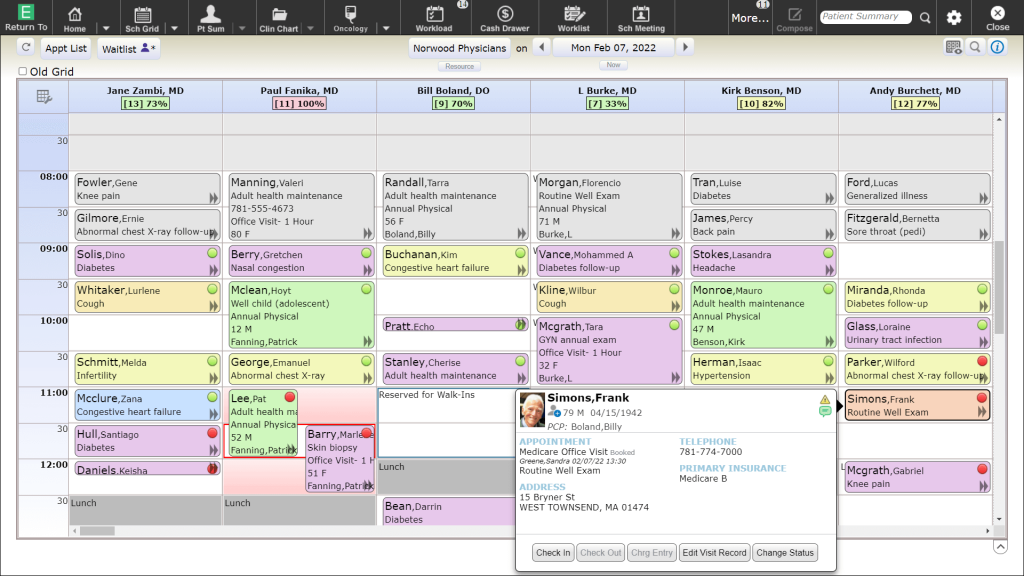
Meditech Expanse is a smart, web-enabled healthcare platform that establishes connections between inpatient and outpatient care. In 2026, it is praised for its “Expanse” view, which provides a modern and intuitive experience for clinicians. It is particularly strong in regional hospital settings where data continuity is vital for patient safety.
Meditech Expanse Features:
- AI-Injected Solutions: Utilizes AI for predictive analytics, genomics, and clinical decision support.
- Real-Time Data Integration: Improve coordination between departments and hospital services immediately.
- MHealth Patient App: Permits patients to check their charts, make appointments, and participate in virtual calls on the phone.
- Web-Based Mobility: Serves clinicians with a robust EMR at their fingertips on any web-enabled mobile device.
- Integrated Medication Safety: Built-in drug-drug and drug-allergy conflict checking at the point of care.
- Onboarding & Training Modules: Simplified training modules to get new staff up to speed.
Pros of Meditech Expanse:
- Great for accuracy of documentation and billing processes throughout complex health systems.”
- Priced lower than competitors such as Epic
- A unified patient record promotes safety with the current list of medications
Cons of Meditech Expanse
- Customization isn’t quite as versatile as the more niche EMRs
- Some legacy screens can still feel “clunky” and less intuitive than newer apps
Meditech Expanse Pricing:
Starts around $49/user/month (base).
Meditech Expanse Reviews:
“Reliable but old-school UI.”
“Functional but not modern.”
Source: G2
8. TouchWorks EHR
Overview:
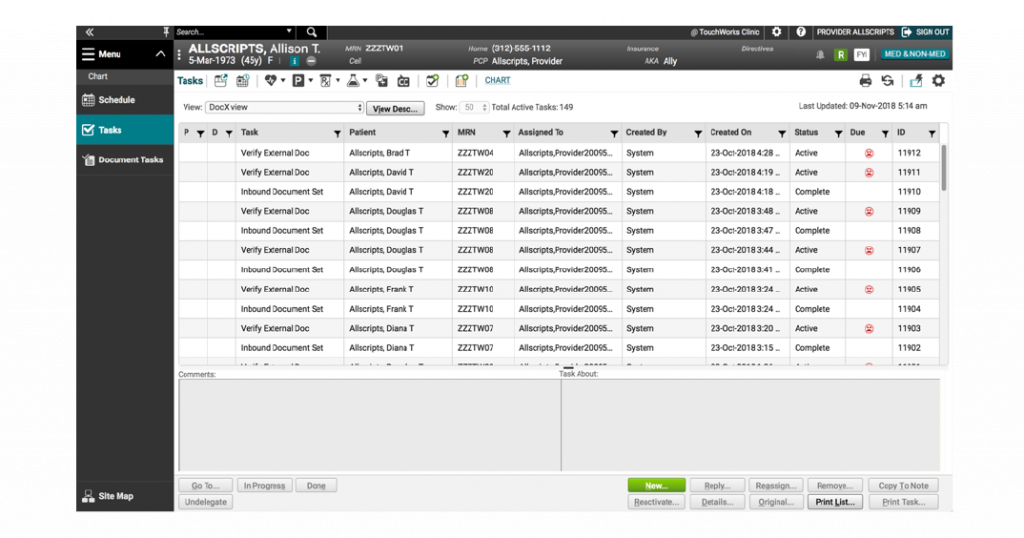
TouchWorks EHR (with Altera Digital Health) is a web-based, scalable offering developed by clinicians for clinicians. This is especially useful for ambulatory service providers covering many patients in numerous locations. Its open design makes it compatible with third-party tools and specialized workflows.
TouchWorks EHR Features:
- Responsive Web UI: Built with web standards to provide a good experience across all devices.
- Mobile EHR Software: Physicians can enter orders, track their tasks, and view charts from virtually anywhere through their smartphone.
- Support for ICD-10 Codes: Recommends the right code to be used every time, thus aiding in accurate billings and compliance.
- Open Architecture API: Easily connect to other specialized third-party software or custom in-house tools.
- Practice Analytics: Gaps in care identification and patient outcomes tracking with actionable alerting.
- Structured Decision Support: Offers clinical guidelines-based decision-making at the point of care.
Pros of TouchWorks EHR:
- Extremely flexible and supports many speciality workflows
- Robust functionality, spanning from clinical notes to revenue cycle management
- The Interface is clear and designed following the principles of user-centered design.
Cons of TouchWorks EHR:
- Needs extensive IT support for configuration and ongoing maintenance
- The user interface may be slow during high traffic times
TouchWorks EHR Pricing:
Quote-based only.
TouchWorks EHR Reviews:
“Word-processor-like EMR with poor search and heavy clicking.”
“Customizable for large practices, but usability challenges remain.”
Source: Capterra
9. NextGen Healthcare

Overview:
NextGen Healthcare provides an integrated IT solution for ambulatory and specialty practices. In 2026, it is one of the leading systems for multi-provider clinics requiring an enterprise-level system with advanced AI documentation tools. It is really great at handling the clinical needs and also balancing them with the financial needs of a busy practice.
NextGen Healthcare Features:
- NextGen Ambient Assist (TM) Practice Performance Layer: A smart clinical input facilitator and documentation assistant, with AI-driven population data quality analytics.
- User Customizable Workflows: Matching daily workflow in a sensitive range of operation to help fit within the practice and not change their way of doing business.
- Revenue Cycle Management (RCM): Overcomes complex billing, payment, and insurance posting in a single solution.
- Specialty Templates: Offers built-in templates for all medical specialties to help you chart faster.
- Web Self-Scheduling: Allows patients to self-schedule both their virtual and in-person visits 24/7.
- Fat Interoperability: Promotes interoperability to spread information across the healthcare spectrum through national networks.
- Telehealth: Helps in virtual visits and telemedicine with embedded video and secure messaging.
Pros of NextGen EMR:
- Provides an extremely user-friendly interface that the administrative staff could easily get accustomed to
- Strong scheduling and reporting features to help minimize no-shows
- Extremely scalable, useful for the rapidly expanding multi-location practice.
- Clinic chart and bills are fully integrated
Cons of NextGen EMR:
- Some reports of limited complexity with challenging insurance and payment posting
- The quality of customer service can vary by location
NextGen Healthcare Pricing:
Quote-based (typically per provider).
NextGen Healthcare Reviews:
“NextGen Healthcare EHR is cloud-based and easy to install with an intuitive system. “It has good reporting, so it can help keep practice operations on track.”
“The system is powerful and fairly robust, but it’s a lot of clicking, and the response times sometimes have lag, which all impacts productivity.”
Source: G2
10. Elation Health
Overview:
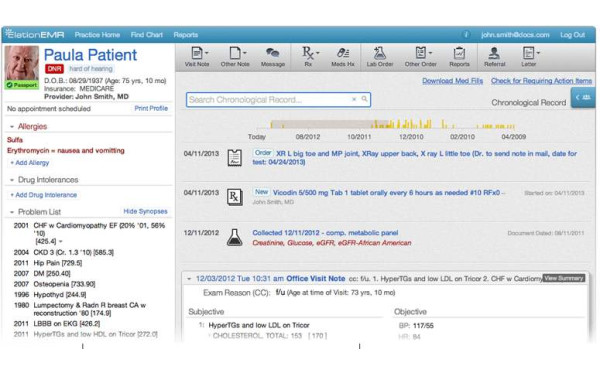
Elation Health is the “Clinical-First” EMR and practice and community health platform for independent primary care providers. In 2026, it’s praised for being easy to use and the “Note Assist” AI that cuts down on documentation time without skimping on details. It is perfect for organizations looking to shed paper and stay organized with a cutting-edge, modern interface and the easiest way to go green.
Elation Health Features:
- Note Assist AI: Transformative AI-powered charting that drafts clinical notes directly within the Elation chart.
- Clinical-First Interface: Uncluttered “light on its feet” chart that lets doctors concentrate more on patients and less on software.
- Concurrent Charging: One EHR and billing system accelerating claims 4x faster.
- Calculate-Dose-by-Weight Calculator Included: A timesaving and safety-promoting tool for pediatric prescribers.
- Open Developer Platform: Works with Open API and over 300+ developer library third-party integrations for a truly customized experience.
- Patient Engagement Family Portal: A unique portal providing family-based care management and messaging functionality.
Pros of Elation Health EMR:
- Winner of “Best in KLAS 2026” for small practice EHR/PM systems
- Simplicity of design means almost zero training time for new providers
- Great for value-based care models that are looking for block-level clinical data
Cons of Elation Health EMR:
- Average rating for customer support versus other enterprise vendors.
- Value for money may not be as great if the practice does not use the integrated billing
Elation Health EMR Pricing:
Starts around $375/month/provider.
Elation Health EMR Rating:
“Elation EMR is very intuitive and simple to use — everything is laid out clearly, which makes charting and navigation much easier compared to other systems.”
“Users praise Elation for its streamlined patient record management and efficient clinical workflows, though some note that certain advanced features and customizations are limited.”
Source: G2
Why Emitrr is the Ultimate Companion to Your EMR
While a robust EMR manages your clinical data, Emitrr manages your clinical conversations. Most EMRs, even the top-tier ones, suffer from “automation gaps” in patient communication. Emitrr bridges this gap by integrating directly with your EMR to handle the heavy lifting of the digital front office.
How Emitrr Completes Your Ecosystem:
- Missed Call Text-Back: Never miss a patient. And if your front desk is busy, Emitrr automatically sends a text to the caller so that they can book or inquire via SMS.
- AI-Powered Automated Reminders: Emitrr does more than just reminding and is smart enough to confirm & cancel the appointments, even reschedule them in real-time back to your EMR Schedule.
- Two-Way Patient Texting: Don’t play phone tag. Text patients safely for lab follow-ups, intake forms, or last-minute virtual visit links.
- Review management: Send review requests to patients automatically after their appointment to grow your practice’s online reputation while you sit back and relax.
- Smart Refill Requests: Effortlessly generate refill requests from the central, HIPAA-compliant inbox.
Key Takeaways
- The best telemedicine EMR depends on your practice size and telehealth volume.
- AI documentation is becoming essential in telemedicine EMR software.
- Integrated telehealth billing prevents claim denials.
- Enterprise systems offer depth but require heavy investment.
- Small practices benefit from lightweight, cloud-based telemedicine EMR platforms.
FAQs
In 2026, pricing typically follows two models: Per Provider/Month (ranging from $200 to $700) or Percentage of Collections (usually 3–7%). Web-based systems like Practice Fusion are the most affordable, while enterprise systems like Epic require custom six-figure quotes.
Yes, but it’s often the biggest friction point. Most 2026 EMRs support HL7 or FHIR standards for data exchange. However, “data dumping” from a legacy system into a new one often requires a clean-up phase to ensure patient histories map correctly.
Yes. Modern “Ambient Listening” tools (like those in NextGen and athenaOne) can reduce charting time by up to 2 hours per day. These tools listen to the patient-doctor conversation and draft a SOAP note, leaving the physician to only review and sign off.
Most modern EMRs (like Meditech Expanse and Elation) are now mobile-first or web-responsive. This allows you to review charts on an iPad or check your schedule on your smartphone, which is essential for providers managing remote or hybrid care models.
Conclusion
In 2026, selecting your EMR for telemedicine is no longer about digitizing your paper records; it’s about choosing a platform that optimizes your time and enhances the patient experience. Whether you need the enterprise power of Epic, the AI-driven speed of Praxis, or the clinical simplicity of Elation, the right choice depends on your practice’s specific scale and specialty.
However, remember that even the best EMR often lacks the proactive communication tools needed to run a modern clinic. By pairing your chosen EMR with a platform like Emitrr, you can automate the “noisy” administrative tasks, reduce no-shows, and finally get back to what matters most: treating your patients. Schedule a demo with Emitrr today.