
 4.9 (400+
reviews)
4.9 (400+
reviews)
Introduction
Primary care clinics are the cornerstone of the healthcare system, responsible for preventive health, chronic disease management, and ensuring patient continuity. Yet, these clinics often face increasing operational challenges such as overwhelming patient loads, administrative burdens, and communication gaps that impact both staff efficiency and patient satisfaction.
This is where AI in healthcare is proving transformative. Intelligent AI agents are changing how primary care teams function by automating repetitive tasks, enhancing patient engagement, and improving workflow management—all while maintaining the essential human connection that defines quality care.
The benefits of AI in healthcare extend far beyond basic automation. These smart systems enable clinicians to dedicate more time to patient care rather than administrative duties. By reducing manual workloads, AI agents boost overall efficiency, minimize burnout, and create a more connected, responsive, and patient-focused healthcare environment—paving the way for a stronger, more sustainable primary care ecosystem.
What Are AI Agents in a Primary Care Setting?
AI agents in healthcare are intelligent digital assistants such as AI voice, chat, SMS, or web-based systems specifically designed to support primary care operations. These agents can handle a wide range of administrative and patient-facing tasks, including appointment scheduling, intake management, reminders, triage, and patient journey follow-ups, all while maintaining compliance and patient privacy.
Unlike simple chatbots, AI agents are context-aware and clinically informed. They understand medical terminology, follow escalation protocols, and maintain continuity of care by recognising when to route a conversation to a human clinician. This ensures that patient interactions remain safe, accurate, and empathetic.
The true purpose of AI agents is not to replace healthcare professionals but to augment clinic staff, enabling them to work more efficiently. By automating repetitive workflows, AI agents free clinicians and front-desk teams to focus on delivering quality patient care and building stronger provider-patient relationships.
Key Pain Points in Traditional Primary Care Clinics
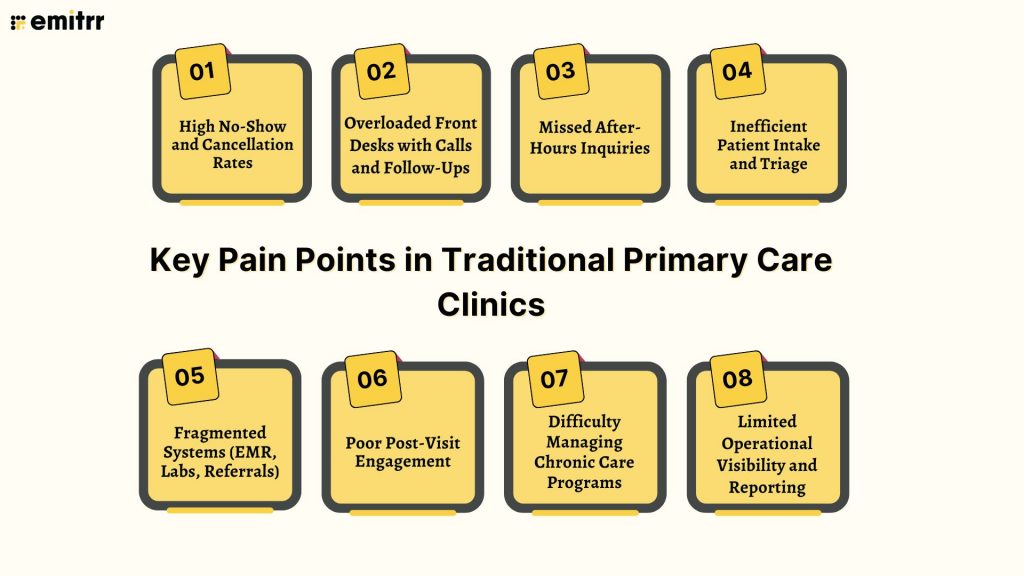
Primary care clinics often struggle with operational inefficiencies that impact both patient experience and staff productivity. These challenges create communication gaps, workflow delays, and missed opportunities for timely, effective care delivery.
High No-Show and Cancellation Rates
Missed appointments disrupt schedules, waste clinical time, and delay care for other patients. Without automated reminders or flexible rescheduling options, managing cancellations manually becomes tedious and leads to significant revenue loss for clinics over time.
Overloaded Front Desks with Calls and Follow-Ups
Front-desk staff often juggle appointment booking, rescheduling, and constant patient inquiries. This administrative overload leads to longer response times, missed calls, and reduced focus on patient interactions within the clinic, lowering overall service quality and efficiency.
Missed After-Hours Inquiries
Patients frequently call outside working hours for scheduling or follow-up questions. Without Online Scheduling for Primary Care Clinics, these calls often go unanswered—leading to missed appointments, reduced patient satisfaction, and lost opportunities to engage, retain, and convert potential new patients seeking timely and convenient healthcare access.
Inefficient Patient Intake and Triage
Manual intake and triage processes consume time and increase room for human error. Missing essential patient details before the consultation can slow down diagnosis and cause bottlenecks, negatively impacting patient flow and care quality.
Fragmented Systems (EMR, Labs, Referrals)
Disconnected digital systems prevent smooth information flow between departments. Staff often spend excessive time retrieving lab results or referral details manually, leading to data inconsistencies, delays in care coordination, and administrative frustration.
Poor Post-Visit Engagement
After consultations, patients often lack structured communication or follow-up reminders. This weakens patient adherence to treatment plans, reduces satisfaction, and hinders clinics from collecting valuable feedback for continuous care improvement.
Difficulty Managing Chronic Care Programs
Managing long-term conditions like diabetes or hypertension requires continuous follow-up. Without automated reminders or tracking, clinics struggle to monitor patients effectively, resulting in care gaps and reduced treatment outcomes over time.
Limited Operational Visibility and Reporting
Traditional systems rarely provide real-time insights into clinic operations. Without proper analytics, identifying bottlenecks, staff productivity, or patient trends becomes difficult, making informed decision-making nearly impossible for healthcare administrators.
Benefits of AI Agents for Primary Care Clinics
AI agents are redefining how primary care clinics operate, addressing long-standing challenges while enhancing efficiency, engagement, and patient satisfaction. Below are 10 common applications of artificial intelligence in healthcare that deliver measurable results for modern primary care practices.
Reduced No-Shows
AI agents send automated reminders and confirmations via SMS, chat, or voice, helping patients stay on schedule. By proactively following up, they minimise missed appointments, fill last-minute cancellations, and improve clinic revenue stability.
24/7 Appointment Access
Patients can conveniently book, reschedule, or cancel appointments anytime through AI voice or chat systems. This round-the-clock access ensures no call goes unanswered, enhancing convenience and satisfaction for patients while reducing administrative workload.
Streamlined Communication
AI-driven systems recover missed calls automatically with follow-up texts or chat prompts. With Texting for Primary Care Clinics, patients stay engaged, response times improve, and no opportunity is lost due to high call volumes or limited staff availability.
Digital Intake
AI-powered forms and pre-visit questionnaires collect medical history, consent, and insurance details digitally. This eliminates paperwork, saves time during check-in, and allows clinicians to review patient data before consultations for better care delivery.
Smart Triage
AI agents perform initial symptom screening to prioritise urgent cases and direct routine inquiries appropriately. This structured triage system ensures critical patients receive timely attention while optimising clinician time and clinic flow.
Continuous Engagement
AI tools maintain consistent communication with patients between visits. They send personalised health education, medication reminders, and chronic care nudges, improving adherence and long-term health outcomes.
Referral Coordination
AI agents track referrals and follow-ups with specialists, closing communication gaps. Automated reminders ensure patients complete their referrals, improving continuity of care and reducing manual coordination efforts for staff.
Data Analytics
With real-time dashboards, clinics can monitor patient engagement, no-show trends, and performance metrics. These insights empower better decision-making and continuous operational improvement through data-driven strategies.
Operational Efficiency
By automating repetitive administrative tasks, AI agents drastically reduce staff workload and phone traffic. This frees clinic teams to focus on high-value tasks like patient interaction, care delivery, and service quality improvement.
Enhanced Patient Experience
AI in healthcare makes patient interactions more seamless, responsive, and personalised. Patients receive timely updates, reminders, and relevant health information—building trust, improving accessibility, and enhancing overall satisfaction.

How AI Agents Function in Primary Care Workflows
AI agents are deeply integrated into the everyday operations of modern primary care clinics, bridging gaps between patients, staff, and systems. By automating key administrative and communication workflows, they streamline processes, reduce manual effort, and enhance the overall care experience. Here’s how they work in action:
24/7 Scheduling and Waitlist Fills
AI agents enable patients to self-book, reschedule, or cancel appointments anytime—without staff intervention. They also manage waitlists automatically, filling open slots efficiently to maximise utilisation and minimise downtime.
Missed Call Recovery
When a clinic misses a call, the AI agent instantly sends an SMS or chat prompt, offering patients options to confirm, reschedule, or request a callback. This ensures that every missed call becomes a potential booking opportunity.
Digital Intake
AI-powered digital forms collect patient details, consent, and medical history before the visit. By automating intake, clinics reduce paperwork, improve data accuracy, and allow clinicians to prepare for consultations ahead of time.
Automated Reminders
From upcoming visits and lab tests to medication refills and vaccinations, AI agents send personalised, timely reminders that keep patients informed and compliant—significantly reducing no-shows and missed follow-ups.
Triage Workflows
AI-driven triage systems assess symptoms and categorise them as urgent or routine. This structured approach ensures patients receive appropriate attention quickly while preventing unnecessary clinic congestion.
Referral Coordination
AI agents track patient referrals to specialists, send reminders, and confirm completion. This closes the communication loop between primary and secondary care providers, enhancing continuity and care quality.
Post-Visit Check-ins
After each visit, AI agents automatically send satisfaction surveys or follow-up questions. They help clinics gather valuable feedback, monitor patient recovery, and maintain ongoing engagement beyond the appointment.
Escalation Logic
When patients report urgent symptoms or abnormal responses, the AI agent flags the case and routes it directly to the appropriate clinician. This ensures patient safety and timely medical intervention.
Data Integration
AI systems integrate seamlessly with EMRs, lab databases, and referral platforms. This allows data to flow smoothly between systems, reducing redundancy and ensuring every interaction is accurately logged.
Analytics Dashboards
AI agents generate detailed dashboards that visualise patient engagement, operational efficiency, and communication performance. Clinics can identify trends, measure outcomes, and optimise workflows using real-time insights.
Key Features to Look For in an AI Agent for Primary Care
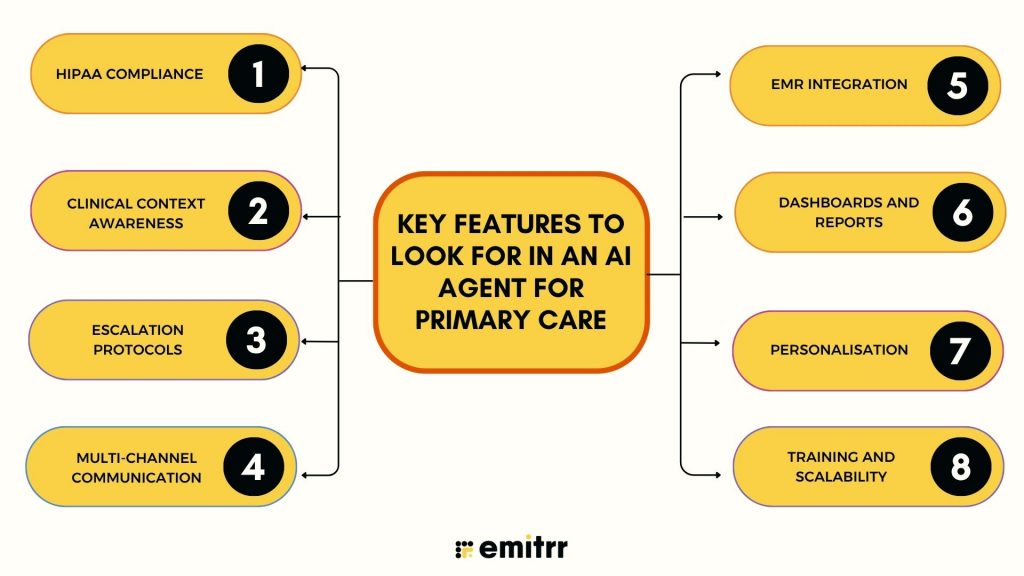
Selecting the right AI agent can make all the difference in improving efficiency, compliance, and patient satisfaction. When evaluating AI in healthcare solutions, primary care providers should focus on features that enhance both operational and clinical performance while ensuring security and seamless integration.
HIPAA Compliance
A healthcare AI agent must adhere to strict HIPAA regulations to ensure complete data privacy and security. Encrypted communication channels and secure data storage protect sensitive patient information from breaches or unauthorised access.
Clinical Context Awareness
Unlike generic chatbots, an effective AI agent understands medical terminology, workflows, and intent. It recognises clinical cues, interprets patient language accurately, and engages in context-aware conversations that align with the practice’s clinical standards.
Escalation Protocols
AI agents should include predefined escalation pathways to transfer complex or urgent cases directly to clinicians. This ensures that critical or sensitive patient interactions are always managed by qualified healthcare professionals.
Multi-Channel Communication
To meet patients where they are, AI agents should support voice, SMS, chat, and web interactions. This flexibility allows clinics to maintain consistent engagement across multiple touchpoints, improving accessibility and responsiveness.
EMR Integration
Seamless integration with Electronic Medical Records (EMRs) ensures automatic syncing of appointment reminders, data, forms, and notes. This eliminates manual entry, reduces errors, and provides clinicians with up-to-date patient information before consultations.
Dashboards and Reports
An AI platform should offer intuitive dashboards displaying no-show rates, response times, and patient engagement metrics. Real-time visibility empowers clinic managers to track performance, identify bottlenecks, and make data-driven decisions.
Personalisation
AI agents must reflect the clinic’s branding, tone, and communication style, ensuring patients feel they are interacting directly with the practice. Personalised messaging helps build trust and reinforces the clinic’s identity.
Training and Scalability
An ideal AI solution offers easy onboarding, continuous training support, and scalability as the clinic grows. This ensures that staff can quickly adapt, and the system can expand with increasing patient demand and new service offerings.
When Human Intervention Is Essential
While AI agents improve efficiency and patient engagement, human expertise remains critical in certain situations. Human intervention ensures empathy, ethical oversight, and nuanced decision-making, particularly when dealing with complex clinical scenarios, emotional conversations, mental health crises, or critical care decisions where automation alone cannot provide safe, personalised care.
Diagnostic Decision-Making and Treatment Planning
AI can provide data analysis and predictive insights, but only trained clinicians can interpret these findings within the full context of a patient’s health. Human judgment ensures accurate diagnoses, considers coexisting conditions, and tailors treatment plans safely, reducing risk and ensuring care aligns with medical standards and individual patient needs.
Complex or Sensitive Emotional Conversations
Discussing serious health issues, test results, or treatment outcomes often requires empathy, reassurance, and nuanced communication. AI agents cannot fully replicate human compassion, making it essential for clinicians to handle sensitive interactions to maintain trust, provide support, and address patient emotions appropriately during critical discussions.
Mental Health or Crisis Escalation
AI may detect warning signs of distress, but immediate human intervention is necessary in mental health crises. Clinicians or trained professionals provide real-time support, risk assessment, and appropriate intervention, ensuring patient safety and emotional well-being, which AI alone cannot guarantee in high-stakes, sensitive situations.
Ethical Decisions or Prognosis Discussions
Ethical dilemmas, end-of-life care conversations, and prognosis discussions require moral judgment and empathy. Human clinicians consider patient values, legal guidelines, and family dynamics when making sensitive decisions, ensuring ethical responsibility and personalised care, aspects that AI cannot replicate or navigate independently.
Clinical Judgement on Medication or Chronic Care
Medication adjustments, dosage changes, and long-term chronic care management require expert evaluation. Clinicians assess patient responses, potential side effects, and comorbidities, applying their expertise to ensure safe, effective treatment—tasks that AI can support but not replace in clinical decision-making.
Real-World Use Cases & Examples in Primary Care
AI agents are transforming primary care operations by automating repetitive tasks, improving patient engagement, and supporting clinicians. Here are real-world AI in healthcare examples demonstrating their impact on clinic workflows:
New Patient Booking via Chat or Voice 24/7
Patients can schedule appointments anytime using AI-driven chat or voice systems. This ensures accessibility, reduces front-desk workload, and allows clinics to capture more appointments outside standard working hours.
Automated Follow-Ups After Missed Calls
AI agents immediately reach out via SMS or chat after missed calls, offering rescheduling options. This recovers potential lost appointments, maintains patient engagement, and ensures that inquiries are addressed promptly.
Visit Reminders with “Confirm / Reschedule” Buttons
Automated reminders include interactive options for patients to confirm or reschedule appointments. This reduces no-shows, optimises clinic schedules, and improves operational efficiency.
Pre-Visit Health Screening and Digital Triage
AI agents collect medical history, pre-visit questionnaires, and symptom information digitally. This streamlines triage, prepares clinicians ahead of consultations, and ensures patients are routed appropriately based on urgency.
Lab Result Notifications and Abnormal Result Alerts
Patients receive automated notifications for lab results, with abnormal findings flagged for clinician review. This enables timely follow-up, reduces delays in care, and enhances patient safety.
Chronic Care Monitoring for Diabetes, Hypertension, etc.
AI agents provide ongoing reminders, check-ins, and educational nudges for chronic disease management. This improves adherence, empowers patients, and supports long-term health outcomes.
Vaccination and Preventive Health Reminders
AI systems automatically notify patients about upcoming vaccinations or preventive screenings. This increases compliance, reduces missed preventive care opportunities, and promotes population health initiatives.
Referral Tracking and Closed-Loop Coordination
AI agents track specialist referrals, send reminders, and confirm completion. This ensures seamless communication between primary and secondary care providers, improving continuity and accountability.
Medication Refill Reminders and Adherence Checks
Patients receive alerts for medication refills and adherence prompts. AI agents help prevent missed doses, support treatment consistency, and reduce complications from non-compliance.
Patient Satisfaction Surveys Post-Visit
AI agents collect post-visit feedback through automated surveys. Clinics gain insights into patient experience, identify improvement areas, and enhance engagement while maintaining quality care standards.
How Emitrr Supports Primary Care Clinics
Emitrr’s AI Agent Platform is purpose-built for primary care, combining automation, compliance, and human-like communication. It helps clinics streamline workflows, reduce administrative burden, improve patient engagement, and maintain regulatory standards. By integrating with existing systems, Emitrr enables efficient operations while allowing clinicians to focus on delivering high-quality, patient-centered care.
AI Receptionist
Emitrr’s AI receptionist answers calls, manages cancellations, and books appointments automatically. By handling routine front-desk tasks, it reduces staff workload, improves patient access, and ensures no calls or booking opportunities are missed, allowing human staff to focus on clinical and personalized patient interactions.
Missed-Call Text Recovery
When calls are missed, Emitrr automatically sends SMS prompts offering rescheduling or appointment options. This ensures lost opportunities are recovered, increases patient retention, and maintains consistent engagement without requiring manual follow-up from clinic staff, improving operational efficiency.
Two-Way Communication
Emitrr supports seamless patient interaction through voice, SMS, and chat. Two-way communication allows patients to ask questions, confirm appointments, or provide updates, creating a responsive, accessible, and personalised experience while keeping staff informed in real-time.
Pre-Visit Forms & Triage
Patients complete digital intake forms, e-consent, and medical history collection before visits. This streamlines triage, saves time during check-in, ensures accurate data capture, and allows clinicians to review patient information in advance for more efficient consultations.
Automated Reminders
Emitrr sends timely reminders for appointments, lab tests, and medication schedules. Automated notifications reduce no-shows, improve adherence to care plans, and help patients stay informed, while freeing clinic staff from manual reminder calls.
Referral Coordination
Emitrr tracks specialist referrals, sends follow-up reminders, and confirms completion. This ensures patients complete necessary referrals, improves continuity of care, and reduces administrative effort, keeping primary and secondary care providers aligned efficiently.
Clinical Escalation Rules
AI agents automatically flag urgent or abnormal responses to clinicians. This ensures timely human intervention in critical situations, improves patient safety, and prevents important health issues from being overlooked.
Dashboards & Analytics
Emitrr provides real-time dashboards displaying call volumes, no-shows, and patient responsiveness. Clinics gain actionable insights into workflow efficiency, patient engagement trends, and staff performance, enabling informed operational decisions and process improvements.
EMR Integration
Emitrr integrates securely with existing Electronic Medical Record systems. Automatic syncing of appointment data, patient forms, and communication history reduces errors, ensures accurate recordkeeping, and enables seamless workflows across departments.
HIPAA-Compliant Security
Emitrr maintains full HIPAA-compliant, protecting sensitive patient data with encryption and secure protocols. This ensures regulatory adherence, safeguards patient privacy, and allows clinics to confidently use AI automation without compromising trust or legal standards.
Take a look at what the Emitrr AI agent can do:
Future Trends in AI for Primary Care
The future of AI in healthcare promises to further transform primary care, enabling proactive, personalised, and efficient patient management. Emerging technologies like AI for Primary Care Clinics will enhance clinical decision-making and patient engagement, making care more data-driven, accessible, and preventive for both patients and providers.
Generative AI for Patient Summaries and Follow-Up Instructions
AI systems will generate accurate visit summaries, care instructions, and discharge notes automatically. This reduces clinician documentation workload, improves patient understanding, and ensures consistent follow-up guidance, enhancing the quality and continuity of care.
Predictive Analytics to Identify High-Risk Patients Early
By analysing patient data, AI can predict those at higher risk for complications or disease progression. Early identification allows proactive interventions, targeted preventive care, and more effective chronic disease management.
Wearable Integration for Continuous Remote Monitoring
Integration with wearable devices enables real-time monitoring of vital signs, activity, and chronic condition indicators. AI interprets this data to detect trends, trigger alerts, and support remote patient management, reducing hospital visits and improving outcomes.
Conversational AI for Chronic Disease Coaching
AI-powered chat or voice assistants provide personalised guidance for patients with conditions like diabetes, hypertension, or asthma. Continuous coaching, education, and medication adherence reminders support behaviour change and long-term health improvements.
AI-Driven Population Health and Preventive Care Outreach
AI systems analyse population-level data to identify care gaps, schedule preventive screenings, and run targeted outreach campaigns. This improves preventive care adoption, reduces disease burden, and strengthens public health initiatives.
Virtual Assistants Offering 24/7 Health Nudges and Guidance
AI virtual assistants provide round-the-clock support, sending reminders, answering health questions, and offering wellness nudges. Continuous engagement empowers patients, encourages healthy behaviours, and enhances overall care accessibility.
Watch how businesses like yours save time and costs with Emitrr AI –
Frequently Asked Questions
No. AI agents are designed to support clinicians by automating administrative and repetitive tasks. They enhance efficiency and workflow management but cannot replace critical clinical decision-making, personalized care, or the empathy that human staff provide.
Yes. Emitrr’s platform is fully HIPAA-compliant, using advanced encryption and secure protocols to protect sensitive patient information. Data privacy and regulatory adherence are maintained at every stage, giving clinics and patients confidence in digital healthcare interactions.
Most patients respond positively to AI interactions when communication feels personal, timely, and reliable. Faster responses, consistent reminders, and easy access to information improve engagement, convenience, and overall trust in the healthcare experience.
Emitrr integrates seamlessly with EMRs, lab systems, and practice management platforms. The setup is smooth, requiring minimal disruption to daily operations, and ensures that patient records, appointment data, and communications are automatically synced across systems.
Tasks that require clinical judgment, emotional support, and diagnostic decision-making must always involve qualified healthcare professionals. AI can assist, but complex cases, sensitive conversations, and treatment adjustments rely on human expertise for safe and effective care.
Conclusion
AI agents are revolutionising artificial intelligence in healthcare, helping primary care clinics optimise operations, reduce administrative burdens, and enhance patient engagement. By automating repetitive tasks like scheduling, reminders, triage, and follow-ups, AI allows clinicians to focus on what they do best—providing personalised, high-quality care. This integration improves efficiency, patient satisfaction, and overall clinic performance, creating a more seamless healthcare experience.
The goal of AI is amplification, not replacement. Clinics adopting AI can benefit from smarter, data-driven workflows and more engaged patients without compromising the human touch. Schedule a demo with Emitrr today to explore how AI agents can transform your primary care practice and elevate patient care.