
 4.9 (400+
reviews)
4.9 (400+
reviews)
Introduction
The growing demand for mental health and therapy services has reshaped the healthcare landscape. More individuals are now seeking professional help to manage stress, anxiety, depression, and other psychological challenges. This surge in demand highlights a positive societal shift toward prioritising mental well-being but it also brings significant operational challenges for therapists, counsellors, and clinics who must balance growing caseloads with the need for personalised care.
Behind every successful therapy practice lies a complex web of administrative tasks, appointment scheduling, intake processing, follow-ups, reminders, and documentation. These responsibilities often consume valuable time and energy that therapists could otherwise devote to direct patient interaction. Additionally, high no-show rates, fragmented systems, and limited after-hours communication create inefficiencies that hinder both practice performance and patient experience.
To overcome these challenges, therapy practices are increasingly turning to AI agents, intelligent digital assistants that streamline workflows, automate communication, and ensure patients stay engaged throughout their care journey. By integrating AI into mental health services, clinics can simplify operations, enhance patient relationships, and improve overall therapy outcomes without compromising the human touch that defines compassionate care.
What Are AI Agents in Therapy Practices?
AI agents are intelligent virtual assistants operating through voice, chat, SMS, or web channels that automate and optimise repetitive tasks within therapy workflows. Unlike generic chatbots, these agents are specifically designed for mental health and therapy environments, with the ability to understand clinical language, emotional tone, and contextual cues. They can schedule appointments, send reminders, collect intake forms, and follow up with patients all while maintaining a compassionate and professional tone.
Rather than replacing therapists, AI agents support them by taking care of administrative responsibilities, streamlining communication, and keeping patients actively engaged between sessions. This enables clinicians to focus more on therapeutic conversations and personalised care.
How They Differ from Generic Bots
- Clinical Language Understanding: AI agents are trained to recognise therapeutic and clinical terms, enabling them to communicate naturally with patients while maintaining professional sensitivity and accuracy in mental health contexts.
- Context-Aware Empathy: They respond with emotional intelligence, using patient context and tone to deliver empathetic, human-like replies that build trust and foster consistent engagement between therapy sessions.
- Smart Escalation Protocols: AI agents identify when conversations require human intervention—such as crisis indicators or sensitive topics—and immediately escalate them to the appropriate therapist or support staff.
- HIPAA-Compliant Security: Built with healthcare-grade encryption and audit trails, AI agents ensure patient data privacy, maintaining full HIPAA-compliant and protecting every interaction from unauthorised access or data breaches.
Challenges in Traditional Therapy Practice Operations
Therapy practices encounter several recurring challenges that disrupt workflow efficiency, reduce patient satisfaction, and limit therapists’ ability to focus on providing quality mental health care and consistent therapeutic outcomes.
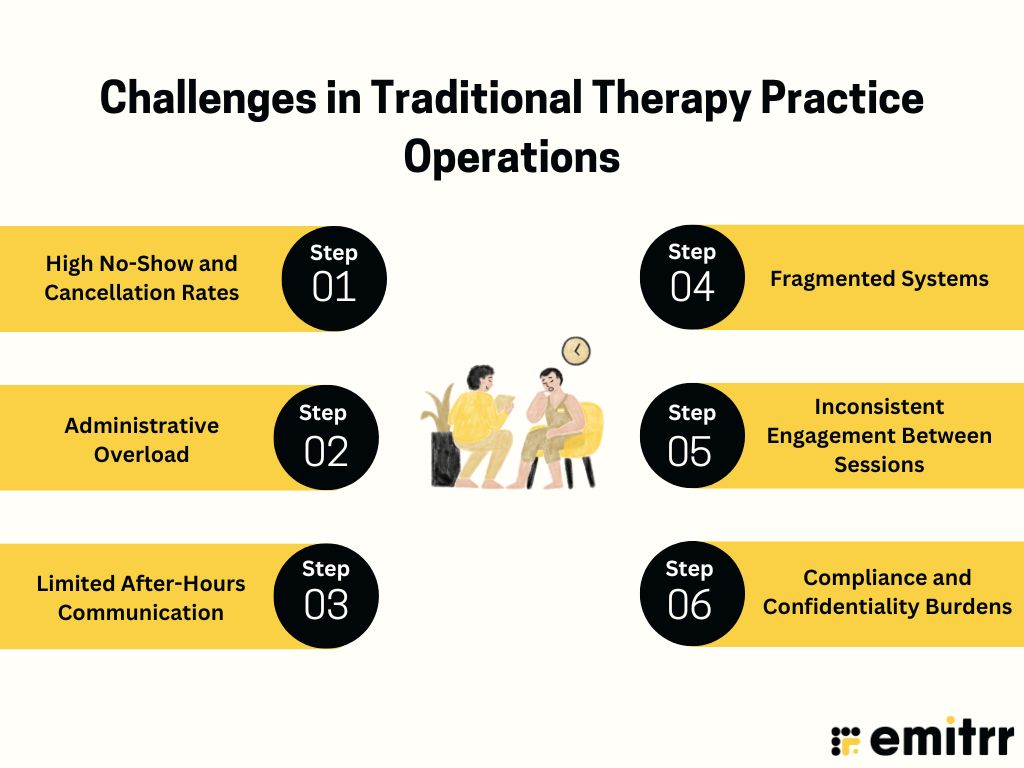
High No-Show and Cancellation Rates
Frequent appointment cancellations or missed sessions result in lost revenue and wasted time. Unfilled slots affect practice productivity, disrupt treatment continuity, and make it difficult for therapists to manage their schedules effectively.
Administrative Overload
Therapists often spend hours managing Therapy Scheduling Software, billing, follow-ups, and documentation. These administrative tasks consume valuable time that could otherwise be dedicated to patient sessions, reducing overall clinical efficiency and increasing burnout risks.
Limited After-Hours Communication
Most therapy practices struggle to maintain patient communication outside of working hours. This lack of accessibility delays responses, decreases engagement, and can leave patients feeling unsupported during moments when guidance is most needed.
Fragmented Systems
Patient data is often scattered across multiple tools—EMRs, intake forms, and manual records making information retrieval inefficient. This fragmentation leads to errors, delayed coordination, and a disjointed patient experience.
Inconsistent Engagement Between Sessions
Therapists frequently lose touch with patients between appointments. Without regular communication or reminders, engagement drops, and patients may lose motivation or discontinue treatment prematurely.
Compliance and Confidentiality Burdens
Therapy practices must strictly adhere to HIPAA and privacy regulations. Managing secure data storage, consent forms, and confidentiality policies adds significant operational pressure and legal responsibility for providers.
Benefits of AI Agents for Therapy Practices
Integrating AI in mental health care offers transformative advantages for therapy practices, helping clinicians save time, improve patient relationships, and achieve operational excellence all while maintaining a human-centered approach that enhances both clinical outcomes and patient satisfaction.
Reduced No-Shows
AI agents send automated reminders and offer easy rescheduling options, reducing missed appointments. Smart scheduling ensures therapists’ calendars remain full, maximising time utilisation while helping patients stay consistent with their therapy routines.
Automated Intake and Triage
By managing initial screenings, collecting patient details, and routing urgent cases to the right professional, AI agents streamline patient intake. This ensures faster prioritisation, improved crisis response, and more effective use of therapists’ time.
Continuous Patient Engagement
AI-driven check-ins, progress nudges, and self-care reminders keep patients engaged between sessions. This consistent communication enhances treatment adherence, reduces no-shows dropouts, and supports better mental health outcomes over time.
Streamlined Workflows
From digital forms and follow-ups to automated documentation, AI agents minimise repetitive administrative work. This helps therapists focus more on therapy delivery and less on backend processes, improving productivity and care quality.
Improved Coordination
AI agents facilitate closed-loop communication between therapists and patients, capturing feedback and session notes automatically. This fosters transparency, strengthens relationships, and ensures that both patient and provider stay aligned on care goals.
Insightful Analytics
Integrated dashboards track metrics like engagement levels, no-show rates, and response times. These data-driven insights empower therapy practices to identify bottlenecks, optimise operations, and make informed decisions for continuous improvement.

How AI Agents Function in Therapy Workflows
AI agents integrate smoothly into therapy operations, managing communication, scheduling, and engagement across voice, chat, and SMS channels. Their automation capabilities simplify complex workflows, allowing therapists to focus more on client care while ensuring patients receive consistent, timely, and supportive communication throughout their therapy journey.
24/7 Appointment Booking
AI agents enable round-the-clock appointment reminders scheduling and rescheduling via voice, chat, or SMS. Patients can instantly book or adjust sessions without human intervention, ensuring accessibility, convenience, and reduced administrative burden for therapy staff.
Automated Session Reminders
Timely reminders through calls, texts, or messages help patients stay consistent with therapy. AI agents can also send personalised self-care prompts and post-session reflections to maintain engagement between appointments.
Multichannel Communication
Patients can interact using their preferred platforms—voice, SMS, email, or web chat. This omnichannel engagement ensures accessibility, strengthens patient-therapist relationships, and promotes a consistent care experience across all communication touchpoints.
Smart Waitlist Management
AI-powered systems automatically detect cancellations and fill open slots by reaching out to waiting patients. This intelligent process maximises therapist schedules, improves practice efficiency, and ensures minimal downtime.
Digital Intake and Consent Forms
Before sessions, AI agents collect intake details, medical history, and digital consent forms securely. This automation saves time, reduces paperwork errors, and ensures therapists are well-prepared for each session.
Secure Triage and Escalation
AI agents identify high-risk responses—such as signs of distress or crisis—and immediately alert the therapist or designated support team. This ensures quick intervention while maintaining privacy and compliance standards.
Post-Session Feedback Collection
Following appointments, AI agents request feedback and satisfaction ratings from patients. These insights help improve therapy quality, maintain reputation, and identify areas for continuous service enhancement.
Continuous Education and Micro-Lessons
AI agents send small, digestible pieces of educational content—such as mindfulness tips or coping strategies—between sessions. These micro-lessons reinforce progress and strengthen long-term therapeutic outcomes.
Analytics and Performance Dashboards
Comprehensive dashboards visualise key metrics like response rates, cancellations, and engagement trends. These insights help practices optimise workflows, measure performance, and make data-driven improvements in patient care delivery.
Watch this video to learn how to automate text messaging:
Key Features to Look for in an AI Agent for Therapy Practices
Choosing the right AI chatbot for healthcare requires balancing compliance, empathy, and integration. These essential features ensure that your therapy practice operates securely, efficiently, and with a patient-first approach.
HIPAA Compliance and Data Security
The AI platform must follow HIPAA guidelines, offering encryption, secure data storage, and audit trails. This ensures all patient journey interactions remain confidential, compliant, and protected from unauthorised access or data breaches.
Empathetic Natural Language Processing (NLP)
Empathetic NLP allows the AI agent to understand tone, intent, and emotions. It delivers compassionate, context-aware responses that mirror human interaction, building patient trust and maintaining meaningful therapeutic engagement.
Smart Escalation Logic
Effective AI agents detect emotional distress or sensitive topics and immediately escalate these to therapists. This ensures patient safety, timely support, and smooth collaboration between automated systems and human professionals.
Seamless Integration Capabilities
Integration with EMR, practice management, and calendar tools allows for unified workflows. It eliminates duplicate entries, synchronises appointments, and ensures information flows efficiently across systems for better coordination.
Role-Based Access and Data Governance
Custom user roles help manage data securely. Therapists, administrators, and staff access only what’s necessary, ensuring privacy, accountability, and compliance with healthcare data-sharing standards.
Performance Dashboards and Analytics
Dashboards provide actionable insights into key metrics—like cancellations, engagement, and response rates. They empower therapists to analyse patterns, identify bottlenecks, and make informed operational and clinical decisions.
Transparent Pricing and ROI Tracking
A reliable AI platform should offer transparent, usage-based pricing. Practices can track ROI easily, understanding cost-effectiveness and scaling their automation strategy without hidden or unpredictable expenses.
Dedicated Onboarding and Support
Comprehensive onboarding, hands-on training, and continuous vendor support ensure smooth adoption. This guidance helps therapists and teams maximise the AI agent’s potential and maintain consistent performance.
When Human Touch Still Matters in Therapy
Even with AI enhancing efficiency, human empathy is irreplaceable in therapy. Certain situations demand a therapist’s insight, emotional intelligence, and nuanced judgment to ensure patient safety, trust, and effective care that AI alone cannot provide.
Crisis and Emotional Support
AI cannot replicate human empathy during crises or deep emotional conversations. Therapists provide immediate support, reassurance, and appropriate intervention, ensuring patient safety and emotional stability while responding to urgent mental health needs.
First Sessions and Trust Building
Initial therapy sessions require human presence to establish rapport and trust. Therapists assess emotional state, communicate empathy, and create a safe environment that encourages openness and long-term engagement in treatment.
Sensitive Issues and Conflict Handling
Handling complaints, conflicts, or sensitive disclosures demands human judgment. Therapists interpret subtle emotional cues, mediate effectively, and respond appropriately, ensuring patients feel understood, respected, and supported throughout their care journey.
Complex Treatment Planning
AI can support administrative tasks, but developing long-term treatment plans requires human expertise. Therapists analyse progress, adjust strategies, and make ethical decisions tailored to each patient’s unique needs.
Oversight of AI Interactions
Therapists monitor AI engagement to prevent negative effects on mental health. They ensure technology complements care, making balanced decisions that preserve human connection, empathy, and patient well-being.
Real-World Applications & Use Cases in Therapy Practices
AI agents are transforming therapy workflows by automating routine tasks, improving patient engagement, and supporting therapists with actionable insights. These tools enhance efficiency while maintaining high-quality, patient-centered mental health care.
Symptom Screening and Intake Automation
AI agents collect patient information, perform symptom screening, and complete intake forms before appointments. This automation saves time, ensures accurate data capture, and allows therapists to focus on clinical assessment rather than administrative tasks.
Pre-Session Summaries
Before each session, AI agents generate concise summaries of patient history and previous interactions. Therapists can review these insights quickly, improving preparation, session efficiency, and personalized care delivery.
Post-Session Reminders and Homework Support
AI agents send automated reminders for upcoming sessions and provide digital homework or self-care tasks. This continuous engagement promotes adherence to treatment plans and encourages consistent patient progress.
Therapeutic Micro-Content Delivery
Between appointments, AI agents deliver small, targeted educational or therapeutic content such as coping strategies or mindfulness exercises—to reinforce learning and support ongoing mental health improvement.
Patient Feedback and Reputation Management
AI agents automate post-session feedback collection, surveys, and rating requests. Insights from these interactions help practices enhance service quality, monitor patient satisfaction, and maintain a positive reputation.
Smart Appointment Fill-Ins
When cancellations occur, AI agents notify waiting patients and automatically fill open slots. This reduces idle time, maximizes scheduling efficiency, and ensures optimal utilization of therapists’ calendars.
Crisis Escalation
AI agents monitor patient responses for distress signals or urgent mental health issues. They immediately escalate these cases to therapists, ensuring timely intervention and maintaining patient safety.
Teletherapy Integration
AI agents integrate with teletherapy platforms, coordinating appointments, follow-ups, and session documentation. This ensures seamless care continuity and enhanced support for remote or hybrid therapy practices.
How Emitrr Helps Therapy Practices
Emitrr helps therapy practices automate administrative tasks, enhance patient engagement, and optimise workflows. By reducing manual workload, therapists can focus on delivering personalised care while improving operational efficiency, appointment management, and overall patient satisfaction.
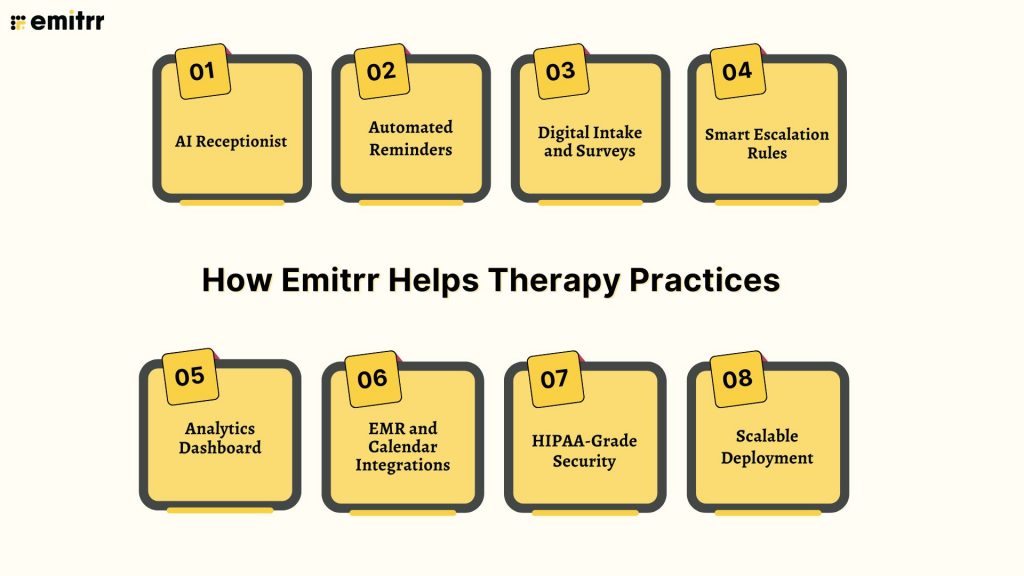
AI Receptionist
Emitrr acts as a virtual receptionist, managing calls, texts, and chat queries. Patients can book or reschedule sessions instantly, ensuring seamless communication, reduced administrative effort, and uninterrupted access to therapy services without relying on staff availability.
Automated Reminders
The platform sends personalised voice and SMS reminders for upcoming appointments and follow-ups. This decreases missed sessions, encourages treatment adherence, and keeps patients engaged consistently, enhancing therapy continuity and overall outcomes.
Digital Intake and Surveys
Emitrr automates patient intake forms, e-consent, and pre-session surveys. This ensures accurate data collection, reduces paperwork errors, speeds up onboarding, and equips therapists with necessary patient information before each session.
Smart Escalation Rules
AI agents monitor patient responses for distress or urgent signals. When detected, the system immediately notifies therapists, ensuring timely intervention and safeguarding patients’ mental health while maintaining workflow efficiency.
Analytics Dashboard
Emitrr provides visual dashboards displaying cancellations, engagement trends, and overall practice performance. These actionable insights allow therapists to identify inefficiencies, make data-driven decisions, and optimise scheduling and patient communication.
EMR and Calendar Integrations
Seamless integration with EMR and calendar systems ensures accurate data syncing. Therapists can manage appointments, access patient records, and maintain consistent documentation without duplicating work across multiple platforms.
HIPAA-Grade Security
All patient interactions are encrypted and logged with audit trails. This ensures full HIPAA compliance, protects sensitive information, and guarantees confidentiality across all communication and workflow processes.
Scalable Deployment
Emitrr scales effortlessly from solo therapists to multi-location clinics. Practices of any size can adopt the platform, benefiting from automation, enhanced patient engagement, and operational efficiency while supporting future growth.
Future Trends in AI for Therapy Practices
The next wave of AI for therapy is shaping mental health care with advanced insights, personalization, and proactive support. Emerging technologies are designed to assist therapists, improve patient outcomes, and enhance engagement—while upholding safety, privacy, and ethical standards in mental health care.
Generative AI for Session Summaries
Generative AI can automatically create accurate, concise therapy session summaries. This reduces manual documentation time, ensures consistent records, and helps therapists focus on patient care while maintaining high-quality session notes.
Predictive Analytics for Relapse Prevention
AI-driven predictive models identify early signs of relapse or potential treatment dropout. Therapists can intervene proactively, tailor treatment plans, and provide additional support to patients at risk, improving long-term therapy outcomes.
Voice Sentiment Analysis
AI for Speech Therapy analyzes speech patterns, tone, and emotional cues to assess a patient’s mood during calls or sessions. This technology helps therapists detect subtle changes, monitor mental health, and respond effectively to each patient’s emotional and communication needs.
Integration with Wearable Devices
AI can integrate with wearables to track indicators like sleep, heart rate, and stress levels. Combined with therapy data, this allows for continuous monitoring and personalized interventions that complement traditional sessions.
Development of Therapeutic AI Assistants
Therapeutic AI assistants can support therapists by providing micro-guidance, reminders, and patient engagement tools. Designed safely and ethically, they enhance collaboration without replacing the human empathy central to effective therapy.
Take a look at what the Emitrr AI agent can do:
Frequently Asked Questions
No. AI agents support therapists by automating administrative tasks, reminders, and patient engagement. However, they cannot replicate human empathy, clinical judgment, or nuanced therapeutic decision-making essential for safe and effective mental health care.
Yes. Platforms like Emitrr follow strict HIPAA guidelines, with end-to-end encryption, secure data storage, and detailed audit trails. This ensures all patient interactions remain private, secure, and compliant with healthcare privacy standards.
Most patients respond positively to AI communication for scheduling, reminders, and progress updates. It provides accessible, timely support and improves engagement, while the human therapist remains responsible for actual clinical interactions and care decisions.
Integration is straightforward with platforms like Emitrr. Plug-and-play capabilities allow seamless connection to existing EMR, calendar, and communication systems, reducing setup time and enabling immediate workflow automation without disrupting daily operations.
AI can automate routine tasks such as scheduling, reminders, intake forms, and follow-ups. However, critical functions like emotional counseling, diagnosis, personalized treatment planning, and therapeutic decisions require human expertise and judgment.
Conclusion
AI agents are transforming therapy practices by automating administrative tasks, reducing no-shows, and maintaining continuous, personalized patient engagement. They enhance therapist efficiency, allowing clinicians to dedicate more time to meaningful interactions and improve patient outcomes, while supporting sustainable practice growth.
While AI cannot replace human empathy and clinical judgment, it complements care by streamlining workflows and providing actionable insights. Platforms like Emitrr offer HIPAA-compliant, secure AI solutions tailored for therapy practices. Schedule a demo call with Emitrr today to explore how AI agents can optimize operations, boost patient engagement, and empower your practice.