
 4.9 (400+
reviews)
4.9 (400+
reviews)
Introduction
Healthcare depends on timely decisions, clear information and smooth coordination across teams. At the center of this sits the EHR which shapes how care moves from one step to the next. athenahealth powers a large part of daily operations in many modern healthcare practices.
Yet questions often come up about what athenaOne actually is and how it fits into the broader athenahealth ecosystem. Is it just the EMR, or something more?
In this guide, we uncover what athenaOne does, how it works in real practice, and how healthcare teams use it to manage both clinical and operational workflows.
What Is athenaOne?
athenaOne is an all-in-one healthcare platform from Athenahealth that brings together the systems most practices use every day into a single cloud-based solution. Rather than using separate software for patient records, billing, scheduling, and patient access, the athenaOne app connects everything around a single patient and a single source of data.
Core Components of athenaOne
athenaOne focuses on three major areas:
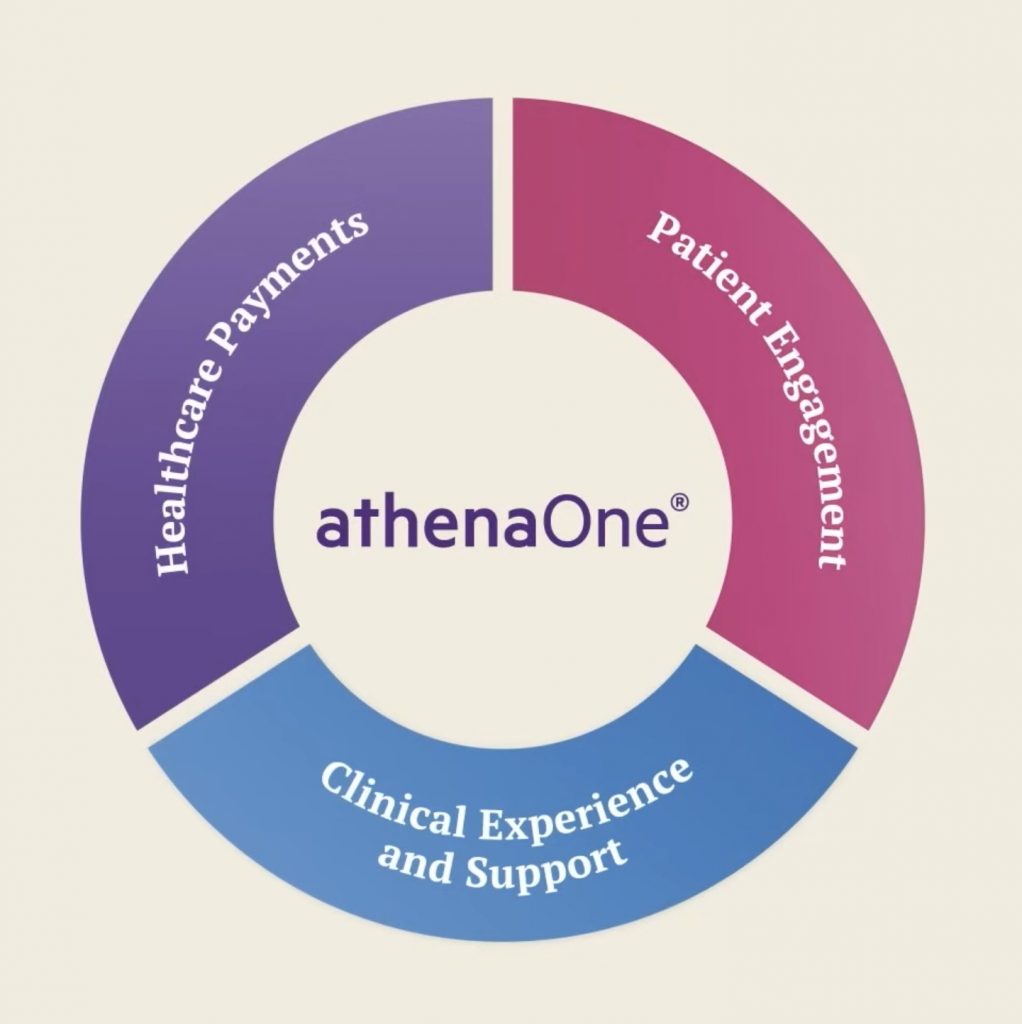
- Clinical Experience and Support
athenaOne includes an Electronic Health Record (EHR) to support day-to-day care delivery. This AI-native EHR offers providers access to patient history, document visits, and manage clinical workflows in one place. By reducing manual effort and surfacing relevant information at the right time, athenaOne AI aims to make providing personalized care simpler for care teams.
- Patient Engagement
athenaOne supports how practices connect with patients beyond the exam room. Through tools like the athenaOne Patient Portal and appointment-related communication, patients can stay informed about their care, upcoming visits, and next steps. This supports continuity and clarity across the patient journey.
- Healthcare Payments
athenaOne also includes medical billing and practice management software (PMS) to support the financial side of care. Information from clinical visits is integrated directly into billing and claims processes, enabling practices to manage insurance submissions, payments, and revenue operations within the same system.
The platform also taps into a broad healthcare network that spans labs, pharmacies, registries, imaging sites, and other providers. As a result, practices can pull in data from external systems and share information without manual steps, supporting continuity of care across care settings. In other words, when different parts of a patient’s journey happen outside the clinic, athenaOne EMR ensures the chart stays up to date.
Because it is cloud-based, athenaOne does not require on-site servers or complex local IT management. Providers and staff log in through a web browser or the mobile EHR app and access current information from any connected device.
In short, athenaOne works by tying together the clinical side, administrative side, financial side, and patient engagement side of a practice so they operate with a shared set of data and real-time updates. These embedded capabilities reduce administrative burden and free up time for patient care.

How Does athenaOne Work in Day-to-Day Practice?
In everyday practice, athenaOne supports the full flow of a patient visit, from preparation before arrival to follow-up after care. Each stage connects to the same patient record, so teams work with consistent information and fewer handoffs throughout the day.
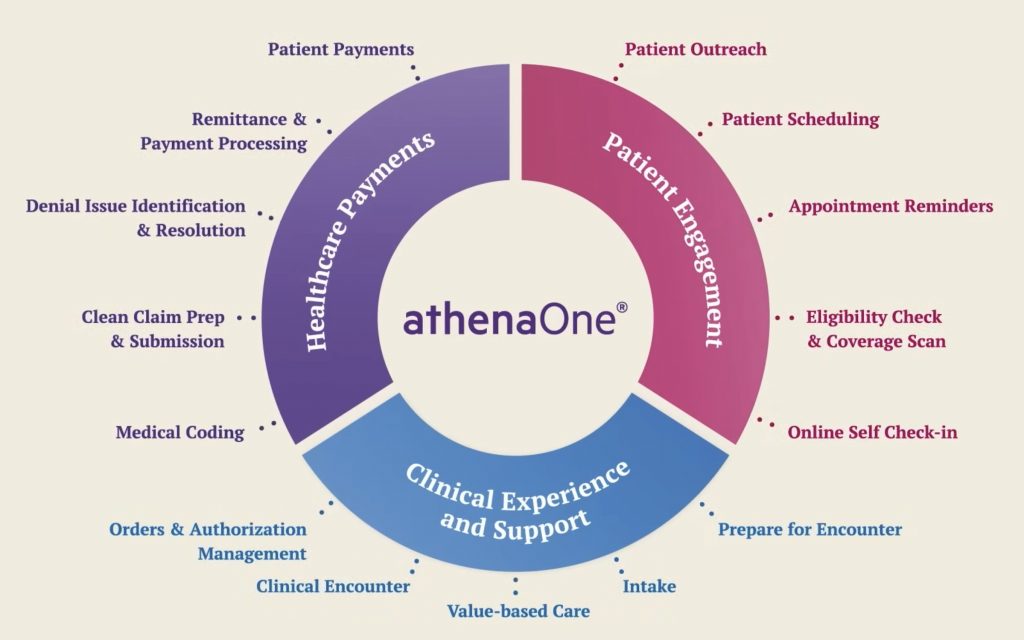
Clinical Experience and Support
This area supports care teams before, during, and after the patient encounter.
- Prepare for encounter: athenaOne enables clinicians to review patient history, upcoming tasks, and care gaps before the visit begins, so appointments start with better context.
- Intake: Patient-provided information is captured in the record, reducing manual data entry and improving visit timing.
- Clinical encounter: Providers document visits, update charts, and manage care activities through the EHR as the visit happens.
- Orders and authorization management: Electronic orders and referrals connect with labs, imaging centers, and specialists, and authorization services manage approvals tied to care.
- Value-based care support: athenaOne surfaces quality measures and care gaps to meet value-based care requirements during routine visits.
Patient Engagement
This area focuses on how practices interact with patients before and after appointments.
- Patient scheduling: Patients can book appointments directly, reducing call volume and improving access.
- Appointment reminders: Automated reminders prompt patients about upcoming visits and reduce no-shows.
- Eligibility check and coverage scan: Insurance checks occur ahead of time, flagging potential issues before the visit.
- Online self-check-in: Patients complete digital forms and required steps digitally, which shortens check-in time at the clinic.
- Patient outreach: Practices reach out to patients for care gaps, follow-ups, or important updates tied to their care.
Healthcare Payments
This area supports billing, claims, and payment processes connected to patient care.
- Medical coding: Certified coding supported by technology translates clinical documentation into accurate claims.
- Clean claim preparation and submission: Claims are checked and submitted with built-in rules that reduce errors across the billing process.
- Denial issue identification and resolution: athenaOne identifies denied claims early and supports resolution workflows across revenue cycle management.
- Remittance and payment processing: Payments and remittance data are tracked and applied to accounts consistently.
- Patient payments: Patient statements and self-pay workflows support patient collections and payment follow-through.
Who Uses athenaOne?
athenaOne is the software teams use to manage day-to-day clinical, administrative, and financial operations. After Athena one login, users access role-specific tools tied to real tasks, such as documentation, scheduling, billing, or patient access.
This distinction often comes up in discussions around athenaOne vs athenahealth. athenahealth is the company, and athenaOne is a software that runs practice operations, powered in part by athenaOne AI.
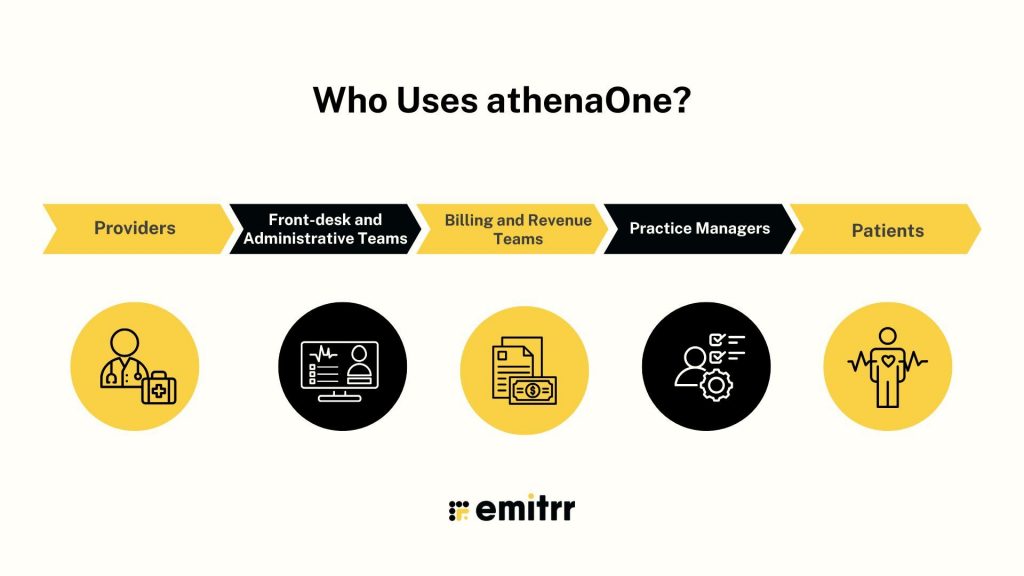
Providers
Providers use athenaOne to review patient history, document encounters, place orders, and monitor care gaps. athenaOne AI surfaces relevant clinical information and quality tasks during visits.
Front-desk and Administrative Teams
Administrative teams use athenaOne to manage appointment schedules, eligibility checks, intake workflows, and patient communication. These tasks support patient flow from arrival through checkout.
Billing and Revenue Teams
Billing teams rely on athenaOne for coding, claim submission, denial tracking, and payment processing. Documentation entered by providers connects directly to these workflows.
Practice Managers
Practice leaders use athenaOne to monitor operational performance, review trends, and manage compliance across locations and teams.
Patients
Patients access athenaOne through the portal and mobile tools. The athenaOne app download allows patients to review appointments, view information, and communicate with their care team using a mobile device.
FAQs
athenaOne helps healthcare practices manage clinical records, appointments, billing, claims, and patient communication from a single platform. It supports daily operations across front-desk, clinical, and billing teams.
athenaOne pricing is not publicly listed. Costs vary based on practice size, services used, and patient volume. Pricing is usually structured as a percentage of collections or a custom agreement rather than a flat monthly fee.
Yes. Patients can send and receive messages through the athenahealth patient portal, depending on how the practice has enabled messaging. Messages typically relate to care questions, appointments, or follow-ups.
No. athenahealth is the company, while athenaOne is its primary software platform. athenaOne is the product used by healthcare practices to manage clinical and administrative work.
athenaOne is used by small and mid-sized medical practices, specialty clinics, community health centers, and larger healthcare organizations across the United States.
The Athena app allows patients to access their health records, view test results, manage appointments, and communicate with their care team through their mobile device.
Yes. athenaOne runs on cloud infrastructure, including Amazon Web Services (AWS), to support scalability, reliability, and secure access to healthcare data.
Summary
athenaOne works by bringing clinical activity, patient engagement, and healthcare payments into a single connected platform. It supports coordination across the practice from the first interaction to final payment.For practices that want to extend these capabilities into patient communication and outreach, integrating Emitrr with the Athenahealth ecosystem can complement athenaOne effectively. If this aligns with your goals, schedule a demo with Emitrr AI to see how patient communication can scale alongside your existing Athena setup.