
 4.9 (400+
reviews)
4.9 (400+
reviews)
Introduction
Imagine this: a patient completes their visit and leaves your clinic, but after that, there’s no follow-up, no check-in, no clear next steps. Within days, engagement drops, and so does their overall experience.
This is where most practices struggle.
Improving post-visit patient satisfaction in healthcare depends heavily on what happens after the appointment. Patients today expect timely updates, easy communication, and a seamless way to stay connected. While Athenahealth patient engagement tools provide a solid starting point, gaps in patient follow-up communication and real-time interaction can make it difficult to maintain consistent patient engagement after appointments.
In this guide, we’ll break down practical ways to improve patient satisfaction in Athenahealth by strengthening post-visit workflows and communication.
AI Summary
- Post-visit communication directly impacts patient satisfaction and retention
- Delayed or missing follow-ups lead to disengagement and poor outcomes
- Patient follow-up communication should be timely and easy to act on
- Digital-first outreach improves response rates and overall engagement
- Automation helps scale post-visit engagement strategies without increasing staff workload
- Stronger engagement after visits leads to better patient experience and continuity of care
Why Post-Visit Engagement Directly Impacts Patient Satisfaction in Athenahealth
For practices using Athenahealth, the in-clinic experience is only one part of the patient journey. What happens after the visit, follow-ups, reminders, and ongoing communication plays a major role in shaping post-visit patient satisfaction in healthcare.
Athenahealth provides the infrastructure to manage patient data, scheduling, and communication. But improving patient engagement after appointments depends on how effectively practices use and extend these workflows.
Patient Satisfaction Is Built Between Visits, Not Just Within Them
A completed appointment doesn’t guarantee a good experience. Patients often leave with questions, next steps, or follow-up needs.
If patient follow-up communication is delayed or inconsistent, patients are more likely to:
- Miss important care instructions
- Delay treatments or prescriptions
- Forget upcoming appointments
- Feel disconnected from the practice
On the other hand, consistent digital engagement after visits helps improve adherence, trust, and overall satisfaction.
What Patients Expect After a Visit
Patient expectations have evolved beyond basic reminders. After a visit, they expect:
- Timely and clear follow-ups
- Easy ways to confirm, reschedule, or ask questions
- Communication on convenient channels like SMS
- Ongoing updates without needing to call the office
Meeting these expectations is key to improving the patient experience after visits, especially in practices using Athenahealth.
The Cost of Gaps in Post-Visit Workflows
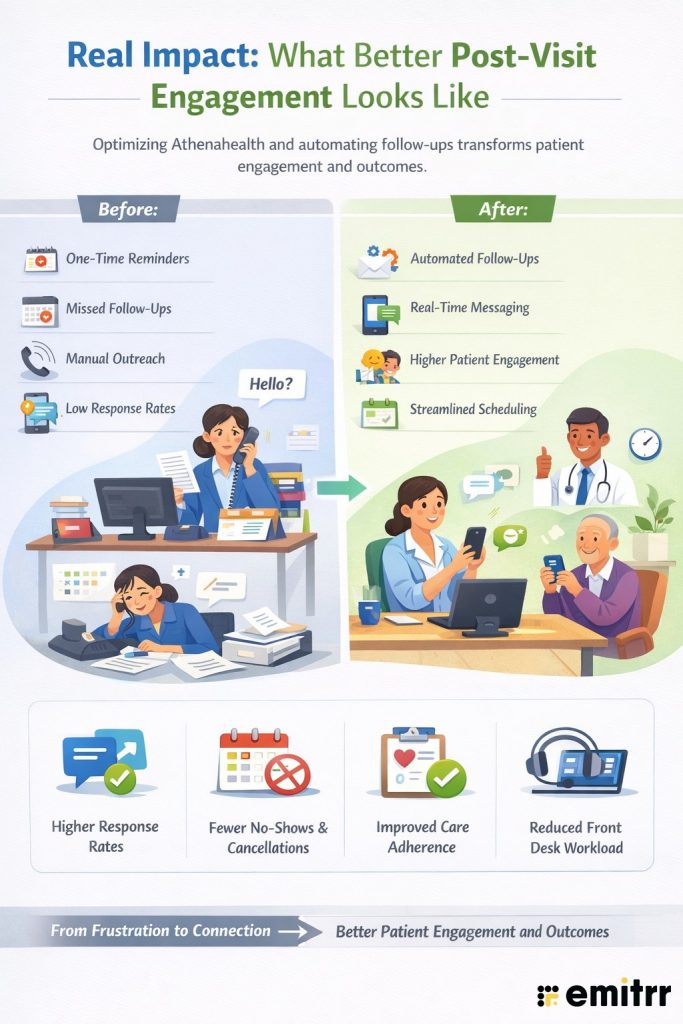
When post-visit workflows within Athenahealth are not fully optimized, practices often see:
- Lower response rates to follow-ups
- Increased no-shows and cancellations
- Gaps in care continuity
- Higher call volumes for staff
- Decline in overall patient satisfaction
Improving post-visit engagement strategies isn’t about adding more tools, it’s about making communication more timely, accessible, and easy for patients to act on.
What Athenahealth Offers for Post-Visit Patient Engagement
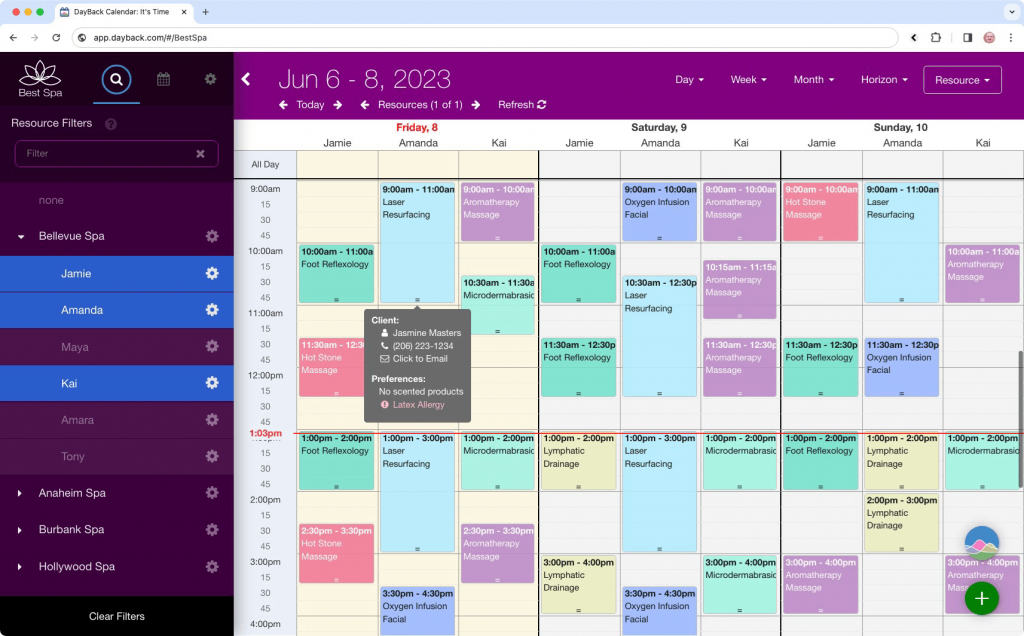
Athenahealth gives practices a solid foundation to manage patient communication workflows after a visit. From reminders to portal-based messaging, it enables basic outreach that supports post-visit patient satisfaction in healthcare.
However, these capabilities are often just the starting point. To truly improve patient engagement after appointments, it’s important to understand what Athenahealth offers, and how these tools are typically used in practice.
Patient Portal & Secure Messaging
Athenahealth includes a patient portal where patients can view visit summaries, access care instructions, and send and receive messages. This supports structured patient follow-up communication, especially for clinical updates. However, for engagement, patients need to actively log in and check messages on the portal or app.
Appointment Reminders & Follow-Ups
Practices can send reminders and basic follow-ups through Athenahealth to confirm upcoming appointments, reduce no-shows or to share post-visit instructions. These reminders help maintain continuity, but are often limited in terms of timing flexibility, personalization, and real-time interaction.
Email and Phone-Based Outreach
Athenahealth supports traditional communication channels like email notifications and phone call workflows. While these channels could help with patient engagement after appointments, they may not always align with how patients prefer to communicate today, especially for quick responses.
Campaigns and Batch Outreach
Practices can run outreach campaigns for general updates, care reminders, patient notifications, etc. This helps with scaling communication, but targeting and segmentation can be limited since it does not offer advanced filtering or automation.
These tools help Athena users to initiate post-visit engagement strategies. However, improving the patient experience after visits requires more than just sending messages; it requires making communication timely, interactive, and easy for patients to respond to.

Where Post-Visit Satisfaction Breaks Down in Athenahealth Workflows
Here are the most common gaps that impact patient engagement after appointments:
Limited Real-Time, Two-Way Communication
Most post-visit outreach in Athena Health is one-directional or not designed for quick back-and-forth interaction. This means:
- Patients can’t easily ask follow-up questions
- Confirmations and reschedules are not frictionless
- Conversations often shift back to phone calls
This slows down patient follow-up communication and increases dependency on staff.
Messages Often Come From Unfamiliar Numbers
With Athena, reminders and follow-ups are sent from numbers that patients don’t recognize. As a result:
- Messages get ignored
- Response rates drop
- Patients are less likely to engage
This directly impacts the effectiveness of post-visit engagement strategies.
Limited Personalization at Scale
While basic reminders can be sent using Athenahealth, tailoring communication based on:
- visit type
- patient type
- provider
- appointment status
can be difficult to execute consistently. Without personalization, your communication feels generic, reducing patient response and engagement.
Gaps in Recall and Reactivation Workflows
Patients who need follow-ups after weeks or months (recalls, preventive care, chronic care) often fall through the cracks. Common issues:
- No automated recall journeys
- Manual tracking of overdue patients
- Missed opportunities to re-engage patients
- This affects both care continuity and long-term patient satisfaction.
No Easy Way to Handle Schedule Changes at Scale
When schedules change (provider unavailable, delays, reschedules), notifying patients becomes manual and time-consuming. Practices often:
- Call patients one by one
- Struggle to reach everyone on time
- Create inconsistent communication experiences
This negatively impacts the patient experience after visits, especially when expectations aren’t managed proactively.
Limited Visibility Into Engagement and Responses
Inside Athena, it’s difficult to track:
- who responded
- who didn’t
- how long responses take
- which messages perform best
Without this visibility, optimizing patient engagement after appointments becomes guesswork.
How to Improve Post-Visit Patient Satisfaction in Athenahealth
Improving post-visit patient satisfaction in healthcare doesn’t require a complete overhaul of your Athena ehr system. Just fix certain gaps in patient communication workflows to make engagement more timely, relevant, and easy for patients to act on.
Here are the most effective strategies practices can implement within Athenahealth workflows:
Send Timely, Structured Follow-Ups
Post-visit communication should feel like a continuation of care, not an afterthought. Patients are most attentive within the first 24–48 hours after their visit, which makes timing critical.
Instead of sending a single generic follow-up, it helps to structure communication in stages, starting with immediate next steps, followed by reminders or check-ins over time. This ensures your patient follow-up communication stays relevant and supports better adherence.
Make It Easy for Patients to Respond
Within Athenahealth workflows, patient responses often depend on portal logins or callbacks. This creates friction and reduces patient engagement after appointments.
Reducing this friction is key. The easier it is for patients to confirm, ask questions, or take action, the more likely they are to engage.
- Simple reply options
- Fewer steps to respond
- Communication on channels patients already use
These small changes can significantly improve response rates.
Personalize Communication Based on Context
Athenahealth captures rich patient and appointment data, but communication often remains generic, which creates a disconnect. Practices can improve the patient experience after visits by tailoring follow-ups based on:
- visit type
- provider
- appointment status
Even light personalization using Athenahealth data can make communication feel more relevant and increase engagement.
Automate Recalls and Ongoing Follow-Ups
Athenahealth helps track patient history, but recall workflows are often manual or inconsistently executed. Since many patients need follow-ups weeks or months later, especially for preventive or ongoing care. Automating recalls ensures consistent outreach and strengthens long-term post-visit engagement strategies without adding staff workload.
Shift Toward Digital-First Communication
Within Athenahealth workflows, relying on phone calls for follow-ups often leads to low engagement. Patients are far more likely to respond to texts than calls.
Shifting patient follow-up communication to SMS helps:
- Increase response rates
- Improve visibility
- Make it easier for patients to act quickly
Build a Continuous Feedback Loop
Athenahealth enables post-visit communication, but feedback collection is often underutilized. Post-visit satisfaction improves when patients feel heard. Sending review requests in Athena or quick feedback prompts after appointments helps close the loop and refine patient engagement after appointments over time.
How Emitrr Extends Athenahealth to Improve Post-Visit Patient Satisfaction
Athenahealth provides the foundation for managing patient communication, but improving post-visit patient satisfaction in healthcare often requires more real-time, flexible, and scalable engagement.
This is where Emitrr extends Athenahealth workflows, by building on top of existing data and automating communication in a way that is easier for both staff and patients.
Automated Post-Visit Follow-Ups
Instead of relying on one-time reminders in Athenahealth, Emitrr enables structured follow-ups triggered by appointment events.
Practices can automatically send:
- Post-visit instructions
- Medication or care reminders
- Follow-up check-ins
This ensures patient follow-up communication is consistent and timely without manual effort.
Review and Feedback Automation
One of the biggest drivers of post-visit patient satisfaction is whether patients feel heard. Emitrr automatically sends review and feedback requests after appointments:
- Triggered after visit completion
- Customizable timing (e.g., 1 hour, 1 day later)
- Based on patient type
This creates a continuous feedback loop and helps improve both satisfaction and online reputation.
Two-Way, Real-Time Patient Communication
Athenahealth communication often requires patients to log in or call back. Emitrr removes this friction by enabling two-way messaging in Athenahealth.
Patients can:
- Confirm or reschedule appointments
- Ask questions
- Respond instantly via text
Smart Recalls and Reactivation
Athenahealth stores patient history, but recall workflows are often manual. Emitrr automates this process.
You can:
- Reach out to patients overdue for care
- Trigger reminders based on visit type or timeline
- Reactivate inactive patients
Schedule-Based Messaging Using Athena Data
Emitrr allows you to pull scheduling data directly from Athenahealth and act on it instantly.
For example:
- Notify all patients of a provider schedule change
- Message patients within a specific date range
- Target communication by visit type or provider
This makes post-visit and ongoing communication far more precise and scalable.
AI-Powered Patient Interaction
Emitrr adds an AI layer to Athenahealth workflows, helping automate routine communication.
- AI SMS agent handles patient queries in real time
- AI scheduler manages bookings, reschedules, and real-time online scheduling
- AI-generated responses improve speed and consistency
This ensures patients stay engaged without increasing staff workload.
Conversations Synced Back Into Athenahealth
All patient communication through Emitrr is logged back into Athenahealth. This ensures:
- Complete communication history
- Better visibility for staff
- No data silos between systems
Insight: Emitrr doesn’t replace Athenahealth, it extends it. By making communication more responsive, automated, and patient-friendly, it helps practices significantly improve post-visit satisfaction.
Real Impact: What Better Post-Visit Engagement Looks Like
Step-by-Step: Improving Post-Visit Satisfaction with Athenahealth + Emitrr
Improving post-visit patient satisfaction in Athenahealth doesn’t require complex setup. With the right workflows in place, you can start seeing better engagement and response rates quickly.
Here’s a simple way to implement it:
1. Connect Emitrr with Athenahealth
Start by integrating Emitrr with Athenahealth to sync patient data, appointments, and communication history. This ensures all outreach is based on real-time information.
2. Automate Post-Visit Follow-Ups
Set up automated messages triggered after appointments, such as:
- Visit summaries or next steps
- Care reminders
- Follow-up check-ins
This keeps patient follow-up communication consistent without manual effort.
3. Enable Two-Way SMS Communication
Enable two-way communication in Athena to allow patients to easily respond via text for:
- Confirmations
- Questions
- Rescheduling
This removes friction and improves patient engagement after appointments.
4. Set Up Recall and Reactivation Campaigns
Use Athenahealth data to identify patients who are due or overdue for care, and automate outreach accordingly. This ensures long-term engagement and better care continuity.
5. Send Review and Feedback Requests
Automatically trigger feedback or review requests after visits. This helps build a feedback loop and improves overall patient satisfaction.
6. Use Schedule-Based Messaging for Ongoing Updates
Leverage scheduling data to send targeted messages based on provider, visit type, or date range. This ensures communication stays relevant and timely.
7. Track Engagement and Optimize
Monitor response rates, patient interactions, and communication performance to refine your workflows over time.
Key Takeaways
- Improving post-visit patient satisfaction in Athenahealth comes down to fixing communication gaps after the visit, not changing your EHR.
- Timely, structured follow-ups within 24-48 hours drive the highest patient engagement after appointments.
- Reducing friction with two-way SMS communication makes it easier for patients to respond and take action.
- Personalization using Athenahealth data (visit type, provider, status) significantly improves response rates.
- Automating recalls, reactivation, and feedback ensures patients don’t fall through the cracks.
- A digital-first (SMS-first) approach consistently outperforms calls for patient follow-up communication.
- Adding a layer like Emitrr helps extend Athenahealth into a complete patient engagement system, without disrupting existing workflows.
Frequently Asked Questions
Focus on timely follow-ups, reduce response friction with SMS, personalize communication using Athenahealth data, and automate recalls and feedback workflows.
Athenahealth supports basic reminders and portal-based communication, but advanced follow-ups, two-way texting, and automation typically require an integration with a tool like Emitrr.
Common reasons include delayed communication, generic messages, and high friction (like needing to log into a portal or call back).
SMS has higher open and response rates than calls or emails, making it easier for patients to quickly read and respond to follow-ups.
Conclusion
Post-visit patient satisfaction in Athenahealth improves when communication is timely, relevant, and easy to act on. By extending Athenahealth with the right tools, practices can turn follow-ups into a consistent, automated experience—driving better engagement, stronger relationships, and improved outcomes.
Book a demo to learn more about Emitrr’s native integration with Athenahealth.