
 4.9 (400+
reviews)
4.9 (400+
reviews)
Introduction
Dental practices often ask one important question: how to increase recall rates in dental practices when many patients do not return for their next visit on time. When a patient misses a recall appointment, their treatment plan often remains incomplete and small oral health issues can turn into more serious problems over time.
For example, a patient who delays a routine checkup may not realize that plaque buildup, gum inflammation, or early cavities can worsen without timely care. As a result, what could have been a simple preventive visit may later require more complex treatment.
A reliable recall system helps dental practices ensure patients come back at the right time and complete their care.
In this guide, you will discover practical ways to increase recall rates in dental practices and encourage patients to return for their next visit on schedule.
What is Recall Rate in Dental Practices?
Recall rate in dental practices measures how many patients return for their recommended follow-up or preventive appointments, such as routine cleanings, oral exams, or periodontal checkups.
Dentists usually recommend these visits at regular intervals often every 3, 6, or 12 months depending on the patient’s oral health. The dental recall rate shows how effectively a practice ensures that patients actually come back for those visits.
You can think of it as a simple performance metric for patient follow-ups.
Recall Rate Formula
Recall Rate (%) = (Number of Patients Who Returned for Recall Visits ÷ Number of Patients Due for Recall) × 100
Example: If a dental practice recommends recall visits to 100 patients and 75 patients return, the recall rate is:
(75 ÷ 100) × 100 = 75% recall rate
A higher recall rate means more patients return for preventive care, complete their treatment plans, and maintain better oral health. It also helps dental practices maintain a steady appointment schedule and stronger long-term doctor-patient relationships.

Common Challenges That Lower Dental Recall Rates
Many dental practices struggle with low recall rates even when they recommend regular follow-up visits. The issue often lies in gaps within the dental recall process, such as missed reminders, manual tracking, or limited patient communication. When a dental recall system is not well organized, patients may delay visits or simply forget about their next checkup.
Some of the most common challenges that lower dental recall rates include:
- Lack of automated dental recall reminders, which makes it easy for patients to forget their next appointment.
- Manual patient tracking, which can lead to missed follow-ups or inconsistent recall communication.
- Limited communication channels, where reminders rely only on phone calls instead of SMS or email.
- Patients not booking their next visit before leaving the clinic, which increases the chances of delays.
- Difficulty scheduling appointments, especially when patients must call during office hours and a missed call may result in the patient not following up again.
- Missed appointments without proper follow-up, which often results in patients not rescheduling their visits.
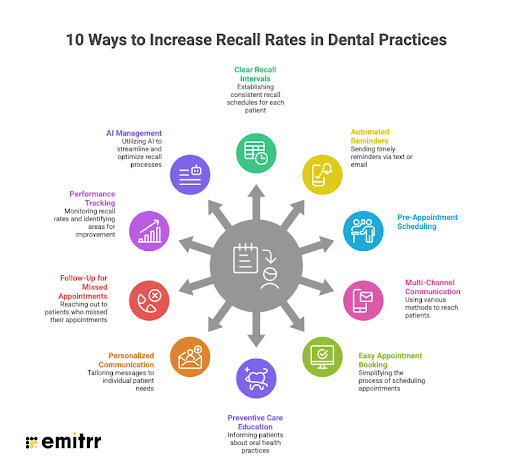
10 Ways to Increase Recall Rates in Dental Practices
Improving recall rates does not require complicated systems. With the right dental recall software and a structured dental recall process, practices can ensure patients return on time for their next visit. Here are ten practical ways to increase recall rates in dental practices.
1. Set Clear Recall Intervals for Every Patient
Not every patient requires the same recall schedule. Some may need a visit every three months while others may only need a six-month checkup. Setting clear recall intervals based on the patient’s oral health helps ensure that text reminders go out at the right time and patients know when they are expected to return.
2. Send Automated Dental Recall Reminders
Automated dental appointment reminders help ensure patients receive timely notifications about upcoming visits. Instead of relying on manual calls, practices can send reminders through SMS, email, or automated calls so patients remember their recall appointments.
3. Schedule the Next Appointment Before the Patient Leaves
One of the simplest ways to improve recall rates is to book the next visit before the patient leaves the clinic. When the next appointment is already on the calendar, patients are far more likely to return for their recall visit. You can further simplify this process with online scheduling for dental office workflows, which allow patients to confirm or adjust their appointments easily without needing to call the clinic.
4. Use Multi-Channel Communication
Different patients prefer different communication methods. Some respond to text messages, while others prefer emails or calls. A recall strategy that uses multiple channels increases the chances that patients see and respond to the reminder. SMS templates to boost your dental practice communication make it easier to send consistent recall reminders without writing a new message each time.
5. Make Appointment Booking Easy
Patients may delay visits if scheduling takes too much effort. Offering simple options such as online booking or quick scheduling links allows patients to confirm or schedule their recall appointment without hassle. Easy scheduling options also become an important factor in the things to consider when choosing dental practice software, as they directly affect how easily patients can book appointments.
Watch to see how easy online appointment scheduling can be for dental practices
6. Educate Patients About Preventive Care
Many patients underestimate the importance of routine dental visits. When dental teams explain how regular checkups help prevent cavities, gum disease, and other oral health problems, patients are more likely to prioritize their recall appointments. A clear explanation during the visit can often motivate patients to commit to their next recall date.
7. Personalize Recall Communication
Generic reminders can feel easy to ignore. Personalized messages that include the patient’s name, last visit date, or treatment details make the communication feel more relevant and increase the likelihood of a response. Train the front desk teams to follow a simple dental recall script to maintain consistent and patient-friendly communication.
8. Follow Up With Patients Who Miss Appointments
Missed appointments should not be the end of the recall process. Sending follow-up messages or reminders soon after a missed visit encourages patients to reschedule instead of delaying their care. A timely follow-up can often recover appointments that might otherwise remain unscheduled.
9. Track Recall Performance Regularly
Monitoring recall rates helps practices understand how effective their recall system is. Tracking metrics such as response rates, booked appointments, and missed visits allows clinics to identify gaps in their recall process and improve their approach over time.
10. Use AI to Manage the Dental Recall Process
Modern communication platforms and dental software can automate recall reminders, track patient responses, and simplify scheduling. AI-powered tools can send reminders at the right time, respond to patient queries, and reduce manual work for staff. As AI agents are transforming dental practices, many clinics now rely on intelligent systems to manage recall communication, handle patient inquiries, and ensure patients return on time for their next visit.
How Dental Practices Can Boost Recall Rates with Emitrr
Emitrr is an AI-powered, HIPAA-compliant patient communication platform that helps dental practices automate their dental recall process and keep patients engaged after their visits. Instead of relying on manual calls or scattered reminders, practices can automatically send recall notifications, respond to patient queries instantly, and make it easy for patients to schedule their next appointment. This ensures patients return on time for checkups, cleanings, and follow-up treatments while reducing the administrative burden on dental staff.
A great example of this impact comes from OTC Dental, which used Emitrr to transform its communication workflows. By implementing an AI chatbot for dental office for 24/7 automated responses and SMS communication for updates and campaigns, OTC Dental resolved 1,500+ customer queries, reduced manual responses by 70%, and increased lead conversions by 25%. The same AI-driven automation can help dental practices manage recall reminders more efficiently, respond to patients faster, and ensure more patients return for their next visit.
AI-Powered Patient Communication
Emitrr uses AI to automate patient communication, allowing practices to send recall reminders, answer patient questions, and handle appointment inquiries without constant manual intervention. With a dental AI receptionist, practices can respond to patient queries instantly, manage recall communication, and ensure patients receive quick replies significantly increasing the chances of them scheduling or confirming their next visit.
Watch Emitrr’s dental AI receptionist in action
Automated Recall Reminders
Dental practices can automatically send recall reminders through SMS or other communication channels. These reminders can be scheduled based on the patient’s recall interval such as 3 months, 6 months, or annual checkups ensuring patients receive notifications at the right time.
Two-Way Messaging
Emitrr allows patients to reply directly to reminders, ask questions, or confirm appointments through simple text conversations. This two-way communication reduces friction and makes it easier for patients to respond without calling the clinic.
HIPAA-Compliant Communication
Since dental practices handle sensitive patient information, compliance is critical. Emitrr provides HIPAA-compliant messaging, ensuring patient data remains secure while practices communicate with patients through text messages or automated workflows.
Smart Appointment Scheduling
Emitrr simplifies appointment scheduling by allowing patients to confirm or request appointments directly from reminder messages. With an AI scheduling assistant, practices can automatically handle appointment requests, suggest available time slots, and confirm bookings without manual effort. This reduces delays in booking recall visits and helps practices maintain a consistent appointment calendar.
Missed Appointment Follow-Ups
When a patient misses an appointment, Emitrr can automatically send follow-up reminders encouraging them to reschedule. This helps recover lost appointments and ensures patients complete their recommended treatment or preventive care.
Integration with Dental Practice Software
Emitrr integrates with practice management systems and other healthcare tools so patient information, appointment data, and recall schedules stay synchronized. It supports integrations with popular dental software like Denticon, OpenDental, and Dentrix, allowing practices to automatically sync patient records and appointment details. This integration reduces manual work for staff and ensures recall reminders are sent accurately.
Frequently Asked Questions
A recall rate in dental practices refers to the percentage of patients who return for their scheduled preventive visits, such as routine cleanings or checkups. A high recall rate indicates strong patient engagement and consistent follow-up care.
Recall appointments help dentists monitor oral health, detect issues early, and maintain long-term patient relationships. They also help practices maintain a steady appointment schedule and predictable revenue.
A healthy recall rate typically ranges between 70% and 85%, though this can vary depending on the size of the practice, patient demographics, and recall reminder systems used.
Some of the most effective ways include sending automated appointment reminders, offering easy online scheduling, personalizing patient communication, and following up with patients who miss appointments.
Automation allows dental practices to send reminders through SMS, email, or calls without manual effort. Automated recall systems ensure patients receive timely reminders and make it easier for them to schedule their next visit.
Emitrr helps dental practices increase recall rates by automating patient reminders, enabling two-way texting, simplifying appointment scheduling, and sending follow-ups for missed appointments, ensuring patients return on time for their visits.
Final Thoughts
Improving recall rates is essential for ensuring patients return on time for preventive care and complete their treatment plans. With the right approach and a structured recall system, dental practices can reduce missed visits and keep patients engaged in their oral health.
Use the 10 ways shared in this guide to improve your dental recall strategy, and explore how Emitrr can help streamline the process. Schedule a free demo trial today so you can see how it works for your dental practice.