
 4.9 (400+
reviews)
4.9 (400+
reviews)
Introduction
Nonprofits often operate on tight budgets, so anything that can save them money is a smart, strategic investment.
Case in point: a VoIP service provider!
A VoIP service provider helps people make phone calls or send texts over the internet instead of using traditional phone lines. You simply pay for them, add your network, and start interacting without spending a penny.
By investing in VoIP services, your nonprofit can:
- Enable missions with the speed of a click.
- Improve communication and collaboration within the organization.
- Reach more people without driving up costs.
It’s a no-fuss way to get your nonprofit talking to more people, with less effort and minimal investment.
In the next five minutes, we’ll walk you through the ABCs of VoIP for nonprofits, from what it is and why it matters, to real-world use cases. We’ll also explain how you can integrate VoIP into your nonprofit’s communication channels and amplify your mission’s reach and impact.
Ready? Set, go!
VoIP for Nonprofits: What Numbers Say
Nonprofits are lining up for VoIP solutions, and it isn’t hard to see why.
Cost savings are a major crowd-puller. Traditional phone systems are expensive and drain budgets, but VoIP services can slash telecom costs by up to 50%, allowing nonprofits to stretch their dollars toward the greater good.
Flexibility is another perk. VoIP scales up or down effortlessly as teams grow or shrink, reducing continuity hassles and keeping operational bottom lines as healthy as projected.
Speaking of numbers, VoIP adoption across the nonprofit sector is steadily growing. Forty-five percent of small to medium enterprises (a category nonprofits often fall into) are already using VoIP, and the technology has seen a staggering 212% growth since 2020.
For nonprofits, VoIP platforms are a no-brainer. They offer cheaper calls and texts, adaptable systems, and enhanced efficiency that makes every conversation count.

Benefits of VoIP for Nonprofits
Shifting to VoIP service providers for your nonprofit’s daily communication needs can draw in game-changing advantages. We’ve outlined the top six of them you should know.
1. Cost-Effective Communication Solutions
VoIP cuts communication costs by half, allowing nonprofits to redirect their funds toward more strategic, high-impact social and economic causes. By doing away with traditional phone systems and switching to VoIP services, nonprofits can simplify and accelerate how they engage with their communities, while keeping costs low. In fact, VoIP is perfect for remote teams or global outreach, running on existing internet connections with no hardware hassles.
2. Robust Features for Robust Operations
VoIP brings top-tier features that streamline your nonprofit’s operations, enhancing efficiency like never before. Auto attendants, call routing, and voice-to-email keep things running smoothly, while built-in analytics reveal what’s working and what lies ahead. Unlike traditional telecom systems, VoIP keeps nonprofits lean and delivers a step-change in productivity and community engagement.
3. Seamless Integration with Nonprofit Tools
VoIP effortlessly integrates with a nonprofit’s go-to platforms like donor CRMs and volunteer management systems, enabling everyone across the board, from staff and volunteers to stakeholders, to gain better insights and make smarter decisions. With end-to-end visibility, there’s less confusion and more synergy. Traditional systems simply can’t match this level of compatibility. VoIP platforms are highly preferred because they save time, reduce frustration, and help your team focus on impact together.
4. Flexible and Scalable for Organizational Growth
Nonprofits’ work trajectories are constantly shifting, and VoIP adapts quickly, keeping everything running smoothly. VoIP systems allow nonprofits to easily scale phone lines and features to meet their evolving needs, all while saving costs. You can quickly ramp up lines for a big campaign or scale them back afterwards without any hassles or budget strain. Unlike traditional legacy systems, VoIP doesn’t require hardware investments or complex wiring, making it a more flexible and scalable option. Affordability is an added bonus. Moreover, VoIP platforms are cloud-based, ensuring communication remains adaptable at all times.
5. Enhanced Donor and Volunteer Engagement
VoIP has dramatically changed how nonprofits connect with donors and volunteers. Replete with features like video calls, SMS capabilities, and file sharing — now also strengthened with AI — the modern-day VoIP tools enable real-time, tailored responses, making every interaction feel more personal and engaging. VoIP has transformed outreach from cold, one-way communication into warm, two-way conversation, laying the right foundation for healthier donor and stakeholder relationships. Not only does this approach enhance engagement, but it also improves retention and participation rates.
6. Sustainable and User-Friendly Technology
VoIP service platforms are eco-friendly, align with the values of sustainability, and are easier to use. These systems stamp out the need for bulky hardware and cut energy use significantly compared to traditional phone systems. Cloud-based VoIP platforms offer seamless, intuitive interfaces, letting even beginners use them without any trouble and minimizing the need for technical training. VoIP also supports remote work, which means a reduced need for physical office space and less environmental impact.
Use Cases of VoIP for Nonprofits
VoIP works as a catalyst for nonprofits, transforming communication into more agile, efficient, and responsive, all while keeping the cost bar low. By leveraging internet-based calling, nonprofits enhance their operations, connect with stakeholders, and maximize impact.
Below are key use cases of VoIP tailored to nonprofit needs.
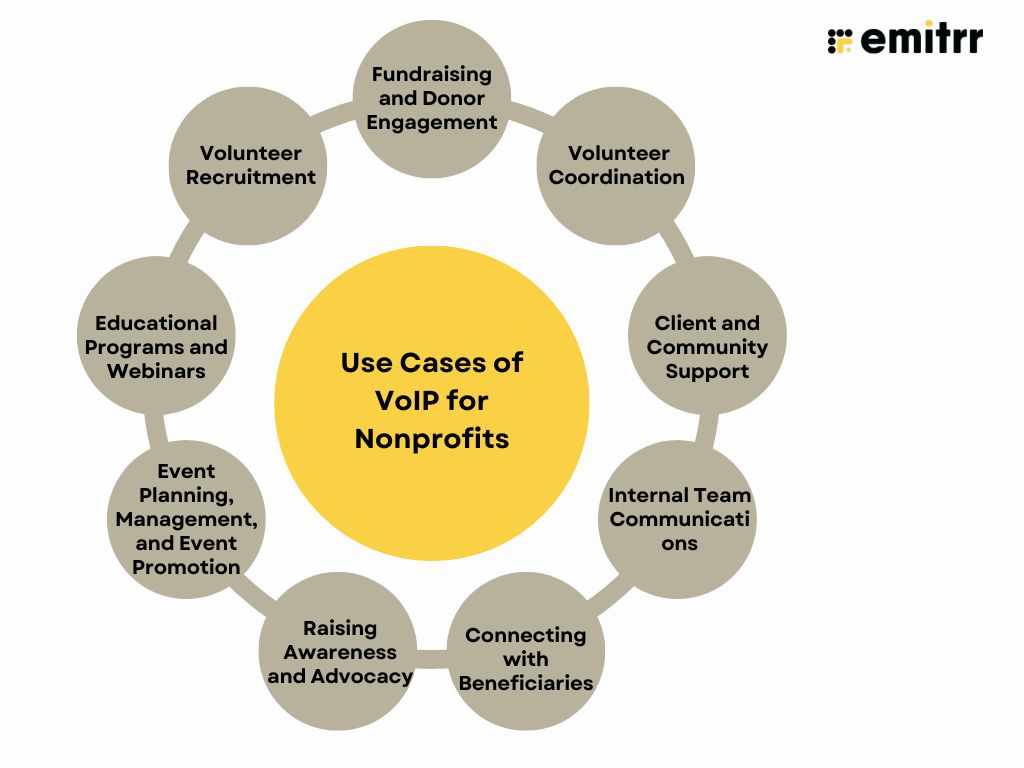
1. Fundraising and Donor Engagement
Through VoIP, nonprofit organizations can easily connect with donors on a regular basis. Using VoIP, organizations can arrange virtual fundraisers, connect with individual supporters over the phone, and keep backers informed by sending messages through the phone. Programs that allow them to analyze calls enable teams to understand how engaged donors are and follow up appropriately. With VoIP, a nonprofit could organize a virtual event to show its appreciation to donors from different regions without traveling.
2. Volunteer Coordination
It is simple to coordinate volunteers in different areas with the help of VoIP. Nonprofits may set up group conferences, discuss changes, or define tasks as soon as possible using VoIP. Call forwarding and apps for phones make it possible for volunteers to keep in touch while not in the office. If a disaster relief organization uses VoIP, volunteers can be grouped and contacted quickly, which allows for a speedy and effective response.
3. Client and Community Support
Organizations rely on VoIP to provide assistance to their clients and the community. An organization may provide counseling, legal advice, or help finding resources through toll-free numbers or local extensions. Since VoIP is flexible, healthcare nonprofits can count on it during times when call volumes are elevated due to open enrollment events. With CRM, you can track each interaction you have with clients, which helps provide better quality service.
4. Internal Team Communications
With VoIP, working as a team is easy, whether colleagues are in the office or working remotely. You can remain connected in real time using video conferences, instant messaging, and extensions that are all available online and not costly. Daily check-ins can be held more efficiently using VoIP for a nonprofit with global offices, helping them save money and achieve good results in terms of audio quality.
5. Connecting with Beneficiaries
With VoIP, nonprofits can communicate directly with beneficiaries at a reduced cost. People can be informed and mobilized as a part of a crisis response by organizations through voice calls, mass text messages, or reminders, which may contain timetables or emergency alerts. Since VoIP allows users to call anywhere, a food bank can communicate with its beneficiaries easily and make sure everyone gets the information.
6. Raising Awareness and Advocacy
Nonprofits can connect with a bigger audience by using VoIP. To promote their ideas, organizations can hold online discussions or press events. Since VoIP can record and sync with social networks, nonprofits can share and reuse information from their calls. A nonprofit working for the environment can use VoIP to organize an advocacy campaign or event, uniting activists and ensuring their message reaches more people.
7. Event Planning, Management, and Event Promotion
With VoIP, people working on an event can send invitations and reminders, quickly connect, and work together with greater collaborative spirit. Charities may use Virtual Private Networks to handle their logistics, update staff at events, and run virtual conferences or workshops. Call queuing ensures every attendee call is dealt with promptly. A charity run managed by a nonprofit can take advantage of VoIP to enroll people and share updates as the event happens.
8. Educational Programs and Webinars
It is especially convenient to use VoIP for learning in webinars and training sessions. Organizations can use video conferencing in their VoIP systems for training, informing people in the community, or supporting the professional development of volunteers. As an example, a nonprofit can hold online reading workshops for those who do not have much opportunity to learn, using VoIP to provide reliable sound and video for everyone taking part.
9. Volunteer Recruitment
VoIP plays a vital role in streamlining volunteer recruitment for nonprofits. With features like automated call routing, virtual phone numbers, and voicemail-to-email, organizations can easily connect with potential volunteers, follow up on inquiries, and schedule interviews, no matter where their team is based. It allows for efficient outreach campaigns, personalized communication, and real-time collaboration between recruiters and program coordinators. By reducing the time and cost associated with manual follow-ups, VoIP helps nonprofits attract and onboard volunteers more effectively.
Want to learn how a VoIP system can transform your business communication? Watch this YouTube video to explore all the benefits!
Key Considerations When Selecting VoIP for Nonprofits
As per reports, the VoIP market is growing at an explosive pace and includes a wide range of providers. This ever-expanding variety can leave even the best of minds in the nonprofit industry clueless about which VoIP service provider best fits their needs and suits their long-term goals.
At Emitrr, we’ve done the research, so you don’t have to. Our experts have come up with the key considerations nonprofits should keep in mind when choosing the right VoIP service platform for their needs.
1. Check Features
Every VoIP platform offers a unique set of features that may or may not align with your nonprofit’s needs. Avoid rushing into the search for features without first assessing your core communication ecosystem. Selecting the right stack of features, such as call forwarding, call routing, and auto-attendants, can significantly improve the speed, scalability, and quality of interactions, while also reducing costs.
2. Ensure Internet Stability
To avoid any disruptions, VoIP systems need to be aligned with the current setup. Due to their limited IT budgets, nonprofits must ensure their technology is compatible with what is currently available. Look into whether the VoIP system gives all staff and volunteers the ability to communicate remotely, and check if it can meet the communication needs of the nonprofit when the operations grow. Plus, check that the supplier offers simple installation, so your operations will be scarcely interrupted.
3. Identify Automation Levels
Automating communication tasks makes them quick and more resource-efficient. Ensure your VoIP software includes features like automatic call routing, voicemail to email, and voice message scheduling. For nonprofits with smaller teams, these tools help streamline operations by eliminating certain manual tasks. Using automated call menus, a nonprofit can help donors reach the appropriate team quickly and efficiently. Integration with CRMs can ensure data interoperability, allowing donor and volunteer data to be logged automatically and accessed from a centralized location without any hassle.
4. Ensure Staff Readiness and Upskilling
Make sure your staff is adequately trained to work with VoIP systems and understands how to use key features effectively. Upskilling your team ensures they can manage communication tools efficiently, troubleshoot minor issues, and make the most of automation and analytics capabilities. Providing regular training sessions will help your nonprofit stay agile and fully leverage the benefits of VoIP technology.
5. Evaluate Security
Nonprofits have troves of sensitive data and must ensure security at all times. Opt for a VoIP service that secures both voice and data transmission by using encryption. Ensuring your communication channels are bolstered with two-factor authentication, safe APIs, and regular testing for vulnerabilities will help prevent breaches. When using VoIP technology, a healthcare nonprofit must make sure they use a HIPAA-compliant VoIP system to keep their clients’ communications safe.
6. Partner With the Best in the Industry
Collaborate with a VoIP provider that offers the right mix of affordability, scalability, support, and features tailored to nonprofit needs. Look for flexible pricing models that help you stay within budget. Evaluate providers based on real reviews from other nonprofits, and ensure their customer support is available 24/7. For global nonprofits, international calling capabilities at low rates are a must. For a reliable, cost-effective, and nonprofit-friendly solution, consider partnering with Emitrr.
Make the Strategic Move to VoIP With Emitrr
Emitrr leads the pack as the most reliable, feature-rich VoIP service provider for nonprofits, offering holistic support through voice, video, and text capabilities bundled into a single platform. Our VoIP services leverage broadband internet, providing a more affordable and consistent alternative to traditional phone systems.
Known for its 24/7 customer support, 99.99% uptime guarantee, and compatibility with more than 1,000 integrations, Emitrr’s VoIP solution is highly rated on platforms such as Capterra and G2.
Emitrr’s greatest USP is its suite of custom features designed to increase communication efficiency for nonprofits. A handful of them are highlighted below:
1. Virtual Receptionist with Auto-Attendant
The virtual receptionist with an auto-attendant feature is a win-win for nonprofits. Not only does it route incoming calls to the appropriate person or department based on caller input, but also creates a professional first impression for nonprofits, even those with limited staff. Keeping a virtual receptionist in action ensures callers are effectively directed without requiring a dedicated receptionist or human intervention.
3. Built-In Conference Calling and Video Meetings
Emitrr’s built-in conference calling and video meeting are star features, allowing nonprofits to host virtual meetings directly within the platform. Imagine launching a team huddle or donor briefing with a single click without needing separate tools like Zoom. Emitrr’s native conference and video meeting toolkit are top-tier additions, letting nonprofits organize boardroom meetings right into the browser.
4. Integrated SMS for Multi-Channel Communication
With Emitrr’s SMS engine, you can send group texts for nonprofits, receive bulk texts and add steam to your volunteer management initiatives, fundraising campaigns, and community outreach efforts. The feature helps curate timely responses and reminders, improving engagement while keeping everyone, from donors to stakeholders, thoroughly involved.
5. Interactive Voice Response (IVR) for Self-Service
Emitrr’s fully-featured IVR system gives callers menu options to reach the right department or leave messages, enabling self-service without staff involvement. It’s an hands-on feature, reducing team workload by half and allowing callers to access information or complete simple tasks efficiently without any long wait lines or frustrating delays.
6. Seamless CRM Integration for Caller Insights
Emitrr has support for over 1,000 integrations. The VoIP service can work in tandem with CRM systems and deliver real-time caller insights at scale, helping nonprofits personalize interactions without extra effort. Plus, it helps keep everyone informed and on the same page. This strengthens donor and volunteer relationships through more meaningful, informed communication.
7. Call Forwarding and Missed Call Handling
Emitrr’s call forwarding and missed call handling ensure important calls are never lost, even after hours. With options like redirecting to voicemail or auto-reply by text, nonprofits maintain responsiveness and build trust with donors and volunteers.
8. AI Agent
Emitrr now also offers AI agent that makes texting for nonprofits effortless. Check out this video to know more about what Emitrr AI agent can do:
How to Setup VoIP for Nonprofits Using Emitrr?
Setting up Emitrr’s VoIP services is designed to be user-friendly, with comprehensive support from their technical team. The process involves the following steps:
- Request a Demo: Visit Emitrr’s scheduling page to book a demo. This allows nonprofits to explore the platform and discuss specific needs.
- Contact from Support Team: Emitrr’s support team will reach out to provide guidance and answer questions.
- Onboarding and Setup: The technical team handles the setup process, including:
- Setting Up Extensions: Configuring multiple extensions for team members or departments.
- Integrating with CRM: Connecting Emitrr to existing CRM systems for seamless data syncing.
- Enabling Texting Features: Activating SMS capabilities for donor engagement and volunteer coordination.
FAQs
The cost of VoIP for nonprofits generally falls within the range of about $14 to $40 per user per month, based on the provider and features. Many providers offer special nonprofit discounts or grants, making everything pretty affordable. Plans often include features like call routing, voicemail-to-email, and video conferencing, helping nonprofits get more bang for their buck.
VoIP helps nonprofits save a ton on communication costs by reducing expensive hardware, dedicated phone lines, and high long-distance fees. Setup and maintenance costs are significantly lower since updates are handled remotely. The cloud-based nature of VoIP also allows nonprofits to easily scale services according to their needs, paying only for what they use.
Contrary to traditional phone systems, VoIP provides higher flexibility, lower costs, and more features. Traditional systems require expensive hardware and are tied to physical locations, while VoIP works anywhere with internet access and supports multiple devices.
VoIP can be secure for sensitive communications when providers use encryption protocols like TLS and SRTP, along with strong authentication and compliance with regulations such as HIPAA or GDPR. With these protections, VoIP can safeguard confidential information as effectively as traditional phone systems.
One of the top-of-the-league VoIP providers for nonprofits is Emitrr, followed by RingCentral, Nextiva and Dialpad. Emitrr is trusted for its extensive custom features, affordable pricing plans, and uptime guarantee. The platform also offers a free 20-min demo to help nonprofits evaluate business fit and make a decisive decision for themselves.
Conclusion
Modern nonprofits can’t afford outdated, cost-intensive phone systems. The time’s ripe for the big move to VoIP service providers that offer SMS outreach, call routing and recording, and seamless CRM integrations for impactful outcomes — all without burning hard-earned money.
Emitrr stands out as one of the best VoIP service providers for nonprofits, and it’s easy to see why. It’s intuitive, powerful, and affordable. Plus, it guarantees service uptime, seamless compatibility, and constant, around-the-clock support — precisely everything you’d want in a VoIP provider. To see how it fits your organization’s needs, book a demo through Emitrr’s scheduling page and experience a solution built to support your impact.