
 4.9 (400+
reviews)
4.9 (400+
reviews)
Introduction to VoIP for Radiologists
Radiologists have long relied on traditional communication methods: desk phones, pagers, and, in some cases, even faxes. These methods, while familiar, are often inefficient and not well-suited to modern, distributed radiology practices.
With the rise of cloud-based VoIP systems, radiology departments are now transitioning to more secure, scalable, and agile communication platforms. Whether you’re in a large hospital or a teleradiology setting, VoIP for radiologists offers the flexibility and functionality needed to maintain quick and secure communication.
Continue reading as we discuss more about the importance of VoIP for radiologists.
Why VoIP is Important for Radiologists
Radiologists today often work across multiple locations and even across time zones. Whether on-site or remote, they must communicate efficiently with referring physicians, technicians, and administrative teams. Watch our detailed video on what VoIP is to get a more thorough understanding:
Here’s why VoIP for radiologists is so essential:
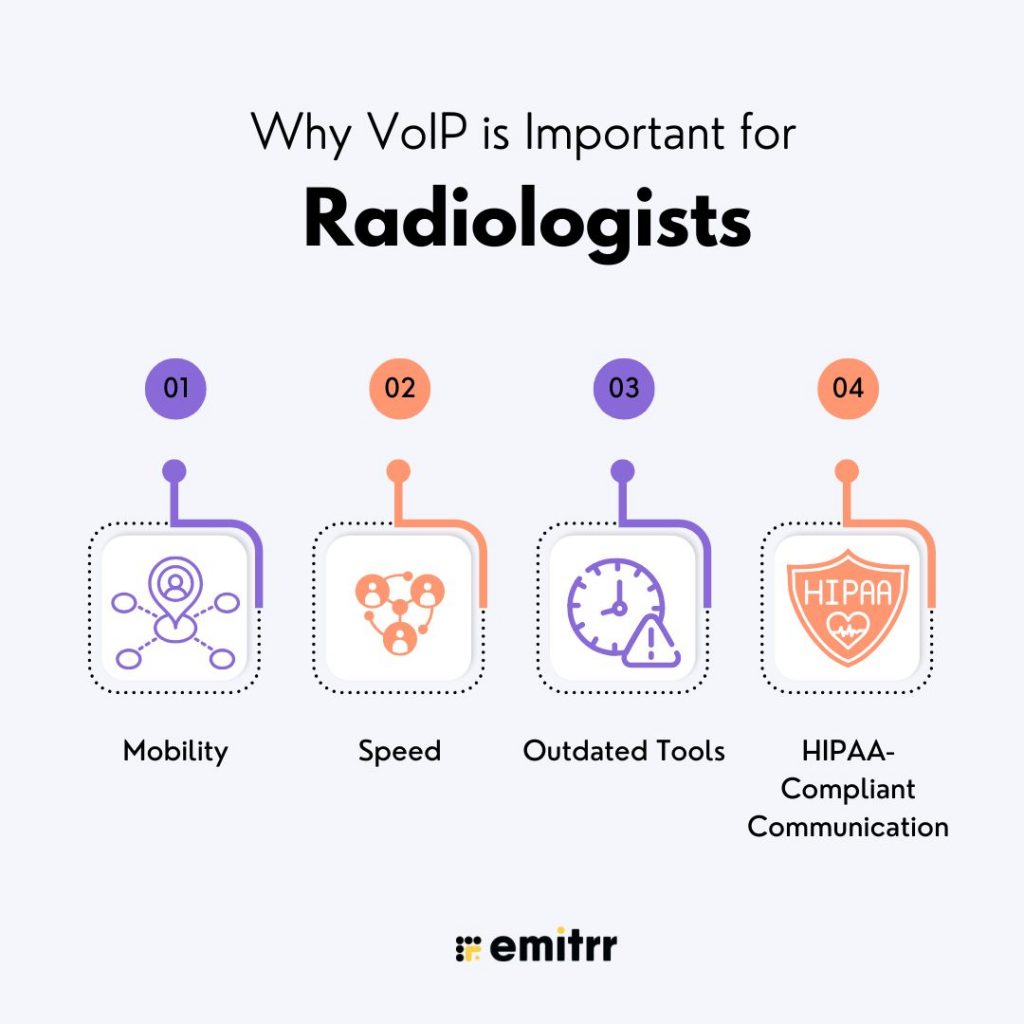
Mobility
Radiologists working from different facilities or home setups need communication tools that follow them. A HIPAA-compliant VoIP phone system ensures they can answer calls, receive secure voicemails, and collaborate in real-time, anytime, anywhere, without being tied to a physical desk phone or a hospital-bound system.
Speed
In radiology, speed can directly impact diagnosis and care. VoIP enables immediate, secure voice calls between care providers. This real-time communication reduces delays that typically occur with emails or waiting for someone to respond via outdated paging systems or in-person updates.
Outdated Tools
Many radiologists still rely on landlines or pagers—devices that offer no flexibility, limited reach, and no integration. VoIP for radiologists replaces these tools with smarter, scalable systems that support modern workflows, especially in multi-site practices and growing teleradiology operations.
HIPAA-Compliant Communication
VoIP systems purpose-built for healthcare ensure HIPAA-compliant phone numbers for radiologists. They protect patient data through encrypted text messaging, secure voicemail, access controls, and audit logs, making voice communication safe for transmitting PHI while meeting federal regulatory standards.
Key Benefits of VoIP for Radiologists
Modern radiology demands modern tools. VoIP systems offer scalable, secure, and highly efficient communication that aligns with the fast-paced and distributed nature of imaging practices, especially when HIPAA compliance and real-time coordination are non-negotiable.
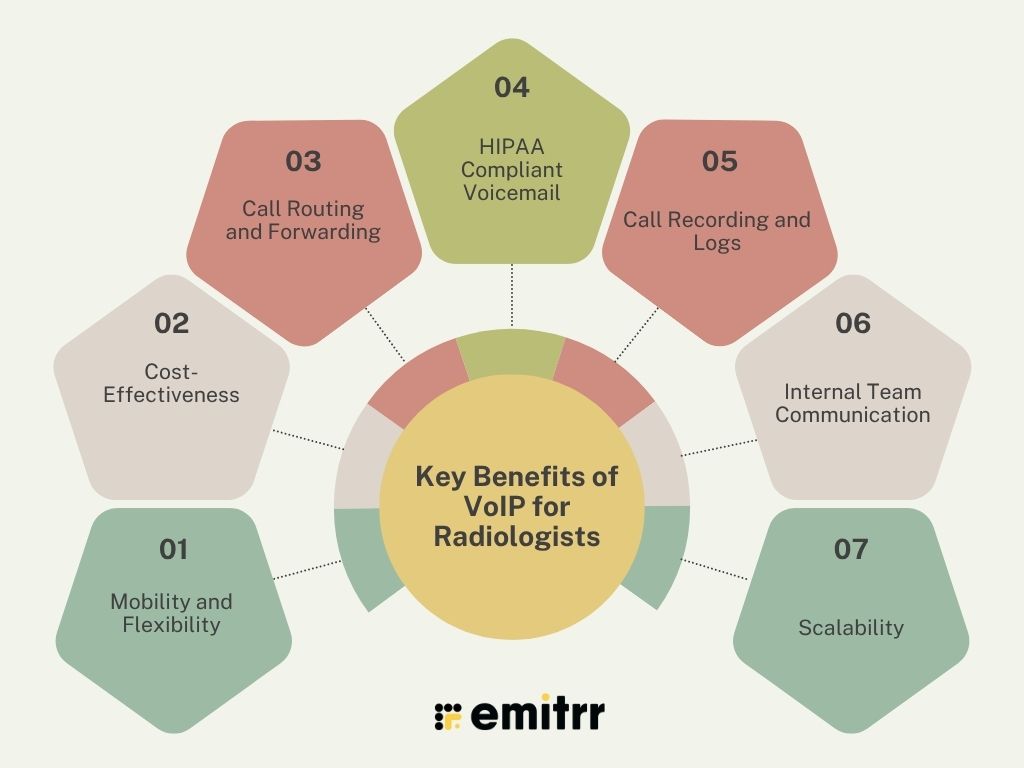
Mobility and Flexibility
Radiologists no longer need to stay tethered to a desk phone. With VoIP for radiologists, communication happens seamlessly through mobile apps, browsers, or desktops, allowing flexibility in how and where they manage calls, voicemails, and follow-ups, including during remote shifts or teleradiology consults.
Cost-Effectiveness
Compared to traditional phone systems, VoIP for radiologists costs significantly less, particularly when supporting long-distance communication, after-hours shifts, or multi-location practices. Cloud-based systems eliminate hardware dependency and reduce recurring charges, making them ideal for small clinics and enterprise-level radiology groups alike.
Call Routing and Forwarding
With smart call routing, incoming calls are automatically directed to the on-call radiologist or designated department, eliminating the need for manual intervention. This ensures no delays in critical communication and improves patient care coordination, especially during emergencies, holidays, or rotating shifts across locations.
HIPAA Compliant Voicemail
Features like HIPAA-compliant voicemail allow secure delivery of voice messages with encryption and access control. Teleradiologists receive voicemails via email or mobile app, transcribed and timestamped, ensuring they stay compliant while accessing critical patient information on the go.
Call Recording and Logs
Call recordings and detailed logs support audit trails, staff training, and communication quality assurance. Radiology practices can track, review, and document every call, ensuring compliance with HIPAA while maintaining accountability and transparency across internal and external voice interactions.
Internal Team Communication
VoIP connects radiologists, technologists, and administrative teams on a single secure platform. This enables real-time collaboration during imaging workflows, minimizes delays, and removes the inefficiencies of fragmented communication tools or delayed responses common in traditional setups.
Scalability
Growing radiology practices can add new users, departments, or locations within minutes, not months. No complex infrastructure is needed. VoIP systems make scaling simple with plug-and-play configuration, user management, and advanced role-based controls.

Use Cases of VoIP for Radiologists
Effective communication is central to radiology. VoIP supports radiologists in delivering timely, secure, and coordinated care, whether it’s during urgent consults, follow-up calls, or managing remote operations.
Here are some use cases that highlight how VoIP adds real value across the imaging workflow:
Urgent Consults Between Referring Physician and Radiologist
When a referring physician needs immediate insight into imaging results, VoIP allows them to connect directly with the on-call radiologist. No waiting, no paging delays. Instant, HIPAA-compliant voice communication helps make time-sensitive diagnostic decisions quickly, which is especially critical in emergency departments, ICUs, or trauma cases.
Voicemail for Teleradiologists With Encrypted Delivery
Teleradiologists can’t afford to miss updates while offline. HIPAA-compliant voicemail via VoIP lets them receive secure voice messages with encrypted delivery and optional transcription. This ensures they remain in the loop, respond promptly, and maintain compliance even when operating from different time zones or off-site locations.
Appointment Scheduling and Rescheduling via Phone Trees
VoIP-enabled phone trees make it easy for patients to confirm, cancel, or reschedule imaging appointments without speaking to a live agent. With options in multiple languages and intelligent routing, radiology centers reduce no-shows and streamline scheduling—all while maintaining an organized, automated workflow.
On-call Management With Auto-routing
Rotating on-call schedules can be a logistical nightmare with traditional phones. VoIP allows automated call forwarding to the designated radiologist based on time or location. This eliminates confusion, reduces missed calls, and ensures someone is always available to provide urgent reads or consults, even after hours.
Follow-up Calls to Patients Regarding Imaging Results
Sharing sensitive test results or next steps over the phone must be secure and compliant. VoIP systems provide encrypted voice lines, caller ID masking, and call tracking, allowing radiologists or admin staff to follow up with patients confidently while protecting patient privacy and ensuring documentation.
Inter-team Coordination During Imaging Procedures
Radiologists, technicians, and nursing staff often need to collaborate during procedures like MRIs, biopsies, or interventional radiology. VoIP enables hands-free, instant voice communication within the imaging suite, streamlining teamwork, reducing interruptions, and minimizing procedural delays without compromising compliance or audio clarity.
Remote Radiology Operations and Virtual Clinics
As remote and hybrid models expand, radiologists can support virtual clinics using VoIP’s cloud capabilities. Whether it’s reading images from home or participating in virtual consults, VoIP for radiologists ensures they stay connected with patients and peers securely and efficiently, regardless of location.
Here’s an in-depth video on the pros and cons of VoIP to help you get started:
Best Practices for Using VoIP in Radiology
To maintain HIPAA compliance and optimize communication, radiology practices must follow structured protocols. These best practices ensure secure, efficient phone usage across departments, especially when handling PHI or managing remote, multi-site operations.
Choose a HIPAA-compliant VoIP Provider that Offers BAA
Working with a VoIP provider that signs a Business Associate Agreement (BAA) is non-negotiable. This agreement ensures the provider is legally accountable for maintaining HIPAA compliance. A signed BAA confirms that the vendor understands their responsibility in safeguarding Protected Health Information (PHI) transmitted over voice systems and voicemails, offering radiology practices the legal and security assurance they need.
Use Encrypted Lines and Disable SMS Features Unless Secured
End-to-end encryption protects voice data from interception or unauthorized access. VoIP platforms should also disable or secure SMS for business communication features unless they meet HIPAA standards. Encryption for all voice and voicemail interactions ensures PHI stays protected across channels.
Implement Role-based Access for Voicemails and Call Logs
Access to voicemails and call logs should be restricted based on job roles. Implementing role-based permissions helps prevent unauthorized access and accidental exposure of Protected Health Information (PHI). Radiologists, technologists, and administrative staff should only be able to view information relevant to their responsibilities.
Train Staff on Leaving and Handling Sensitive Voicemails
Improper handling of voicemails is a common HIPAA violation. Staff should be trained to avoid including PHI in voicemail messages unless it is securely stored or encrypted. Establish clear protocols for recording, transcribing, and responding to voicemails in a compliant manner.
Automate Call Flows for After-hours or On-call Rotations
Manual call routing during evenings, weekends, or holidays can cause delays or missed consultations. Automating call flows based on schedules or on-call rotations ensures 24/7 coverage. This reduces errors and enhances both efficiency and compliance.
Regularly Monitor and Audit Logs to Flag Unusual Activity
Monitoring and auditing call activity helps identify suspicious behavior, unauthorized access, or process inefficiencies. Regularly reviewing call logs and system access reports strengthens compliance efforts and ensures communication systems function smoothly.
Avoid Using Personal Devices Without Secure VoIP Apps
Personal mobile phones typically lack the necessary security features to protect PHI. Ensure staff use only secure, HIPAA-compliant VoIP applications that include encryption, access controls, and audit trails. This is especially important for radiologists working remotely or across multiple sites.
Common Challenges with VoIP for Radiologists
Adopting VoIP technology in radiology isn’t without its hurdles. From maintaining compliance to ensuring smooth integration, several challenges must be addressed for a successful transition.
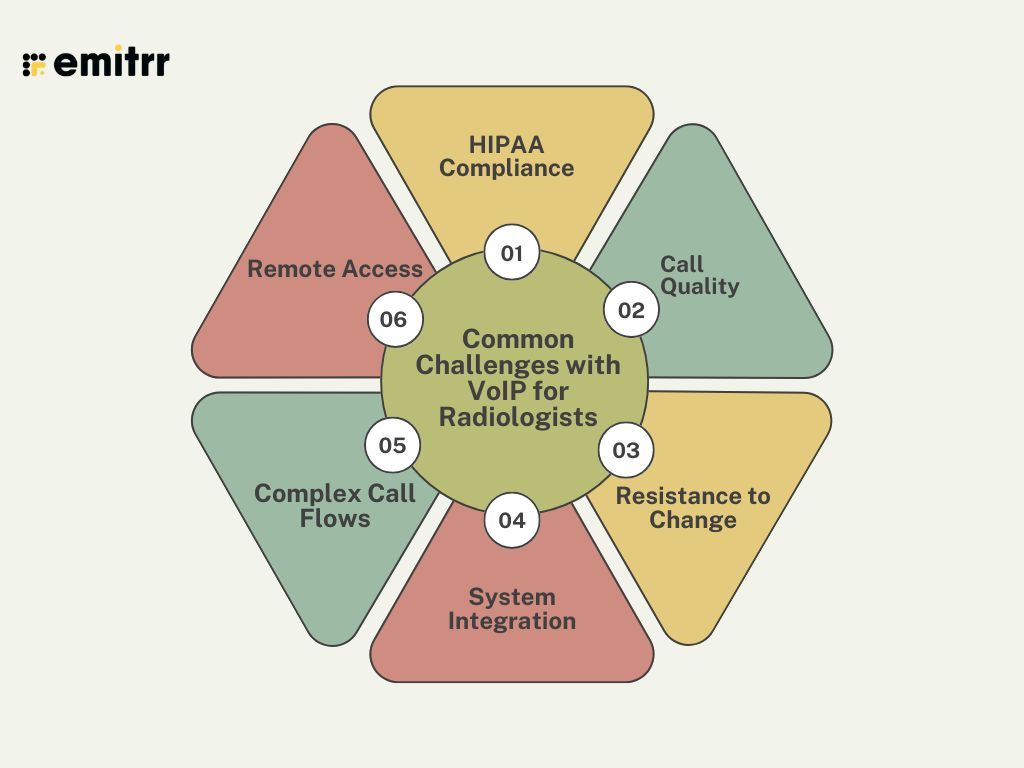
HIPAA Compliance
Protecting patient health information (PHI) is non-negotiable. VoIP systems used in healthcare must support encryption, secure voicemail, and access control to meet HIPAA requirements. Without these features, providers risk data breaches and regulatory violations.
Call Quality
Reliable, high-speed internet is essential for maintaining clear voice communication. Poor network connectivity can cause dropped calls or audio lag, which disrupt critical workflows. It’s important for radiology practices to evaluate and enhance their infrastructure before fully implementing VoIP.
Resistance to Change
Radiology teams familiar with traditional landlines or pagers may be hesitant to embrace new systems. Offering user-friendly interfaces, proper onboarding, and role-specific training can help smooth the transition and reduce pushback.
System Integration
To improve operational efficiency, VoIP should integrate seamlessly with existing systems such as Electronic Medical Records (EMRs), Radiology Information Systems (RIS), and scheduling platforms. Compatibility issues can slow down workflows and limit the effectiveness of the new communication setup.
Complex Call Flows
Designing features like auto-attendants or intelligent call routing can be complex without technical support. If not configured properly, these systems can cause delays or misrouted calls, frustrating both staff and patients. Tools that simplify call flow design are essential for radiology-specific use cases.
Remote Access
With many radiology teams working across multiple sites or from home, secure remote access is crucial. Organizations must implement strong device management policies and ensure that all remote communication is encrypted and monitored to protect PHI across all locations.
How to Set Up VoIP for Radiologists Using Emitrr
Emitrr’s AI VoIP simplifies the process of modernizing voice communication for radiology practices. Designed specifically for healthcare, it offers built-in HIPAA compliance, encrypted voicemail, and intelligent call routing. Setup is fast, secure, and tailored to match the operational and clinical workflows of radiologists from day one.
Here’s how you can set up Emitrr VoIP for small businesses:
Choose a HIPAA-Compliant Plan
Start by selecting an Emitrr AI plan tailored for healthcare. Ensure it includes encrypted voice communication, secure voicemail storage, and comprehensive audit logs. Emitrr provides a signed BAA, giving radiologists confidence in HIPAA-compliant phone communication across all practice locations.
Set Up Auto-Attendants
Configure auto-attendants to streamline call routing. Create smartphone trees that direct patients and providers to the right department, scheduling, results, urgent consults, or billing without delays. Emitrr offers templates specifically designed for radiology workflows and after-hours management.
Enable Secure Voicemail
Turn on encrypted voicemail with email notifications. Radiologists can receive transcribed messages securely, reducing response time and improving follow-up accuracy. Emitrr’s voicemail system ensures PHI is never compromised, whether accessed from a desktop, mobile device, or browser.
Train Staff
Provide hands-on training to ensure every team member knows how to use the system properly. Focus on voicemail etiquette, call handling, and privacy protocols. Emitrr includes onboarding support and training tools tailored for radiology teams and administrative staff.
Monitor Logs
Emitrr’s real-time dashboard gives you full visibility into call activity. Monitor who accessed voicemails, track call volumes, and flag any anomalies. Regular audits ensure your VoIP system remains compliant, and adjustments can be made instantly if any issues are detected.
Integrate Tools
Connect Emitrr with your EHR, RIS, or scheduling platforms to create a seamless communication ecosystem. This eliminates the need to switch systems and keeps call records aligned with patient data, streamlining both administrative tasks and clinical coordination.
FAQs
Emitrr AI is a top VoIP solution for radiologists, offering HIPAA compliance, smart call routing, voicemail transcription, and real-time analytics tailored specifically for healthcare communication needs.
Yes, when voicemails are encrypted, access-controlled, and logged. Emitrr AI ensures full HIPAA compliance with secure voicemail delivery and detailed tracking to protect patient health information.
VoIP for radiologists’ costs vary, but Emitrr offers flexible, affordable plans suited for solo radiologists or large imaging groups, with pricing based on user count and required features.
Yes. Emitrr AI offers automated on-call routing, ensuring urgent calls reach the correct radiologist anytime, streamlining after-hours coverage without manual call transfers or system delays.
Emitrr secures PHI with encrypted calls, role-based access, secure voicemail storage, activity logs, and a signed BAA, ensuring full HIPAA compliance across all radiology voice interactions.
Conclusion
Radiology today requires more than outdated landlines or pagers. Efficient, secure communication is critical for delivering timely care. VoIP for radiologists provides a flexible, cost-effective way to manage voice interactions while maintaining full HIPAA compliance.
With Emitrr AI, radiology practices gain access to encrypted voicemails, smart call routing, audit-ready logs, and seamless integration with existing workflows. Whether you’re running a multi-site imaging center or offering remote reads, Emitrr makes setup simple and secure.
Ready to modernize your radiology communication system? Schedule a demo with Emitrr today and experience HIPAA-compliant VoIP built for radiologists.