
Introduction: Beyond the Diagnosis – Why Patient Satisfaction is Your Practice’s Lifeline
Imagine a skilled surgeon successfully completing a perfect procedure. Clinically, it’s a success. But if the patient feels that they were not listened to while they waited for the procedure or did not understand their post-operative instructions, the patient experience was compromised. And today, delivering a great clinical outcome isn’t enough to grow your practice or build patient retention.
There’s no denying that healthcare has begun to shift towards a patient-centric model. The average patient now expects a level of individualized attention, empathy and effortless, clear communication similar to other industries.
That’s where patient satisfaction is important, more than ever. When it comes to patient care, it’s not just about the end outcome. It’s about how the patient feels at every step of the way. Happy patients will come back, will refer others and will generally leave positive reviews, which all contribute to the sustainability of your practice.
That’s why patient satisfaction is more important than ever. It’s not just about the results, but how the patient feels during the process. Happy patients will come back, tell others about your clinic and write positive reviews—all of which will make your practice successful in the long run.
In this blog, we are going to talk about what patient satisfaction is, why it matters, and how you can improve it in your own practice.
Whether you are a solo dentist or part of an expansive organization, you are going to gain insights on how solutions like Emitrr’s AI-powered communications platform can create better patient connections, more efficient operations and improved patient satisfaction.
Understanding Patient Satisfaction: What it Really Means?
At its core, patient satisfaction definition is the extent of satisfaction or dissatisfaction of a patient’s healthcare needs and expectations that are met during the service they receive. It’s a subjective measure affected by much more than clinical outcomes. A satisfied patient is a patient who feels he/she was treated fairly, received respect, and the services they received aligned with their expectations. Healthcare practices often document this feedback using structured patient feedback forms, such as a Patient Satisfaction Survey, to consistently capture patient experiences.
When considering why patient satisfaction is important, it makes sense to understand its implications on practice impact. Patient satisfaction isn’t only about attaining better health outcomes, there are significant and measurable benefits:
- Loyalty & Retention: A happy patient will come again and will refer to others. A TARF (Technical Assistance Research Programs) study found that dissatisfied patients told about 10–15 people after their experience, while satisfied patients only told about 4, underscoring the multiplier effect of patient satisfaction.
- Better Results: Patients who feel understood and valued are more likely to take appropriate medical steps towards better health.
- Lower Legal Risk: In the healthcare industry, high patient satisfaction often mitigates malpractice risk levels; valued and satisfied patients are less likely to sue their friendly doctor, even if there is an adverse outcome.
- Financial Growth: A good experience of patients in the hospitals and clinics brings more loyal patients, free referrals and also makes practices eligible for getting incentives with value-based care.
- Staff Benefits: High satisfaction results in happier staff, lower burnout, and improved staff retention – staff want to work where patients are satisfied.
- Regulatory Compliance: Organizations such as The Joint Commission (JCAHO) and the National Committee for Quality Assurance (NCQA) join the dots between hospital patient satisfaction and levels of quality care, making it important for accreditation.
The Nuance: Difference between Patient Experience vs. Patient Satisfaction
In order to become effective at patient-centered care, there must be a differentiation between patient experience and patient satisfaction as they highlight different yet intertwined aspects of the care journey.
Patient Experience Recap:
As described by groups such as the Beryl Institute and the Agency for Healthcare Research and Quality (AHRQ), patient experience refers to all the interactions a patient has had with the healthcare system that shape their perception of care. The care experience involves all touch points including scheduling appointments, billing, waiting rooms, and interaction communication – and there’s also the clinical care experience. It’s important to remember what happened throughout the whole journey of care.
Key Difference:
The difference comes in their focus:
Patient Experience = What actually happened = The patient’s perception of the journey.
Patient Satisfaction= Did it meet my expectations (how well the experience matched expectations )
Example (Melanoma Surgery):
Two patients have the same melanoma surgery and are both treated very well. Yet:
Patient A, a younger person who has a higher pain tolerance level and previous positive experiences, expects minimal discomfort and has a quick recovery. If they get what they want, they are very satisfied.
Patient B, who is older with lower pain tolerance and has had tough recoveries in the past, anticipates pain and being laid up. If pain is greater than expected or recovery is not making progress, they will be less satisfied, even if the quality of care is consistent for both patients.
This illustrates how expectations – fuelled by age, state of health, past experiences, or simply researching online – shape satisfaction, even when there is the same quality of care.
Measuring both parameters provides a complete picture. The patient experience exposes operational gaps (perhaps in the form of wait times or unclear communication), while patient satisfaction provides a barometer of whether expectations were met.
Together, they help healthcare providers figure out if patient issues stem from operational problems or expectation mismatches. They are both integral in achieving better patient satisfaction and a successful practice.

Pillars of Service Excellence: Creating a High-Satisfaction Journey
It takes a multi-pronged approach to develop a healthcare organization that is able to continually rise to the challenge of high patient satisfaction and build on its base of service excellence.
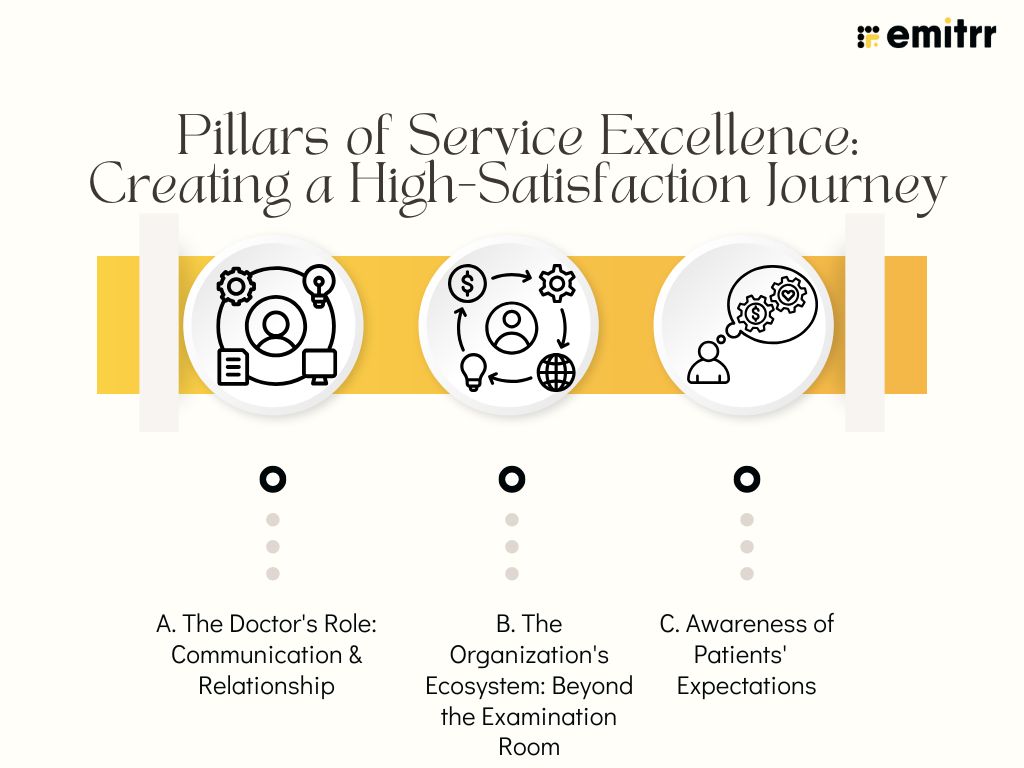
A. The Doctor’s Role: Communication & Relationship
The doctor-patient relationship is a cornerstone of the patient experience, and success is dependent on communication and building relationships with patients.
Active Listening includes providing full attention and eye contact and allowing patients to express concerns without interruption—this creates respect and trust.
Clear explanations involve using simple, empathetic language to address diagnoses and treatment plans while helping to set expectations – this is critical for understanding by the patient. The NRC survey stresses that patients care very much about this clear approach, especially in a scenario where the treatment may be chronic or aesthetic.
Creating rapport and trust involves all of these things:
- Breaking the ice with a smile, eye contact, using names, and showing concern.
- Courteous respect, by preserving dignity and modesty.
- Undivided attention, by reducing distractions and honing in on the patient.
- Privacy, by respecting confidentiality.
- Pain Management involves setting expectations and a plan ahead of time (i.e. before eventually having surgery) to minimize anxiety and improve satisfaction.
B. The Organization’s Ecosystem: Beyond the Examination Room
Patient satisfaction in healthcare is more than about interactions with practitioners; every interaction with the organization matters.
First Impressions Count:
- Phone Etiquette includes prompt, polite, and informed responses along with tools such as Emitrr, which can assist in smart routing and instant information responses.
- Office Environment that is clean, comfortable, and inviting, as well as good directional signage and aesthetics.
- The level of Empathy is shown by all employees, who are all trained in active listening, empathy, and resolution.
Operational Efficiency:
- Reducing Wait Times through smarter appointment schedules, timely notifications of delays and issues when they occur, and promoting the best flow of patients.
- Streamlining Processes consisting of easy patient check-in/out, smooth transitions through departments, and clarity and purpose with communication.
Responding to Complaints:
- Formal Systems for Patients to Lodge Complaints, which allow patients to maintain confidentiality and do no harm.
- Timely, Documented Responses that provide transparency, compliance with JCAHO standards, and a focused approach to future prevention.
- Owning Mistakes by acknowledging the mistake with empathy, and the focus on learning to improve, not to blame.
C. Awareness of Patients’ Expectations
To obtain high levels of satisfaction, providers need to understand and adapt to changing patient expectations.
Patients continue to see themselves as Consumers, and can now take a more active role by being informed in their own decision-making while demanding transparency, value, and convenience.
Patients’ expectations are multifaceted, and vary by age, sense of urgency, health condition, and technological awareness—so you must tailor the experience to the patient (i.e., younger patients value speed; while older patients value trust and care).
Know Their Rights through staff education on patient charters and ensuring everyone honors and respects patient expectations.
The Contact Center: Your Digital Connection to Patient Satisfaction
Often, the initial and most frequent point of contact, whether a dedicated contact center team or front office staff, the contact center is a digital connection that is directly tied to patient satisfaction in healthcare.
- First Entry Point: The way a call is answered, a question is addressed, or an appointment is made will drive the tone of the entire patient experience. A favorable first interaction establishes trust and reduces anxiety, whereas unfavorable first contact creates dissatisfaction.
- Challenges: Frustrating experiences tied to long hold times, providing different information (having to repeat), inconsistent answers, and issues with transfers and other departments.
How Technology Fixes It: The right tools can transform contact centers into patient satisfaction powerhouses:
- 360° Patient Profiles: When you combine CRM with contact center tools, your agents have immediate visibility to patient medical histories, preferences, and care gaps for more efficient, personalized support – especially during sensitive circumstances.
- Emitrr’s Benefit: Emitrr brings you effortless CRM integration, allowing your agents to see the full context of patients and deliver better and more sympathetic responses.
- Multi-Channel Access: Supporting phone, SMS, or web chat enables us to meet the preferences of patients and to provide consistent service across all channels.
Automation & AI Support:
- Appointment Management: SMS/IVR scheduling, confirmations, and reminders reduce no-shows and staff time.
- Emitrr’s AI Agent Sarah: Instantly replies to FAQs; freeing up agents and shortening wait times.
- Efficient workflows: Automated refills, post-visit instructions, and reminders for better care quality and convenience.
- Proactive Engagement: Engaging with an individual based on data patterns and reaching out for follow-ups or screenings is indicative of commitment and can significantly enhance engagement.
- Impact: With such tools, healthcare providers can reduce wait times, increase agent efficiency, resolve issues faster, and improve patient convenience, ultimately enabling an environment where patient feels really “cared for” – resulting in higher patient satisfaction in healthcare.
Measuring & Improving Patient Satisfaction: A Continuous Quality Loop
You can only manage and improve if you have measurements. Developing a strong mechanism for the measurement of patient satisfaction is important to focus on what you do well and where growth opportunities exist.
Purpose of measuring: Measurement regularly delivers data with which to monitor organizational performance, visualize trends, and determine the impact of improvements.
- HCAHPS: A mandated U.S. hospital survey established to capture patient perceptions on communications, staff responsiveness, cleanliness, pain management, and discharge. Scores are public and used in reimbursement calculations.
- NPS: Measures loyalty with just one question — “How likely are you to recommend our practice?” —grouping responses into Promoters, Passives, and Detractors to quantify the overall sentiment.
- Custom Surveys: Customizable surveys for any service or department ensure specific, actionable feedback.
Digital Feedback Options:
- SMS and Email Surveys: Ease of use, automated, high response, and quick data collection.
- Online Reviews and Suggestion Boxes: Less structured, but highly valuable qualitative information.
- Emitrr’s Position: Automates SMS/email surveys to send hours after the patient episode, so feedback can be taken at the moment the experience is crisp, for the clinic to gather data quickly and easily.
Simplify feedback collection with patient satisfaction survey SMS templates built for healthcare practices
Turn Feedback into Action:
- Identify Trends & Concerns: Actively identify survey trends for the most popular complaints and dissatisfaction points.
- Segment Insights: Analyze data by provider, department, or demographic to identify hidden issues.
- Drive Improvements: Leverage feedback to improve staff training, operations workflows, and facility improvements.
Methods of Continuous Improvement:
- Staff Training: Offer regular training on improving both communication and empathy as well as service recovery.
- Refinements to workflows: Continuously review and enhance the patient-facing workflows to be faster and more convenient.
- Smart Tech Use: Leverage unified communication, scheduling automation, and real-time insights platforms like Emitrr.
- Close Feedback Loops: Inform patients of how their feedback has led to concrete changes — this establishes trust and triggers more input.
The Future of Patient Satisfaction: Powered By Technology
The patient satisfaction landscape in its entirety is constantly evolving, and technology is going to play a critical role in the future of patient-centered care.
- Predictive Personalization: The application of AI and data analytics will enable healthcare organizations to address patients’ needs and wants without them ever having to voice them, providing an experience that is tailored to each patient’s preferences and constraints.
- Unified Digital Experience: The patient journey will be completely integrated across digital touchpoints (websites, patient portals, communication apps), creating an experience that makes each new step towards continuity of care seamless for them.
- Proactive, Preventative Care: Actionable data and information will enable proactive outreach to patients, prompting reminders to schedule follow-ups and screenings and receive personalized lifestyle recommendations for preventative care.
- Next-Generation Virtual Visits: Continued growth, coupled with advancements in technology, will enable the number of options for virtual care visits to rise in all facets, while still elevating performance for communication, relationship-building, and patient satisfaction in virtual formats.
- Emotion-Oriented AI: AI might someday be able to sense other users’ emotions based on voice analysis in calls or text/description analysis in messages. This would allow us to have AI better choose when to involve human agents in responding to support requests or adjust itself to be more empathetic.
- Emitrr’s Mission: We are advancing this transformative technology at Emitrr- with a dedicated mission to offer the healthcare industry the most innovative AI-powered communication technology. This will help them drive the kind of unparalleled patient-first experiences that will ultimately come to define patient experience best practices in healthcare.
Frequently Asked Questions
Ans: Common complaints that harm patient satisfaction include long wait times, staff not communicating well, confusing billing, appointment scheduling, and patients feeling rushed during visits.
Ans: Online reviews heavily influence potential patients’ perceptions and decisions. Positive online reviews can lead to new patients and general positive feelings, while negative online reviews result in patients not visiting their office, damaging their reputation, despite favorable internal survey scores.
Ans: Yes, in many cases, an office’s ability to improve patient satisfaction can be achieved through operational efficiency, training staff on communication and empathizing, and the use of technology, like Emitrr, to automate tasks and increase processes leading to a happier patient- without an increase in expenses.
Ans: Empathy, or the ability to understand and share the feelings of another, plays a crucial role in patient satisfaction. Patients who feel their healthcare providers exercise empathy are more inclined to report better patient satisfaction even while dealing with disease conditions.
Ans: Patient satisfaction scores of hospitals influence many hospital reputation ranking systems, like U.S. News & World Report and many others, in their context of considerations to two-score organizations. In this view, patient satisfaction represents a broader portion of patient experience.
Ans: Small clinics can easily put to use cost-effective digital survey tools (for example, SurveyMonkey or Jotform with HIPAA compliance), make use of Emitrr for automated SMS/email feedback, and might even do informal post-visit check-ins for useful wins.
Ans: Absolutely. There is concrete data that high patient satisfaction is highly associated with long-term patient retention. A happy patient is someone who is likely to come back and recommend the practice.
Ans: The best approach is to have an ongoing feedback loop. Conducting the surveys regularly (e.g., quarterly or after each major service encounter) allows you to monitor where improvements are needed and respond quickly.
Conclusion: Patient Satisfaction is the Brand of Your Practice
In today’s world of healthcare, your commitment to patient satisfaction not only delivers patient care, it defines your legacy. When you exceed expectations, those contracts turn into trust, repeat business, and long-term relationships. A happy patient is not just a number – they are a representation of your commitment, a source of referrals, and a champion for the care that you provide.
Emitrr is your key partner in this commitment. We provide smart and intelligent communication tools that integrate into your workflow to help you design and deliver exceptional care while improving efficiency and patient relationships. Our goal is to lift the standard of patient satisfaction in healthcare by making it possible for patients to hear clearly and for providers to respond thoughtfully.
Looking to improve patient relationships and set yourself up for long-term success?
Try Emitrr today. Book a demo and discover how our AI-powered platform enhances patient satisfaction, promotes accompaniment service, and facilitates the growth of your practice.


 4.9 (400+
reviews)
4.9 (400+
reviews)