
Introduction
Imagine your business thriving with more calls, inquiries, and customers than ever before. But as demand grows, outdated phone systems can struggle to keep up. This is where VoIP call forwarding technology comes in, offering a modern, efficient, and cost-effective communication solution.
With call forwarding VoIP, your business can streamline operations, handle high call volumes effortlessly, and improve customer engagement. It’s not just a tech upgrade; it’s a transformative tool designed to meet the demands of today’s fast-paced business environment. And with the global mobile VoIP market projected to grow from $31.2 billion in 2023 to $73.4 billion by 2032, registering a robust 10.4% CAGR, it’s clear that this technology is the future of communication.
What is Call Forwarding?
VoIP call forwarding for business lets users seamlessly redirect incoming calls to any phone or device, whether it’s your mobile, landline, or another VoIP-enabled device. This feature ensures you never miss an important call. It’s perfect if you have a business with remote teams or those on the move. Business call forwarding service for small businesses keeps you connected, no matter where you are. This tool basically helps streamline communication and enhances customer service by making sure calls always reach the right person at the right time!
For example, imagine you’re a business owner who’s frequently on the move or working remotely. With VoIP call forwarding, you can ensure that any incoming call to your business number is automatically redirected to your mobile phone, even when you’re out of WiFi range or away from your desk. If you’re unavailable, the calls can be seamlessly routed to a team member’s device, allowing them to handle customer queries or urgent calls on your behalf. This flexibility ensures your business never misses an important call, no matter where you are or what you’re doing.
Watch this video to learn everything about the VoIP phone system:
How Does Call Forwarding Work?
Call forwarding is a phone feature that automatically redirects incoming calls from your primary phone number to another phone number you choose. This means when someone calls you, the call doesn’t ring on your original phone but goes to a different phone, like your mobile, home phone, or even voicemail. It helps you stay connected and answer calls anytime, anywhere, without missing important calls. You can set call forwarding to work all the time or just in certain situations, like when your phone is busy, unanswered, or you’re not reachable.
Setting up call forwarding is simple and can usually be done in a few minutes through your phone’s settings. You just choose the number to forward your calls to and turn on the feature. There are also advanced options where you can control exactly when and how the calls get forwarded, for example, only during work hours or for specific callers. This helps you manage your calls better, so you never miss important messages even if you’re away from your phone.

Types Of Call Forwarding
When considering a VoIP system for your business, it’s important to understand the different types available, as each has its own set of benefits and features. Here’s a breakdown of the two most common types of call-forward service:
Cloud-based VoIP
Cloud-based virtual number forwarding services, like Emitrr, which is also the best call forwarding software for businesses that are hosted entirely online and do not require any physical hardware or complex infrastructure to operate. These systems offer a high level of flexibility and scalability, making them ideal for businesses of all sizes. The cloud phone system model means you don’t need to worry about managing physical servers or costly on-site hardware, which can significantly reduce maintenance costs and allow for quick scalability. You can easily add new users, upgrade features, or scale down as needed, all without worrying about significant upfront investments or hardware limitations. Additionally, updates and system upgrades are handled automatically, ensuring you’re always using the latest version of the software.
Since everything is hosted on the cloud, you can access your online call forwarding service from virtually anywhere in the world. Isn’t that amazing?
Key Benefits:
- No need for physical hardware setup or maintenance.
- Flexibility to access the online call forwarding service remotely from any device with internet access.
- Automatic software updates ensure you have the latest features and security patches.
- Scalable to meet your growing business needs without the hassle of adding physical equipment.
On-premise VoIP
On-premise virtual number forwarding systems, on the other hand, require physical servers and equipment to be installed and managed within your office. While this option might give you more control over your system, business phone forwarding services also mean you’ll need to handle hardware maintenance and software updates on your own. This typically involves a larger upfront investment in equipment, and ongoing costs for maintenance and troubleshooting can snowball quickly.
For businesses that require complete control over their systems or have specific security requirements, on-premise VoIP can be a good choice. But do make note of the fact that on-premises call forwarding business lines may not be as flexible or cost-effective as cloud-based systems, especially for businesses in the growth stage that require frequent infrastructure expansion.
Key Benefits:
- Full control over your VoIP infrastructure and security.
- Suitable for businesses with specific security or regulatory requirements.
- No ongoing subscription fees (after initial setup).
Benefits Of Call Forwarding
VoIP call forwarding isn’t just about never missing a call; a business call forwarding service for small businesses brings along a suite of benefits that can transform your business communication. Here’s how business phone forwarding services can work for you:
Improved Customer Service
With features like auto-attendant, call forwarding, and caller ID, VoIP call forwarding ensures that even a small team like yours can offer top-notch customer service. You don’t need a large workforce to appear professional and organized. These tools let you greet your customers seamlessly and direct their calls to the right person, creating a great impression every time.
For example, imagine a customer calling your business. With VoIP’s call forwarding, their query can be routed to the best available team member, even if they’re working remotely. This ensures that your customers feel valued and supported, no matter when or where they call.
Boosted Productivity
Call forwarding VoIP systems go beyond basic call forwarding by offering advanced tools like call analytics, call recording, and CRM integrations. These features let you and your team track performance, analyze customer interactions, and streamline your operations for maximum efficiency.
For example, let’s say you run a digital marketing agency. Call forward VoIP CRM integration can instantly pull up customer profiles during calls, making your conversations more personalized and impactful. Call analytics can help you pinpoint which services attract the most inquiries, allowing you to refine your marketing strategies. This means you can focus on what truly drives growth.
Better Collaboration
Collaboration is key, especially if you’re managing a small or remote team. Many call-forward VoIP systems, like Emitrr, include tools for video conferencing, instant messaging, and group calls. These features help your team work together effectively, no matter where they are.
For example, picture your team brainstorming on a new project. With port-forward VoIP for remote teams or even for team collaborations, you can quickly set up a video conference or group chat to share ideas in real time. Whether it’s a quick update or a detailed strategy session, everyone stays connected and productive.
By adopting port-forward VoIP call forwarding for business, you won’t just upgrade your phone system; you’ll end up creating a more responsive, efficient, and collaborative way of working.
Challenges With Call Forwarding
While call forwarding is a valuable tool for businesses to stay connected with customers, it also comes with some challenges that can impact communication effectiveness.
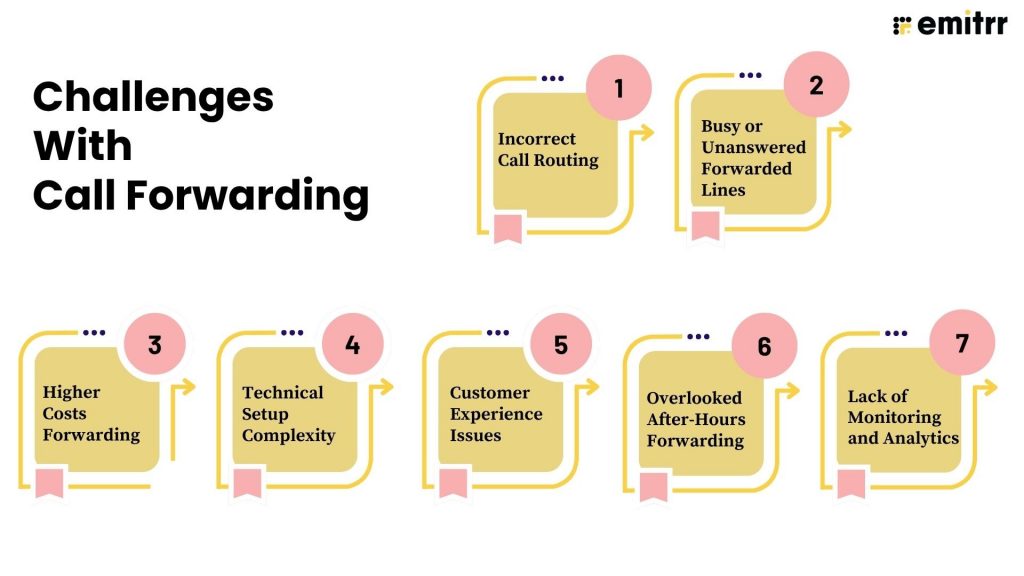
- Incorrect Call Routing: Calls can be forwarded to the wrong person or department if call forwarding rules are not set up properly. This can frustrate customers and delay issue resolution.
- Busy or Unanswered Forwarded Lines: If the forwarded number is busy or doesn’t answer, customers might get voicemail or missed calls, which defeats the purpose of call forwarding.
- Higher Costs Forwarding: Calls over long distances or internationally can increase phone bills, which businesses need to manage carefully.
- Technical Setup Complexity: Setting up and maintaining forwarding rules can require technical knowledge, and configuration mistakes can cause communication disruptions.
- Customer Experience Issues: Customers dislike being transferred multiple times during a call, which can result in dissatisfaction if call forwarding isn’t smooth.
- Overlooked After-Hours Forwarding: Businesses sometimes forget to set up forwarding for after-hours or holidays, causing missed calls and lost business opportunities. An after-hours answering service for business becomes critical during such times.
- Lack of Monitoring and Analytics: Without proper tracking of missed calls or forwarding effectiveness, businesses may fail to improve customer service or detect communication gaps.
Use Cases Of Call Forwarding
VoIP call forwarding is a pretty versatile tool that can be used by virtually all industries that require smooth and uninterrupted communication. Here’s how different sectors can benefit from a call forwarding service for small businesses:
Customer support teams
If you’re part of a customer service team, you know how important it is to never miss a call. VoIP call forwarding will help you manage incoming calls during peak times, ensuring customers are always attended to, even if your team is busy or unavailable.
Sales teams
As a sales professional, missing calls means missed opportunities. With VoIP call forwarding, you can ensure that no matter where you are, your calls will be forwarded to the next available team member, helping you close deals faster.
Healthcare providers
Whether you’re a doctor, clinic, or hospital, VoIP call forwarding helps you stay accessible to patients at all times. If you’re busy or out of the office, business phone forwarding services will forward calls to the right person or department, making sure patients’ needs are always met. VOIP for healthcare can help you use features like call forwarding and stay connected with patients.
Retail businesses
For retail businesses, especially during high-traffic periods like holidays or sales events, call forwarding ensures that you don’t miss any customer inquiries, providing an uninterrupted shopping experience and better customer service.
Remote teams
If your team is working remotely, VoIP call forwarding ensures you stay connected with clients, even when you’re working from different locations. This way, you won’t miss important calls, and team collaboration stays smooth.
Legal firms
In legal services, confidentiality and timely communication are key. VoIP for legal firms that offer call forwarding ensures that clients can reach you or your colleagues, even during busy court days or meetings, helping maintain seamless communication and client trust.
IT companies
For IT businesses, managing client inquiries and support requests is crucial. VoIP call forwarding helps direct calls to the right technician or team member, even if they’re working remotely or unavailable, ensuring that issues are addressed promptly.
Real estate
In the fast-paced world of real estate, VoIP for real estate that offers call forwarding ensures that potential buyers or renters can reach you no matter where you are. Whether you’re out showing properties or in a meeting, calls will be forwarded to your mobile or another team member, ensuring that you never miss an opportunity to close a deal.
Security and Compliance Requirements for Call Forwarding
Call forwarding involves managing sensitive business and customer communications, so maintaining privacy and compliance is essential. Below are the key considerations and best practices to ensure secure and compliant call forwarding:
- Ensure sensitive customer data is protected through strong encryption during call transfers and storage, following requirements like GDPR, CCPA, or PCI DSS, depending on your location and industry.
- Use secure authentication, such as two-factor authentication, for accessing call forwarding settings and management to prevent unauthorized changes.
- Obtain explicit customer consent before forwarding or recording calls, and inform customers about how their data will be used and stored.
- Set role-based access controls, ensuring only authorized team members can set up or modify forwarding rules and access call data.
- Monitor and audit call forwarding activities periodically to verify compliance with internal policies and external regulations, and flag any unusual call activity for further review.
- Maintain documentation of consent, call logs, and compliance processes for audit readiness and legal protection.
- Follow local data localization rules, ensuring customer data is stored and processed only in approved locations, especially for industries like finance or healthcare.
Best Practices for Call Forwarding
Smooth and secure call forwarding for business keeps your communication efficient. Here are the top tips to do it right:
- Design clear and simple call forwarding rules or workflows that match your business hours, support structure, and escalation paths.
- Regularly review and update forwarding rules to account for staff changes, holiday hours, and business growth.
- Use real-time monitoring and analytics to identify missed or failed forwarded calls, enabling quick follow-up and service improvements.
- Train staff on when and how to use call forwarding, including how to update their own settings and communicate changes to team members.
- Test call forwarding setups frequently to ensure calls reach the correct endpoints and that the customer experience remains smooth.
- Provide alternate contact options, like voicemail or web chat, in case forwarding fails or lines are busy, so customers are never left without support.
- Use multiple contact numbers or distribute inbound calls across different departments to avoid overloading a single recipient.
- Clearly communicate your call forwarding and escalation process to customers so they know what to expect and whom to contact for urgent needs.
Future Trends For Call Forwarding
Call forwarding is rapidly evolving with new technologies that enhance how businesses communicate. Modern solutions are driven by artificial intelligence, automation, and unified communication platforms. These advancements aim to provide faster, smarter, and more personalized customer interactions while supporting flexible work environments and stronger data security.
AI-Powered Call Routing: AI call routing helps route calls using artificial intelligence based on real-time analysis of customer needs and sentiment.
Unified Communications Integration: Call forwarding works smoothly with other channels like chat, video, and email for seamless customer experiences.
Automated Smart Workflows: Systems automatically adjust forwarding rules based on time, staff availability, and call volume.
Mobile and Remote Support: Team members can manage and receive calls from any device, anywhere in the world.
Advanced Analytics and Reporting: Businesses use detailed data to monitor performance and optimize their call forwarding setups with AI call analytics.
Privacy and Security Enhancements: Built-in compliance and security tools keep customer data safe and meet global standards.
Streamline Call Forwarding with Emitrr
The decision between cloud-based and on-premise VoIP comes down to your business’s unique needs. If you value flexibility, scalability, and a simple setup, cloud-based VoIP like Emitrr is probably the best call-forwarding service for business.
Consider your business size, budget, and long-term growth goals when making your decision. Either way, both types of business call forwarding services for small businesses offer significant advantages over traditional phone systems, allowing you to streamline communication, reduce costs, and improve overall productivity. Here is why Emittr is the best call forwarding VoIP service:
Integration with CRMs
Your virtual phone number forwarding should be able to integrate with your existing CRMs. Emitrr excels when it comes to integrating with your existing software. It not only reduces the time to fetch the information but also helps agents to offer personalized services to customers.
Superior support
When facing issues like call lag or glitches, customer support is crucial. Emitrr offers round-the-clock support via chat, phone, and other channels. With a stellar 5/5 rating on Capterra for their excellent service, Emitrr ensures you’re never left struggling with technical problems.
Advanced Call Management features
Emitrr combines advanced AI VoIP to streamline business communication. Features include voicemail-to-text, missed call-to-text, detailed call pop-up, user and extension management, and simultaneous ringing. AI enhancements like AI call forwarding, AI call queuing, AI call recording, and many more to ensure smarter call handling, faster responses, and seamless management of appointments, updates, and customer queries.
Affordable pricing
Emitrr is one of the most cost-effective phone systems for health offices with clear, transparent pricing, and provides excellent value for the features and services delivered.
Offers additional capabilities
Beyond virtual number forwarding, Emitrr enhances business communication with a full suite of VoIP and AI-powered features. This includes AI-driven texting, conversation assignment, and team messaging designed to streamline interactions across industries, from healthcare and education to retail and services. Emitrr helps businesses manage patient updates, customer queries, and team coordination efficiently, making communication smarter, faster, and more reliable.
Emitrr’s AI answering services smartly handle and forward calls, cutting missed calls and delays. Find out how:
FAQs
To activate call forwarding, go to your VoIP or phone system settings, select the “Call Forwarding” option, and enter the number you want calls to be forwarded to. You can usually choose to forward all calls or only when your line is busy or unanswered.
To deactivate call forwarding, simply go back to your call forwarding settings and toggle the feature off or remove the forwarded number.
You can check if call forwarding is active by looking for the call forwarding icon in your phone interface or checking your VoIP account dashboard. Some systems also allow you to dial a specific code to verify the status.
Yes, many VoIP systems, including Emitrr, allow you to set up simultaneous or sequential forwarding to multiple numbers, ensuring that calls are never missed.
Conclusion
VoIP systems are no longer just an alternative to traditional phone systems; they’ve become an essential tool for the success of businesses. With benefits such as cost savings, advanced features, scalability, and the ability to stay mobile, virtual number forwarding provides everything you need to stay connected and operate efficiently. By choosing the right provider, like Emitrr, and leveraging our powerful features, you can ensure that your business remains competitive while providing exceptional service to your customers.
Emitrr, the best call forwarding service for business, takes your communication to the next level, offering everything from seamless call forwarding to call tracking, ensuring you never miss a beat. Ready to upgrade your business communication? Schedule a demo today and experience the difference!


 4.9 (400+
reviews)
4.9 (400+
reviews)