
 4.9 (400+
reviews)
4.9 (400+
reviews)
Introduction
The automotive industry faces unprecedented challenges in an era defined by rapid technological evolution and shifting market dynamics. Business leaders and dealerships contend with mounting pressures: rising customer expectations for hyper-personalized experiences, supply chain complexities, and the critical need to balance innovation with operational efficiency. Traditional communication frameworks and operational models are increasingly inadequate in meeting these demands, creating urgency for intelligent, adaptive solutions.
Artificial intelligence has emerged as a transformative force, redefining industry standards across autonomous mobility, predictive analytics, and smart manufacturing. Its most immediate impact, however, lies in revolutionizing communication ecosystems. AI-driven tools are eliminating information bottlenecks, enabling real-time customer engagement, and powering data-informed decision-making capabilities now essential for maintaining competitive advantage.
At the forefront of this evolution is Emittr, a purpose-built communication platform designed exclusively for automotive enterprises. By integrating AI-powered automation, unified customer interaction management, and actionable analytics, Emittr empowers dealerships and manufacturers to deliver precision-targeted messaging, optimize resource allocation, and drive sustainable growth.
In this guide, we examine the industry’s pressing challenges, demonstrate AI’s role in reshaping automotive communication strategies, and illustrate how Emittr’s tailored solutions position businesses to thrive in the age of intelligent automation.
Communication Challenges in the Automotive Industry
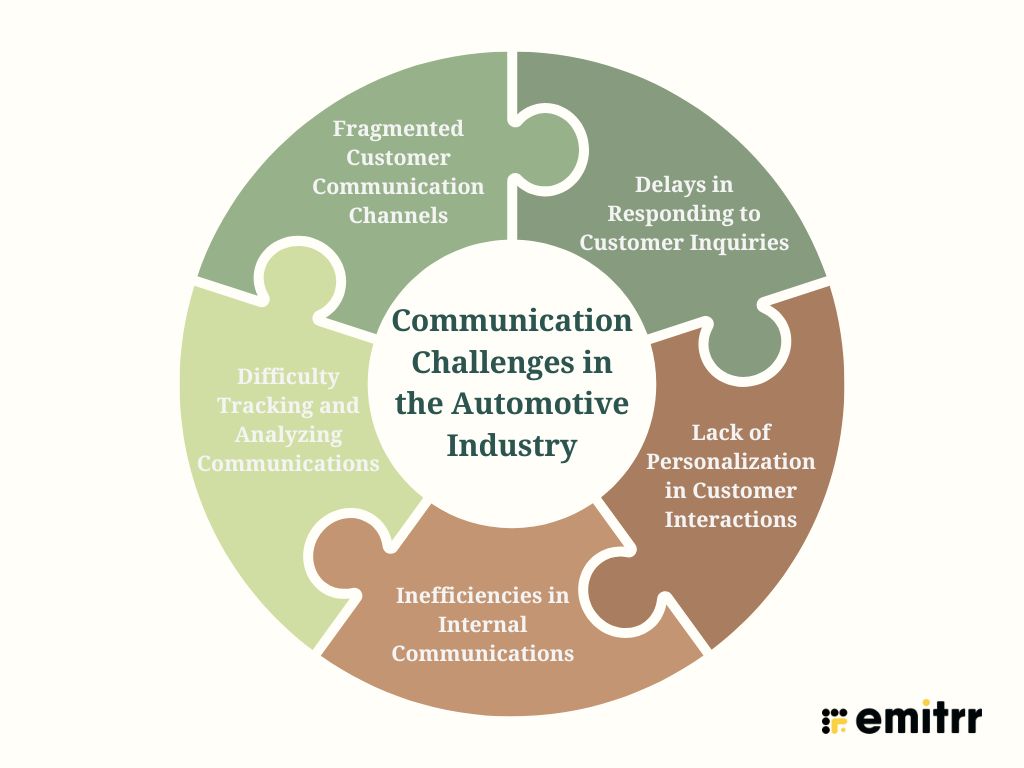
Fragmented Customer Communication Channels
Customers interact across multiple touchpoints- calls, emails, SMS, chat, and social media-but these channels often operate in isolation. Critical details from one interaction (e.g., a service inquiry via email) are rarely accessible during follow-ups on other platforms (e.g., a phone call). This fragmentation forces customers to repeat information, creating frustration and disjointed experiences. The lack of synchronization also leads to missed opportunities for upselling or resolving issues efficiently, directly impacting revenue and customer retention.
Delays in Responding to Customer Inquiries
In an industry where purchasing decisions and service requests are time-sensitive, slow response times are costly. Customers expect instant answers about vehicle availability, financing options, or appointment scheduling. When inquiries go unanswered for hours or days due to manual processes or siloed teams, businesses risk losing buyers to competitors and damaging long-term loyalty.
Lack of Personalization in Customer Interactions
Generic communication fails to resonate with modern automotive customers, who expect tailored experiences. Without insights into individual preferences, purchase history, or service needs, businesses struggle to deliver relevant recommendations or anticipate customer requirements. This impersonal approach erodes trust and makes it harder to differentiate in a market where competitors are increasingly leveraging customer-centric strategies.
Inefficiencies in Internal Communications
Poor coordination between sales, service, and operations teams leads to errors, delays, and inconsistent service delivery. For example, a service department might lack real-time updates about a customer’s warranty details, or sales teams might miss critical follow-ups due to miscommunication. These internal gaps directly translate into subpar customer experiences and operational bottlenecks.
Difficulty Tracking and Analyzing Communications
With interactions scattered across platforms, businesses lack visibility into customer journeys. Unstructured data from calls, emails, and chats remains untapped, making it nearly impossible to identify trends, measure satisfaction, or optimize processes. Without actionable insights, automotive companies operate reactively, missing opportunities to proactively address customer needs or improve service quality.
How AI is Transforming Automotive Communication?
The automotive industry is witnessing a seismic shift in how businesses communicate with customers and manage internal workflows. AI-driven solutions are addressing long-standing inefficiencies by unifying fragmented systems, accelerating response times, and delivering hyper-personalized interactions. This transformation isn’t just incremental; it’s redefining how automotive companies build loyalty, streamline operations, and stay competitive. Below are the key ways AI is reshaping communication dynamics:
Key Transformations Enabled by AI:
Unified Omnichannel Communication
AI is eliminating silos by integrating calls, emails, SMS, and chat into a single platform, ensuring customers no longer need to repeat themselves across channels. Agents now have full context for every interaction, enabling faster resolutions and seamless experiences that reduce frustration and missed opportunities.
Instant, Always-Available Support
AI chatbots are replacing manual, delayed responses by handling routine inquiries like service scheduling or inventory checks instantly. This shift reduces wait times from hours to seconds, minimizing lost sales and boosting satisfaction while freeing staff to focus on complex customer needs.
Hyper-Personalized Customer Interactions
By analyzing real-time data such as purchase history and browsing behavior, AI delivers tailored recommendations and proactive service updates. This move from generic messaging to hyper-personalization fosters loyalty and helps brands stand out in a competitive market.
Streamlined Internal Collaboration
AI automates routine tasks like appointment reminders and parts ordering while surfacing critical data to teams in real-time. This reduces errors, accelerates service coordination, and improves operational efficiency, ensuring smoother workflows across departments.
Data-Driven Decision-Making
AI turns unstructured communications-calls, emails, and chats-into actionable insights by identifying trends and predicting customer needs. This shift from guesswork to data-backed strategies enables continuous optimization of marketing, service, and sales efforts.
Why This Matters?
AI isn’t just solving existing pain points- it’s future-proofing automotive businesses by turning communication into a strategic asset. Companies adopting these tools are seeing measurable gains in customer retention, operational efficiency, and revenue growth, positioning themselves as leaders in the next era of automotive innovation.

How Is AI Communication Different From Traditional Communication In the Automotive Industry?
The automotive industry is undergoing a profound transformation as artificial intelligence (AI) redefines how businesses communicate with customers and manage internal processes. While traditional communication methods-such as phone calls, emails, and manual follow-ups-have long been the standard, they often result in fragmented experiences, slower response times, and limited personalization. AI-powered communication is fundamentally changing this landscape, offering automotive businesses new levels of efficiency, engagement, and insight.
Real-Time, Personalized Customer Engagement
Traditional communication in automotive businesses is often reactive and generic, relying on staff to manually respond to inquiries and provide information. In contrast, AI enables real-time, proactive engagement through chatbots, virtual assistants, and intelligent messaging platforms. These AI systems can instantly answer customer queries, recommend vehicles or services based on browsing history and preferences, and even handle appointment scheduling-all without human intervention. This shift not only speeds up response times but also ensures every customer interaction is tailored and relevant, significantly enhancing the overall experience.
Unified Omnichannel Experiences
Where traditional communication channels operate in silos-forcing customers to repeat information and leading to inconsistent service-AI unifies all touchpoints into a seamless experience. AI-powered platforms integrate calls, emails, SMS, and chat, providing staff with a complete view of each customer’s journey. This integration eliminates gaps in communication, reduces errors, and allows businesses to deliver consistent, high-quality service across every channel.
Predictive and Data-Driven Insights
Traditional communication methods offer limited visibility into customer needs and business performance, often relying on manual data collection and analysis. AI, however, can process vast amounts of data from customer interactions, vehicle diagnostics, and market trends in real time. This enables predictive analytics-such as anticipating when a customer might need maintenance or identifying sales opportunities-allowing businesses to act proactively rather than reactively. As a result, automotive companies can optimize their operations, improve customer satisfaction, and drive revenue growth.
Automation and Operational Efficiency
Manual communication processes are time-consuming and prone to human error. AI automates routine tasks like lead qualification, service reminders, and follow-ups, freeing staff to focus on higher-value activities. This automation not only increases operational efficiency but also reduces costs and minimizes the risk of missed opportunities.
Enhanced Customer Experience and Loyalty
Ultimately, the difference between AI and traditional communication in the automotive industry lies in the ability to deliver a more personalized, efficient, and predictive customer journey. AI empowers businesses to meet rising consumer expectations for instant, relevant, and seamless interactions-turning communication into a strategic asset that drives loyalty and long-term success.
In summary, AI communication in the automotive sector stands apart from traditional methods by enabling real-time, personalized engagement, unifying channels, providing predictive insights, automating processes, and elevating the overall customer experience. For automotive businesses, adopting AI in communication is no longer just an upgrade; it is a competitive necessity in a rapidly evolving market.
How AI Helps In Optimizing Automotive Operations?
AI-driven communication tools are redefining operational efficiency in the automotive industry. Below, each subheading is expanded with additional, business-relevant insights focused on the role of AI in communication and operational optimization.
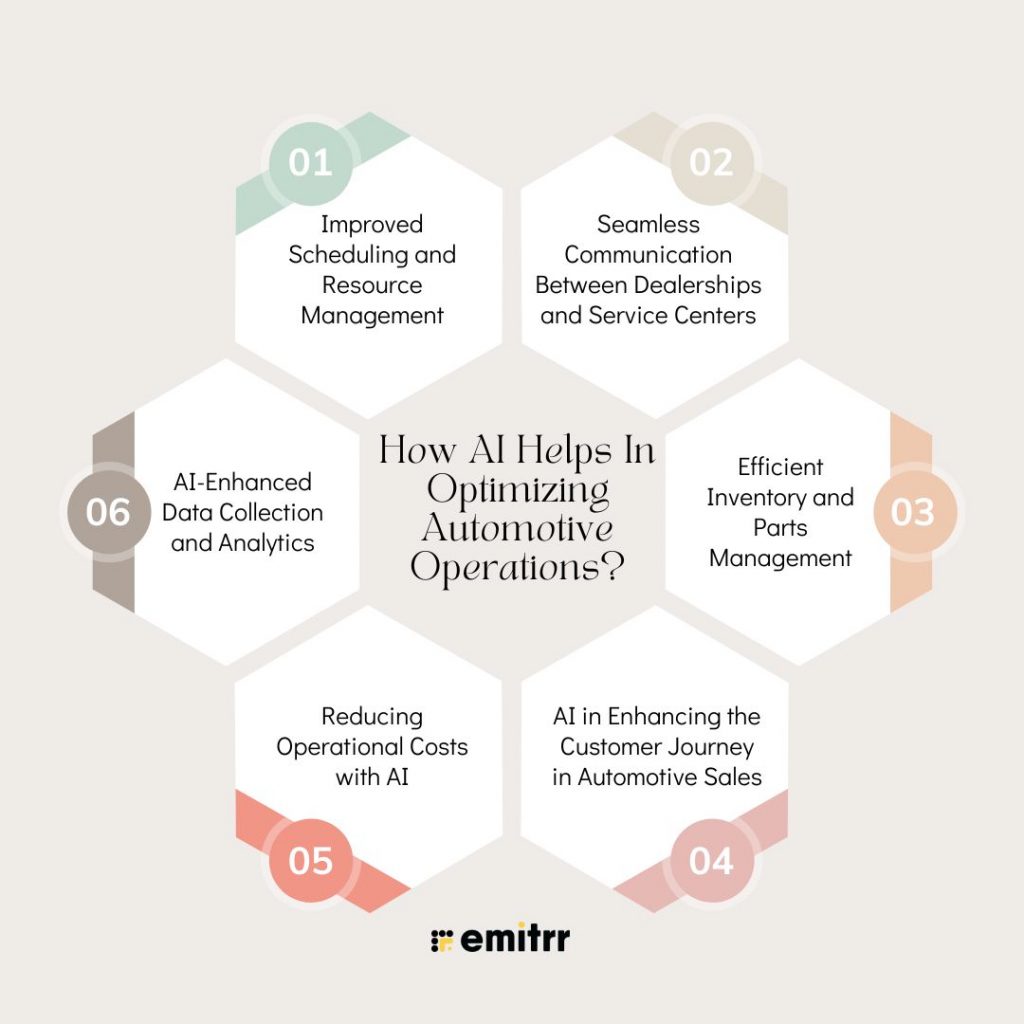
Improved Scheduling and Resource Management
AI-powered scheduling systems not only analyze historical booking patterns and customer urgency but also integrate real-time data from connected vehicles and service histories. This allows for dynamic appointment adjustments, that is, if a vehicle signals an urgent maintenance need, AI can prioritize that booking automatically. Additionally, AI tools facilitate seamless communication between customers and service centers, sending automated reminders, confirmations, and updates via SMS, email, or app notifications, which reduces no-shows and improves workshop utilization. This level of automation frees up staff to focus on high-value tasks, while customers benefit from a smoother, more transparent experience. Use AI-powered SMS, automated calls, and email reminders to confirm, reschedule, or update service appointments in real time, reducing no-shows and maximizing workshop efficiency
Seamless Communication Between Dealerships and Service Centers
AI platforms act as a digital bridge, enabling instant information flow between sales, service, and inventory teams. For example, conversational AI solutions can automatically relay updates about vehicle delivery status, maintenance schedules, and promotional campaigns across departments, ensuring everyone is aligned in real time.
This eliminates manual handoffs and reduces the risk of miscommunication, leading to faster customer responses and more coordinated operations. AI-powered chatbots can also escalate complex issues to the right department, ensuring that urgent customer needs are addressed promptly. Implement AI chatbots and automated email notifications to instantly relay vehicle status, maintenance updates, and promotional offers between sales and service teams, ensuring everyone stays informed
Efficient Inventory and Parts Management
AI enhances inventory management by continuously monitoring stock levels and predicting future demand based on historical sales data, upcoming service appointments, and even external trends. For operations that include tire services, integrating a tire shop management system can help streamline inventory tracking, service scheduling, and customer data management. When a part is running low, AI can trigger automated alerts to managers or directly notify customers waiting for specific repairs. Integrated communication tools can inform service advisors and customers about estimated delivery times, reducing downtime and improving transparency.
This predictive approach minimizes overstocking and stockouts, optimizing cash flow and customer satisfaction. Deploy AI-driven alert systems that send automated texts or emails to managers and customers about parts availability, restock needs, or shipment tracking, streamlining inventory communication
AI in Enhancing the Customer Journey in Automotive Sales
AI-powered communication is central to both attracting new customers and maintaining strong post-sale relationships.
Pre-sales Interaction
Conversational AI chatbots engage potential buyers on dealership websites and social channels, providing instant answers to questions about model availability, features, and pricing. These AI systems can qualify leads by capturing preferences and intent, then automatically route high-potential prospects to sales teams for personalized follow-up.
This not only accelerates lead conversion but also ensures that every inquiry is addressed promptly, improving the overall customer experience. Utilize AI chatbots and personalized email campaigns to engage and qualify leads, answer queries, and schedule showroom visits before prospects arrive at the dealership
Post-sale Engagement
AI-driven communication platforms automate post-sale outreach, sending personalized messages about service reminders, warranty updates, and accessory recommendations. These systems can segment customers based on purchase history and behavior, tailoring content to maximize relevance and engagement. Automated follow-ups help dealerships maintain continuous contact, nurture loyalty, and increase the likelihood of repeat business, all without overburdening staff. Automate follow-up emails, text messages, and calls to remind customers about service intervals, promote accessories, and nurture loyalty programs, keeping the relationship active after the sale
Customer Feedback Loop
AI-powered feedback solutions collect and analyze customer sentiment from multiple channels, including SMS, calls, and online surveys. Natural language processing (NLP) algorithms identify trends, flag urgent issues, and highlight areas for operational improvement. This real-time feedback loop enables businesses to respond quickly to concerns, refine their offerings, and demonstrate a commitment to customer satisfaction, ultimately boosting retention and reputation. Leverage AI to send post-service surveys via SMS or email and analyze responses for sentiment, enabling rapid identification and resolution of customer concerns
Reducing Operational Costs with AI
AI’s predictive and communication capabilities directly impact the bottom line by streamlining workflows and optimizing resource allocation.
Efficient Workforce Allocation
AI analyzes service center traffic, appointment types, and historical demand to forecast busy periods and recommend optimal staffing levels. Automated scheduling tools communicate shift changes and updates to employees, reducing idle time and overtime costs. This ensures that the right number of staff are available when needed, improving productivity and service quality. Use AI-driven communication tools to notify staff of shift changes and busy periods through automated texts or app alerts, ensuring optimal coverage based on predicted demand
AI-Enhanced Data Collection and Analytics
Predictive Analytics for Sales and Services
AI tracks customer interactions across all communication channels, identifying patterns that signal upcoming service needs or sales opportunities. For example, if a customer inquires about tire wear, AI can flag this for proactive outreach when a replacement is likely due. Predictive insights enable targeted marketing, timely service reminders, and more effective sales strategies. Integrate AI with CRM systems to send proactive service reminders or personalized offers via email and text, based on analysis of customer behavior and vehicle data
Data-Driven Decision Making
AI aggregates operational and customer data from across the business, transforming it into actionable insights through advanced analytics. Managers receive automated reports highlighting trends, bottlenecks, and opportunities, supporting faster, evidence-based decision-making. This empowers automotive businesses to continuously refine operations, reduce costs, and stay ahead of market changes. Automate the delivery of AI-generated performance reports and insights to managers through scheduled emails or dashboards, supporting faster, informed operational decisions
AI-driven communication is at the core of operational optimization in the automotive industry. By automating interactions, streamlining workflows, and delivering actionable insights, AI enables businesses to operate more efficiently, respond to customer needs faster, and maintain a competitive edge in an increasingly digital marketplace.
How Emitrr Helps the Automotive Industry with AI Agents?
At Emitrr, we’re redefining how automotive businesses, dealerships, service centers, and auto repair shops engage with customers across voice and text.
Our AI agents act as intelligent service advisors and receptionists, ensuring every inquiry, booking, and service follow-up is handled efficiently and professionally, 24/7.
By automating routine communications, Emitrr helps automotive businesses capture more leads, reduce service no-shows, improve customer satisfaction, and keep revenue flowing, without adding extra staff.
Voice AI Agent – Your Always-On Automotive Receptionist
100% Lead Capture, Zero Missed Calls
Whether it’s a busy Saturday or after business hours, our AI Receptionist ensures every call from potential buyers, service customers, or parts inquiries is answered instantly. No missed opportunities. No frustrated customers.
Smarter Test Drive and Service Scheduling
Customers can book, reschedule, or confirm test drives, maintenance appointments, or service calls anytime. The AI automatically updates your CRM or DMS (Dealer Management System), sending confirmations and reminders, helping reduce no-shows by up to 90%.
Instant Answers for Faster Decision-Making
From inventory availability and financing options to service FAQs and pricing queries, the AI Receptionist provides real-time, accurate information, improving response times and helping customers make faster decisions.
Proactive Follow-Ups That Boost Sales and Service Revenue
Emitrr’s AI doesn’t just wait for customers to call. It proactively follows up on missed calls, service reminders, maintenance schedules, and even payment reminders, driving higher customer retention and repeat business.
Intelligent Call Routing to the Right Specialist
Whether a customer needs sales support, service booking, or finance information, Emitrr’s AI routes them to the right department, reducing wait times and improving customer satisfaction.
Text AI Agent – Conversational Automotive Support at Scale
Automated Text Conversations for Sales and Service
Emitrr’s Text AI Agent enables dealerships and service centers to handle inbound and outbound texts with ease. Whether it’s answering vehicle availability queries, booking service appointments, sending special offers, or managing post-service follow-ups, the AI ensures timely, contextual conversations.
Deliver a Modern, Customer-Centric Experience
Today’s customers love texting. Emitrr’s Text AI mimics human-like conversations while staying consistent and accurate, creating a seamless, personalized experience that builds trust and loyalty.
Scale Without Overwhelming Your Team
Handling hundreds of conversations at once, Emitrr’s Text AI allows your team to stay focused on closing deals and providing high-touch service, while the AI takes care of routine communications.
Frequently Asked Questions
AI is used for autonomous driving, predictive maintenance, quality control, and personalized customer experiences, making vehicles safer and manufacturing more efficient.
AI will drive the development of fully autonomous vehicles, smarter manufacturing, and highly personalized mobility services, transforming the industry’s efficiency and safety.
Major companies like General Motors, BMW, and Nissan use AI for production, vehicle features, and customer service innovations.
AI will automate many diagnostic and routine tasks, but human mechanics will still be needed for complex repairs and oversight.
AI-powered robots can assemble cars and optimize production, but human expertise is still essential for design, supervision, and problem-solving.
Conclusion
The automotive industry’s communication challenges, disjointed customer interactions, manual inefficiencies, and impersonal engagement are no longer obstacles but opportunities for reinvention. AI has emerged as the catalyst for this transformation, enabling businesses to automate processes, predict customer behavior, and deliver seamless, hyper-personalized experiences at scale.
Emittr stands at the forefront of this revolution, offering automotive leaders a proven pathway to operational excellence. By unifying omnichannel communication, automating repetitive tasks, and harnessing real-time data insights, Emittr doesn’t just solve problems; it creates measurable advantages: reduced costs, elevated customer loyalty, and accelerated revenue growth.
Don’t let competitors define the future of automotive communication. Act now to position your business as an industry leader. Discover Emittr’s AI-driven platform-transform how you engage customers, optimize operations, and drive profitability.
Book your personalized demo today and take the first decisive step toward dominating the new era of intelligent automotive communication.