
 4.9 (400+
reviews)
4.9 (400+
reviews)
Running a nonprofit has always meant doing more with less. Whether you are coordinating volunteers, managing donor relationships, or proving impact to funders, every task competes for time and attention. In a world where expectations are rising but resources often aren’t, it’s getting harder to keep up.
For this reason, many not-for-profit organizations are beginning to focus more on artificial intelligence (AI). AI was once thought of as a luxury for tech giants, but it is now accessible to organizations of all kinds and is already assisting nonprofits in making quicker, more informed decisions, streamlining operations, and connecting with supporters more personally.
From predicting donor behavior to automating admin work, nonprofit AI offers practical, real-world solutions to the challenges nonprofit teams face every day. And no, you don’t need a coding background or a big budget to start. What matters most is understanding how AI fits into your work—and using it with intention.
This guide walks you through exactly what AI can do (and what it can’t), what to look for in a tool, and how to avoid common pitfalls. Whether you’re just curious or ready to experiment, you’re in the right place. Let’s get into it.
Understanding AI for Nonprofits
AI is a real asset for nonprofit organizations working with limited time, budgets, and staff. Whether you’re trying to engage more donors, streamline operations, or make faster, smarter decisions, artificial intelligence in nonprofit organizations can help you get there with less friction.
At its core, artificial intelligence refers to technology that mimics human thinking, like analyzing data, spotting patterns, and making informed predictions. In the nonprofit world, that translates into stronger donor outreach, simplified admin, and clearer insights into where your programs are making the most impact.
AI for nonprofits can forecast which donors are most likely to make additional contributions and when, which helps teams better schedule and customise campaigns. Operationally, AI takes care of repetitive duties like data input, scheduling, and follow-ups, freeing up your staff to concentrate on the goal. Nonprofit AI aids in program identification, needs forecasting, and real-time result tracking.
To begin, a complete technological revamp is not necessary. Choose one area, such as volunteer coordination or donor communication, that causes your team to lag frequently, then work on improving it.
AI in nonprofits clears the clutter so you can focus on what actually moves the mission forward: connection, clarity, and meaningful impact.
Benefits of AI for Nonprofits
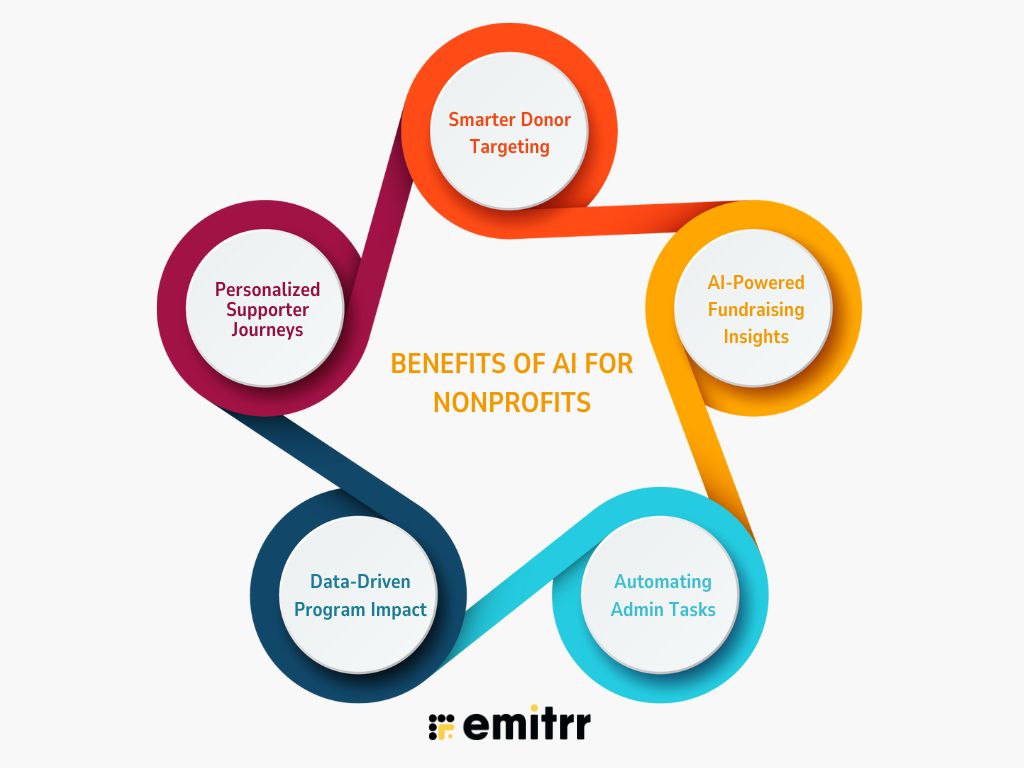
In nonprofit organizations, every hour and dollar matters. That’s why AI for nonprofits is becoming less of a buzzword and more of a practical shift. When used intentionally, artificial intelligence in nonprofit organizations can free up time, sharpen focus, and help teams work with more precision.
Let’s take a closer look at how nonprofit AI is reshaping the way missions are powered.
Smarter Donor Targeting
You don’t have to guess who’s likely to give, you can know. AI tools for nonprofits can analyze donor data, detect giving patterns, and surface insights that would take days to find manually. It can tell you who’s most likely to donate again, when they’re most engaged, and which messages are likely to land. Instead of sending one-size-fits-all emails, you can reach the right people with the right ask at the right time and actually build stronger connections while you’re at it.
AI-Powered Fundraising Insights
What if you didn’t have to guess when to ask for a donation or what kind of message will resonate? That’s exactly where AI fundraising tools come in. They dig into your past campaigns, donor behavior, and even social media interactions to show you what’s working, and what’s not. With nonprofit AI, you can make smarter decisions, faster.
Automating Admin Tasks
Let’s be honest: admin tasks pile up fast. And in most nonprofit organizations, time is already stretched thin. That’s where AI in nonprofits can really pull its weight. It can handle the busywork so you don’t have to.
Think:
- Keeping your donor data clean and organized
- Automatically scheduling volunteer shifts or follow-up reminders
- Instantly sending out donation receipts and thank-you notes
It’s the kind of support that gives your team breathing room and lets you focus on the work that truly makes a difference.
The result is more time for your team to connect with your community and less time stuck in spreadsheets.
Data-Driven Program Impact
If showing impact feels like a scramble every time a funder asks, AI can help. Instead of digging through spreadsheets or waiting months for reports, AI tools can tell you in real time with what’s working, what’s not, and where things are slipping through the cracks. It’s like having a program evaluator on call, helping you spot trends, fix gaps, and plan ahead with confidence.
Instead of waiting months for impact reports, nonprofits can access real-time analytics that help them adapt and optimize on the fly.
Personalized Supporter Journeys
People want to feel seen and valued; AI makes that possible at scale. By analyzing donor history and engagement patterns, AI can create personalized journeys for each supporter.
AI-Powered Personalization for Nonprofits Includes:
- Custom Email Campaigns: Automatically send tailored updates based on past donations and expressed interests.
- Dynamic Web Content: Show personalized landing pages or donation prompts based on browsing history.
- Volunteer Matching: Suggest opportunities that align with individual skills and availability.
This level of customization improves engagement and boosts loyalty, making your supporters feel genuinely connected to your cause.
AI amplifies the heart of nonprofit work. With the right tools, nonprofits can be more efficient, more impactful, and more connected to their communities.
Features to Look for in AI Platforms for Nonprofits
Choosing the right AI for nonprofits is crucial to streamline operations, engage donors, and amplify their impact. But with so many options available, it is important to know what features matter most.
Here are the key elements to prioritize when evaluating AI solutions for your organization.
Easy Integration with Existing Tools
Nonprofits frequently use a patchwork of technology, such as communication tools for outreach, event platforms for fundraising, and CRMs for donor management. You should be able to easily connect a good AI for nonprofit platform with the technologies you now use. Workflows will run more smoothly, there will be fewer manual uploads, and data consistency will improve.
Look for platforms that:
- Sync with your CRM: Automatically update donor profiles and contribution histories.
- Connect with email marketing tools: Track engagement without toggling between systems.
- Integrate with event and volunteer management software: Seamlessly update attendance and participation logs.
User-Friendly Interface
Although AI has great potential, it should also be simple to utilise. Due to their hectic schedules, nonprofit teams cannot afford to spend months learning a complex platform.
The best AI solutions are intuitive, with:
- Drag-and-drop dashboards: Create custom views of your data without coding.
- Visual reporting tools: Instantly understand trends and campaign outcomes.
- Plain language commands: Ask questions in simple terms like “Who are my top lapsed donors?” and get immediate answers.
A user-friendly interface ensures that your team spends more time engaging with supporters and less time wrestling with software.
Customizable Reporting and Dashboards
Numerous indicators are monitored by nonprofits, including program results, volunteer hours, and program outcomes. An effective AI platform should offer:
- Customizable reports: Focus on the KPIs that matter to your mission.
- Real-time dashboards: Access live updates on campaign progress or event registrations.
- Impact visualization: Create compelling visuals to demonstrate outcomes to stakeholders.
These features allow you to quickly gather insights, share results with your board, and make data-driven decisions that enhance your impact.
Predictive Analytics Capabilities
AI’s predictive analytics can transform how nonprofits strategize. By analyzing historical data, AI can forecast:
- Donor churn: Spot supporters at risk of disengaging.
- Giving patterns: Predict which donors are likely to increase their contributions.
- Program demand: Anticipate which community services will be in higher demand.
These insights allow nonprofits to take proactive action, whether it’s reaching out to a donor before they lapse or scaling up programs ahead of rising demand.
Strong Data Privacy and Security
Nonprofits handle sensitive information like donor details, volunteer contacts, and sometimes even beneficiary data. Ensuring strong data privacy and security is non-negotiable. Look for platforms that offer:
- Data encryption: Protects information during storage and transmission.
- Access control: Limits who can view or edit sensitive data.
- Compliance with regulations: Adherence to GDPR, HIPAA, and other regional data laws.
Transparency is key: your supporters trust you with their information, and a breach could damage your reputation. Choose AI solutions with a proven track record of data security.

Use Cases of AI In Nonprofits
AI might sound like something built for tech giants, but it’s proving to be incredibly useful for nonprofits, especially those stretched thin on time, budget, and bandwidth. It’s helping teams work smarter, stay focused, and free up energy for what really matters.
Here’s how nonprofits are putting AI to work in everyday, mission-driven ways.
Donor Prospecting and Retention
Building lasting donor relationships takes more than a few well-timed emails. AI helps spot patterns that humans often miss, like which donors are quietly drifting, who’s likely to give again, and when the timing is just right to reach out. It lets you stop guessing and start being more intentional, so your follow-ups feel timely, relevant, and personal (not robotic).
Optimizing Fundraising Campaigns
Fundraising is always part art, part science, and AI strengthens the science side. It helps you look at past campaigns, understand what actually worked, and adjust your strategy accordingly. You can segment supporters more thoughtfully, personalize your asks, and even tweak messaging mid-campaign based on how people are responding. That means fewer wasted efforts and more meaningful results.
Improving Program Delivery
Whether you’re running education programs, health clinics, or community workshops, the ability to adapt in real time is huge. AI helps by showing what’s working, where the gaps are, and who might not be getting reached. It takes all the data you already collect and turns it into useful insight so decisions aren’t just well-intentioned, but well-informed.
Enhancing Volunteer Management
Coordinating volunteers can feel like a full-time job. AI can help match people with the right opportunities, send reminders, track engagement, and flag when someone’s gone quiet. It takes the guesswork out of managing your volunteer base and helps you show up for the people who are showing up for you.
Predictive Insights for Resource Allocation
Every nonprofit knows the feeling of needing to be everywhere at once with half the resources. AI can help by identifying where your efforts and funding will go furthest. It can forecast need, anticipate changes, and help you shift resources before a crunch hits, so you’re planning ahead instead of playing catch-up.
Challenges Of AI Adoption For Nonprofits
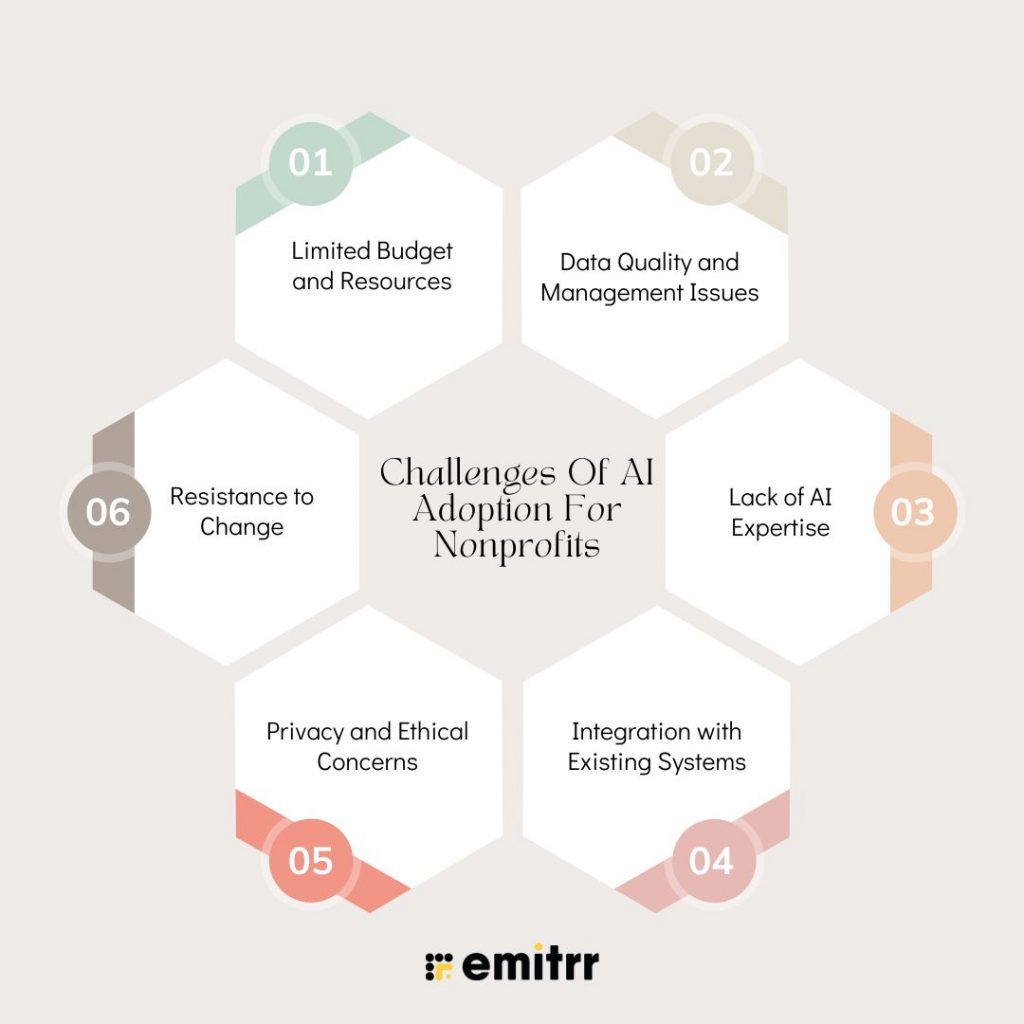
While AI holds enormous promise, adopting it isn’t always straightforward, especially in a nonprofit setting. Limited budgets, lean teams, and legacy systems can complicate the journey.
Here are the most common hurdles nonprofits face when integrating AI into their work:
Limited Budget and Resources
Many nonprofits operate with tight budgets and stretched teams. Even affordable AI tools require some investment, whether it’s time, money, or staff attention. Costs can include:
- Software subscriptions
- Staff training
- Data preparation
- Ongoing maintenance
This makes it hard to justify new technology, especially when day-to-day operations already feel maxed out.
Even low-cost AI tools take time to implement and manage. The challenge here is the capacity. You can start small. Pilot a low-risk tool that solves a single, time-consuming task (like donor segmentation or email writing). Measure the outcome, then build from there.
Data Quality and Management Issues
AI is only as good as the data it uses. If your donor database is messy, outdated, or inconsistent, AI tools will struggle to produce accurate insights. Common problems include:
- Duplicate or missing records
- Incomplete donor histories
- Siloed data across platforms
Poor data leads to poor predictions, which can damage trust with supporters and waste resources. Before diving into AI, invest a few hours cleaning and standardizing your existing data. A solid foundation will make everything else work better.
Lack of AI Expertise
Most nonprofit staff aren’t data scientists, and they shouldn’t have to be. But understanding how AI works, what it can do, and where it fits into your workflow takes a baseline of technical literacy. Many organizations are hesitant simply because they don’t feel confident.
Lean on vendors who offer onboarding support, look for tools with no-code interfaces, or tap into volunteer tech talent. You don’t need to hire a full-time AI specialist to get started.
Integration with Existing Systems
Nonprofits often use a mix of tools like CRMs, email platforms, event software, and more. Many AI platforms aren’t plug-and-play. Getting them to talk to your existing systems can take time and, in some cases, custom development.
If your systems don’t sync well, you risk data duplication or fragmentation — two things AI doesn’t play well with. When choosing AI tools, prioritize compatibility with your current tech stack. Look for integrations with your CRM, email marketing tools, or donation platform.
Privacy and Ethical Concerns
AI tools process a lot of personal data, like donor information, volunteer history, and even beneficiary records.
Mishandling this data can lead to serious consequences:
- Breaches of trust with supporters
- Legal noncompliance (GDPR, HIPAA, etc.)
- Unintended bias in AI recommendations
Nonprofits have an extra responsibility to protect the communities they serve. Choose AI tools with clear privacy policies, secure data handling, and options for human review. Stay transparent with supporters about how their data is used.
Resistance to Change
Change is hard. Even if AI can make things better, it still disrupts routines. Staff may worry that AI will replace jobs, or they may just be overwhelmed by another new system to learn. Without buy-in from the team, even the best tech will fall flat.
Involve staff early. Show how AI will reduce workload, not replace it. Focus on small wins, and automating tedious tasks is an easy place to start building trust.
How is AI-based Communication in Nonprofits Different from Traditional Communication?
AI is changing how nonprofits communicate internally and externally. Unlike traditional communication, which is time-bound and often generalized, AI-driven communication can be faster, more personalized, and data-informed.
To see the differences clearly, here’s a side-by-side comparison:
| Aspect | Traditional Communication | AI-Based Communication |
| Speed | Manual writing and scheduling take time | Instant drafting, scheduling, and replies |
| Personalization | One-size-fits-all messaging | Tailored content based on donor or volunteer behavior and preferences |
| Scalability | Limited by staff capacity | Can engage thousands simultaneously without extra workload |
| Response Time | Delayed replies, especially outside business hours | 24/7 chatbots and automated email responses |
| Data Use | Minimal use of behavioral or giving data | Real-time insights from past interactions drive messaging decisions |
| Consistency | Relies on individual writing styles and availability | Maintains brand tone and message quality across all touchpoints |
| Testing and Optimization | A/B testing requires manual setup and analysis | AI can automatically test, learn, and adapt messaging in real-time |
| Accessibility | Messages often standardized and English-only | Multi-language translation and content accessibility with AI tools |
| Feedback Analysis | Qualitative and slow (manual reviews, surveys) | Instant sentiment analysis across emails, social media, and surveys |
| Cost Efficiency | High cost for high volume or personalized outreach | Reduces cost per message and scales without proportionate budget increase |
Where Does AI Overtake Humans In Nonprofits?
AI outpaces humans in the areas where speed and repetition rule the day. It’s great at taking care of the routine tasks that eat up time and energy. It can analyze huge chunks of data in seconds, spotting trends and patterns most of us would miss. Need to answer donor questions at midnight? AI’s on it with chatbots and instant replies. It also personalizes messages at a scale no human team could manage, tailoring emails or texts based on each supporter’s behavior. Plus, it predicts things like donor drop-off or program demand before they happen and can translate content on the fly. Basically, when it comes to doing a lot, fast, and accurately, AI has the edge.
Where Do Humans Overtake AI In Nonprofits?
AI can do a lot, but it can’t replace what makes nonprofit work truly meaningful: people.
Humans are still better at the things that require heart, judgment, and nuance. Whether it’s building trust with a donor, having a sensitive conversation with a beneficiary, or navigating the grey areas of ethics and community needs, this is where people shine. AI can spot patterns in data, but it can’t read the room, pick up on emotion, or adjust course when something unexpected happens.
Strategic thinking, too, is a human strength. Balancing impact, mission, and limited resources isn’t something you can hand off to an algorithm. At the end of the day, AI can help nonprofits run smarter and faster, but it’s people who connect, adapt, and lead with purpose. And that’s irreplaceable.
Why Nonprofits Need AI?
Nonprofits serve people to respond to need, build community, and spark change. But doing that work has never been easy, especially with limited staff, growing demand, and rising expectations for transparency and impact. That’s where AI comes in. It is an instrument that helps them do more of what matters most.
Nonprofits need AI because the stakes are high and the margins are thin. When you’re juggling grant deadlines, donor stewardship, program delivery, and community outreach, AI can take the weight off the operational load. It helps teams spend less time buried in admin and more time in meaningful work like listening, connecting, and advocating. AI can help uncover insights that otherwise get lost in the noise that’s falling through the cracks, what efforts are really working, and where the next opportunity lies.
And perhaps most importantly, nonprofits need AI because equity, access, and responsiveness aren’t optional—they’re foundational. AI can help tailor services, communicate across languages, and surface silent signals in data that humans might miss. Used thoughtfully, it becomes a way to serve more people, more personally, without losing the soul of the work. The mission stays human. The means just get smarter.
Future of AI in Nonprofits
The future of AI in nonprofits is less about automation and more about amplification of insight, empathy, and impact. As tools get smarter and more accessible, nonprofits will use AI to spot patterns faster, reach people more personally, and make better decisions with less guesswork.
AI in nonprofits helps listen more closely. You can use AI to catch what teams might miss, like underserved communities, shifting donor behavior, or early signs of burnout. The real value will come from pairing that intelligence with human judgment, values, and trust.
Moving forward, the nonprofits that lead will be the ones that use it thoughtfully. They will ask hard questions, build with transparency, and stay rooted in purpose. The tech will get better. The mission will stay the same.
Why Emitrr AI Is The Best AI Tool For Your Nonprofit
When you’re running a nonprofit, every minute and message counts.
Emitrr AI gets that. It’s built for lean teams juggling donor outreach, community service, and admin overload without losing the human touch.
- Built for Busy Teams: Emitrr takes care of the repetitive stuff like responding to texts, confirming appointments, and collecting feedback so your staff can stay focused on the real work. No steep learning curve, no tech headaches. Just plug it in and go.
- All Your Communication, One Place: Whether it’s SMS, calls, email, or chat, Emitrr keeps everything under one roof. No more hopping between platforms or losing track of conversations. Everything’s organized, real-time, and easy to manage.
- Smart Automation That Sounds Human: Emitrr’s AI replies like a person. It handles FAQs, schedules, follow-ups, and more, 24/7. And when a human needs to step in, the transition is seamless.
- Personalized Outreach at Scale: You can’t write every message by hand but Emitrr makes it feel like you did. It tailors communication based on behavior and history, whether you’re talking to a donor, volunteer, or service user.
- Nonprofit-Friendly Pricing: Emitrr doesn’t break the budget. It’s priced with nonprofits in mind and doesn’t require a tech team to set up or manage. You get powerful AI without the complexity or cost.
- Clear Insights, Real Results: Track engagement, measure response times, and see what’s working without digging through spreadsheets. Emitrr gives you the clarity to make smart, fast decisions.
Emitrr helps you stay present, responsive, and personal without burning out your team. It’s AI that speaks your mission’s language.
Conclusion
AI for nonprofits makes the human side of nonprofit work more doable.
When your team is stretched thin, your systems are clunky, and the to-do list never ends, AI can step in to take a few things off your plate. The behind-the-scenes help frees up your people to focus on what really matters: relationships, impact, and mission-driven work that only humans can do.
This doesn’t mean every nonprofit needs to dive into the deep end with complex systems or big budgets. The real shift happens when you start small, pick the right problems to solve, and stay grounded in why you’re using the tech in the first place.
It’s imperative to use AI in nonprofits more intentionally to do what matters better. To spot needs faster, respond more personally, and build stronger connections without burning out their teams.
AI will not fix everything, and it shouldn’t try to. But when used intentionally, it helps nonprofits do what they already do best: spot needs sooner, respond more personally, and show up with consistency and care, without burning out in the process.
What the nonprofit sector needs isn’t just smarter systems. It’s more space for listening, for impact, and for the work that actually changes lives. That’s where AI can help.
Frequently Asked Questions (FAQs)
In way more ways than most people realize. If you’re running a nonprofit, AI can be your quiet assistant behind the scenes. It helps you figure out which donors are most likely to give again, automates the boring admin stuff (data cleanup or follow-up emails), and even helps you see what’s working in your programs. You can give your team more room to do what they’re great at.
Whether you’re a local community group or a global nonprofit, AI is being used to streamline tasks, manage outreach, and make better decisions with less guesswork. It can help you track needs in real time, keep volunteers organized, and understand where your efforts are making the biggest impact. In short, it helps you do more, without needing more.
Yes and also, kind of. Anyone can use the free version of ChatGPT, but if your team needs access to more advanced features (like GPT-4o or shared workspaces), OpenAI offers discounts specifically for nonprofits. So you can upgrade your tools without blowing your budget—pretty handy when every dollar matters.
AI is like an extra set of hands for your team but one that works 24/7 and doesn’t burn out. It can take care of repetitive tasks, personalize outreach, keep your donor data clean, and help you track impact without spending hours in spreadsheets. The goal is to support people. With AI handling the routine work, your staff can stay focused on the relationships, strategy, and storytelling that actually drive your mission forward.