
 4.9 (400+
reviews)
4.9 (400+
reviews)
It’s Monday morning at two different clinics. Both have equally skilled doctors, both with packed waiting rooms and mountains of lab results to review. At Clinic A, the staff is drowning in phone calls, paperwork, and patient messages that keep piling up. At Clinic B, things look surprisingly calm. Why? Because Clinic B uses AI tools that take care of scheduling, reminders, documentation, and even patient questions.
That’s the difference AI can make. Think of it as your AI physician assistant, one that never gets tired, works 24/7, and quietly handles routine tasks in the background. From analyzing data in seconds to keeping patients engaged with timely updates, AI makes the day less stressful and the care more focused.
In this blog, we’ll explore how AI is transforming physician practices. You’ll see how it improves care delivery and communication, where it shines, where it still needs the human touch, and why it might be the right time to bring a tool like Emitrr AI into your practice!
Understanding AI in Physician Practices
AI can change the way a clinic runs. To see the difference, let’s compare two setups.
Life in a Clinic Without AI
Clinic A runs without any AI support. The front desk is buried in phone calls and manual scheduling. Appointments overlap, no-shows and cancellations leave gaps, and patients wait days for callbacks. Doctors spend hours on notes, chart reviews, and chasing lab results. By evening, staff fatigue and physician burnout become evident, and patients feel the delays in treatment.
Life in a Clinic With AI
Clinic B has an AI physician assistant built into daily work. With AI physician scheduling software, patients book online anytime. Last-minute cancellations are filled instantly from the waitlist. During visits, AI drafts notes in real time, so doctors just review and sign. Lab results are scanned automatically, with urgent ones flagged right away. Patients get reminders, follow-ups, and education messages without staff effort. Care is the same, but the workflow runs way smoother, and doctors focus more on patients.
Benefits of AI in Physician Practices
AI is making its way into medical offices because it can make life easier for both doctors and patients. Here are some major areas where physician AI tools provide benefits:
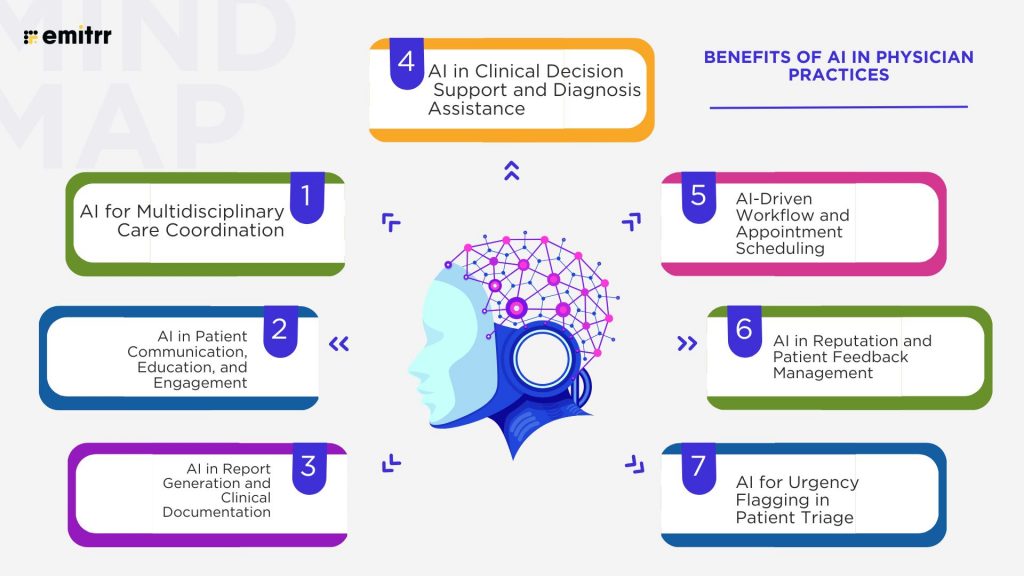
AI for Multidisciplinary Care Coordination
Coordinating care between specialists is often messy. AI helps connect the dots. Imagine a patient who sees a cardiologist, an endocrinologist, and you as their primary doctor. An AI system shares updates and important details with the whole team. If the cardiologist prescribes a new drug, AI can flag interactions and alert the endocrinologist and you. It can also set up team meetings or make sure everyone sees the latest test results. By acting as a go-between, AI reduces high call volumes and emails and keeps care smooth.
AI in Patient Communication, Education, and Engagement
Staying in touch with patients outside visits is hard. AI makes it simple by acting like a round-the-clock helper. A chatbot can answer questions at 10 PM without you being there. It can send a “How are you feeling?” text the day after a procedure. It also reminds patients about check-ups, vaccines, or screenings. With quick and personal messages, patients feel cared for while your staff gets a break.
AI in Report Generation and Clinical Documentation
Paperwork takes too much time. AI scribes can listen during visits and draft notes for you. By the time the patient leaves, a progress note is already ready. These tools also pull details from charts, like past diagnoses or meds, and fill in forms automatically. You just review and sign. Less typing means more time for patients and fewer late nights finishing notes.
AI in Clinical Decision Support and Diagnosis Assistance
Think of AI as a fast second opinion. It looks at symptoms, labs, history, and even the latest research. In tricky cases, it can suggest, “Check for this condition.” In imaging fields like radiology or dermatology, AI highlights areas that deserve a closer look. It won’t decide for you, but it gives you extra options and reminders. This reduces errors and makes diagnosis safer.
AI-Driven Workflow and Appointment Scheduling
Scheduling is a constant headache. AI can take over and keep it under control. If someone cancels, it instantly offers that slot to a waitlisted patient. It also allows patients to book online anytime without staff. Reminders go out automatically, reducing no-shows. Your calendar stays full, the front desk is less stressed, and patients enjoy easy booking.
AI in Reputation and Patient Feedback Management
Reviews matter for every practice. AI can help collect and manage them. After visits, it sends patients quick surveys or review requests. Positive comments go online, while concerns are flagged for you to fix. AI can even suggest polite replies to reviews. Instead of tracking every platform, you get steady feedback and a stronger reputation.
AI for Urgency Flagging in Patient Triage
Critical results can get buried in long lists. AI makes sure they’re seen right away. If a lab test shows a dangerous value at night, it alerts the on-call doctor. If a patient reports chest pain in an online patient form, AI moves it to the top of the queue. It works as a safety net to catch emergencies before they’re missed.
Use Cases of AI in Physician Workflows
AI sounds great in theory, but the real question is: how does it actually help in day-to-day practice? Let’s look at a few common situations.
AI in Diagnostic Accuracy and Error Reduction
Missing something in a diagnosis is every doctor’s nightmare. That’s where AI comes in as a backup. In primary care, it can scan a patient’s symptoms against thousands of past cases and nudge you to test for something you might not have thought of. In hospitals, it reviews scans and lab slides, picking up tiny details a tired eye could miss. Think of it as having a colleague who never blinks, never tires, and always double-checks your work. It makes diagnosis safer and gives you extra peace of mind.
AI in Automation of Routine Administrative Tasks
So much of the day is filled with small, repetitive jobs. Sending reminders, verifying insurance, sorting faxes – none of it really needs your medical degree. AI eats these tasks for breakfast. It can text patients reminders, reschedule automatically, or pull insurance details straight from a photo. Some systems even read faxes or emails and send them to the right team member. That means your staff spends less time on paperwork and more time helping patients.
AI in Telemedicine and Remote Patient Consultations
Telemedicine is here to stay, and AI makes it feel effortless. Picture this: during a video visit, AI medical transcription is quietly taking notes, capturing the entire conversation for your records. If a patient mentions a symptom, it pulls up their past history or a guideline in seconds. When the call ends, it sends the physician and patient a neat summary with clear next steps. It also takes care of tech hassles, sending links, checking connections, and collecting pre-visit info. For you, that’s less juggling; for the patient, it feels smooth and personal.
AI in Predictive Analytics for Disease Progression and Risk Stratification
One of the coolest things AI can do is predict problems before they happen. Say you’re managing diabetic patients. AI can spot rising blood sugars and missed check-ups and flag who’s most at risk for complications. Or it can scan hospital discharge data and warn you who’s likely to be readmitted in 30 days. That gives you a chance to step in early. It’s like a crystal ball that points you to the patients who need your attention right now.
AI in Post-Discharge Follow-Up and Readmission Prevention
Care doesn’t end when a patient walks out the door. AI makes sure they stay on track at home. Imagine a pneumonia patient just discharged. Every day, they get a text asking how they feel or if they’re having trouble breathing. If they answer with anything concerning, your office gets an alert right away. AI also reminds them to take meds and book follow-ups. Patients feel supported, and you catch problems before they turn into another hospital visit.

Challenges of AI Adoption for Physicians
AI is exciting, but it’s not always smooth sailing. Bringing it into a clinic has its own set of hurdles. Here are a few you might face.
Integration with Existing Systems
Imagine this: you bring in a new AI tool, but it doesn’t sync with your EHR. Suddenly, you’re typing the same information twice. Once in the AI system and again in the EHR. That’s extra work, not less. Switching between screens during a busy clinic day is frustrating. This is why smooth integration matters. Whether it’s an AI physician scheduling tool or a documentation assistant, it must fit your workflow, not break it.
Continuous Training and Updates
AI isn’t a tool you set up once and forget. It needs regular updates to stay accurate. Medical knowledge changes fast. Guidelines that were valid two years ago may already be outdated. Sometimes the system also needs fine-tuning for your specific patients. This means relying on vendors for updates and retraining. Not every practice has the time or budget for that, so it becomes a real challenge.
Data Privacy and HIPAA Compliance
Now picture a patient asking, “Where does all my information go?” You need to have a confident answer. HIPAA rules are strict for a reason. Data must be encrypted. It must be stored safely. Access should be limited to the right people only. One slip could damage patient trust and put your practice at risk. That’s why it’s crucial to work only with vendors who guarantee compliance and sign a Business Associate Agreement.
Regulatory Approval and Standards
The rules around healthcare AI are still evolving. Some AI tools that suggest treatments may need FDA clearance. Others may fall into a gray zone. This can leave you unsure of what’s safe to use. At the end of the day, AI should support your judgment, not replace it. You still have to follow clinical guidelines and keep track of new regulations.
Patient Trust and Acceptance
Patients can be skeptical. Imagine someone gets an automated follow-up text and says, “Wait, is a robot treating me now?” They may fear personal care is being replaced. This is where you need reassurance. Patients must know AI is only a helper. You’re still making the medical decisions. A little transparency and explanation can build trust and help them accept AI-supported care.
Download our professionally crafted voicemail greeting scripts for physicians to ensure clear, empathetic, and patient-friendly communication.
How Is AI-Based Communication in Physician Practices Different from Traditional Communication?
AI is changing the way clinics talk to patients. Here’s a side-by-side look.
| Aspect | AI-Based Communication | Traditional Communication |
| Speed and Accessibility | Patients can get quick answers or book anytime, day or night | Patients often wait for office hours, callbacks or spend time on hold |
| Personalization | Personalized messages, using names and visit details that matter | Most messages are generic and take extra effort to make personal |
| Proactive vs. Reactive | AI reaches out first with reminders, follow-ups and health tips | The practice usually waits until the patient calls or asks |
| Multi-Channel Delivery | Same message goes out across text, email and calls so everything matches | Different staff handle different channels and messages can get inconsistent |
| 24/7 Availability | Feels like someone is always on duty without adding more staff | Limited to business hours unless you pay for an answering service |
| Language Support | Can translate messages instantly into different languages | Relies on bilingual staff or interpreters, which slows things down |
Where Does AI Overtake Humans in Physician Practices?
AI can’t replace physicians or doctors at large. But there are areas where it clearly does better. These are tasks where speed and scale matter most.
Speed of Data Analysis
Doctors handle endless data, labs, scans, charts, and research. Reviewing it all takes hours and often spills into late nights. AI can process this information in seconds. It pulls out the most important details right away. This helps doctors make faster decisions and spend more time with patients. It’s a clear example of how to reduce physician burnout with AI, since it cuts down the heavy load of after-hours charting.
Real-Time Critical Alerts
Think about a critical lab result that comes in at midnight. Normally, it might sit in the system until morning. With AI, it gets flagged instantly and sent to the on-call doctor. AI never sleeps, so urgent issues don’t wait. This safety net means faster responses and better outcomes. It’s like having an assistant who works 24/7 without breaks.
Detection of Subtle Patterns
AI is great at spotting what the human eye might miss. It can highlight small changes on an X-ray or connect patterns across lab results. These clues may point to early disease or worsening conditions. Doctors under pressure can easily overlook such details. AI adds another layer of accuracy by catching them consistently. This helps reduce errors and improves patient safety.
Automated Scheduling
Clinic schedules can get messy fast. Cancellations leave gaps, and staff spend hours calling to reschedule. AI can handle this automatically. It fills open slots from the waitlist, organizes the calendar, and suggests the best timing for complex visits. Patients can also book online anytime. This keeps the schedule full, reduces admin stress, and makes the day flow easier for everyone.
Population Health Surveillance
Humans focus best on one patient at a time. But watching thousands at once is impossible. AI can scan records for entire patient groups and flag those at risk. It can identify diabetics heading toward complications or patients likely to be readmitted. This lets doctors act early instead of reacting late. With AI doing the monitoring, no patient gets missed in the shuffle.
Where Do Humans Overtake AI in Physician Practices?
AI can do a lot, but let’s be honest, it can’t replace the human side of medicine. There are plenty of areas where doctors will always come first.
Contextual Interpretation of Complex Cases
AI is great with data, but can it understand a patient’s life outside the clinic? Not really. Social factors, family stress, and lifestyle choices all affect treatment. Doctors can connect these dots and adjust care plans to fit real life. AI gets confused when things don’t follow a clear rulebook. Human judgment makes sure the full story is considered. That’s why tricky cases still need a doctor’s eye.
Empathy and Reassurance
Here’s a simple question: would you trust a chatbot to comfort you before surgery? Probably not. Patients want kindness, eye contact, and a calm voice. A reassuring word from a doctor can reduce stress more than any reminder text ever could. These moments build trust and make patients feel safe. Medicine isn’t just about fixing. It’s about caring. That’s something only humans can offer.
Ethical Decision-Making
What happens when treatment isn’t just about numbers? Maybe the choice is between aggressive care and focusing on comfort. These are tough calls that need compassion and moral judgment. AI can crunch data, but it can’t weigh feelings, culture, or family wishes. Doctors bring empathy to these moments and guide patients with both facts and heart. That mix of science and humanity is irreplaceable.
Balancing Patient Preferences
Not every patient wants the textbook answer. Some may prefer a lighter approach, fewer medicines, or a slower plan. Doctors can explain the risks, adjust treatment, and respect those choices. This back-and-forth builds trust and cooperation. AI can’t have that kind of conversation or understand emotions behind decisions. Humans can listen, explain, and adapt, and that makes care truly patient-centered.
Handling Multi-Morbidity
Now, what about patients with several conditions at once? This is where experience matters most. Doctors know how one treatment might clash with another and adjust accordingly. They balance medications, risks, and side effects with care. AI struggles when guidelines overlap or contradict. Physicians use intuition and judgment to keep complex patients safe. That’s a skill no algorithm can copy.
Why Physician Practices Need AI
Healthcare is getting busier every year. More patients, more data, and the same number of hours in a day. So, is AI still a “nice-to-have”? Not really, it’s fast becoming a must-have. Here’s why.
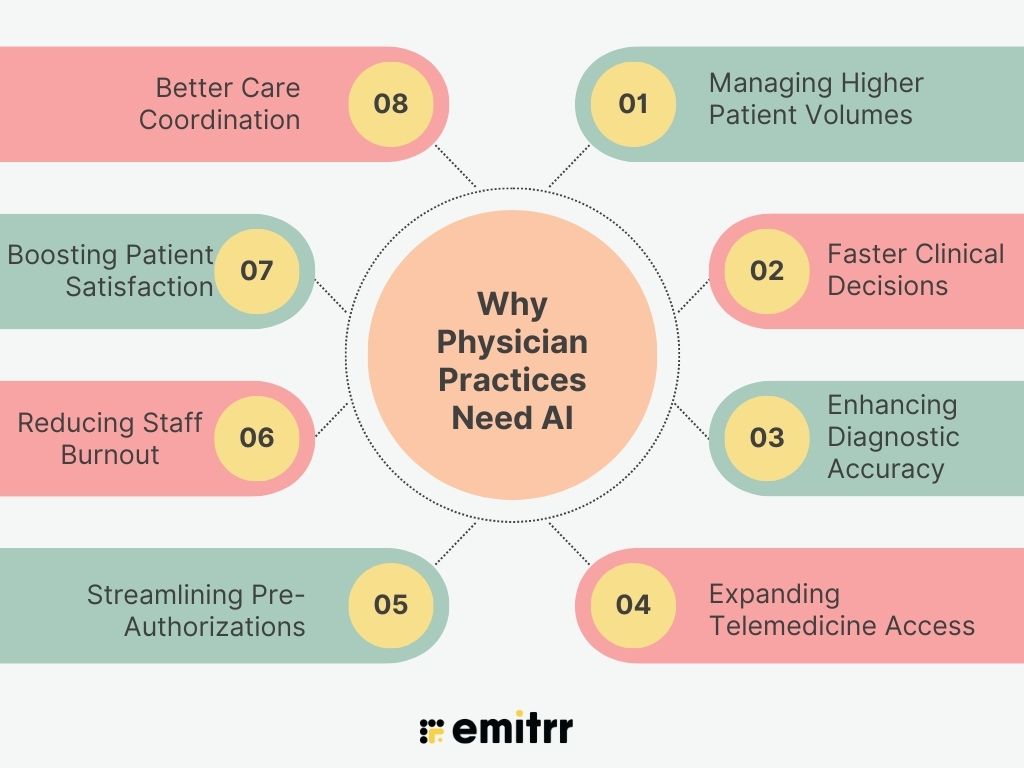
Managing Higher Patient Volumes
Do you ever feel like your team is too small for the number of patients you see? AI helps solve that. It automates routine tasks so a small staff can handle a much bigger load. It’s like adding an extra set of hands without hiring more people. It also reduces patient wait times by handling admin-related tasks faster. This makes the clinic run smoothly for everyone involved.
Faster Clinical Decisions
AI can quickly flag abnormal results or trends you might otherwise find later. It pulls key details from data and suggests possible next steps. That means faster treatment decisions and fewer delays for patients. Speed matters, and AI delivers it. Doctors also feel more confident knowing they didn’t miss something. Patients, in turn, feel reassured that nothing important slipped by.
Enhancing Diagnostic Accuracy
AI works as a second set of eyes. It reviews scans, labs, and prescriptions to catch errors you might miss in a busy day. This extra layer of checking reduces risk and helps improve accuracy. It’s like having a colleague double-checking every case. Over time, this helps lower mistakes and even reduces litigation risk. Patients trust the care more when accuracy is high.
Expanding Telemedicine Access
Telehealth is growing fast, but managing it takes time. AI automates scheduling, intake forms, and even simple triage. That way, you can serve more patients online without adding pressure on your staff. It keeps virtual care smooth for both sides. Patients can also get seen quicker, even if they live far away. For rural or busy patients, this is a game-changer.
Streamlining Pre-Authorizations
Insurance paperwork can drain time from your day. AI can auto-fill forms and make sure all required info is in place. This avoids endless back-and-forth with insurers. Approvals move faster, and you spend less time buried in admin work. Patients also get treatment sooner since they’re not stuck waiting on paperwork. Staff feel less drained because they’re not buried in forms all day.
Reducing Staff Burnout
Clinic staff often juggle calls, reminders, and endless forms. AI can take over many of those repetitive jobs. Less busywork means your team feels less stressed and more supported. Happier staff usually means better patient care too. Staff retention also improves when the workload feels manageable. This saves the clinic the stress and cost of constant turnover.
Boosting Patient Satisfaction
Patients love fast, clear communication. With AI, they can get results quickly, reminders on time, and answers without waiting. That kind of responsiveness makes them feel cared for. Satisfied patients are more likely to stick with your practice. They may even recommend your clinic to others. Over time, this builds a strong reputation in the community.
Better Care Coordination
When multiple doctors are involved, communication can get messy. AI makes sure updates, notes, and results are shared instantly between specialists and primary care. Everyone stays on the same page, and the patient gets smoother care. It reduces miscommunication that can lead to errors or delays. Patients also feel more confident knowing all their doctors are aligned.
Future of AI in Physician Practices
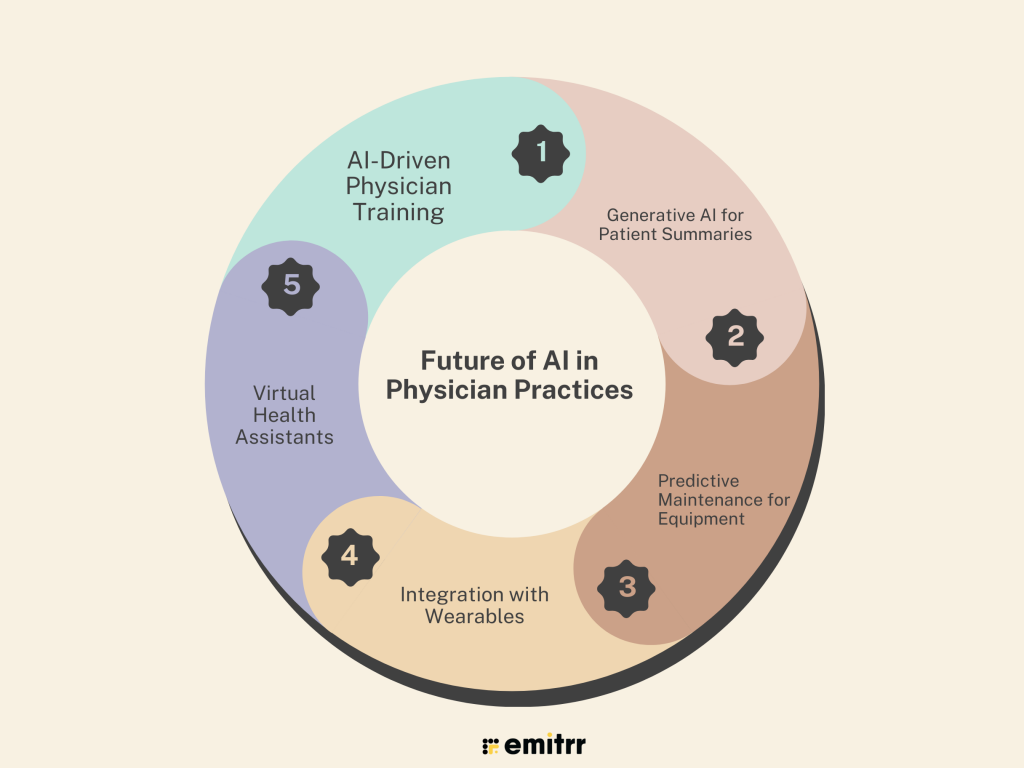
AI is growing quickly, and what we see today is only the start. Here are some ways it could shape physician practices in the near future.
AI-Driven Physician Training
Think of AI as a mentor that’s always available. Young doctors could get real-time guidance during patient care, almost like a senior doctor whispering tips in their ear. For example, if a resident forgets a step in a procedure, AI could send a quick reminder. It could also suggest the latest treatment guidelines on the spot. This kind of support would help new physicians feel more confident. It makes training faster, safer, and easier to manage.
Generative AI for Patient Summaries
Doctors often end up using complex terms that patients don’t fully understand. AI can step in and rewrite medical notes into plain, simple language. Imagine finishing a visit and the patient instantly gets a clear summary: “Take this medicine once a day and come back in two weeks.” No jargon, no confusion. Patients leave knowing exactly what to do. This helps improve compliance and reduces the number of follow-up calls for clarification.
Predictive Maintenance for Equipment
Medical devices are critical, but they sometimes fail without warning. AI could predict when a machine, like an ECG or lab device, is likely to break down. It would send an alert to get it serviced before it causes a delay in care. This saves money on emergency repairs and keeps clinics running smoothly. Doctors wouldn’t have to cancel appointments due to sudden equipment issues. Patients benefit too because care remains on schedule.
Integration with Wearables
More patients are using smartwatches and health trackers. These devices collect tons of data, but it’s impossible for doctors to check it all. AI can scan the data and alert you only if something looks off, like irregular heart rhythms or sudden weight gain. This way, physicians don’t waste time digging through endless graphs. Instead, they get focused alerts that matter. It allows for proactive care without overwhelming the clinic.
Virtual Health Assistants
Chronic illness management takes constant attention. AI can act like a “health buddy” for patients at home. It could send daily medication reminders, check in with quick symptom questions, and flag concerning responses. If a diabetic patient reports rising sugar levels, the system alerts the doctor right away. Patients feel supported even outside the clinic. For physicians, it means fewer emergencies and better long-term outcomes.
Access the complete PDF here and set up a polished, reliable voicemail experience for your practice in minutes.
Why Emitrr AI Is the Best AI Tool for Physicians
Emitrr AI brings together everything a modern practice needs, making patient communication and operations easier than ever.
- HIPAA Compliant: Emitrr is built for healthcare, so it keeps all data secure and HIPAA-compliant, so you don’t have to worry about privacy issues while adopting new tech.
- All-in-one communication: Text, calls, and emails in one platform, so you don’t juggle multiple apps.
- AI SMS agent: Handles bookings, reschedules, reminders, and two-way patient chats over text.
- AI voice agent: Picks up calls, schedules visits, shares updates, and routes callers instantly.
- Smart scheduling and reminders: Works like a 24/7 receptionist, filling cancelled slots and sending confirmations automatically.
- Digital intake and documentation: Secure forms and auto-logged interactions reduce paperwork and save staff time.
- Personalised patient engagement: Sends tailored reminders and follow-ups like “How are you feeling today?” to build stronger patient connections.
- Reputation management: Prompts patients for reviews, highlights positives, and shares negatives privately with suggested replies.
- Always-on virtual assistant: Answers FAQs, books visits, and responds to patients after hours.
- Seamless EHR integration: Syncs appointments, reminders, and forms directly into your EHR while staying HIPAA-compliant.
- Smarter campaigns: Builds and schedules recall drives or seasonal reminders with AI optimisation.
- Call handling and follow-ups: Ensures no missed call goes unanswered by sending automatic follow-up texts.
- Forms and surveys: Collects intake details, feedback, and patient surveys over SMS, storing them neatly for your team.
- High uptime reliability: Runs smoothly with minimal downtime, so your practice is always available to patients.
- Great customer support: Responsive team that helps you resolve issues quickly and get the most out of the platform.
- Easy to set up: Simple onboarding and training make it hassle-free for clinics of any size to get started.
FAQs
AI is mostly used for scheduling, reminders, documentation, and patient communication. Many practices also rely on it for voicemail triage, clinical support, and urgent tasks like flagging abnormal results. In short, it takes care of routine work so physicians can focus on patient care.
Emitrr automates bookings, reminders, and patient outreach like follow-ups or pre-visit instructions. It also digitises intake forms and logs conversations, cutting down on paperwork. This saves staff hours every week and reduces phone traffic.
Absolutely! Patients get faster replies, timely reminders, and personalized updates. A chatbot can answer questions late at night, and reminders reduce no-shows. These small touches make patients feel valued and more engaged in their care.
Not at all! AI supports physician assistants by handling repetitive work like scheduling, data entry, or simple patient queries. AI makes their work easier, not redundant.
Very little. Emitrr is built to be simple, with onboarding support and an app-like interface. Most teams adjust quickly with minimal practice, and help is always available from the Emitrr support team.
Emitrr syncs with most widely used EHRs, so appointments and communications update automatically. It can log texts into records, send telemedicine links, and even manage reminders.
Conclusion
AI in healthcare isn’t a future idea – it’s already changing how physicians practice! Think of it as that extra team member who handles the busywork while you focus on patient care. From filling empty slots to answering routine questions, AI helps you deliver smoother, faster service without burning out your staff.
The big picture? AI won’t replace physician assistants or physicians. It’s here to support them. Practices that adopt tools like Emitrr AI for healthcare get the benefit of happier patients, lighter admin loads, and a head start on the future of care.
Ready to see how this works in your practice? Book a free demo with Emitrr AI and experience the difference yourself!