
 4.9 (400+
reviews)
4.9 (400+
reviews)

Introduction
The healthcare landscape has transformed dramatically over the past few years, with care providers increasingly relying on telehealth platforms to serve their patients effectively. As we navigate through 2025, the importance of HIPAA-compliant telemedicine platforms has never been more critical for healthcare practices seeking to deliver secure, efficient, and patient-centered care.
In the next few minutes, we’ll explore what HIPAA-compliant telemedicine software really is. We’ll cover its types, key features, and the factors you should consider when choosing one for your healthcare practice.
Plus, we’ll take a closer look at 10 top platforms offered by leading telemedicine software providers. So, let’s get started.

HIPAA-Compliant Telemedicine: Why It Matters
HIPAA and telemedicine go hand in hand. As a power duo, they enable remote diagnosis and treatment plans, while ensuring patient trust and reliability.
When patients share their health info online, they’re counting on the tech and the people behind it to keep things safe. True-to-its-purpose HIPAA-compliant telemedicine software platforms double up as digital safehouses. It locks down data with things like end-to-end encryption, gives access only to the right people, and keeps a clear record of who did what and when.
The cost of non-compliance with HIPAA is high. Healthcare providers can face fines ranging from thousands to even millions of dollars, depending on the severity and scale of the violation. But it’s not just about the money. HIPAA breaches can seriously damage a practice’s reputation, lead to loss of patient trust, and invite government investigations.
Compliance needs an approach and an ever-evolving at that. To stay compliant, adhering to a batch of technical safeguards is non-negotiable, which includes end-to-end encryption, secure user authentication, detailed audit logs, and proper data storage protocols. Together, these measures create a fortress-like environment that reassures patients their personal health information is safe, especially when it’s shared virtually.
While evaluating a telemedicine platform with HIPAA-compliance, healthcare providers must prioritize certain features. Some of them are outlined below.
- End-to-end encryption for all communications and data transmission.
- Business Associate Agreements (BAAs) provided by the platform vendor.
- Secure user authentication including multi-factor authentication options.
- Comprehensive audit trails for all user activities and data access.
- Data backup and recovery capabilities with encrypted storage.
- Regular security updates and vulnerability management.
- Role-based access controls to limit data access based on user permissions.
The process of evaluating telemedicine systems software requires a systemic, well-thought-out approach. As the first order of business, start with a detailed security analysis, check for clear HIPAA compliance telehealth documentation, business associate agreements (BAAs), and robust encryption standards. Test the platform hands-on, both as a provider and as a patient, to get a real sense of the user experience and technical requirements.
Research the compatibility of the platform’s integration with your current EHR, practice management, and billing systems. Live demonstrations can be especially useful. During the financial analysis, go beyond just the subscription fees and factor in the costs of implementation, training, and ongoing support. Lastly, assess the credibility of potential vendors by reviewing customer support ratings, uptime guarantees, and feedback from similar healthcare practices to ensure long-term reliability and ease of use.
Types of HIPAA-Compliant Telemedicine Platforms
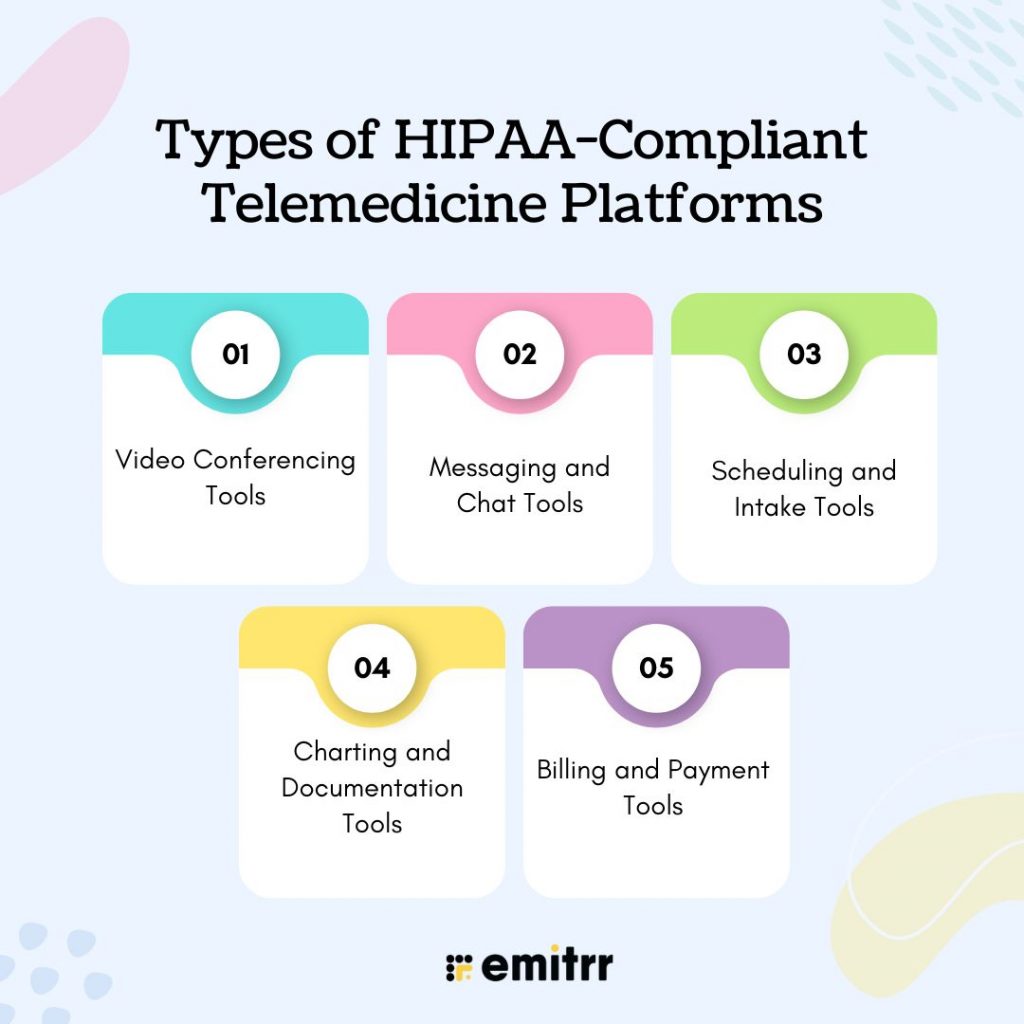
Telemedicine services platforms come in a variety, with various dynamics of HIPAA compliance intertwined. Let’s explore the top-of-the-crop tools in the listicle below.
1. Video Conferencing Tools:
Video conferencing remains the backbone of telemedicine, enabling face-to-face interactions with patients that closely resemble in-person visits. Modern HIPAA-compliant platforms offer features such as virtual waiting rooms, screen sharing, and the ability to record video sessions for documentation purposes.
2. Messaging and Chat Tools:
Secure messaging tools allow healthcare professionals and patients to stay in touch even outside clinical settings. These tools often include appointment reminders, secure file sharing, and integration with electronic health records (EHRs).
3. Scheduling and Intake Tools:
Automated scheduling tools streamline the appointment booking process while maintaining HIPAA compliance. These platforms typically offer online booking, patient intake forms, insurance verification, and automated appointment confirmations.
4. Charting and Documentation Tools:
Digital charting tools help healthcare providers document patient encounters efficiently and within compliance standards. These tools are often integrated with existing EHR systems and come with templates tailored to various medical specialties.
5. Billing and Payment Tools:
HIPAA-compliant billing tools securely handle payments and store transaction data. They are commonly used for insurance claims processing, setting up payment plans, and automating the billing cycle.
VoIP and Cloud Calling Tools:
VoIP (Voice over Internet Protocol) tools play a critical role in modern telemedicine by enabling secure, reliable, and HIPAA-compliant voice communication between healthcare providers and patients. These tools support features such as call routing, IVR menus, call recording (with consent), voicemail-to-text, and call analytics. VoIP systems also support secure, customizable voicemail messages that guide patients when staff are unavailable. This PDF includes ready-to-use HIPAA-compliant voicemail templates designed to improve clarity, set expectations, and enhance patient communication. Download now!!
Key Factors to Consider When Choosing a Telemedicine Platform With HIPAA Compliance
Choosing a telemedicine platform with just the right measure of HIPAA and other compliance standards requires more than meets the eye. Explore the seven key factors to consider before investing in one.
1. Platform Reliability and Uptime: Healthcare services do not have the option of downtime. Seek out platforms that have 99.9 percent uptime or better, solid infrastructure, and backup systems. These platforms must offer Service Level Agreements (SLAs) to define how they will maintain consistency.
2. User Experience and Interface Design: Both medical professionals and patients should find the interface intuitive and user-friendly, where technical complexity is minimized or absolutely zilch. The best connection platforms are clean, user-friendly in design, and require little training to guide users across different user categories.
3. Integration Capabilities with Existing Systems: Ensure that the platform integrates with current EHR systems, practice management tools, billing solutions, and other systems in the IT estate to be effective in terms of workflow. APIs and pre-built integrations with the most popular healthcare software solutions should be available.
4. Scalability and Growth Potential: Select platforms that allow your practice to expand, accommodating more patients, more providers, and more services, without requiring dramatic infrastructure changes or incurring substantial modification costs.
5. Customer Support and Training Resources: Comprehensive customer support, consisting of 24/7 technical support, training materials, and implementation assistance, is needed to ensure smooth adoption and continued platform usability.
6. Total Cost of Ownership: Subscription fees may range from $25 to over $300 per month, depending on various factors. Don’t focus only on the monthly fees; also consider implementation, training, integration, and potential customization costs.
7. Mobile Accessibility and Cross-Device Compatibility: Since a large portion of the target market uses smartphones more than desktops, ensure that the telemedicine platform is mobile-responsive. Modern telemedicine systems should function on mobile phones, tablets, and desktop computers across different operating systems, so patients and providers can access services on the devices they prefer.
Security and Compliance Considerations
Besides HIPAA, a telemedicine platform must be equipped with other security standards and protocols to ensure a safe bridge for patients to interact and share information with doctors and care providers.
1. Understanding HIPAA Requirements for Telemedicine: Not all telehealth activities are covered under the HIPAA Security Rule, but the majority are, and healthcare providers should be aware of which activities require compliance. Telemedicine platform providers, as business associates of covered entities, can also be subject to the Security Rule.
2. End-to-End Encryption Standards: Data in transit and data at rest on all HIPAA-compliant platforms should be strongly encrypted. Seek services that use AES-256 encryption or comparable security levels to ensure patient data remains secure during communication.
3. Data Storage and Backup Security: Secure data storage includes encrypted databases, regular backup procedures, and geographically distributed data centers. Platforms should provide clear documentation about data storage locations and backup recovery procedures.
4. Business Associate Agreements (BAAs): Reputable telemedicine platforms will offer detailed BAAs that outline their responsibilities in safeguarding patient health information without hesitation. HIPAA compliance requires these agreements.
5. Audit Trails and Access Controls: Audit trails of user activity, accessed data, and system changes allow healthcare providers to monitor compliance and investigate potential security breaches.
6. Multi-Factor Authentication Requirements: Multiple authentication methods, such as multi-factor authentication, are considered strong safeguards against unauthorized access and are increasingly necessary for HIPAA compliance.
7. Network Security and Firewall Protection: Network security must be robust, including firewalls, intrusion detection systems, and regular security checks to prevent cyber threats and unauthorized access attempts.
8. Regular Security Updates and Vulnerability Management: Platforms should show a commitment to ongoing security through regular updates, vulnerability assessments, and proactive threat management.
Top HIPAA-Compliant Telemedicine Platforms
- Emitrr
- Doxy.me
- Healthie
- VSee
- SimplePractice
- Thera-LINK
- SimpleTelehealth
- TheraNest
- Enghouse Video
- Zoom for Healthcare
We’ve tested and reviewed several HIPAA-compliant platforms in the sphere of telemedicine, so you don’t have to. We’ve listed their features, pros, and cons to help you narrow down your search and find the best fit. Here it begins!
1. Emitrr
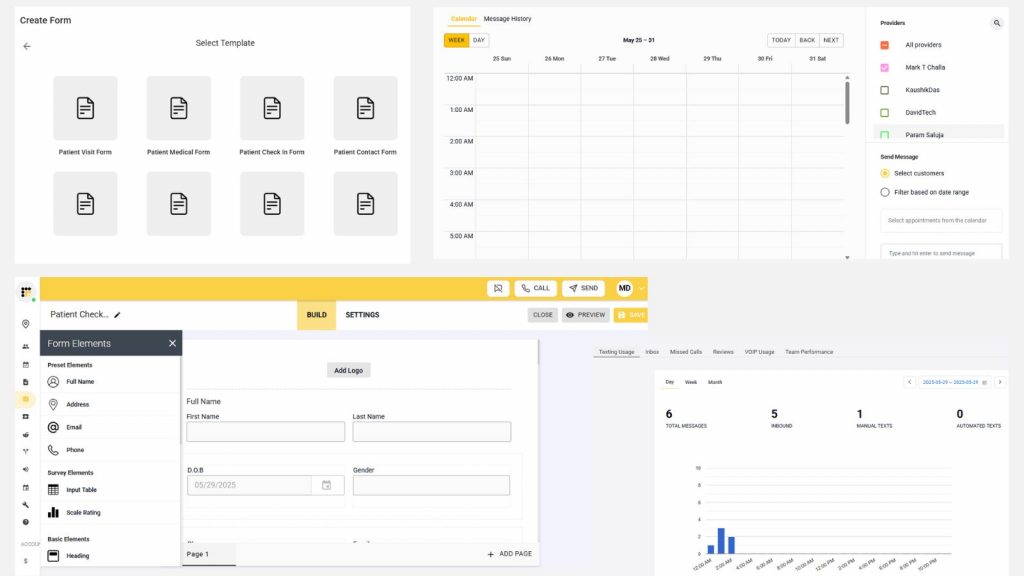
Emitrr is a HIPAA‑compliant, AI‑powered telehealth and patient engagement platform for healthcare, offering 24/7 automation to streamline operations. It integrates with EHR/CRM systems and supports video, chat, email, and SMS. Features include self-scheduling, intake forms, advanced reporting, and analytics, making it a scalable, cost-effective single-solution alternative to juggling multiple tools.
What sets Emitrr apart is its ability to seamlessly integrate multiple healthcare functions into a single, powerful ecosystem. The platform not only offers video consultations, but also creates an intelligent healthcare environment where AI-driven automation handles appointment scheduling, patient screening, follow-up communications, and administrative tasks that typically consume valuable staff time.
The advanced automation features of Emitrr operate seamlessly in the background to help keep patients motivated by engaging them in personal messaging, sending automated intelligent reminders, doing basic health checks, and even offering straightforward health education resources. The platform observes its strict stance on HIPAA compliance in all products built on AI technology, so that further automation of work processes cannot threaten patient privacy or data security. Integrating artificial intelligence and full telemedicine capabilities, Emitrr, as one of the leading telehealth software companies, enables healthcare practices to provide high-quality care to their patients and streamline operations and costs at the same time.
Emitrr Key Features:
- AI-powered patient engagement platform automating communication with empathetic conversational flows.
- Comprehensive EHR/CRM integration syncing data with over 500 systems effortlessly.
- Multi-channel communication via secure video, chat, email, SMS, voicemail.
- Self-scheduling automation allows 24/7 appointment bookings eliminating front‑desk workload.
- Customizable intake forms and secure digital documentation per patient visit.
- Appointment reminders with SMS, email, and voice reducing no-shows ninety percent.
- Automated follow-ups and recall messages bringing back missed or lapsed patients.
- Two-way secure messaging enabling real-time dialogue with patients confidently.
- Seamless conversion of inbound calls into textable, trackable conversation threads.
- AI-assisted VoIP, with smart routing and encrypted calls for compliance.
- Advanced analytics dashboard tracking appointment trends, message performance, satisfaction scores.
Emitrr Pros:
- All-in-one solution reducing the need for multiple platforms
- Advanced AI automation capabilities
- Comprehensive integration options
- Cost-effective pricing structure
- 24/7 automated patient engagement
Emitrr Cons:
- Newer platform with limited long-term user reviews
Emitrr Pricing:
Emitrr offers Standard and Pro pricing tiers based on message credits, used for SMS and voicemail transcription. Enterprise plans are available for larger healthcare systems. Pricing may vary with 10DLC registration for business SMS in the US.
Sample Pricing (Monthly):
- 500 credits: $42 (Standard), $45 (Pro)
- 1000 credits: $68 (Standard), $73 (Pro)
- 2000 credits: $110 (Standard), $118 (Pro)
- 3000 credits: $138 (Standard), $148 (Pro)
Emitrr Reviews & Rating
As a newer entrant in the market, Emitrr is building its user review base, with early adopters praising its comprehensive feature set and AI automation capabilities.
Rating: 4.9/5
“Big Emitrr Fan! …Dedicated team … always willing to go above and beyond… 10/10”
ABSOLUTELY AMAZING experience! Emitrr has allowed such a better experience between our employees & our customers.
Emitrr Customer Support Channels
- 24/7 technical support hotline
- Live chat support during business hours
- Comprehensive online knowledge base
- Video training resources and webinars
- Dedicated account management for enterprise clients

2. Doxy.me
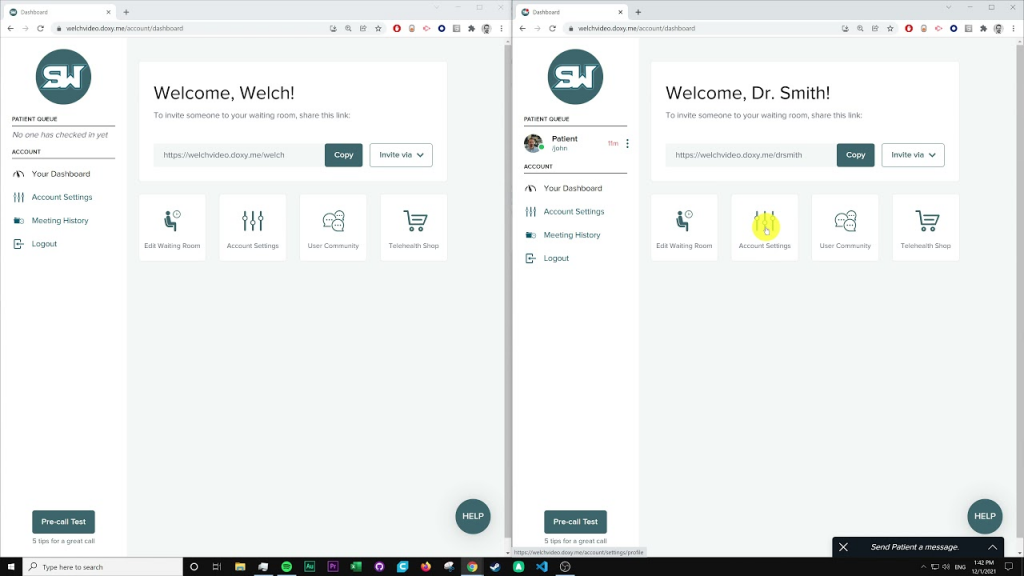
The world’s most loved telemedicine system software, Doxy.me offers a straightforward approach to telemedicine with robust HIPAA compliance. The platform provides easy-to-use video conferencing with no downloads required for patients.
Key Features & Benefits:
- Browser-based video calls requiring no software installation
- Virtual waiting rooms with customizable branding
- Screen sharing and annotation tools
- Integration with popular EHR systems
- Mobile app availability for iOS and Android
Pricing Structure:
Start delivering HIPAA compliant virtual care for free with doxy.me. The platform offers a freemium model with basic features available at no cost, while premium plans provide advanced functionality starting at competitive monthly rates.
Best For:
Doxy.me is ideal for solo practitioners and small practices seeking a simple, reliable telemedicine solution without complex features or high costs.
Doxy Pros:
- Free tier available
- No software installation required
- Simple, intuitive interface
- Strong HIPAA compliance track record
Doxy Cons:
- Limited advanced features in free tier
- Basic customization options
- Fewer integration capabilities compared to comprehensive platforms
Doxy.me Review and Ratings
Rating 4.6/7
“HIPAA compliant, easy to use, FREE… unlimited 60 min sessions!”
“They were initially discounted as internet/wifi issues or operator error, but after months, they still persisted. Switching to a competing product removed almost all technical problems.”
3. Healthie

Healthie, as a HIPAA-secure medical platform, offers a comprehensive telehealth platform specifically designed for nutrition professionals, dietitians, and wellness coaches, though it serves other healthcare specialties as well. It features video consultations, nutrition planning tools, secure messaging, intake forms, billing, and mobile apps. Its tiered pricing supports both solo practitioners and expanding practices, which is its greatest USP.
Key Features and Benefits:
- Video consultations with recording capabilities
- Secure messaging and chat functionality
- Meal planning and nutrition tracking tools
- Payment processing and insurance billing
- Comprehensive client management system
- Mobile app for both providers and clients
Pricing Structure:
Healthie offers tiered pricing plans starting from basic individual practitioner plans to enterprise solutions, with pricing typically ranging from affordable monthly subscriptions to comprehensive practice management packages.
Best For:
Healthie is particularly well-suited for nutrition professionals, dietitians, health coaches, and wellness practitioners who need specialized tools for their practice areas.
Healthie Pros:
- Specialized tools for nutrition and wellness professionals
- Comprehensive client management features
- Strong mobile app functionality
- Integrated payment processing
Healthie Cons:
- May be over-featured for general medical practices
- Pricing can be higher for smaller practices
- Learning curve for advanced features
Healthie Ratings and Review:
Rating: 4.4/5
“User-friendly. Excellent tutorial videos to help you get started quickly. Easy customization.”
“The app is glitchy – it’s often hard to have clients use it for the educational portal or form completion.”
4. VSee
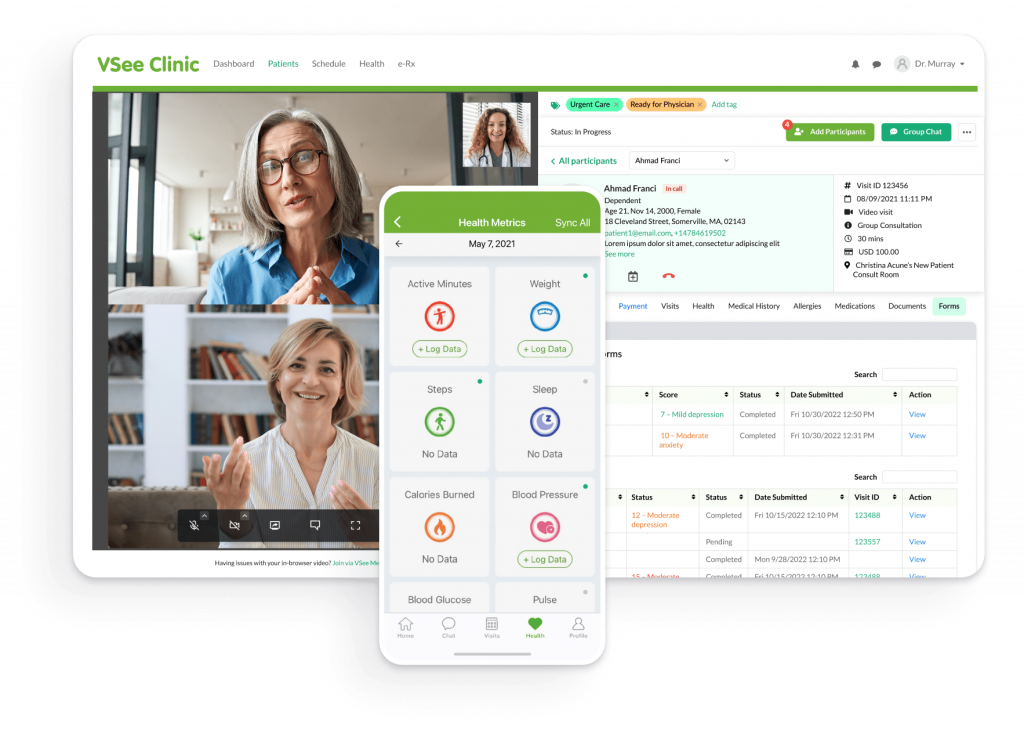
VSee offers HIPAA‑compliant, enterprise-grade telemedicine services optimized for low-bandwidth environments and clinical workflows. It features HD video, secure file-sharing, multi-party consultations, EHR integrations, and customizable interfaces. Its pricing is bespoke and best suited for large healthcare systems or practices that need high reliability and tailored solutions.
Key Features and Benefits:
- HD video consultations with low bandwidth optimization
- Secure file sharing and document collaboration
- Integration with major EHR systems
- Multi-party video conferences for team consultations
- Advanced security and compliance features
- Customizable interface and branding options
Pricing Structure:
VSee offers customized pricing based on practice size and feature requirements, typically positioning itself in the mid-to-upper price range with enterprise-focused solutions.
Best For:
VSee is ideal for larger healthcare organizations, hospital systems, and practices requiring advanced customization and enterprise-level features.
VSee Pros:
- Enterprise-grade security and reliability
- Extensive customization capabilities
- Strong EHR integration options
- Low bandwidth optimization for rural areas
VSee Cons:
- Higher pricing for advanced features
- May be complex for smaller practices
- Requires more technical setup and maintenance
VSee Ratings and Review:
Rating: 4.1/5
“The software and app were both fairly useful until last week. Customer service has always been difficult to access.”
“Not acceptable support at any level, but especially during a national crisis.”
5. SimplePractice

SimplePractice is an all‑in‑one practice management and telehealth solutions platform tailored for mental health professionals. It features integrated video sessions, automated appointment scheduling, secure messaging, insurance claim processing, and comprehensive reporting tools. Elevated by its mobile app and analytics, it offers both solo and group providers a streamlined way to manage the full patient journey.
Key Features and Benefits:
- Integrated telehealth video sessions
- Complete practice management suite
- Automated appointment scheduling and reminders
- Insurance claim processing and billing
- Client portal with secure messaging
- Comprehensive reporting and analytics
Pricing Structure:
SimplePractice offers tiered pricing plans based on the number of providers and features needed, with telehealth included in higher-tier plans.
Best For:
SimplePractice is excellent for mental health professionals, therapists, and small to medium-sized practices seeking an all-in-one practice management solution.
SimplePractice Pros:
- Comprehensive practice management features
- Strong reputation in mental health community
- Integrated billing and scheduling
- Excellent customer support
SimplePractice Cons:
- Higher cost for full feature access
- May be over-featured for practices only needing telemedicine
- Telehealth features are add-on to core platform
SimplePractice Ratings and Review
Rating: 4.6/5
“The calendar is great, easy to use and you can see the times client’s are scheduled. You can set up notifications to be alerted about appointment times.”
“The cost. There are a lot of other programs out there offering similar platforms for less.”
6. Thera-LINK

Thera‑LINK is a HIPAA‑secure teletherapy platform designed specifically for therapists and counselors. It offers video sessions, client scheduling, mental‑health-focused documentation tools, secure messaging, group therapy capabilities, and EHR integration. With a focus on simplicity and therapist support, it’s an affordable and user-friendly option for behavioral health professionals.
Key Features and Benefits:
- HIPAA-compliant video therapy sessions
- Specialized tools for mental health documentation
- Client scheduling and management
- Secure messaging between sessions
- Integration with mental health-focused EHR systems
- Group therapy session capabilities
Pricing Structure:
Thera-LINK offers competitive pricing specifically designed for mental health professionals, with plans typically including per-provider monthly fees.
Best For:
Thera-LINK is specifically designed for mental health professionals, therapists, counselors, and behavioral health practices.
Thera-LINK Pros:
- Specialized for mental health professionals
- Strong security and compliance features
- Affordable pricing for solo practitioners
- Excellent customer support for therapy-specific needs
Thera-LINK Cons:
- Limited applicability outside mental health
- Fewer advanced features compared to comprehensive platforms
- Basic integration capabilities
Thera-LINK Ratings and Review:
Rating: 4.7/5
“It’s easy to use and increasingly growing in functionality and features. The interface is clean and the video and audio quality are consistently strong.“
“When I requested to cancel my services…once again the response…do it yourself and there are no refunds.”
7. SimpleTelehealth
SimpleTelehealth is a HIPAA‑compliant, no‑frills telemedicine system focused on video consultations, basic scheduling, documentation, and reporting. Designed for quick setup and ease of use, it targets small practices and solo providers who need reliable virtual care without the complexity or high cost of enterprise platforms.
Key Features and Benefits:
- Simple video consultation platform
- Basic scheduling and appointment management
- HIPAA-compliant communications
- Mobile-friendly interface
- Basic reporting and documentation tools
- Affordable pricing structure
Pricing Structure:
True to its name, SimpleTelehealth offers straightforward pricing with transparent monthly fees based on provider count and usage requirements.
Best For:
SimpleTelehealth is ideal for small practices, solo practitioners, and healthcare providers who prioritize simplicity and cost-effectiveness over advanced features.
SimpleTelehealth Pros:
- Simple, easy-to-use interface
- Affordable pricing
- Quick setup and implementation
- Good customer support
SimpleTelehealth Cons:
- Limited advanced features
- Basic integration capabilities
- May not scale well for larger practices
SimpleTelehealth Ratings and Review:
Rating: 4.2/5
8. TheraNest

TheraNest is a practice management and HIPAA-compliant telehealth suite designed for therapists and mental health clinics. It includes video conferencing, EHR, insurance billing, client portal messaging, scheduling, and documentation tools. Package plans scale by client volume, making it suitable for solo providers and growing practices.
Key Features and Benefits:
- Integrated telehealth video sessions
- Complete practice management suite
- Electronic health records specifically for mental health
- Insurance billing and claims processing
- Client portal and secure messaging
- Scheduling and appointment management
Pricing Structure:
TheraNest offers tiered pricing plans with telehealth included in comprehensive practice management packages.
Best For:
TheraNest is designed for mental health professionals, therapy practices, and behavioral health organizations seeking integrated practice management and telehealth solutions.
TheraNest Pros:
- Comprehensive mental health-focused features
- Integrated practice management and telehealth
- Strong compliance and security features
- Excellent support for mental health billing
TheraNest Cons:
- Primarily focused on mental health practices
- Higher learning curve for comprehensive features
- May be expensive for basic telehealth needs only
TheraNest Ratings and Review:
Ratings: 4.4/5
“Works well but has limitations for large counseling programs.”
“Slow performance: “painfully slow… IT support… ineffective.”
9. Enghouse Video

Enghouse Video offers HIPAA‑compliant telemedicine and enterprise video conferencing solutions. It features encrypted HD video/audio, secure file sharing, audit trails, low‑bandwidth optimization, clinical workflow support, EHR integration, and remote patient monitoring. Its scalable infrastructure is built for large healthcare systems and complex telehealth needs.
Key Features and Benefits:
- Enterprise-grade video conferencing
- Advanced security and encryption
- Scalable infrastructure for large organizations
- Integration with healthcare systems
- Multi-platform support
- Advanced analytics and reporting
Pricing Structure:
Enghouse Video typically offers enterprise-level pricing with customized solutions based on organizational size and requirements.
Best For:
Enghouse Video is suited for large healthcare organizations, hospital systems, and enterprises requiring scalable, secure video communication solutions.
Enghouse Video Pros:
- Enterprise-grade reliability and security
- Highly scalable infrastructure
- Advanced customization options
- Strong technical support
Enghouse Video Cons:
- High cost for enterprise features
- Complex setup and maintenance requirements
- May be over-engineered for smaller practices
Enghouse Ratings and Review:
Rating: 4.5/5
“Exceptional video and audio quality even in low‑bandwidth areas. The platform is well‑regarded in enterprise evaluations.”
10. Zoom for Healthcare
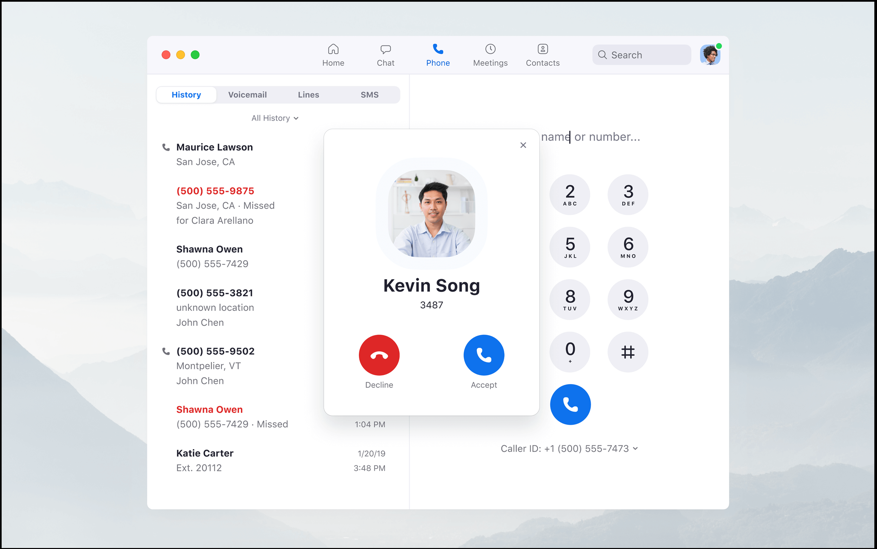
Zoom for Healthcare is a variant of Zoom tailored to healthcare practitioners. It enhances telehealth consultations and clinical collaborations. The platform is HIPAA-compliant, offering familiar Zoom functionality with healthcare-specific security and compliance features.
Key Features and Benefits:
- HIPAA-compliant video conferencing
- Virtual waiting rooms for patient privacy
- Cloud recording with encryption
- Integration with healthcare systems
- Administrative controls for healthcare organizations
- Mobile and desktop accessibility
Pricing Structure:
Zoom for Healthcare offers tiered pricing plans specifically designed for healthcare organizations, with costs varying based on user count and feature requirements.
Best For:
Zoom for Healthcare is ideal for healthcare organizations already familiar with Zoom’s interface who need HIPAA-compliant video conferencing with minimal learning curve.
Zoom Pros:
- Familiar Zoom interface and functionality
- Strong brand recognition and reliability
- Comprehensive security and compliance features
- Excellent video and audio quality
Zoom Cons:
- Limited healthcare-specific features beyond video conferencing
- Requires separate solutions for practice management
- Higher cost compared to some specialized healthcare platforms
Zoom Review and Ratings:
Rating: 4.6/5
“I like Zoom Meetings because of the great user experience… super intuitive.”
“It lacks specialized practice management features beyond video conferencing.”
Why Choose Emitrr for Your Telemedicine Needs
Among the numerous telemedicine solutions platforms available in 2025, Emitrr stands out as a comprehensive solution that addresses the evolving needs of modern healthcare practices. With its innovative approach to patient engagement and practice management, Emitrr offers unique advantages that set it apart from traditional telemedicine platforms:

1. AI-Powered Patient Engagement and 24/7 Automation
Emitrr’s AI-powered platform revolutionizes patient engagement by providing intelligent automation that works around the clock. The system can handle appointment scheduling, send personalized reminders, conduct initial patient screenings, and even provide basic health information, freeing up valuable staff time for more complex patient care activities.
Learn more about what Emitrr’s AI agent can do:
Introducing Sarah: The AI Agent That Makes Texting Effortless
2. Seamless EHR and CRM Integration
Unlike many telemedicine platforms that require manual data entry or complex workarounds, Emitrr offers seamless integration with existing EHR and CRM systems. This integration ensures that patient information flows smoothly between systems, reducing administrative burden and minimizing the risk of data entry errors.
3. HIPAA-Compliant Communication Across All Channels
Emitrr ensures HIPAA compliance across all communication channels, including video consultations, secure messaging, email communications, and SMS notifications. This comprehensive approach to compliance gives healthcare providers confidence that all patient interactions meet regulatory requirements. Looking for SMS Templates that are HIPAA-compliant for all your communication needs? Download a variety of SMS Templates for all communication types:

4. Comprehensive Practice Management Features
Beyond telemedicine, Emitrr offers a complete suite of practice management tools, including scheduling, billing, documentation, and analytics. This all-in-one approach eliminates the need for multiple software solutions and provides a unified platform for practice operational bottom lines
5. Cost-Effective All-in-One Solution
By consolidating several healthcare software functions into a single platform, Emitrr can help practices save hundreds of thousands of dollars compared to purchasing individual solutions for telemedicine, practice management, EHR integration, and patient engagement.
6. Self-Scheduling Automation Feature
With Emitrr’s intelligent self-scheduling system, patients can automatically book appointments based on provider availability, service type, and personal preferences. The system also handles rescheduling, cancellations, and waitlists, without requiring staff involvement.
Future of HIPAA-Compliant Telemedicine
The telemedicine environment is currently changing at an unparalleled pace, and a number of innovative technologies can change the face of healthcare delivery in the coming decade. Provided below are some new technologies, which are bound to increase the level of patient care, enhance the accuracy of diagnostics, and the increase in the delivery of specialized medical services without derogating the standards of strict HIPAA compliance.
- Artificial Intelligence, and Machine Learning are transforming telemedicine by developing advanced tools of diagnosis of medical images, symptom interpretation and clinical suggestions in real-time over virtual meetings. Using AI, predictive analytics assists medical professionals to determine which patients have a high risk of being adversely affected by health conditions and can step in to help these patients practically before they become sick to increase the quality of care and decrease expenses.
- Internet of Medical Things (IoMT) is also growing the possibility of remote care by making use of connected medical devices capable of transmitting patient data to medical practitioners without fail in the virtual setup. Such smart devices are smart blood pressure monitors, glucose meters, pulse oximeters, and wearable health trackers, which offer constant monitoring and share real-time data, which allows conducting more detailed virtual examinations and continuously managing patients.
- Augmented and Virtual reality technologies are again delivering immersive telehealth services, which were not possible through traditional video consultations. Mental health treatment, physical rehabilitation and immersive medical education platforms based on VR therapy sessions, AR-facilitated physical rehabilitation exercises, and mental health recovery programs are already showing powerful therapeutic and improved engagement.
- Blockchain technology holds a great promise to resolve the long-existing issues of security and interoperability of healthcare data, offering tamper-resistant health records, an increase in patient control over the sharing of this data, and cross-platform, secure communications between distinct telemedicine systems, all at the titular HIPAA compliance.
As telemedicine technology advances and becomes more deeply integrated into healthcare delivery, regulatory frameworks must adapt to address new challenges and opportunities. Policymakers are actively working to create supportive environments for virtual care while ensuring patient safety and privacy protections remain paramount in this rapidly evolving landscape. Let’s delve deeper into top regulatory changes to consider
4 Emerging Healthcare Regulatory Changes Dominating 2025
Healthcare regulations continue to evolve rapidly in response to technological advances and changing care delivery models, creating a dynamic regulatory landscape that healthcare providers must navigate carefully.
Expanded Telehealth Coverage:
Insurance payers and government programs are likely to continue expanding coverage for telehealth services, making virtual care more accessible and financially viable. The coverage represents one of the most significant regulatory shifts affecting telemedicine adoption. Insurance payers and government programs, including Medicare and Medicaid, are likely to continue expanding coverage for telehealth services beyond the temporary measures implemented during the pandemic.
Interstate Licensing Reforms:
Ongoing efforts to streamline medical licensing across state lines may facilitate broader telehealth service delivery and provider mobility. They are gaining momentum as policy makers recognize the need to facilitate broader telehealth service delivery across state boundaries. Ongoing efforts to streamline medical licensing include expanding interstate medical compacts, reducing licensing barriers for telehealth-specific practice, and creating reciprocity agreements between states.
Enhanced Privacy Regulations:
Stricter privacy and security requirements are emerging as healthcare data becomes increasingly digitized and interconnected across multiple platforms and systems. Stricter privacy and security requirements may include more stringent data encryption standards, enhanced patient consent mechanisms for data sharing, and more rigorous audit requirements for healthcare technology vendors.
What to Expect in 2025 and Beyond?
Telemedicine will continue to consolidate the market with more end-to-end platforms taking market share with more all-in-one solutions. Healthcare practitioners can expect to see a far brighter picture of interoperability between diverging healthcare systems, allowing the smooth transfer of data in-between EHRs, billing providers, and specialty software.
AI-empowered automation will transform administrative duties, including smart appointment scheduling and automatic patient triage, predictive care management analytics, X-rays automation. More advanced patient outreach tools will be offered, with tailored health coaching, live symptom tracking, and proactive intervention possibility.
Also, there could be more regulatory support of telehealth services, greater insurance coverage, and enhanced security measures, thus further enhancing patient privacy protection without compromising the ease of delivering care.
Frequently Asked Questions
Consumer Zoom, Skype, or Google Meet do not work well in the program at all, as they cannot be used in healthcare consultations due to the lack of the HIPAA compliance capability. The healthcare providers should utilize platforms that provide Business Associate Agreements, the appropriate encryption, and healthcare security provisions.
Many security levels need to be taken to ensure patient privacy: work at HIPAA-compliant platforms, hold a consultation in a closed premises, identify the patient prior to his/her consultation, connect to a secure network (do not use public Wi-Fi), and restrict access to the gadgets on which consultations are held.
When faced with a breach of security, the healthcare providers are obliged to observe the HIPAA provisions regarding HIPAA breach notification: determine the extent of breach, notify patients within 60 days, report to Department of Health and Human Services, and possibly the media in cases of large breaches. It is important to have in place a detailed incident response plan.
The majority of existing telemedicine systems have mobile access (using specific applications or web-based applications optimized to work on mobile devices). Nonetheless the quality and functionality of mobile access may greatly differ between platforms. Mobile functionality can be tested during the evaluation process in order to determine whether it satisfies the requirements of your practice.
Final Recommendations
When selecting the HIPAA-compliant telemedicine platform, you should keep in mind the needs of your practice, pay attention to patients, take care of the technology requirements, and stay within budget. To make a final decision, it is practical to check how well a platform fits into your current practices by first attempting to use it in a pilot program or on a free trial.
Those key-decision factors ought to be related to several critical areas. Your highest priority will be compliance and security by having a strong HIPAA compliance and strong Business Associate Agreements as well as tested security procedures. The end user experience should also not be overlooked and hence should focus on platforms with simplified interface on both the provider and the patient.
To be able to achieve workflow efficiency requires integration capabilities and platforms that integrate with your current EHR systems, practice management software, and healthcare billing platforms. Scalability practices guarantee that your preferred solution can augment along with your practice as the number of patients and provided services increase. The analysis of the total cost of ownership must take into consideration any cost other than the monthly subscription fee and include implementation, training, and supporting costs. Lastly, proper support and training mechanisms are essential to the successful adoption of platforms and ultimately allow the platform to be operational over long periods of time.
After choosing the telemedicine platform, you will need a well-organized plan to make the implementation successful. Training of the staff should be thorough to include everybody and with technical assistance and integration of the workflow so that adoption is easy. The patient education is also very essential and the resources to be created should enable the patient to feel comfortable working with new technology and comprehend the processes of virtual care.
Workflow integration is the way of changing the currently established practice processes in order to integrate telemedicine processes and activities as efficiently as possible into the practice processes that do not compromise the quality of care. Systems of quality assurance should also be initiated so that it is able to guide on how well the platform is performing on what your practice wants. Continuous improvement processes ought to constantly review the performance of systems and user (patient) satisfaction to pinpoint areas that can be optimized in the long run to enhance provider functioning in terms of efficiency as well as patient experience.
Conclusion
The landscape of telemedicine in 2025 presents enormous opportunities to providers that not only can administer high-quality and readily available care but are also able to offer the utmost levels of privacy and security. Selecting an appropriate HIPAA-compliant telehealth latform and implementing it carefully, healthcare practices will be able to improve patient satisfaction, enhance the efficiency of care delivery and prepare their business to succeed in the digital healthcare age.
Ultimately, they are both excellent options to consider a more general solution like Emitrr with machine learning-based automation and built in practice management tools, or a more niche platform like Doxy.me that focuses only on video visits. The idea is to find a solution that best fits your practice and growth goals. The financial outlay on an efficient, HIPAA-compliant telemedicine platform will be well worth it in regard to patient care, OPEX, and practice sustainability.