
 4.9 (400+
reviews)
4.9 (400+
reviews)

Introduction
Patient no-shows are a major challenge for healthcare facilities. When patients miss scheduled appointments without notifying the clinic, it disrupts workflows, lowers provider productivity, and limits access for other patients needing care. Even a slight rise in no-show rates can lead to noticeable revenue loss and hinder continuity of care.
However, no-shows can be prevented. Most missed appointments can be avoided when clinics put in place effective communication and scheduling strategies. Automated appointment reminders and easy rescheduling options can greatly lower the chances of missed visits.
This guide explains the common reasons behind no-show rates in healthcare, identifies the clinics most affected, and offers evidence-based strategies to improve appointment attendance. It also shows how specialized communication platforms like Emitrr help clinics automate reminders, manage confirmations, reduce manual tasks, and encourage patient follow-through.
Understanding No-Show Rates in Healthcare
What Are Patient No-Shows?
A patient no-show happens when a patient does not attend a scheduled appointment and does not inform the clinic beforehand. This is different from cancellations, where the patient contacts the practice before the appointment to reschedule or cancel.
No Show Rates in Healthcare (Industry Benchmarks)
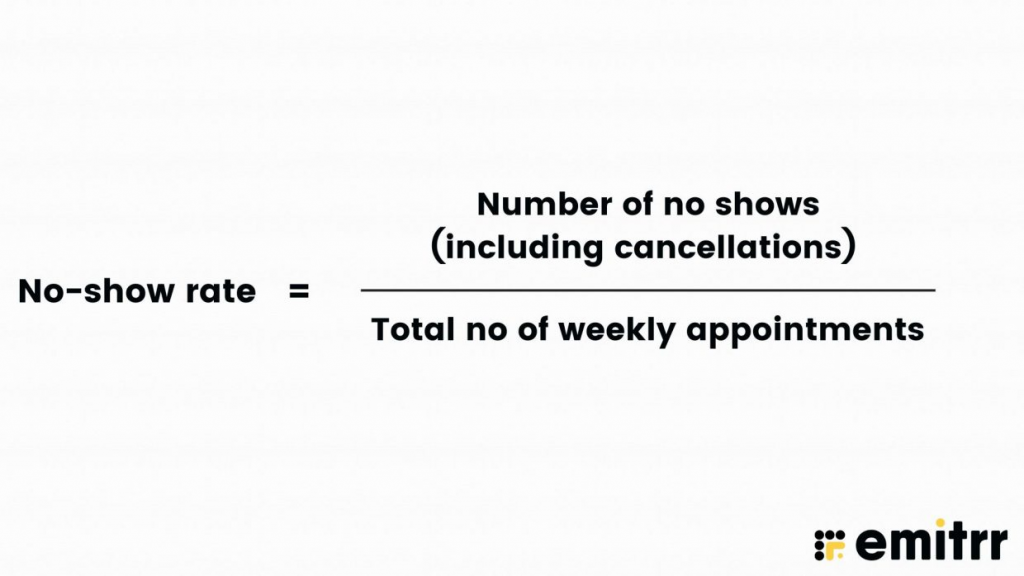
No-show rates differ depending on specialty, population, and setting:
- Primary Care Clinics: 5-15%
- Dental and Oral Health Practices: 10-20%
- Physical Therapy and Rehabilitation: 15-30%
- Behavioral and Mental Health Clinics: 20-50%
Behavioral health and physical therapy tend to have the highest no-show rates, partly due to the length of treatment, frequency of visits, and emotional barriers.
The Real Cost of No-Shows for Clinics
Revenue Impact
Every missed appointment means lost billable time. Even a small no-show rate can seriously impact patient volume and the clinic’s financial health.
Scheduling Disruptions
Last-minute gaps in the schedule reduce provider efficiency and may lead to unproductive time that cannot be easily recovered.
Staff Productivity Strain
Administrative staff often spend too much time trying to confirm appointments, reschedule missed visits, or manage waitlists manually.
Reduced Continuity of Patient Care
Missed appointments can delay diagnosis, prolong treatment plans, and negatively affect patient health outcomes.
Why Patients Miss Appointments?
Understanding why patients miss appointments is crucial before trying to reduce no-show rates in clinics. While each specialty faces unique challenges, several common factors impact no-show rates across all types of clinics and patients.
Forgetfulness or Lack of Appointment Reminders
One main reason for no-show appointments is forgetfulness. Without structured reminder systems, patients can overlook appointments, especially if they were scheduled weeks or months earlier. Automated SMS, voice, or email reminders are necessary to reduce patient no-shows at scale.
Scheduling Conflicts and Transportation Barriers
Patients may run into last-minute work, family, or transportation issues. In areas with limited transport options, travel challenges can significantly increase no-show rates. Offering flexible scheduling, simple rescheduling options, and real-time confirmation workflows can help reduce no-shows related to logistical problems.
Anxiety, Fear, or Low Perceived Urgency
In clinics like dental, behavioral health, and physical therapy, patients sometimes underestimate the importance of regular care or may feel anxious about treatment. This can lead to hesitation and missed appointments. Clear pre-visit expectations and supportive communication can help improve no-show rates.
Lack of Clear Pre-Visit Information
When patients do not know what to expect from a visit, such as forms or preparation steps, they may feel overwhelmed and skip the appointment. Sending digital intake forms and instructions ahead of time can significantly reduce no-shows and cancellations.
Cost or Billing Uncertainty
If patients are unsure about their insurance coverage, copays, or out-of-pocket costs, they might delay or miss appointments. Proactive communication about billing can ease uncertainties and reduce patient no-shows.
Impact of Appointment No-Shows on Clinic Operations
High no-show rates in healthcare impact both patient outcomes and clinic performance. When patients miss scheduled visits, the clinic loses valuable operational capacity, leading to inefficiencies, revenue loss, and interruptions in care continuity. Understanding this impact is vital before implementing strategies to reduce no-shows.
1. Loss of Revenue and Reduced Provider Productivity
Every missed appointment means wasted provider time. Frequent patient no-shows can result in significant revenue loss. Clinics may see:
- Fewer billable visits
- Lower daily patient volume
- Decreased provider efficiency
Lowering no-show rates improves financial stability and helps clinics better manage daily workloads.
2. Interrupted Care Continuity and Poor Health Outcomes
Missed appointments can delay diagnosis, ongoing treatment, preventive care, and follow-up visits. When patients fail to show up:
- Conditions can worsen
- Treatment plans may become ineffective
- Recovery times may extend
Improving attendance helps minimize no-shows and ensures patients receive timely, consistent care.
3. Increased Administrative and Staff Burden
Front-desk staff often spend hours:
- Calling patients who missed appointments
- Rebooking visits
- Manually filling gaps in the schedule
This reactive work raises staff stress levels. Tools that help lower no-shows by automating reminders and rescheduling can greatly lessen this administrative burden.
4. Scheduling Inefficiencies and Workflow Disruption
When appointment slots remain empty:
- Providers may face unproductive time
- Clinics might overbook to balance schedules (leading to longer wait times when all patients arrive)
- Daily workflows can become erratic
Structured systems that reduce no-show rates improve scheduling stability and patient flow.
7 Proven Strategies to Reduce No-Shows in Clinics
To lower no-shows and improve appointment attendance, clinics should adopt proactive communication and patient-friendly scheduling processes. The following strategies are proven to reduce patient no-shows, enhance care continuity, and increase provider productivity.
1. Use Automated Appointment Reminders (SMS, Voice, Email)
Automated reminders are one of the most effective ways to lower no-shows in both small practices and larger healthcare groups. By sending reminders:
- 1 week before
- 1 day before
- 1 hour before
clinics can help ensure patients remember their appointments and have enough time to confirm, cancel, or reschedule. This method is crucial for clinics looking to reduce no-show rates without increasing staff workload.
Best Practices for Reminder Timing
- Use text messages as the main channel to prevent no-shows (highest open + response rate).
- Keep messages short, clear, and action-oriented.
HIPAA-Compliant Reminder Messaging
Ensure reminders include:
- A friendly tone
- Appointment details
- A clear option to confirm or reschedule
Platforms like Emitrr simplify this process while ensuring full HIPAA compliance.
2. Enable Two-Way Texting for Confirmations & Rescheduling
Traditional phone call reminders often fail due to missed voicemails and callback delays. Two-way texting allows patients to instantly:
- Confirm appointments
- Ask questions
- Request simple rescheduling
This greatly enhances patient no-show rates by eliminating communication barriers.
3. Offer Online Scheduling and Easy Rescheduling
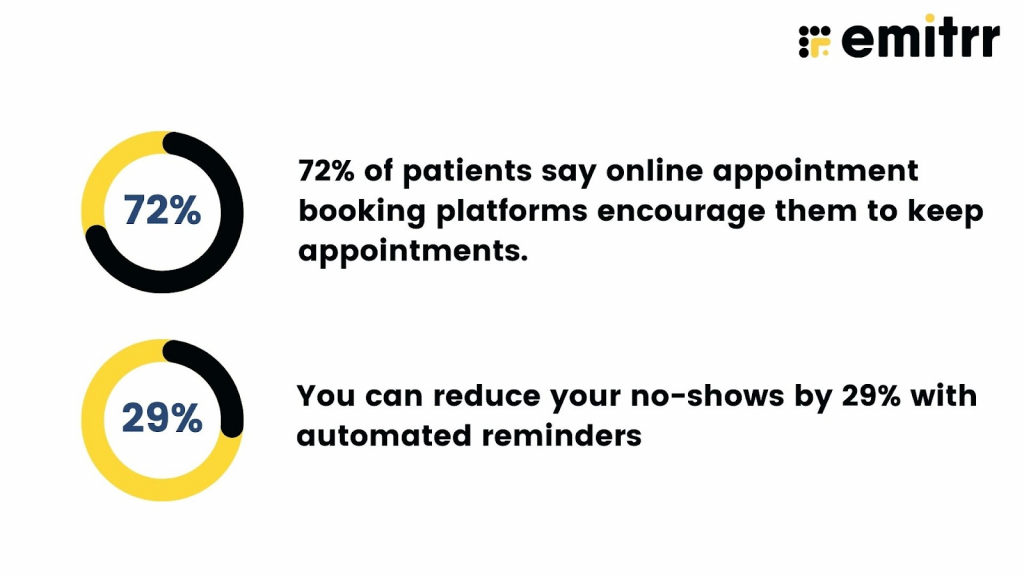
When patients find it difficult to contact the clinic by phone, they are more likely to miss their visits. Allowing patients to quickly reschedule online can reduce appointment cancellations and missed visits resulting from scheduling conflicts.
4. Send Digital Intake Forms Before the Appointment
Pre-visit paperwork can cause anxiety or confusion on the appointment day. Sending digital patient intake forms in advance:
- Reduces check-in delays
- Clarifies expectations
- Helps lower no-show rates
This is especially effective in physical therapy, dental, and outpatient specialty clinics.
5. Implement a Waitlist to Fill Same-Day Cancellations
Automated waitlist systems can notify the next patient when an appointment becomes available. This helps clinics reduce no-show rates while keeping schedules full, which is particularly useful in high-demand specialties.
6. Maintain a Clear, Compassionate No-Show Policy
A well-explained, empathetic no-show policy sets expectations without assigning blame. Gentle accountability messaging can improve no-show rates over time.
7. Improve the Patient Experience
Patients are more likely to attend appointments when they feel valued and supported. Enhancing:
- Staff communication tone
- Appointment flow efficiency
- Waiting room experience
This can further decrease patient no-shows and foster long-term patient relationships.
Specific Strategies for Reducing No-Show Rates by Clinic Type
Different clinics see no-shows for varied reasons. To effectively reduce no-show rates and enhance patient attendance, the approach must fit the type of care provided and the patient population. Below are targeted strategies for clinics that often struggle with high no-show rates in healthcare.
1. Dental Clinics
Dental patients often schedule appointments far in advance and may not feel urgency, which leads to missed visits.
How to Reduce No-Shows in Dental Clinics:
- Use automated text reminders 7 days, 2 days, and 2 hours before the appointment.
- Send educational texts about the importance of oral health.
- Provide easy rescheduling options to prevent cancellations from turning into no-shows.
Improving perceived value and communication can significantly cut down on dental no-shows.
2. Physical Therapy Clinics
Success in physical therapy relies on consistent attendance, yet no-show rates can be high due to pain fluctuations or slow progress.
Strategies to Improve No-Show Rates:
- Send messages that motivate based on progress.
- Allow patients to confirm or change appointments through two-way texting.
- Send reminders for home exercises to support treatment continuity.
This approach helps reduce no-show appointments while enhancing patient outcomes.
3. Primary Care and Family Medicine
In primary care, routine visits are sometimes viewed as low priority, which can raise no-show rates.
How to Decrease No Show Rates in Primary Care:
- Educate patients on the benefits of preventive care.
- Allow self-scheduling and use automated recall for follow-ups.
- Use text reminders with health education links to lower no-shows and cancellations.
4. Mental Health & Behavioral Health Clinics
These clinics often report the highest no-show rates due to emotional challenges, stigma, or inconsistent motivation.
Reducing No Show Rates in Mental Health:
- Use supportive messaging that emphasizes help rather than obligation.
- Provide anonymous text check-ins before appointments.
- Offer telehealth as an alternative appointment option.
These strategies can help reduce no-show rates in mental health care while fostering patient trust and continuity.
5. Outpatient Specialty Clinics
Patients in specialty care may have concerns about insurance or unclear instructions for visits.
How to Improve No-Show Rates in Outpatient Clinics:
- Send digital intake forms and instructions ahead of time.
- Use reminders that include details on location, parking, and preparation steps.
- Offer simple rescheduling options to prevent silent cancellations.
These strategies effectively reduce no-shows and improve schedule reliability.
Want to know how to reduce no-shows with AI? Watch this YT video:
Software to Reduce No-Shows in Clinics
To lower no-show rates, clinics are increasingly using patient communication and scheduling automation tools. These solutions simplify reminders, confirmations, rescheduling, and patient engagement. They help clinics avoid no-shows while reducing administrative tasks.
Below is a comparison of leading software solutions used in primary care, dental, physical therapy, mental health, and outpatient clinics.
1. Emitrr
Overview
Emitrr is a HIPAA-compliant patient communication and workflow automation platform designed to lower patient no-shows and appointment cancellations. It centralizes texting, reminders, scheduling, and digital intake forms to ensure that patients are informed and engaged.
Features That Reduce No-Shows
- Multi-channel appointment reminders (SMS, voice, email)
- Two-way texting for instant confirmations
- Smart auto-rescheduling workflows
- AI-driven follow-up messages for missed appointments
- Digital intake forms and pre-appointment checklists
- Waitlist and recall automation
- No-show risk scoring (predictive engagement)
Pros
- Highly effective at lowering no-show rates
- Easy for staff to use (minimal training required)
- Works across various clinic types and specialties
- Fully HIPAA compliant and focused on healthcare
Cons
- No free plan (but the ROI is high due to reduced no-shows)
Pricing
Starts at $179 to $349 per month, depending on clinic size and usage level.
Integrations
Compatible with over 100 EHR, PMS, and EMR systems, including Dentrix, Athena, DrChrono, eClinicalWorks, and more.
Reviews & Rating
- 4.9/5 (Average from Google and Capterra)
Most reviewers note significant reductions in no-shows and less workload for staff.
2. Solutionreach
Overview
Solutionreach provides patient reminders, recalls, surveys, and messaging tools aimed at improving patient compliance and scheduling efficiency.
Features That Reduce No-Shows
- Automated appointment reminders
- Recall messaging
- Pre-visit instructions
- Patient newsletters and educational sequences
Pros
- Wide range of communication and recall features
- Effective for multi-location organizations
Cons
- Complex user interface for smaller practices
- Limited real-time texting personalization
- Longer setup and onboarding cycles
Pricing
Solutionreach’s pricing starts around $300 to $800 per month, depending on organization size.
Integrations
Integrates with major EHR/PMS platforms, mainly for enterprise systems.
Reviews & Rating
- 4.0 to 4.3/5
Praised for scalability but criticized for usability.
3. NexHealth
Overview
NexHealth specializes in online scheduling and syncing calendars between the clinic’s booking system and EHR.
Features That Reduce No-Shows
- Online self-scheduling
- Automated appointment confirmations
- Calendar and EHR syncing to prevent double-booking
Pros
- Strong scheduling functionality
- Clean, modern interface
Cons
- Less automation depth than Emitrr
- Limited follow-up workflows for missed appointments
Pricing
Nexhealth costs $350 to $650 per month, depending on locations and features.
Integrations
Supports major dental and healthcare PMS/EHR systems.
Reviews & Rating
- 4.4/5
Highly rated for its scheduling simplicity.
4. Weave
Overview
Weave provides VoIP phone systems with added texting and review management features.
Features That Reduce No-Shows
- SMS reminders
- Call and text communications from one platform
Pros
- Useful for front-desk call management
- Good option if the clinic wants VoIP and messaging together
Cons
- Reminders require more manual workflows
- Not specifically designed for no-show automation
Pricing
Approximately $399 to $799 per month based on the number of phone lines.
Integrations
Works with several dental and medical PMS platforms.
Reviews & Rating
- 4.2 to 4.6/5
Praised for call management but less effective for reducing no-shows.
5. SimplePractice
Overview
SimplePractice offers scheduling, reminders, and telehealth features, making it a popular choice among therapists and counseling clinics.
Features That Reduce No-Shows
- Email and SMS reminders
- Client portal scheduling
- Telehealth backup option (reduces missed visits due to travel challenges)
Pros
- User-friendly interface
- A great fit for solo and small mental health clinics
Cons
- Limited automation compared to Emitrr
- Less effective for high-volume multi-provider clinics
Pricing
Plans start at $39 to $99 per month per clinician.
Integrations
Basic EHR/PMS integrations; internal workflows are stronger than external syncs.
Reviews & Rating
- 4.6/5
Highly rated for its simplicity and telehealth convenience.
| Software | Best For | Automation Strength | Ease of Use | Approximate Pricing* | Review Rating |
| Emitrr | Clinics of all sizes seeking full workflow automation | ★★★★★ (multi-channel reminders + two-way texting + AI follow-up) | Very High (rated ~4.8-4.9) Capterra+2GetApp+2 | ~$179-$349/month (varies by size) | ~4.9/5 Capterra+1 |
| Solutionreach | Mid-to-large healthcare groups needing broad engagement tools | ★★★★☆ (good reminders + recalls) | Moderate to High (feature rich but more complex) | Quote-based (~$300-$800/month) | ~4.3–4.5/5 G2 |
| NexHealth | Clinics focused on online patient scheduling & ease of booking | ★★★★☆ (strong for scheduling, less deep in follow-up) | High (modern interface) | ~$350-$650/month (varies) | ~4.4/5 |
| Weave | Clinics needing combined phone + text communication | ★★★☆☆ (solid reminders + texting, less advanced automation) | Moderate | ~$399-$799/month depending on lines | ~4.2-4.6/5 |
| SimplePractice | Mental & behavioral health practices / solo clinicians | ★★★☆☆ (good reminders + telehealth; less automation depth) G2 | High (designed for smaller practices) | ~$39-$99/month per clinician |
Why Emitrr is the Best Software to Reduce No-Shows
While many platforms offer basic reminder functions, Emitrr is specifically designed to reduce patient no-shows by automating the entire patient communication workflow, rather than just sending reminders. Emitrr emphasizes real-time communication, easy rescheduling, and lowering staff workload, making it highly effective for clinics with high no-show rates.
1. Multi-Channel Automated Appointment Reminders
Emitrr sends reminders through:
- SMS
- Voice calls
All timed intelligently (e.g., 7 days, 2 days, and 2 hours before appointments). This significantly decreases no-shows caused by forgetfulness or busy schedules.
2. Two-Way Texting for Instant Confirmations and Rescheduling
Instead of phone tag or waiting for voicemails, patients can:
- Confirm appointments instantly
- Ask questions
- Request a new time
This eases the process of lowering appointment cancellations and preventing no-shows.
3. Digital Intake Forms Sent Before the Visit
Patients get pre-visit forms directly via text. This reduces:
- Anxiety
- Check-in delays
- Day-of confusion
It’s a crucial factor in how to lower no-shows in outpatient clinics.
4. AI-Driven No-Show Prediction and Follow-Up Workflows
Emitrr identifies patients more likely to miss appointments and automatically follows up with personalized messages. This helps reduce no-show rates proactively, instead of reactively.
5. Designed for High No-Show Specialties
Emitrr has proven to reduce patient no-shows in:
- Dental clinics
- Physical therapy practices
- Mental and behavioral health centers
- Primary care and family medicine
- Outpatient specialty clinics
6. HIPAA-Compliant and EHR-Integrated
Emitrr works with leading EHR, EMR, and PMS systems, ensuring:
- No double entry
- No manual tracking
- Full compliance
7. Proven Results
Clinics using Emitrr typically see:
- 35 to 70% reduction in patient no-shows
- Higher schedule utilization
- Increased patient satisfaction
- Reduced staff workload
This makes Emitrr one of the most effective tools for healthcare organizations looking to lower no-show rates and improve operational efficiency.
Frequently Asked Questions (FAQs)
A no-show is a situation where a patient fails to attend their scheduled appointment without notifying the clinic to cancel or reschedule beforehand. These missed appointments raise workload, disrupt scheduling, and affect revenue.
Common reasons include forgetfulness, transportation issues, anxiety, unclear pre-visit instructions, last-minute conflicts, and low perceived urgency. Understanding these causes is key to decreasing no-show rates.
The most effective strategies to lower patient no-shows include:
Automated appointment reminders (SMS, voice, email)
Easy online rescheduling options
Two-way texting for confirmations
Digital intake form completion before visits
Clear and compassionate no-show policies
Text message reminders are the most effective, as they have the highest open and response rates. Using multiple channels for reminders also helps reduce no-shows.
High no-show rates in healthcare lead to lost billable visits, decreased provider productivity, increased staff efforts, and inconsistent patient flow. These factors negatively impact revenue and operational efficiency.
Clinics with ongoing or long-term treatment plans tend to have higher no-show rates, including:
Dental clinics
Physical therapy practices
Mental and behavioral health centers
Primary care practices
Outpatient specialty clinics
Emitrr automates appointment reminders, enables two-way texting for confirmations and rescheduling, sends digital intake forms, predicts high-risk no-shows, and reduces manual workload at the front desk. This consistently helps clinics improve no-show rates by 35 to 70%.
Conclusion
Reducing patient no-shows is not just about preventing missed appointments; it’s about building stronger patient relationships, improving care outcomes, and creating a more consistent and efficient clinic workflow. When clinics work to lower no-show rates, they optimize provider schedules, increase revenue, and ensure patients receive timely care.
Success starts with understanding why patients miss appointments and putting proven strategies into action, such as automated reminders, easy rescheduling, digital intake forms, and supportive communication. This approach becomes even more effective with the right technology.
Tools like Emitrr simplify the process of reducing patient no-shows, automating follow-ups, enabling two-way texting, and eliminating manual scheduling tasks. By streamlining patient engagement, clinics can decrease no-shows, lower administrative burdens, and facilitate a smoother care experience from booking to checkout.
Clinics that adopt a proactive, communication-first approach see lasting improvements in patient attendance, satisfaction, and care continuity.
The result is fewer missed appointments, fully booked schedules, and better outcomes for both patients and providers.