
 4.9 (400+
reviews)
4.9 (400+
reviews)
Introduction
In a world where a single tweet can spark a movement or sink a cause, nonprofits must master their online reputation to thrive. Trust is your currency, and donors, volunteers, and communities judge you by your digital footprint. A glowing review on GuideStar can unlock funding; a negative comment can erode years of goodwill.
Reputation and review management software empowers nonprofits to navigate this high-stakes landscape, turning feedback into fuel for growth. From real-time social monitoring to crisis response, these tools are your mission’s shield and amplifier.
In 2025, with 89% of donors researching online before giving (Nonprofit Tech for Good, 2024), the right software isn’t just a luxury—it’s a necessity. This guide explores why nonprofits need these solutions, key features to prioritize, and how to choose the perfect platform to elevate your impact and build unshakable trust.
Understanding Nonprofit Reputation and Review Management Software
Nonprofits operate in a digital minefield where transparency is non-negotiable, and scrutiny is relentless. They are different from for-profits, as they deal with tight budgets, heterogeneous stakeholders, and the need to earn public support.
A negative review on Charity Navigator or a trending post on social media may prevent some people from donating, because online feedback is a key consideration for 67% of people (Nonprofit Tech for Good, 2024). Mistakes seem larger, and when people are quiet, it may be mistaken for a lack of attention. Because nonprofits are often short-staffed, they must be careful not to engage too much on social media.
This software helps gauge feedback, respond promptly to it, and highlight the results, helping your company remain dominant in public perception. It allows nonprofits to track and control their activities on the internet. It collects reviews, looks for mentions of the brand online, and provides information to help design the right approach. For nonprofits, it’s vital for looking professional because this helps build trust among supporters and spread news about what they do. These techniques allow businesses to get involved, use feedback to build trust, and prove they are honest with customers.
However, the approach to reviews should be unique for nonprofit organizations. For-profit businesses? While for-profits aim to earn more customers, nonprofits look to gain supporters’ trust and ensure their mission is clear. As organizations hope for good product ratings, nonprofits depend on methods to evidence how well they accomplish their objectives and how satisfied their donors are.
Nonprofits must pay special attention to data laws, which is different from many for-profits that are not strictly required to do so. Because of budget restrictions, nonprofits are especially dependent on low-cost systems that produce results without adding to their expenses.

Essential Features Every Nonprofit Should Look For In A Nonprofit Reputation Management Software
Reputation management software is a lifeline for nonprofits navigating the complex digital landscape. The following features are critical to ensure these tools empower your organization to build trust, engage stakeholders, and amplify impact effectively.
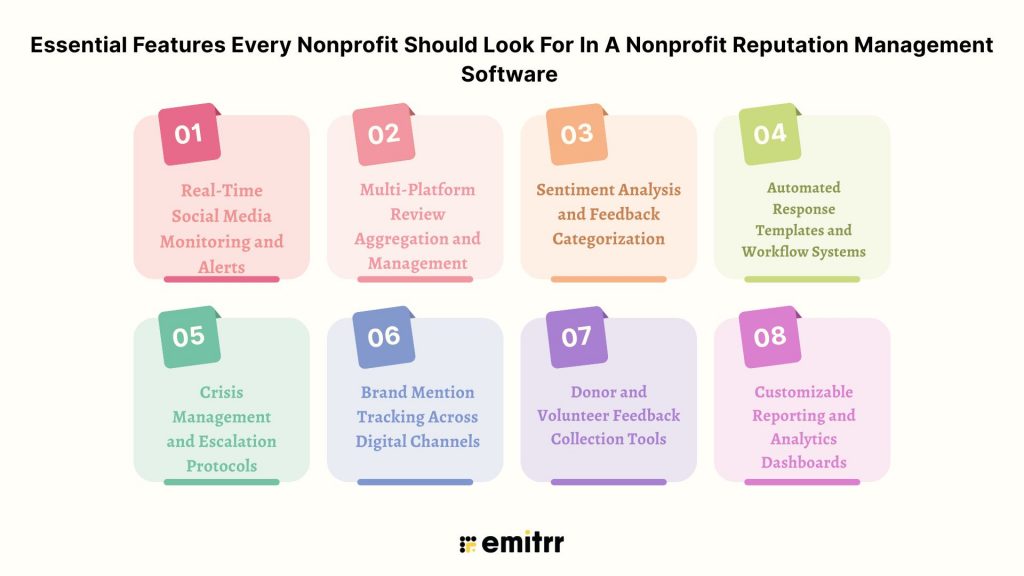
Real-Time Social Media Monitoring and Alerts
It’s important for nonprofits to pay attention to all the interactions happening on Twitter, Instagram, and LinkedIn because situations can change rapidly. Using real-time monitoring, you can spot all Twitter references to your company and receive instant updates. So, customers feel that their complaints are addressed immediately and their positive words are received with gratitude, which stops small problems from becoming bigger.
Multi-Platform Review Aggregation and Management
The reviews found on sites such as GuideStar, Charity Navigator, or Google influence how a person sees a nonprofit. All feedback from multiple channels is gathered by these tools and shown on a single screen for easier tracking. A regular connection with followers, along with handling concerns without delay, makes sure the brand’s image is always good.
Sentiment Analysis and Feedback Categorization
It is very important to recognize whether the feedback you get is good, bad, or neutral. Sentiment analysis uses AI to group comments, which helps managers decide on the responses. For example, a poor review can require i
mmediate action, whereas a good review should be highlighted to spotlight its effect on the company’s overall strategy.
Automated Response Templates and Workflow Systems
Nonprofit teams that are short on staff need to be efficient. Instead of writing responses from scratch, templates help save time and guarantee that the answers fit the mission. Workflow systems help by directing donor complaint issues to senior staff, creating more efficient procedures, and making everything more professional.
Crisis Management and Escalation Protocols
When PR professionals experience a crisis, their companies may lose the trust of customers, like when a negative post gains popularity online. Pre-set strategies and protocols make it easy for the team to react promptly, notify leaders, and use the best ways to avoid damage to the company’s reputation.
Brand Mention Tracking Across Digital Channels
Apart from reviews, keeping an eye on mentions in blogs, news, or forums will help give you a complete image of your reputation. Because of this, trends and chances to participate actively with stakeholders can be found more easily.
Donor and Volunteer Feedback Collection Tools
Having surveys and feedback forms fills in the gaps by giving useful information from donors and volunteers needed to improve existing programs and keep them. They help create better relationships by showing people their concerns are heard.
Customizable Reporting and Analytics Dashboards
Data-driven insights are crucial. Customizable dashboards track KPIs like donor sentiment or review volume, offering visual reports to guide strategy and demonstrate impact to board members or funders.
Critical Security and Compliance Requirements
Since nonprofits deal with sensitive data such as information about donors, volunteers, and sometimes health info, no one can accept weak security or non-compliant reputation management tools. They keep consumer trust intact and guarantee the law is followed.
- Data Protection Standards (GDPR, CCPA)
Ensuring compliance with GDPR and CCPA protects the privacy of donors’ names and contact information. These regulations require users’ permission for gathering data and give them the right to view or delete their information. When organizations do not follow the rules, they can receive fines and damage trust with donors, as most (73%) give privacy top priority (Blackbaud, 2024).
- PCI DSS Compliance for Payment Processing Integration
No software that includes Donorbox can conduct credit card transactions unless it complies with PCI DSS rules. This guarantees that donations are handled safely to prevent anything that could discourage people from giving.
- HIPAA Considerations for Health-Related Nonprofits
To ensure client data is secure, organizations managing health information, including medical nonprofits, rely on HIPAA-compliant software. Protecting sensitive records and restricting access to them is also part of this process.
- Encryption Protocols and Secure Data Storage
All user information is shielded from others by encryption and secure cloud systems. Because of strong encryption, information about feedback and donors cannot be accessed by anyone during transmission.
- Access Control and User Permission Management
Role-based access keeps unauthorized staff from accessing sensitive data, which reduces internal risk. For example, volunteers may only be able to use feedback forms, while more sensitive financial data is restricted to them.
Must-Have Integrations for Seamless Operations
Seamless integrations are vital for nonprofit reputation management software, enabling lean teams to unify workflows, enhance efficiency, and amplify impact. By connecting with existing tools, these integrations ensure reputation efforts align with broader organizational goals, saving time and resources.
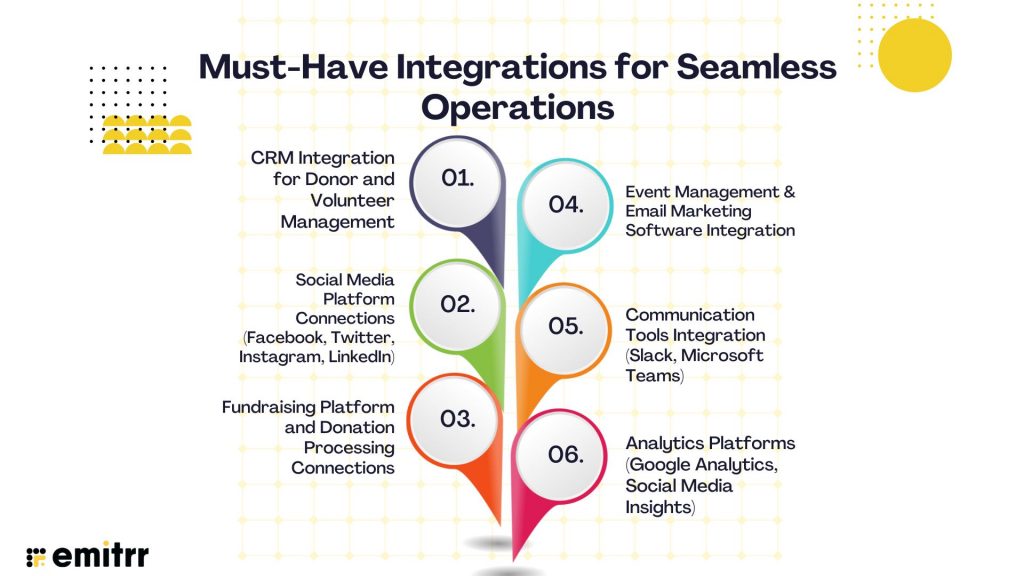
CRM Integration for Donor and Volunteer Management
Integrating with CRMs like Salesforce Nonprofit Cloud, Bloomerang, or DonorPerfect syncs reputation data with donor and volunteer records. For example, feedback from a donor’s review can be linked to their giving history, enabling personalized follow-ups. This strengthens relationships, improves retention, and ensures a holistic view of stakeholder interactions critical for nurturing long-term support.
Social Media Platform Connections (Facebook, Twitter, Instagram, LinkedIn)
Nonprofits thrive on social engagement. Direct connections to platforms like Facebook, Twitter, Instagram, and LinkedIn allow real-time monitoring and responses to mentions or reviews. This streamlines engagement, ensuring timely responses to comments or posts, which 67% of donors consider influential (Nonprofit Tech for Good, 2024). It also amplifies positive stories across channels.
Fundraising Platform and Donation Processing Connections
Integration with platforms like Qgiv, GiveButter, or Donorbox ties reputation efforts to fundraising outcomes. For instance, positive reviews can be linked to donation pages, boosting conversions. Secure payment integrations ensure donor trust, while analytics track how reputation impacts giving, helping optimize campaigns.
Event Management & Email Marketing Software Integration
Syncing with Eventbrite or Mailchimp aligns reputation management with events and campaigns. Feedback from event attendees can inform follow-up emails, while email analytics reveal how reputation efforts influence engagement. This creates cohesive outreach, enhancing community building.
Communication Tools Integration (Slack, Microsoft Teams)
Integration with Slack or Microsoft Teams enables real-time team collaboration. Alerts about critical feedback can be routed to specific channels, ensuring swift responses. This keeps staff aligned, especially during crisis management, without disrupting workflows.
Analytics Platforms (Google Analytics, Social Media Insights)
Connecting to Google Analytics or social media insights tools provides deeper data on reputation impact. Metrics like website traffic driven by positive reviews or social engagement rates help measure success, guiding strategic decisions.
Transformative Benefits of Reputation Management Software for your Nonprofit Organization
Reputation management software is a powerful tool for nonprofits, delivering transformative benefits that strengthen trust, boost resources, and amplify mission impact. By leveraging these tools, organizations can navigate the digital landscape with confidence, turning feedback into opportunities for growth and engagement in 2025.
Enhanced Donor Trust and Transparency Building
Before giving, donors value transparency and often check websites for information—89% of them research online (Nonprofit Tech for Good, 2024). With reputation software, nonprofits can quickly and honestly respond to reviews and comments. Addressing concerns on platforms like Charity Navigator and highlighting positive testimonials helps build donor trust and strengthens support for the mission.
Improved Fundraising Outcomes Through Better Public Perception
Fundraising is significantly influenced by a nonprofit’s online reputation. Research shows that donations to well-reviewed organizations can increase by 10–15%. Positive reviews stand out, while negative ones can be managed through the platform to maintain a favorable public image. Linking strong reputations with donation campaigns drives higher contributions and long-term growth.
Volunteer Recruitment and Retention Enhancement
Volunteers are more likely to join and stay with organizations they trust. Positive reviews of volunteer experiences shared through reputation tools attract new supporters. Feedback also helps volunteers feel recognized, improving retention. When a volunteer shares an update on LinkedIn, responding to it strengthens the bond and deepens their commitment to the cause.
Crisis Prevention and Rapid Response Capabilities
Negative feedback or viral posts can spread quickly. Reputation management tools help nonprofits monitor sentiment in real time and activate crisis response plans when needed. Early detection of issues allows organizations to act swiftly, protecting their reputation and maintaining stakeholder trust even in difficult situations.
Stakeholder Engagement and Community Building
Reputation software fosters meaningful engagement with donors, volunteers, and communities. Sentiment analysis helps tailor messaging, while feedback surveys enhance interaction quality. Thoughtful responses to comments or DMs on platforms like Instagram or email build stronger relationships and inspire deeper community involvement.
Program Impact Visibility and Success Story Amplification
Nonprofits thrive when they showcase the change they create. Feedback collected through reputation software helps surface powerful stories that can be shared across social media or websites. Promoting successful projects draws attention and inspires new donors, volunteers, and partners to get involved.
Strategic Guide: Choosing the Right Software
Picking the correct reputation management software matters greatly to nonprofits that wish to build their reputation and trust of stakeholders in the year 2025.This strategic guide outlines key considerations to ensure the chosen solution aligns with your mission, resources, and long-term goals, empowering your organization to manage its reputation effectively.
Assessing Your Organization’s Specific Needs and Budget:
Start by figuring out what your nonprofit needs the most; donor engagement, feedback from volunteers, a strong response to crises, or appearing strongly on social media can serve as good priorities. Consider the cost of your needs, as prices for entry-level materials are $100-$150, mid-range items cost $200-$250, and enterprise-level plans are more than $400
Evaluating Software Scalability for Growing Organizations:
Software scalability matters for your nonprofit since its challenges and needs will not stay the same. Scalable software allows your organization to grow and will give you access to more powerful tools like AI-based sentiment analysis, many languages, or more integrations. It’s possible for a local nonprofit to later want to track and monitor social issues across the globe. Check if the software is capable of handling more reviews and new platforms, since you would not want to need a new platform because the old one isn’t scalable.
User-Friendliness vs. Advanced Feature Requirements:
Nonprofits often have staff with varying tech skills. User-friendly interfaces with intuitive dashboards ensure quick adoption, critical for lean teams. However, don’t sacrifice advanced features like sentiment analysis or crisis protocols for simplicity. Test software demos to balance ease of use with functionality, ensuring it meets both immediate needs and strategic objectives without overwhelming staff.
Integration Capabilities with Existing Nonprofit Tech Stack:
Seamless integration with your current tools, CRMs like Salesforce Nonprofit Cloud, fundraising platforms like Donorbox, or communication tools like Slack, is essential to avoid siloed workflows. Verify compatibility to ensure data flows smoothly, such as linking donor feedback to CRM records. This reduces manual work, enhances efficiency, and aligns reputation efforts with fundraising and engagement strategies.
Vendor Support and Training Resources Assessment:
It is very important to have reliable support from vendors during the implementation process. Find providers that offer complete training, an onboarding plan, and quick support, all available 24/7, if possible. If a problem comes up, account managers will be there to help nonprofits set up and address it. Check the available training resources, including videos, webinars, and manuals, to guarantee staff can get comfortable with the software as soon as possible.
Free vs. Paid Solutions: When to Invest:
Although Google Business Profile is free, it does not have advanced tools like those found in paid options. In addition to other benefits, paid solutions provide organizations with scalability, various integrations, and compliance, making them important for groups managing important or private information. Consider using software that has advanced reporting, crisis management, and multi-platform tools as your organization’s supporters grow.
This strategic approach ensures your nonprofit selects software that aligns with its mission, budget, and growth trajectory. Demo multiple platforms, involve key stakeholders, and prioritize long-term value to choose a solution that empowers your organization to build trust, manage crises, and amplify impact in the digital age.
Top-Rated Reputation and Review Management Software for Nonprofits
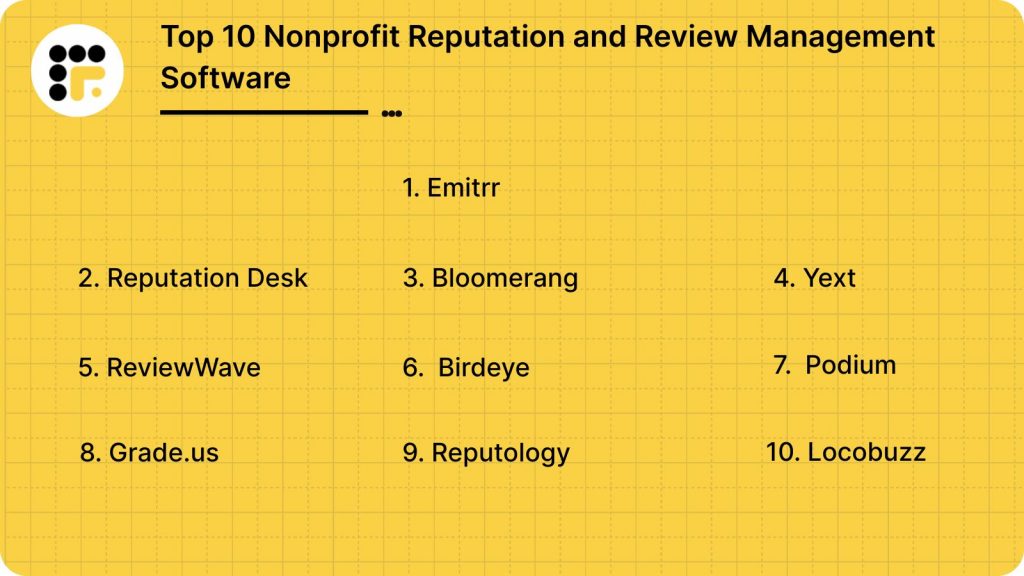
1. Emitrr
3. Bloomerang
4. Yext
5. ReviewWave
6. Birdeye
7. Podium
8. Grade.us
9. Reputology
10. Locobuzz
Below is a detailed overview of ten top-rated reputation and review management software solutions tailored for nonprofits, including Emitrr, Thrive Agency, zHealth Review Plus, Surefire Local, ReviewWave, Birdeye, Podium, Grade.us, Reputology, and Locobuzz. Each entry includes a 50-word overview, three pros, two cons, pricing details, and three user reviews, ensuring nonprofits can make informed decisions to enhance their digital reputation in 2025.
1. Emitrr

Overview:
Emitrr is an AI-powered reputation management platform designed for nonprofits, offering review automation, social monitoring, and donor feedback tools. Its intuitive dashboard and HIPAA-compliant features streamline engagement, making it ideal for organizations seeking to boost trust and efficiency.
Pros:
- Comprehensive nonprofit-focused ecosystem with CRM integration.
- Advanced analytics for donor sentiment and engagement KPIs.
- Competitive pricing with nonprofit discounts and robust support.
Cons:
- Limited customization for advanced reporting needs.
- Initial setup may require technical assistance.
Pricing:
Starts at $129/month, with nonprofit discounts available. Custom plans for larger organizations.
User Reviews:
“Emitrr transformed our donor engagement with automated review requests and analytics.” – Nonprofit Director, Capterra
“Affordable and easy to use, but reporting could be more flexible.” – Fundraising Manager, G2
“Their support team is phenomenal, guiding us through onboarding seamlessly.” – Volunteer Coordinator, Trustmary
2. Reputation Desk
Overview:
Reputation Desk helps businesses generate and showcase positive customer reviews via a customizable website widget. It automates review reminders, aggregates feedback from major platforms, and sends real-time alerts so you never miss a new review. Its simple interface and unlimited users model make it ideal for local businesses seeking quick wins.
Pros:
- Free basic plan, no setup fees.
- Automated customer review reminders.
- Easy widget integration on websites.
- Unlimited user accounts included.
Cons:
- Basic feature set for advanced needs.
- Limited analytics and reporting tools.
- No native mobile app available.
Pricing:
- Standard Plan: $49.99 per user / month (1 location)
Free Plan: $0 /month with basic widget and reminders, no contracts or setup fees.
User Reviews:
“I stopped having to log in to individual review websites to see what people are saying about my brand. I can view many websites right in one dashboard which saves me time.”
“The software works great, they are building out many API’s and I hope they will have one for our system soon.”
3. Bloomerang
Overview:
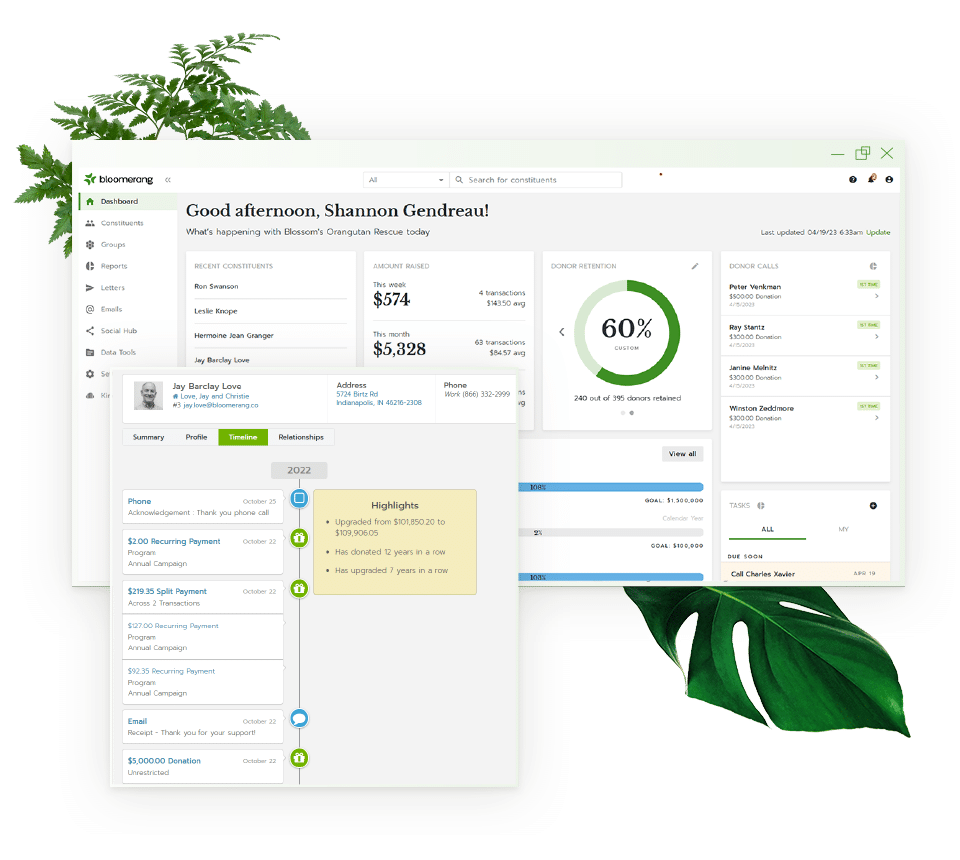
Bloomerang is a donor-focused CRM that integrates reputation and feedback management to help nonprofits retain and engage supporters. It offers unlimited users, customizable reporting, peer-to-peer fundraising tools, and real-time analytics to boost donor satisfaction and fundraising outcomes—all via an intuitive, cloud-based platform.
Pros:
- Intuitive, user-friendly interface.
- Robust customer support and training.
- Unlimited online giving pages/forms.
- No user-count limits.
- Wealth screening and engagement scoring included.
Cons:
- Pricing scales with database record count.
- Limited event-tracking functionality.
- Customization options can be restrictive.
- Some add-ons incur extra fees.
Pricing:
- CRM Edition: $125 / month (flat rate; unlimited users)
- Membership Management: $25 / month (plan per module)
- Fundraising Module: $40 / month
- Volunteer Management: $119 / month
User Reviews:
“The reporting meets all our needs, data is easy to import and read, customer service and tutorial videos and articles are on point, and the company offers continuing education courses on fundraising strategies.”
“It does not always have all the features I would like it to have, but customer support is always good about helping me figure out a work around.”
4. Yext
Overview:
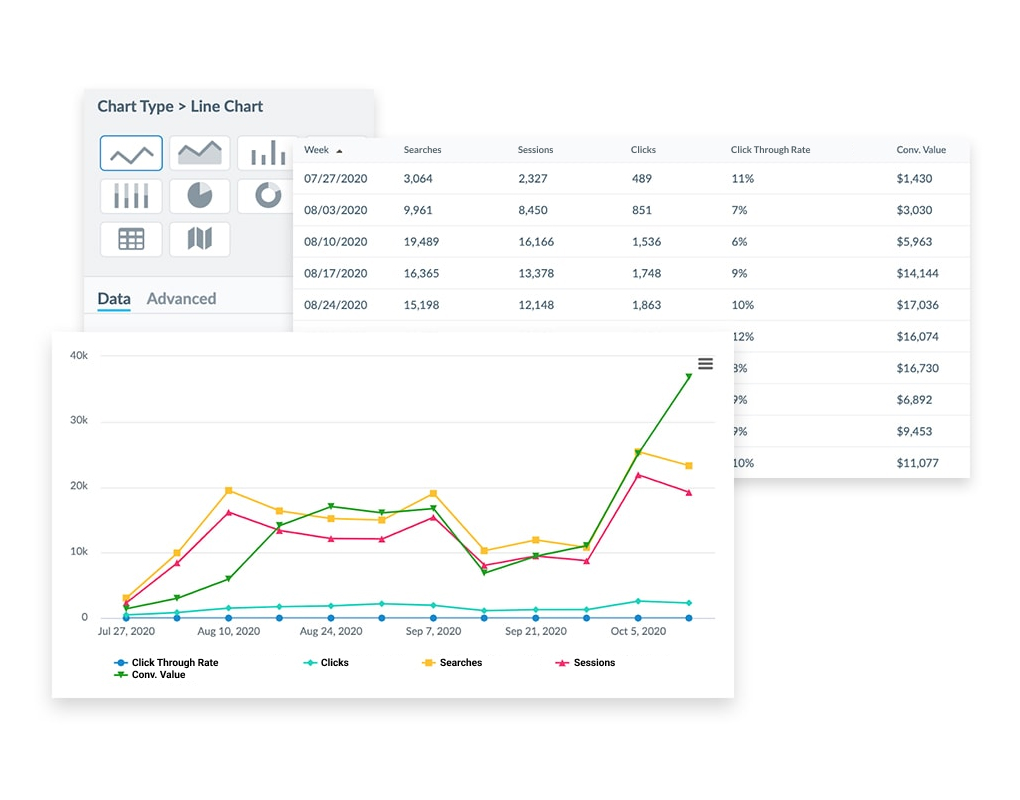
Yext Reviews is an AI-powered platform that centralizes monitoring, response, and analysis of customer feedback across Google, Facebook, Yelp, and more. It uses sentiment analysis, AI-generated replies, and mobile tools to help multi-location businesses improve local SEO rankings, drive customer loyalty, and streamline reputation management at scale.
Pros:
- AI-driven sentiment analysis insights.
- Scales seamlessly across locations.
- Boosts local SEO performance.
- Mobile review-response tools available.
- Centralized platform consistency.
Cons:
- Premium pricing starts at $199/month.
- Lengthy contract onboarding process.
- Interfaces can feel cumbersome sometimes.
- Post-sale support quality varies.
Pricing:
- Emerging Plan: $199 / month
- Essential Plan: $449 / year
- Complete Plan: $499 / year
- Premium Plan: $999 / year
User Reviews:
“Customer Service with Yext is TOP NOTCH. Our rep is there to answer questions before I even have the chance to finish thinking of them. There are ample training modules to walk you through exactly what you need. Everything is highly customizable as well, so it’s perfect for listing different types of businesses.”
“I liked most how user-friendly the software was, and how well it worked. But, the price. It is definitely pretty expensive when you compare it to other similar softwares on the market.”
5. ReviewWave
Overview:
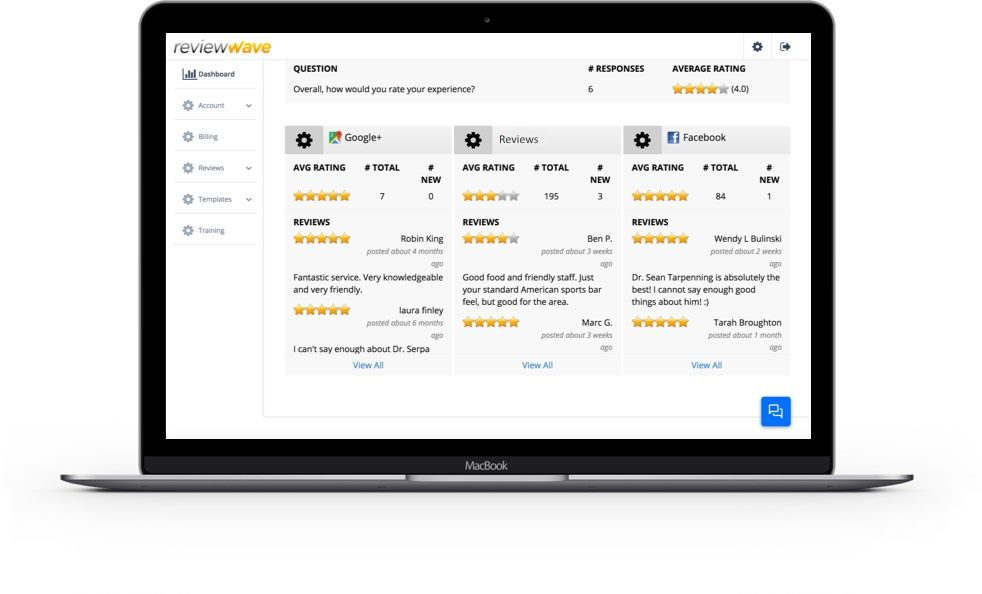
ReviewWave provides affordable reputation management for nonprofits, with automated review requests via SMS/email and a user-friendly interface. Its focus on simplicity and cost-effectiveness makes it ideal for small organizations seeking to enhance their online presence.
Pros:
- Cost-effective with robust automation.
- Easy-to-use interface for non-tech staff.
- Strong review generation tools.
Cons:
- Limited integrations with nonprofit CRMs.
- Basic reporting compared to competitors.
Pricing:
Starts at $99/month, with discounts for annual billing.
User Reviews:
“ReviewWave’s automation saved us hours weekly.” – Fundraising Coordinator, Capterra
“Great for small budgets, but needs better CRM sync.” – Program Lead, G2
“Simple and effective for our small nonprofit.” – Volunteer Manager, Trustmary
6. Birdeye
Overview:
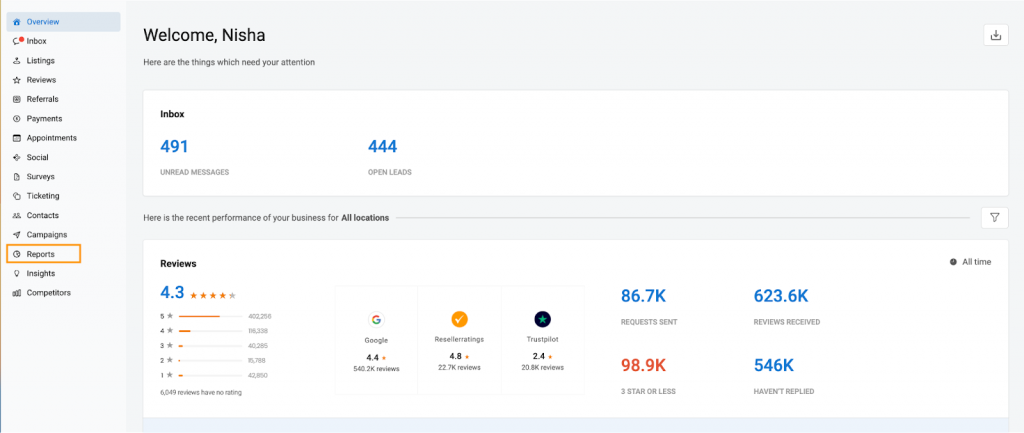
Birdeye is an AI-powered reputation management platform offering review automation, social media management, and multi-platform monitoring. Its robust features and integrations make it ideal for nonprofits with complex needs, though pricing can be high.
Pros:
- AI-driven review responses and analytics.
- Supports 200+ review platforms.
- Extensive integrations (Salesforce, Mailchimp).
Cons:
- Expensive, starting at $299/month.
- Steep learning curve for new users.
Pricing:
Starter: $299/month, Growth: $399/month, Dominate: custom pricing.
User Reviews:
“Birdeye’s AI tools streamlined our review process.” – Marketing Director, G2
“Powerful but costly for small nonprofits.” – Operations Lead, Capterra
“Integrations are great, but onboarding was tricky.” – Donor Relations Manager, Trustpilot
7. Podium

Overview:
Podium is a communication-focused platform with reputation management features, automating review requests via SMS and managing feedback across Google and Facebook. Its AI tools and integrations suit nonprofits prioritizing donor engagement.
Pros:
- Strong SMS-based review automation.
- Integrates with 200+ tools.
- AI-assisted response templates.
Cons:
- High starting price ($399/month).
- Limited social media integration.
Pricing:
Core: $399/month, Pro: $599/month, Signature: custom.
User Reviews:
“Podium’s SMS tools boosted our donor reviews.” – Fundraising Manager, G2
“Effective but pricey for our budget.” – Program Director, Capterra
“Great features, but support could be better.” – Volunteer Lead, Trustpilot
8. Grade.us
Overview:
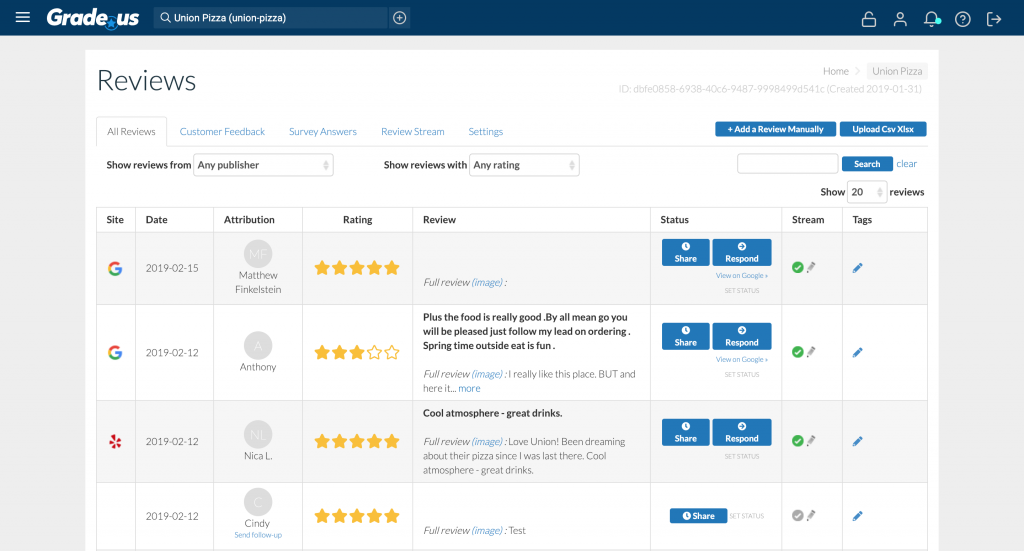
Grade.us (formerly Reputology) offers review management for nonprofits, with multi-platform monitoring, sentiment analysis, and agency-focused tools. Its affordability and robust features make it suitable for organizations seeking scalable solutions.
Pros:
- Affordable, starting at $110/month.
- Comprehensive review monitoring and analytics.
- Agency-friendly with white-label options.
Cons:
- Limited support hours.
- Extra charges for integrations.
Pricing:
Starts at $110/month for three locations, with trial available.
User Reviews:
“Grade.us is cost-effective and feature-rich.” – Marketing Lead, G2
“Great tool, but support isn’t 24/7.” – Operations Manager, Capterra
“Helped us track reviews across platforms.” – Donor Coordinator, Trustmary
9. Reputology
Overview:
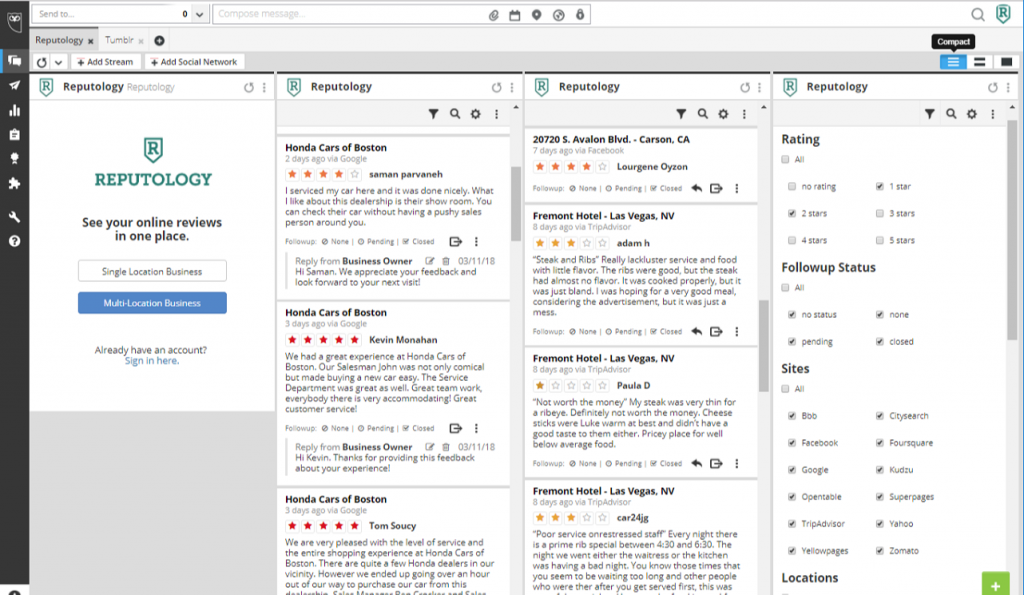
Reputology, now part of Grade.us, specializes in multi-location nonprofits, offering review monitoring, sentiment analysis, and centralized dashboards. Its analytics and automation make it ideal for organizations with multiple branches or programs.
Pros:
- Strong multi-location review management.
- Advanced sentiment analysis tools.
- Customizable performance tracking.
Cons:
- Pricing can be high for small nonprofits.
- Integration setup can be complex.
Pricing:
Starts at $110/month, aligned with Grade.us plans.
User Reviews:
“Reputology’s dashboards simplified our multi-site tracking.” – Regional Director, G2
“Effective but costly for smaller budgets.” – Program Manager, Capterra
“Analytics are top-notch for our branches.” – Fundraising Lead, Trustpilot
10. Locobuzz
Overview:
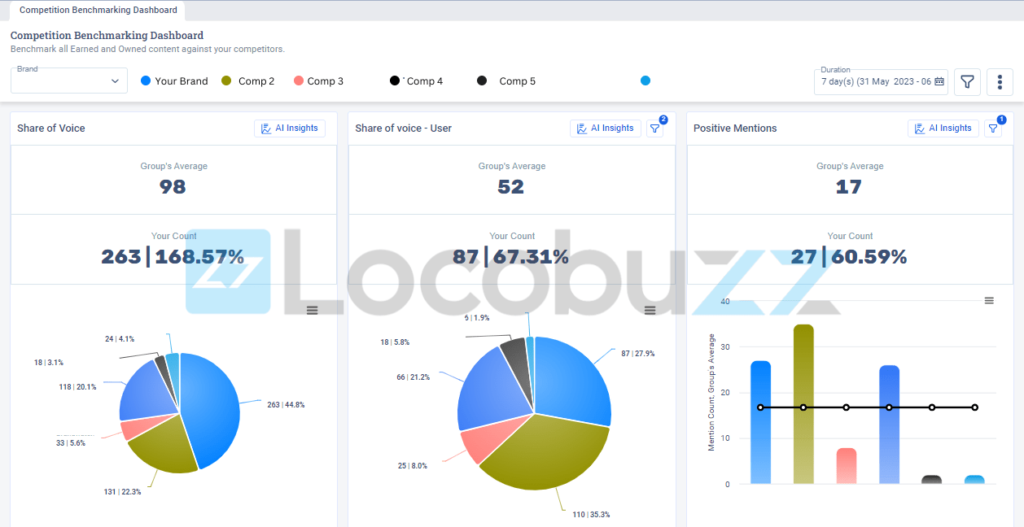
Locobuzz is a social listening and reputation management platform, offering nonprofits tools for review monitoring, sentiment analysis, and global engagement. Its focus on social media makes it ideal for organizations with strong online communities.
Pros:
- Robust social listening and analytics.
- Multi-channel engagement tools.
- Scalable for global nonprofits.
Cons:
- Limited focus on review automation.
- Pricing details require vendor contact.
Pricing:
Custom pricing, typically $200-$400/month. Contact for quotes.
User Reviews:
“Locobuzz’s social tools enhanced our community outreach.” – Marketing Manager, G2
“Great for social, but review automation is basic.” – Program Lead, Capterra
“Scalable for our international campaigns.” – Donor Relations Manager, Trustmary
Why Emitrr Stands Out as the Premier Solution
Emitrr is the leading reputation management solution for nonprofits in 2025, offering a tailored, all-in-one platform that aligns with the unique needs of mission-driven organizations. Its comprehensive ecosystem integrates review automation, real-time social media monitoring, and donor/volunteer feedback tools, seamlessly syncing with nonprofit CRMs like Salesforce Nonprofit Cloud or Bloomerang to unify stakeholder engagement.
By taking a holistic approach, teams do not need to use several tools and can focus their work. With Emitrr’s highly developed analytics, nonprofits can monitor factors like their donors’ reactions, how many volunteers continue in their jobs over time, and the level of success their programs achieve, using custom dashboards to guide their decisions and present their achievements to funders.
Because its prices start at $129/month with discounts for nonprofits, it is an affordable option for small organizations, and larger groups can upgrade their plans as they need to. You can get started easily, as the implementation is designed for employees who are not tech experts. With superior 24/7 assistance, every nonprofit has a dedicated account manager to help from set-up to problem-solving, so they can concentrate on their work. Because of its low cost, features for nonprofits, and stellar help, Emitrr is the best fit for building digital trust, handling emergencies, and increasing impact.
Frequently Asked Questions
Depending on the needs of the organization, the budget for nonprofits ranges from $100 to $400 per month. Top-tier plans are excellent for advanced analysis and big organizations, as entry-level plans are meant for small nonprofits. Maintain the right amount of spending and strictly allocate funds for situations where needed, such as for keeping donors engaged or navigating a crisis, to have a positive impact on your mission without putting too much stress on the finances.
ReviewWave and Google Business Profile allow small nonprofits to benefit a lot with their free or affordable services. With platforms like these, nonprofits can watch their online reviews and perform certain automated tasks, increasing the engagement of donors and volunteers. With cost-effective solutions, organizations constrained by resources can earn a better reputation and take part in digital competitions.
It usually takes between 2 and 8 weeks to put the strategy in place, depending on the project’s complexity and the company’s size. You can use a cloud-based system in just a few weeks, whereas on-premise solutions might require twice as long. Quick onboarding helps nonprofits use useful tools to manage what people say and improve their image.
You can measure ROI by noting whether there are more donations, if more workers stay over time, and if the group and volunteers remain actively involved. When users see plenty of quality reviews and quick replies, they are more likely to help out and take part. Dashboards using analytics numbers prove the software’s added value for the board and funders.
Many developers appreciate that most platforms have simple interfaces that need little training. CLI provides webinars, tutorials, and 24/7 assistance for those who want to use it. A short training period is usually enough for non-tech people to manage reviews and analytics, so fewer resources are needed to keep things moving smoothly.
Conclusion: Building a Stronger Nonprofit Through Strategic Reputation Management
Reputation management software is your nonprofit’s bridge to trust and impact in 2025. By monitoring feedback, responding authentically, and leveraging insights, you can strengthen donor relationships, boost fundraising, and amplify your mission. Choose a solution like Emitrr that aligns with your needs, integrates seamlessly, and prioritizes security.
Start today. Request a demo and take control of your nonprofit’s digital narrative.