
 4.9 (400+
reviews)
4.9 (400+
reviews)
Healthcare communication breaks down every 12 seconds in America, costing the industry $12 billion annually while putting patient safety at risk. Medical texting software transforms this chaotic landscape into streamlined, secure communication networks that protect both patient information and healthcare outcomes.
Medical texting software represents specialized communication platforms designed exclusively for healthcare environments. These solutions enable doctors, nurses, and administrative staff to:
- Exchange patient information.
- Coordinate care.
- Maintain operational workflows while adhering to strict HIPAA compliance standards.
The software bridges the gap between urgent medical communication needs and regulatory requirements that govern healthcare data protection.
This comprehensive guide explores the 15 leading texting solutions that healthcare professionals rely on in 2025. You’ll walk away with key insights on their essential features, implementation strategies, compliance requirements, and practical recommendations that help medical practices choose the right communication platform for their specific needs.
Why Do Doctors Need Specialized Texting Software?
The Communication Crisis in Healthcare is a serious bottleneck for doctors and healthcare professionals in 2025.
Did you know patient no-shows drain $150 billion from the U.S. healthcare system annually. With these missed appointments, there are a series of events whose consequence trickles to all of the medical practices; the doctors have no-shows, and the patients are left with no available time.
A major cause of this crisis is the breakdown in patient communication where researchers found out that 67 percent of patients skip appointments because of mere notification failures.
The result in patient outcomes is a direct result of communication delays. According to emergency departments, delay in physician-to-physician communication elevates the rate of patient mortality by 8.2%. When there is a communication breakdown in surgical teams, chances of complication go up to 23 percent. Such figures are evidence of the life-and-death value of effective medical communications systems.
The problem of staff coordination in busy medical facilities increases many times. To conduct consultations with their patients 35 percent of the nurses on duty are apparently spending their time and effort trying to find physicians. An average of 47 minutes is used to wait until laboratories or anyone obtains physician returns once the test results are critical.
Administrative personnel find it hard to integrate schedules among various departments thus causing bottlenecks in the delivery of patient care.
Need to text patients fast? Use these ready-to-send doctor SMS templates.. Download the PDF now!!
Benefits of Medical Texting Software
Medical texting software acts as a boon for the healthcare industry, transforming doctor-to-patient communications into something more agile, responsive, and inclusive. Here are the top benefits of medical texting platforms.
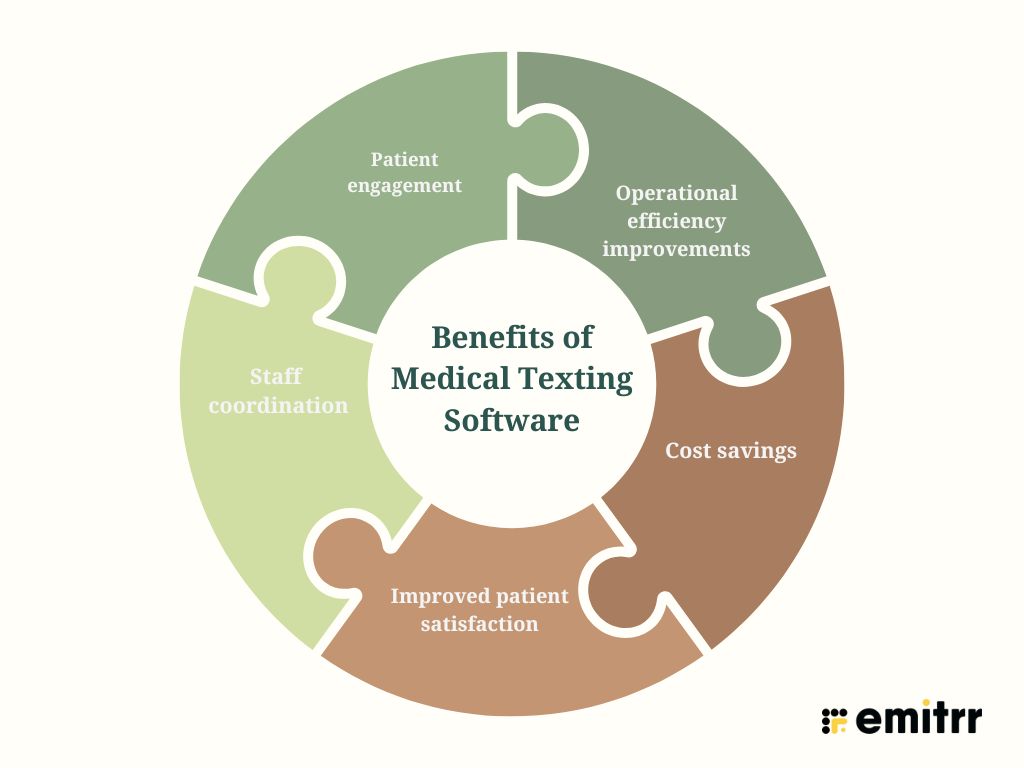
Patient engagement:
When the care providers adopt a healthcare texting messaging system, patient engagement jumps to the sky. It was also found that research has shown that 90 percent of the patient reads a text-message within three minutes, as opposed to 20 percent of the patient who in a time slot reads the email. The resulting improved appointment attendance, medication adherence, and general healthcare outcomes are the result of this prompted interest.
Operational efficiency improvements:
The efficiency gains in the operations are clearly felt as soon as it is made operational. The medical practices are recording percentages of missed appointment reductions by 20 percent when automated text reminder systems are applied. When the physicians can reach out to the team members instantly, the staff productivity improves by 31 percent. One would reduce the administrative load since communication that occurs daily will be through text messages instead of making it over the phone.
Cost savings:
The savings on costs are experienced in various practice management areas. Lower no-show levels lead to higher revenues of 89,000 dollars a year in typical primary care practices. Reduced administrative overhead saves practices an extra 34,000 a year. The liability reduces and patients give high satisfaction scores as the emergency response time advances by 15 percent.
Improved patient satisfaction:
Better patient satisfaction also occurs as an unavoidable by-product of better communication. Patients observe that 42 percent satisfaction rate is increased when their caregivers are adopting text messaging as their means of communication as concerns appointment reminders, test results, and care instructions. Patients are able to make use of the real-time communication features to pose questions and get an instantaneous response to it and, as a result, such relationships between the doctor and the patient are strengthened.
Staff coordination:
The problem of staff coordination becomes a routine effort turning into a smooth process. Surgical teams are alerted instantly when there is a change to the schedule, the emergency department is updated as soon as possible about the next patients, and discharge coordinators receive immediate communication with the transportation services. These enhancements cut the average wait time of patients per visit by 23 minutes.

What are HIPAA Compliance Requirements Every Communication Solution Must adhere to?
Using standard messaging apps exposes healthcare providers to legal risk. These platforms lack encryption, authentication, and HIPAA-compliant agreements.
Medical texting platforms are HIPAA-compliant and stand apart from consumer apps. End-to-end encryption protects message content both in transit and at rest. User authentication ensures that only authorized personnel can access patient information. Audit logs track every message, recording the sender, recipient, timestamp, and delivery status. And if a device is lost or stolen, administrators can trigger a remote wipe to prevent data exposure.
The consequences of non-compliance go far beyond fines. Healthcare professionals risk license suspension, criminal charges, and lawsuits from affected individuals. Insurance companies typically exclude HIPAA violations from coverage, making providers personally liable for damages. On top of that, a single data breach can severely damage a practice’s reputation – sometimes beyond repair.
Must-Have Key Features to Look for in Medical Texting Software
There’s a blinding variety of medical texting software platforms in the market. Some perform well. Others fizzle out. The difference between those that make it and those that miss the mark lies in the features they come equipped with.
When choosing a medical texting service, make sure it includes the following set of features.
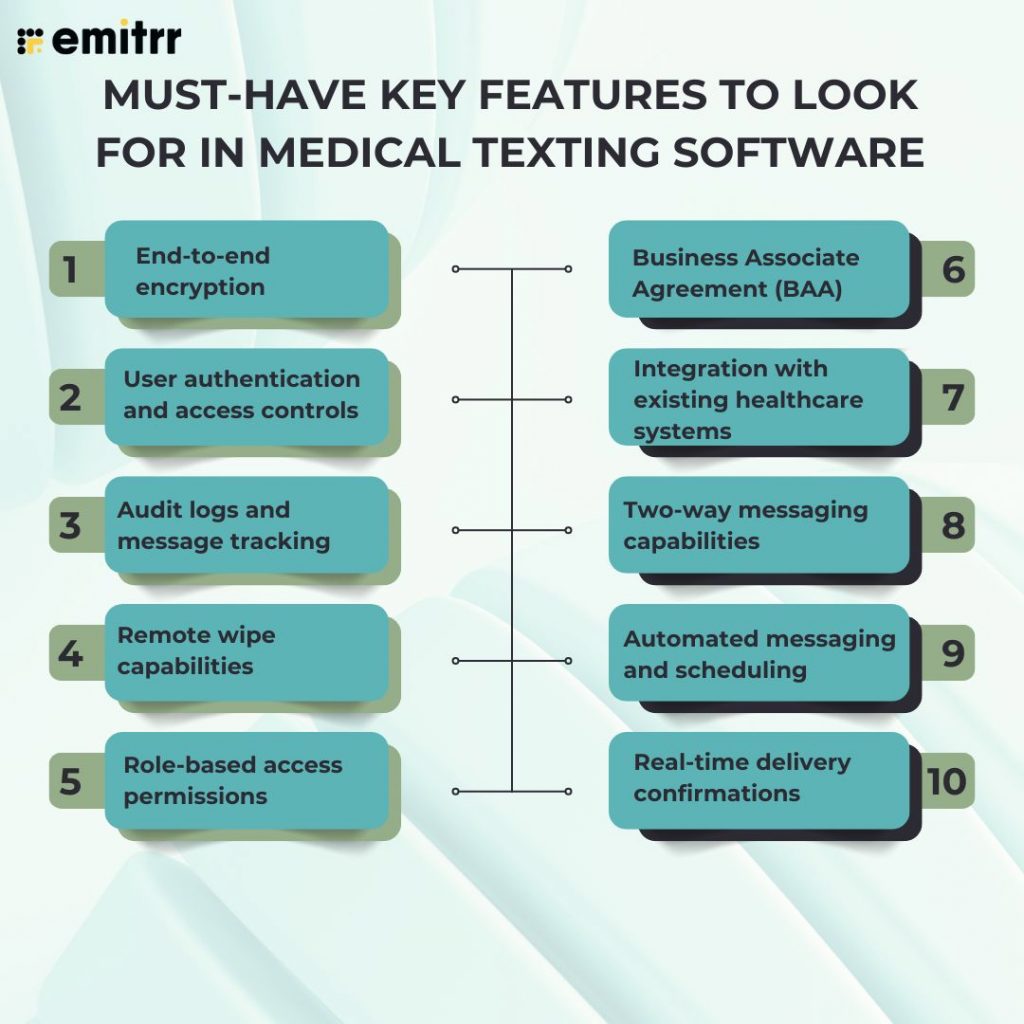
End-to-end encryption
The end-to-end encryption secures the information about the patient all through the communication process. The messages sent are still encrypted on the device of the sender through the transmission networks up to the device of the recipient. The security level eliminates illegal access even when the transmitting messages are intercepted.
High grade encryption software relies on intrinsic mathematical computations to encrypt the contents of the message beyond the eyes of anyone not holding decode keys. Hackers even when intercepting messages in the course of their transmission will be unable to decipher the encrypted messages without access to the private keys stored in the secure devices by their respective owners.
Such protection is not limited to what is being said but usually covers metadata containing sender details, timestamps and delivery receipts. Primarily, medical professionals will be able to share confidential information about the patient without fear of losing any data security in terms of data loss, unauthorized access, and violation of compliance measures to the full communication cycle.
User authentication and access controls
Authorization controls and user authentication ensure that no one can gain access to the messaging system other than the authorized personnel. Multi-factor authentication entails the need to establish several input credentials first before one can access the information on a patient. Role-based access makes the staff members able to see only the information that is related to their duties.
Current authentication networks use several factors; something known (passwords), something possessed (mobile devices) and something personal (biometric identifiers), to form intricate security boundaries. The administrators can set up authentication requirements according to access levels, more access is given to higher privileged users under stricter authentication.
Single sign-on integration provides security standards and simplifies the process of authentication. Multiple failed sign-ins generate automatic warnings and temporary blockages of the account to deter unauthorized account sign-ins. Periodic authentication audit prevents unauthorized access to the organization system by ensuring the credentials assigned to former employees are removed automatically.
Audit logs and message tracking
Message tracking and audit logs provide detailed records of all the activities of the communication. Such logs are recorded to include sender and recipient details, timestamp of the message, message delivery information, and user activities. In case of regulatory audit, healthcare providers are able to generate the report that shows compliance.
Complete logging systems keep a history of all activities on the message platform and result in extensive trials following message creation, delivery, viewing and deletion. To add visibility to system usage, advanced logging functions are used to capture user log in attempts, changes to system configuration and administrative change.
The analysis of logs with automation detects unusual trends or possible security breaches and prompts the administrators about suspicious activity. Tamper-proof storage of logs means that audit records are not allowed to be altered or destroyed and thus they remain intact and therefore can be inspected to deal with regulatory and other requirements.
Healthcare practitioners have the ability to create compliance reports on HIPAA audits in a short period of time and show compliance with communication protocols and security requirements by a readable documentation of all messages in your system.
Remote wipe capabilities
Administers can also delete messages on a lost/stolen device by remote wipes that occur instantly. This property guards the security of patient information on compromised network devices and stores all messages on safe servers. Chosen messages or whole-device wipes can all be done by the administrators.
Superior remote control provides an opportunity to react in time to the breach in security, excluding unauthorized access to the data of the correspondents on the breached devices. Administrators have the option of performing selective wipes, on messaging applications only, or a full clearing of the device, when needed, but the data on the device remains safe, and the device remains functional to valid users.
Role-based access permissions
The use of role-based access controls removes generic control access unrelated to the job position. Access to patient communications is completely availed to physicians and such access may be partially granted to administrative personnel when it comes to scheduling messages. These controls eliminate unauthorized views of confidential medical information.
The granular permission models provide staff only with that kind of information that they require in their particular functions. Dynamic assignments automatically change access level when employees change positions, time-based restrictions restrict sensitive information when the employees are outside the job time to preserve safety and administer productive healthcare operations.
Business Associate Agreement (BAA)
Vendor offers Business Associate Agreement (BAA) that puts legal protection on healthcare providers. The vendor will take the responsibility of being compliant to HIPAA and they warrant not to unnecessarily compromise patient information as per the federal stipulations. In this agreement, healthcare providers are not liable to cases related to vendor security failure.
The broad BAAs establish vendor requirements such as data encryption, incident response and reporting. Liability parameters are published in legal frames, the conditions of the breach declaration are stipulated, and the third parties, who are the vendors in this case, are required to preserve the necessary insurance amounts, thus offering healthcare providers the leverage of financial hazard and prosecution possibilities.
Integration with existing healthcare systems
Integration with existing healthcare systems eliminates the need for duplicate data entry. The texting platform connects directly with electronic health records, practice management systems, and billing software. This integration ensures that all patient communications are properly documented and accessible.
Seamless API connections enable automatic data synchronization between messaging platforms and healthcare systems. Real-time integration with EHRs, practice management, and billing systems ensures patient communications become part of permanent medical records while streamlining administrative processes and maintaining workflow efficiency.
Two-way messaging capabilities
Two-way messaging capabilities enable interactive communication between healthcare providers and patients. Patients can respond to appointment reminders, ask questions about medications, and report symptoms. Healthcare providers can send immediate responses and follow-up instructions.
Interactive messaging transforms one-way communication into dynamic conversations that improve patient engagement. Smart routing directs patient messages to appropriate staff members, while automated systems handle routine inquiries and escalate complex questions to qualified healthcare professionals for personalized responses.
Automated messaging and scheduling
Automatic messaging and scheduling also ease administration and enhance patient contact. The communication is automated to send appointments, medication alerts and follow-up prescriptions without human intervention. The scheduling integration enables patients to confirm and reschedule or cancel their appointments via text messages.
Intelligent automation examines the data of the patients to maximize the time and topic of the messages. Templates that can be created to suit all types of appointments and patient needs and machine learning models allow them to be better and better at engaging patients at each intake and increase overall communication rates by analyzing patient response patterns in conversations and how well they respond.
Real-time delivery confirmations
Confirmation on delivery on a real time basis gives immediate feedback. The healthcare providers can tell immediately about message delivery, read, and whether it was answered. The information will assist the providers in monitoring the patient usage and responding to significant correspondence.
Modern tracking systems give complete visibility into the lifecycle of messages with detailed indicators of status. Notifications about the failure of delivery allow responding as soon as possible in other ways, and read receipts allow providers to evaluate the effectiveness of their communication and determine those patients who need more attention.
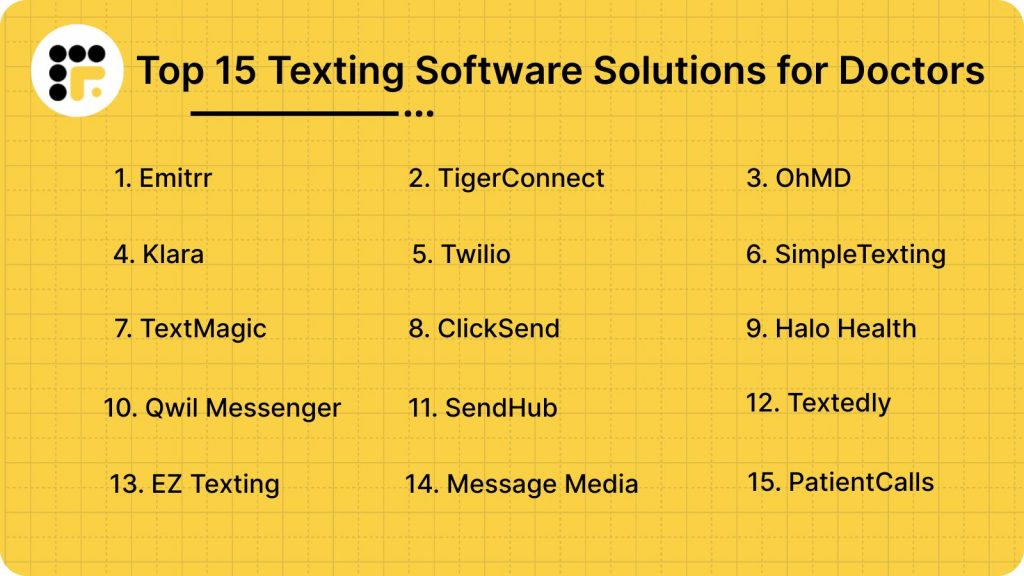
Top 15 Texting Software Solutions for Doctors
To find the best medical texting software platforms that do the job, we tested and compared more than 10 tools against factors that you’d actually be interested in: features, price points, benefits, and limitations. Let’s find out who made it to our list (and who didn’t.)
1. Emitrr
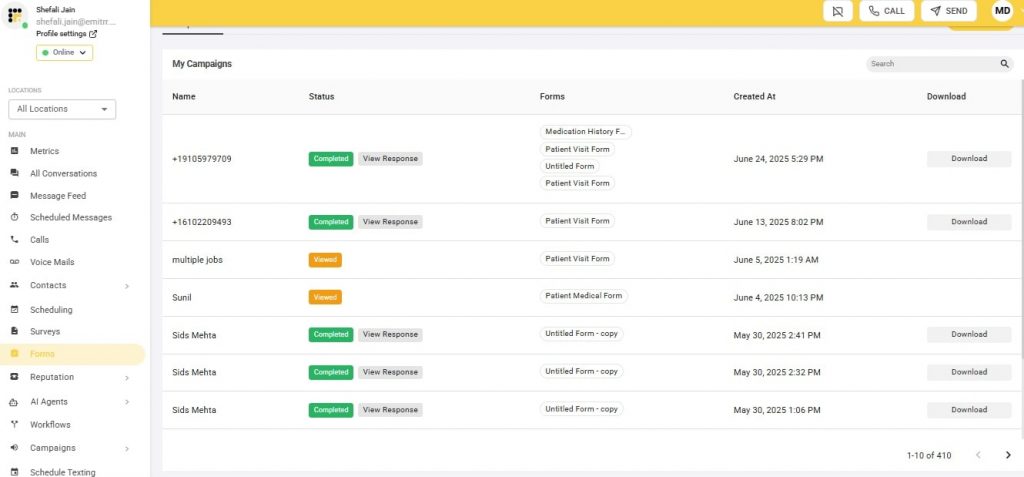
Emitrr Overview
Emitrr delivers comprehensive communication solutions designed specifically for healthcare environments. The platform combines internal staff messaging with patient outreach capabilities, creating a unified communication ecosystem that streamlines medical practice operations. Healthcare providers appreciate Emitrr’s intuitive interface and robust security features.
Key Features:
- HIPAA-compliant messaging with end-to-end encryption
- Integration with major EHR systems including Epic, Cerner, and Allscripts
- Automated appointment reminders and follow-up messaging
- Role-based access controls for different staff levels
- Real-time delivery confirmations and read receipts
- Mobile and desktop applications for universal access
Pricing Structure:
- Starter Plan: $29/month for up to 5 users
- Professional Plan: $79/month for up to 25 users
- Enterprise Plan: Custom pricing for larger organizations
Pros:
- Excellent integration capabilities with existing healthcare systems
- User-friendly interface requires minimal training
- Comprehensive audit logs for compliance reporting
- 24/7 customer support with healthcare-specific expertise
Cons:
- Limited customization options for smaller practices
- Premium features require higher-tier subscriptions
Integration Capabilities:
Emitrr connects seamlessly with over 200 healthcare applications, including major EHR platforms, practice management systems, and billing software. The platform provides API access for custom integrations and supports single sign-on (SSO) for streamlined user authentication.
2. TigerConnect (formerly TigerText)

TigerConnect Overview
TigerConnect pioneered secure messaging in healthcare and continues to lead the industry with innovative communication solutions. The platform serves over 7,000 healthcare organizations worldwide, providing secure messaging, voice calling, and collaboration tools designed for clinical environments.
Key Features:
- Secure messaging with message recall and auto-delete functions
- Directory integration with existing hospital systems
- Priority messaging for urgent communications
- Voice and video calling capabilities
- Clinical workflow integration
- Analytics dashboard for communication metrics
Pricing Structure:
- Basic Plan: $5/user/month
- Professional Plan: $8/user/month
- Enterprise Plan: Custom pricing with advanced features
Pros:
- Extensive feature set covers all communication needs
- Strong reputation in healthcare industry
- Excellent security and compliance features
- Comprehensive analytics and reporting
Cons:
- Higher cost compared to simpler alternatives
- Learning curve for staff unfamiliar with advanced features
Integration Capabilities:
TigerConnect integrates with over 100 clinical and administrative systems, including nurse call systems, EHRs, and critical alert systems. The platform provides robust API documentation and professional services for complex integrations.
3. OhMD

OhMD Overview
OhMD focuses on patient-provider communication through secure text messaging that works with existing phone numbers. The platform enables healthcare providers to text patients directly from their current phone numbers while maintaining HIPAA compliance through secure relay systems.
Key Features:
- Uses existing phone numbers for patient communication
- Secure message relay system maintains HIPAA compliance
- Appointment scheduling and reminder automation
- Patient portal integration
- Broadcast messaging for practice announcements
- Message templates for common communications
Pricing Structure:
- Basic Plan: $29/month for single provider
- Team Plan: $49/month for up to 5 providers
- Practice Plan: $99/month for unlimited providers
Pros:
- Simple setup process with minimal configuration
- Patients can use their existing text messaging apps
- Affordable pricing for small practices
- Good customer support and training resources
Cons:
- Limited advanced features compared to enterprise solutions
- Dependent on third-party relay system for security
Integration Capabilities:
OhMD integrates with popular practice management systems and EHRs through direct connections and API access. The platform supports appointment scheduling integration and patient portal connectivity.
4. Klara
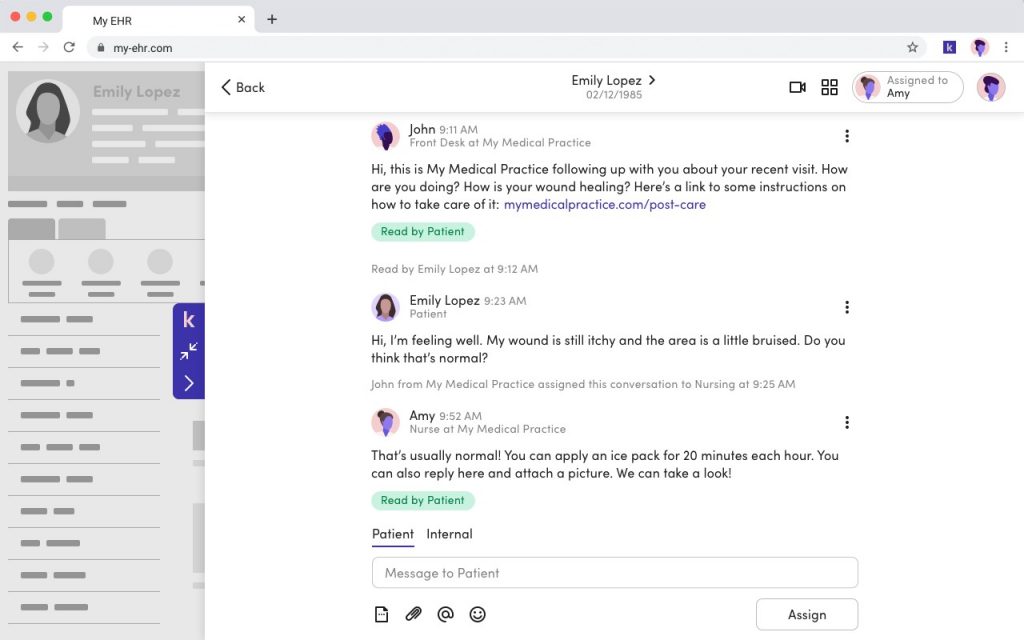
Klara Overview
Klara transforms patient communication by centralizing all interactions in a single platform. The solution handles patient messaging, appointment scheduling, and care coordination through secure, HIPAA-compliant channels that improve practice efficiency and patient satisfaction.
Key Features:
- Unified patient communication platform
- Smart routing of messages to appropriate staff
- Integration with EHR systems for complete patient records
- Appointment scheduling and reminder automation
- Patient satisfaction surveys and feedback collection
- Analytics dashboard for communication metrics
Pricing Structure:
- Essential Plan: $69/month for up to 3 providers
- Professional Plan: $129/month for up to 10 providers
- Enterprise Plan: Custom pricing for larger organizations
Pros:
- Comprehensive patient communication features
- Excellent user interface and patient experience
- Strong integration with popular EHR systems
- Detailed analytics and reporting capabilities
Cons:
- Higher cost for premium features
- Limited customization options for workflow preferences
Integration Capabilities:
Klara connects with major EHR systems including Epic, Cerner, and athenahealth. The platform provides API access for custom integrations and supports various practice management systems.
5. Twilio

Twilio Overview
Twilio provides communication APIs that enable healthcare organizations to build custom messaging solutions. The platform offers enterprise-grade infrastructure with healthcare-specific features including HIPAA compliance, audit logging, and secure message delivery.
Key Features:
- Programmable messaging APIs for custom solutions
- HIPAA-compliant infrastructure and BAA availability
- Global message delivery with 99.95% uptime
- Real-time analytics and monitoring
- Flexible pricing based on usage
- Extensive developer documentation and support
Pricing Structure:
- Pay-as-you-go model starting at $0.0075 per message
- Volume discounts available for high-usage organizations
- Custom enterprise pricing for large implementations
Pros:
- Highly customizable for specific healthcare needs
- Scalable infrastructure handles large message volumes
- Comprehensive API documentation and developer support
- Flexible pricing model accommodates various usage patterns
Cons:
- Requires technical expertise for implementation
- Limited out-of-the-box features for non-technical users
Integration Capabilities:
Twilio provides extensive API access for integration with any healthcare system. The platform supports custom webhook configurations and real-time event streaming for complex integrations.
6. SimpleTexting
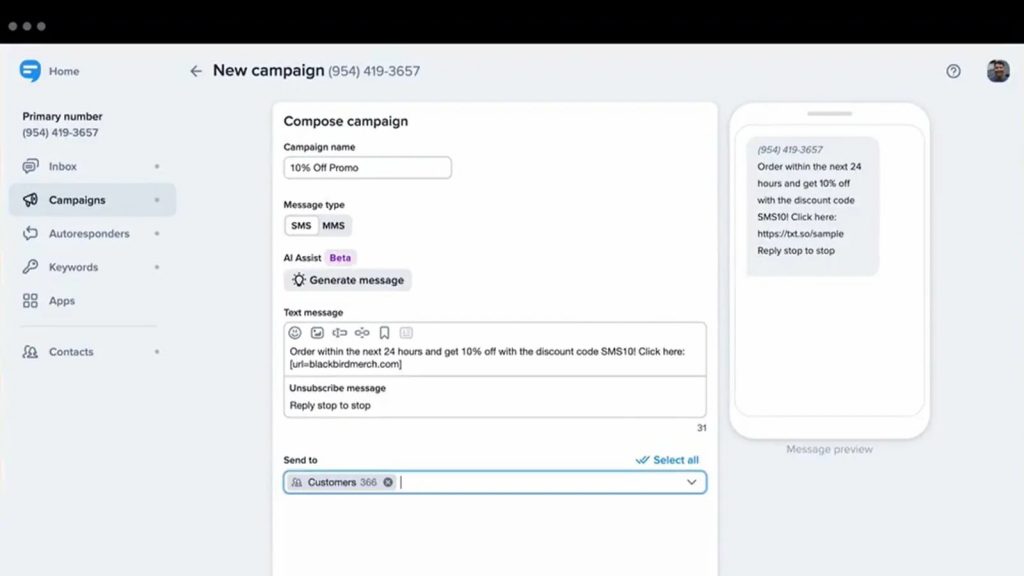
SimpleTexting Overview
SimpleTexting delivers straightforward text messaging solutions for healthcare providers seeking basic communication capabilities. The platform focuses on ease of use and affordable pricing while maintaining HIPAA compliance for patient communications.
Key Features:
- Simple text messaging interface
- Contact management and segmentation
- Automated messaging and drip campaigns
- Basic analytics and reporting
- Mobile and web applications
- HIPAA compliance with BAA available
Pricing Structure:
- Basic Plan: $29/month for 500 messages
- Professional Plan: $49/month for 1,000 messages
- Enterprise Plan: Custom pricing for high-volume users
Pros:
- Easy to use with minimal learning curve
- Affordable pricing for small practices
- Good basic features for patient communication
- Reliable message delivery
Cons:
- Limited advanced features for complex healthcare needs
- Basic integration options compared to specialized solutions
Integration Capabilities:
SimpleTexting offers basic integration options through Zapier and API access. The platform connects with popular CRM systems and basic practice management tools.
7. TextMagic

TextMagic Overview
TextMagic provides business text messaging services with healthcare-specific features for patient communication and staff coordination. The platform offers global messaging capabilities with HIPAA compliance options for U.S. healthcare providers.
Key Features:
- Global SMS delivery to 190+ countries
- Bulk messaging for patient communications
- Two-way messaging capabilities
- Email-to-SMS conversion
- Contact management and segmentation
- API access for custom integrations
Pricing Structure:
- Pay-as-you-go: $0.04 per message
- Monthly plans starting at $10/month
- Volume discounts for high-usage accounts
Pros:
- International messaging capabilities
- Flexible pricing options
- Good delivery rates worldwide
- Simple interface for basic messaging needs
Cons:
- Limited healthcare-specific features
- HIPAA compliance requires additional configuration
Integration Capabilities:
TextMagic provides API access and webhook support for custom integrations. The platform connects with various CRM systems and business applications through third-party integration tools.
8. ClickSend

ClickSend Overview
ClickSend offers multi-channel communication solutions including SMS, email, and voice messaging for healthcare organizations. The platform provides global messaging capabilities with compliance features for healthcare communications.
Key Features:
- Multi-channel messaging (SMS, email, voice)
- Global messaging infrastructure
- API access for custom integrations
- Contact management and segmentation
- Delivery reporting and analytics
- Compliance features for healthcare
Pricing Structure:
- Pay-as-you-go: $0.027 per SMS
- Monthly plans starting at $15/month
- Volume discounts available
Pros:
- Multi-channel communication options
- Global messaging capabilities
- Competitive pricing for high-volume users
- Good API documentation
Cons:
- Limited healthcare-specific features
- Requires additional setup for HIPAA compliance
Integration Capabilities:
ClickSend provides comprehensive API access and supports integrations with various healthcare systems through custom development and third-party connectors.
9. Halo Health
Halo Health Overview
Halo Health specializes in healthcare communication solutions with a focus on care coordination and patient engagement. The platform provides secure messaging, automated workflows, and integration capabilities designed specifically for healthcare environments.
Key Features:
- Secure messaging with HIPAA compliance
- Care coordination workflows
- Patient engagement tools
- Integration with EHR systems
- Automated messaging and alerts
- Analytics and reporting dashboard
Pricing Structure:
- Professional Plan: $79/month per provider
- Enterprise Plan: Custom pricing for large organizations
Pros:
- Healthcare-specific features and workflows
- Strong security and compliance capabilities
- Good integration with healthcare systems
- Focused on improving patient outcomes.
Cons:
- Higher cost compared to general messaging solutions
- Limited customization options
Integration Capabilities:
Halo Health integrates with major EHR systems and healthcare applications through direct connections and API access. The platform supports HL7 standards for healthcare data exchange.
10. Qwil Messenger
Qwil Messenger
Qwil Messenger provides secure communication solutions designed for healthcare teams. The platform focuses on clinical communication and collaboration while maintaining strict HIPAA compliance and security standards.
Key Features:
- Secure messaging for healthcare teams
- Clinical communication workflows
- Integration with hospital systems
- Role-based access controls
- Audit logging and compliance reporting
- Mobile and desktop applications
Pricing Structure:
- Standard Plan: $6/user/month
- Premium Plan: $12/user/month
- Enterprise Plan: Custom pricing
Pros:
- Designed specifically for healthcare communication
- Strong security and compliance features
- Good integration capabilities
- User-friendly interface
Cons:
- Limited patient communication features
- Smaller user base compared to major competitors
Integration Capabilities:
Qwil Messenger integrates with various healthcare systems through API access and direct connections. The platform supports HL7 standards and provides webhook functionality for custom integrations.
11. SendHub
SendHub Overview
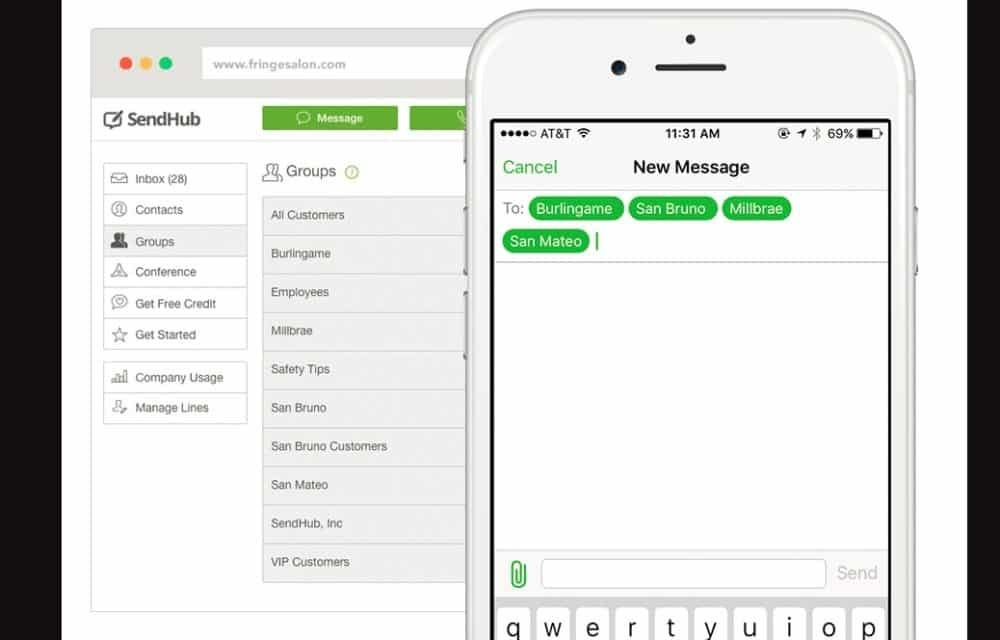
SendHub offers business messaging solutions with healthcare-specific features for patient communication and practice management. The platform provides secure messaging capabilities with HIPAA compliance options. It’s the best fit for small to medium healthcare practices seeking affordable messaging solutions
Key Features:
- Business messaging with healthcare compliance
- Contact management and segmentation
- Automated messaging campaigns
- Two-way messaging capabilities
- Analytics and reporting
- Mobile and web applications
Pricing Structure:
- Basic Plan: $20/month for 500 messages
- Professional Plan: $40/month for 1,500 messages
- Enterprise Plan: Custom pricing
Pros:
- Affordable pricing for small practices
- Good basic features for patient communication
- Simple setup and configuration
- Reliable message delivery
Cons:
- Limited advanced healthcare features
- Basic integration options
Integration Capabilities:
SendHub provides API access for custom integrations and connects with popular business applications through third-party integration platforms.
12. Textedly

Textedly Overview
Textedly provides text messaging services for businesses with healthcare-specific features for patient communication. The platform offers automated messaging, contact management, and compliance features for healthcare providers. It’s a suitable for healthcare practices needing basic text messaging with automated campaigns
Key Features:
- Automated text messaging campaigns
- Contact management and segmentation
- Two-way messaging capabilities
- Keyword-based messaging
- Analytics and reporting
- HIPAA compliance options
Pricing Structure:
- Basic Plan: $24/month for 1,000 messages
- Professional Plan: $49/month for 2,500 messages
- Enterprise Plan: Custom pricing
Pros:
- Good automation features for patient engagement
- Affordable pricing for basic needs
- Simple interface and setup
- Reliable message delivery
Cons:
- Limited healthcare-specific features
- Basic integration capabilities
Integration Capabilities:
Textedly offers API access and webhook support for custom integrations. The platform connects with various business applications through third-party integration tools.
13. EZ Texting

EZ Texting Overview
EZ Texting provides business text messaging solutions with healthcare compliance features for patient communication. The platform offers bulk messaging, automation, and contact management capabilities. It’s best for healthcare practices requiring bulk messaging capabilities
Key Features:
- Bulk text messaging capabilities
- Contact management and segmentation
- Automated messaging workflows
- Two-way messaging support
- Analytics and reporting
- HIPAA compliance features
Pricing Structure:
- Basic Plan: $19/month for 500 messages
- Professional Plan: $49/month for 1,500 messages
- Enterprise Plan: Custom pricing
Pros:
- Good bulk messaging capabilities
- Affordable pricing for basic needs
- Simple interface and setup
- Reliable delivery rates
Cons:
- Limited healthcare-specific features
- Basic compliance capabilities
Integration Capabilities:
EZ Texting provides API access for custom integrations and connects with various business applications through integration platforms.
14. Message Media
Message Media Overview
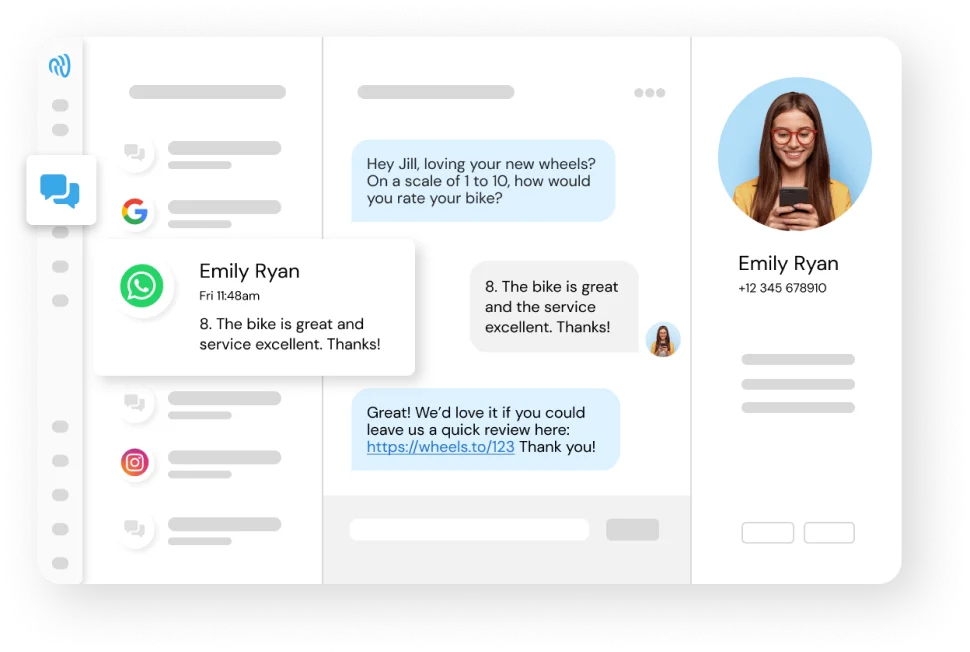
Message Media offers global messaging solutions with healthcare-specific features for patient communication and practice management. The platform provides multi-channel communication capabilities with compliance features.
Key Features:
- Global messaging infrastructure
- Multi-channel communication options
- Contact management and segmentation
- Automated messaging workflows
- Analytics and reporting
- Compliance features for healthcare
Pricing Structure:
- Pay-as-you-go: $0.045 per message
- Monthly plans starting at $25/month
- Volume discounts available
Pros:
- Global messaging capabilities
- Multi-channel communication options
- Good delivery rates worldwide
- Comprehensive analytics
Cons:
- Limited healthcare-specific features
- Higher cost for premium features
Integration Capabilities:
Message Media provides API access and webhook support for custom integrations. The platform connects with various healthcare systems through custom development and third-party connectors.
15. PatientCalls
PatientCalls Overview
PatientCalls specializes in automated patient communication solutions for healthcare practices. The platform provides appointment reminders, follow-up messaging, and patient engagement tools designed specifically for healthcare environments.
Key Features:
- Automated appointment reminders
- Follow-up messaging workflows
- Patient satisfaction surveys
- Integration with practice management systems
- HIPAA compliance and security
- Analytics and reporting
Pricing Structure:
- Basic Plan: $49/month for up to 1,000 patients
- Professional Plan: $99/month for up to 5,000 patients
- Enterprise Plan: Custom pricing
Pros:
- Specialized in healthcare patient communication
- Good automation features
- Strong integration with practice management systems
- HIPAA compliant by design
Cons:
- Limited features for internal staff communication
- Higher cost for premium features
Integration Capabilities:
PatientCalls integrates with major practice management systems and EHRs through direct connections and API access. The platform supports HL7 standards for healthcare data exchange.
Comparison Matrix
| Solution | Monthly Cost | HIPAA Compliance | EHR Integration | Best For | Implementation Difficulty |
| Emitrr | $29-$79 | ✓ | Excellent | Staff & Patient Communication | Easy |
| TigerConnect | $5-$8/user | ✓ | Excellent | Large Hospital Systems | Moderate |
| OhMD | $29-$99 | ✓ | Good | Small-Medium Practices | Easy |
| Klara | $69-$129 | ✓ | Excellent | Patient Engagement | Easy |
| Twilio | Usage-based | ✓ | Custom | Large Organizations | Difficult |
| SimpleTexting | $29-$49 | ✓ | Basic | Small Practices | Easy |
| TextMagic | $10+ | Optional | Basic | International Messaging | Easy |
| ClickSend | $15+ | Optional | Basic | Multi-channel Communication | Easy |
| Halo Health | $79/provider | ✓ | Good | Care Coordination | Moderate |
| Qwil Messenger | $6-$12/user | ✓ | Good | Clinical Teams | Easy |
| SendHub | $20-$40 | Optional | Basic | Small Practices | Easy |
| Textedly | $24-$49 | Optional | Basic | Automated Campaigns | Easy |
| EZ Texting | $19-$49 | Optional | Basic | Bulk Messaging | Easy |
| Message Media | $25+ | Optional | Basic | Global Messaging | Easy |
| PatientCalls | $49-$99 | ✓ | Excellent | Automated Patient Communication | Easy |
Implementation Best Practices To Get Started
Staff Training Requirements
Staff training requirements vary significantly based on the chosen platform and organizational complexity. Healthcare providers should allocate 2–4 hours for initial training sessions and plan for ongoing education as staff become comfortable with the system. Training should cover basic messaging functions, compliance requirements, and emergency procedures for system failures.
Role-Based Training Modules
Create comprehensive training modules that address different user roles within the organization. Physicians need training on patient communication protocols and documentation requirements. Nurses require instruction on care coordination messaging and urgent alert procedures. Administrative staff must understand appointment scheduling integration and patient onboarding processes.
Patient Onboarding Strategy
Patient onboarding strategies determine the success of any medical texting implementation. Begin with a pilot program involving 50–100 patients who frequently interact with the practice. Provide clear instructions about opting in to text communications and explain the benefits of improved appointment reminders and care coordination.
HIPAA-Compliant Enrollment Procedures
Develop standardized patient enrollment procedures that ensure HIPAA compliance while maximizing participation rates. Create consent forms that clearly explain text messaging services and obtain written permission for patient communications. Implement opt-out procedures that allow patients to discontinue text messaging at any time.
Pre-Integration Assessment
Integration planning prevents disruption to existing workflows while maximizing the benefits of new communication tools. Conduct thorough assessments of current systems including EHRs, practice management software, and billing systems. Identify integration points that will provide the greatest operational improvements.
Technical Integration Mapping
Work with IT staff or consultants to map data flows between systems and identify potential compatibility issues. This helps ensure a smoother integration and supports overall system efficiency.
Testing, Migration, and Backup Procedures
Plan for data migration if switching from existing communication tools and establish backup procedures for system failures. Test all integrations thoroughly before full implementation to reduce errors and avoid disruptions during the transition.
Compliance Considerations
HIPAA Audit Preparation
HIPAA audit preparation requires comprehensive documentation of all communication activities and security measures. Establish policies that define appropriate use of text messaging, outline staff responsibilities, and describe procedures for handling security incidents. Create audit trails that track all message activities and user actions.
Compliance Assessments
Implement regular compliance assessments that evaluate system security, staff adherence to policies, and patient privacy protection. Conduct quarterly reviews of access logs, message archives, and user permissions. Document all compliance activities and maintain records for regulatory inspections.
Communication Documentation Requirements
Documentation requirements extend beyond simple message logs to include comprehensive records of all communication activities. Maintain detailed records of user access, message delivery confirmations, and system security events. Store documentation in secure, encrypted systems that provide long-term accessibility.
Standardized Documentation Procedures
Create standardized documentation procedures that ensure consistent record-keeping across all staff members. Develop templates for incident reports, compliance assessments, and audit documentation. Train staff on proper documentation procedures and establish quality control processes.
Staff Compliance Training
Staff compliance training must address both technical system use and regulatory requirements. Provide initial training on HIPAA regulations, practice policies, and appropriate use of text messaging systems. Conduct annual refresher training and update staff on regulatory changes.
Role-Based Training Modules
Develop specialized training modules for different roles within the organization. Create physician-specific training that covers patient communication protocols and documentation requirements. Provide administrator training on system management and compliance monitoring.
Measuring Success
Key Performance Indicators (KPIs)
Key performance indicators (KPIs) provide quantifiable measures of communication system effectiveness. Track appointment no-show rates, patient response times, and staff communication efficiency. Monitor system uptime, message delivery rates, and user adoption metrics.
Establishing Baselines and Targets
Establish baseline measurements before implementation to enable accurate comparison of improvements. Set specific targets for each KPI and review progress monthly. Use data analytics to identify trends and opportunities for further optimization.
Patient Satisfaction Metrics
Patient satisfaction metrics reveal the impact of improved communication on patient experience. Conduct regular surveys that assess patient satisfaction with appointment reminders, care coordination, and overall communication quality. Track patient complaints and compliments related to communication services.
Feedback Analysis and Protocol Refinement
Analyze patient feedback to identify areas for improvement and celebrate successful implementations. Use survey data to refine communication protocols and address patient concerns. Share positive feedback with staff to reinforce the value of improved communication.
ROI Calculation Methods
ROI calculation methods help justify investment in communication technology and guide future decisions. Calculate direct cost savings from reduced no-show rates, decreased administrative overhead, and improved staff efficiency. Measure indirect benefits including improved patient satisfaction and reduced liability risks.
Comprehensive ROI Modeling
Develop comprehensive ROI models that account for implementation costs, ongoing subscription fees, and staff training expenses. Calculate payback periods and long-term financial benefits. Use ROI data to support budget requests and system upgrades.
Need to text patients fast? Use these ready-to-send doctor SMS templates.. Download the PDF now!!
Why Emitrr is Your Go-to Choice?
Emitrr’s medical texting service is a HIPAA-compliant platform that enables two-way patient communication, automated reminders, and digital intake forms. It reduces administrative workload, improves response times, and integrates with EHR and telehealth systems.
With AI-driven message timing and analytics, Emitrr helps practices boost patient engagement, minimize no-shows, and streamline day-to-day communication.
Here are the top-tier reasons you should pick Emitrr over the rest.
AI-driven 24/7 Medical Texting Assistant:
Automatically responds to patient inquiries, triages urgent messages, handles prescription refill requests, and even auto‑books appointments via SMS, all while maintaining HIPAA compliance and reducing administrative workload by over 60 %.
See what more Emitrr AI agent can do:
Future-Ready Healthcare Communication
Emitrr represents the future of healthcare communication by combining cutting-edge technology with practical healthcare applications. The platform anticipates industry trends while solving current communication challenges that plague medical practices. Advanced automation features reduce administrative burden while improving patient engagement and care coordination.
Intelligent Messaging and Predictive Analytics
The platform’s AI-powered messaging capabilities learn from practice patterns to optimize communication timing and content. Predictive analytics identify patients who may benefit from additional outreach or support. Integration with telemedicine platforms creates seamless communication experiences that span virtual and in-person care.
Implementation and Compliance Support
Emitrr addresses common implementation pitfalls through comprehensive training programs and dedicated healthcare support. The platform’s intuitive interface minimizes learning curves while robust security features ensure HIPAA compliance. Flexible pricing options accommodate practices of all sizes without sacrificing essential features.
Proven Impact on Practice Performance
Healthcare providers choose Emitrr because it delivers measurable improvements in patient satisfaction, staff efficiency, and operational costs. The platform’s track record of successful implementations demonstrates its ability to transform healthcare communication while maintaining the highest standards of security and compliance.
The Future of Medical Texting For Smarter and Patient-Centric Communication
With a medley of technologies coming in, the future of medical texting looks as revolutionary as ever. Let’s walk you through the trends all poised to change the landscape of medical texting software solutions.
AI-Powered Messaging Automation:
The use of AI-powered messaging systems allows personalizing patient communication through examination of health history and behavioral patterns. Machine learning finds the most optimal time, content and frequency of messages. Natural language processing (NLP) processes patient responses and provides automated responses related to patient requests, and the process of patient engagement becomes smarter, faster, and highly responsive with occasional human interventions.
AI in Routine Patient Communication:
Clinicians will allow AI-based systems to engage even more in using appointment reminder, medication reminding and after-visit guidance. These instruments will examine the preference and behaviors of patients to deliver messages more appropriately to enhance adherence and satisfaction. Risk-based proactive outreach guarantees care at the proper time, minimizes the development of complications, and unexpected visits.
Integration with Telemedicine Platforms:
Texting in medicine will also be incorporated easily into telemedicine so that patients will be informed about the changes in appointments, pre-visit preparation, and follow-up after consultation with a single system. This enables a seamless flow between messaging and video consultations and maintains care continuity and increases patient convenience when using hybrid care delivery models.
Real-Time Communication During Virtual Appointments:
Telemedicine services will facilitate secure real-time communications, where patients will be able to exchange symptoms, photos or vitals during virtual visits. Doctors, nurses, and specialists will be able to coordinate treatments using messaging, video, and access to EHRs without leaving their desks and practice care with less risk to people in online consultations with the help of integrated care platforms.
Enhanced Patient Portal Connectivity:
Portal integrations will transform text messaging into a patient engagement interactive platform. Patients get access to the test outcomes, make a scheduling appointment, order a prescription, and updates concerning their care in secure portable devices with smart messaging systems. It is also possible to share health education, remote monitoring alerts, wellness tips with providers through these channels.
Advanced Patient Portal Features:
Future patient portals will offer enriched messaging features like secure file sharing, appointment scheduling, and personalized medication management. Patients will receive tailored health advice based on medical histories and device-generated data. Integrating wearable devices and home health monitors will enable continuous, data-driven patient-provider communication and timely interventions.
Predictive Messaging for Proactive Care:
Predictive messaging systems will analyze patient data, medical history, and risk factors to proactively schedule follow-ups, medication reminders, or health checks. These algorithms will detect patterns indicating potential non-adherence or complications, allowing providers to intervene early, improving outcomes and optimizing resource allocation in patient care management.
Population Health Messaging Strategies:
AI-powered systems will assess population health data to design proactive communication strategies for specific patient groups. Healthcare providers can automate interventions, like medication reminders for high-risk patients or wellness tips for chronic conditions, minimizing preventable health issues while improving long-term outcomes and operational efficiencies.
Voice-to-Text Transcription Enhancements:
Advancements in speech recognition will improve medical terminology transcription accuracy, enabling providers to dictate patient notes or messages hands-free. Patients with limited typing abilities or impairments can use voice messaging for convenience. Integrating this with existing clinical workflows will boost efficiency, documentation speed, and patient-provider accessibility.
See how Emitrr’s voicemail-to-text capability works:
Voice Messaging and Workflow Integration:
Healthcare teams will increasingly adopt voice-to-text tools for rapid messaging during consultations and rounds. Voice options will improve accessibility for patients unable to type. Seamless integration with voice recognition and EHR systems will streamline care coordination, reduce administrative burdens, and enhance real-time, patient-centered communication.
FAQs
HIPAA-compliant texting refers to secure messaging platforms that protect patient health information through encryption, user authentication, and audit logging. These tools comply with HIPAA standards and include Business Associate Agreements (BAAs), making them legally safe for medical communication, unlike regular apps like WhatsApp or Messenger.
Using non-compliant messaging tools puts healthcare providers at risk of fines, lawsuits, and damaged reputations. HIPAA-compliant platforms safeguard patient privacy, build trust, and reduce legal exposure. They also enhance care coordination and operational efficiency, making them a smart, safe choice.
Look for encryption, secure logins, audit trails, BAAs, and role-based access. Bonus if it integrates with your EHR, automates appointment reminders, supports real-time delivery tracking, and streamlines patient communication. All features should help you stay compliant while working smarter.
Emitrr is great for end-to-end communication, TigerConnect is ideal for large systems, OhMD is simple and patient-friendly, and Klara focuses on patient engagement. Others include Twilio and Halo Health.
It’s a secure two-way communication tool that lets healthcare providers and patients exchange messages for appointments, test results, medication reminders, and more. It enhances convenience while staying HIPAA-compliant. Most systems include opt-in consent, automation, and integration with patient portals.
Conclusion
Healthcare communication stands at a critical juncture where technology meets regulation, efficiency meets security, and patient care meets operational excellence. The 15 texting solutions explored in this guide represent the current state of medical communication technology, each offering unique advantages for different healthcare environments.
The choice of communication platform will influence patient relationships, staff productivity, and practice success for years to come. Healthcare providers who act decisively to implement appropriate solutions position themselves for success in an increasingly competitive healthcare environment.
Embrace Emitrr. Take action today. Wrest a win. Because your patients deserve better communication, your staff deserves efficient tools, and your practice deserves the competitive advantages that come with modern healthcare communication technology.