
 4.9 (400+
reviews)
4.9 (400+
reviews)
Overview of Psychiatrists’ Review and Reputation Management Software
You might be giving your patients the care they need. But what does the internet say about you? For many psychiatrists, that part gets overlooked. Between sessions, paperwork, and practice management, online reviews don’t always get much attention. But here’s the reality: people are researching you long before they call. A few clicks on Google, a scroll through Healthgrades, maybe a glance at Facebook, and they’ve already made a decision.
And not seeing much online? That can be just as damaging as a bad review. In psychiatry, where trust is everything, that silence can be a dealbreaker. A single kind review can carry more weight than your entire website.
That’s why more psychiatrists are turning to reputation and review management software. It helps you gently collect feedback, track reviews across platforms, and respond in ways that build credibility. You don’t need to be pushy or awkward about it. It automates the process so reviews come in naturally and consistently, all while staying HIPAA-compliant!
So let’s dive in and explore what features to look for and which platforms actually work well for psychiatric practices.
Features to Look for in Psychiatrists’ Reputation and Review Management Software
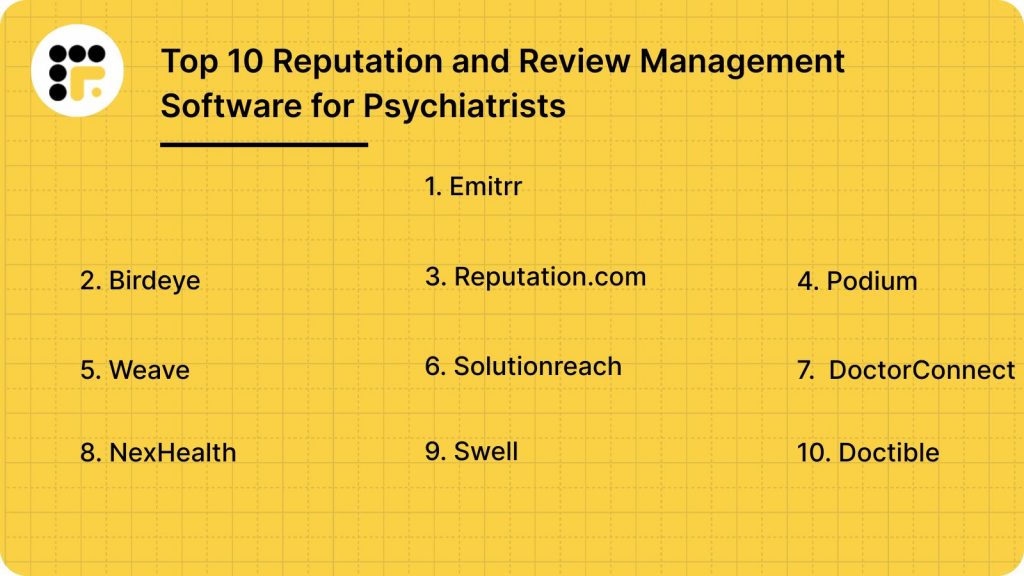
If you’re thinking about trying reputation software for your practice, here’s what to actually look for:
Easy review request automation
Asking for reviews manually? Not ideal. It can feel awkward or just slip your mind. A good tool sends out review requests automatically. Usually after each session through a quick text or email. That way, patients hear from you while the visit is still fresh. You can even personalize the message to make it feel warm, not salesy. The result? More reviews without any extra effort from your end!
HIPAA-safe messaging and workflows
In healthcare and psychiatry, privacy isn’t optional. Your software should keep all patient communications encrypted and PHI-free. That means no diagnosis details, no names in public reviews, and no risk of HIPAA violations. Some tools even screen for sensitive info and help you respond in a compliant way. That’s the kind of peace of mind to look out for.
Multi-platform review tracking
Your patients leave reviews all over the place. One could be on Google, another probably Healthgrades, WebMD, Facebook. But, you don’t have to go review hunting manually. A solid platform should be able to pull them all into one easy dashboard. No jumping between tabs. Most softwares let you set alerts when new feedback comes in. This feature can help you stay on the top of things.
Sentiment tagging and alerts
Not every review needs your full attention. But when someone leaves a 1-star or uses words like “rude” or “ignored,” you want to catch that fast. There are a few AI-powered reputation management tools that use sentiment tagging. This basically picks up on tone, and alerts let you jump in quickly when something negative comes through. It’s like having a digital heads-up before things spiral.
Inbuilt response templates
If you have to pause other work and manually reply to every review, things can quickly pile up. Plus, responding to reviews can be tricky in mental health, where privacy is key. That’s where templates come in. A good system will give you ready-to-use replies that sound professional and stay compliant. Just pick a template, personalize it a little, and you’re done!
Analytics and trend reports
Even in psychiatry, numbers matter. A good review tool doesn’t just collect feedback, it helps you learn from it. You’ll see trends in what people are saying, which platforms drive the most reviews, and how your ratings are moving over time. It’s a simple way to keep tabs on what’s working (and what’s not).
Custom branding and personalization
Your practice has a tone and your review requests should match it. Look for software that lets you add your logo, customize messages, and keep everything on-brand. Patients are more likely to respond when a message feels like it’s really from you, not some third-party tool.
Integration with EHR, scheduling, and telehealth tools
You’re already using tools to manage appointments and care. Your review software should plug into those. Not add more work. The best ones sync with your EHR, send review requests automatically after sessions, and even integrate with telehealth platforms. That way, everything flows without extra clicks.
The bottom line, look for a tool that asks for reviews without bugging you or your patients. A tool that protects patient privacy, helps you stay on top of what people are saying, and plugs right into the tools you already use!
Security & Compliance Requirements For Psychiatrists’ Reputation and Review Management Software
When you’re working in psychiatry, privacy i’s everything. You’re dealing with sensitive, deeply personal information. So if you’re using any kind of tool to collect reviews or feedback, it has to be airtight when it comes to security and compliance. Let’s walk through what you need to look for:
HIPAA and PHI-safe review handling
HIPAA is non-negotiable. Any platform you use should be built to handle Protected Health Information (PHI) safely. That means no slip-ups, like revealing a diagnosis in a review response. Even something like “Glad your anxiety is improving!” is a privacy issue.
The right software avoids that risk by using encrypted messaging, generic language, and smart templates. Some platforms even help filter out PHI automatically. Bonus points if they sign a Business Associate Agreement (BAA), that’s a legal promise they’ll follow HIPAA rules. If they don’t offer one, move on.
Encrypted data collection and storage
Every bit of patient data – names, emails, feedback, needs to be locked down. The tool should encrypt data both when it’s being sent and when it’s stored. That way, even if someone tries to snoop, they won’t be able to read a thing without access. This kind of security will protect your patients, your practice, and your peace of mind.
Data backup and storage protocols
Stuff happens, systems crash, glitches occur. A good platform backs up everything regularly so no data gets lost. Those backups should also be encrypted and stored safely. Also, make sure the software lets you delete patient data if someone asks for it. That’s a must-have under HIPAA and a few other privacy laws.
Staff access controls and audit logs
Not everyone in your clinic should have full access to patient data. Maybe your front desk needs limited access. Your team of therapists and psychiatrists could need more. So, look for a tool that lets you set permissions for each team member. And audit logs are also very impotant. They track who did what in the system. That way, if anything goes wrong, you know exactly where to look.
Consent-based review triggers and opt-outs
You can’t just text every patient asking for a review. They have to agree first. Good software makes this easy by collecting consent during patient intake and respecting those preferences. There should also be a quick opt-out option, something like letting patients reply “STOP” to messages. It keeps you compliant and shows patients you respect their choices.
Business Associate Agreement (BAA) support
This one’s simple. If the company doesn’t offer to sign a BAA, don’t use them. A BAA says, “We understand patient privacy, and we’re responsible for protecting it.” Reputable healthcare tools will always offer this as part of the setup.
Protecting patient privacy isn’t a checkbox. It’s part of the care you provide. The right software will make it easy to stay compliant. You won’t be left second-guessing every review request or message.

Integrations Required For Psychiatrists Reputation and Review Management Software
A review tool shouldn’t work in a bubble. The best ones will always connect with the rest of your systems. So things happen automatically and your staff doesn’t have to juggle tasks. Here are the key integrations that matter for psychiatrists:
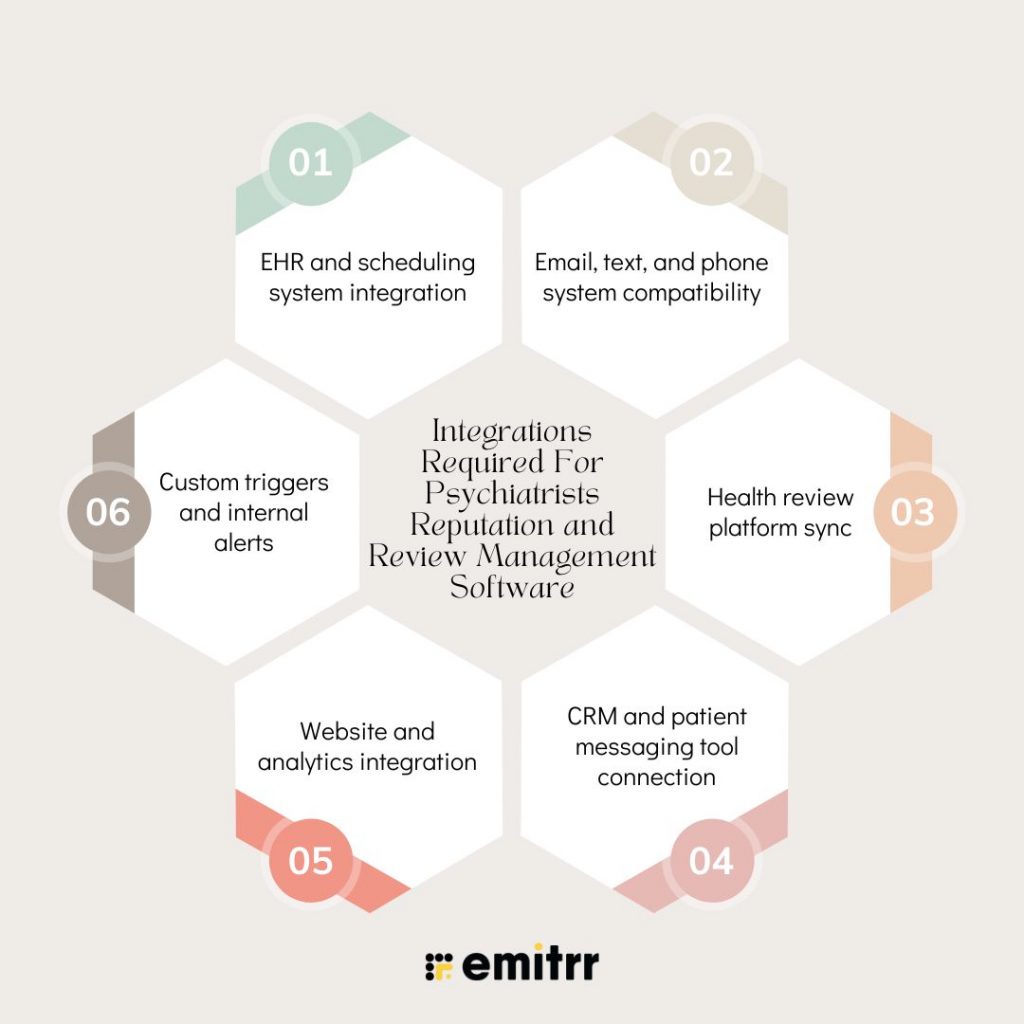
EHR and scheduling system integration
This one’s non-negotiable. Your EHR or scheduling software already knows who came in and when. A good review tool plugs into that and sends feedback requests right after appointments. Your team won’t even have to lift a finger. No exporting contacts, no manual triggers. Just seamless follow-ups after each session. Whether you use SimplePractice, Epic, Athenahealth, or another system, just check once if the reputation tool offers a direct integration or at least API access.
Email, text, and phone system compatibility
Your review messages should come from your clinic, not a random number or a personal email ID. Look for tools that let you use your main office line for texts or send emails from your domain. If your phone system supports texting, the tool should work with it too. This way, follow-ups like missed call texts or review invites feel personal and natural to patients.
Health review platform sync
Patients leave reviews everywhere, any platform they are comfortable using. It could be Google, Facebook, Healthgrades, and more. Your software should gather them all into one clean dashboard. You shouldn’t have to check five places. Some AI-powered tools even let you reply to reviews from inside the dashboard. That’s a bonus!
CRM and patient messaging tool connection
Already using a CRM or something for messaging patients? Your review software should work alongside it, not against it. It should help you spot happy patients who might be open to leaving reviews or let you track feedback trends over time. The goal is to make your patient communication feel seamless and connected.
Website and analytics integration
Got great reviews? Display them on your website. Most tools will let you embed review widgets that update automatically. Some also connect with web analytics tools so you can see how reviews affect booking behavior. A few even help create a dedicated review page to boost your search presence and bring in more clicks.
Custom triggers and internal alerts
Here’s where things get really useful. A solid platform can alert your team when a new review comes in, good or bad. You could even set it up so a great review triggers a thank-you message or a low rating creates a follow-up task. The more it can plug into your team’s workflow, the faster you can respond.
Good integrations make your reputation software feel like part of your everyday system. It won’t be one additional row on your tasklist to check off. When it syncs with your EHR, communication tools, and internal processes, everything runs smoother. Less juggling, more doing.
How Reputation and Review Management Software Helps Psychiatrists
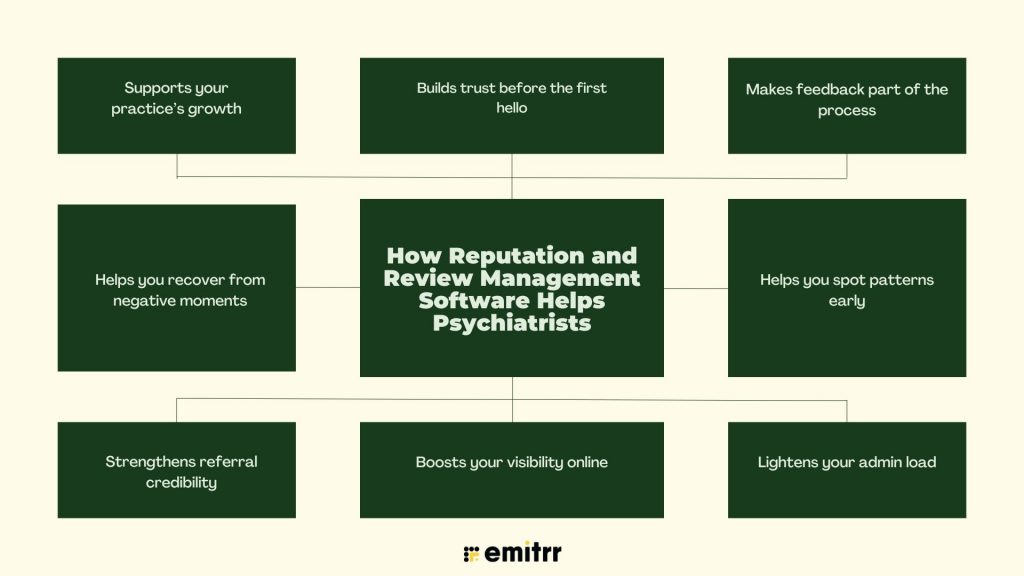
Choosing a psychiatrist is personal. People look for more than credentials. They want to feel safe, heard, and understood. And often, reviews are where that trust begins. That’s why reputation software matters. It helps you collect feedback, show what you’re about, and make a strong first impression, before the first session even starts.
Builds trust before the first hello
For mental health, trust starts before a session even happens. A nervous patient reading, “Dr. Lee made me feel heard when no one else did,” can be the push they need to reach out. A reputation tool helps you collect those moments and gently share them online. It’s like word-of-mouth, but digital. The right kind of visibility that reassures someone they’re not alone in choosing you.
Makes feedback part of the process
Imagine a patient finishes their third session and is finally feeling a bit better. They’re grateful, but saying it out loud might feel hard. A simple review invite sent automatically gives them a way to share that thanks. No pressure, just a moment to reflect. And for you, that feedback is gold. It helps you learn what’s working, and where things could be smoother.
Helps you spot patterns early
Let’s say a few patients mention that the waiting room feels too cold, or that your intake forms are confusing. You might not catch that in casual conversation. But review software picks up on those small signals and shows you the trend. On the flip side, it also highlights your strengths. Maybe patients constantly praise your calm voice or the way you explain things. That’s insight you can build on.
Lightens your admin load
If you’re running solo or have a small staff, time is tight. This software handles the back-and-forth, sending review requests, sorting feedback, even posting thank-you replies if you want. It’s like having an extra pair of hands that never forgets. Instead of juggling spreadsheets or remembering who to follow up with, the system does it for you.
Boosts your visibility online
Reviews don’t just help people feel good about you, they help people find you. Search engines like Google reward active profiles. The more recent, positive reviews you have, the more likely your name pops up when someone types “psychiatrist near me.” Some tools even let you show off reviews on your website or create a review page that ranks on Google. It’s quiet SEO that works in the background.
Strengthens referral credibility
Even when patients come from a referral, many still check reviews. If they see a pattern of warm, honest feedback, it reinforces their decision. Think of it as backup for the trust they’re already starting to build. And if a referring doctor is browsing too, it signals that you’re reliable and well-regarded in your field.
Helps you recover from negative moments
Not every patient will have a perfect experience, which is absolutely okay. But how you respond matters. Reputation software notifies you when a negative review comes in, so you’re not blindsided. You can respond quickly, calmly, and privately if needed. Most often, just acknowledging the issue goes a long way.
Supports your practice’s growth
Over time, reviews paint a bigger picture. You’ll see what changes lead to happier patients. Maybe you updated your booking process and notice fewer complaints. Or you extended session slots and see higher ratings. Some tools even let you run small surveys to ask focused questions. It’s patient satisfaction with a purpose, turning feedback into better care.
How To Choose the Right Reputation and Review Management Software
Selecting the right software can feel daunting given all the options out there. But don’t worry, by approaching it step by step, you can find a solution that fits your psychiatric practice like a glove. Here’s a simple 6-step guide you can follow:
Step 1: Know your practice size and goals
Are you solo or part of a group? High patient volume or a few steady clients? Start by listing what you need, like review invites, surveys, or texting features. Keep it simple, ask yourself what will actually help you day-to-day?
Step 2: Check for HIPAA compliance
If you’re in healthcare, security isn’t optional. Make sure the tool is HIPAA-compliant and offers encryption, secure data storage, and a BAA. If they dodge those terms, skip them.
Step 3: Focus on the right features
Don’t fall for shiny extras. Pick the top 3–5 features that matter to your workflow. It could be automated invites, review replies, EHR sync. Test them out in a demo and question yourself if it will actually save you time.
Step 4: Look for smooth integrations
The tool should connect with your EHR, phone line, or telehealth setup. It should work with what you already use, not force a tech overhaul.
Step 5: Think about future growth
If you plan to add providers or expand services, make sure the software can scale. Check how pricing changes with growth. Look for tools that stay updated and don’t go stale in a year.
Step 6: Test support and ease of use
Try a demo. Is it easy to navigate? Does support respond fast? A helpful team and a clean interface can make or break your experience. Go with something you can actually use without stress.
Top 10 Reputation and Review Management Software for Psychiatrists
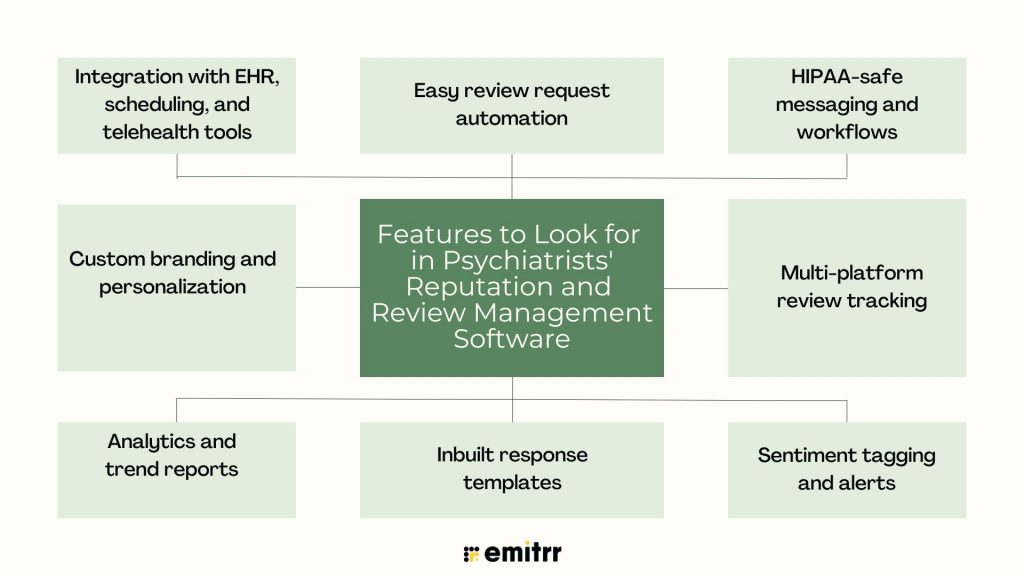
Here are the top 10 reputation and review management tools psychiatrists should check out in 2025:
Let’s take a quick look at what each platform offers and how it can help you manage your online reputation.
1. Emitrr
What is Emitrr?
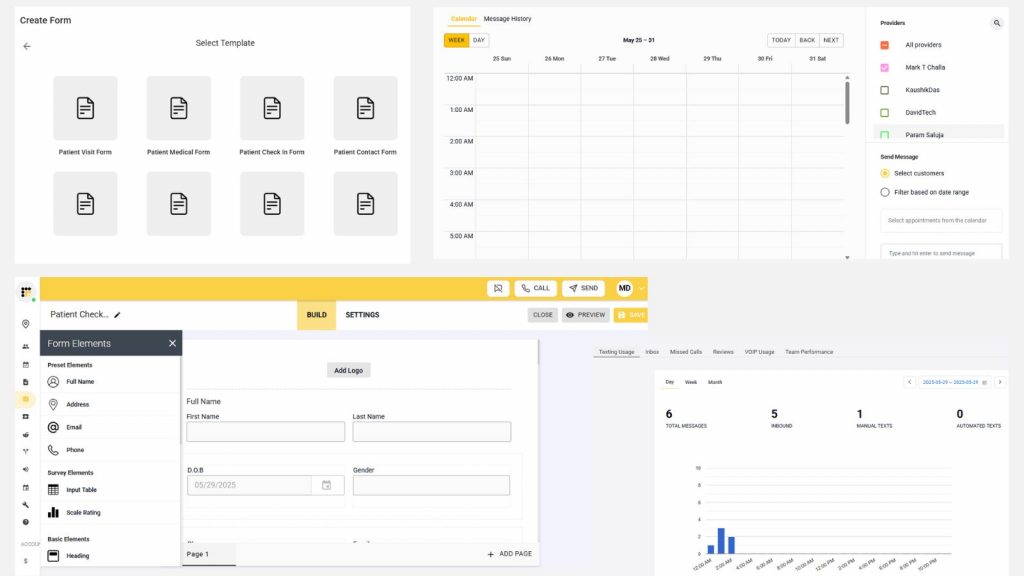
Emitrr is an all-in-one, HIPAA-compliant platform made for healthcare practices. It helps psychiatrists manage their online reputation, reviews, and patient communication, all from one dashboard. Whether you’re running solo or managing multiple providers, Emitrr keeps things simple, secure, and compliant.
Key Features of Emitrr
- Automated review requests: Sends out review invites via text or email right after appointments.
- Unified review dashboard: Pulls in reviews from Google, Facebook, WebMD, and more.
- Two-way texting + missed call replies: Lets you message patients directly and follow up automatically if you miss a call.
- EHR and scheduling integrations: Syncs with tools like DrChrono, Dentrix, and Athenahealth for seamless automation.
- Sentiment analysis: Tracks tone in reviews to flag negative feedback
- Website review widget: Show off your best patient reviews directly on your website to build instant trust.
- Real-time review alerts: Get notified the moment a new review comes in so you can respond quickly.
Watch this video to understand how Emitrr’s reviews and reputation management capability works:
Emitrr Pros
- Built for psychiatry: Fully HIPAA-compliant with features tailored to mental health practices.
- Simple to use: Clean interface that front desk teams can learn quickly.
- Excellent customer support: Fast, helpful responses via chat, phone, or text.
- Boosts review volume: Practices often see major jumps in 5-star reviews within months.
- All-in-one tool: Combines reviews, texting, reminders, and call handling in one platform.
Emitrr Cons
Some advanced AI features are still evolving.
Emitrr Pricing
Starts at $30/month
Emitrr Ratings
- Capterra: 4.9/5
- G2: 4.8/5
Emitrr Customer Reviews
“Working with Emitrr has been a pleasure. Love the features it offers and how easy it is to use.”
“My overall experience with Emitrr is so far excellent – great responsive customer service and extremely helpful.”
Source: Capterra
Emitrr Support Channels
- Email: support@emitrr.com
- Phone: +1 (210) 941-4696
- Live chat: On the Emitrr website
- Knowledge base: Setup guides, training resources, FAQs
- SMS support: Yes, you can even text their team
2. Birdeye

What is Birdeye?
Birdeye is a popular all-in-one reputation and customer experience platform used by healthcare practices, including psychiatrists. It helps you collect reviews, manage online listings, respond to patient feedback, and even handle text-based communication from a central dashboard.
Key Features of Birdeye
- Automated review requests: Sends texts or emails post-appointment asking for reviews. You can personalise timing and messaging.
- Review monitoring & alerts: Real-time notifications when new reviews come in so you can reply quickly.
- Listings management: Keeps your practice info updated across 80+ directories, boosting SEO and credibility.
- Two-way texting: Lets you have real-time conversations with patients through a secure, easy-to-use inbox.
Birdeye Pros
- Strong brand presence: Well-known and trusted across industries, including healthcare.
- Highly polished dashboard: Modern, user-friendly design that’s easy for staff to navigate.
- Wide integrations: Works with EHRs, CRMs, and calendar tools.
- Helps drive SEO: Optimises Google Business listings and supports local search visibility.
Birdeye Cons
- Not healthcare-specific: While it serves healthcare well, some features may feel generalised.
- Can be pricey: Higher cost compared to newer tools offering similar functions.
Birdeye Pricing
Pricing is custom and typically starts around $299/month, depending on feature set and practice size.
Birdeye Ratings
- Capterra: 4.7/5
- G2: 4.6/5
Birdeye Customer Reviews
“They made big promises but delivered poor results. It felt like empty talk with no real value. Birdeye is simply bad!”
“Onboarding was a nightmare. Customer support sub-par. Most tools are not their own and they had to reach out to 3rd parties to get things resolved, which happened a lot.”
Source: Capterra
Birdeye Support Channels
- Email and ticket support
- Live chat on website
- Help centre with how-to guides
- Onboarding and training included
3. Reputation.com
What is Reputation.com?
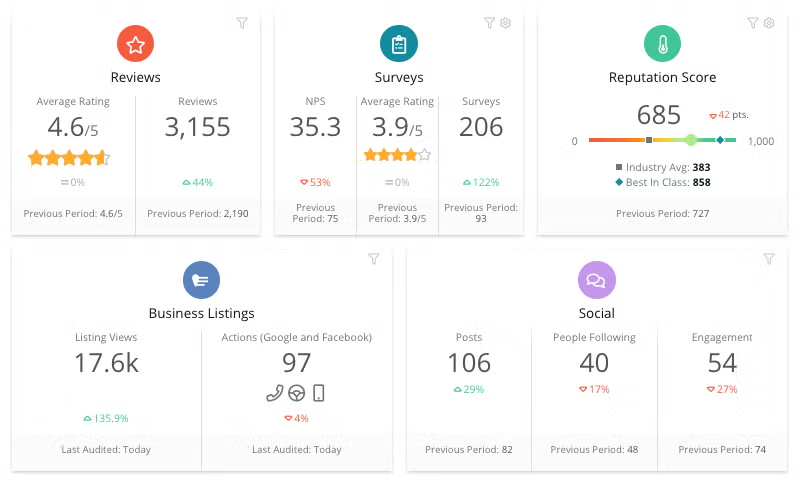
Reputation.com is an enterprise-grade platform built to help medical groups manage patient feedback, reviews, and online listings. It’s commonly used by multi-location practices, including behavioral health networks. While broader in scope than some psychiatry-focused tools, it brings powerful analytics and automation to the table, making it a good fit for high-volume practices looking to standardize reputation management across locations.
Key Features of Reputation.com
- Centralized review management: Monitor, request, and respond to reviews across sites like Google, Facebook, and Healthgrades.
- Listing sync: Keeps business details consistent across 70+ online directories.
- Insights & analytics: Offers sentiment analysis and detailed reporting on patient feedback trends.
- Surveys & feedback: Allows for private post-visit surveys in addition to public review collection.
Reputation.com Pros
- Enterprise-ready: Designed for larger practices and healthcare networks.
- In-depth reporting: Great for tracking feedback over time by provider, location, or service type.
- Strong directory management: Reduces listing errors and SEO issues.
- Built for compliance: Includes HIPAA-compliant features and privacy-safe workflows.
Reputation.com Cons
- Not built for small clinics: Might be overpriced for solo psychiatrists.
- Complex UI: May require more training than simpler tools.
Reputation.com Pricing
Custom pricing only. Generally starts at a higher range, with enterprise contracts being common.
Reputation.com Ratings
- Capterra: 4.4/5
- G2: 4.5/5
Reputation.com Customer Reviews
“Photos disappear from profiles, changes do not occur across all platforms, incorrect info populates and their system won’t save the profile, have to get them to push the updates through.“
“Data was incomplete and inaccurate. Terrible customer service, false claims of their product being “the single source of truth”. Waste of money and a year work.”
Source: Capterra
Reputation.com Support Channels
- Phone
- Live Chat
- Knowledge Base
4. Podium

What is Podium?
Podium is a communication and review platform that’s gained popularity across many industries, including healthcare. For psychiatrists, Podium helps drive more patient reviews while streamlining texting, appointment reminders, and even payments. It’s built for mobile-first use and works especially well for clinics that rely heavily on patient texting and mobile communication.
Key Features of Podium
- Text-based review requests: Sends quick SMS invites to collect patient reviews after visits.
- Webchat for leads: Lets prospective patients start a conversation directly from your site via text.
- Text-to-pay: Securely collect payments through text, ideal for therapy follow-ups or billing reminders.
- Inbox for messaging: One place to manage all text conversations with patients or leads.
Podium Pros
- Strong mobile tools: Built with texting-first communication in mind.
- Well-designed UI: Easy for front-desk teams to navigate and respond quickly.
- Quick review growth: SMS-first approach tends to get fast responses.
- Text-to-pay feature: Great for fee collection without extra platforms.
Podium Cons
- Higher pricing: Costs more than newer tools offering similar features.
- Limited healthcare-specific tools: Not deeply integrated with EHRs.
Podium Pricing
Starts around $350/month for basic plans. Custom pricing for larger practices.
Podium Ratings
- Capterra: 4.3/5
- G2: 4.2/5
Podium Customer Reviews
“Continuous IT tickets that had months with inadequate service. The lack of communication when the system was not working properly but yet still taking our payments. I have multiple documents and IT tickets to support our challenges. This year cost with not the ability to get Google reviews made the experience a failure”
“Lack of morals and integrity. Non-existent customer service. Shady business practices. Over-simplified platform.”
Source: Capterra
Podium Support Channels
- Chat
- Help Center
- Phone
5. Weave

What is Weave?
Weave is a communication and reputation management platform built for healthcare practices. While it’s especially popular among dentists and optometrists, many mental health clinics use Weave for its clean interface and strong texting and call management features.
Key Features of Weave
- VoIP phone & texting system: Replaces your clinic phone with a smart system that supports calls and texting on the same number.
- Missed call auto-text: Instantly sends a text to patients when you miss their call, helping reduce lost opportunities.
- Text-to-pay: Sends secure payment links via SMS so patients can pay co-pays or fees easily.
- Review collection: Automatically requests reviews after appointments to help boost your online presence.
Weave Pros
- Strong all-in-one tool: Covers calls, texts, and payments.
- Great for busy front-desks: Reduces front-desk load with automation.
- Intuitive mobile app: Lets you manage communication from anywhere.
- Missed call rescue: Helps prevent lost leads or patient frustration.
Weave Cons
- Not psychiatry-specific: Some mental health tools may be missing.
- Pricing on the higher side: Especially for small practices needing only basic features.
Weave Pricing
Starts around $125/month. The costing will vary by feature set and number of users.
Weave Ratings
- Capterra: 4.3/5
- G2: 4.2/5
Weave Customer Reviews
“With Weave, it’s just a nightmare with the customer service and support. And guess what, any settings or setup you want to change, you only have to go through their customer support because whenever you make changes from their web portal, none of it gets actually reflected.”
“The customer support is lacking and the fact when you have a problem and there is no manager to talk to is not helpful.”
Source: Capterra
Weave Support Channels
- Phone
- Chat support
- Email help desk
- Training articles and tutorials are available in the support hub
6. Solutionreach
What is Solutionreach?
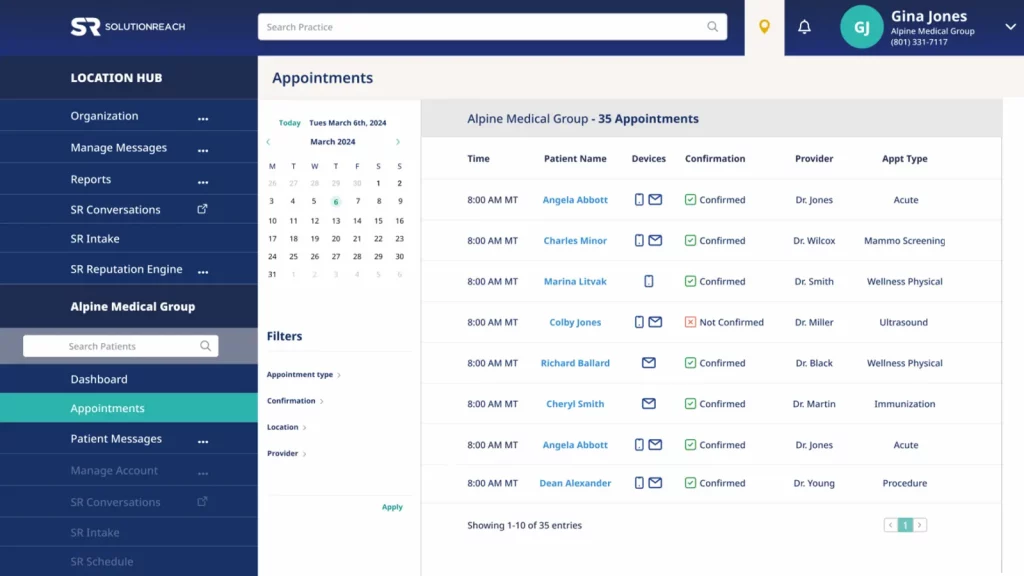
Solutionreach is a patient relationship platform designed for healthcare providers. It helps psychiatric practices build better connections through reminders, feedback requests, and ongoing communication tools. While not psychiatry-exclusive, it offers useful tools for improving no-show rates and collecting reviews at scale.
Key Features of Solutionreach
- Patient review automation: Sends out post-visit review requests via text or email to collect patient feedback without manual follow-ups.
- Appointment reminders: Automates SMS, email, and voice reminders to reduce missed sessions and free up your staff’s time.
- Newsletter and email campaigns: Helps practices send patient education content or clinic updates with a built-in email editor.
- Reputation monitoring dashboard: Tracks reviews from platforms like Google and Facebook in one place and flags negative feedback for quick response.
Solutionreach Pros
- Customizable outreach: Helps tailor messages to different patient groups.
- Great for engagement: Useful for therapists who want to stay in touch between visits.
- Boosts reviews and retention: Helps clinics stay top-of-mind.
- Flexible messaging tools: Email, text, and voice in one platform.
Solutionreach Cons
- Dated interface: Some users find the UI clunky.
- Initial learning curve: Takes time to set up and get used to.
Solutionreach Pricing
Plans start around $300/month. It scales based on features and clinic size.
Solutionreach Reviews Ratings
- Capterra: 3.8/5
- G2: 3.9/5
Solutionreach Reviews Customer Reviews
“The sync software needs to be running constantly on a computer that we never turn off. It took quite a bit of customization for it to do what we needed it to.”
“Sometimes we experience “glitches” where the communication software lags causing us to not receive messages from our patients.”
Source: Capterra
Solutionreach Reviews Support Channels
- Phone support
- Knowledge base
- Onboarding assistance
7. DoctorConnect
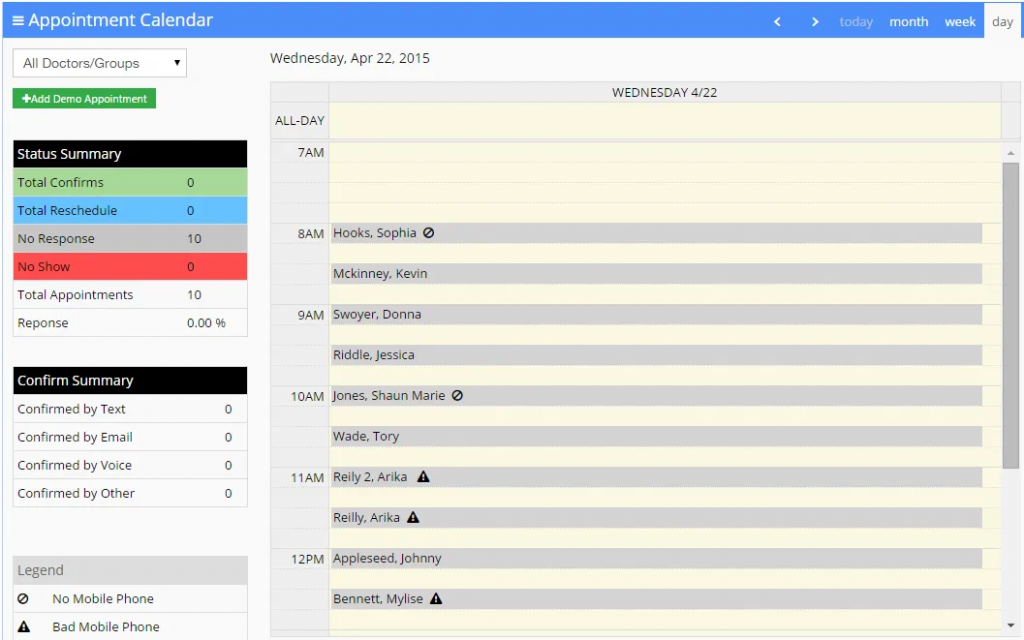
What is DoctorConnect?
DoctorConnect is a patient communication and reputation management platform focused on appointment reminders, review generation, and follow-ups. For psychiatrists, it helps reduce no-shows, streamline patient engagement, and build a steady stream of positive reviews, all while staying compliant and easy to manage.
Key Features of DoctorConnect
- Automated review requests: Sends timed messages post-visit encouraging patients to leave feedback on Google and other platforms.
- Appointment reminders via text and email: Reduces no-shows with flexible reminder options that suit different patient preferences.
- Two-way messaging: Lets your clinic respond to patient questions or reschedules via a secure messaging platform.
- Recall campaigns: Helps psychiatrists bring back patients for follow-ups or recurring mental health sessions through automated nudges.
DoctorConnect Pros
- Good for retention: Recall and reminder tools are useful for recurring psychiatry visits.
- HIPAA-compliant: Built for medical practices with secure messaging.
- Customizable templates: You can personalise outreach to fit your tone and practice.
- Straightforward to use: Works well for small teams without a steep learning curve.
DoctorConnect Cons
- Limited review dashboard: Not as comprehensive for multi-site review tracking.
- Interface feels dated: Some users say it could use a visual refresh.
- Limited integrations: Doesn’t connect easily with all EHRs.
DoctorConnect pricing
Plans start around $210. Which may vary based on practice size and usage.
DoctorConnect ratings
- Capterra: 4.8/5
- G2: 4.7/5
DoctorConnect customer reviews
“Did not integrate into my existing EHR, though the Sales Rep assured me it would. I have had the software for 3 days and never used it. The sales rep refuses to issue a refund. He states I am locked in a 1 year contract.”
“Difficult to integrate with our current software system making more work.”
Source: Capterra
DoctorConnect support channels
- Email and phone support
- Live chat
- Help center with FAQs
- Onboarding support for new clinics
8. NexHealth
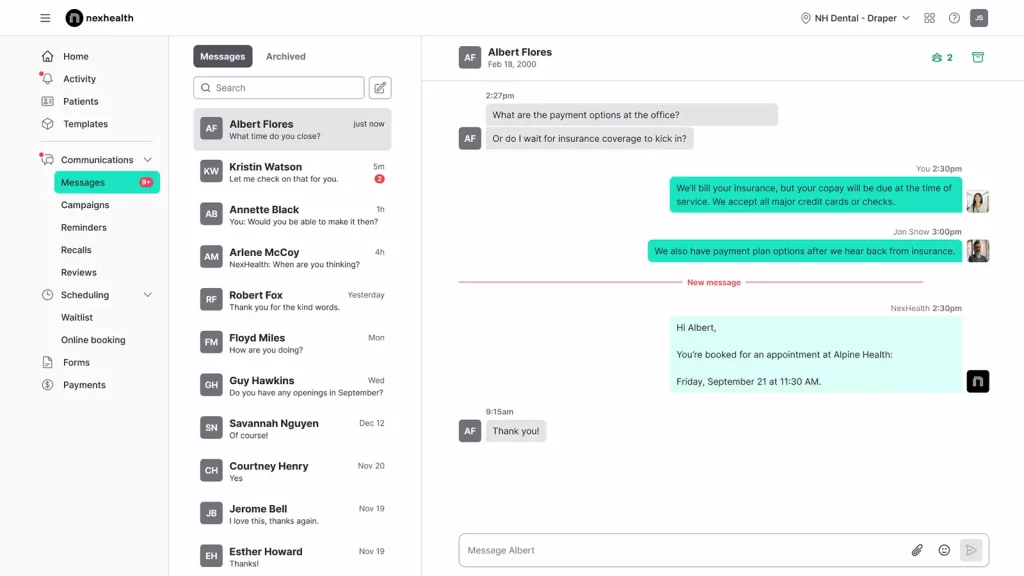
What is NexHealth?
NexHealth is a modern patient experience platform designed to streamline scheduling, communication, and reputation management. While it’s especially popular with dentists and general clinics, it’s increasingly being used by psychiatrists for its sleek design and automation tools that help manage reviews and patient interactions.
Key Features of NexHealth
- Automated review generation: Sends smart prompts after appointments, driving more Google and Yelp reviews.
- Integrated online booking: Patients can self-schedule psychiatry visits, which sync directly with your EHR.
- Two-way texting: HIPAA-compliant chat lets your clinic message patients easily from a central dashboard.
- Real-time EHR syncing: Supports major EHRs like Athenahealth and DrChrono, keeping schedules and patient info in sync.
NexHealth Pros
- Great for digital-first clinics: Modern design and automation fit busy psychiatry practices.
- Boosts online visibility: Timed review requests drive steady ratings growth.
- Fast and responsive interface: Works well on desktop and mobile.
NexHealth Cons
- Pricier than others: Can be expensive for smaller psychiatry practices.
- Some features are extra: Not all features are included in base pricing.
- Review focus is light: It’s more of an all-rounder than a reviews-only platform.
- Support varies by plan: Basic support may feel limited at lower tiers.
NexHealth Pricing
Starts around $350 per provider/month.
NexHealth Ratings
- Capterra: 4.8/5
- G2: 4.7/5
NexHealth Customer Reviews
“Professional front, but rigid terms and poor client handling reveal deeper issues. Moreover, we identified a major limitation in NexHealth’s software before any onboarding or integration began. Despite no services used or work performed, they refused a refund and plan to bill us twice more. This demonstrates a clear lack of professional integrity. NexHealth not a company we can recommend.”
“That it didn’t integrate as nicely with Curve Dental Software. I wanted two custom booking links – one for the general public to schedule specific appointments online, and another for recare patients to schedule recares when prompted by a reminder/notification link. It took a long time to find a way to make this possible, but the end result was not great. Also, it seemed as though staff had a hard time ensuring forms sent to patients were completed prior to the appointment, because there was no obvious indication of form status visible on Curve.”
Source: Capterra
NexHealth Support Channels
- Phone
- Live chat
- Help Center
- Onboarding team
9. Swell
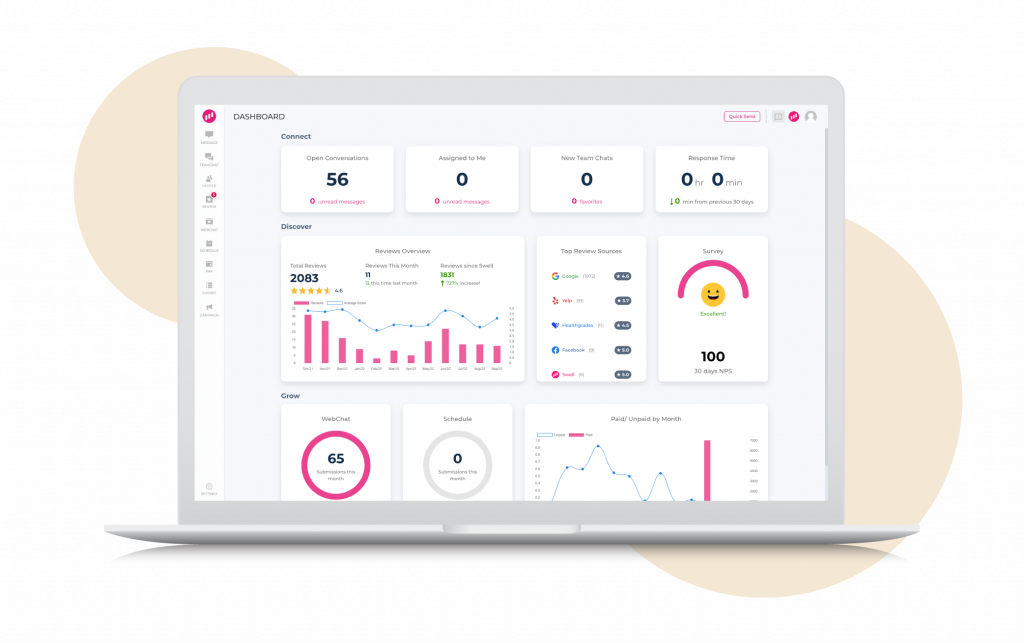
What is Swell?
Swell is a sleek, patient engagement and reputation management platform made for modern healthcare practices. For psychiatrists, it helps simplify review collection, manage feedback, and boost online presence with minimal lift. Everything is designed to work quietly in the background so your team can focus on care, not admin.
Key Features of Swell
- Automated review requests: Sends SMS or email invites right after a session, encouraging quick feedback.
- Customisable workflows: Set your own timing, frequency, and tone for review and message requests.
- Mobile-optimised dashboard: Lets you view and respond to reviews from your phone—great for on-the-go use.
- Performance insights: Helps spot trends in reviews, sentiment shifts, and which location or provider is doing well.
Swell Pros
- Simple to use: Clean dashboard and setup, no need for extra tech knowledge.
- Designed for psychiatry: Works well with small practices like solo psychiatry clinics.
- Boosts review volume: Users often see faster growth in Google ratings.
Swell Cons
- No built-in texting beyond reviews: It’s focused on reviews, not a full messaging tool like Emitrr.
- Limited integrations: May not sync deeply with all EHRs or scheduling tools.
- No call tracking: VoIP or missed call follow-up not included.
Swell Pricing
You’ll need to request a demo to get exact costs.
Swell Ratings
- Capterra: 4.6/5
- G2: 4.5/5
Swell Customer Reviews
“I do not find the support to be great. In fact I initially stopped using Swell, because I did not like the person helping me and then when I was talked back into coming back, I was put with her again. She was not much nicer and then I reached out to ask question, she told me to go ask someone else because it was not in her job description anymore, so I did and I basically was told that I wasn’t trained correctly…I wanted out of my expensive contract and was told no. So I am riding it out and hoping things get better and using it minimally. The app does not do half of what the website does. The back end of the website is not super intuitive. Review alert is slow.”
Source: Capterra
Swell Support Channels
- Email support
- Phone assistance
- Live chat
- Setup help
10. Doctible

What is Doctible?
Doctible offers review management, patient texting, and digital front-desk features that help mental health practices like psychiatry clinics stay organised and patient-friendly. Its tools focus on reducing missed calls, collecting feedback, and improving communication—without overloading your team.
Key Features of Doctible
- Automated review invites: Sends messages to patients after visits with a direct review link.
- Two-way HIPAA-compliant texting: Lets you follow up or reschedule sessions easily through secure chat.
- Missed call follow-up: If a call is missed, Doctible sends a friendly follow-up message automatically.
- Custom feedback surveys: Lets you gather private feedback, not just public reviews.
Doctible Pros
- Great for small practices: Ideal for solo or small psychiatry teams.
- Real-time alerts: You get notified if a negative review comes in.
- Supports multi-channel reviews: Google, Facebook, and Healthgrades supported.
Doctible Cons
- Fewer deep integrations: May not connect deeply with all major EHRs or practice tools.
- Limited automation workflows: Lacks more advanced flows offered by platforms like Emitrr.
- UI could feel basic: The design is clean but less modern than some competitors.
Doctible Pricing
Starts at $249/month. Custom pricing available for large groups.
Doctible Ratings
- Capterra: 4.7/5
- G2: 4.6/5
Doctible Customer Reviews
“They hold no responsibility for their errors in syncing with our Eaglesoft system. Patients are confirming appointments and then it doesn’t indicate on our schedule. They claim to have corrected this issue several times, but it keeps happening. Patients get aggravated that we call them to remind them of their appointments when they have already confirmed through Doctible, but Doctible didn’t change on our schedules.”
“This company offers poor integration with practice management software.”
Source: Capterra
Doctible Support Channels
- Phone
- Help Center
- Chat
Why Emitrr Is The Best Reputation and Review Management Software For Psychiatrists
Here’s why more psychiatrists are choosing Emitrr to manage their reviews and reputation:
- Built for psychiatry: Emitrr is designed specifically for medical use. It’s HIPAA-compliant, supports PHI filters, and respects the privacy needs of psychiatric care.
- Easy for your team: The interface is clean, simple, and built for busy clinics. Front desk staff can use it with zero tech stress or lengthy training.
- All-in-one platform: Along with reviews, you get tools for texting, reminders, voicemail, and more. No need to juggle separate apps.
- Automated review flow: Sends out review requests automatically after sessions, timed just right and worded with care. That means more reviews without the awkwardness.
- Faster responses, fewer issues: You’ll get notified instantly when reviews come in. Negative or positive, you can reply fast and professionally.
- Top-rated support: Whether you’re setting up or troubleshooting, the Emitrr team responds quickly and actually helps. Users often say the support is a highlight.
- Saves serious time: It handles outreach, feedback tracking, alerts, and follow-ups quietly in the background, so your staff can focus on patients.
- Keeps improving: Emitrr rolls out new features regularly based on feedback. As platforms change, the tool adapts, so no work on your end.
- Smart analytics: Spot trends in your reviews, what patients love, what they don’t. You can use these insights to fine-tune care and improve service.
- Affordable and scalable: Works just as well for solo psychiatrists as it does for group practices. No sky-high pricing, no long-term lock-ins.
- Enhances the patient journey: Patients feel seen and heard when feedback is welcomed. And that connection really matters in mental health.
Emitrr takes care of your reputation while you take care of your patients! It’s quiet, powerful, and built for how psychiatric practices really work.
Frequently Asked Questions
Online reviews matter a lot in mental health. They help new patients feel safe, build trust, and give your practice visibility. A solid review profile can make the difference between getting contacted and getting skipped!
Send a discreet, general message after appointments via email or text. Avoid asking during sessions. Tools like Emitrr help automate the ask while keeping it respectful and HIPAA-compliant.
More reviews = better SEO. Reputation tools help you show up higher on Google by boosting your ratings, syncing listings, and adding fresh review content to your site, all without extra work.
Absolutely! Emitrr sends automatic review requests after sessions using text or email. You set the timing, and it personalizes the message. It’s hands-off for you, but effective for getting more reviews.
Yes. Emitrr pulls in reviews from Google, Healthgrades, WebMD, and more. You’ll see everything in one dashboard and can respond without logging into multiple sites.
Conclusion
Your reputation doesn’t just live in your office anymore. It lives online, where patients are searching and deciding. And in mental health, first impressions matter. That’s why having the right review management software is key.
Emitrr makes it easier to ask for feedback, respond smartly, and show patients you care, without adding extra work for your team. It fits neatly into your psychiatry workflow and keeps your reputation strong, consistent, and visible.
Ready to make things easier? Book a free demo and see how Emitrr handles your online reputation while you focus on your patients!