
 4.9 (400+
reviews)
4.9 (400+
reviews)
Introduction to Hospital Messaging
Healthcare patient communication has evolved. What was once the province of phone calls, voicemail, and paper mail has increasingly moved toward quicker, more responsive methods. As patients got more technology-savvy and healthcare needs expanded, the necessity for real-time, available communication became evident.
HIPAA-compliant texting solutions are a primary driver in this evolution. Hospital secure messaging solutions enable providers to send appointment reminders, care directions, and important updates directly to patients’ phones efficiently and securely. By maintaining patient privacy while enhancing responsiveness, hospital messaging is now an integral part of healthcare systems today.
The COVID-19 pandemic further hastened the move towards digital-first communication. With face-to-face interactions curtailed and patient volumes peaking, hospitals needed to change rapidly. Hospital messaging offered an instant, scalable solution to stay connected and optimize operations.
As we get into the blog, we’ll examine how texting has revolutionized sending messages to patients in hospitals, why it’s a must for hospital workflows in the present, and how top healthcare providers are leveraging it to provide improved care with improved efficiency.
Importance of Hospital Messaging
While hospitals are confronting increasing pressures of providing quality care and optimizing operations, the necessity of using efficient communication tools can hardly be stressed more. Legacy modes like telephone calls and paper reminders have turned out to be ineffective in managing the needs of modern healthcare.
Here’s why HIPAA-compliant text messaging in healthcare has become an indispensable communication tool:
Reduced Missed Appointments
One of the largest challenges to healthcare professionals is minimizing missed appointments. It has been shown through research that no-shows cost the healthcare system billions annually. The conventional appointment reminders tend to go unnoticed, which results in poor patient engagement.
Text reminders, however, have an impressive 98% open rate compared to a paltry 20% for emails, so patients are more likely to receive and respond to appointment reminders, thus lowering no-show rates.
Improved Staff Communication
Poor communication among hospital staff can contribute to confusion, delays, and compromised patient care. Hospital secure messaging provides a rapid and reliable channel of internal communication that enables staff to exchange key information quickly, coordinate with each other, and ensure that smooth operations continue.
Reduced Patient Burnout
Patients are increasingly inundated with the sheer amount of communication coming from healthcare providers today. Voicemails and calls are intrusive, while hospital texting is less intrusive.
It enables patients to reply at their own convenience, which makes it simpler to remain on top of appointments, follow-ups, and other vital health-related issues.
Reduced Staff Burnout
The stress on healthcare professionals is great, and excessive volumes of telephone calls can significantly cause staff burnout. HIPAA Compliant texting for hospitals can reduce staff workload and enhance their productivity and job satisfaction by streamlining some of their communication, including appointment reminders, prescription renewals, and follow-up calls.
Mobile-First Preference
With more than 90% of adults in the U.S. possessing a smartphone, healthcare messaging creates a direct means of communication to patients where they feel most at ease: on their phone. Not only does this mobile-first strategy catch patients where they are, but it also keeps critical messages convenient and within reach, and avoidable from being drowned out by a flood of emails or left to languish in the call log.

Benefits of Hospital Text Messaging
The use of HIPAA-compliant texting for hospitals has several concrete advantages, both for healthcare professionals and their patients. Hospitals that use texting can anticipate a dramatic increase in patient satisfaction, operational effectiveness, and overall care provision.
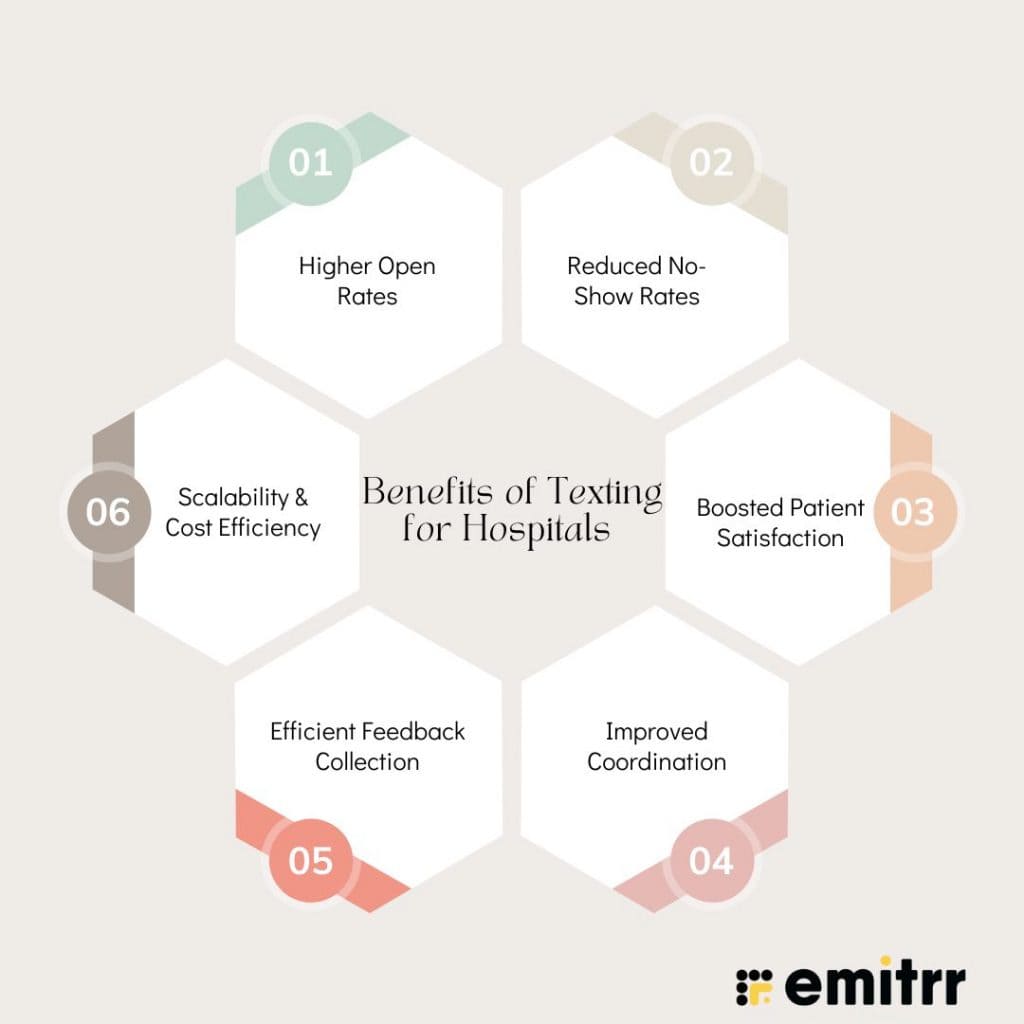
Higher Open Rates
SMS has an impressive 98% open rate, much higher than that of email (20%) or voice calls (below 10%). Text messages are brief, to the point, and instantly displayed on the patient’s phone, where they will be noticed and responded to in a hurry.
Reduced No-Show Rates
Automated SMS reminders have been shown to reduce no-show rates by up to 30%. Sending timely reminders using a HIPAA compliant texting app enables hospitals to streamline their scheduling, decrease downtime, and increase overall revenue by getting patients to arrive at their appointments.
Boosted Patient Satisfaction
Patients value the convenience and instantaneity that HIPAA secure texting app offers. Text messaging facilitates faster responses to appointment reminders, prescription renewals, lab test results, and follow-ups. This real-time interaction results in increased patient satisfaction and participation.
Improved Care Coordination
Hospitals usually work in time-critical environments, and miscommunication can create bottlenecks in operations. With secure texting for healthcare, communication within departments is efficient, and it is simpler for teams to coordinate and respond promptly.
Efficient Patient Feedback Collection
HIPAA-compliant texting in healthcare offers an easy and effective way to collect patients’ feedback, whether it be for a follow-up survey visit or patient satisfaction measurement. By automating feedback collection via SMS, you can utilize findings to help improve patient care continuously.
Scalability & Cost Efficiency
Texting in healthcare is cost-effective compared to phone calls or traditional mail. It also scales well, which is especially important during times of crisis such as the COVID-19 pandemic. Hospitals can quickly send hipaa compliant text messages to large patient groups without additional staffing or manual effort.
Conversational AI in Healthcare
Many hipaa compliant text messaging apps for hospitals are now offering conversational AI. This conversational AI interacts with your patients and offers them resolution or help with their routine queries. Conversational AI like Emitrr is perfect for busy hospitals that want to reduce their level one patient queries.
Use Cases of HIPAA Compliant Text Messaging for Hospitals
HIPAA-compliant hospital text messaging isn’t limited to reminders. It spans a broad range of operational and engagement functions:
- Appointment Reminders and Confirmations: Reduce no-shows and late arrivals by sending timely reminders and allowing patients to confirm or reschedule.
- Prescription Refill Alerts: With healthcare messaging, patients can be notified when it’s time to refill medications, ensuring better adherence to treatment plans.
- Lab Result Notifications: Instead of waiting for a call, patients can receive secure messages via hipaa compliant text messaging app, prompting them to view results on the patient portal.
- Billing and Payment Reminder: Gentle nudges about due payments or outstanding bills via patient messaging services lead to quicker collections.
- Post-Visit Follow-Ups & Virtual Check-ins: Doctors can check on patient recovery or pain levels, and even offer virtual advice via hipaa secure texting app.
- Emergency Response Communication: Using hospital text messaging, you can quickly inform patients and staff about closures, emergencies, or updates during crises.
- Patient Education Campaigns: Regular health tips, dietary advice, and reminders for chronic disease patients can be sent via SMS.
- Online Scheduling & After-Hours Booking: Automating booking links through text helps patients schedule appointments at their convenience.
- Clinical Trial Recruitment Messaging: Targeted outreach to eligible candidates can be efficiently managed via SMS campaigns within a good hipaa compliant text messaging app.
- Internal Staff Communication: Hospital text messaging can be used to notify staff of open shifts, policy updates, or breaking news in real-time.
- Reputation Management Requests: Hospitals may text patients after visits to request feedback or leave a Google review.
- Net Promoter Score Campaigns & Surveys: Use hospital text messaging to execute short surveys to find out patient sentiment and enhance hospital services.
Best Practices for HIPAA Compliant Hospital Messaging
To make texting for hospitals as effective as possible while also being compliant with HIPAA and other regulations, hospitals need to follow best practices:
Stay in Character Limits
Make sure that your hipaa compliant text messages are below 160 characters to keep it brief and enable the delivery to be efficient, particularly on phones where the audience may not necessarily read long messages.
Use AI-Driven Hospital Texting Platforms
Hospital texting platforms are not the same anymore; most of them are not offering AI-driven messaging capability that helps you draft faster responses, better replies, and even help you automate replies with hospital conversational AI. So make sure to look for a messaging tool that is AI-integrated.
Check out this video to see what AI hospital messaging platforms like Emitrr can do:
Use Hospital Text Message Templates
Standardize routine hospital text messages, such as reminders of appointments, confirmations, and prescription refills to simplify the communications and make them more efficient. Use templates to send hospital message to patients, be it for sending a thank you message for hospital care or for sending a hospital greeting message.
Offer Personalization
When you send a message for a patient in a hospital using our HIPAA compliant texting app, try to personalize it to include the patient’s name, physician details, and clear instructions to create trust and relevance.
Ensure HIPAA Compliance
Make sure that all SMS for hospitals are HIPAA and TCPA compliant to honor the privacy of patients and prevent legal action.
Offer Opt-In/Opt-Out Workflows
Patients must have an unmistakable option to opt in or opt out of SMS messages. Hospitals must honor these choices and allow patients to change their communication options with ease when sending a hipaa compliant text messages to a patient in hospital.
Ensure EHR/EMR Integration
Integrating hospital secure messaging with EHR and EMR solutions such as Epic, Athenahealth, and DrChrono would assist in facilitating communication and data integrity between applications.
Challenges of Using Text Messaging in Hospitals
Despite the numerous benefits, there are several challenges hospitals must overcome when implementing texting via any patient messaging services:
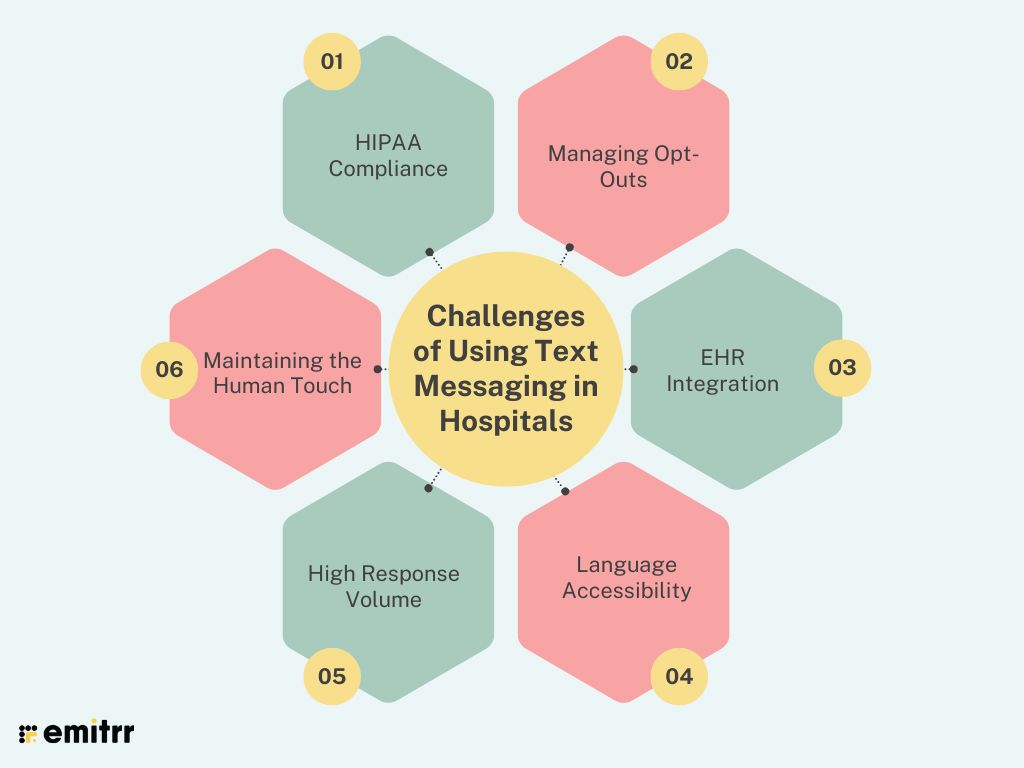
HIPAA Compliance
Texting platforms used by hospitals must be HIPAA-compliant to ensure patient data security. Not all SMS providers are secure enough for healthcare use, so hospitals must choose platforms that offer encryption and audit capabilities.
Managing Opt-Outs
Hospitals must track and respect patients’ preferences for opting out of SMS communications. This requires careful integration with patient databases and consent management systems.
EHR Integration
Healthcare secure text messaging solutions need to integrate with complex hospital systems such as EHR, CRM, and RCM platforms. This requires careful planning and technical support to ensure smooth data exchange.
Language Accessibility
Hospitals with diverse patient populations must ensure their SMS systems can support multiple languages to meet the needs of non-English-speaking patients.
High Response Volume
Automating responses to common queries and routing critical messages to human staff is crucial to managing high volumes of incoming messages.
Maintaining the Human Touch
While automation is essential for scalability, it’s important to strike the right balance and ensure that some messages sent via any HIPAA complaint texting app still have a personal touch, especially for sensitive topics.
How to Set Up HIPAA Compliant Texting for Hospitals Using Emitrr
Emitrr is a HIPAA-compliant texting platform that simplifies patient communication. Here’s how you can set up SMS for hospitals using it:
- Sign-Up and Onboarding: Begin with a demo and create an account on Emitrr’s secure platform.
- EHR/CRM Integration: Connect with Epic, Salesforce Health Cloud, DrChrono, or others for seamless data flow.
- Workflow Setup: Automate reminders, prescription alerts, lab updates, and follow-up messages.
- Access Controls & Staff Training: Define user roles, offer staff training, and ensure responsible data access.
- Analytics & Optimization: Track message open rates, response times, and patient satisfaction scores.
- Compliance & Security: Emitrr ensures end-to-end encryption, audit trails, and regular compliance updates.
- Third-Party Syncing: Connect your HIPAA compliant texting app with PracticeQ, CareCloud, and Zoho CRM for added flexibility.
Case Study: Minimizing No-Shows and Enhancing Patient Engagement
Aspire Counseling was experiencing high no-show rates and an inefficient reminder system. The reminder process in the clinic was not engaging patients, which was resulting in lost appointments and boosting patient dissatisfaction.
Solution: In response to these problems, Aspire Counseling deployed Emitrr HIPAA text messaging app, which is integrated with their current EHR system. The integration streamlined appointment reminders, follow-up reminders, and rescheduling abilities, all sent through text, which facilitated prompt communication with patients.
Outcome:
- 30% drop in no-show rates due to automated, text-based reminders.
- Increased patient engagement through webchat and text conversations.
- Improved staff efficiency by automating routine communication tasks, freeing up time for direct patient care.
Frequently Asked Questions
Texting provides instant, tailored communication that informs patients in real-time, reminds them of appointments, and helps them in between visits—enhancing engagement and treatment compliance.
Maintaining HIPAA compliance, handling opt-ins/outs, EHR integration, and balancing automation with personal attention are the biggest challenges.
Texting cuts call volume, eliminates manual labor, speeds up internal coordination, and enhances response rates—all making hospitals more efficient.
End-to-end encryption, audit logs, access control for users, and authenticated opt-in processes are crucial to HIPAA compliance.
Hospitals can send periodic health tips, reminders for chronic disease management, and FAQs to patients, enhancing health literacy and support.
Conclusion
Hospital texting has become a necessary component of contemporary patient care and hospital operations. Hospitals can communicate more effectively with patients, reduce communication delays, and enhance outcomes with secure, HIPAA-compliant texting solutions.
By combining texting with EHR, CRM, and RCM platforms and adhering to best practices, hospitals can fuel both clinical and operational efficiency.
Emitrr is a reliable partner for hospitals that want to revamp their communication strategy. Its scalability, compliance, and strong integration features make it the perfect choice.
Today, hospitals need to adopt automated, but personalized, communication, and texting is at the center of that revolution.