
 4.9 (400+
reviews)
4.9 (400+
reviews)
Introduction to Text Messaging for Medical Offices
For years, patient communication relied on phone calls, whether it was confirming an appointment, following up on lab results, or answering simple questions. But that model no longer fits how patients prefer to interact.
Today, people expect quick, digital communication from their healthcare providers. Texting stepped in as the natural alternative, thanks to its 98% open rate and near-instant read times. In fact, 83% of patients say they prefer appointment reminders via text. It’s clear why so many practices started using text messages as their primary channel.
However, plain texting alone is no longer enough. Patients now want more than just reminders, they expect two-way communication, fast responses, and the ability to reschedule or ask questions without calling the front desk.
This is where artificial intelligence is changing the game. AI-powered texting tools act like virtual assistants, handling appointment scheduling, sending SMS reminders for medical offices, managing FAQs, and even following up on care, all through simple conversations. According to Goldman Sachs, more than 25% of the work done by healthcare professionals can now be automated by AI, much of it related to front-office tasks. And already, 38% of providers are using AI to assist with communication and diagnostics.
This guide will help you understand how to modernize your communication through effective, AI-enhanced texting and why doing so might be the best operational decision your office makes this year.
Importance of Text Messaging for Medical Offices
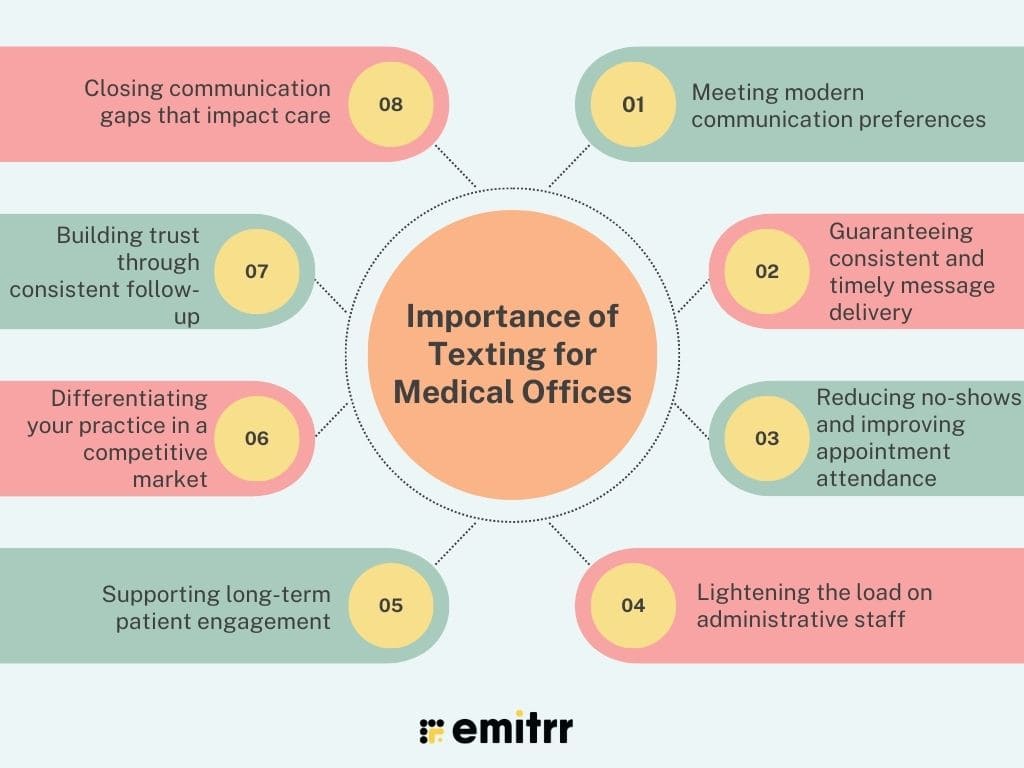
What started as a helpful medical office text message reminder tool is now a core part of modern medical practices. Texting has quietly become one of the most reliable ways to reach and support patients. Here’s how:
Meeting modern communication preferences
Healthcare communication once relied heavily on phone calls and voicemail, often leading to delays, missed messages, or patient frustration. Texting replaces these friction-heavy touchpoints with instant, mobile-first communication that patients are used to. It makes engagement feel natural and non-intrusive.
Guaranteeing consistent & timely medical message delivery
Old-school phone calls and emails were easy to ignore or brush off, especially for active patients or caregivers on the go. Text is read almost in real-time, so it is more effective for time-sensitive information. AI can also make it better by sending reminders at optimal times.
Reducing no-shows and improving appointment attendance
Previously, methods relied on phone reminders, but these were tiring and often went unanswered. Texting is mechanizing the process, so patients actually receive and respond to medical office text message reminders. AI systems can predict likely no-shows and adjust follow-up frequency.
Lightening the load on administrative staff
Manual scheduling and repetitive calls used to dominate the front desk’s day, often creating unnecessary strain. Texting eases this load by handling routine questions and updates through quick, convenient back-and-forth messages. AI-powered communication tools can respond instantly to common queries and alert staff only when personal attention is required.
Supporting long-term patient engagement
Before texting, post-visit care relied on printed instructions or outbound calls that often went ignored. Texts offer a better way to check in, remind, and re-engage patients with simple, personalized touchpoints that feel timely and helpful. AI can adapt these messages based on patient behavior.
Differentiating your practice in a competitive market
Practices that only offered calls and mail reminders felt outdated in a digital-first world. Texting signals that your office is modern, patient-focused, and responsive. It’s especially powerful when AI is layered into personalize interactions at scale.
Building trust through consistent patient follow-up
Previously, follow-ups could fall through the cracks due to staff limitations. Texting creates a consistent communication loop, especially when automated workflows ensure every patient gets the right nudge at the right time. This strengthens the sense of reliability and attentiveness.
Closing communication gaps that impact patient care
When calls are missed or forms get lost in email, patients end up confused or disengaged. AI texting simplifies this by offering clear, timely instructions directly on their phone. AI can ensure no message gets skipped by learning and adjusting to patient habits.
Download ready-to-use SMS templates built specifically for medical offices. Reduce front desk workload and improve patient communication instantly.
Benefits of Text Messaging for Medical Offices
Medical text messaging, when used strategically, brings measurable returns across the whole practice, enhancing patient satisfaction, increasing staff productivity, and making better business results. This is the breakdown of how secure medical texting improves every element of your medical office.
For Patients: Convenient, Clear, and Personal
- Better attendance and fewer patient no-shows: SMS reminders for medical offices help patients remember appointments and show up on time. Even simple messages can reduce no-shows by up to 30%, improving continuity of care. Patients appreciate timely nudges that keep them on track without needing to call or log in.
- Consistent and clear doctor-patient communication: Instead of relying on phone instructions or printed notes, patients receive updates in writing, right on their phone. A simple medical text message like “Don’t eat after 10 PM for tomorrow’s blood test” stays on their phone and reduces confusion.
- Support between visits: Medical office instant messaging can be used to follow up after care, check in on recovery, or remind patients to take medication. These touchpoints make patients feel supported and valued, not forgotten once they leave the office. Over time, this builds stronger loyalty and better outcomes.
- Personalization at scale: AI-powered texting tools can tailor messages based on visit type or patient history. These reminders can feel personal when they include names, appointment details, and friendly prompts, helping patients feel like they’re being spoken to, not just notified.
For Staff: Lighter Workload, Greater Focus
- Fewer repetitive calls: Many phone calls are just to confirm appointments, give directions, or answer quick questions. Medical texting takes over these repetitive tasks, reducing high call volume and giving staff more breathing room during busy hours.
- Better time management: Because medical texts don’t require immediate replies, staff can handle several conversations at once and respond when they’re free. This flexibility improves workflows and reduces interruptions at the front desk.
- Smart automation with AI: Smart AI for texting systems can answer FAQs, send updates, or suggest responses to incoming messages. This acts like a virtual assistant, giving staff extra bandwidth to focus on in-person patients and complex issues.
- Reduced miscommunication: Having a written record of what was shared and when helps avoid confusion. Patients are less likely to call back asking for the same information, and staff can double-check what’s been sent, cutting down on errors.
For the Business: Operational Gains and Patient Loyalty
- Recovered revenue from missed appointments: Every missed slot costs the practice. By reducing no-shows, medical texting directly protects your bottom line and ensures provider time is used efficiently.
- Lower communication costs per reminder: Studies have shown that the relative cost of medical text message reminders per attended appointment is only 55% to 65% of what it costs to make a phone call. Over hundreds of appointments, this leads to significant savings. For a growing practice, it’s a scalable, budget-friendly communication method that still delivers results.
- Faster collections: Medical billing reminders sent by text are more likely to be seen and acted on. Texts with payment links make it easy for patients to clear balances, helping improve cash flow with less staff effort.
- Improved patient retention: When patients feel connected, they’re more likely to return and recommend your practice. Consistent, secure text messaging for healthcare plays a big role in shaping that experience.
- Around-the-clock availability: Even after hours, AI-powered patient texting service can provide information, confirm appointments, or answer common questions. This extends your office’s presence without stretching your team.
- More efficient operations: Medical texting allows for batch communication, real-time updates, and automation of common workflows. That adds up to smoother daily operations, better use of staff time, and overall lower administrative overhead.
Recommended for watching: Top 5 AI Tools Transforming Healthcare Businesses
Use Cases of Medical Office Texting
HIPAA-compliant text messaging supports nearly every touchpoint in a patient’s journey, right from scheduling their visit to post-visit reminders. It’s used for logistics, education, follow-ups, and even internal coordination. With AI-powered tools layered in, medical text messaging can become smarter, faster, and more responsive, helping practices stay ahead without adding more manual effort. Here’s where it plays a critical role every day:
Medical office text message reminders & Appointment scheduling
Medical text messaging makes it easy for patients to book or reschedule appointments without long calls. A simple “Text us your preferred date and time” opens the door to faster scheduling. Many patient texting service now allow AI to offer available slots and confirm in real time, reducing the need for back-and-forth.
Once booked, automated reminders can go out in a sequence, right after scheduling, a few days before, then on the day of. Patients can confirm, cancel, or ask questions directly via text, helping clinics maintain a full, efficient schedule and reduce last-minute no-shows.
Patient Check-ins and real-time updates
Text-to-check-in allows patients to notify staff upon arrival by simply texting a keyword like “HERE.” This reduces lobby wait times and lets teams prepare rooms more efficiently. During busy hours or delayed arrivals, patients can quickly update the clinic without tying up the phone line.
Digital forms sent via SMS before appointments also cut down paperwork and make onboarding smoother, especially for new patients. This type of contactless check-in remains popular long after COVID-19, especially in practices focused on operational ease.
Post-visit follow-ups and patient care plan reminders
Medical patient messaging system is a valuable tool for staying in touch after the visit. You can send quick follow-ups like “Hope you’re feeling better, any questions?” or offer next steps like “It’s time to schedule your follow-up bloodwork.”
AI can flag certain replies that need clinical attention, for instance, if a patient reports feeling worse, and escalate the message to the right team member. Medical texting also helps patients stick to care plans through nudges like medication or therapy reminders, which over time support better outcomes.
Insurance and billing notifications
Secure text messaging for healthcare can take over many routine admin steps. New patients can securely submit insurance card photos before their visit, helping staff verify details early. You can also confirm insurance info or co-pay status through simple text exchanges.
Post-visit, SMS reminders can gently nudge patients to pay outstanding balances. Secure links sent via text remove friction and make bill payment more immediate. AI tools help tailor these messages based on timing, past behavior, or urgency, reducing manual follow-ups.
Prescription pickup and pharmacy coordination
Text updates via a medical communication app let patients know when their medication is ready or if a delay occurs. This reduces pharmacy call-backs and improves patient satisfaction. AI-powered systems can track refill timelines and send reminders if a patient hasn’t picked up their prescription after a few days, supporting medication adherence.
Preventive care and patient education
Practices can use medical texting to keep patients informed beyond appointments. From seasonal flu shot reminders to wellness tips, texts are ideal for quick, digestible messages. For example, “It’s been 12 months since your last check-up. Want to book now?”
AI can personalize these outreach campaigns based on the patient’s age, condition, or history, ensuring the right message goes to the right person at the right time.
Practice updates and mass announcements
Need to notify patients of a provider change, holiday closure, or new office location? SMS reaches them instantly, unlike emails that might go unread. Practices also use it for urgent alerts, such as weather-related cancellations, or proactive outreach to dormant patients like “We haven’t seen you in a while – need a check-up?”.
These messages, especially when coordinated through AI, can be scheduled and delivered in batches with zero manual effort.
Internal coordination through smart alerts
Medical office instant messaging isn’t just external. AI-triggered internal texts can streamline workflows, too. When a room needs cleaning, a test result is ready, or a provider is running late, the right team member gets notified instantly and quietly.
These operational nudges reduce miscommunication and help staff stay focused on patient care, not tracking each other down.
Use professionally written SMS templates for medical practices. Download your free templates here!!
Best Practices for Texting in Medical Offices
To make texting in medical offices efficient, secure, and patient-friendly, it is vital to follow best practices.
- Guarantee HIPAA compliant sms messaging: Never put sensitive patient information, such as diagnoses or insurance IDs, in regular secure SMS. Utilize secure patient messaging apps with encryption and make them sign a Business Associate Agreement (BAA) to safeguard patient data.
- Always get patient consent: Patients must opt for your medical text messaging before you text them. Make it part of your intake process, and clearly state what types of messages they’ll receive. Include opt-out options like “Reply STOP to unsubscribe” in initial messages.
- Keep messages short, clear, and professional: Patients read medical texts quickly. Use simple language, avoid jargon, and clearly state who the message is from. Include relevant info and a clear action if needed (e.g., confirm, reschedule, or reply with a question).
- Smart automation with a personal touch: Use AI-powered patient texting service that go beyond basic automation. These systems can adjust timing, tone, and content based on patient history and preferences, making each message feel more relevant and human, not just a templated reminder.
- Human + AI teamwork: Use AI to manage the first layer of communication, like basic questions or scheduling. But always give patients a direct path to connect with your team. AI should act as your digital front desk, not a replacement, but a support system that frees your staff for high-value conversations.
- Stick to ideal timing and frequency: Do patient engagement through text messaging during appropriate hours, typically between 9 AM and 6 PM. Avoid sending too many texts, especially those not tied to upcoming appointments. Limit outreach to what’s necessary and value-adding.
- Standardize message templates and tone: Use consistent patient texting templates to maintain tone and reduce errors. Ensure all staff use friendly but professional language. Avoid slang, emojis, or capital letters that can feel aggressive.
- Integrate texting into your system: Choose a medical office texting system that integrates with common EHR or scheduling systems like NextGen Healthcare, AdvancedMD, and more. This reduces double entry and ensures messages and replies are documented and linked to the patient’s record.
- Train your team: All staff using the system should know how to send, respond to, and escalate medical messages. Provide training on what can and cannot be shared via text, how to maintain tone, and how to manage opt-outs and message logs.
Challenges of Medical Office Instant Messaging
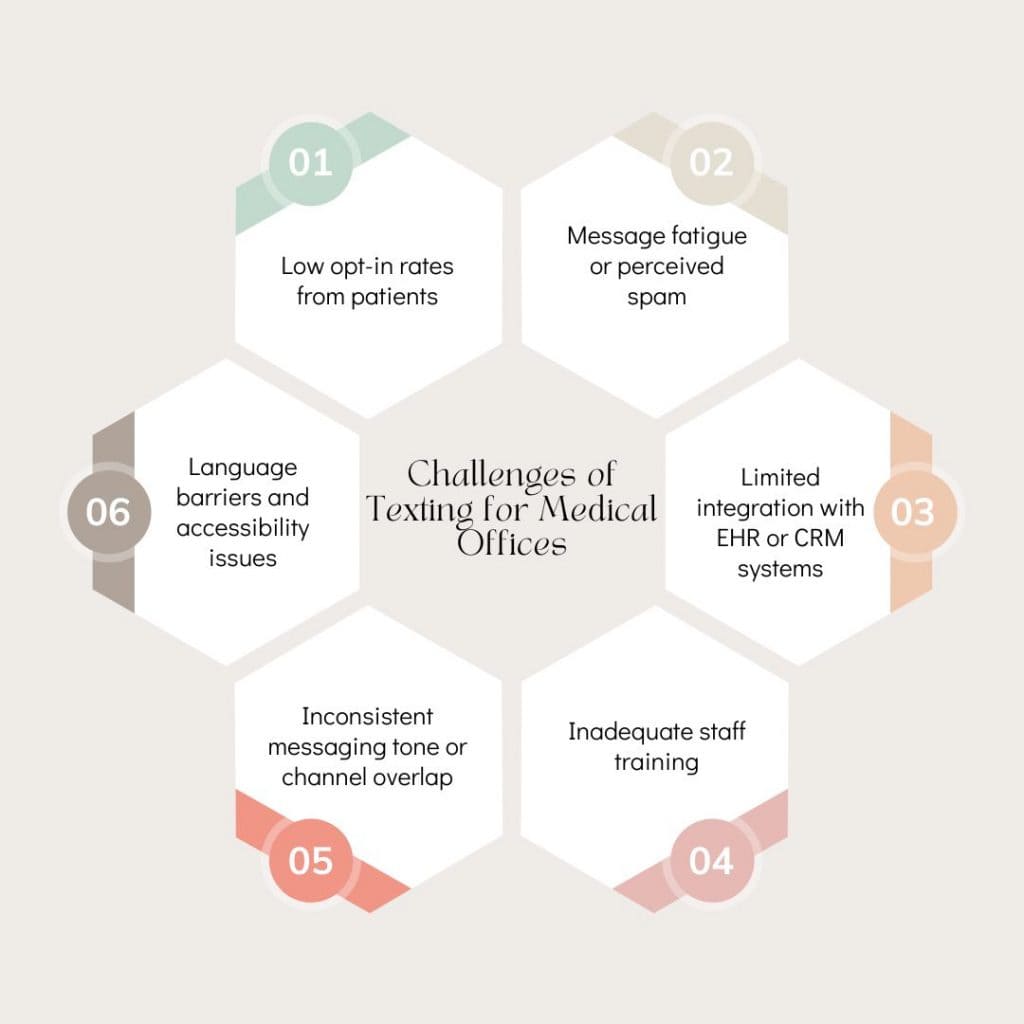
Texting can be powerful, but medical offices often face these common roadblocks when using it. Listed below are some common challenges and how to address them:
- Low opt-in rates from patients: While most patients are open to medical office instant messaging, some may hesitate due to privacy concerns or a lack of digital familiarity. To overcome this, clearly explain the benefits and security of text messaging at the time of registration. Keep the opt-in process clear, easy, and part of your standard intake flow.
- Message fatigue or perceived spam: Too many medical messages or irrelevant ones can annoy patients and lead to opt-outs. Stick to essential updates, avoid over-texting, and let patients choose what types of texts they want to receive (e.g., only appointment reminders).
- Limited integration with EHR or CRM systems: If your medical patient messaging system doesn’t connect with your existing software, staff may have to duplicate efforts or manually track communication. Choose medical texting platforms with native integrations or set clear internal workflows for syncing information.
- Inadequate staff training: Staff unfamiliar with the medical patient messaging system may send inconsistent or unclear messages. Train your team on platform use, tone, patient privacy, and how to respond when AI escalates a query. Provide ready-to-use HIPAA templates to reduce guesswork.
- Inconsistent messaging tone or channel overlap: Patients may get confused if they receive multiple updates via text, email, and phone without coordination. Use a unified messaging strategy with shared templates and a communication calendar to prevent duplication.
- Language barriers and accessibility issues: Not all patients are fluent in English or comfortable with text-based formats. Offer multilingual messaging and accommodate preferences where possible. For patients with visual impairments, explore a secure sms platform with voice messages or phone support.
A medical messaging app like Emitrr helps overcome these common challenges by combining smart automation, secure integrations, and easy consent workflows, so your medical office can communicate better with less effort.
Texting Metrics to Track in a Medical Office
Medical texting isn’t just about faster communication; it should drive better outcomes. With an AI-powered texting system in place, tracking the right metrics helps you measure its true impact on operations, patient satisfaction, and overall efficiency.
Here are the key performance indicators (KPIs) every practice should monitor:
- No-show rate reduction: One of the most immediate benefits. Track your appointment no-show percentage before and after texting implementation. Many practices see a significant drop, especially when using automated reminders and two-way texting for medical offices.
- Patient opt-in rate: This shows how many patients are open to texting communication. A higher opt-in rate means broader reach. Make sure your onboarding process clearly explains the benefits of texting to increase this number over time.
- Response time and resolution speed: With AI handling first touches, measure how long it takes your team to respond or resolve patient queries. Faster resolutions signal efficiency and a more responsive office.
- Missed call conversion rate: If you use features like “missed call to text,” track how many calls are followed up via secure SMS. This is a strong indicator of whether texting is filling communication gaps.
- Staff time saved per week: Automating SMS reminders for medical offices, check-ins, and FAQs can save hours. Monitor how much time your team now spends on phone calls or manual tasks.
- Patient satisfaction scores and reviews: Use surveys and review prompts sent via text to see if patients are happier with communication. More 5-star reviews or positive mentions of ease of communication indicate success.
- Billing response and payment completion rates: When using SMS for medical billing reminders, track open rates, click-throughs on payment links, and time-to-payment. Faster collections mean improved cash flow and a more modern patient experience.
By keeping tabs on these metrics, your office can fine-tune its texting strategy and continuously improve patient and team outcomes. And the best part? Medical office texting systems like Emitrr help you track many of these KPIs right in the dashboard, making it easier to turn insights into action.

How To Set Up SMS for a Medical Office Using Emitrr
Switching to AI-powered medical texting with Emitrr doesn’t require a tech overhaul. The process is simple, efficient, and built for busy practices:
- Schedule a live demo: Book a personalised walkthrough to explore how Emitrr’s AI-powered medical texting fits into your daily workflow, from appointment reminders to post-visit follow-ups.
- Define your communication goals: Share your team’s current communication gaps, be it high no-shows, long call times, or poor follow-up rates, so the Emitrr team can map features accordingly.
- Integrate with your systems: Emitrr connects easily with leading EHR, CRM, and medical practice management platforms, allowing patient records and message logs to sync automatically.
- Train your team: This secure sms platform includes onboarding support and training so your staff knows how to manage messages, review AI-suggested replies, and step in when needed.
- Go live and automate smartly: Once activated, Emitrr’s HIPAA compliant sms messaging handles day-to-day patient messaging, like appointment scheduling, reminders, billing alerts, and more. All this while giving you full visibility and control, allowing your staff to focus more on patient care.
Emitrr also offers AI texting feature now, check out this short video to know more:
Case Study for Medical Office Texting
One urgent care clinic serving multiple neighborhoods faced a familiar set of challenges: missed appointments, time-consuming intake processes, and patients struggling to get through on the phone. Their front desk was constantly overwhelmed, while patients often missed crucial updates. The result? Delays in care, staff fatigue, and lost revenue.
To address these issues, the clinic implemented Emitrr’s AI-powered texting solution across its locations. Within weeks, the impact was noticeable across departments:
- Appointment scheduling and reminders became seamless: Patients could book appointments directly via text and receive timely medical office text message reminders before each visit. If bad weather or unexpected changes required a reschedule, staff could instantly notify patients. This helped drastically reduce no-shows, creating a more predictable and efficient schedule.
- Patient intake moved online: Instead of handing out clipboards at the front desk, the clinic started sending digital forms via text. Patients filled out their information before arriving, which minimized wait times and reduced manual data entry. Staff reported fewer errors and smoother check-ins.
- Real-time messaging replaced missed calls: When patients tried calling but couldn’t reach a live person, they received an automatic follow-up text like: “Sorry we missed your call, how can we help?” This simple switch redirected patient queries to text, reducing phone tag and giving staff more flexibility to respond. As a result, missed calls dropped significantly.
- Staff efficiency improved across the board: With common medical communication tasks now automated, the clinic saved over 90 hours of manual work every month. Teams could focus on patient care instead of chasing confirmations or answering the same questions repeatedly. Staff satisfaction improved, and burnout decreased.
- Patient engagement increased: The clinic started sending wellness reminders and preventive care prompts via text. Patients found it easy to respond and appreciated the consistent, low-effort outreach.
This transformation wasn’t just about medical texting; it was about creating a smarter workflow. From intake to follow-up, every step became faster, more accurate, and more patient-friendly. If your clinic is still relying only on calls or emails, adopting an AI-powered secure sms platform could be the upgrade your team and patients need. With minimal setup and measurable results, it’s a powerful way to modernize communication while delivering better care.
Frequently Asked Questions
Texting helps reduce missed appointments, phone tag, and manual tasks like reminders or form collection. It lets your team handle more communication in less time, all while keeping patients in the loop.
Emitrr goes beyond basic automation. It uses AI to adapt tone, personalize messages at scale, and even triage incoming texts, ensuring the right response at the right time, without overwhelming your team.
Standard SMS is not encrypted, so sensitive info should never be shared directly. Use HIPAA compliant sms messaging platforms like Emitrr that offer secure links or portals for anything involving patient health data.
Yes, Emitrr offers seamless integration with over 500+ practice management and EHR systems. It syncs data, updates appointment logs, and reduces manual double entry.
Absolutely. Whether you run a solo practice or operate across locations, Emitrr is built to scale. It’s easy to set up, affordable, and powerful enough to support large-volume communication.
Conclusion
Running a medical office today means balancing care with texting for medical offices for constant communication, and that’s where smart texting makes all the difference. AI-powered tools now make it possible to keep patients informed, reduce admin burdens, and create a seamless flow from scheduling to follow-ups.
If you’re ready to simplify operations, reduce no-shows, and boost patient satisfaction, now’s the time to act. Book a free demo with Emitrr today and discover how intelligent, patient-first communication can elevate your entire practice!