
 4.9 (400+
reviews)
4.9 (400+
reviews)
Introduction To VOIP For Psychiatrists
A patient calls your clinic after hours. They’re anxious, maybe even in crisis. The call goes unanswered. No follow-up, no voicemail alert. It’s a small moment, but in psychiatry, small moments matter. This is where VoIP for psychiatrists can make a real difference.
VoIP, or Voice over Internet Protocol, lets you take calls over the internet instead of a landline. That means your team can answer from a phone, laptop, or even a tablet, basically anywhere with a good connection. No waiting at a desk. No missed messages piling up.
For psychiatrists, especially those offering telehealth, this isn’t just a convenience. It’s essential. Today, nearly 36 to 38 percent of mental health sessions happen remotely. Patients expect flexibility, and a VoIP for psychiatrists helps you meet them where they are. VoIP for psychiatrists also ensures missed calls don’t fall through the cracks. VoIP for small psychiatric clinics can forward them, transcribe voicemails, and make follow-ups smoother. It’s faster, more connected, and designed for the way psychiatric care works today.
With the VoIP market projected to reach over 349 billion dollars by 2034, healthcare, particularly mental health, is leading the way in adopting smarter systems. More clinics are switching from old-school landlines to internet-powered communication tools.
This guide breaks down how VoIP helps psychiatric practices and how to set VoIP for small psychiatric clinics up easily. Whether you’re solo or growing, platforms like Emitrr make the switch simple.
Importance of VOIP For Psychiatrists
In psychiatry, a missed call can mean a missed chance to help someone. Many clinics still use old phone systems that drop calls, waste staff time, and create patient frustration. VoIP for psychiatrists changes that. A secure VoIP for psychiatrists brings reliability, privacy, and ease, just what a modern psychiatric practice needs.
Want to learn how a VoIP system can transform your business communication? Watch this YouTube video to explore all the benefits!
Without VoIP: Common issues psychiatric clinics face
Missed calls, missed care
About 29% of calls to healthcare practices go unanswered. And in a psychiatry clinic, that could be a patient trying to reschedule, ask about their medication, or wanting to reach out during a tough moment. Especially during rush hours, those missed calls really add up.
Hold times lead to hang-ups
Patients don’t wait around forever. Around 75% won’t stay on hold, and one in three will hang up within five minutes. If someone’s already anxious or overwhelmed, long wait times can push them to give up altogether.
Staff burnout and juggling
Front desk teams are doing a little bit of everything – calls, forms, walk-ins, and scheduling. Without the right system, it turns into a constant juggle. Calls get missed, patients get frustrated, and staff get burned out.
Privacy concerns
Returning calls from personal phones? It happens more than you’d think. But that crosses a line, patients can save your number, reply at odd hours, or worse, expect 24/7 access. It’s not safe for staff or private for patients.
No backup support
When your main line’s busy, patients often hear nothing. No voicemail, no “we’ll call you back,” just endless ringing. This can make your patients feel unsure if they should try calling again later or would they will receive a call back. In some cases, patients even wonder if their call went through in the first place.

With VoIP: Smart, secure communication that works for psychiatry
Multi-call handling
With VoIP for psychiatrists, your clinic can finally stop dropping calls during rush hours. The telepsychiatry phone system lets you take multiple calls at once, direct them to the right person, or even send a friendly auto-response when you’re busy. Automated attendants help route things fast, so no one’s left hanging.
Mobile flexibility
Whether you’re working in the clinic, at home, or between sessions, VoIP for psychiatrists gives you full access from anywhere. Use your clinic’s number from your laptop, tablet, or phone. It’s perfect for telepsychiatry setups or part-time in-office schedules.
Professional boundaries preserved
You don’t have to text or call patients from your personal number anymore. VoIP for psychiatrists keeps that info private while still letting you stay responsive. HIPAA-compliant VoIP for mental health professionals helps you show up for patients without crossing those important boundaries.
HIPAA-compliant security
Platforms like Emitrr are built for healthcare. That means everything is encrypted, voicemails are transcribed securely, and you get a Business Associate Agreement (BAA) to stay HIPAA-compliant. It’s one less thing to stress about.
24/7 availability
Even after hours, the psychiatrist phone system keeps your clinic covered. Missed calls can trigger a follow-up text, or a voicemail can be forwarded to the right team member. It’s peace of mind for you and reassurance for your patients.
The takeaway? HIPAA-compliant VoIP for mental health professionals is more than a phone upgrade. It’s a step toward smoother operations, better privacy, and timely care. For psychiatric clinics trying to do more with less, this quiet tech shift makes a big difference.
Benefits of VOIP For Psychiatrists
Psychiatrist phone system makes things easier for your patients, smoother for your staff, and smarter for your clinic’s operations. Here’s how:
How VoIP helps your patients
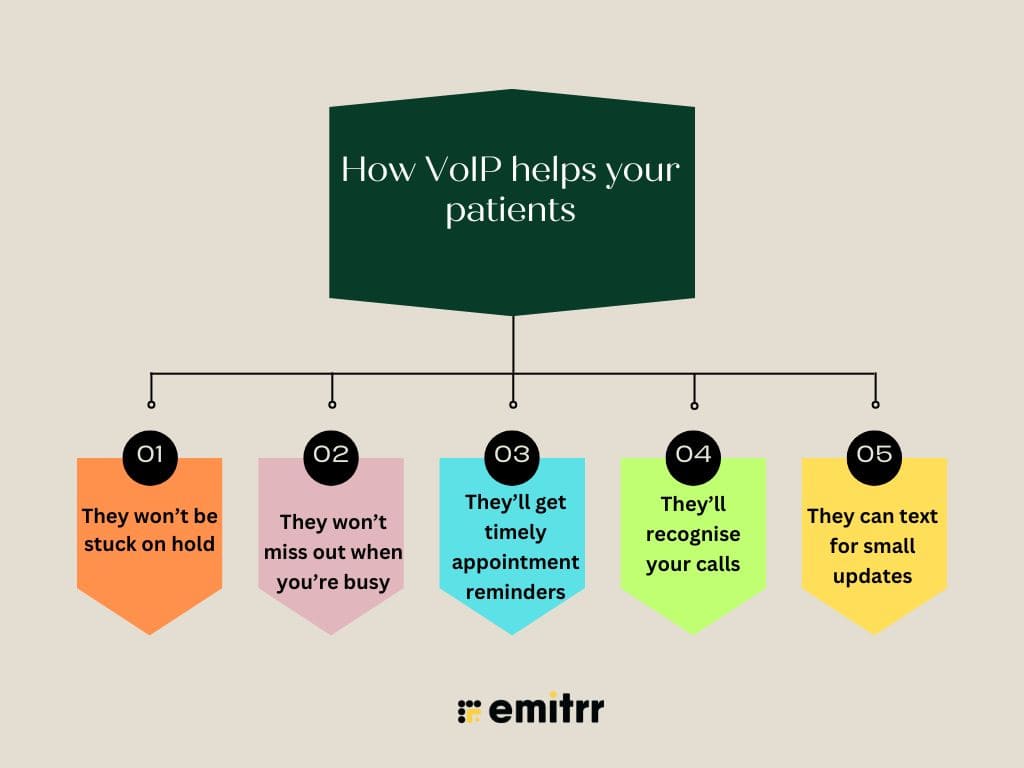
They won’t be stuck on hold
VoIP for therapy practices routes calls to the right person right away. Patients won’t have to wait endlessly or bounce between departments. This makes the whole experience less frustrating and more efficient. And your front desk won’t be overwhelmed during peak hours.
They won’t miss out when you’re busy
If no one’s free to answer, Secure VoIP for psychiatrists sends calls to voicemail or a follow-up text. This gives patients a clear next step instead of being left hanging. Even a short “We’ll call you back soon” message keeps them at ease. It’s a small touch that really improves the patient experience.
They’ll get timely appointment reminders
VoIP software for psychiatrists can send automatic texts or calls before appointments. It’s one less thing for patients to track on their own. This cuts down on no-shows and keeps your schedule on track. Patients appreciate the heads-up, especially during busy weeks.
They’ll recognise your calls
Your clinic name shows up on caller ID, not an unknown number. Patients are more likely to answer when they know it’s you. HIPAA-compliant VoIP for mental health professionals adds a layer of trust and professionalism from the first ring. And you don’t have to worry about looking like a spam call.
They can text for small updates
Psychiatrist phone system supports two-way texting that feels easy and casual. Patients can ask a quick question or confirm a session without calling in. The telepsychiatry phone system saves time for both sides while still feeling personal. Great for med refills, reschedules, or “Just checking in” messages.
How VoIP helps psychiatrists and staff
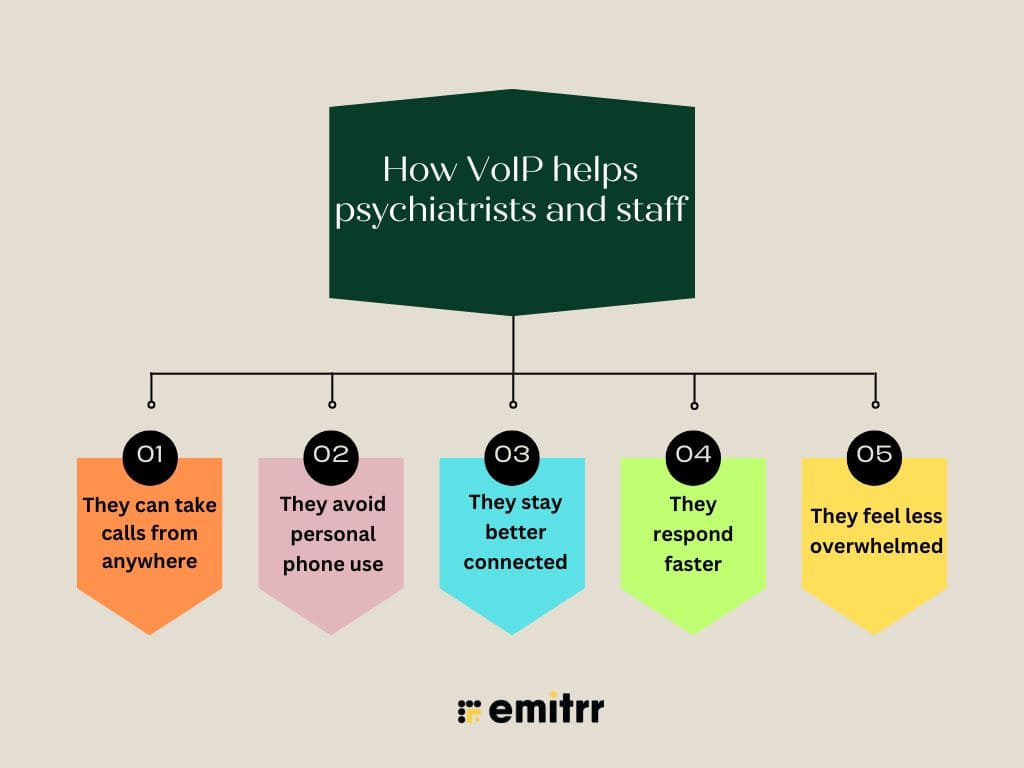
They can take calls from anywhere
Whether your team is in the clinic, working remotely, or switching between locations, secure VoIP for psychiatrists keeps them connected. Staff can answer calls from their computer, tablet, or phone using your clinic number. It’s seamless and helps maintain professional consistency. No more missed calls just because someone’s away from the front desk.
They avoid personal phone use
Returning patient calls from a personal number blurs boundaries. With a telepsychiatry phone system, all calls go through your clinic number, keeping personal and work life separate. HIPAA-compliant VoIP for mental health professionals helps your staff stay reachable without sacrificing privacy. And VoIP for small psychiatric clinics just feels more secure and professional for everyone involved.
They stay better connected
Need to bring in a nurse or transfer a call to another provider? VoIP for therapy practices makes it easy with features like call transfers, extension dialing, and team routing. Everyone stays in the loop without juggling devices or running between rooms. Collaboration happens smoothly, even across locations.
They respond faster
Voicemail gets transcribed into text, and all patient messages land in one place. This means your team can scan, prioritize, and reply faster than ever. No more checking multiple inboxes or forgetting who said what. The telepsychiatry phone system keeps things efficient and organized.
They feel less overwhelmed
VoIP for therapy practices automates routine tasks like call routing, sending reminders, and handling voicemails. That means fewer interruptions and less mental clutter for your team. HIPAA-compliant VoIP for mental health professionals frees up time to focus on patients instead of chasing down missed calls. Everyone breathes a little easier.
How VoIP helps clinic operations
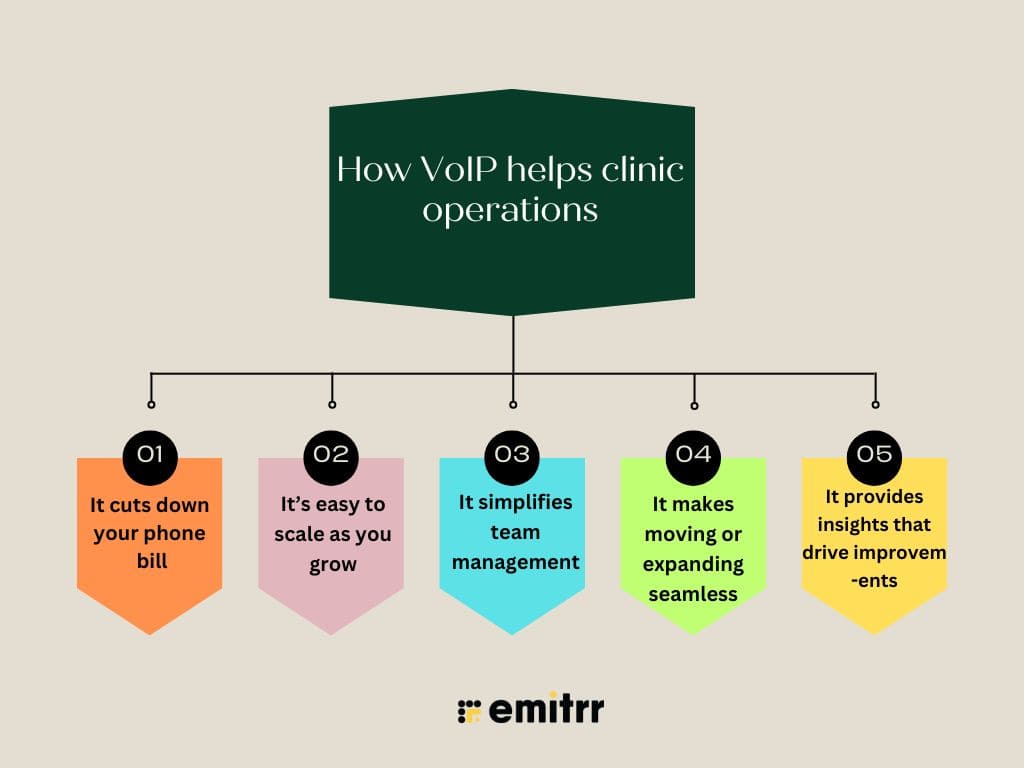
It cuts down your phone bill
Traditional phone systems can rack up high monthly costs, especially with long hold times and missed calls. Psychiatrist phone system usually runs on a flat fee with unlimited calling, which keeps expenses predictable. Many clinics report saving up to 50% after switching. That’s a big win for your budget.
It’s easy to scale as you grow
Whether you’re hiring more providers or opening a second location, VoIP for therapy practices grows with you. Adding a new line or user takes just a few clicks, no need to buy new hardware. You get the flexibility to expand without tech headaches. A telepsychiatry phone system makes growth feel a lot less overwhelming.
It simplifies team management
VoIP software for psychiatrists let you to assign roles, set call permissions, and monitor activity, all from a single dashboard. You can track who’s handling what and make sure patient calls are being answered. VoIP for small psychiatric clinics brings clarity to your workflows and keeps communication running smoothly.
It makes moving or expanding seamless
If you relocate or expand your practice, your VoIP software for psychiatrists moves with you, no rewiring or complicated installations. You can stay connected from anywhere with internet access. That means less downtime and fewer disruptions when you’re making big changes.
It provides insights that drive improvements
A psychiatrist phone system isn’t just about making calls, HIPAA-compliant VoIP for mental health professionals also gives you valuable data. You can see when calls are missed, how long patients wait, and when your phones are busiest. With these insights, you can tweak schedules, boost support, or improve workflows based on real numbers.
If you are also a psychiatrists clinic and want to opt for VoIP, watch our YouTube video for better understanding:
Use Cases of VOIP For Psychiatrists
There’s no one-size-fits-all for psychiatric clinics, but psychiatrist phone system handles many everyday situations with ease. From handling missed calls to improving coordination with your team, here are some practical ways VoIP for therapy practices makes your clinic run smoothly.
Automating appointment reminders and follow-ups
Psychiatry clinics see a lot of no-shows. Life gets busy, and patients sometimes forget. With HIPAA-compliant phone systems, you can automate reminders. A day before the session, a call or even a text saying “Hi, just a reminder about your appointment tomorrow at 2 PM. Reply C to confirm.” can go out.
It’s simple, fast, and saves your staff hours of manual calling. You can also send check-ins after appointments or follow-up reminders after a new prescription. A telepsychiatry phone systemfeels personal, but doesn’t take up time.
Handling different types of calls easily
Not every call is the same. Some are for new appointments, others for billing or prescription questions. A psychiatrist phone system lets you set up a phone menu. “Press 1 to book an appointment, Press 2 for billing, Press 3 for refills.”
Calls go to the right person without hold time or transfers. That means fewer interruptions, and your patients get to the right place faster.
Supporting telehealth and remote consults
You don’t need a landline for therapy calls anymore. A telepsychiatry phone system works from anywhere at home, a clinic, or even while travelling. You can call from your clinic number, not your personal phone.
Some VoIP software for psychiatrists also offer video call support. That way, you can offer secure remote sessions and keep everything documented in one place. Perfect for psychiatrists doing hybrid care.
Keeping the team connected
Need to move a call to another office? Or does your team work from different offices, or even remotely? Well, psychiatrist phone system keeps everyone in sync seamlessly.
You can dial an extension to reach your assistant or loop in another psychiatrist for a quick consult. Everything runs on the same system, so your team stays connected, even across cities.
Managing after-hours calls
Psychiatrists can’t be on-call 24/7, but patients still need help after hours. With HIPAA-compliant phone systems, you can create a custom message after closing time. “If this is an emergency, call 911. For urgent needs, press 1 to reach our on-call doctor.”
Calls can be forwarded to whoever is on duty. Voicemails get emailed or transcribed. Patients feel cared for, even when your office is closed.
Secure documentation and HIPAA compliance
Every call is logged and encrypted. That means you can go back and review call records, voicemails, and even timestamps when needed. And with user-level permissions, you control exactly who can access what, keeping everything HIPAA-compliant.
Outreach and patient education
Need to share a group therapy reminder or announce office closures? You can use VoIP software for psychiatrists to send out bulk texts or pre-recorded calls. It’s fast, easy, and ensures no one misses a key update.
These aren’t just fancy features. They solve real problems that psychiatric clinics deal with every day. VoIP fits right into your workflow, without extra effort!
Best Practices for VOIP For Psychiatrists
HIPAA-compliant phone system is easy to get started with. But to make it truly work for your psychiatric clinic, a bit of planning upfront can save you from confusion and hiccups later.
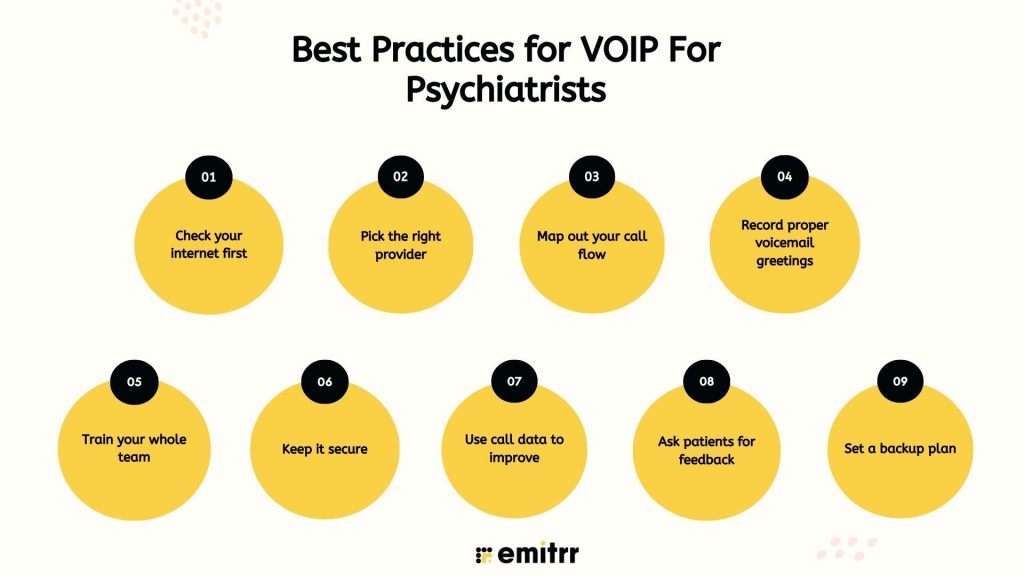
Check your internet first
HIPAA-compliant phone systems needs a stable internet connection. Run a speed test and see if HIPAA-compliant VoIP for mental health professionals can handle voice calls during your busiest hours. If your clinic shares internet with devices streaming or downloading, consider upgrading your plan. It’s also smart to have a backup option, like a mobile hotspot, in case the Wi-Fi goes down.
Pick the right provider
Not all HIPAA-compliant phone systems are built for healthcare. Look for a HIPAA-compliant VoIP for mental health professionals that signs a BAA and understands how clinics operate. Providers like Emitrr offer built-in features like secure texting, voicemail transcriptions, and integration with EHR. Don’t settle for just any low-cost tool if it risks patient data or call quality.
Map out your call flow
Think about what should happen when someone calls your main number. Do they reach a receptionist first? Or an automated menu? Plan it out. Keep menus simple and short so patients don’t get lost in options. Also, define what happens after hours, should the call go to voicemail, or be forwarded to someone on call?
Record proper voicemail greetings
Every team member who handles calls should have a clear, friendly voicemail. Say who you are, your availability, and what the caller should do next. Make sure to avoid robotic or generic default messages. This makes the voicemails sound extremely impersonal.
Train your whole team
Set aside time to train everyone when HIPAA-compliant phone system goes live. Walk them through how to make and take calls, transfer to other extensions, and handle voicemails. If your system supports texting, show them how to use that too. Print a one-pager with key instructions for quick desk reference. Secure VoIP for psychiatrists really helps more than you think.
Keep it secure
VoIP software for psychiatrists store call data, texts, and voicemail, so treat telepsychiatry phone system like any other part of patient records. Change default passwords, use strong logins, and make sure staff logs out when done. Set access rules so only the right people can see or change sensitive settings.
Use call data to improve
Most VoIP software for psychiatrists offer reports, use them. See when your clinic misses the most calls. Check how long patients are waiting before hanging up. If certain menu options confuse people, change them. This feedback helps you fine-tune your phone setup based on real behavior, not guesswork.
Ask patients for feedback
Once you’re up and running, check in with patients. Ask if they were able to reach your clinic easily. Was the menu confusing? Did they get a timely call back? A quick text survey or casual ask during a visit can tell you what’s working and what’s not.
Set a backup plan
Secure VoIP for psychiatrists depends on the internet. If your network crashes, your phones could go down too. Avoid that risk. Most platforms let you set call forwarding rules, for example, route calls to a mobile number or landline if the main line goes offline. It’s like having phone insurance. You stay reachable, even during an outage.
These best practices aren’t complicated. But they make a real difference in how smooth, reliable, and professional your clinic sounds to every patient who calls. And when calls go right, care feels easier for them and for you!
Challenges of VOIP For Psychiatrists
HIPAA-compliant phone system is a smart tool. But like any technology, it comes with a few things to watch out for. Let’s go through the common ones:
It depends on the internet and power
Secure VoIP for psychiatrists won’t work without both. If your internet goes out or there’s a power cut, your phones go quiet. Unlike old landlines, VoIP needs a modem and router to be on. That’s why clinics often use a battery backup and a mobile hotspot. HIPAA-compliant VoIP for mental health professionals keeps things running, even during an outage.
Security needs attention
VoIP works over the internet, so it must be locked down. Use strong passwords. Keep the system updated. And make sure your VoIP is encrypted, so your calls stay private. Also, make sure emergency services can find your correct clinic address through your VoIP settings.
Call quality can sometimes drop
Usually, calls are crisp and clear. But if your internet is slow or overloaded, it can affect sound. You might hear delays or static. If someone’s downloading a big file or the Wi-Fi is weak, it shows. The fix? Prioritize call traffic in your network settings and use wired connections where possible.
There’s a short learning curve
Setting up secure VoIP for psychiatrists isn’t hard, but it takes a bit of time. You’ll need to port your number, record greetings, and learn the new system. Secure VoIP for psychiatrists might feel new for a week or two. But once your team settles in, it becomes second nature. Most for VoIP small psychiatric clinics like Emitrr help with onboarding, so you’re not doing it alone.
Glitches can happen sometimes
Tech isn’t perfect. A software update might cause a bug. A setting might stop working. Maybe your voicemail stops syncing. It’s rare, but possible. That’s why you need a good support team. Most VoIP for small psychiatric clinics offer fast help. Also, set up call forwarding as a backup so patients can still reach you.
Despite these small bumps, VoIP for therapy practices is used by thousands of clinics every day, including psychiatric ones. The good news? Most of these issues are easy to handle with a little prep. And the payoff? Better communication, lower costs, and more control over your calls.
How To Set Up VOIP For Psychiatrists Using Emitrr
Getting started with Emitrr is easy. No tech headache, no long delays. Just follow these steps and your phone system will be ready to go.
Step 1: Book a demo
Start by booking a quick demo with the Emitrr team. They’ll show you how the VoIP software for psychiatrists works for psychiatric clinics, appointment calls, follow-ups, reminders, and more. It’s the best way to see how HIPAA-compliant VoIP for mental health professionals fits your practice.
Step 2: Share your communication pain points
Tell them what’s not working in your current setup. Maybe patients are stuck on hold too long. Or calls go unanswered during sessions. This helps the team tailor everything to your clinic’s flow.
Step 3: Connect your tools
Emitrr easily connects with most EHRs and CRMs. Once connected, your voicemails, texts, and call records sync automatically. That means no double work, no mix-ups, just one smooth system.
Step 4: Train your team
Once setup is done, Emitrr will train your staff. Everyone learns how to take calls, check voicemails, send texts, and use smart features. It’s quick and clear. Even for teams that aren’t tech-savvy.
Step 5: Go live and stay ready
Now you’re ready to use VoIP for therapy practices in your clinic. Calls get routed smartly. Patients reach the right person faster. No more missed calls or front desk chaos. Just calm, professional communication, perfect for a psychiatric setting.
Case Study For Psychiatrists VOIP
Let’s look at how a psychiatric clinic improved operations with VoIP. This clinic had three locations and a growing patient base. Most appointments were therapy sessions, evaluations, or medication check-ins. Patients often needed flexible ways to reach out, especially outside of session time.
The problem: Missed calls, burnout, and communication gaps
But their old phone system just couldn’t keep up. Calls were missed during busy hours. Staff had to return calls from personal phones. Voicemails often went unchecked for hours. And patients couldn’t always get through to the right provider. There was no easy way to manage texts or call logs across locations.
The solution: Switching to a VoIP system built for psychiatry
They needed a more reliable, modern system. That’s when they switched to Emitrr’s AI-powered VoIP solution for psychiatrists. Here’s what changed:
Fewer missed calls
If the clinic couldn’t answer, the system sent an automatic text letting patients know they’d be contacted soon. Patients felt acknowledged instead of ignored.
Smarter call routing
Calls were directed to the right provider or department based on a simple phone menu. Patients no longer bounced between staff just to book a follow-up or refill request.
Better after-hours care
During evenings and weekends, calls were forwarded to the on-call clinician, or patients got a secure voicemail with next steps. Emergencies escalated, others were reassured.
Voicemail transcription
Messages were turned into text and sent to the right person by email. That meant quicker responses and less chance of missing critical info.
Here’s how Emitrr’s voicemail transcription feature works:
Integrated texting
The same system also helped staff follow up with reminders, session links, or billing updates, all through HIPAA-compliant text. Great for medication management and therapy check-ins.
The results: More reach, less stress
After just a few months, the clinic saw clear results:
- Missed call recovery improved by over 60%
- Hold times dropped sharply during peak hours
- Patients responded better to automated reminders
- The clinic collected more positive reviews thanks to timely follow-ups
- Staff reported fewer communication errors and less burnout
FAQs
Yes, it gives you more control. You can take multiple calls at once, route them smartly, and even send reminders or texts. Regular phone lines don’t offer this flexibility.
Your VoIP system may stop briefly, but you can plan ahead. Set up call forwarding to mobiles or use a backup hotspot. Most systems also offer voicemail and auto-texts if you miss a call.
Not really. If they can use a smartphone, they can use VoIP. Emitrr and other platforms offer quick setup help and staff walkthroughs. Most teams adjust within a few days.
Yes! VoIP lets you send automatic reminders through calls or texts. Patients can confirm, cancel, or reschedule easily, so fewer people forget their appointments. In fact, using Emitrr’s VoIP software can even drop no-shows by 90%!
Emitrr is built for psychiatric clinics. It combines calling, texting, reminders, and voicemail, all in one HIPAA-compliant dashboard. You also get features like missed-call texts and voicemail transcription.
No. Emitrr helps you transfer your current number so patients can keep calling the same one. The switch is smooth, and you won’t lose any calls during the move.
Conclusion
Your phone system may seem like a small part of the clinic. But it plays a big role in how patients feel and how smoothly your day runs.
With VoIP, you don’t miss calls. You save staff time. You help patients faster and more clearly. And everything stays secure and easy to track. Emitrr’s VoIP software for psychiatrists is built with mental health clinics in mind. It’s not just tech, it’s a better way to care.
Book a free demo with Emitrr today and see how it can make a big difference for your clinic, your patients, and your team!