
Introduction
Text messaging has become one of the fastest and most effective ways to communicate, but in healthcare, it’s not that simple. You’re not just sending reminders or updates; you’re handling sensitive patient data that must be protected at all costs.
That’s where HIPAA-compliant texting comes in.
For medical professionals, using regular SMS can expose Protected Health Information (PHI) to serious risks, including data breaches, compliance violations, and hefty penalties. On the flip side, using a HIPAA-compliant texting solution can dramatically improve patient communication, operational efficiency, and overall care delivery.
In this guide, we’ll break down everything you need to know about HIPAA-compliant texting for medical professionals, including regulations, benefits, best practices, and how to implement it effectively.
Definition of HIPAA Compliant Texting
HIPAA-compliant texting refers to the secure exchange of patient information via messaging platforms that meet the requirements of the Health Insurance Portability and Accountability Act (HIPAA).
Unlike standard SMS, compliant texting platforms are designed to:
- Encrypt messages both in transit and at rest
- Restrict unauthorized access
- Provide audit logs and monitoring
- Ensure secure storage of patient data
- Require user authentication
In simple terms, it’s texting, but built with healthcare-grade security and compliance in mind.
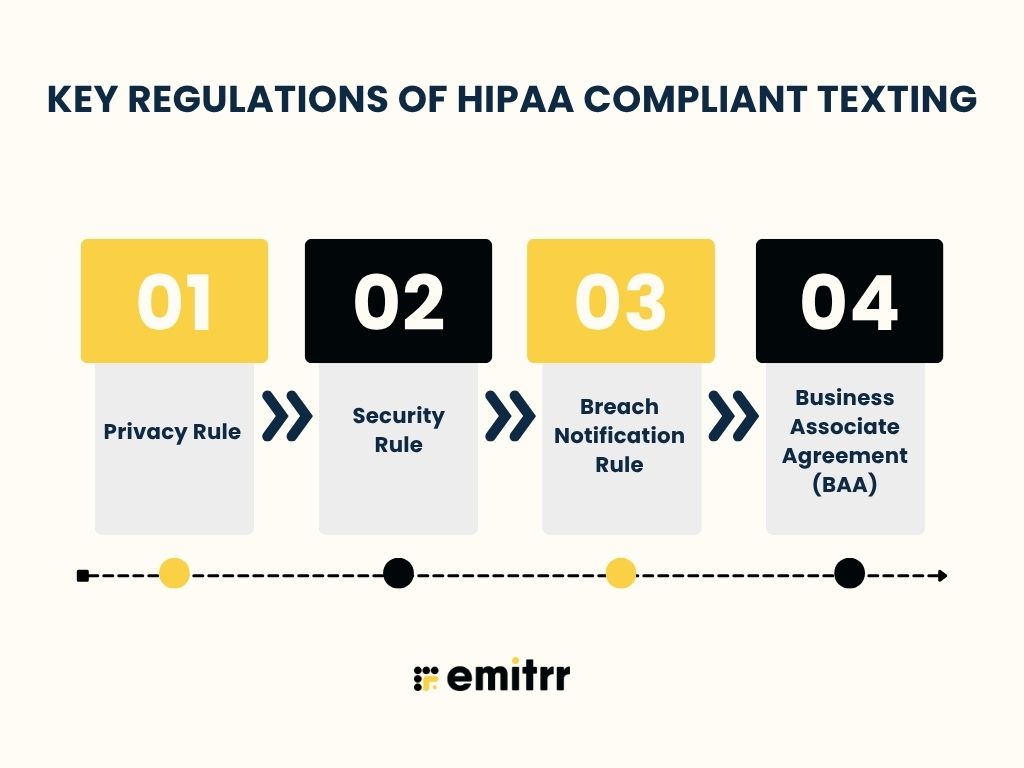
Key Regulations of HIPAA Compliant Texting
To fully understand HIPAA-compliant texting for medical professionals, it’s important to break down the core regulatory framework behind it.
Privacy Rule
The HIPAA Privacy Rule defines how PHI can be used and shared. For secure patient communication via text messaging, this means that only necessary information should be shared. Patients must be informed about how their data is used, and unauthorized disclosures must be avoided. This rule ensures that patient privacy in digital patient communication is always maintained.
Security Rule
The HIPAA Security Rule focuses on protecting electronic PHI (ePHI), which is central to HIPAA-compliant texting platforms. It includes administrative safeguards, physical safeguards, and technical safeguards. This is why secure messaging for healthcare providers must include advanced technical protections.
Breach Notification Rule
If a data breach occurs while using a non-compliant texting system, healthcare providers must notify affected patients as well as regulatory authorities. This makes using HIPAA-compliant texting for medical professionals critical to avoiding legal and financial consequences.
Business Associate Agreement (BAA)
A HIPAA-compliant texting solution must provide a signed BAA. This agreement ensures that the vendor is responsible for protecting PHI, and compliance responsibilities are shared. Without a BAA, even the best-looking healthcare messaging software is not compliant.
Why is HIPAA Compliant Texting Important for Health Payers and Providers?
According to McKinsey & Company, the healthcare industry continues to enjoy a high level of consumer trust. In fact, 44% of patients are willing to voluntarily share personal and health data with healthcare organizations, more than double the rate seen in technology or retail sectors.
This trust, however, comes with responsibility.
At the same time, 92% of patients expect personalized reminders and messages from their providers. This means healthcare organizations must strike a delicate balance between personalization and compliance.
That’s exactly where HIPAA-compliant texting for medical professionals becomes essential.
Let’s break down why it matters more than ever:
Protects Sensitive Patient Data
Healthcare data isn’t just another type of information; it includes highly sensitive details like medical history, diagnoses, prescriptions, and insurance records. Using secure texting for healthcare ensures that all patient communication is encrypted, access-controlled, and protected from unauthorized access.
Without proper safeguards, even a simple text message can lead to a serious data breach.
HIPAA-compliant texting platforms are designed to keep Protected Health Information (PHI) safe at all times, whether messages are being sent, received, or stored.
Avoids Costly HIPAA Penalties
Non-compliance with HIPAA regulations can be extremely expensive and damaging to your reputation. Penalties can range from thousands of dollars for minor violations to millions of dollars for severe or repeated breaches. Beyond fines, violations can also lead to:
- Legal consequences
- Loss of patient trust
- Operational disruptions
By adopting HIPAA-compliant communication tools, healthcare organizations can significantly reduce these risks while maintaining secure workflows.
Builds and Strengthens Patient Trust
Patients today are more aware of data privacy than ever before. The fact that 44% are willing to share health data shows that trust exists, but it’s conditional. When providers use secure patient communication software, they signal that patient privacy is a priority, communication is safe and reliable, and sensitive data is handled responsibly.
Enables Personalized Patient Engagement at Scale
With 92% of patients expecting personalized communication, generic messaging is no longer enough. HIPAA-compliant texting allows providers to safely send SMS appointment reminders, follow-up care instructions, medication alerts, and preventive care notifications.
Improves Communication Efficiency
Traditional communication methods like phone calls and manual follow-ups are time-consuming, error-prone, and difficult to scale. With real-time healthcare messaging, providers can instantly reach patients, reduce missed appointments, automate routine communication, and free up front desk staff. This results in smoother operations and faster response times, without compromising security.
Ensures Ongoing Regulatory Compliance
Healthcare regulations are strict and constantly evolving. Using HIPAA-compliant texting platforms ensures that your communication meets all HIPAA requirements, including HIPAA audit trails and access logs, maintains secure data storage, and supports compliance during audits. Instead of worrying about violations, providers can focus on what matters most: delivering quality patient care.

Best Practices for HIPAA Compliant Text Messaging
- Use a HIPAA Compliant Messaging Platform: Always choose a secure platform built for healthcare with encryption, access controls, and audit logs. Regular messaging apps don’t meet HIPAA standards and can put patient data at risk.
- Obtain Patient or Member Consent: Always get explicit consent before sending any healthcare-related text messages. This ensures transparency and keeps your communication legally compliant.
- Limit the Sharing of Sensitive Information: Share only the minimum necessary information to reduce exposure risks. Avoid including detailed diagnoses or full medical histories in texts.
- Encrypt Messages: Ensure messages are encrypted both in transit and at rest to prevent unauthorized access. Encryption is essential for protecting sensitive patient data from breaches.
- Develop and Implement Policies: Establish clear internal guidelines on how texting should be used in patient communication. This helps maintain consistency and reduces compliance risks.
- Implement Access Controls and Audit Trails: Restrict system access based on roles to ensure only authorized staff can view patient data. Audit trails help track activity and support compliance during reviews.
- Conduct Regular Audits and Compliance Checks: Regularly review your systems and workflows to identify vulnerabilities. This ensures ongoing compliance with evolving HIPAA regulations.
- Train and Educate Staff: Provide continuous training on HIPAA rules and secure communication practices. Well-informed staff helps prevent accidental data breaches.
- Verify Patient Identity Before Sharing Information: Always confirm the recipient’s identity before sending any protected health information. This prevents accidental disclosure to the wrong person.
- Avoid Using Personal Devices Without Security Controls: If staff use personal devices, ensure they are secured with proper safeguards like passwords and remote wipe capabilities. Unsecured devices can easily lead to data leaks.
- Sign a Business Associate Agreement (BAA): Work only with vendors who sign a BAA, ensuring they are also responsible for protecting patient data. This is a critical requirement under HIPAA regulations.
How to Implement HIPAA Compliant Texting
Transitioning to compliant texting doesn’t have to be complex, just follow a structured approach and focus on the essentials.
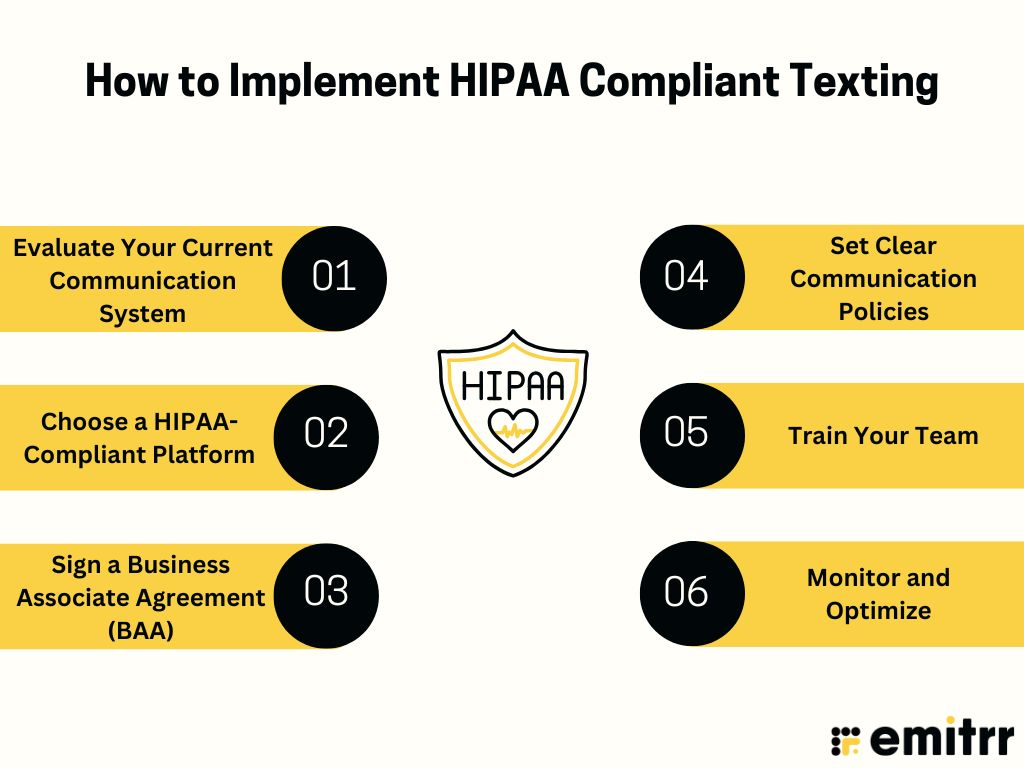
Step 1: Evaluate Your Current Communication System
Assess your existing tools to identify gaps in security, compliance, and workflow efficiency. This helps you understand what needs fixing before making the switch.
Step 2: Choose a HIPAA-Compliant Platform
Select a platform that offers end-to-end encryption, BAA support, integrations, and automation. The right tool lays the foundation for secure and scalable communication.
Step 3: Sign a Business Associate Agreement (BAA)
Ensure your vendor signs a BAA to share responsibility for protecting patient data. This is a non-negotiable requirement for HIPAA compliance.
Step 4: Set Clear Communication Policies
Define what information can and cannot be shared via text. Clear guidelines reduce confusion and minimize the risk of accidental violations.
Step 5: Train Your Team
Educate your staff on compliance protocols and proper usage of the platform. A well-trained team is key to maintaining secure communication.
Step 6: Monitor and Optimize
Continuously review message activity, security logs, and performance. Regular monitoring helps you stay compliant and improve communication over time.
Benefits of Using HIPAA Compliant Texting
For Patients
Faster Communication
Patients receive instant updates, reminders, and responses without long wait times. This ensures they stay informed and can take timely action on their care.
Better Communication and Engagement
Texting is convenient and familiar, making patients more likely to respond. This leads to more active participation in their healthcare journey.
Improved Accessibility
Important information like appointments, medications, and instructions is delivered directly to their phones. This makes healthcare more accessible and easier to manage.
Personalized Experience
Patients increasingly expect tailored communication, and secure texting enables that safely. Personalized reminders and messages improve adherence and overall outcomes.
Higher Satisfaction and Convenience
Quick, hassle-free communication improves the overall patient experience. Patients value the ease of reaching their provider without calls or long queues.
Increased Trust and Privacy
Secure messaging reassures patients that their sensitive information is protected. This builds confidence and strengthens long-term relationships with providers.
For Healthcare Providers
Improved Communication Efficiency
Providers can instantly connect with patients and staff without relying on time-consuming calls. This speeds up workflows and reduces communication bottlenecks.
Better Care Coordination
Secure messaging allows seamless collaboration between teams and specialists. This leads to more aligned and effective patient care.
Reduced No-Shows
Automated reminders and follow-ups help patients remember appointments. This improves scheduling efficiency and reduces revenue loss.
Increased Operational Efficiency
Texting reduces the need for manual outreach like calls and direct mail. Staff can focus on higher-value tasks instead of repetitive communication.
Cost Savings
Automated and digital communication lowers operational costs significantly. Practices save on staffing, printing, and outreach expenses.
Enhanced Patient Engagement
Two-way messaging encourages continuous interaction with patients. Engaged patients are more likely to follow treatment plans and stay loyal.
Compliance and Risk Reduction
HIPAA-compliant texting ensures all communication meets regulatory standards. This protects providers from legal risks, penalties, and data breaches.
Why HIPAA Compliant Texting Works for Patient and Member Engagement
Texting works because it aligns with how people communicate today.
- 98% open rates compared to email
- Immediate visibility and response
- Personalized communication at scale
- Two-way interaction builds stronger relationships
For healthcare providers and payers, this translates into better engagement, improved outcomes, and stronger retention.
Why Emitrr is the Best Tool for HIPAA Compliant Texting
If you’re looking for a solution that combines security, automation, and ease of use, Emitrr is a strong choice for HIPAA-compliant texting. It’s designed specifically for healthcare organizations to streamline communication while staying fully compliant.
Built for HIPAA Compliance
Emitrr offers end-to-end encryption, secure infrastructure, and full BAA support. Every interaction is protected to ensure compliance with HIPAA regulations.
Secure Two-Way Messaging
Communicate with patients and staff in real time through secure messaging. This enables faster responses without compromising patient data.
Automation for Efficiency
Automate appointment reminders, follow-ups, and campaigns to reduce manual workload. This helps teams save time while maintaining consistent communication.
Centralized Communication Dashboard
Manage texts, calls, and patient interactions from a single platform. This improves visibility and eliminates the need for multiple tools.
Seamless Integrations
Integrates with EHR/EMR systems to ensure smooth data flow and efficient workflows. This reduces duplication and improves operational efficiency.
Improved Engagement and Outcomes
Higher open and response rates lead to better patient engagement. This directly helps reduce no-shows and improve overall patient experience.
How Emitrr Supports Healthcare Teams
Emitrr is built to simplify day-to-day operations while maintaining compliance:
- Enables secure, HIPAA-compliant patient messaging
- Reduces compliance risks related to HIPAA and TCPA SMS compliance
- Supports after-hours communication with templates and auto-responders
- Syncs all conversations into one unified inbox
- Automates appointment reminders to keep schedules full
- Allows bulk texting with proper opt-in and opt-out controls
- Helps collect patient feedback and reviews
- Enables patient self-scheduling to reduce front-desk workload
Advanced Security and AI Capabilities
Emitrr combines compliance with modern technology to enhance performance:
- End-to-end encryption and secure PHI sharing
- Audit trails and role-based access controls
- SOC 2 compliant infrastructure
- AI-powered replies and workflow automation
- Intent-based routing and multi-language communication
Conclusion
From protecting sensitive patient data to improving engagement, reducing no-shows, and streamlining operations, HIPAA-compliant texting delivers value across the board. It enables healthcare organizations to communicate efficiently while maintaining the highest standards of privacy and trust.
If you’re looking to implement a solution that brings all of this together, Emitrr can help. With built-in compliance, automation, and seamless integrations, Emitrr makes it easier to scale patient communication without compromising on security. Explore how Emitrr can simplify your workflows and enhance patient engagement, while keeping you fully compliant. Book a demo now!!
Frequently Asked Questions
HIPAA-compliant texting refers to sending messages that meet HIPAA regulations for protecting patient data. This includes encryption, secure access, audit controls, and patient consent.
Yes, providers can text patients as long as they follow HIPAA guidelines. This includes using a secure platform and obtaining patient consent before sharing any sensitive information.
No, standard SMS is not HIPAA compliant because it lacks encryption, access control, and audit trails. Healthcare organizations must use specialized HIPAA-compliant messaging platforms.
Providers can share appointment reminders, follow-ups, care instructions, and limited PHI. However, it’s best to follow the “minimum necessary” rule when sharing sensitive data.
Yes, patient consent is required before sending any healthcare-related messages. Patients should also have the option to opt out at any time.
Key features include end-to-end encryption, BAA support, access controls, audit logs, secure storage, and integration with healthcare systems like EHR/EMR.
Texting offers faster, more convenient communication, which increases response rates. Patients are more likely to engage with reminders, updates, and follow-ups via text.
Yes, it’s beneficial for practices of all sizes. Even small clinics can improve efficiency, reduce no-shows, and enhance patient experience with secure texting solutions.
Emitrr is one of the best HIPAA-compliant texting platforms, offering secure messaging with advanced encryption, built-in compliance features, automation, and seamless integrations. It helps healthcare organizations communicate efficiently while ensuring patient data remains fully protected.

 4.9 (400+
reviews)
4.9 (400+
reviews)