
 4.9 (400+
reviews)
4.9 (400+
reviews)
Introduction
A common challenge many healthcare practices face is managing the constant flow of patient calls, appointment requests, reminders, and follow-ups. When all of this lands on a busy front desk, it often leads to long wait times, missed calls, and staff burnout.
To handle this growing workload more efficiently, healthcare practices are now exploring solutions like a HIPAA-compliant virtual assistant. But how does it actually work in healthcare? And can it really handle patient interactions securely?
In this guide, we’ll walk you through everything you need to know about HIPAA-compliant virtual assistants and how they support healthcare practices—so keep reading!
What Is a Virtual Assistant in Healthcare?
A virtual assistant in healthcare is a digital or AI-powered tool that helps medical practices manage routine administrative and patient communication tasks without needing a staff member to do everything manually. In simple terms, it acts like an additional front-desk assistant that can answer patient queries, schedule appointments, send reminders, and handle basic requests.
Instead of patients waiting on hold or staff manually responding to every message, a HIPAA-compliant virtual assistant can automatically handle these interactions while ensuring that sensitive patient information remains protected.
A patient wants to book an appointment with a dentist. Instead of waiting for a receptionist, the patient calls the clinic. The HIPAA-compliant virtual assistant answers the call, asks for the preferred date and time, checks the doctor’s availability, and books the appointment. The patient then receives a confirmation text along with a reminder before the visit.
Advancements in AI are also expanding what these systems can do. How AI agents are transforming the healthcare industry is becoming increasingly visible as intelligent systems are now able to understand patient requests, respond conversationally, and handle common tasks such as scheduling, reminders, and patient inquiries.
This kind of support makes patient communication faster and more organized. It also helps healthcare teams focus on patient care and more complex administrative tasks.
In short, a HIPAA-compliant virtual assistant acts as a secure communication layer between healthcare practices and patients, helping clinics manage everyday interactions more efficiently.
Wondering whether a Healthcare AI Receptionist or an AI Agent is the right fit for your practice? This short video explains the key differences.
Why Healthcare Virtual Assistants Must Be HIPAA Compliant
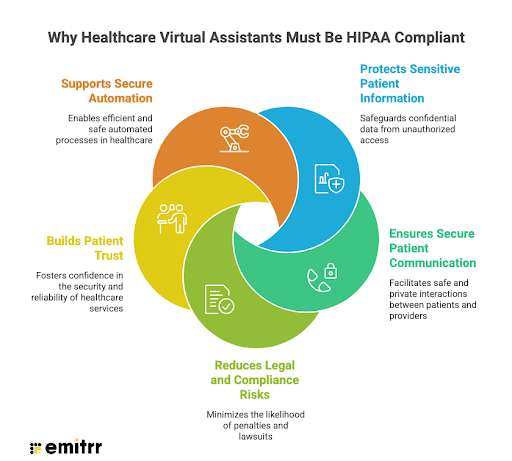
Healthcare communication often involves sensitive patient information such as medical history, appointment details, contact information, and insurance data. When a virtual assistant interacts with patients through calls, texts, or scheduling systems, it may process this protected health information (PHI).
This is why a HIPAA-compliant virtual assistant is essential. Below are the key reasons healthcare practices must ensure their virtual assistants meet HIPAA compliance standards.
Protects Sensitive Patient Information
Healthcare conversations frequently include protected health information such as patient names, phone numbers, medical concerns, and appointment details. If a virtual assistant is not HIPAA compliant, this data could be exposed or mishandled.
A HIPAA-compliant virtual assistant uses secure systems, encryption, and controlled access to ensure that patient information is protected during every interaction.
Ensures Secure Patient Communication
Patients communicate with healthcare practices through calls, SMS, web chat, and online forms. These interactions often include personal health information that must be handled securely.
HIPAA-compliant virtual assistants ensure that patient communication channels follow strict security protocols so that data shared during conversations is transmitted and stored safely.
Reduces Legal and Compliance Risks
Healthcare providers are legally required to follow HIPAA regulations when handling patient data. Using tools that are not compliant can expose a practice to compliance violations, penalties, or reputational damage.
A HIPAA-compliant virtual assistant helps practices align with regulatory requirements and maintain secure workflows for data handling.
Builds Patient Trust
Patients expect healthcare providers to protect their personal and medical information. When practices use secure and compliant technology, it reinforces trust and confidence.
A HIPAA-compliant virtual assistant ensures that every patient interaction is handled with the same level of privacy and security that patients expect from healthcare organizations.
Supports Secure Automation in Healthcare
Healthcare automation is becoming an important part of modern operations, covering tasks such as appointment scheduling and prescription refill reminders. However, automation in healthcare must still follow strict privacy and security standards.
A HIPAA-compliant virtual assistant automates routine communication tasks and ensures patient data remains secure and compliant with healthcare regulations.

HIPAA-Compliant Virtual Assistant vs Traditional Medical Receptionist
Both play an important role in managing patient communication and front-desk operations. The table below highlights the key differences to help you understand how a HIPAA-compliant virtual assistant compares with a traditional medical receptionist.
| Feature | HIPAA-Compliant Virtual Assistant | Traditional Medical Receptionist |
| Availability | Available 24/7 to handle calls, messages, and appointment requests | Limited to clinic working hours |
| Response Time | Instant responses to patient queries and scheduling requests | Depends on staff availability and call volume |
| Task Handling | Automates scheduling, reminders, follow-ups, and common inquiries | Manually handles calls, scheduling, and administrative tasks |
| Scalability | Can handle multiple patient interactions at the same time | Can handle one interaction at a time |
| Operational Cost | Lower long-term operational cost with automation | Higher cost due to salaries, training, and staffing |
| Compliance | Built with HIPAA-compliant systems for secure patient communication | Requires manual adherence to HIPAA policies |
| Workload on Staff | Reduces front-desk workload by handling repetitive tasks | Staff manages all communication and administrative tasks |
What Front-Desk Tasks Can a HIPAA-Compliant Virtual Assistant Handle?
Front-desk teams in healthcare handle many repetitive tasks every day. From answering patient calls to sending reminders and managing appointment changes, these responsibilities can quickly pile up.
A HIPAA-compliant virtual assistant helps manage these routine workflows through secure healthcare automation. Here are some common front-desk tasks it can handle.
Appointment Scheduling
Managing appointments is one of the biggest responsibilities at the front desk. A HIPAA-compliant virtual assistant can schedule new appointments, reschedule existing ones, and confirm bookings based on provider availability. Patients can request appointments through calls or messages, and the system can instantly update the calendar and send confirmations. This is similar to how online scheduling for healthcare helps practices simplify the appointment booking process for patients.
Patient Communication (Calls, SMS, Reminders)
Patients frequently contact clinics to ask about office hours, appointment availability, or basic instructions before a visit. A HIPAA-compliant virtual assistant can respond to these queries through calls or SMS and guide patients to the right information. It can also automatically send HIPAA-compliant appointment reminders to notify patients about upcoming visits and reduce no-shows.
Insurance Verification
Before an appointment, clinics often need to confirm insurance details and collect basic patient information. A virtual assistant can gather patient details, request required documents, and organize the information for the staff to review. This helps reduce the time front-desk teams spend on phone calls and manual data collection.
Documentation and Data Entry
Front-desk staff also spend a lot of time recording patient requests, updating contact details, and logging communication. A HIPAA-compliant virtual assistant can capture information from calls or messages and organize it for the care team. This helps maintain accurate records and reduces repetitive documentation work for the staff.
Follow-Ups and Patient Engagement
After a visit, healthcare practices often send follow-ups to check on patients, share instructions, or request feedback. A virtual assistant can automate these messages and keep patients engaged with the practice. For example, clinics can send prescription refill reminders to notify patients when it is time to refill their medication. These reminders improve medication adherence and reduce the number of refill-related calls to the clinic.
See how AI-powered prescription refills cut call volume by 40%
Benefits of Using a HIPAA-Compliant Virtual Assistant
Healthcare practices manage a large number of patient interactions and administrative tasks every day. A HIPAA-compliant virtual assistant helps streamline these processes through secure healthcare automation, making it easier for staff to manage communication and operational workflows.
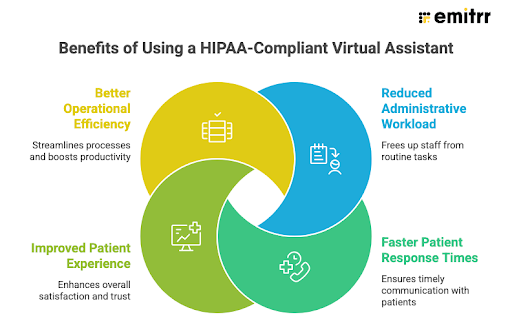
Here are some key benefits healthcare practices can experience:
Reduced Administrative Workload
Front-desk teams often spend hours handling repetitive tasks such as answering patient calls, confirming appointments, and managing basic requests. A HIPAA-compliant virtual assistant can automate many of these routine activities, reducing the pressure on administrative staff.
Faster Patient Response Times
Patients expect quick responses when contacting a healthcare practice. Long wait times or missed calls can negatively affect patient satisfaction. A HIPAA-compliant virtual assistant can respond instantly to common requests, manage patient inquiries, and guide patients through scheduling or appointment changes.
Improved Patient Experience
Timely communication helps patients feel more connected and supported throughout their care journey. Automated reminders, confirmations, and follow-ups help reduce confusion and missed appointments.
Better Operational Efficiency
When routine communication and administrative workflows are automated, healthcare teams can manage operations more efficiently. A HIPAA-compliant virtual assistant helps reduce manual work and organizes patient communication across different channels.
How to Ensure Your Virtual Assistant Is HIPAA Compliant
Using a virtual assistant in healthcare requires careful attention to data privacy and security. Since these systems interact with patient information, practices must ensure that the technology follows HIPAA regulations.
Use the checklist below to verify whether a HIPAA-compliant virtual assistant meets the necessary compliance and security standards.
Business Associate Agreement (BAA)
A HIPAA-compliant virtual assistant provider should sign a Business Associate Agreement (BAA) with your practice. This agreement confirms that the vendor will follow HIPAA rules when handling protected health information (PHI).
End-to-End Data Encryption
Patient data shared through calls, messages, or scheduling systems should be encrypted during transmission and storage. Encryption ensures that sensitive information remains protected from unauthorized access.
Secure Access Controls
The system should include strict access controls so only authorized staff members can view or manage patient data. Features such as role-based permissions help limit access to sensitive information.
Audit Logs and Activity Tracking
A compliant system should maintain detailed audit logs that record who accessed patient information and when. This helps healthcare practices monitor system activity and maintain accountability.
Secure Infrastructure and Hosting
The virtual assistant platform should operate on a secure infrastructure that follows healthcare security standards. This includes protected servers, regular security updates, and compliance-focused data management practices.
Staff Training and Compliance Policies
Even with secure technology, staff members should understand how to handle patient information responsibly. Practices should follow internal policies and training guidelines to maintain HIPAA compliance when using a virtual assistant.
How Emitrr Works as a HIPAA-Compliant Virtual Assistant for Healthcare Practices
Healthcare practices receive a steady flow of patient calls, appointment requests, reminders, and follow-ups every day. Managing these interactions manually can quickly overwhelm front-desk teams. Emitrr functions as a HIPAA-compliant virtual assistant that helps practices manage patient communication securely and keep everyday workflows organized through AI-powered automation.
Emitrr acts like a smart digital front-desk assistant. It interacts with patients through calls and messages, handles routine requests, and supports staff with common administrative tasks, all within a secure and HIPAA-compliant environment.
Here are some ways Emitrr supports healthcare practices as a HIPAA-compliant virtual assistant:
- AI-powered patient call handling: Emitrr can answer incoming patient calls, understand the reason for the call, and guide patients through common requests such as booking or rescheduling appointments. This helps reduce the number of calls front-desk staff need to manage.
- Automated appointment scheduling: Patients can book, reschedule, or confirm appointments through calls or messages. Emitrr checks provider availability and updates the schedule, making the appointment process simpler for both patients and staff.
- HIPAA-compliant patient messaging: Emitrr allows healthcare practices to communicate with patients through secure messaging. Clinics can send confirmations, reminders, and responses to common patient inquiries in a HIPAA-compliant way.
- Appointment reminders and follow-ups: The platform automatically sends appointment reminders and follow-up messages after visits. These reminders help reduce missed appointments and keep patients informed about upcoming care.
- Prescription refill reminders and requests: Emitrr can send reminders when patients are due for medication refills and collect refill requests from patients, helping reduce the number of refill-related calls received by the clinic.
- Conversational AI: Emitrr uses conversational AI to interact with patients naturally. Patients can speak or message in a simple way, and the system understands their requests and responds with relevant information.
- Context-aware responses: The system understands the context of a patient’s request. For example, if a patient asks to reschedule an appointment, Emitrr can recognize the request and guide the patient through the available time slots.
- Multilingual support: Emitrr can communicate with patients in multiple languages, helping practices serve a more diverse patient population and improve accessibility.
- 24/7 availability: Unlike traditional front desks limited by working hours, Emitrr remains available around the clock to respond to patient calls, messages, and appointment requests.
- Integration with healthcare systems: Emitrr integrates with practice management systems and EHR platforms, allowing patient communication, appointment updates, and records to stay connected within the clinic’s existing workflow.
Key Highlights from This Guide
- A HIPAA-compliant virtual assistant helps healthcare practices manage patient communication and routine front-desk tasks securely.
- It can handle common tasks such as appointment scheduling, reminders, patient inquiries, and follow-ups.
- Using a HIPAA-compliant system ensures patient information is protected and healthcare practices stay aligned with privacy regulations.
- Virtual assistants help reduce administrative workload and allow front-desk teams to focus more on patient care.
- AI-powered capabilities like conversational responses, multilingual support, and 24/7 availability improve patient accessibility and communication.
- Features such as prescription refill reminders, automated messages, and call handling help streamline everyday healthcare workflows.
Want to see how it works for your practice? Schedule a free demo and explore how Emitrr can support your team with a HIPAA-compliant virtual assistant.
Frequently Asked Questions
A virtual assistant is HIPAA compliant when it follows strict security and privacy standards to protect patient health information (PHI). This typically includes encrypted communication, secure data storage, access controls, audit logs, and a signed Business Associate Agreement (BAA) with the healthcare provider.
Yes, AI virtual assistants can be HIPAA compliant if they are built with healthcare-grade security measures. This includes encrypted data processing, secure infrastructure, restricted access to patient data, and compliance with HIPAA regulations when handling protected health information.
A healthcare virtual assistant can handle several administrative and patient communication tasks such as appointment scheduling, patient reminders, answering common patient inquiries, insurance verification, follow-ups, and managing incoming calls or messages.
Outsourcing a virtual assistant can be HIPAA safe as long as the provider follows HIPAA compliance standards. Healthcare practices should ensure the vendor signs a Business Associate Agreement (BAA) and uses secure systems to protect patient data.