

Introduction
Selecting the best electronic medical records software for mental health practices is different than choosing a regular, all-practice EHR. Behavioral health workflows require long-form therapy notes, confidential psychotherapy documentation, flexible narrative charting, DSM-5 diagnosis coding, and strict compliance with EPCS (Electronic Prescribing of Controlled Substances) regulations. Psychiatrists must also be able to manage medication history and, for telepsychiatry, require secure, HIPAA-compliant video integration that’s native to the platform. These particular needs make mental health EMRs quite distinct from primary care EMR platforms.
While mental health practices may be dealing with insurance-heavy billing, including behavioral CPT codes 90837 and 90792, documentation needs to clearly document medical necessity. An EMR that lacks behavioral-specific templates, claim scrubbing, or integrated revenue cycle tools can lead to denials, delayed reimbursements, and provider burnout. Selecting the wrong emr for psychiatry practice can result in increased compliance exposure and administrative load, while the right solution means reduced documentation lag time, better billing performance, improved telehealth delivery, and sustainable practice growth.
AI Summary
Choosing the right EMR for mental health practices in 2026 is no longer just about digital charting; it’s about reducing clinician burnout, protecting sensitive psychotherapy notes, improving reimbursement for behavioral codes, and enabling secure virtual care. In this guide, we compare the top 10 mental health EMR systems based on usability, psychiatry-focused features, pricing transparency, telehealth capabilities, e-prescribing (including EPCS), and real-world reviews.
Whether you’re a solo therapist searching for the best EMR for a small psychiatry practice, a growing group looking for scalable psychiatry emr systems, or a multi-location behavioral health organization evaluating enterprise-grade platforms, this listicle will help you make a confident decision.
Key Features to Look for in a Mental Health EMR
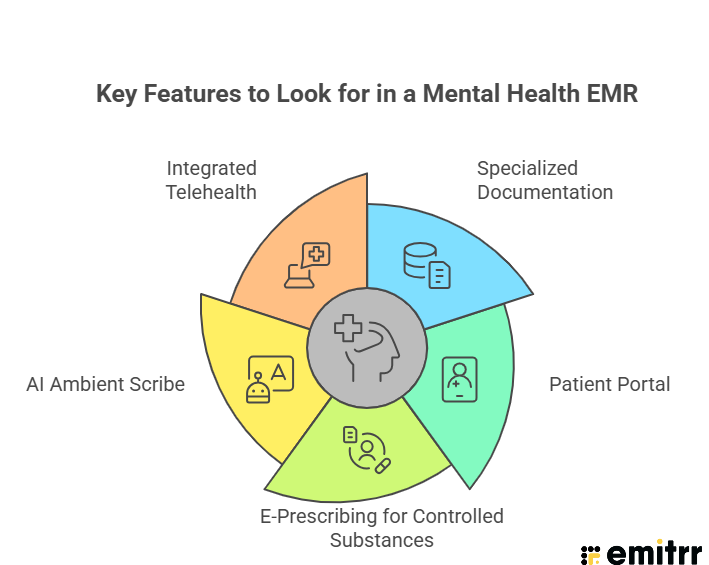
The quality of an EMR/EHR system is a major factor in determining clinical efficiencies & patient care influencer for an organization or practice. And for mental health in particular, general-purpose medical EMRs often fall short. Here are the features that will be must-haves in 2026:
Specialized Mental Health Documentation
General-purpose medical templates don’t serve psychiatry and psychotherapy. Find a system that has DSM-5-TR and ICD-10 coding and SOAP/DAP/BIRP note formats with “Golden Thread” logic; the treatment plan flows directly into the progress note.
Patient Portal & Engagement
Patients will want a “digital front door” in 2026. They want to see records, view results of PHQ-9 or GAD-7 questionnaires , and schedule appointments without picking up the phone. A robust portal improves patient autonomy and reduces the administrative burden on your front desk.
E-Prescribing for Controlled Substances (EPCS)
For psychiatrists, the added ability to send prescriptions, even controlled substances- directly to pharmacies became necessary. A high-tier EMR should automatically check for drug-to-drug interactions and insurance coverage.
Pro Tip: If you still feel your staff is overwhelmed by prescription refill calls, consider adding a system like Emitrr, where these requests can be automated through AI-driven voice and text assistants that integrate with your EMR to reduce phone tag.
AI Ambient Scribe
The biggest trend in 2026 is the AI scribe. This feature “listens” to the session (with patient consent) and drafts a clinical note for you. This allows therapists to maintain eye contact rather than typing, significantly reducing “pajama time” (after-hours charting).
Integrated Telehealth
Hybrid care is the standard. Your EMR should offer a HIPAA-compliant video platform that doesn’t require separate logins. Ideally, it should include screen sharing for therapeutic exercises and whiteboard tools.

Core Problems Mental Health EMRs Solve
Documentation Overload
Mental health requires extensive documentation. AI-enabled templates and voice-to-text capabilities in modern EMRs can save up to 40% of the time clinicians spend on notes, which is a direct strike against therapist burnout.
Billing and Coding Errors
Transition from 45 to 60 m codes, or the introduction of crisis codes, may be associated with manual errors. EMRs pull in CPT codes according to session length, so nothing’s falling through the cracks when it comes to getting what you’re due.
Fragmented Patient History
When you have someone in crisis, you need to be able to know what they’ve been taking, their history, and their treatment plans in the past. This is condensed into a dashboard known as “at-a-glance” by the EMR.
Patient No-Shows
No-shows are a revenue killer. Most EMRs will also do simple email reminders, but a patient engagement tool like Emittr allows for two-way SMS-based reminders that can “write back” into the EMR schedule so your calendar is always full.
EMR Switching Timeline: What to Expect
Switching systems is a marathon, not a sprint. Follow this roadmap:
- Week 1-2: Selection & Contracting: Finalize your choice and sign the BAA (Business Associate Agreement).
- Week 3-6: Data Migration: Exporting files from your old system and importing them into the new one.
- Week 7-8: Staff Training: Providers and admin staff learn the new workflows.
- Week 9: Go-Live: Running both systems in parallel for a few days to ensure no data loss.
- Week 10+: Optimization: Fine-tuning templates and integrating third-party tools like Emitrr for advanced automation.
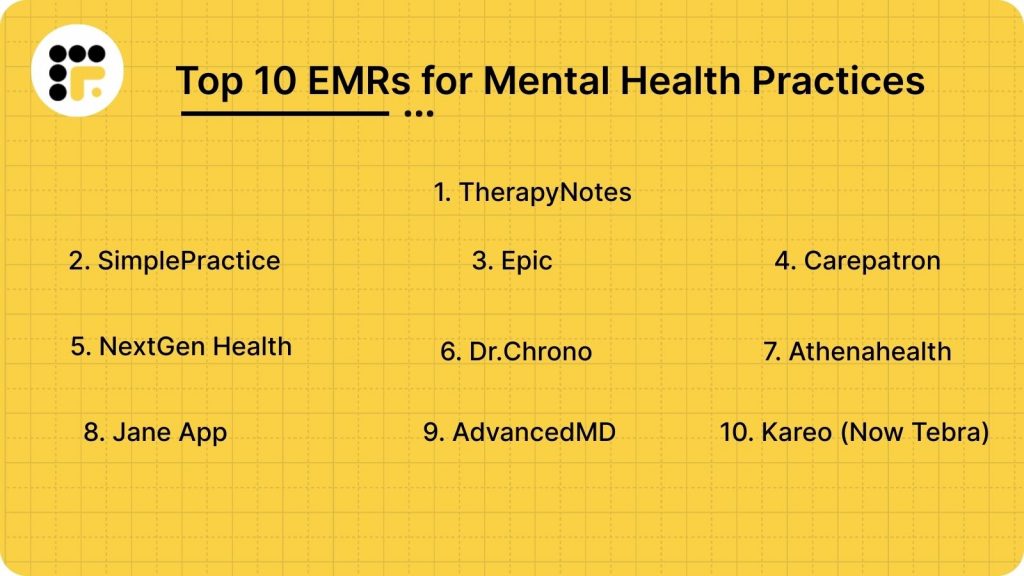
Top 10 EMRs for Mental Health in 2026
- TherapyNotes
- SimplePractice
- Epic
- Carepatron
- NextGen Behavioral Health
- DrChrono
- Athenahealth (athenaOne)
- Jane App
- AdvancedMD
- Kareo (Now Tebra)
1. TherapyNotes
Overview:
Built for clinicians, TherapyNotes is an intuitive and easy-to-use EHR platform with a focus on speed and efficiency for the users. It specializes in mental health workflows, something general-purpose EHRs are not able to claim. It also includes structured therapy documentation, psychiatric medication management, and robust insurance billing support. It has a strong following for insurance-based group practices, and a partial is due to its uptime and billing claim accuracy. TherapyNotes brings the two together in one system, so it’s good for practices on the rise that are looking for stability and scalability.
TherapyNotes Features:
- Behavior Specific Charting: TherapyNotes has templates and note forms for psychotherapy, assessments, progress notes, and psychiatric evaluations. This allows mental health professionals to have intuitive charting without having the limitations of a general SOAP that is not suitable for therapy workflows.
- Automated CPT & Billing Code Assistance: The solution identifies and links to behavioral CPT codes like 90791, 90834, 90837, 90792 during billing procedures, which eliminates manual coding mistakes and accelerates payments.
- Multi-Provider Scheduling: Schedule for clinicians, rooms, and telehealth is organized into a single calendar view. This assists practices in managing group availability strategically and scheduling back-to-back client appointments.
- To-Do Dashboard: TherapyNotes displays unsigned notes, missing charges, unbilled visits, and appointment follow-ups in a consolidated task list. This minimizes documentation misses and positions practices to stay compliant.
- Telehealth Integration: Internal, HIPAA-compliant video conferencing so clients don’t have to leave the platform or download any external apps (like Zoom), all virtual sessions begin on their platform.
- Insurance Billing & Claim Scrubbing: Integrated checks identify CPT mismatches, missing diagnosis codes, and eligibility problems before claims submission, reducing denials.
- Outcome Measurement Tools: The solution includes standardized tools such as PHQ-9 and GAD-7 for monitoring client progress over time, promoting quality of care, and value-based care delivery models.
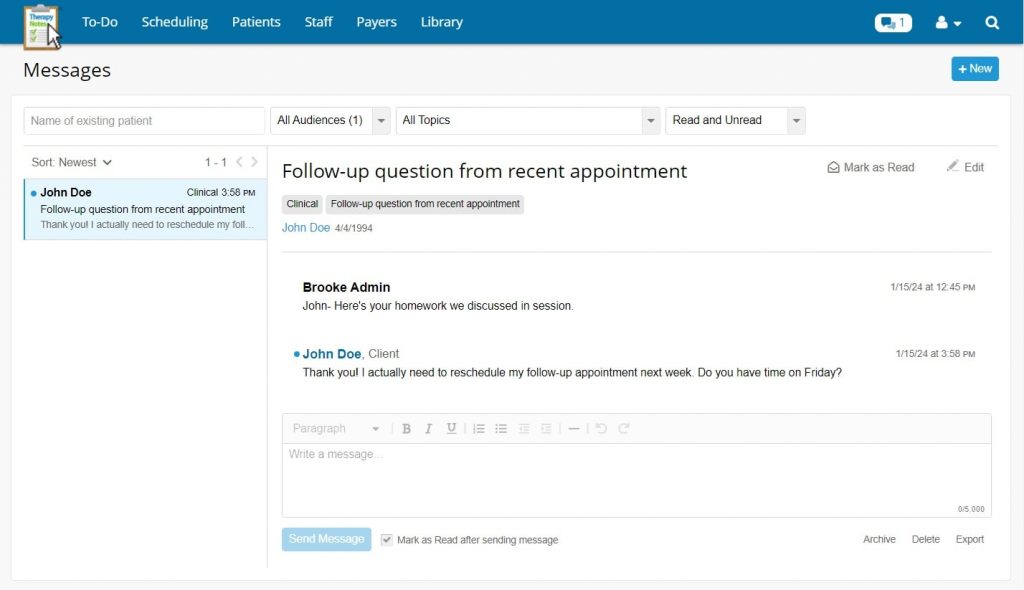
- Digital Client Portal: Let clients schedule appointments, fill out intake forms, and exchange messages securely, increase engagement, and reduce administrative overhead.
TherapyNotes Pricing:
Begins at $59 per month for the initial clinician. Pricing increases with additional providers.
TherapyNotes Reviews:
“TherapyNotes changed my life. The notes are intuitive, and the billing is seamless.”
“Very reliable software with great customer service, but the interface looks somewhat outdated.”
Source: G2
2. SimplePractice

Overview:
SimplePractice is among the most popular EMRs for solo therapists and small independent practices. With its modern and clean design, it streamlines scheduling, documentation, billing, and telehealth into one easy-to-use platform. It’s all about the user experience – and is supported by a polished client portal and mobile apps. If simplicity and looks are a higher priority for you than enterprise-level complexity, then SimplePractice is still going to be your frontrunner.
SimplePractice Features:
- Paperless Intake Forms: Patients complete demographic and clinical intake forms in advance online, reducing time at the front desk and streamlining their first visit.
- Integrated Telehealth: HIPAA-compliant video calls right on the platform, and appointment links are created automatically for the clinician and client.
- Monarch Practice Directory: Easy to search for therapists’ directory already built in, helps clinicians find their ideal clients and grow their practice in a way that feels natural.
- EPCS Support: With EPCS available on the appropriate plan, clinicians can prescribe their controlled substances safely in alerts that easily react with the EMR.
- Mobile App (Therapist and Client): Chart from anywhere with the therapist app and get appointment reminders, secure messaging, and intake-only access through the client app.
- Client Portal & Secure Messaging: Let your clients access their invoices, send secure messages, and share form information with you all in one place, which ends up reducing phone calls and promoting professionalism.
- Insurance Claims Submission: Integrated claims submission lessens the downtime needed for third-party clearinghouses.
SimplePractice Pricing:
- Starter: $29/month
- Essential: $69/month
- Plus: $99/month
SimplePractice Reviews:
“The client portal is so easy that my patients actually use it.”
“Great software for private practice, but costs have risen significantly.”
Source: G2
3. Epic
Overview:
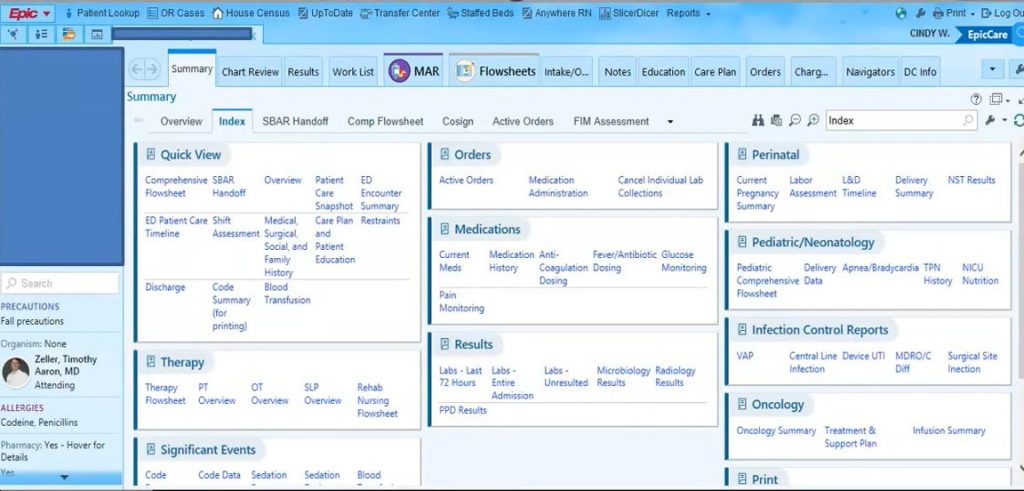
Epic is a high-end EHR system and is currently implemented by some of the largest hospitals and health systems on the planet. Its behavioral health tracking solution integrates easily with primary care, emergency medicine, and specialty clinics for a complete understanding of patient medical records. Epic is recognized for its unparalleled integration capabilities, high-level analytics, and rigorous security functionality. It has built-in functionality that is tailored to psychiatric departments, but it is expensive and cumbersome, and better suited for very large facilities with IT support.
Epic Features:
- Care Everywhere Interoperability: Allows sharing of mental health data with other health systems in a secure manner, so if a patient goes to an ER or another primary care clinic, their psychiatric background is available immediately.
- Detailed Security: Role-based access, break-glass protocols, and audit logs all play in favor of keeping psychotherapy notes where they belong: safe.
- Advanced Analytics & Predictive Risk: Receive data-driven tools to help identify patients who are at risk of decompensating or reaching crisis and drive proactive care planning.
- Enterprise Scheduling & Telehealth: Complex departmental calendars, video visits at the ready, and coordinating for labs or imaging appointments.
- Unified Billing & RCM Tools: All of your bills are created, scrubbed, and tracked all in Epic’s own system to cut down on administrative hassle.
- EPCS & PDMP Integration: Helps practice safe prescribing by comparing against state prescription databases and controlled substance monitoring programs.
- Patient Portals (MyChart): For patients to retrieve records, test results, and secure messages, especially helpful for therapy and psychiatry follow-ups.
Epic Pricing:
Enterprise: Custom upon request (typically $500,000+ implementation).
Epic Reviews:
“Epic is extremely efficient and easy to use.”
“It’s powerful but requires a lot of training to master.”
Source: G2
4. Carepatron
Overview:
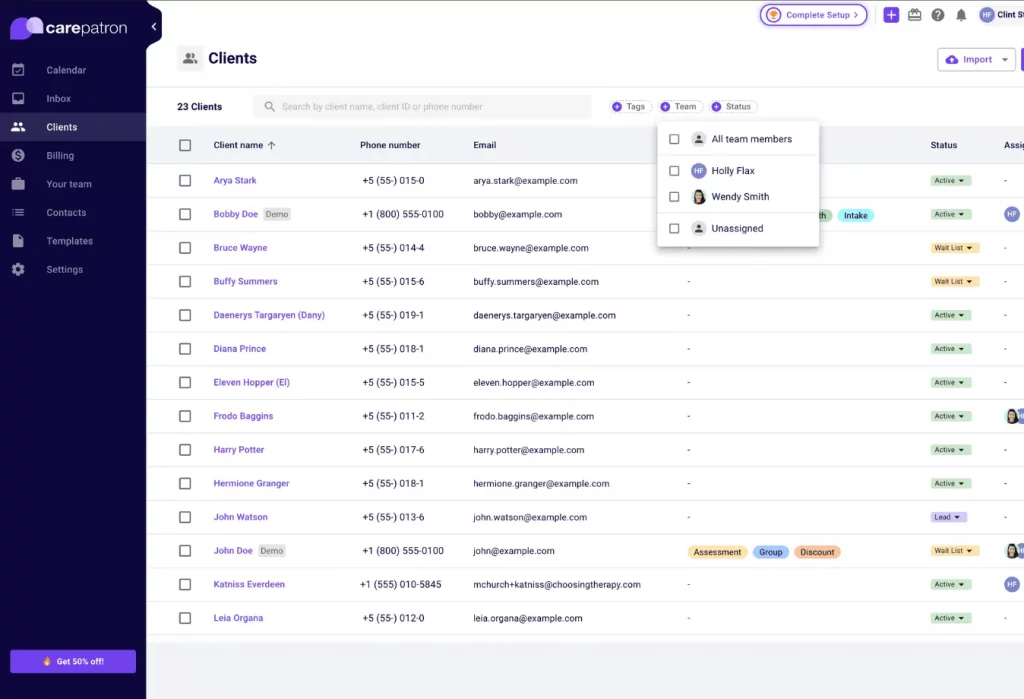
Carepatron is an AI-based EMR built for care-providers that seek automation & collaboration. It stands out for its built-in AI transcription tools that help reduce documentation time significantly. The platform has a free tier, which may be appealing to new or smaller practices just getting started. A user-friendly interface and co-working space-inspired design mean Carepatron is an affordable choice for tech-forward practices who value efficiency but don’t want to pay high upfront costs.
Carepatron Features:
- AI Transcription & Note Taking: In-session or post-session, Carepatron uses AI to translate audio into therapy notes or psychiatric charts: years of work completed in minutes.
- Team Flow: Enabling multi-staff edit access, shared calendars, and a centralized task list to keep your group practice in sync.
- Built-in Telehealth: It is built into the appointment, and when users click on it, they are “in” a video visit with little to no setup for both providers and patients.
- Safe Client Messaging: HIPAA-compliant secure text and file sharing for follow-ups, reminders, and forms.
- Seamless Intake & Forms: Online form completion auto-fills chart notes for more accurate intake.
- Simple Billing Support: There is something called billing modules that are supposed to support common insurance workflows, including automatic claim generation (over time, this will grow as features mature).
Carepatron Pricing
Free tier; Professional from $12/user/month.
Carepatron Reviews
“The AI note-taker saves me hours every week.”
“Affordable and modern but still growing in features.”
Source: G2
5. NextGen Behavioral Health

Overview:
NextGen Behavioral Health is an integrated solution for multi-specialty practices and FQHCs that integrate mental health services with primary care, or any combination of physical and behavioral health. It provides powerful revenue cycle management, a comprehensive suite of regulatory compliance solutions, and advanced analytics that allow you to monitor and grow your organization. The app offers a complex workflow and outcome tracking with reporting across faculty. With its extensive features and customization, it is a more suitable solution for larger clinics, community health centers, and non-profit organizations.
NextGen Behavioral Health Features:
- Integrated RCM: All financial workflows, from charge capture to claims submission to payment posting, are connected. Behavioral-specific CPT codes are supported.
- State Regulatory Reporting: NextGen accommodates the reporting requirements of mental health agencies that are required to submit local board and Medicaid reports.
- Holistic Care: Unlike siloed EMRs, NextGen templates allow blended workflows (e.g., psychiatry + diabetes + chronic pain).
- Telehealth & Video Integration: Virtual visits that are fully integrated reduce reliance on third-party platforms.
- Outcome Tracking & Dashboards: Included are built-in analytics for mental health supervisors to track clinical performance, adherence to appointments, and quality measures.
NextGen Pricing:
Custom quote.
NextGen Reviews:
“NextGen handles our complex reporting needs perfectly.”
“Powerful system but requires time to learn.”
Source: G2
6. DrChrono: Best Mobile-First EMR
Overview:
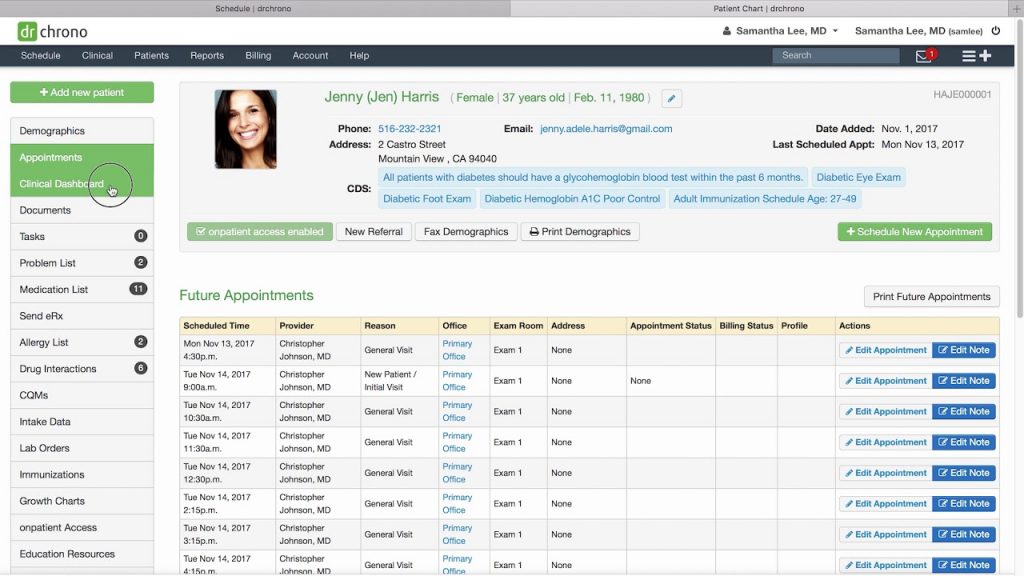
DrChrono is recognized for its mobile-first approach, including an iPad-optimized interface that enables providers to chart directly while in session. It provides customizable forms, integrated billing, and telehealth with a flexible cloud-based system. The platform is ideal for providers who prefer mobility and a less intrusive charting experience. It’s extremely flexible, but may need to be optimized slightly when you first set it up for mental health use.
DrChrono Features:
- iPad-Friendly: Built for the iPad experience, this allows clinicians to chart with stylus input in sessions.
- Create and Reuse Custom Medical Forms: Build therapy or mental health assessment forms, intake paperwork, and release-of-info packets.
- Developer API: Allows developers to build custom 3rd party integrations and extensions (mood tracking apps, billing plug-ins).
- Telehealth Integration: Push-button secure video visits are available within the chart.
- EPCS & PDMP Integration: Safely prescribe within the health record and obtain compliance checks for controlled substances.
- Scheduling App for Mobile Devices / Patient Portal: Access on the move to the calendar, clients.
DrChrono Pricing:
Custom quote
DrChrono Reviews:
“Charting on iPad is a game-changer.”
“Very customizable, but setup takes effort.”
Source: G2
7. Athenahealth (athenaOne)
Overview:
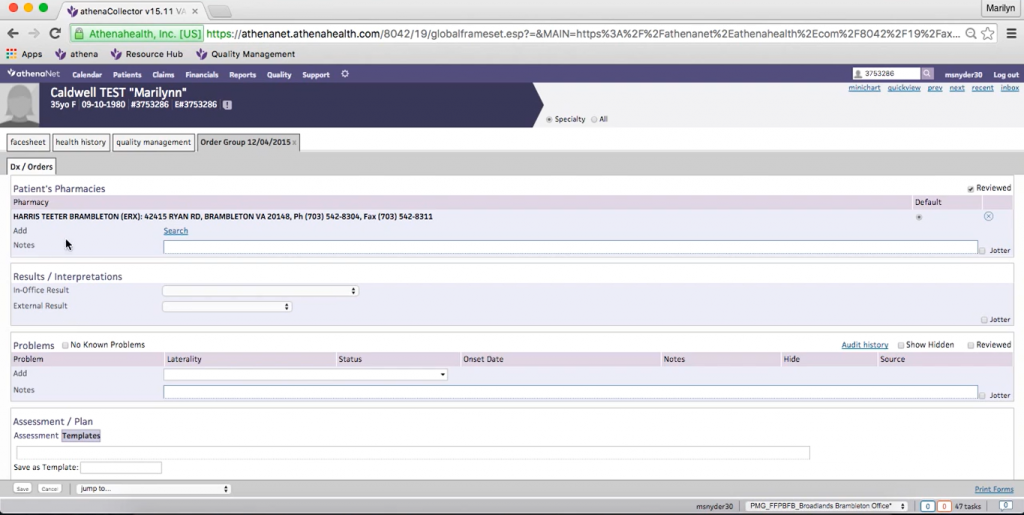
Athenahealth is another cloud-based EHR system known for its excellent billing and revenue cycle management capabilities. Its Value-based Seller Disrupts Traditional EMR Pricing Model (a pay-what-you-can vendor may make the price quite appealing if you are looking to do some billing optimization). The platform includes AI-enhanced chart summaries and patient engagement software. Athenahealth is a good fit for mental health clinics that are focused on financial performance and integrated care coordination.
Athenahealth Features:
- Performance-Based Pricing: Instead of typical licensing, Athenahealth receives a percentage of the collections, which can also align incentives for revenue growth.
- AI-Powered Chart Summaries: AI tools extract the most relevant data from charts to help clinicians focus on clinical decisions, not navigation.
- Patient Engagement Tools: Appointment reminders, secure messaging, and updating patient data increase attendance and satisfaction.
- Deep Integration with RCM: Its wide coverage across practices means better visibility into insurance performance and denial patterns.
- Telehealth & Mobile Apps: From virtual visits to mobile integration, hybrid care delivery is facilitated.
Athenahealth Pricing:
4–7% of collections.
Athenahealth Reviews:
“Athena handles billing headaches.”
“Reporting is strong, but navigation requires many clicks.”
Source: G2
8. Jane App
Overview:
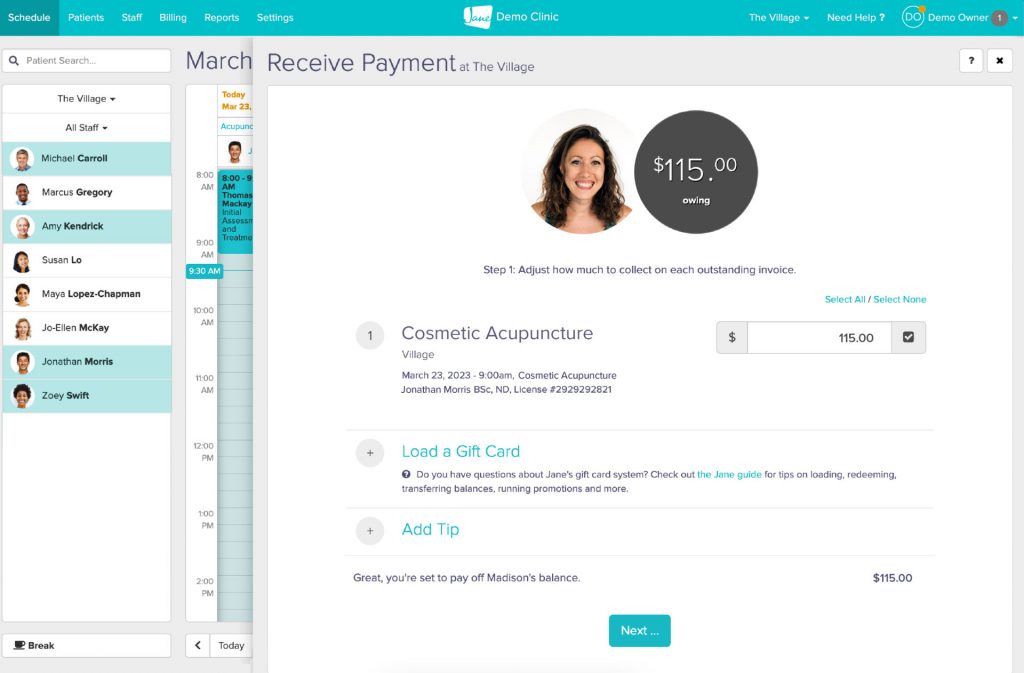
Jane App has gained popularity among boutique mental health clinics due to its beautifully designed interface and exceptional customer support. Originally started for allied health, it has expanded to mental health with therapy-friendly documentation and scheduling tools. Its intuitive interface and patient-facing portal improve the entire client experience. Jane works well for small practices that value simplicity and design over enterprise-level features.
Jane App Features:
- Self-Scheduling & Online Payments: Let clients book and pay for their own appointments online, which reduces front desk clutter and no-shows.
- Template Library: Therapists can get up and running quickly with workflow adoption by leveraging an expanding library of shared clinical documentation templates.
- Client Portal: Safe and secure forms, appointments , and messaging for clients.
- Telehealth in Platform: HIPAA-secure virtual visits are built into the platform.
- Automatic Reminders: Send email or SMS reminders to encourage attendance and minimize cancellations.
Jane App Pricing:
Starts at $79/month.
Jane App Reviews:
“Jane is actually fun to use.”
“Very supportive customer service.”
Source: G2
9. AdvancedMD
Overview:
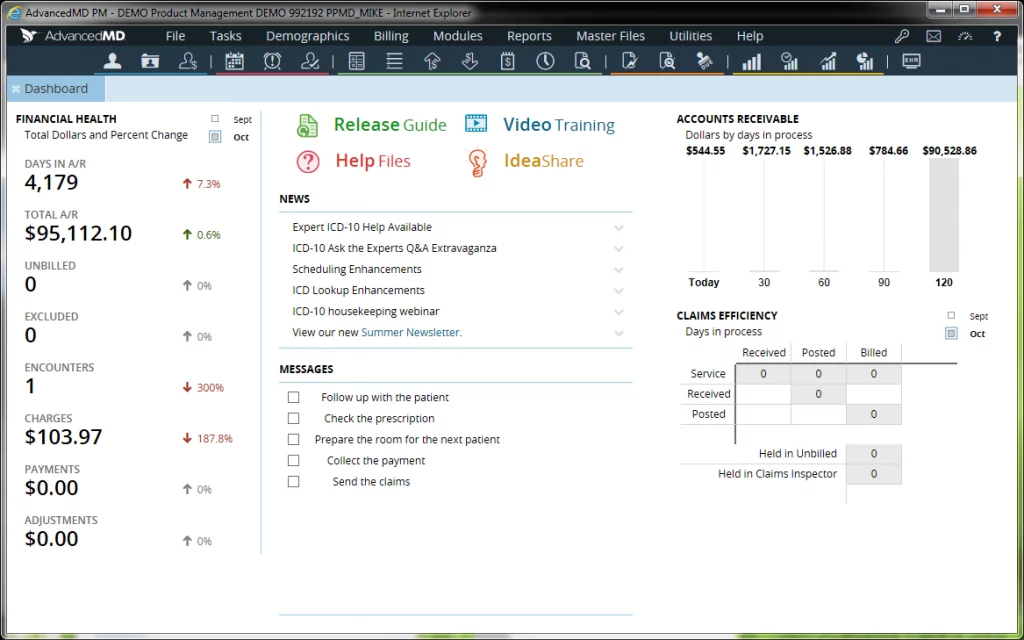
AdvancedMD is a customizable, integrated web-based solution that offers practice management, EHR, scheduling, billing, and reporting. It provides sophisticated billing automation, robust reporting, and flexible customization of workflow. As practices grow from a few providers to dozens, AdvancedMD can expand alongside them. However, its depth and configurability may require time, training, and investment to fully optimize.
AdvancedMD Features:
- Robust RCM & Billing Rules Engine: Configurable rules enable practices to automate insurance verification, claim scrubbing, and denial tracking.
- Tailored Patient Journeys: Design workflows that suit your clinic scenario, from intake to discharge planning.
- Telehealth Module: High-definition video integration with charting.
- Patient Engagement Tools: Automated reminders, surveys, and digital intake forms work to boost retention and show rates.
- Analytics & Reporting Suite: Offers meaningful financial and clinical reports for large practices that need to track productivity and outcomes.
AdvancedMD Pricing:
Custom quote.
AdvancedMD Reviews:
- “Now that it’s bespoke, we would not be without it.”
- “Very powerful but requires training.”
Source: G2
10. Kareo (Now Tebra)
Overview:
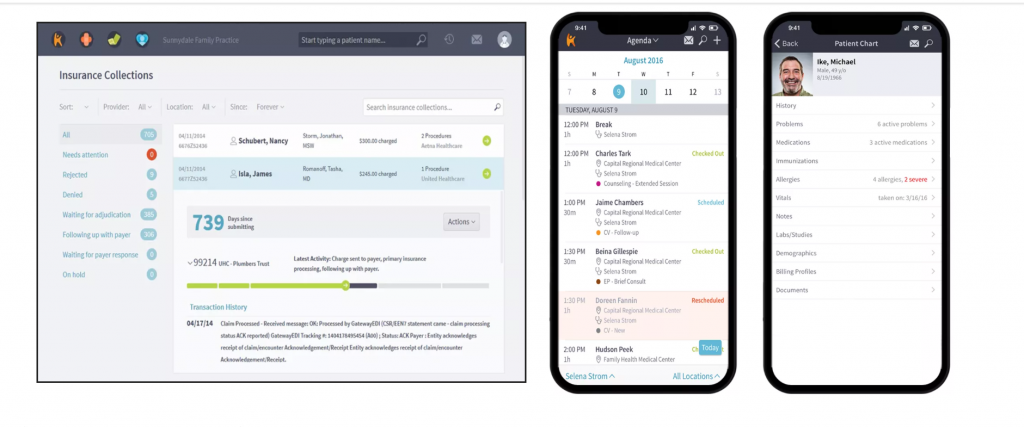
Kareo, now part of Tebra, combines clinical EMR functionality with marketing and patient acquisition tools. It is built for independent practices that desire efficiency of operations paired with growth support. As well as charting and billing, the system provides SEO tools and reputation tracking. (Kareo (Tebra)atisation) is particularly attractive to private mental health practices interested in growing patient volume and streamlining daily workflow.
Kareo (Tebra) Features:
- SEO & Practice Marketing Tools: Not just an EMR, but a complete practice growth system. Instruments allow for maximizing the online presence and attracting new clients.
- Efficient Charting: Intuitive templates help staff chart quickly and avoid superfluous click time.
- Managed Billing Services: With Kareo, you receive billing support (they can even handle your claims), which is well-suited for a provider without billing employees.
- Telehealth Integration: Virtual visits built in, no 3rd party video apps to download.
- Online Scheduling & Intake: Allows clients to self-register, complete forms, and schedule visits online, eliminating administrative workload.
Kareo Pricing:
Custom quote.
Kareo Reviews:
“Kareo is straightforward and perfect for private practice.”
“Good for growing practices, but support can vary.”
Source: G2
How Emitrr Enhances Your Mental Health EMR
No EMR is perfect at everything. While platforms like TherapyNotes or SimplePractice excel at clinical notes and billing, they often struggle with the “communication gap”, handling the hundreds of phone calls and texts that a busy practice receives.
By integrating Emitrr with your chosen EMR, you can:
- Automate Appointment Reminders: Move beyond basic emails to two-way SMS that syncs with your EMR schedule.
- AI Voice Agent: Let an AI receptionist handle FAQ calls, “Do you take my insurance?” queries, and initial intake screenings after hours.
- Prescription Refill Automation: As shown earlier, Emitrr can handle the back-and-forth with pharmacies, documenting the request directly in the patient’s record.
- Missed Call Text-Back: If you’re in a session and miss a call from a potential new client, Emitrr immediately sends them a text: “Hi! We’re with a patient right now. How can we help?”—ensuring you never lose a lead.
Key Takeaways
- The best EMR for mental health depends heavily on practice size and billing complexity.
- Solo therapists and psychologists often prefer SimplePractice or Jane App for ease of use.
- Insurance-heavy psychiatry practices benefit from TherapyNotes or Athenahealth.
- Large behavioral networks and hospital systems typically choose Epic or NextGen.
- If AI documentation is a priority, Carepatron is emerging as a strong option.
- Practices planning rapid expansion should consider AdvancedMD for scalability.
- Mobile-first providers may find DrChrono more natural for in-session charting.
- No single platform is perfect, workflow alignment matters more than feature volume.
FAQs
There is no one-size-fits-all answer. The best EMR for mental health depends on your practice size, billing complexity, and documentation needs. Solo therapists often prefer SimplePractice or Jane App for ease of use, while insurance-heavy psychiatry clinics may benefit from TherapyNotes or Athenahealth. Larger behavioral health organizations typically choose Epic or NextGen for scalability and interoperability.
Mental health EMR pricing typically ranges from $29 to $99 per provider per month for small practices (e.g., SimplePractice), while mid-sized platforms like TherapyNotes start around $59/month. Enterprise systems like Epic or NextGen require custom pricing and can involve significant implementation costs. Additional expenses may include EPCS setup, billing services, telehealth modules, and data migration fees.
Yes, most modern mental health EMRs now include integrated telehealth platforms. In 2026, AI-powered ambient scribes are one of the biggest trends, automatically generating clinical notes from session conversations (with patient consent). Platforms like Carepatron and Athenahealth are incorporating AI tools to reduce after-hours charting and clinician burnout.
Key features include DSM-5 coding support, therapy-specific note templates (SOAP, DAP, BIRP), EPCS for controlled substance prescribing, integrated telehealth, insurance claim scrubbing, outcome measurement tools (PHQ-9, GAD-7), and a secure patient portal. Strong revenue cycle management and automation features are also critical to reduce denials and administrative burden.
Switching EMRs typically takes 8–10 weeks, including vendor selection, data migration, staff training, and go-live optimization. Most vendors provide migration support, but careful planning is required to avoid data loss or workflow disruption. Practices often run both systems temporarily during transition to ensure smooth continuity of care.
Conclusion
In 2026, picking the right EMR for your mental health practice is about finding an appropriate balance between clinical depth (such as TherapyNotes), client ease of use (SimplePractice), and operational scale (Epic). Our recommendation is simple: solo practitioners should consider SimplePractice or Jane App, group practices should look at TherapyNotes or Kareo, and integrated or large healthcare systems will benefit most from Athenahealth or Epic.
Regardless of the EMR you choose, remember that the human side of your practice, especially communication- is just as important as the clinical side, and tools like Emitrr help bridge that gap by reducing phone time and increasing meaningful session time. Ready to see how AI can transform your practice engagement? Download our free EMR selection checklist below or book a demo with Emitrr to explore our EMR integrations in action.


 4.9 (400+
reviews)
4.9 (400+
reviews)