
Introduction
Examples of HIPAA violations in healthcare occur more often than many organizations realize. From unauthorized access to patient records to unsecured texting and workplace gossip, even small mistakes can expose protected health information and create serious compliance risks for hospitals and clinics.
Understanding real-world HIPAA violation examples in healthcare helps healthcare teams recognize risky behaviors, strengthen privacy practices, and prevent costly compliance issues.
AI Summary
- Examples of HIPAA violations in healthcare include unauthorized access to patient records, unsecured texting, and discussing patient information in public areas.
- Many healthcare HIPAA violations occur due to human error, lack of training, or improper communication tools.
- Hospitals may face regulatory penalties, while employees can face discipline or termination.
- Using secure communication systems helps reduce privacy violations in healthcare.
- Strong staff training and access controls are essential for preventing HIPAA violations in hospitals and clinics.
What Is a HIPAA Violation in Healthcare?
A HIPAA violation in healthcare occurs when protected health information (PHI) is accessed, shared, or exposed without proper authorization or safeguards. Protected health information includes any data that can identify a patient and relates to their medical condition, treatment, or payment details. Examples include patient names, medical records, appointment details, lab results, prescriptions, insurance information, and contact details.
Healthcare organizations such as hospitals, clinics, dental practices, pharmacies, and medical billing providers are required to protect this information under the Health Insurance Portability and Accountability Act (HIPAA).
When healthcare professionals fail to follow these HIPAA texting rules, the result is considered a healthcare HIPAA violation.
What Counts as Protected Health Information
Examples of PHI include:
- patient names linked to medical records
- phone numbers associated with appointments
- diagnostic results and treatment plans
- insurance information
- prescriptions and medications
If any of this information is shared improperly, it may qualify as a privacy violation in healthcare. Learn more about the do’s and don’ts of HIPAA-compliant texting to avoid breaches.
Common Causes of Healthcare HIPAA Violations
Many healthcare violations occur due to everyday operational issues rather than intentional misconduct. Common causes include:
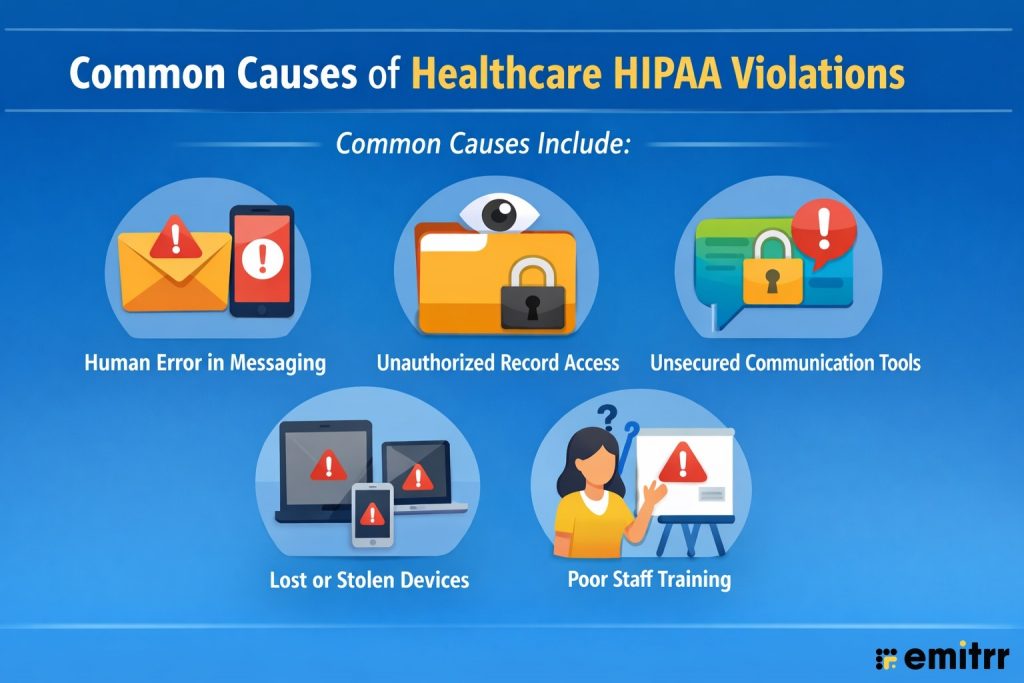
- Human error when sending messages or emails
- Employees accessing patient records without authorization
- Use of unsecured communication tools
- Lost or stolen devices containing patient information
- Poor staff training on privacy practices
Because healthcare teams handle sensitive patient data daily, even small mistakes can lead to significant compliance risks.
Learn more about what counts as HIPAA violation in healthcare:
Text Message Examples That Violate HIPAA (And the Correct Way to Send Them)
| HIPAA-Violating Text Message | Why It Violates HIPAA | Correct Message Example |
| “Hi John Smith, your blood test results show high cholesterol. Please call the clinic.” | Contains patient name and medical results sent through unsecured SMS. | “Hi John, you have a new update from your healthcare provider. Please log in to the secure patient portal to view your results.” |
| “Maria Lopez, your MRI appointment is tomorrow at 3 PM at City Hospital.” | Includes identifiable patient name and medical procedure details. | “Reminder: You have an appointment scheduled tomorrow at 3 PM. Reply YES to confirm or call the clinic if you need to reschedule.” |
| “Patient David Lee in Room 210 has HIV. Please prepare medication.” | Shares sensitive diagnosis through unsecured texting between staff. | “Please review the patient details in the secure EHR system and prepare the required medication.” |
| “Here is the patient’s insurance ID: 9483721 and DOB 05/02/1980.” | Shares identifiable financial and personal information through SMS. | “Please check the patient insurance information in the billing system before processing.” |
| “Sending you the patient chart now.” (screenshot of medical record attached) | Screenshots expose protected health information and are not secure. | “Please access the patient chart directly through the secure medical record system.” |
Key takeaway:
Sending patient names, diagnoses, medical records, or insurance details through standard texting can lead to HIPAA violations in healthcare. Healthcare teams should instead use HIPAA-compliant messaging platforms like Emitrr to protect sensitive information.

Reasons Why HIPAA Violations in Healthcare Occur
Understanding the most frequent HIPAA violation examples medical organizations face helps healthcare teams identify risks and strengthen privacy practices.
Below are some of the most common examples of HIPAA violations in healthcare.
Unauthorized Access to Patient Records
One of the most frequent healthcare HIPAA violations occurs when employees access patient records without a legitimate work-related reason. This often happens when staff members look up the medical records of friends, family members, coworkers, or public figures out of curiosity.
Even if the information is not shared with others, simply accessing records without authorization is considered a HIPAA violation in healthcare. Hospitals have fired employees after discovering they accessed the medical charts of celebrities or coworkers without a valid reason.
Sending Patient Information Through Regular SMS
Many healthcare professionals communicate quickly through text messages, but using standard SMS to send protected health information can lead to privacy violations in healthcare. Because standard texting platforms are not secure or encrypted for healthcare compliance, they create a significant risk of a hospital HIPAA violation.
Discussing Patient Information in Public Areas
Another common mistake involves discussing patient information in places where others can overhear the conversation.
This may happen in:
- hospital hallways
- elevators
- waiting rooms
- cafeterias
Even casual conversations between staff can lead to privacy violations in healthcare if identifiable patient information is mentioned in public areas.
Posting Patient Information on Social Media
Social media has become a growing source of HIPAA violation examples in healthcare. Healthcare professionals sometimes post stories or photos related to their work without realizing they reveal patient details.
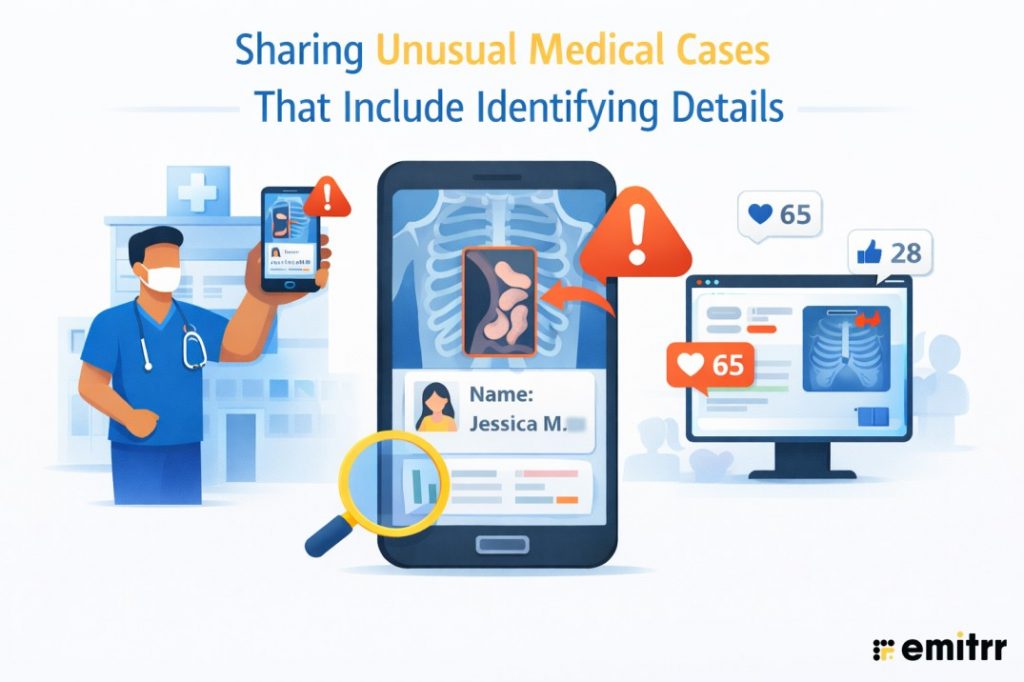
Examples include:
- posting patient images without consent
- sharing unusual medical cases that include identifying details
- discussing patient situations on public platforms
Even if a patient’s name is not mentioned, other identifying information can still create a healthcare HIPAA violation.
Lost or Stolen Devices Containing Patient Data
Mobile devices such as laptops, tablets, and smartphones often store sensitive healthcare data. If these devices are lost or stolen and not properly encrypted, patient information may be exposed. This can lead to a hospital HIPAA violation affecting hundreds or even thousands of patients.
Healthcare organizations must ensure devices storing patient data have proper security protections.
Workplace Gossip About Patients
Workplace gossip can also create serious HIPAA violation examples medical professionals must avoid. For example, a hospital employee may discuss a patient’s diagnosis with coworkers who are not involved in that patient’s care. Even casual conversations about a patient’s condition can violate privacy rules if the information is shared without authorization.
Although these conversations may seem harmless, they are still considered privacy violations in healthcare.
Want to avoid common HIPAA violations? Use these HIPAA-compliant text message templates instead.
Examples of Employee HIPAA Violations
Employees are responsible for many healthcare HIPAA violations, often due to curiosity or convenience when handling patient data. Common examples of employee HIPAA violations include:
- Accessing patient records without a valid work reason
- Sharing patient details with coworkers not involved in care
- Sending PHI through personal phones or regular SMS
- Taking screenshots of patient records
- Leaving medical systems logged in or records visible
Read the full guide: Examples of Employee HIPAA Violations
Examples of Nurse HIPAA Violations
Because nurses frequently access patient charts and interact closely with patients, they may unintentionally contribute to HIPAA violation examples in healthcare. Common examples of nurse HIPAA violation situations include:
- Accessing charts of patients not assigned to them
- Discussing patient information in hallways or public areas
- Sharing patient stories on social media
- Talking about patient cases with friends or family
- Using unsecured messaging apps for patient communication
Examples of Dental HIPAA Violations
Dental practices also handle sensitive patient information, which means privacy violations in healthcare can occur if proper safeguards are not followed. Common examples of dental HIPAA violations include:
- Discussing treatment details at the front desk
- Sending dental X-rays through unsecured email or SMS
- Leaving patient charts visible in waiting areas
- Texting appointment details using personal phones
- Improperly disposing of patient records
Calling patients? Learn more about HIPAA telephone rules to avoid HIPAA phone violations
Real Healthcare HIPAA Violation Cases
1. UCLA Health System Celebrity Record Breach
At UCLA Health System, multiple employees accessed the medical records of celebrity patients without authorization. The violations occurred over several years when staff repeatedly viewed protected health information out of curiosity. Federal regulators later fined the hospital $865,500 for failing to adequately protect patient records.
What happened
- Employees accessed celebrity medical records without a legitimate reason
- Some records were allegedly sold to media outlets
- The hospital faced federal penalties and strengthened its security policies
2. Cedars-Sinai Hospital Employee Snooping Incident
At Cedars-Sinai Medical Center, six staff members were fired after they accessed patient records without authorization following the birth of a high-profile celebrity’s child. Hospital investigations revealed that multiple employees viewed confidential medical records they were not permitted to access.
What happened
- Six staff members improperly accessed patient medical records
- One employee accessed 14 patient charts, others accessed at least one record
- The hospital terminated the employees and notified affected patients
3. St. Francis Health Employee Medical Record Abuse
At Bon Secours St. Francis Health System, an employee was fired after investigators discovered she had accessed patient and employee records for over 20 months without authorization. The information was allegedly used to submit fraudulent insurance claims for prescription medications.
What happened
- Unauthorized access to thousands of records
- Data potentially used to file fraudulent insurance claims
- The hospital terminated the employee after an internal investigation
HIPAA Violation Penalties in Healthcare
When healthcare HIPAA violations occur, the consequences can affect both organizations and employees. Employees responsible for violations may face:
- verbal or written warnings
- mandatory HIPAA retraining
- suspension from job duties
- termination of employment
Serious violations may also lead to legal consequences if protected health information is intentionally misused. Healthcare organizations themselves may face regulatory investigations and significant financial penalties depending on the severity of the violation.
What to Do If a Hospital Violated HIPAA
If a patient believes a hospital violated HIPAA, several steps can be taken to report the issue and protect their rights.
First, patients should contact the hospital’s privacy officer or compliance department. Healthcare organizations are required to investigate potential privacy incidents and address them internally.
If the issue is not resolved, patients can file a complaint with the U.S. Department of Health and Human Services Office for Civil Rights.
In some cases, individuals may consider suing a hospital for HIPAA violation if the privacy breach caused financial harm or emotional distress.
Taking action helps ensure healthcare providers maintain proper safeguards for patient information.
How Healthcare Organizations Can Prevent HIPAA Violations
Preventing privacy violations in healthcare requires both policy enforcement and technology solutions. Healthcare organizations should focus on:
- regular HIPAA compliance training for staff
- strict role-based access to patient records
- monitoring access logs for suspicious activity
- secure storage of patient data
- clear policies around communication tools
Because many healthcare HIPAA violations occur during everyday communication, organizations must ensure staff use secure platforms designed for healthcare environments.
See how to send secure text messages to avoid HIPAA violations:
Use HIPAA-Compliant Communication Tools to Reduce Violations
A large number of HIPAA violation examples in healthcare occur when staff communicate through tools that were never designed to handle protected health information.
Employees may send patient details through regular SMS, share screenshots of medical records, or use personal messaging apps to coordinate care. These shortcuts often lead to privacy violations in healthcare.
Platforms like Emitrr are designed specifically to reduce these risks.
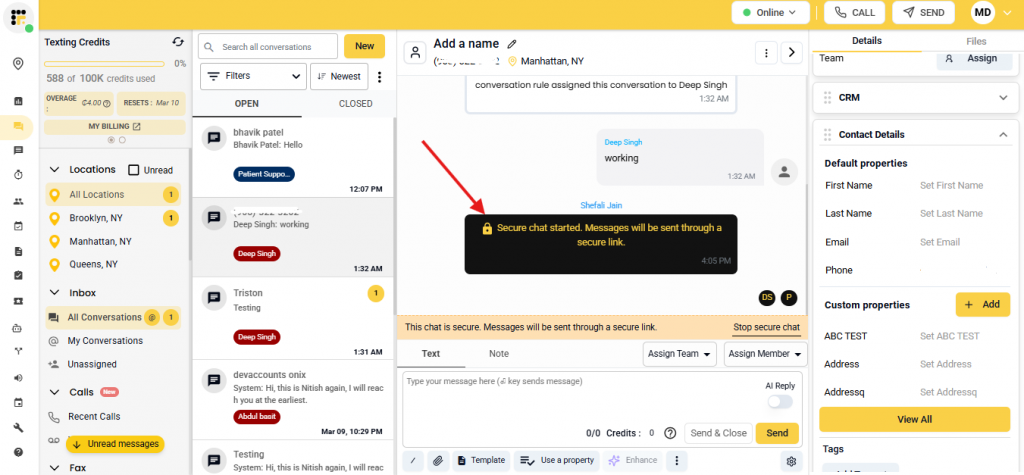
With Emitrr, healthcare teams can:
- send secure patient text messages through encrypted messaging
- move sensitive conversations to a secure cloud portal
- maintain audit trails for patient communication
- enforce role-based user access control
- enable automatic session log-off for added security
- automate appointment reminders while remaining HIPAA-compliant
By replacing unsecured messaging tools, healthcare organizations can significantly reduce communication-related healthcare HIPAA violations.
Frequently Asked Questions
Common examples include unauthorized access to patient records, sending PHI through regular text messages, discussing patients in public areas, posting patient information on social media, and lost devices containing medical data.
You should first report the issue to the hospital’s privacy officer. If the issue is not resolved, you can file a complaint with the U.S. Department of Health and Human Services.
Patients may consider suing a hospital for HIPAA violation if the breach caused financial loss or significant harm. However, many cases are first handled through regulatory investigations.
Unauthorized access to patient records and unsecured communication methods are among the most frequent HIPAA violation examples in healthcare.
Organizations can reduce risks through staff training, strict access controls, audit logs, and secure communication platforms designed for healthcare compliance.
Key Takeaways
- Examples of HIPAA violations in healthcare occur more frequently than many organizations realize.
- Unauthorized record access and unsecured communication are leading causes of privacy violations in healthcare.
- Employees responsible for violations may face discipline, termination, or legal consequences.
- Hospitals can face regulatory fines and reputational damage after healthcare HIPAA violations.
- Using secure communication tools helps healthcare organizations prevent common compliance risks.
Want to reduce communication-related HIPAA violations?
Emitrr helps healthcare organizations send secure patient messages, automate appointment reminders, and maintain full compliance while improving patient communication.Book a demo to see how Emitrr can protect your patient communication workflows.


 4.9 (400+
reviews)
4.9 (400+
reviews)